Laestrygonians in The Odyssey: Odysseus the Hunted
Laestrygonians in The Odyssey resided on the Island of the Laestrygonians and are known in Greek mythology to be cannibalistic. They are one of the island dwellers that pose extreme danger to Odysseus and his men as they journey back to Ithaca. To fully understand their role in the epic poem, in our article we will go over who they were, what they did, and how they were portrayed.
Who Are The Laestrygonians
The Laestrygonians in the Odyssey were basically a tribe of giants that lived on an island named "island of the Laestrygones". Not only did they have superhuman strength, but they also had an appetite for human flesh. You understood that correctly – they ate people!
The only thing left to wonder is what happened when Odysseus and his men went into the island of the Laestrygonians. Let's find out!
Odysseus and His Men in the Island of the Laestrygones
After their tumultuous journey in various islands, Odysseus docked his ship outside the harbor, moored to rock, off the island of the Laestrygones. He then sent a few of his men to investigate the island and basically sour the land for threats before he stepped foot on it.
The men docked their ships to the harbor and followed a road, eventually meeting a tall young woman on her way to fetch some water.
The woman, daughter of Antiphates – who was the king of the island – directed them to her house. However, when they reached her humble abode, they encountered a gigantic woman who turned out to be the wife of Antiphates, calling out to her husband. The king immediately left his assembly, grabbed one of the men, and killed him then and there, eating him in the process.
The other two men ran for their lives, but the king raised an outcry, allowing others to pursue the fleeing mortals. The Giants pursuing them were smart as they targeted their ships docked at the shore, pelting them with rocks until they sank. Eventually, all but Odysseus' ship sank as the men on the other ships were drowning or getting captured by the giants.
After he saw the chaos ensuing on the harbor, Odysseus fled the scene with his remaining men, leaving the rest to fend on their own.
Laestrygonians in the Odyssey: Inspiration for The Cannibalistic Giants
It was rumored that the ships that entered the harbor of the island of the Laestrygonians, were met with steep cliffs and nothing but a single small entrance between two lands. This is why they had to lodge each ship next to one another when they entered the calm-watered port.
Moreover, there was another legend with regards to the island of Laestrygonians. It was said that a man who could do without sleep could earn double wages. This was because the men of this island worked both during the night and during the day.
Both of these facts point to the idea that the island's layout and way of life are consistent with the island of Sardinia, Porto Pozzo in particular, where Homer drew inspiration from for his epics.
According to historians, the Laestrygonians originated from a legend that was a result of a sighting by Greek sailors in the Giants of Mont'e Prama, which were ancient stone figures in the Sardinian peninsula.
As the Greek sailors traveled the seas, they caught sight of the Sardinian sculptures. Hence, tales of giant, cannibalistic humans spread through ancient Greece, and as such the tale of the Laestrygonians was born.
Laestrygonians Role in The Odyssey
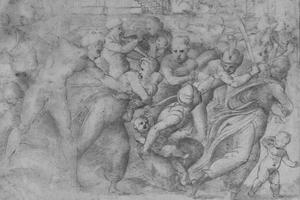
The Laestrygonians played the role of one of the obstacles Odysseus and his men had to face in order to return home to Ithaca to present the major theme in the story. This struggle is one of the major ones Odysseus and his men faced, as the terrifying giant cannibals hunted them for fun and ate them alive for dinner. The race of cannibalistic giants lived in the mythological city of Telepylos, described as the rocky stronghold of Lamos.
The men of the 12 ships that sailed the seas, going island after island and facing numerous dangers all throughout their journey thought they could finally catch a break as the calm waters of the harbor felt enticing to dock to. Odysseus docked his ship near the island, moored to a rock as the other 11 ships entered the narrow opening and settled on the island's harbor.
Significance of Laestrygonians in the Odyssey: Grief
The importance of the Laestrygonians in the epic poem was to give our hero great grief before he encountered greatness. Like all cinematic tropes, the hero is faced with obstacles that needed his wits and ingenuity as well as a steadfast nature in order to overcome such hardships.
Significance of Laestrygonians in the Odyssey: Odysseus the Human
The significance of the Laestrygonians became clear after Odysseus's escape from the island. His encounter with the giants is what gave our hero extreme guilt and mourning, giving his character more human dimensions in the story.
The Greek poet had described Odysseus as a strong man seemingly perfect in nature in the Iliad. He was a strong king, a good friend, and a compassionate soldier who loved his people to no end. But in The Odyssey, we see his more humane side as he struggled to control his men and made many mistakes along the way.
The presence of the Laestrygonians reiterated that Odysseus was merely human, as the cannibals in The Odyssey caused the first major loss of life to our hero after his time in Troy. Odysseus was riddled with guilt and mourning after the deaths of his beloved comrades; these were the men he held dear and the men whom he fought a war with as well as men who had overcome hardships with him.
Significance of Laestrygonians in the Odyssey: Strength to Reach Ithaca
This whole event reinvigorated him to return to Ithaca, not only to protect the beloved land his men struggled to get home to, but also to make them proud in his journey.
The Laestrygonians also allowed the shifting of focus in the Greek classic; without Odysseus' extravagant troop, the focus of the epic poem would have shifted solely on the remaining ship that survived.
Were the Laestrygonians the Main Antagonists in The Odyssey?
The land of The Laestrygonians was not the main antagonist of the plot and only played a small role in the poem. As such, the audience felt no connection or deeper feelings for the race of cannibalistic giants. Instead, as readers, we tend to place our attention on Odysseus and his men as they struggled to survive in the rest of the story.
Laestrygonians in Greek Mythology
The land of the Laestrygonians in The Odyssey was filled with cannibalistic men who enjoyed extreme violence and hunting. As Odysseus and his men neared the island, the Laestrygonians pelted their ships with boulders, sinking all of their ships but Odysseus'. They then hunted the men to eat those they have captured, so they were known to be the cannibals of The Odyssey.
Giants in Greek Mythology
In Greek mythology, the Giants, humanlike in form, were monstrous savages that are said to be the children of Ge and Uranus. In other words, they were the children of the Heavens and the Earth.
During the time of the Titans, it is said that a battle between the Olympian Gods and giants occurred where the gods prevailed with the help of Heracles, son of Zeus, the sky god. The giants were slain, and those that survived hid underneath mountains. The rumbling of the ground and volcanic fires were thought to be caused by the giants' movements.
Living their lives without the interference of the Olympian gods and goddesses. Eventually, the race of monstrous men and women came up from hiding and dwelled on one single island. There, no god could interfere as they were able to go about their lives trapped on the island, fearing the consequences that would bring them if they left.
This is how the island of the Laestrygonians came to be.
Conclusion
Now that we've talked about the Laestrygonians, who they were in The Odyssey as well as in Greek Mythology, let's go over the key points of this article:
The Laestrygonians were giant cannibals who enjoyed hunting mere mortals such as Odysseus' men
In Greek mythology, the Giants, humanlike in form but huge in size, were monstrous savages that were said to be the sons of Ge and Uranus
Odysseus and the Laestrygonians were written in a way that allows the viewer to empathize with one without hating the other
The Laestrygonians were not the main antagonist of the plot and only played a small role in the poem, as such the audience felt no connection or deeper feelings for the race of cannibalistic giants, and instead, the focus shifted on Odysseus and his men as they struggled to survive
They posed an extreme danger to Odysseus, and his men, since the Laestrygonians went out of their way to capture their dinner by pelting the Greek men's ships in their harbor
The Ithacan men could do nothing as they watched some of their comrades drown or get captured by the man-eating giants
The men who reached Odysseus' ship fast enough survived, as Odysseus sailed off, leaving those too far gone to save
The importance of the Laestrygonians in the play is to give our hero great grief before he encountered greatness by getting back to his role as king of Ithaca
The presence of the Laestrygonians also reiterated the fact that Odysseus was merely human, as the cannibals in The Odyssey caused the first major loss of life our hero faced after leaving Troy
The giant cannibals posed a risk to Odysseus and his men, yet their part in the Odyssey served as a boost for the hero to remember why he started his journey in the first place: to finally reach Ithaca and find peace after 20 years of war and tumultuous traveling.