Timeless Myths Logo
Aphrodite Apollo Ares Artemis Athena Atlas Coeus Crius Cronus Demeter Dionysus Gaia Hades Hephaestus Hera Hermes Hestia Hyperion Iapetus Mnemosyne Oceanus Phobos Phoebe Poseidon Prometheus Rhea Tethys Themis Uranus Zeus
Bacchus Ceres Diana Juno Jupiter Mars Mercury Minerva Neptune Pluto Venus Vesta Vulcan
Amun Anubis Aten Atum Babi Bastet Bes Geb Hapi hathor heqet Horus Isis Khepri Khnum Khonsu Maat Nephthys Nut Osiris Ptah Ra Seshat Seth Shu Sobek Thoth
Alfheim Baldur Freya Freyr Frigg Heimdallr Helheim Idun Jotunheim Loki Nerthus Njord Odin Thor Tyr
Aengus Arawn Badb Brigid Cailleach Ceridwen Cernunnos Cu Chulainn Dagda Danu Gwydion Herne the Hunter Lugh Medb Morrigan Neit Nuada Taliesin Taranis
Chalchiuhtlicue Coatlicue Huitzilopochtli Mictlantecuhtli Mixcoatl Ometeotl Quetzalcoatl Tezcatlipoca Tlaloc Tonatiuh Xipe Totec Xochiquetzal Xolotl
Amaterasu Ame no Uzume Benzaiten Bishamonten Daikokuten Ebisu Fujin Fukurokuju Inari Izanagi Kagutsuchi Raijin Susanoo Tsukuyomi
Caishen Cangjie Dragon King Eight Immortals Erlang Shen Fuxi Guanyin Hou Yi Huxian Jade Emperor King Yama Leizi Lu-ban Mazu Nezha Nuwa Pangu Shennong Sun Wukong Xiwangmu Yue Lao Zhong Kui
Norse Classical Celtic Arthurian
Literature Stories Names
Aphrodite Apollo Ares Artemis Athena Atlas Coeus Crius Cronus Demeter Dionysus Gaia Hades Hephaestus Hera Hermes Hestia Hyperion Iapetus Mnemosyne Oceanus Phobos Phoebe Poseidon Prometheus Rhea Tethys Themis Uranus Zeus
Bacchus Ceres Diana Juno Jupiter Mars Mercury Minerva Neptune Pluto Venus Vesta Vulcan
Amun Anubis Aten Atum Babi Bastet Bes Geb Hapi hathor heqet Horus Isis Khepri Khnum Khonsu Maat Nephthys Nut Osiris Ptah Ra Seshat Seth Shu Sobek Thoth
Alfheim Baldur Freya Freyr Frigg Heimdallr Helheim Idun Jotunheim Loki Nerthus Njord Odin Thor Tyr
Aengus Arawn Badb Brigid Cailleach Ceridwen Cernunnos Cu Chulainn Dagda Danu Gwydion Herne the Hunter Lugh Medb Morrigan Neit Nuada Taliesin Taranis
Chalchiuhtlicue Coatlicue Huitzilopochtli Mictlantecuhtli Mixcoatl Ometeotl Quetzalcoatl Tezcatlipoca Tlaloc Tonatiuh Xipe Totec Xochiquetzal Xolotl
Amaterasu Ame no Uzume Benzaiten Bishamonten Daikokuten Ebisu Fujin Fukurokuju Inari Izanagi Kagutsuchi Raijin Susanoo Tsukuyomi
Caishen Cangjie Dragon King Eight Immortals Erlang Shen Fuxi Guanyin Hou Yi Huxian Jade Emperor King Yama Leizi Lu-ban Mazu Nezha Nuwa Pangu Shennong Sun Wukong Xiwangmu Yue Lao Zhong Kui
Norse Classical Celtic Arthurian
Literature Stories Names

Polydectes: The King Who Asked for Medusa's Head

greek-mythology

Polydectes was the king of the island of Seriphos. The island is famous for giving shelter to Danae and her son, Perseus. The story of Polydectes and how he ordered Perseus to fetch Medusa's head for him is very interesting.

So let us read ahead about the life of Polydectes and all the drama it has to offer.
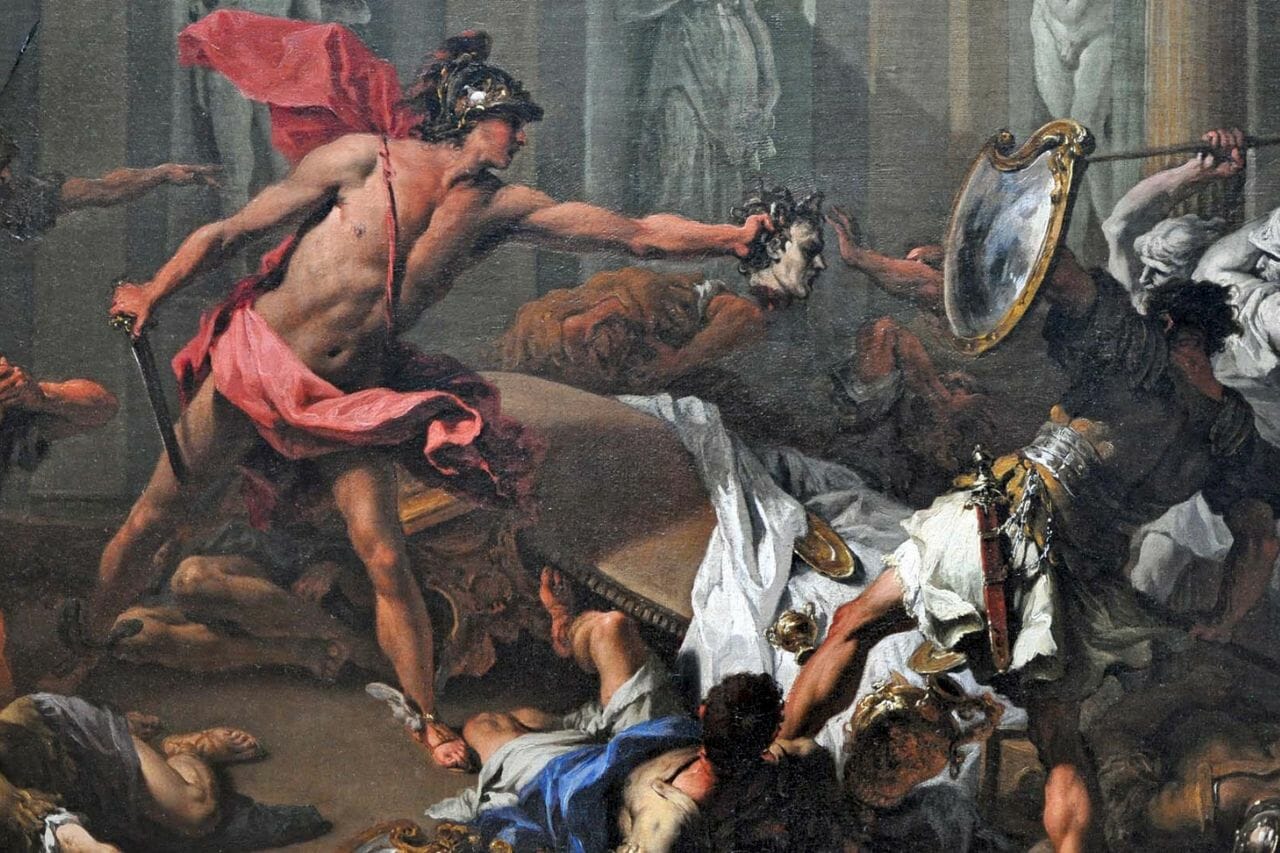
Polydectes and the head of Medusa

Polydectes and the head of Medusa

Polydectes's Origin

The origin of King Polydectes is quite controversial. The reason behind this controversy is that various sets of parents are attributed to Polydectes at various places in the poems and Greek mythology. He is famously regarded as the son of Magnes, the son of Zeus and the first king of Magnesia, and a naiad, who was probably a nymph living on the outskirts of Seriphos island. He is also said to be the only son of Peristhenes and Androthoe, both important non-god-like beings.

Among all the origin stories of Polydectes, the most widely accepted is that Polydectes was the son of Poseidon and Cerebia, therefore, he was a demigod with some god-like powers. His character and demeanor before the Perseus debacle were known to be kind. He was a good king of Seriphos who looked after his people.

Polydectes and Perseus

Being the King of the island of Seriphos that was not the source of Polydectes's popularity. He is most famously remembered because of his grudge against Perseus. The decline of Polydectes began when Perseus and his mother, Danae, came for shelter on the island of Seriphos.

The Story of the Golden Shower

Perseus was the son of Danae, the daughter of Acrisius. Acrisius, the king of Argos, was foretold that the son of his daughter would be the death of him. Because of this prophecy, Acrisius banished his daughter Danae to a closed cave. Danae was locked inside the cave when a shower of gold arrived before her.

The shower of gold was actually Zeus in disguise. Zeus fancied Danae and wanted her for himself but because of Hera and his previous endeavors on Earth, he was hesitant. He impregnated Danae and left. Sometime later Danae gave birth to a baby boy named Perseus. Danae and Perseus lived in the cave for some time until Perseus had grown up.

Acrisius found out about his grandson being born out of wedlock due to Zeus. To save himself from Zeus' wrath, instead of killing his grandson, Perseus, and his daughter, Danae, he cast them to the sea in a wooden chest. The mother and her son found the shore some days later where they reached the island of Seriphos where Polydectes was.

Polydectes and Danae

Polydectes and his islanders opened their arms to Danae and Perseus. They started living in harmony and peace. Perseus finally saw how real life was until King Polydectes intervened. Polydectes had fallen for Danae and wanted to marry her.

Perseus was against this union as he cared deeply for Danae. After the rejection from Danae and Perseus, Polydectes set out to remove Perseus from his path to true love.

Hence, Polydectes threw a grand feast and asked everyone to bring the King some lavish gifts. Polydectes knew that Perseus could not bring him something expensive as he was not that well off, which would in return be a shame for Perseus among the people.

Perseus reached the feast empty-handed and asked Polydectes about what he wanted. As Polydectes saw this as an opportunity and asked Perseus to bring him to the head of Medusa. Polydectes was positive that Medusa would turn Perseus into stone and then he could marry Danae without any restrictions but fate had other plans for him.

Medusa's Head

Medusa was one of the three Gorgons in Greek mythology. She was described as a beautiful woman with venomous snakes in place of her hair. The most interesting thing about Medusa was that whoever put his eyes straight on her was turned to stone in a few seconds. So no one dared to look at her ever.

Polydectes knew that Medusa could turn anyone into stone. Which is why he ordered Perseus to bring him her head. Polydectes was actually secretly plotting Perseus' death. However, Perseus knew better than to fall for his trap.
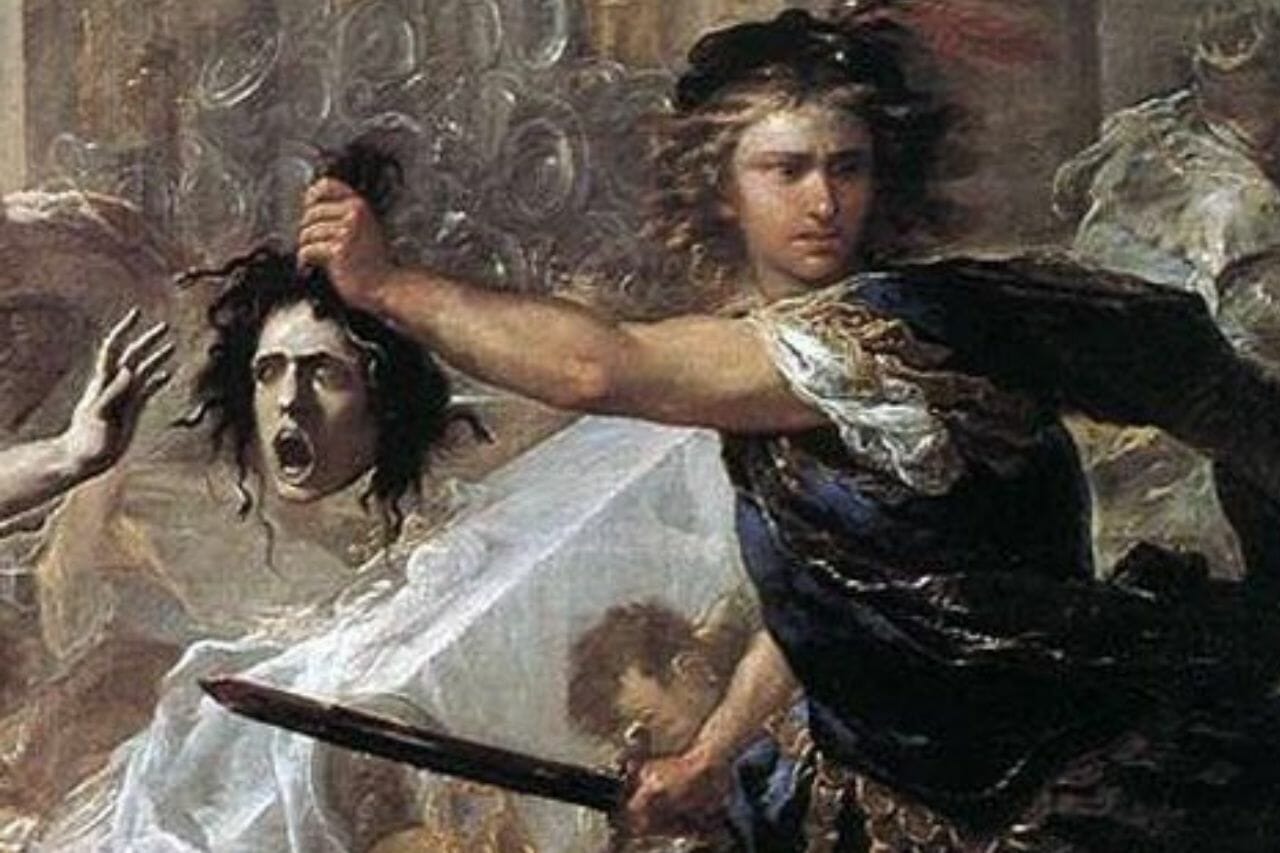
Polydectes and the head of Medusa in Greek mythology

Polydectes and the head of Medusa in Greek mythology

He miraculously killed Medusa with the help of Zeus. Zeus gave a sword and wrapping cloth to Perseus that he could use in his conquest. Perseus used the element of surprise and took her head off, he carefully bagged it and brought it back to Polydectes. Polydectes was stunned by his bravery and was embarrassed in front of everyone.

Polydectes's Death

As the origin of Polydectes, his death is also very controversial. There are many stories that describe the last moments of Polydectes' life. Among which the most famous one is related to Perseus.

According to the mythology, when Perseus came back with the head of Medusa, Polydectes gave up on his love, Danae. He backed off and understood that Perseus is not a force to be reckoned with. But Perseus was not going to back off now that he had pulled the impossible.

Perseus took out the head and turned everyone into stone, including Polydectes and his entire court, and just like that Polydectes stood there in the form of stone.

Conclusion

The reason for his fame in Greek mythology can be attributed to Perseus and his mother, Danae. This article covered the origin, life, and death of Polydectes. Here are the most important points from the article:

  • Polydectes was the son of either Poseidon and Cerebia or Magnes and a Naiad. His origin story is not very prominently known but he is most famously known to be a descendant of Poseidon.

  • The tale of Polydectes and Perseus is one of the most famous tales in Greek mythology. The tale entrails the defeat of Polydectes and his ultimate death at the hands of Perseus. The reason was Perseus' mother, Danae who became a love interest of Polydectes.

  • Polydectes was turned to stone by Perseus. Perseus used Medusa's head in all of his future endeavors.

Polydectes fell in love with the wrong woman at the wrong time. His debacle with Perseus turned out to be fatal for him. Nevertheless, his place in Greek mythology is sealed. Here we come to the end of the life and death of Polydectes, the king of Seriphos.

By Ancient Literature

Created: February 16th, 2024

Modified: January 10th, 2025

Perseus

Perseus

Perseus (Περσεύς) and the Gorgon Medusa (Μέδοισα) is one of the most popular myths in both Greece and Rome. This story's popularity can be seen in numerous pieces of artwork in ancient Greece and Italy. There are no epics made about this legend, a...

April 9th, 1999 • Jimmy Joe
How Did Perseus Die: A Riveting Tale of Revenge

How Did Perseus Die: A Riveting Tale of Revenge

How did Perseus die? The question is often asked knowing that Perseus was a very famous personality in Greek mythology. He was a demigod and was known as the slayer of many monsters. This article brings the answers to all your question about Perse...

May 19th, 2022 • Timeless Myths
Death of King Pelias

Death of King Pelias

Upon returning home, the Argonauts were disbanded, while Jason and Medea went to Iolcus with the Golden Fleece. Jason gave the Golden Fleece to his uncle Pelias. But during Jason's absence, Pelias had either murdered Jason's father or forced Aeson...

May 22nd, 1999 • Timeless Myths
Was Medusa Real? The Real Story Behind the Snake-Haired Gorgon

Was Medusa Real? The Real Story Behind the Snake-Haired Gorgon

Was Medusa real? Is her character based on a real-life story? We will discover the reason behind Medusa's one-of-a-kind appearance and whether there is anything from her story that is based on fact. One of the most recognizable and famous monsters...

February 16th, 2024 • Ancient Literature
Pelias

Pelias

King of Iolcus. Pelias (Πελιάς) was the son of Tyro and Poseidon. Pelias was the twin brother of Neleus. Pelias incurred Hera's enmity when he murdered Sidero before her altar or statue. Hera sought her revenge through Pelias' nephew, the hero Jas...

April 27th, 1999 • Jimmy Joe
Perseus and his Children

Perseus and his Children

Acrisius (Acrisios, Ἀκρίσιοσ) consulted the oracle from Delphi about having a son; instead the oracle warned him that his grandson would kill him one day. Acrisius tried to avoid the fulfilment of the oracle by first imprisoning his daughter Danaë...

April 24th, 1999 • Jimmy Joe
Acrisius and Proëtus

Acrisius and Proëtus

Lynceus' son, Abas, succeeded Lynceus. It was written that Abas was a mighty warrior, but there is no mythology of his own to tell us what heroic deeds Abas had done. His wife Aglaea, daughter of Mantineus, bore him twins, Acrisius (Acrisios or Ἀκ...

April 24th, 1999 • Jimmy Joe
Cetus

Cetus

Cetus was a sea monster that Poseidon sent to punish Cassiopeia, wife of King Cepheus of Joppa, and mother of Andromeda. Cassiopeia had boasted that her daughter was more beautiful than the Nereïds, the sea nymphs. The city would be spared if they...

June 1st, 2000 • Jimmy Joe
Why Was Medusa Cursed? The Two Sides of the Story on Medusa's Look

Why Was Medusa Cursed? The Two Sides of the Story on Medusa's Look

Why was Medusa cursed? It was either to punish or to protect. However, since she was a mere mortal and her violator was a god, even if she was the victim, she still suffered the consequences of the curse. These two versions of the story of why Med...

February 17th, 2024 • Ancient Literature
Gorgons

Gorgons

The Gorgons, Γοργόνες, were perhaps the strangest of the monsters that appeared in Classical mythology. They were winged women with snakes on their heads instead of hair. A single glimpse of their hideous visage would turn any creature, mortal or ...

June 1st, 2000 • Jimmy Joe
Timeless Myths

Exploring mythology and legends from around the world.

Explore Myths

All Stories Characters All Articles Search Site Map

Mythologies

Norse Mythology Classical Mythology Celtic Mythology Arthurian Legends Mythology Gods Ancient Literature

About Us

Introduction About Jimmy Bibliography FAQs Retro Version

Resources

Timeless Myths All Stories All Articles Characters
© 1999-2026 Timeless Myths • Copyright • Privacy Policy • Cookie Policy • Contact
Follow us: