Why Were Priests Powerful in Mesopotamian Society?
Why was a Mesopotamian priest so powerful in Mesopotamian society?
Anyone who studies history knows that religion was a powerful institution in every civilization, but the Mesopotamian priesthood set a relatively high standard. From surviving sources, we know that the priests held several important roles at once.
Read on to learn more about these key figures in Mesopotamian society.
Why Were Priests Powerful In Mesopotamian Society?
The ancient Mesopotamian priests were some of the busiest members of their society. Of course, their principal duty was to serve the gods. The priesthood’s power primarily came from their proximity to the gods.
Their power increased over time because they held many different roles in Mesopotamian society.
Listed below are some of the priesthood’s most important spheres of influence:
Religion: Priests were responsible for day-to-day worship to the city’s patron deity. They also managed various activities within the temple complex.
Government: The king was the leader of Mesopotamian rule. But, the priests also served a government role. The priests carried out various administrative duties.
Economy: The priests managed city land-holdings and oversaw trade.
Religious Structure in Mesopotamia: Gods, Kings, and Priests
Ancient Mesopotamia’s religious structure is pretty uncomplicated. The gods ruled over everything. The gods governed over the earth, and humans were required to serve them. Failure to please the gods could have disastrous consequences on earth.
The king held authority below the gods. As long as the king committed to serving their will, the gods granted the king the right to rule on earth. The king participated in special religious rituals. The Mesopotamians considered him the gods’ earthly surrogate. In a way, the king was like the head priest of the city-state.
The priests were the next most powerful in the Mesopotamian religion under the king. The temple clergy broadly included anyone from the temple’s gardeners to high priests.
Different Types of Priests in Mesopotamia
The Mesopotamian priesthood had its own hierarchy. At the top of the social ladder were the high priests and priestesses. The high priests presided over sacred rights and rituals. Underneath the high priests were many other priests who assisted them.
Priesthood Duties
Not all priests carried out the same duties. Many priests had to undergo specialized training for the rituals they performed. Priests with specialized training often traveled from temple to temple when needed.
These specializations include, but are not limited to:
Ritual purification: This was the most common specialization. These priests made sure cult statues, sacred objects, and different temple areas remained holy. They also provided offerings in the form of food, drink, clothing, and other items.
Exorcism: These priests were trained to ward off evil spirits.
Divination: Divination is the practice of interpreting signs from the gods. Divination priests also communicated with gods through ritual.
Lamentations: These priests specialized in performing music for various purposes.
The Steps To Become a Priest in Ancient Mesopotamia
Becoming one of the priests of Mesopotamia required years of education and training. Some people went on to train as priests if they showed promising scribal abilities as young students. But, access to education in ancient Mesopotamia was limited. The average Mesopotamian did not receive an education, let alone seek further training to become a priest.
Those who did become priests were born into an upper-class family. These elite families often had many generations as a part of the priesthood. Families with generations of priests often trained their sons personally to join the priesthood. Occasionally, women from elite families would train to become priestesses as well.
Priests had to be able-bodied without any physical defects. There were high standards for cleanliness, and they were subject to frequent head-to-toe inspection to enforce this rule. They would go through years of education, usually at a school run by the temple complex, and then complete a lengthy apprenticeship before finally becoming a priest.
Were Women Allowed to Become Priests in Ancient Mesopotamia?
Men who trained for priesthood served a god after completing their apprenticeship. In some cases, women joined the priesthood as well.
Mesopotamian priestesses served in a goddess’ temple after the apprenticeship. Still, it’s important to remember that women had less opportunity overall than men in Mesopotamian society, and even more so when it came to the priesthood.
Mesopotamian women could take part in religious rites, financial transactions, and hold employment. But, they were generally treated as property. Peasant women could be sold into slavery by their husbands or fathers to pay off debt.
Like the men, women had to come from an upper-class family and meet the standard set for physical abilities. Women who became priestesses could not bear children. They were allowed to marry and serve as a stepmother to any children her husband had.
High Priests and Priestesses: The Royal Support System
High priests and priestesses, called en and entu, sat at the top of Mesopotamia’s religious hierarchy, second only to the king. They supervised the other priests in sacred duties at the temple complex and worked closely with the king.
The Mesopotamians believed that the priests and the king were the gods’ servants on earth. Virtuous kingship was crucial to staying in the gods’ favor. So, the high priests assisted the king by explaining how they interpreted the will of the gods. Then, the king was empowered to make a decision that would ensure continued peace.
Many scholars agree that the high priests shared substantial governing power with the king. But, this varied over time. In ancient Sumer, priests were essentially equal to the king.
Over time, Sumerian kings would perform more of the government duties originally performed by the priests. On the other hand, some Assyrian kings declared themselves divine, which would automatically place the king’s status over the clergy.
Organized Government in Mesopotamia: Priests as Civil Servants
Today, we regard religious figures and government administrators as total opposites. The ancient Mesopotamians believed that the gods oversaw all earthly matters. The Mesopotamians did not separate religion and state. It’s no wonder then that priests operated as the Mesopotamia government officials.
According to the Mesopotamians, all land and water under the jurisdiction of one city-state belonged to the gods. The priesthood was responsible for managing their gods’ land. The chief administrative priest was called a sanga.
We know that priests were often government historians. Archaeologists have found clay tablets of legal records and administrative correspondence to prove that. They also recorded receipts of loans, commercial transactions, and lists of people who donated offerings to the gods.
The priesthood also held significant control over the economy. As caretakers of the land owned by the gods, they decided how to redistribute the taxes collected from Mesopotamian society. They often invested the taxes back into the temple complex to pay for the various ritual offerings.
The Temple Complex: Ancient Mesopotamia’s Headquarters
Religious rituals, education, and most tasks performed by Mesopotamia’s government officials were all conducted in the temple complex.
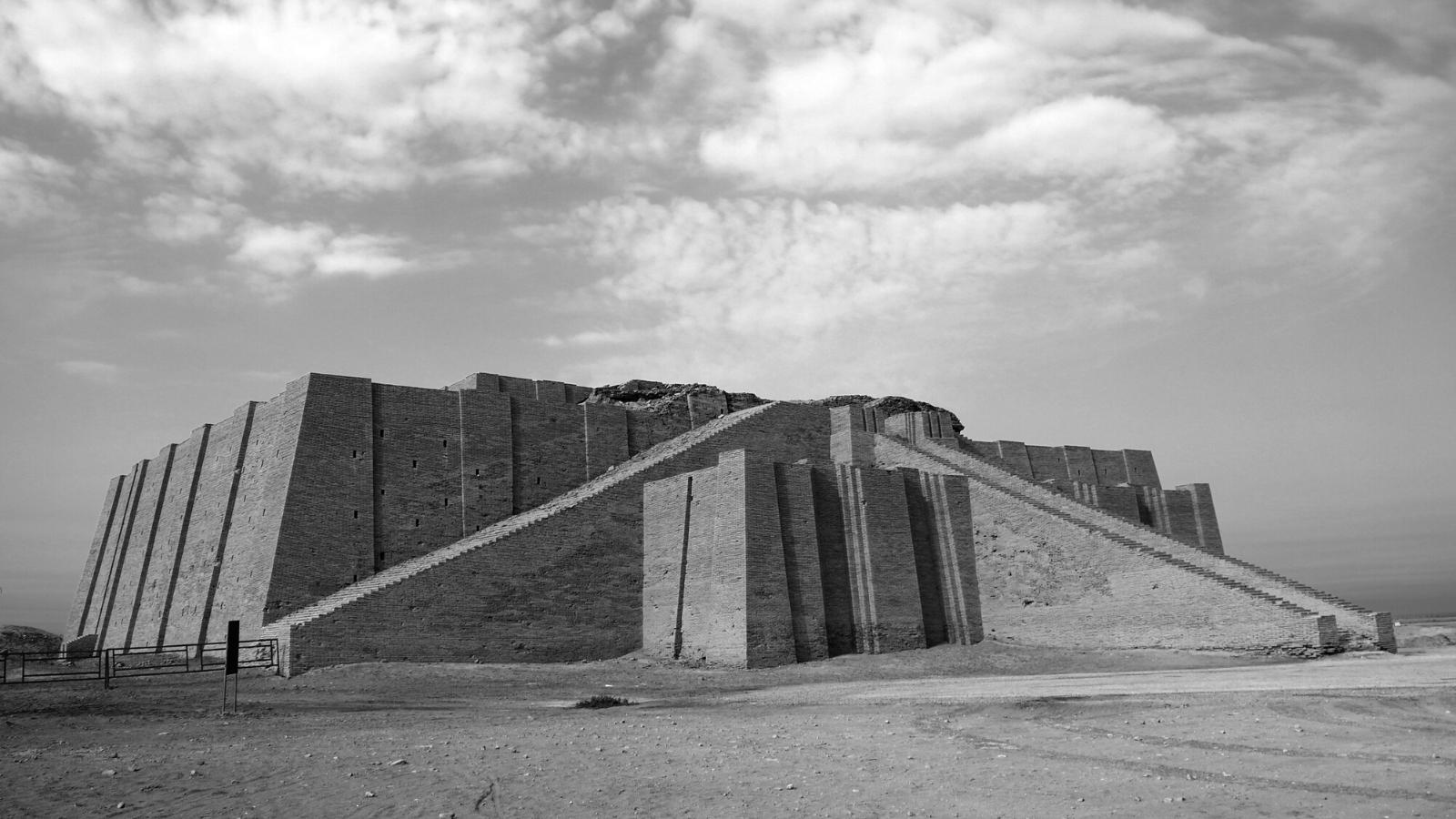
We know that the complex included a temple or shrine of the city’s patron deity and a multi-stepped, base structure called a ziggurat. The temple on top of the ziggurat was the patron god or goddess’s home on earth. But, the ziggurat below was a lot like an office building.
For centuries, scholars have debated the exact purpose of the ziggurat. Diodorus, an ancient Greek historian, believed the towering ziggurats were a “celestial observatory.” Another suggestion is that the structure simply protects the temple from the frequent flooding which plagued the region.
We know the ziggurat included rooms for the priests, and for much of the additional staff required for the temple complex’s day-to-day activities. But, most of the space was set aside for the temple’s various business activities. Here, the temple clergy conducted commercial undertakings and managed the gods’ land-holdings.
Outside, worshippers on the ground gathered watched the priests perform rituals at the temple high above the ziggurat. Scholars argue that the height of the temple was so the gods could ascend to heaven more easily.
Mesopotamian Priests and Priestesses: A Review
As you can see, the priesthood was powerful because they managed nearly every aspect of life in ancient Mesopotamia.
Let’s review some of the roles that gave them their significant power:
Mesopotamian priests were responsible for carrying out religious rites at the city-state’s patron deity’s temple
The most powerful people in the temple complex were the high priest (en) and the chief administrative priest (sanga)
The high priest or priestess was sometimes considered equivalent to the king
The temple clergy included a wide range of employees at the temple complex
In most cases, priests served male gods while priestesses served goddesses
Many priests had specialized duties
Women could study to join the priesthood but had fewer rights than priests. For example, priests could bear children, but priestesses could not
The priests acted as government officials because they believed they were servants and managers for the gods
The Mesopotamians believed that the gods ruled everything in both heaven and on earth. This is why Mesopotamian religious structure overlapped with government and business
The gods owned all land and water, so the priests redistributed taxes collected by the subject who used it
The priests would conduct all business at the temple complex