7 Characteristics of Epic Heroes: Summary and Analysis
The two ancient Greek poets Hesiod and Homer, created the first guide on ancient Greek religion and customs. In this guide, it was stated that there were five Ages of Mankind and that the Age of Heroes was the fourth of those ages. In this age, Zeus, famously known as the King of the Greek Gods, created special men who are powerful and noble. Although they are mere mortals, their capabilities and characteristics were god-like. These men are known as epic heroes.
The words “epic hero” bring to mind mortal men defeating terrorizing monsters, a demigod with super strengths, or even a man from a noble birth that is wise beyond his years. But what can we say are the main traits of epic heroes?
There are seven main traits of epic heroes; they are of noble birth or elevated status. They have superhuman capabilities, are a vast traveler, an unmatched warrior, a cultural legend, demonstrate humility, and finally, battle superhuman foes.
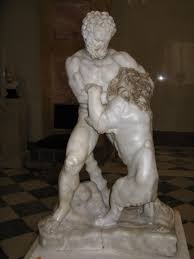
7 Traits of an Epic Hero
These 7 principal characteristics can describe epic heroes. They are:
Noble Birth
Most of the epic heroes that we know about were born to a noble family. They usually fall under the category of kings, princes, nobles or another position of high rank. Commoners are not usually found in their lineage.
Superhuman Capabilities
Most epic heroes have the capability to complete deeds of incredible strength and courage. This means they have the potential for extraordinary deeds considered impossible for most humans. These acts are beyond what the average commoner could do in their life. However, this does not mean that they are necessarily superheroes; not all epic heroes are good heroes.
Vast Traveler
Epic heroes are known for traveling to exotic locations, either by choice or by chance, and usually do so to fight against evil.
Unmatched Warrior
Epic heroes usually established themselves as a capable fighter in a war. They also usually have a reputation for being a warrior, even before the start of the story.
Cultural Legend
A hero is usually first recognized in his own home country as a hero, which leads to them becoming known in other lands. Soon they will reach the status of legend where many different countries celebrate them.
Humility
Although recognized for their great deeds as heroes, they should never brag about it or even be willing to accept applause. For example, Oedipus’ intelligence in answering the Sphinx’s riddle earned him the throne of Thebes, yet he didn’t brag about it to Thebes’ people.
Battles Superhuman Foes
Most epic heroes receive aid from a god or goddess when they are on a quest or are battling against some superhuman forces. This is the part that makes their action epic because they are in a battle that mere mortals cannot fight.
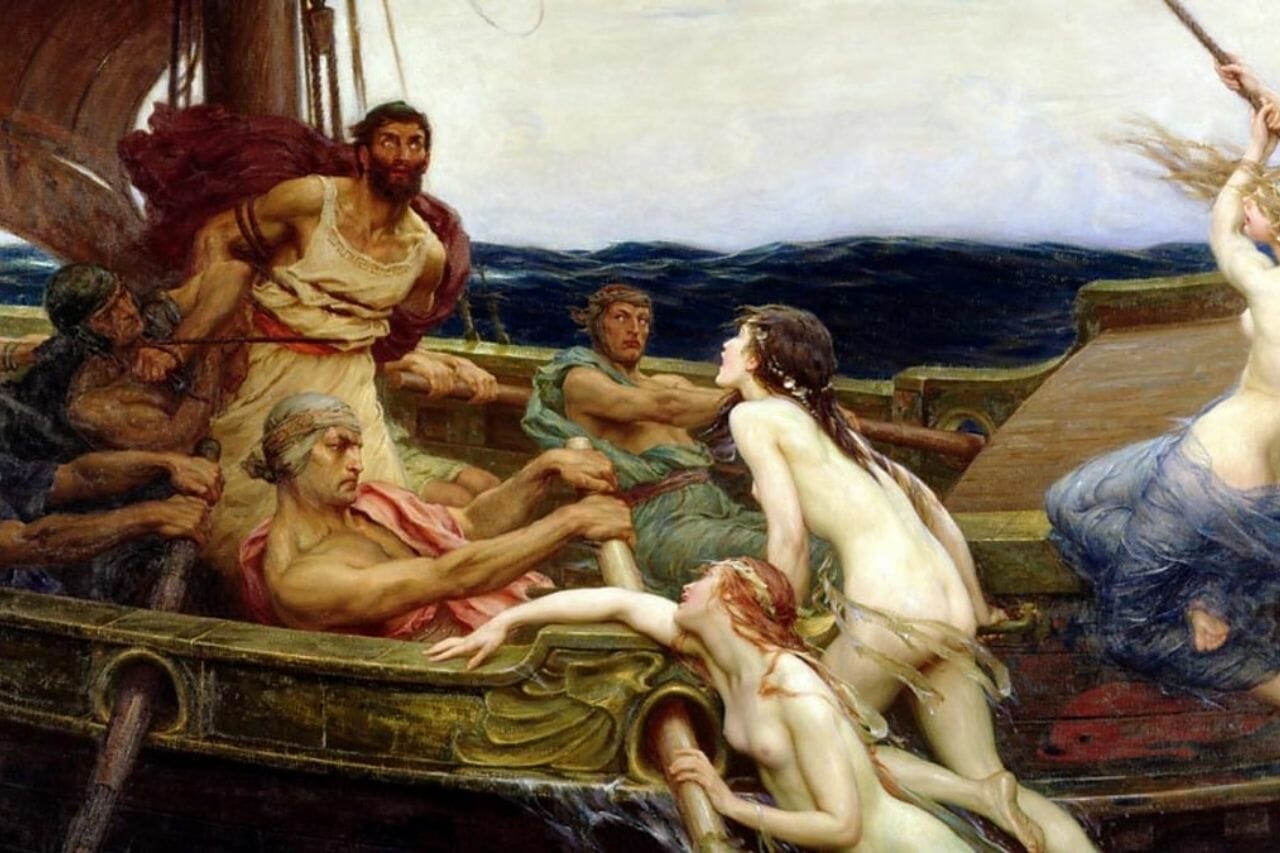
Examples would be Beowulf against Grendel and Odysseus against Cyclops, Polyphemus. One interesting fact is that for each of the heroes, their enemies are unique. It is unheard of that a hero would fight the same enemy that another hero has already fought.
The Heroic Age
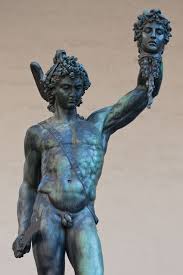
Perseus holding the head of Medusa
According to ancient genealogy, the heroic age spanned approximately 6 generations. This was a time of legendary Greek figures like Perseus, Achilles, Heracles, Jason and Odysseus. These great legendary figures all lived throughout this 4th age. Although filled with great tales of exciting adventures and great challenges, it was also a time of sorrow, turmoil, and bloodshed, and most of these epic heroes died in battle.
It is to be noted again that according to Homer, epic heroes were known to be “god-like.” In other words, they are an exceptional being, one way or another.
However “god-like,” heroes, as they were, are not actually divine. They are humans. They can be male or female, sometimes gifted with superhuman capabilities, and in some instances, a descendant of the gods themselves.
Because of these circumstances, a mere mortal might see heroes as having more in common with the gods than mankind, but that is not the case. While gods live forever, heroes are just like other humans in that they are destined to die.
Mortality is a profound theme in the stories of ancient Greek heroes. It is a question for all heroes within these epic tales to grapple with. Epic heroes usually face dire circumstances in their lives and have to deal with much tragedy. Despite their seemingly superhuman abilities, they are ultimately unable to escape their inevitable demise.
For example, let’s take one of the most famous heroes of all time, Heracles (known as Hercules to the Romans). Heracles is famously known as the son of Zeus. He was the result of a union between Zeus and a mortal woman.
It is commonly known that Zeus has a wife, who is a goddess herself, named Hera. Due to her husband’s affair, she became jealous and using her powers as a god, she delayed Heracles’ birth and instead let Eurystheus, another child, be born first and later became a king.
Hera, together with Eurystheus, who was now a king, plans to conspire throughout Heracles’ life, meaning to meddle with his affairs and trying to make his life as hard as possible. This is punishment according to Hera’s decree.
We also know that Heracles had undergone Eurystheus’ famous 12 labors, in which he had to battle the world’s worst monsters like the Nemean Lion and the hydra serpent.
And up to a point, this punishment is somewhat successful. Although Heracles was born with incredible attributes of strength and courage, he died a terrible death. He was poisoned before getting burnt alive atop a funeral pyre.
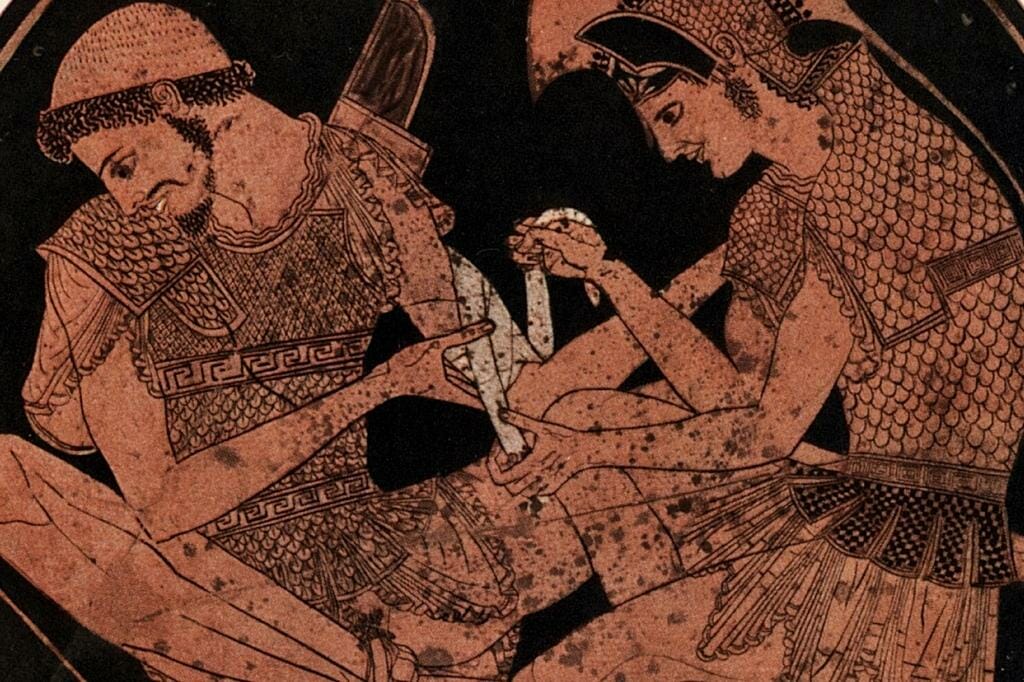
Another epic hero, Achilles, from the famous Iliad, also experienced tragedies in the Trojan War. Unlike Heracles, who was born with miraculous strength and courage, Achilles was faced with his own demons in the form of his pride and anger, which outweighed everything else.
On top of that, the gods gave him a choice whereby he could either experience eternal glory at the cost of a young death or no glory but at the cost of eternal life. When his friend, Patroclus, was killed by Hector, Achilles’ Trojan rival, he then went on a rampage before he took his own life on Troy’s shore.
In conclusion, heroes are those who possess god-like characteristics, which earn them the status of legends. Although they faced death after achieving fame, their fame was passed on to what the Greeks called kleos, in which they achieved immortality.
Grand themes like fate are always the main focus in a narrative epic poem, and it usually includes heroic characters and divine beings. Although some women are epic heroes, it is almost always the men at the heart of an epic hero story.
Epic Origins
In general, an epic is a mythologized history. Just like the traits of an epic hero, an epic origin consists of four elements. The first element is that it is a collection of pre-existing stories and characters. Secondly, an epic origin is often of oral origin. That is why some epic heroes have different versions or additions to their stories.
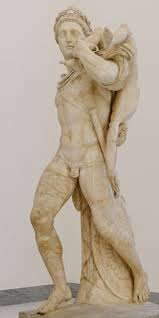
Achilles - one of the greatest epic heroes
Thirdly, an epic origin is loosely, or at least, based around historical or quasi-historical characters or events. Finally, an epic origin’s setting is usually in a mythological distant time, traditionally in the past (for example, a time where mythological beasts like the sphinx and pegasus were thought to co-exist with humans).
Morality in Epics
Epic stories always demonstrate moral ideas and taboos with the behavior of their heroes. This means that an epic hero’s behavior and the lessons that he learns along the way usually give us a picture of a culture’s ideals. Monsters and antagonists are usually shown as inferior to the heroes; these characters always represent those who break or defy the moral taboos or ideals of the culture.
Additionally, many events that occur in a heroes’ lifetime usually feature a god or goddess’s influence or intervention. Nearly always in epic stories, the heroic acts and triumph of a hero are divinely ordained. Therefore, there is a moral significance in mythologized history because heroes are divinely guided towards their fate, even if it means they had to face a gruesome death.
Finally, many epics also revolve around the heroes’ journey of self-discovery. This can include the emotional, psychological, and/or spiritual development of the hero. Along the path of the hero’s journey, the hero often realizes that the heroic act is actually not just a physical journey. More importantly, he is a spiritual and psychological journey leading to their own personal development.