Nessos: The Story of the Most Cunning Centaur in Greek Mythology
Nessos, or Nessus, is one of the centaurs, which are iconic creatures of Greek mythology. He is one of the most notable of these half-man, half-horse creatures, next to Chiron, who became the mentor of many heroes, including Heracles and Achilles. Nessus played an integral role in the death of one of mythology's greatest heroes, Heracles, also known as Hercules. Keep reading to discover how Nessus did it and what happened to him as well!
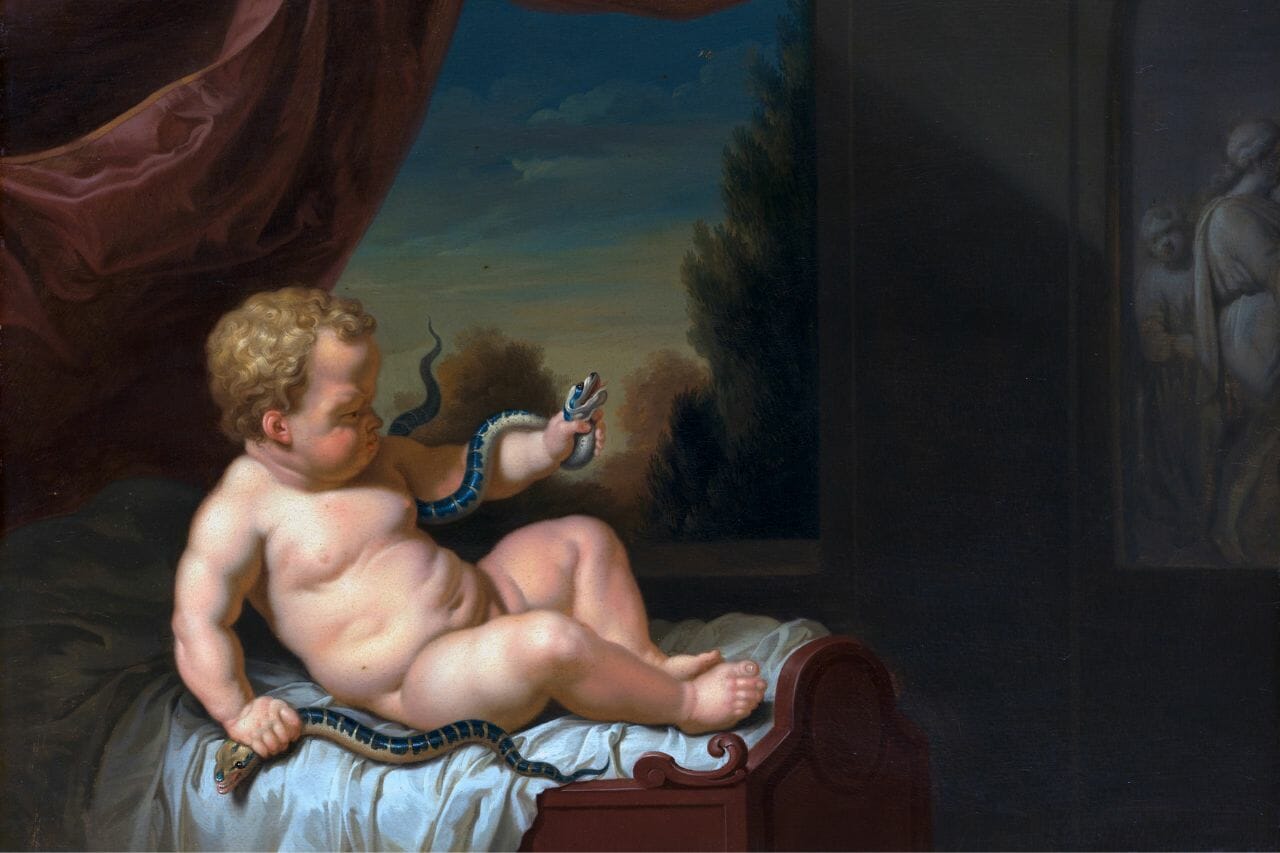
Heracles, the Greek hero whose fate was intertwined with the cunning centaur Nessos
Who Is Nessos?
Nessos is one of the famous centaurs in Greek mythology. He was known for his association with Heracles. He was killed by Heracles, but eventually had his revenge and was able to kill Heracles as well. He was known as the reason why the great hero Heracles died.
Origin
The background of Nessos, along with all the centaurs, is all rooted in their father, Centaurus, as there was no mention of the name of their mother, except for the breed: Magnesian mares. The history of Centaurus, Nessus' father, is a highly fascinating one. Centaurus was born from King Ixion and a cloud figure modeled after Hera. It happened when Ixion became insane and killed his father-in-law. Instead of punishing him, Zeus brought Ixion to Olympus.
When Ixion saw the goddess Hera, he fell in love with her. Zeus suspected this and made a trap for Ixion to confirm his lust. He shaped a cloud in the form of Hera to be her double and named it Nephele. Zeus placed her beside the sleeping Ixion on the fields.
When Ixion woke up and found the figure beside him, he started to make love to the cloud. This action confirmed everything, and Zeus was enraged. He struck Ixion with his thunderbolt and punished him by cursing him to be permanently attached to a flying, blazing wheel that would continuously revolve around the skies.
However, the cloud figure was impregnated, and Centaurus was the result of that union. He was born as a human with defects, and his abnormal appearance was the first of its kind. He had difficulty blending in and was forced to live in the remote highlands of Mt. Pelion. Being alone in the forest, Centaurus befriended the Magnesian mares. Soon enough, he began to mate with them, and the race of the centaurs was born. Nessus was one of them.
Physical Features
Like every centaur, Nessus was a creature who was half-human and half-horse; he had a man's torso, complete with a human head and limbs, attached at the waist to a horse's body and legs, giving him a unique look. Centaurs were considered hybrid monsters by the ancient Greeks and were regarded as symbols of barbarism and disorder. Overall, it cannot be classified as Nessus god nor a demi-god.
Even though they are known for being lusty and beastly, not all of them are depicted negatively. Some were shown to be so wise and intelligent that they were known to mentor some of Greek mythology's greatest heroes, including Jason of the Argonauts, Heracles, and Achilles. Nessus might not be as wise as Chiron, the famous centaur who mentored the heroes, but he also became known due to his association with Heracles. He proved how cunning centaurs can be.
Characteristics
Aside from being lusty, which was natural for centaurs, Nessos proved to be intelligent, brave, and cunning, yet careless. He had fooled Hercules into trusting him to carry Deianira across the river, so he got his chance to take her away.
One of the key things about him is that he was brave and careless at the same time because he knew that Hercules could still kill him because of his bow and arrow, but he still went ahead with his plan. With his cunning, he was able to trick Deianira into believing that he was only trying to help her secure her husband's love. He was, in a way jealous and lustful, and such things would blind one from taking into consideration what he results of their actions may turn out to be.
Nessos and the Centauromachy
Nessus would take part in the Centauromachy, also known as the Battle of Lapiths or Battle of the Centaurs. It even has a relief sculpture made by the famous artist, Michelangelo. The story was about morality and intellect overcoming lust and the triumph of good over evil. It also showed the effect of disorder and uncivilized behavior.
It happened at the wedding of King Ixion's successor, Pirithous, to another horsewoman named Hippodameia. As centaurs and Lapiths were related, even though centaurs were thought to be less civilized than Lapiths, they were frequently invited to events hosted by the Lapiths.
The centaurs gladly attended the wedding as guests. However, as the centaurs are naturally wine lovers and heavy drinkers, they probably had too much to drink at the wedding and started to misbehave.
In addition, being lustful creatures and drunk at the same time, a centaur named Eurytion jumped up and tried to kidnap the bride as soon as she was presented to meet the guests. Seeing this, all the other centaurs started to straddle girls and boys at the feast. Chaos had broken out, and a fight ensued.
The Battle
The Greek hero Theseus was present and aided the Lapiths. Soon, the centaurs lost in the fight, and Eurytion was punished by having his ears and nose severed. He, together with all the centaurs, was banned from Thessaly.
Nessos survived the battle, even though the centaurs ultimately lost it and many of them were killed. He continued to play various roles in society before landing a position as a ferry driver on the Euenos River in western Greece, unaware that this would be the place where he would fulfill Nessus destiny.
With Deianira and Heracles
Nessos became well-known because of what happened, as told in the story of the Tunic of Nessos. The story revolves around Nessus, Heracles, and Heracles' wife, Deianira Greek mythology. This happened at the time when Heracles and his new bride, Deianira, set off to return to their home after Heracles' victory at Oechalia.
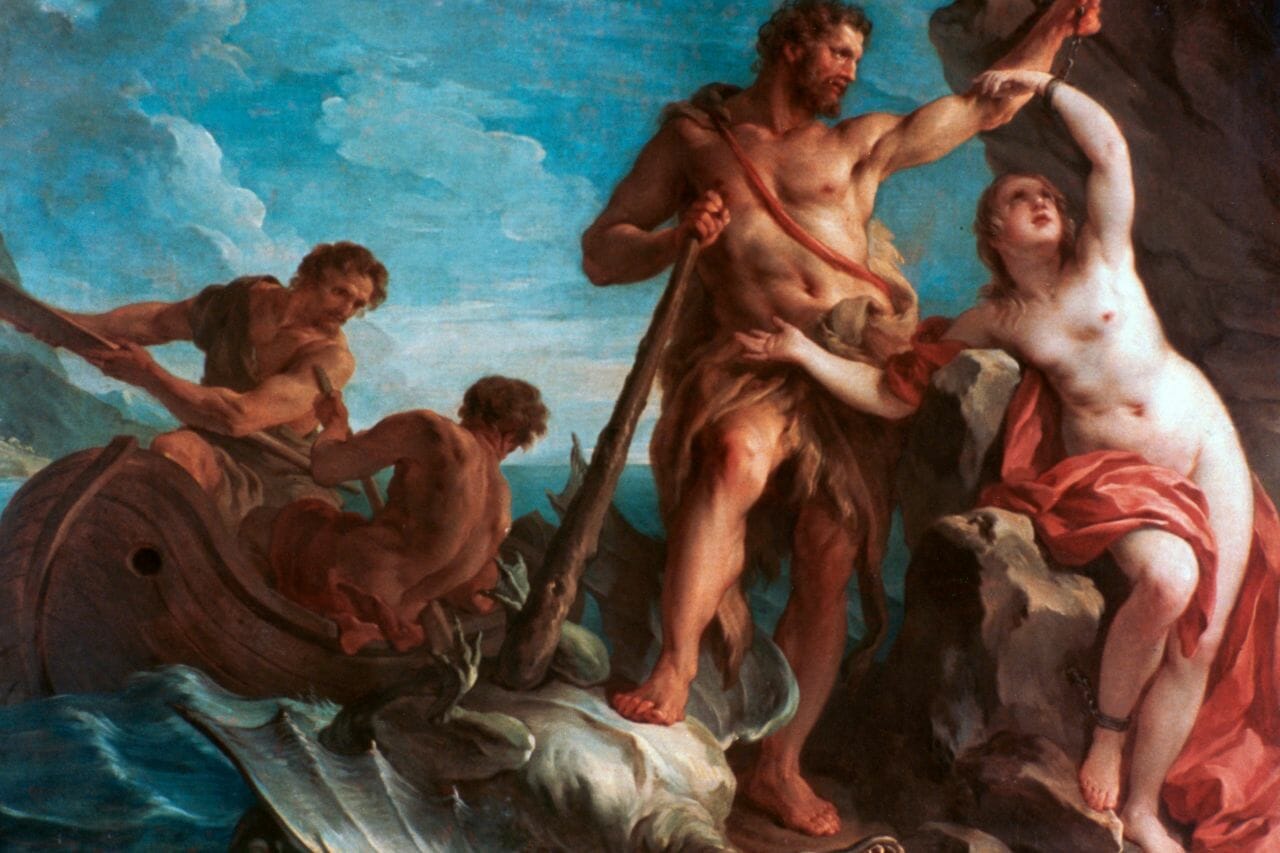
The mighty Heracles, unaware of the deception that would lead to his demise
The two arrived at the Euenos River, where Nessus serves as a ferryman. At that time, the currents on the river were strong, and Heracles was concerned that his wife would have a hard time crossing it. Sensing Heracles' concern, Nessus offered to carry Deianira across the river. Unknown to Heracles, Nessus had become attracted to Deianira's beauty the moment he saw her.
Heracles permitted Nessus to carry his wife across the river because he was familiar with the area and knew how to navigate it as he had done it frequently. He also crossed the river first and planned to wait for Nessus and Deianira.
Stealing
Nessos tried to steal Deianira from Heracles. First, he convinced Heracles to take his offer of carrying Deianira across the river by making him believe that he was just doing them a favor.
Next, Nessos made sure that Heracles had already crossed the river when he tried to carry off Deianira and started galloping away. Unfortunately, Heracles, even from across the river, was quick to shoot an arrow that pierced his chest.
However, when he turned around, he saw Nessus dragging his wife off with the intention of raping her. Heracles shouted warnings at Nessus, but the centaur ignored them and drove off with Deianira, determined to take her away.
With this, Heracles took up his bow and shot an arrow because he anticipated that the centaur and his bride would soon disappear from view. The arrow laced with venom went through Nessus' chest and would eventually cause his death.
Punishment
He was shot by an arrow laced with Hydra venom. This venom came from the Lernaean Hydra, whom Heracles had killed as part of his Twelve Labors. The monster had blood so virulent and venomous in its breath that even the smell of it was fatal. In fact, even before Nessus, Heracles had used this poison to kill multiple centaurs.
The poison on the arrow that Heracles shot was what ultimately killed Nessus. He was shot through his chest and died almost instantly, but not before he tricked Deianira into believing him that the blood on his tunic is a kind of love potion, which can make Hercules love her forever.
Heracles killed Nessus for trying to take away Heracles' wife, Deianira. Nessus tricked Heracles by appearing to offer help but with a different motive. Naturally lustful, Nessus' intention was to carry Deianira off and rape her since he was attracted to her from the moment that he saw her at the riverbanks.
Death and Deception
The lethal Hydra venom has killed numerous centaurs, and it undoubtedly had the same effect on Nessus. As Nessus lay down bleeding with his tunic soaking in blood, he thought to himself that he would not die without vengeance.
With this, he quickly devised a plan and gave his tunic soaked in his blood combined with the Hydra venom to Deianira. He said that his blood was a powerful love potion. At first, Deianira refused to take it, but when Nessus told her that it would make Heracles love her forever and that when the time came that she needed to secure Heracles' love for her, it would help her, she foolishly believed him and accepted it.
This move by Nessus, coupled with Deianira's selfishness and Heracles' carelessness, gave Nessus his desired vengeance even after his death. It might look like Nessus has lost as he was killed almost instantly, but he ultimately won the fight against Heracles.
Shirt of Nessus
The Shirt of Nessus phrase has become a popular idiomatic expression to mean something that cannot be escaped, which will bring disaster, damage, or tragedy. It was a metaphor that paid homage to Nessus and his shirt soaked in his blood with poison. The poison was so intense that even a strong, immortal man like Heracles could not endure it and chose to give up his immortality and die instead.
The Revenge
Soon after, Heracles and Deianira returned to their hometown, where legends about Heracles made him famous. However, it was not only the legends of Heracles' victory that spread but also the news that he had fallen in love with Iole, the daughter of King Eurytus. Upon learning of this, Deianira was heartbroken and started to consider using the tunic that Nessus gave her, but she looked for other alternatives first.
The Love Potion
He got revenge with the help of the foolish Deianira, who believed Nessus when he said that his blood, mixed with the poison from the arrow that Heracles shot, was a love potion. Deianira used it when she heard of the rumor that Heracles was starting to like Iole, the beautiful young daughter of Eurytus. It was even rumored that Heracles even requested for Iole to be his bride, but his proposal was rejected.
Finally, she gave in and presented the bloody tunic to Heracles as a gift. Heracles received it and put it on. Deianeira, meanwhile, unintentionally spilled some of the centaur's blood onto the ground. To her dismay, when the sun rose, it started to fume. As soon as she discovered it was poison, she made an effort to prevent Heracles from donning the tunic. However, it was too late as Heracles has already worn it, and his flesh started to burn.
With the intention to bring back Heracles' affection for her, Deianira smeared the blood on a coat and gave it to Heracles. The contact of the poison with Heracles' skin was enough to cause him excruciating pain, which eventually led to him asking the gods to kill him. Even after his death, Nessus was able to get his revenge on Heracles.
The Result
Heracles lay dying on the ground; the pain was so excruciating that he requested to be burned instead. However, no one wanted to light the pyre. He called out to the gods and asked them to grant him death. When Zeus granted his request, he was changed into a god and dwelt on Mount Olympus while his mortal body was burned at the pyre.
Up on Mount Olympus, Heracles reconciled with Hera, who was very keen on killing him from the moment he was born. As a sign of reconciliation, Hera even gave her daughter Hebe to be Heracles' wife.
Existence in Film, Literature, and Others
The sculpture, entitled "Hercules and the Centaur Nessus," was commissioned in 1594 by Grand Duke Ferdinand I, also known as Ferdinando De' Medici, the Grand Duke of Tuscany. It was initially positioned on a pedestal at the intersection of Canto dei Carnesecchi in Florence, Italy until 1842 when it was transferred to its current location.
However, based on the scene depicted by the sculpture in which Heracles can be seen beating the centaur, it could probably be from one of the 12 labors in which Heracles also fought with centaurs. This is because according to the myth, Nessus was killed by an arrow shot by Heracles as he was across the river rather than by being beaten by Heracles.
Even though Nessus has only limited participation in the stories of the ancient Greeks, his name and character have inspired many others and were included in many works. He appeared in a variety of ways and characters, some for books, film adaptations, and even for video games.
His name has been incorporated into several films about Greek myths, especially if the story is about Hercules. Even the cartoon version of the Disney movie Hercules includes Nessus. He appears as well in other novels like Dante Alighieri's Inferno. In addition, Nessus' name has been used as a character in video games, such as "Titan Quest" in 2006 and "Rise of the Argonauts" in 2008.
Mannerism
The tale of Nessos and Heracles is one of a kind, as the killer was eventually killed by the victim. Their story was so famous that there were several depictions of it, including a marble statue made by the Italian-Flemish artist Giambologna. The statue was created between 1595 and 1599 in the genre called Mannerism, which was a popular art movement in Italy in the middle to late 16th century.
FAQ
What Is the Difference between Centaurs and Lapiths?
Similar to the Centaurs, the Lapiths are a mythological family. They were an Aeolian tribe that originated in Thessaly and went on to live in the Peneus Valley and the Pelion Mountains. They are a distinct race of half-human, half-horse animals descended from Apollo and Stilbe, a river nymph. Other lineages suggest Lapiths and Centaurus were twins; thus, the two were related.
While Centaurus is known to have mated with mares and produced the centaurs, the Lapiths were known as brave fighters who were able to produce Lapith warriors and monarchs like Ixion, Pirithous, Coronus, and Caeneus.
Conclusion
Nessus is one of the centaurs, a famous creature from the stories of the ancient Greeks. He is notable as the cause of the death of the great hero, Heracles, also known as Hercules. What is more unique about their story is that Nessus was able to get the revenge he wanted even after his death. Let us recap what we have discovered about Nessus and the stories involving him.
Nessus was a son of Centaurus, the creature who fathered the race of centaurs. Centaurus is the son of King Ixion and Nephele, a cloud figure who was formed to be in the likeness of Hera. Centaurus was born with birth defects and was forced to live remotely in a place where he befriended mares. He also mated with them, and the race of centaurs was born.
Ixion was the king of the Lapiths, a race similar to centaurs, who are also half-human and half-horse. The two races, Centaurs and Lapiths, are closely related. Hence, the centaurs were invited to the wedding of Pirithous, Ixion's successor and king of the Lapiths.
The centaurs gladly attended the wedding; however, the centaurs have gotten intoxicated, and Eurytion attempted to take away the bride while the other centaurs started to straddle boys and girls at the feast. The chaos caused by the centaurs led to Centauromachy, or the Battle of Lapiths, which Nessus participated. As Theseus helped the Lapiths, the centaurs eventually lost the battle. As a result, the centaurs were expelled from Thessaly.
Having survived Centauromachy, Nessus went on and got a job as a ferryman at Euenos river. This was where he encountered Heracles and Deianira. Nessus lusted after Deianira and planned to take her away, so he offered to carry her across the river. Hercules, who was already on the other side of the river, saw Nessus trying to carry off Deianira and immediately shot an arrow through Nessus' chest.
Not wanting to die without revenge, Nessus tricked Deianira into believing that his poisoned blood was a love potion that could make Heracles love her forever. Deianira believed him and put the poisoned blood on Heracles' coat. Upon contact, it brought him such excruciating pain that Heracles even requested the gods for his death.
The story of Nessus and Heracles only proves how cunning centaurs can be and that even great heroes like Heracles, who was able to survive and successfully complete the 12 labors, were still susceptible to being tricked. The only justifiable reason could be that Heracles trusted his wife so much that he did not even bother to look and check what she gave him.
Nonetheless, Heracles' death seemed unfitting for such a great hero like him, whereas Nessus' cleverness elevated him to become one of the most notable centaurs with the likes of Chiron, the wisest of all centaurs.