Timeless Myths Logo

Explore myths and legends from cultures around the world

Featured

Classical Mythology
Classical Mythology Greek and Roman myths, gods, heroes, and epic tales
Norse Mythology
Norse Mythology Vikings, Asgard, Ragnarok, and the nine realms
Celtic Mythology
Celtic Mythology Irish, Welsh, and Gaelic legends and folklore
Ancient Literature
Ancient Literature Classical texts, translations, and literary analysis

All Mythologies

Arthurian Legends King Arthur, Camelot, the Round Table, and the Holy Grail Egyptian Mythology Pharaohs, pyramids, and ancient Nile deities Japanese Mythology Shinto gods, spirits, and legendary creatures Chinese Mythology Dragons, immortals, and celestial beings Aztec Mythology Mesoamerican gods, rituals, and creation myths

Discover gods and goddesses from every pantheon

Featured

Greek Gods
Greek Gods The Olympians, Titans, and primordial deities
Norse Gods
Norse Gods Odin, Thor, Loki, and the Aesir and Vanir
Egyptian Gods
Egyptian Gods Ra, Osiris, Isis, Anubis, and more
Japanese Gods
Japanese Gods Amaterasu, Susanoo, and Shinto kami

All Gods & Deities

Roman Gods Jupiter, Mars, Venus, and the Roman pantheon Celtic Gods The Tuatha Dé Danann and Celtic deities Aztec Gods Quetzalcoatl, Tezcatlipoca, and Aztec deities Chinese Gods Jade Emperor, Dragon Kings, and celestial beings View All 150+ Deities Browse the complete collection of mythological deities
View all gods & deities

Tales, legends, and character profiles from mythology

Featured

All Stories
All Stories Browse 800+ mythology and history stories
Characters
Characters Profiles of 67 mythological heroes, gods, and villains

All Stories

Mythology Stories Ancient myths and legends retold History Stories Historical tales from ancient civilizations Religion & Culture Religious traditions and cultural beliefs
View all stories

Tools, references, and site information

Featured

Name Generators
Name Generators Generate fantasy and mythology-inspired names
All Articles
All Articles Browse 1,800+ articles on mythology and history

All Resources

About Timeless Myths Learn about this mythology resource Bibliography Sources and references used on this site FAQ Frequently asked questions Contact Get in touch with us
Search
Classical Mythology Greek and Roman myths, gods, heroes, and epic tales Norse Mythology Vikings, Asgard, Ragnarok, and the nine realms Celtic Mythology Irish, Welsh, and Gaelic legends and folklore Arthurian Legends King Arthur, Camelot, the Round Table, and the Holy Grail Egyptian Mythology Pharaohs, pyramids, and ancient Nile deities Japanese Mythology Shinto gods, spirits, and legendary creatures Chinese Mythology Dragons, immortals, and celestial beings Aztec Mythology Mesoamerican gods, rituals, and creation myths Ancient Literature Classical texts, translations, and literary analysis
Greek Gods The Olympians, Titans, and primordial deities Roman Gods Jupiter, Mars, Venus, and the Roman pantheon Norse Gods Odin, Thor, Loki, and the Aesir and Vanir Egyptian Gods Ra, Osiris, Isis, Anubis, and more Celtic Gods The Tuatha Dé Danann and Celtic deities Aztec Gods Quetzalcoatl, Tezcatlipoca, and Aztec deities Japanese Gods Amaterasu, Susanoo, and Shinto kami Chinese Gods Jade Emperor, Dragon Kings, and celestial beings View All 150+ Deities Browse the complete collection of mythological deities View all gods & deities
All Stories Browse 800+ mythology and history stories Characters Profiles of 67 mythological heroes, gods, and villains Mythology Stories Ancient myths and legends retold History Stories Historical tales from ancient civilizations Religion & Culture Religious traditions and cultural beliefs View all stories
Name Generators Generate fantasy and mythology-inspired names All Articles Browse 1,800+ articles on mythology and history About Timeless Myths Learn about this mythology resource Bibliography Sources and references used on this site FAQ Frequently asked questions Contact Get in touch with us
Search Search the entire mythology archive
  1. Classical Mythology
    Pantheon Heroic Age Royal Houses Geographia Facts & Figures Genealogy Bibliography About Classical Myths
  2. Geographia
    Map of Aegean Map of Argolis Map of Italy Mainland Greece Peloponnesus Islands Asia & Africa Italy
  3. Asia & Africa
    Phrygia Mysia Lydia Caria Lycia Cilicia Pontus & Bithynia Colchis Phoenicia Egypt Libya
  4. Libya
    Cyrene Carthage Cherronesus
  5. Carthage

Carthage

Carthage was a Phoenician city in North Africa, which was located near the modern city of Tunis. The original name of the city was probably Byrsa (the "citadel").

Carthage was said to have been founded by Dido, sometimes called Elissa, a Phoenician queen in Tyre. There is some confusion over who her father was. Dido fled with her sister Anna from Tyre, when her brother Pygmalion murdered her husband Sychaeus (she had actually married her uncle).

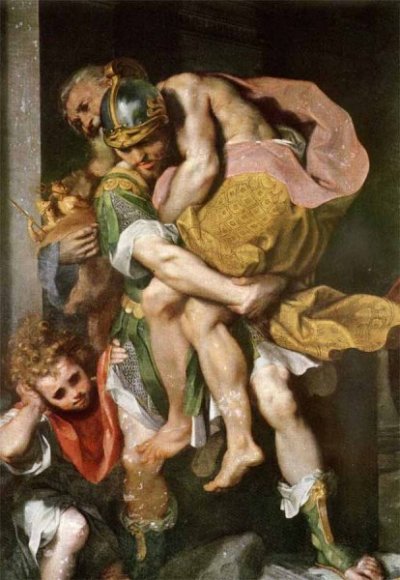
When Aeneas landed in Carthage, Venus (Aphrodite) made Dido fall in love with her son (Aeneas). Aeneas would have married Dido, but the messenger god Mercury (Hermes) had to tell Aeneas that he was not fated to marry Dido and live in Carthage, because his new home was in Italy. When Aeneas left Carthage, Dido was so devastated that she committed suicide. As Aeneas' ships sailed away from the city, the hero saw the burning of a large funeral pyre.

Later on, Aeneas met her shade in the Underworld, and she was reunited with her husband (Sychaeus) and she refused to acknowledge Aeneas' presence; apparently she had not forgiven him for leaving her.

Most of the legends about Aeneas and Dido came from the Roman epic, the Aeneid, written by Vergil, and the poem called Metamorphoses by Ovid. However, it was believed that in an earlier Roman source, Dido killed herself on a funeral pyre in order to escape a marriage to Iarbas or Hirbal, a Libyan king who would invade Carthage if the queen did not marry him. Obviously, Vergil changed the legend to suit his epic. (See the Aeneid about Aeneas and Dido.)

Historically, Carthage was a great maritime city, known for its navy. Also, Carthage was a city-state, governed by a system of oligarchy, not ruled by a monarch. The Carthaginians founded cities in Sicily, Sardinia, Corsica and Spain.

Their traditional enemies were the Greek cities in Sicily, including Syracuse, as well as Rome itself. Carthage and Rome were involved in three wars, known as the Punic Wars. Hannibal was the most distinguished general in the Second Punic War, who defeated several Roman armies in Italy, but he finally lost the war in the Battle of Zama, a site south-east of Carthage, in 202 BC.

Related Information

Name

Carthage, Carthago (Latin);
Καρχηδών (Greek).

Founder

Dido

Rulers

Dido.

Jimmy Joe Timeless Myths

By Jimmy Joe

Libya:

  • • Cyrene
  • • Carthage
  • • Cherronesus
Siege of Carthage: The Rise and Fall of a Classical City

Siege of Carthage: The Rise and Fall of a Classical City

The inevitable decline of the Phoenicians during the siege of Carthage in 146 BC marked a crucial time in world history. Knowing Carthage’s superior power in times of war, you would wonder how ancient Rome deliberately pursued an unprecedented bat...

January 11th, 2022 • Timeless Myths
Why Did the Phoenicians Establish Carthage and How Did Carthage Grow?

Why Did the Phoenicians Establish Carthage and How Did Carthage Grow?

The Phoenicians established Carthage to serve as a trading post on the western Mediterranean. The strategic location of Carthage meant that all major trading routes went through it. But how was the city founded and how did it help the Phoenician e...

January 11th, 2022 • Timeless Myths
Carthage: The Rise and Fall of a Phoenician Trading Powerhouse

Carthage: The Rise and Fall of a Phoenician Trading Powerhouse

Situated on the eastern shore of the Lake of Tunis in what is now Tunisia is Carthage. This city was at one time the capital of ancient Carthaginian society. Carthage grew out of a Punic realm that ruled parts of the Mediterranean in the first mil...

January 11th, 2022 • Timeless Myths
Tyre

Tyre

Tyre (modern Sur) was a principal coastal city of southern Phoenicia. The Greeks often confused Tyre with Sidon, its northern neighbour. Sidon was a colony of Tyre. Its city was built on the island and the mainland. Like Byblus, it was famous for ...

August 8th, 1999 • Jimmy Joe
The Punic Wars: The Battle for the Ancient Mediterranean

The Punic Wars: The Battle for the Ancient Mediterranean

Many people have surely heard of names like “Hannibal” and “Carthage” from high school history, but the colossal legacy of the Punic Wars has been lost in introductory Roman history. The three conflicts led to the destruction of Carthage’s ancient...

January 11th, 2022 • Timeless Myths
The Greatest Carthaginian Generals in History: Training and Deeds

The Greatest Carthaginian Generals in History: Training and Deeds

Carthaginian generals were fierce military leaders in the ancient world who led Carthage during its shift from a small trade city to one of the most powerful empires of its time. These generals led their armies to conquer new lands and fight battl...

January 11th, 2022 • Timeless Myths
Phoenicia

Phoenicia

Phoenicia was a narrow coastal region of Canaan. Phoenicia was famous for their skilled and brave merchant sailors, and they founded cities as far west as north-west Africa and the southern coast of Spain. Phoenicia was named after Phoenix, son of...

August 8th, 1999 • Jimmy Joe
Syracuse

Syracuse

Syracuse was one of the Greek cities in Sicily. The city was found by the Corinthians in 734 BC, located on the east coast, partly on the island of Ortygia, flanked by the Lesser Harbour and Great Harbour. Syracuse proper was on the island of Orty...

February 4th, 2008 • Jimmy Joe
Why Were the Punic Wars Fought and What Happened After the Wars?

Why Were the Punic Wars Fought and What Happened After the Wars?

The Punic wars were serial clashes that occurred between the Carthaginians and the Romans. The reason for the conflicts was that both Empires wanted to establish their superiority. It’s also interesting to think that the two empires fought three d...

January 11th, 2022 • Timeless Myths
Aeneid

Aeneid

The Aeneid was written by a Rome's greatest poet named Virgil or Vergil (full name was Publius Vergilius Maro) and lived in 70-19 BC. Although Virgil wrote a couple of other works, it was the Aeneid which brought him fame after his death, during t...

March 31st, 2004 • Jimmy Joe
Timeless Myths

Exploring mythology and legends from around the world.

Explore Myths

All Stories Characters All Articles Search Site Map

Mythologies

Norse Mythology Classical Mythology Celtic Mythology Arthurian Legends Mythology Gods Ancient Literature

About Us

Introduction About Jimmy Bibliography FAQs Retro Version

Resources

Timeless Myths All Stories All Articles Characters
© 1999-2026 Timeless Myths • Copyright • Privacy Policy • Cookie Policy • Contact
Follow us: