Timeless Myths Logo

Explore myths and legends from cultures around the world

Featured

Classical Mythology
Classical Mythology Greek and Roman myths, gods, heroes, and epic tales
Norse Mythology
Norse Mythology Vikings, Asgard, Ragnarok, and the nine realms
Celtic Mythology
Celtic Mythology Irish, Welsh, and Gaelic legends and folklore
Ancient Literature
Ancient Literature Classical texts, translations, and literary analysis

All Mythologies

Arthurian Legends King Arthur, Camelot, the Round Table, and the Holy Grail Egyptian Mythology Pharaohs, pyramids, and ancient Nile deities Japanese Mythology Shinto gods, spirits, and legendary creatures Chinese Mythology Dragons, immortals, and celestial beings Aztec Mythology Mesoamerican gods, rituals, and creation myths

Discover gods and goddesses from every pantheon

Featured

Greek Gods
Greek Gods The Olympians, Titans, and primordial deities
Norse Gods
Norse Gods Odin, Thor, Loki, and the Aesir and Vanir
Egyptian Gods
Egyptian Gods Ra, Osiris, Isis, Anubis, and more
Japanese Gods
Japanese Gods Amaterasu, Susanoo, and Shinto kami

All Gods & Deities

Roman Gods Jupiter, Mars, Venus, and the Roman pantheon Celtic Gods The Tuatha Dé Danann and Celtic deities Aztec Gods Quetzalcoatl, Tezcatlipoca, and Aztec deities Chinese Gods Jade Emperor, Dragon Kings, and celestial beings View All 150+ Deities Browse the complete collection of mythological deities
View all gods & deities

Tales, legends, and character profiles from mythology

Featured

All Stories
All Stories Browse 800+ mythology and history stories
Characters
Characters Profiles of 67 mythological heroes, gods, and villains

All Stories

Mythology Stories Ancient myths and legends retold History Stories Historical tales from ancient civilizations Religion & Culture Religious traditions and cultural beliefs
View all stories

Tools, references, and site information

Featured

Name Generators
Name Generators Generate fantasy and mythology-inspired names
All Articles
All Articles Browse 1,800+ articles on mythology and history

All Resources

About Timeless Myths Learn about this mythology resource Bibliography Sources and references used on this site FAQ Frequently asked questions Contact Get in touch with us
Search
Classical Mythology Greek and Roman myths, gods, heroes, and epic tales Norse Mythology Vikings, Asgard, Ragnarok, and the nine realms Celtic Mythology Irish, Welsh, and Gaelic legends and folklore Arthurian Legends King Arthur, Camelot, the Round Table, and the Holy Grail Egyptian Mythology Pharaohs, pyramids, and ancient Nile deities Japanese Mythology Shinto gods, spirits, and legendary creatures Chinese Mythology Dragons, immortals, and celestial beings Aztec Mythology Mesoamerican gods, rituals, and creation myths Ancient Literature Classical texts, translations, and literary analysis
Greek Gods The Olympians, Titans, and primordial deities Roman Gods Jupiter, Mars, Venus, and the Roman pantheon Norse Gods Odin, Thor, Loki, and the Aesir and Vanir Egyptian Gods Ra, Osiris, Isis, Anubis, and more Celtic Gods The Tuatha Dé Danann and Celtic deities Aztec Gods Quetzalcoatl, Tezcatlipoca, and Aztec deities Japanese Gods Amaterasu, Susanoo, and Shinto kami Chinese Gods Jade Emperor, Dragon Kings, and celestial beings View All 150+ Deities Browse the complete collection of mythological deities View all gods & deities
All Stories Browse 800+ mythology and history stories Characters Profiles of 67 mythological heroes, gods, and villains Mythology Stories Ancient myths and legends retold History Stories Historical tales from ancient civilizations Religion & Culture Religious traditions and cultural beliefs View all stories
Name Generators Generate fantasy and mythology-inspired names All Articles Browse 1,800+ articles on mythology and history About Timeless Myths Learn about this mythology resource Bibliography Sources and references used on this site FAQ Frequently asked questions Contact Get in touch with us
Search Search the entire mythology archive
  1. Classical Mythology
    Pantheon Heroic Age Royal Houses Geographia Facts & Figures Genealogy Bibliography About Classical Myths
  2. Royal Houses
    Aeolids House of Elis & Calydon Houses of Argolis House of Pelops Minoan Crete House of Thebes House of Sparta House of Athens Heraclids House of Troy Tales of Rome
  3. House of Pelops
    Tantalus Pelops Atreus and Thyestes Agamemnon Orestes Tisamenus Pittheus Alcathous
  4. Pelops

Pelops

Pelops (Πñλοψ) was the son of Tantalus and brother of Niobe.
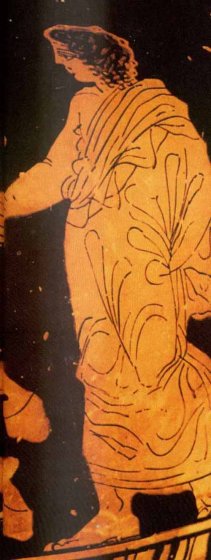
Pelops

Pelops
Amphora with red figures, 4th
century BC
Metropolitan Museum of Art,
New York

His father had killed him and served his flesh to the gods, hoping to fool the gods. The gods punished Tantalus and restored Pelops to life. Demeter, who had eaten part of Pelops' shoulder blade, replaced it with ivory shaped like his shoulder blade.

Like Ganymede, son of Tros, king of Troy, Tantalus' son was taken from home by the sea god Poseidon, who desired Pelops so much that he took the youth to Olympus in his golden chariot.

When Pelops reached manhood, he heard that King Oenomaüs (Oenomaus) of Pisa, the son of Ares and Asterope, had challenged several suitors to a chariot race, offering his daughter Hippodaemia's hand in marriage as the prize. However, any suitor who lost the race against the king would also forfeit his life. Oenomaüs had received a pair of swift horses from the war god. The proof of how swift the horses were was that the spectators could count the number of headless bodies that littered the race track.

When Pelops was restored to life, he became a beloved of Poseidon because of his beauty. According to Apollodorus, Poseidon gave him a winged chariot that could be driven across the sea without ever wetting its axles. But according to Pindar, the pair of horses were winged; the chariot itself was made out of gold.

Pelops went to Pisa and decided to bribe the king's charioteer, Myrtilus, into sabotaging Oenomaüs' chariot. The king was killed as the axle of his wheel broke, dragging the king to his death. Pelops won the race and married Hippodaemia.

Pindar (and other early writers) said that it was Poseidon's gift which won the race, not the treachery. The earliest mention of Myrtilus' treachery is found in Pherecydes in the 5th century BC. Pindar wrote that Poseidon gave him winged horses and a chariot of gold, but Apolldorus wrote that Pelops received a winged chariot.

When Myrtilus sought his rewards for helping Pelops to win the race, Pelops flung him out of the chariot, off the cliff overlooking the sea. Dying, Myrtilus cursed him and his family for his treachery. The sea he drowned in was named after him, the Sea of Myrto.

A slightly different version from Apollodorus, says that Myrtilus had tried to rape Hippodaemia, when Pelops went to fetch a drink from a small stream. Upon hearing a cry from his new wife, Pelops angrily threw Myttilus into the Myrtoan Sea. Myrtilus cursed Pelops as he fell.

To atone for the murder, the smith-god Hephaestus purified him. Myrtilus was the son of Hermes, so fearing reprisal from the god, Pelops set out to appease Hermes by instituting the god's worship in the Peloponnese. Pelops also erected a burial mound near the race-course at the Olympia. It was said that Myrtilus' ghost frequently spooked the horses at the races during the Olympic Games. Hermes may have placed his son in the sky as the constellation of the Charioteer.

Pelops became one of the most powerful kings of his time. Pelops conquered Elis, Achaea and Arcadia, and renamed the entire peninsula from Apia to Peloponnesus or Peloponnese.

Pelops and Hippodaemia had many children. His daughters, Astydameia, Anaxo, Nicippe and Lysidice all married the sons of Perseus, king of Tiryns and Mycenae. His sons Pittheus and Troezen ruled in Troezen, while Alcathous succeeded Megareus in Megara. His sons Atreus and Thyestes ruled Midea in Argolis, until Eurystheus died.

Pelops also had an illegitimate son named Chrysippus by the nymph Astyoche or Axioche, daughter of Danaüs. It was said that Hippodaemia was jealous because of Pelops' love and attention to Chrysippus, instead of their sons. She urged Atreus and Thyestes to murder her step-son.

A different version says that Laius, king of Thebes, abducted Chrysippus. Laius had fallen in love with the young boy. The Theban king abducted and raped Chrysippus. In shame of the rape, Chrysippus killed himself by falling upon a sword. Pelops cursed Laius, and that led to the Theban king's death.

Related Information

Name

Pelops, Πñλοψ.

Eponym of Peloponnesus.

Source

The Odyssey, written by Homer.

The Great Eoiae was possibly written by Hesiod.

Nostoi ("The Returns") was part of the Epic Cycle.

Fabulae, written by Hyginus.

Olympian I was written by Pindar.

Description of Greece was written by Pausanias.

Library of History was written by Diodorus Siculus.

Related Articles

Tantalus, Atreus, Thyestes, Perseus.

Jimmy Joe Timeless Myths

By Jimmy Joe

House of Pelops:

  • • Tantalus
  • • Pelops
  • • Atreus and Thyestes
  • • Agamemnon
  • • Orestes
  • • Tisamenus
  • • Pittheus
  • • Alcathous
House of Pelops

House of Pelops

Another important family arrived in Greece. Pelops won a wife and kingdom in a chariot race in Pisa, and his children and descendants would establish an important dynasty in Mycenae and Argos. For Niobe, see Wrath of Heaven, Folly of Niobe.House o...

August 23rd, 2003 • Jimmy Joe
House of Pelops

House of Pelops

Children of Pelops House of AtreusChildren of Pelops The family tree of Pelops displays his descendants, such as Agamemnon, Menelaus and Orestes. Several of his daughters were married into Perseus' family, so also see the House of Perseus. You wil...

July 28th, 1999 • Jimmy Joe
Tantalus

Tantalus

Tantalus (Τάνταλος) was the king of Sipylus, in Lydia. Tantalus was the son of Zeus and Pluto, daughter of Cronus. Tantalus was married to the Oceanid Dione, and was the father of Pelops and a daughter, Niobe. The gods would often invite him to di...

August 23rd, 2003 • Jimmy Joe
Pittheus

Pittheus

King of Troezen. Pittheus was the son of Pelops and Hippodaemia. He was the brother of Troezen, Atreus, Thyestes, Alcathous, and several sisters. Originally the kingdom of Troezen was two separate towns, Hypereia and Antheia, when Pittheus and Tro...

August 23rd, 2003 • Jimmy Joe
Peleus

Peleus

A king of Phthia, in Thessaly. Peleus (Πηλεύς) was the son of Aeacus (Aiacos), king of Aegina, and Endeïs. He and his brother Telamon plotted to kill their half-brother Phocus, son of Aeacus by the Nereïd (Nereid) Psamathe, because he excelled in ...

April 9th, 1999 • Jimmy Joe
Atreus and Thyestes

Atreus and Thyestes

During Perseus' reign, Pelops was king of Pisa while his wife Hippodaemia bore him many children, including Pittheus (king of Troezen), Atreus (Ἀτρεύς) and Thyestes (Θυέσης). Pelops cleverly married most of his daughters to the sons of Perseus: As...

August 23rd, 2003 • Jimmy Joe
Tyndareüs

Tyndareüs

King of Sparta. Tyndareüs (Τυνδάρεως) was the son of Oebalus and Gorgophone, who was daughter of Perseus and Andromeda. Tyndareüs was the brother of Icarius and Arene. He was also the half-brother of Hippocoön, his rival. Tyndareüs succeeded his f...

August 17th, 2002 • Jimmy Joe
Lapith House of Thessaly

Lapith House of Thessaly

The family tree shown above lists the royal family of the Lapiths in Thessaly. The Lapiths ruled around the valley of the Peneius River in Thessaly. This family were the descendants of the river god Peneius and his wife Creusa, a daughter of Ge (G...

July 28th, 1999 • Jimmy Joe
Aetolus

Aetolus

Aetolus' reign in Elis was also short. Aetolus (Αἰτωλός) participated in the funeral games of Azan. In a chariot race, Aetolus accidentally ran over and trampled Apis, possibly the king of Argos. Either Aetolus fled from Elis, or he was banished f...

May 12th, 2001 • Jimmy Joe
Neleus

Neleus

Neleus (Νηλεύς) was the son of Tyro and Poseidon, and the twin brother of Pelias. When Pelias drove him from Iolcus, Neleus migrated south, where he was warmly welcomed by his cousin Aphareus. Neleus received most of the coastal land in Messenia f...

April 27th, 1999 • Jimmy Joe
Timeless Myths

Exploring mythology and legends from around the world.

Explore Myths

All Stories Characters All Articles Search Site Map

Mythologies

Norse Mythology Classical Mythology Celtic Mythology Arthurian Legends Mythology Gods Ancient Literature

About Us

Introduction About Jimmy Bibliography FAQs Retro Version

Resources

Timeless Myths All Stories All Articles Characters
© 1999-2026 Timeless Myths • Copyright • Privacy Policy • Cookie Policy • Contact
Follow us: