Timeless Myths Logo
Aphrodite Apollo Ares Artemis Athena Atlas Coeus Crius Cronus Demeter Dionysus Gaia Hades Hephaestus Hera Hermes Hestia Hyperion Iapetus Mnemosyne Oceanus Phobos Phoebe Poseidon Prometheus Rhea Tethys Themis Uranus Zeus
Bacchus Ceres Diana Juno Jupiter Mars Mercury Minerva Neptune Pluto Venus Vesta Vulcan
Amun Anubis Aten Atum Babi Bastet Bes Geb Hapi hathor heqet Horus Isis Khepri Khnum Khonsu Maat Nephthys Nut Osiris Ptah Ra Seshat Seth Shu Sobek Thoth
Alfheim Baldur Freya Freyr Frigg Heimdallr Helheim Idun Jotunheim Loki Nerthus Njord Odin Thor Tyr
Aengus Arawn Badb Brigid Cailleach Ceridwen Cernunnos Cu Chulainn Dagda Danu Gwydion Herne the Hunter Lugh Medb Morrigan Neit Nuada Taliesin Taranis
Chalchiuhtlicue Coatlicue Huitzilopochtli Mictlantecuhtli Mixcoatl Ometeotl Quetzalcoatl Tezcatlipoca Tlaloc Tonatiuh Xipe Totec Xochiquetzal Xolotl
Amaterasu Ame no Uzume Benzaiten Bishamonten Daikokuten Ebisu Fujin Fukurokuju Inari Izanagi Kagutsuchi Raijin Susanoo Tsukuyomi
Caishen Cangjie Dragon King Eight Immortals Erlang Shen Fuxi Guanyin Hou Yi Huxian Jade Emperor King Yama Leizi Lu-ban Mazu Nezha Nuwa Pangu Shennong Sun Wukong Xiwangmu Yue Lao Zhong Kui
Norse Classical Celtic Arthurian
Literature Stories Names
Aphrodite Apollo Ares Artemis Athena Atlas Coeus Crius Cronus Demeter Dionysus Gaia Hades Hephaestus Hera Hermes Hestia Hyperion Iapetus Mnemosyne Oceanus Phobos Phoebe Poseidon Prometheus Rhea Tethys Themis Uranus Zeus
Bacchus Ceres Diana Juno Jupiter Mars Mercury Minerva Neptune Pluto Venus Vesta Vulcan
Amun Anubis Aten Atum Babi Bastet Bes Geb Hapi hathor heqet Horus Isis Khepri Khnum Khonsu Maat Nephthys Nut Osiris Ptah Ra Seshat Seth Shu Sobek Thoth
Alfheim Baldur Freya Freyr Frigg Heimdallr Helheim Idun Jotunheim Loki Nerthus Njord Odin Thor Tyr
Aengus Arawn Badb Brigid Cailleach Ceridwen Cernunnos Cu Chulainn Dagda Danu Gwydion Herne the Hunter Lugh Medb Morrigan Neit Nuada Taliesin Taranis
Chalchiuhtlicue Coatlicue Huitzilopochtli Mictlantecuhtli Mixcoatl Ometeotl Quetzalcoatl Tezcatlipoca Tlaloc Tonatiuh Xipe Totec Xochiquetzal Xolotl
Amaterasu Ame no Uzume Benzaiten Bishamonten Daikokuten Ebisu Fujin Fukurokuju Inari Izanagi Kagutsuchi Raijin Susanoo Tsukuyomi
Caishen Cangjie Dragon King Eight Immortals Erlang Shen Fuxi Guanyin Hou Yi Huxian Jade Emperor King Yama Leizi Lu-ban Mazu Nezha Nuwa Pangu Shennong Sun Wukong Xiwangmu Yue Lao Zhong Kui
Norse Classical Celtic Arthurian
Literature Stories Names
  1. Classical Literature
    Greece Rome Other Ancient Civilizations Timeline of Classical Literature Alphabetical List of Authors Index of Individual Works Index of Important Characters Sources About Us
  2. Greece
    Homer Hesiod Aesop Sappho Pindar Aeschylus Sophocles Euripides Aristophanes Menander Apollonius of Rhodes
  3. Hesiod
    Works and Days Theogony
  4. Works and Days
    Works and Days

Works and Days

(Didactic Poem, Greek, c. 700 BCE, 828 lines)

Introduction

"Works and Days" (Gr:"Erga kaí Hemérai"; Lat: “Opera et Dies”) is a didactic poem written by the very early ancient Greek poet Hesiod. It was probably written around 700 BCE or earlier and is the first example we have of Greek didactic poetry (poetry that emphasizes instructional and informative qualities).

It embodies the experiences of his daily life and work, forming a sort of shepherd's calendar, interwoven with episodes of fable, allegory, advice and personal history. It may have been written against a background of an agrarian crisis in mainland Greece, which inspired a wave of documented colonizations in search of new land.
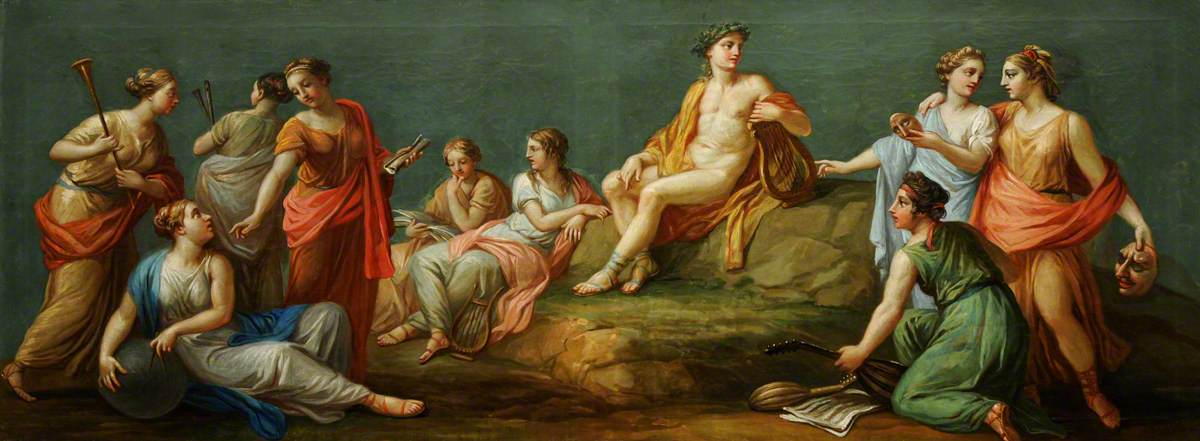
Muses

Muses

Synopsis - Works and Days Summary

After an opening invocation of Zeus and the Muses, the first portion of the poem is an ethical enforcement of honest labour and dissuasion from strife and idleness. The second section consists of hints and rules on agricultural husbandry. The third part is a religious calendar of the months, with remarks on the days most lucky or the contrary for rural or nautical employments.

The connecting link of the whole poem is the author's advice to his brother, Perses, who appears to have bribed the corrupt judges to deprive Hesiod of his already scanty inheritance, and is content to while away his time in idle pursuits and accept Hesiod's additional charity.

Specific episodes which rise above the rather prosaic average include an early account of the "Five Ages of the World"; a much admired description of winter; the earliest known fable in Greek literature, that of "The Hawk and the Nightingale"; and the stories, also described in his "Theogony", of Prometheus stealing fire from Zeus and the resulting punishment of man when Pandora releases all the evils of mankind from her jar (referred to in modern accounts as "Pandora's box"), with only Hope left trapped inside.

Analysis

The poem revolves around two general truths: that labour is the universal lot of Man, but that he who is willing to work will always get by. Hesiod prescribes a life of honest labour (which he regards as the source of all good) and attacks idleness, suggesting that both the gods and men hate the idle. Within the poem's advice and wisdom, Hesiod also pursues his own agenda to some extent, attacking unjust judges (such as those who decided in favour of Perses, Hesiod's less-than-responsible brother, who was granted an inheritance by the ruling of these unjust judges) and the practice of usury.
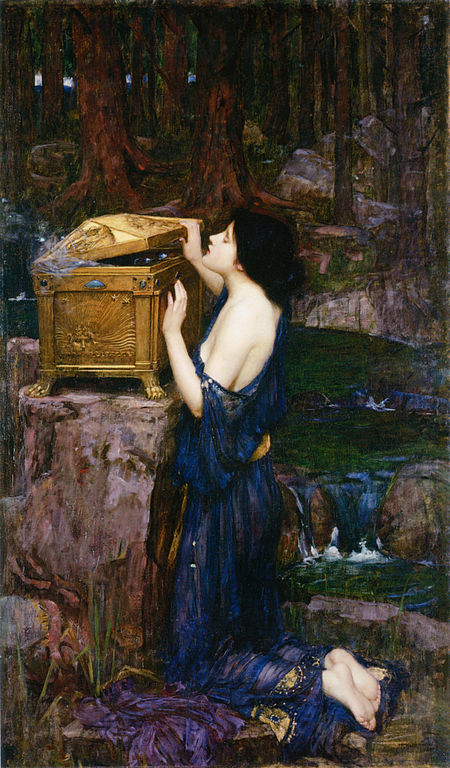
pandora's box by John William

Pandora's Box by John William

The poem is also the first extant account of the successive ages of mankind, known as the "Five Ages of Man". In Hesiod's account, these are: the Golden Age (in which men lived among and freely mingled with the gods, and peace, harmony and abundance prevailed); the Silver Age (in which men lived for one hundred years as infants, followed by just a short strife-filled time as grown adults, an impious race of men which Zeus destroyed because they refused to worship the gods); the Bronze Age (in which men were hard and violent and lived only for war, but were undone by their own violent ways, relegated to the darkness of the Underworld); the Heroic Age (in which men lived as noble demigods and heroes, like those who fought at Thebes and Troy, and who went to Elysium on their deaths); and the Iron Age (Hesiod's own time, in which the gods have foresaken humanity, and in which man lives an existence of toil, misery, shamelessness and dishonour).

Resources

  • English translation by Hugh Evelyn-White (Internet Sacred Text Archive)

  • Greek version with word-by-word translation (Perseus Project)

By Ancient Literature

Hesiod:

  • • Works and Days
  • • Theogony
Hesiod

Hesiod

(Didactic Poet, Greek, c. 750 – c. 700 BCE)Introduction Hesiod is often paired with his near contemporary Homer as one of the earliest Greek poets whose work has survived. He is considered the creator of didactic poetry (instructive and moralizing...

January 1st, 2025 • Ancient Literature
The Georgics

The Georgics

(Didactic Poem, Latin/Roman, 29 BCE, 2,188 lines)Introduction "The Georgics" (Gr: "Georgicon") is a didactic poem, in the tradition of Hesiod, by the Roman poet Vergil. It was Vergil's second major work, published in 29 BCE, after The Bucolics (Ec...

October 25th, 2024 • Timeless Myths
Pythian Ode 1

Pythian Ode 1

(Lyric Poem, Greek, 470 BCE, 100 lines)Introduction "Pythian Ode 1" is one of the better known of the many victory poems (or "epinicia") of the ancient Greek lyric poet Pindar. Like "Olympic Ode 1", it celebrates a victory of the Sicilian tyrant H...

January 1st, 2025 • Ancient Literature
Theogony

Theogony

(Didactic Poem, Greek, c. 700 BCE, 1,022 lines)Introduction - What is Theogony and why is it important? The "Theogony" (Gr: "Theogonia") of the ancient Greek poet Hesiod is a didactic or instructional poem describing the origins of the cosmos and ...

January 1st, 2025 • Ancient Literature
The Iliad

The Iliad

(Epic Poem, Greek, c. 750 BCE, 15,693 linesIntroduction - Who wrote the Iliad "The Iliad" (Gr: "Iliás") is an epic poem by the ancient Greek poet Homer, which recounts some of the significant events of the final weeks of the Trojan War and the Gre...

January 1st, 2025 • Ancient Literature
Bucolics (Eclogues)

Bucolics (Eclogues)

(Pastoral Poem, Latin/Roman, 37 BCE, 829 lines)Introduction "The Bucolics" (Lat: "Bucolica"), also known as "The Eclogues" (Lat: "Eclogae"), is a collection of ten pastoral poems by the Roman poet Vergil. It was Vergil's first major work, publishe...

October 25th, 2024 • Timeless Myths
Theogony of Hesiod

Theogony of Hesiod

Hesiod was a Boeotian poet of either the 8th or 7th century BC, who is believed by many to have flourished not long after Homer. Hesiod wrote two poems, Works and Days and the Theogony. Both works can actually be combined to form an adequate Creat...

April 9th, 1999 • Jimmy Joe
The Odyssey

The Odyssey

(Epic Poem, Greek, c. 725 BCE, 12,110 lines)Introduction “The Odyssey” (Gr: “Odysseia”) is the second of the two epic poems attributed to the ancient Greek poet Homer (the first being “The Iliad”), and usually considered the second extant work of ...

January 1st, 2025 • Ancient Literature
The Trachiniae

The Trachiniae

(Tragedy, Greek, c. 440 BCE, 1,278 lines)Introduction “The Trachiniae” (Gr: “Trachiniai”, also known as “The Trachinian Women”, “The Women of Trachis” or “The Maidens of Trachis”) is a tragedy by the ancient Greek playwright Sophocles. It was prob...

January 1st, 2025 • Ancient Literature
Invocation of the Muse Odyssey: The Author's Prayer

Invocation of the Muse Odyssey: The Author's Prayer

Invocation of the muse Odyssey, in Greek mythology, refers to the act of the author, Homer, requesting the muse to give him inspiration and blessing as he begins to write his work of literature, The Odyssey. Read on to discover more details about ...

February 16th, 2024 • Ancient Literature
Timeless Myths

Exploring mythology and legends from around the world.

Explore Myths

All Stories Characters All Articles Search Site Map

Mythologies

Norse Mythology Classical Mythology Celtic Mythology Arthurian Legends Mythology Gods Ancient Literature

About Us

Introduction About Jimmy Bibliography FAQs Retro Version

Resources

Timeless Myths All Stories All Articles Characters
© 1999-2026 Timeless Myths • Copyright • Privacy Policy • Cookie Policy • Contact
Follow us: