Timeless Myths Logo

Explore myths and legends from cultures around the world

Featured

Classical Mythology
Classical Mythology Greek and Roman myths, gods, heroes, and epic tales
Norse Mythology
Norse Mythology Vikings, Asgard, Ragnarok, and the nine realms
Celtic Mythology
Celtic Mythology Irish, Welsh, and Gaelic legends and folklore
Ancient Literature
Ancient Literature Classical texts, translations, and literary analysis

All Mythologies

Arthurian Legends King Arthur, Camelot, the Round Table, and the Holy Grail Egyptian Mythology Pharaohs, pyramids, and ancient Nile deities Japanese Mythology Shinto gods, spirits, and legendary creatures Chinese Mythology Dragons, immortals, and celestial beings Aztec Mythology Mesoamerican gods, rituals, and creation myths

Discover gods and goddesses from every pantheon

Featured

Greek Gods
Greek Gods The Olympians, Titans, and primordial deities
Norse Gods
Norse Gods Odin, Thor, Loki, and the Aesir and Vanir
Egyptian Gods
Egyptian Gods Ra, Osiris, Isis, Anubis, and more
Japanese Gods
Japanese Gods Amaterasu, Susanoo, and Shinto kami

All Gods & Deities

Roman Gods Jupiter, Mars, Venus, and the Roman pantheon Celtic Gods The Tuatha Dé Danann and Celtic deities Aztec Gods Quetzalcoatl, Tezcatlipoca, and Aztec deities Chinese Gods Jade Emperor, Dragon Kings, and celestial beings View All 150+ Deities Browse the complete collection of mythological deities
View all gods & deities

Tales, legends, and character profiles from mythology

Featured

All Stories
All Stories Browse 800+ mythology and history stories
Characters
Characters Profiles of 67 mythological heroes, gods, and villains

All Stories

Mythology Stories Ancient myths and legends retold History Stories Historical tales from ancient civilizations Religion & Culture Religious traditions and cultural beliefs
View all stories

Tools, references, and site information

Featured

Name Generators
Name Generators Generate fantasy and mythology-inspired names
All Articles
All Articles Browse 1,800+ articles on mythology and history

All Resources

About Timeless Myths Learn about this mythology resource Bibliography Sources and references used on this site FAQ Frequently asked questions Contact Get in touch with us
Search
Classical Mythology Greek and Roman myths, gods, heroes, and epic tales Norse Mythology Vikings, Asgard, Ragnarok, and the nine realms Celtic Mythology Irish, Welsh, and Gaelic legends and folklore Arthurian Legends King Arthur, Camelot, the Round Table, and the Holy Grail Egyptian Mythology Pharaohs, pyramids, and ancient Nile deities Japanese Mythology Shinto gods, spirits, and legendary creatures Chinese Mythology Dragons, immortals, and celestial beings Aztec Mythology Mesoamerican gods, rituals, and creation myths Ancient Literature Classical texts, translations, and literary analysis
Greek Gods The Olympians, Titans, and primordial deities Roman Gods Jupiter, Mars, Venus, and the Roman pantheon Norse Gods Odin, Thor, Loki, and the Aesir and Vanir Egyptian Gods Ra, Osiris, Isis, Anubis, and more Celtic Gods The Tuatha Dé Danann and Celtic deities Aztec Gods Quetzalcoatl, Tezcatlipoca, and Aztec deities Japanese Gods Amaterasu, Susanoo, and Shinto kami Chinese Gods Jade Emperor, Dragon Kings, and celestial beings View All 150+ Deities Browse the complete collection of mythological deities View all gods & deities
All Stories Browse 800+ mythology and history stories Characters Profiles of 67 mythological heroes, gods, and villains Mythology Stories Ancient myths and legends retold History Stories Historical tales from ancient civilizations Religion & Culture Religious traditions and cultural beliefs View all stories
Name Generators Generate fantasy and mythology-inspired names All Articles Browse 1,800+ articles on mythology and history About Timeless Myths Learn about this mythology resource Bibliography Sources and references used on this site FAQ Frequently asked questions Contact Get in touch with us
Search Search the entire mythology archive

Acamas: The Son of Theseus Who Fought and Survived the Trojan War

greek-mythology

Acamas was born to King Theseus and Queen Phaedra of Athens along with his brother Demophon. He was said to be skillful and intelligent in warfare and undertook many adventures by himself or with his brother.

Due to his skill and war intelligence, he was chosen as one of the elite soldiers to enter the Trojan Horse and take the city. This article will cover the life of Acamas, his family, and some of his adventures.
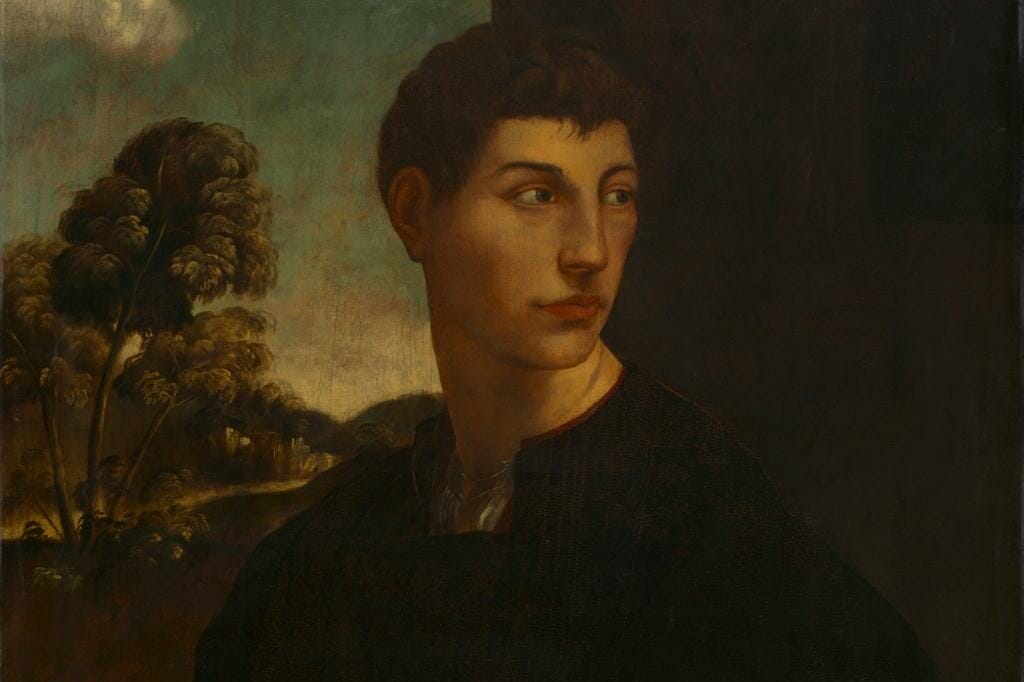
Acamas, son of Theseus and Phaedra, depicted as a young Greek warrior

The Adventures of Acamas

According to Greek mythology, Acamas and Diomedes, the Lord of War, were sent to negotiate the return of Helen of Sparta after Paris of Troy had abducted her to Troy. This venture proved unsuccessful as Paris refused to allow Helen to leave, thus the envoy of Acamas came back empty-handed.

This initiated the Trojan war as King Menelaus of Sparta, the rightful husband of Helen, wanted her back at all costs. While Acamas was at Troy negotiating the release of Helen, he fell in love with Laodice, the daughter of King Priam.

The couple gave birth to a boy who they named Munitis and handed him over to Aethra, grandmother of Acamas, who had gone with Helen as her handmaiden when she was kidnapped. Aethra looked after Munitis until his death from a snakebite whilst hunting in the city of Olynthus in the region of Thrace.

Acamas Trojan War

Once Paris refused to return Helen, the Trojan War started with Menelaus summoning other Greek states to help him free Helen from Troy. Acamas fought with the Greeks and was elected as one of the elite soldiers allowed to enter the Trojan War.
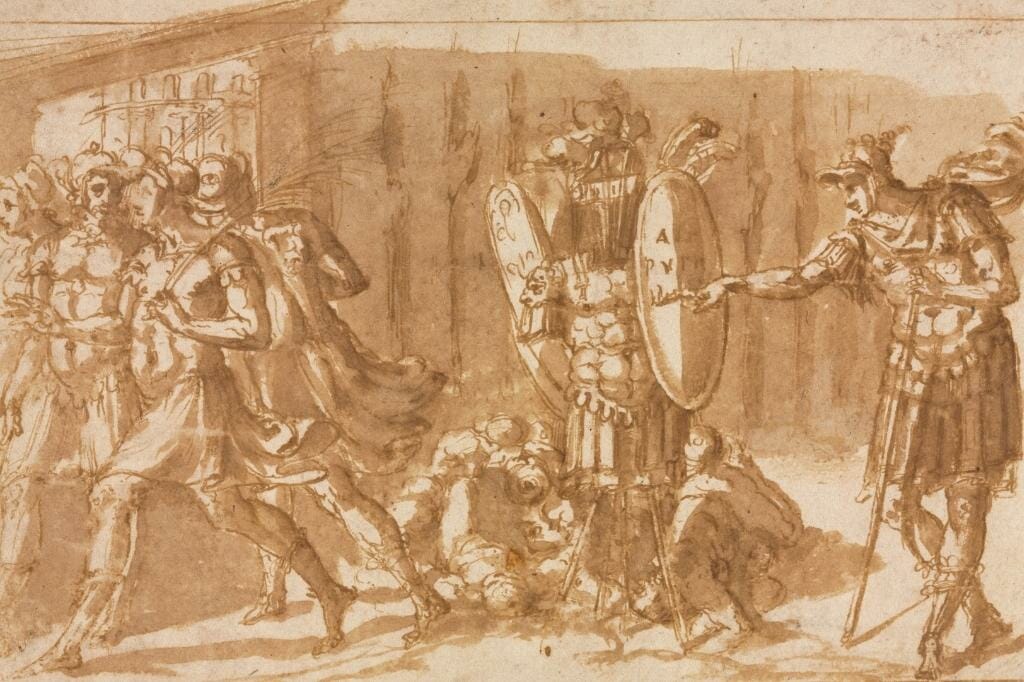
Acamas participating in the Trojan War alongside Greek warriors

He fought bravely ensuring the Greeks secured the victory and Helen safely returned to her husband. According to other myths, when the Greeks broke through and entered Troy, Acamas and his brother Demiphon captured the Trojan Palladium.

The Palladium was a carving of Pallas, the daughter of the demigod Triton. The carving was said to protect the city of Troy from falling and the Greeks had to capture it if they wanted to win the war against the Trojans. Thus, Acamas and his brother were tasked to retrieve the Palladium. However, according to Homer's Iliad, the responsibility to capture the Palladium fell on Odysseus and Diomedes.

How Acamas Lost His Mother

As already mentioned Acamas was the son of King Theseus of Athens who lost his throne after a series of unfortunate events. Initially, his father was married to an Amazonian who was called Antigone, before marrying his mother Phaedra.

Acamas' father had a son with Antigone, who was known as Hippolytus and when Hippolytus was young he decided to worship Artemis, the goddess of childbirth. This made Aphrodite jealous and angry because she expected the young lad to dedicate her life to her just as his father, Theseus, had done.

Therefore, Aphrodite, the goddess of love, made Queen Phaedra fall desperately in love with Hippolytus as a form of revenge. Acamas' half-brother, Hippolytus wanted, nothing to do with his stepmother so he resisted all her advances which frustrated her.

Tired of being rejected, Phaedra committed suicide but not without leaving a note which indicated that Hippolytus had raped her. This angered Theseus who prayed to the god of the sea, Poseidon, to avenge the honor of his wife Phaedra.

Acamas Loses His Father and Goes to Exile on the Island of Euboea

Poseidon granted Theseus's request and sent monsters to frighten Hippolytus' horses as he rode on in a chariot. The frightened horses overturned the chariot trapping Hippolytus in the wheels and dragging him along as they run madly.

Meanwhile, Theseus learned that the note left behind by his wife was a ruse and she was the one who was making sexual advances on Hippolytus. This grieved his heart and he went in such of Hippolytus to save him from the wrath of Poseidon.

Theseus found Hippolytus half-dead and cried at what he had just done to his own son. Not long after, Hippolytus gave up the ghost and the story quickly spread among the Athenians like wildfire. Nonetheless, they became enraged and the popularity of Theseus dwindled in their eyes. This event coupled with other events led to Theseus abdicating his throne and fleeing to the island of Skyros.

There he was killed by the king of Scyros Lycomedes who feared Theseus would usurp his throne, thus, Acamas lost his father. Acamas and his brother then went into exile on the island of Euboea under the King of the Abante tribe, Elephenor. This was because Menestheus had been installed as king of Athens by the twin brothers, Castor and Polydeuces, also known as the Discouri.

The Meaning of Acamas and His Eponyms

Acamas meaning is unwearying which depicts his relentless and brave nature in the Trojan War. No wonder he is one of the few that survived the 10-year siege of the city of Troy. A promontory in Cyrus called Akamas derives its name from him while the tribe called Acamantis in the Attic Peninsula is named after him.

Conclusion

So far we've covered the life of Acamas from his birth to his exploits before, during and after the Trojan War.

Here is a summary of all that we have read:
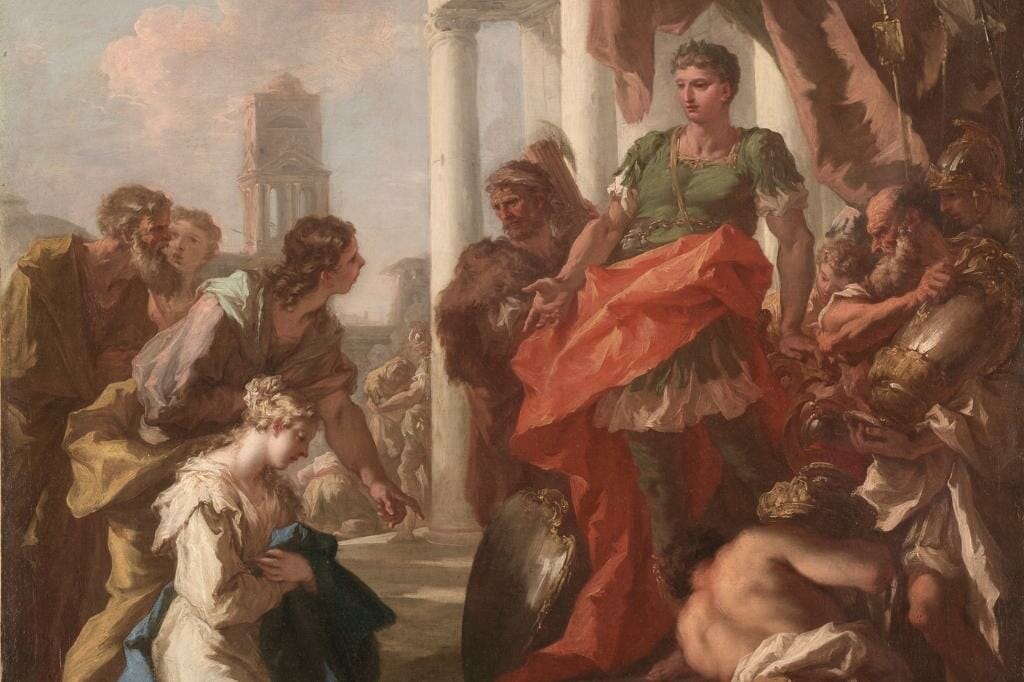
Depiction of Acamas in Greek mythology after the Trojan War

  • Acamas was the son of King Theseus and Queen Phaedra of Athens and the brother of Demophon.

  • He and his brother went into exile in Euboea under King Elephenor of the Abantes.

  • Before the Trojan war, Acamas was included as an envoy to negotiate the release of Helen but this proved unsuccessful.

  • While there, he fell in love with Princess Laodice, daughter of Priam and the couple gave birth to Munitis who later died of snakebite in Olynthus.

  • He and his brother then fought in the Trojan War and helped to retrieve the Palladium which was believed to protect the city of Troy.

Though the myth of Acamas is not mentioned in Homer's Iliad, his story can be found in the epic poem Aeneid and the Iliupersis.

By Ancient Literature

Created: February 15th, 2024

Modified: January 11th, 2025

Athens After Theseus

Athens After Theseus

Theseus died in exile, leaving Menestheus (Μενεσθεύς) to rule Athens. In the Iliad, Menestheus was listed as a suitor of Helen, and he became the commander of the Athenian fleet of fifty ships during the Trojan War. Some said that Menestheus died ...

January 13th, 2001 • Jimmy Joe
Theseus

Theseus

Theseus, or Θησεύς, was the greatest hero from Athens. In many aspects he was like his more famous cousin Heracles, strong and extremely brave. Yet his courage and strength were matched with wisdom and compassion. Early Adventures War of the Lapit...

May 22nd, 1999 • Jimmy Joe
Thoas

Thoas

Andraimon was the husband of Gorge, the daughter of Oeneus and Althaea. Andraimon was the father of Thoas (Θόας). Andraimon received the kingdom of Calydon, either because Oeneus was too old to rule, or because the aged king had died. However, his...

May 12th, 2001 • Jimmy Joe
Descendants of Aeacus

Descendants of Aeacus

July 28th, 1999 • Jimmy Joe
Acastus

Acastus

Argonaut. Acastus was the son of Pelias and Anaxibia or Phylomachus. Acastus joined his cousin Jason in the quest for the golden fleece. When Medea tricked his sisters into murdering their father, Acastus drove Jason and Medea into exile for causi...

April 27th, 1999 • Jimmy Joe
Telamon

Telamon

A king of Salamis. Telamon was the son of Aeacus (Aiacos), king of Aegina, and Endeïs (Endeis). He and his brother Peleus plotted to kill their half-brother Phocus, because he surpassed them in sport. One of them killed Phocus and hid the body, bu...

April 9th, 1999 • Jimmy Joe
Aegeus and Theseus

Aegeus and Theseus

Some writers said that Aegeus (Αἐγεύς) was the son of Pandion II, the exiled king of Athens, and Pylia, daughter of Pylas, but the usual tales said that Aegeus was only Pandion's adopted son. This version said that Aegeus was actually the son of S...

January 13th, 2001 • Jimmy Joe
Penthesileia

Penthesileia

An Amazon queen. Penthesileia was the daughter of the war god Ares and Otrere. Penthesileia was as superb and fierce a warrior as she was beautiful. Penthesileia killed another Amazon queen named Hippolyta or Hippolyte. Priam, the king of Troy, pu...

January 1st, 2002 • Jimmy Joe
Trojan War

Trojan War

Catalogues of Ships Greek Forces Trojan ForcesOther Information Funeral Games of Patroclus Trojan HorseGreek Forces Agamemnon was the commander-in-chief of the Greek forces. The Greek forces brought a total of 1227 ships to Troy. Neoptolemus joine...

August 8th, 1999 • Jimmy Joe
Antiope

Antiope

There is some confusion over the name of the Amazon who became the wife of the Athenian hero Theseus, and the mother of Hippolytus. Some called her Hippolyta or Hippolyte (Ἱππολύτη), the same name as the Amazon queen who had owned the girdle, the ...

January 1st, 2002 • Jimmy Joe
Timeless Myths

Exploring mythology and legends from around the world.

Explore Myths

All Stories Characters All Articles Search Site Map

Mythologies

Norse Mythology Classical Mythology Celtic Mythology Arthurian Legends Mythology Gods Ancient Literature

About Us

Introduction About Jimmy Bibliography FAQs Retro Version

Resources

Timeless Myths All Stories All Articles Characters
© 1999-2026 Timeless Myths • Copyright • Privacy Policy • Cookie Policy • Contact
Follow us: