Timeless Myths Logo
Aphrodite Apollo Ares Artemis Athena Atlas Coeus Crius Cronus Demeter Dionysus Gaia Hades Hephaestus Hera Hermes Hestia Hyperion Iapetus Mnemosyne Oceanus Phobos Phoebe Poseidon Prometheus Rhea Tethys Themis Uranus Zeus
Bacchus Ceres Diana Juno Jupiter Mars Mercury Minerva Neptune Pluto Venus Vesta Vulcan
Amun Anubis Aten Atum Babi Bastet Bes Geb Hapi hathor heqet Horus Isis Khepri Khnum Khonsu Maat Nephthys Nut Osiris Ptah Ra Seshat Seth Shu Sobek Thoth
Alfheim Baldur Freya Freyr Frigg Heimdallr Helheim Idun Jotunheim Loki Nerthus Njord Odin Thor Tyr
Aengus Arawn Badb Brigid Cailleach Ceridwen Cernunnos Cu Chulainn Dagda Danu Gwydion Herne the Hunter Lugh Medb Morrigan Neit Nuada Taliesin Taranis
Chalchiuhtlicue Coatlicue Huitzilopochtli Mictlantecuhtli Mixcoatl Ometeotl Quetzalcoatl Tezcatlipoca Tlaloc Tonatiuh Xipe Totec Xochiquetzal Xolotl
Amaterasu Ame no Uzume Benzaiten Bishamonten Daikokuten Ebisu Fujin Fukurokuju Inari Izanagi Kagutsuchi Raijin Susanoo Tsukuyomi
Caishen Cangjie Dragon King Eight Immortals Erlang Shen Fuxi Guanyin Hou Yi Huxian Jade Emperor King Yama Leizi Lu-ban Mazu Nezha Nuwa Pangu Shennong Sun Wukong Xiwangmu Yue Lao Zhong Kui
Norse Classical Celtic Arthurian
Literature Stories Names
Aphrodite Apollo Ares Artemis Athena Atlas Coeus Crius Cronus Demeter Dionysus Gaia Hades Hephaestus Hera Hermes Hestia Hyperion Iapetus Mnemosyne Oceanus Phobos Phoebe Poseidon Prometheus Rhea Tethys Themis Uranus Zeus
Bacchus Ceres Diana Juno Jupiter Mars Mercury Minerva Neptune Pluto Venus Vesta Vulcan
Amun Anubis Aten Atum Babi Bastet Bes Geb Hapi hathor heqet Horus Isis Khepri Khnum Khonsu Maat Nephthys Nut Osiris Ptah Ra Seshat Seth Shu Sobek Thoth
Alfheim Baldur Freya Freyr Frigg Heimdallr Helheim Idun Jotunheim Loki Nerthus Njord Odin Thor Tyr
Aengus Arawn Badb Brigid Cailleach Ceridwen Cernunnos Cu Chulainn Dagda Danu Gwydion Herne the Hunter Lugh Medb Morrigan Neit Nuada Taliesin Taranis
Chalchiuhtlicue Coatlicue Huitzilopochtli Mictlantecuhtli Mixcoatl Ometeotl Quetzalcoatl Tezcatlipoca Tlaloc Tonatiuh Xipe Totec Xochiquetzal Xolotl
Amaterasu Ame no Uzume Benzaiten Bishamonten Daikokuten Ebisu Fujin Fukurokuju Inari Izanagi Kagutsuchi Raijin Susanoo Tsukuyomi
Caishen Cangjie Dragon King Eight Immortals Erlang Shen Fuxi Guanyin Hou Yi Huxian Jade Emperor King Yama Leizi Lu-ban Mazu Nezha Nuwa Pangu Shennong Sun Wukong Xiwangmu Yue Lao Zhong Kui
Norse Classical Celtic Arthurian
Literature Stories Names

Ascanius in the Aeneid: The Story of the Son of Aeneas in the Poem

roman-mythology

Ascanius in the Aeneid was the son of the epic hero Aeneas and his wife Creusa, the daughter of King Priam. He fled with his father from Troy as the Greeks besieged the once illustrious city and accompanied him on his journey to Italy.
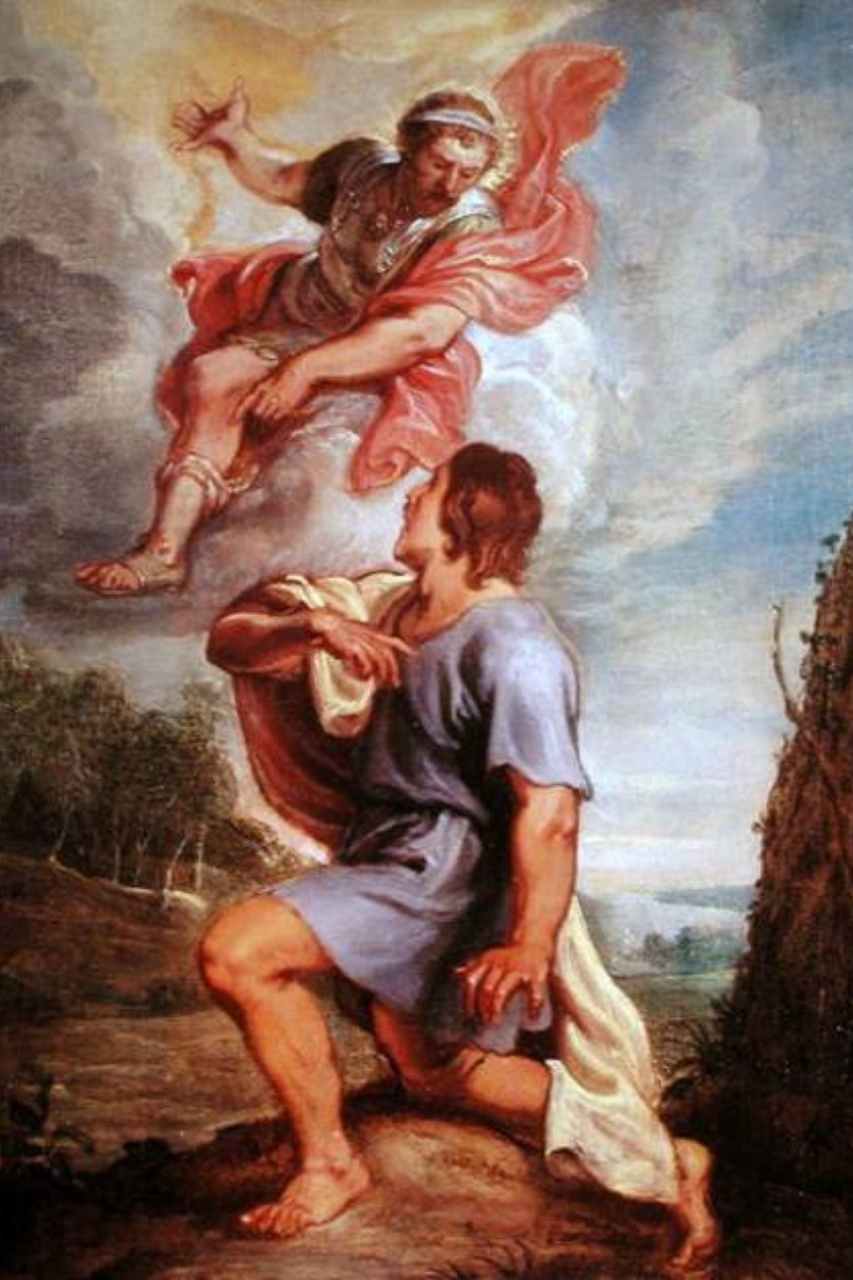
Ascanius in the Aeneid - what was his role

The Aeneas and Ascanius relationship was a strong one that contributed to establishing the foundations of what later became known as Rome. To know more about the story of Ascanius and his role in Virgil's the Aeneid, continue reading.

Who Is Ascanius in the Aeneid?

Ascanius in the Aeneid was the founder of the city of Alba Longa which later became Castel Gandolfo. He was an instrumental in the founding of the Roman Empire and was the ancestor of Remus and Romulus. He fought in the war against the Italians and killed Numanus.

The Myth of Ascanius in the Aeneid

Ascanius was an important character, as he was the one who started the war between the Latins and the Trojans, he was also the one who the god Apollo motivated. He was even mentioned by the Romans ancestry as Lulus.

Ascanius Starts War Between the Latins and the Trojans

Ascanius was rarely heard of until the latter stages of the Aeneid when he accidentally wounded the deer of Sylvia. According to the story, Juno had assigned the fury, Allecto, to instigate a war between the Trojans and the Latins. To fulfill her assignment, Allecto chose to cause Ascanius, who was a Trojan, to wound the pet stag of Sylvia, a Latin. On a hunt with his dogs in the woods, Allecto pointed Ascania's dogs to Sylvia's deer which was drinking from the river.

Following the direction of his dogs, Ascanius threw his spear mortally wounding the royal deer of Sylvia. Around the same time, Allecto had gone to incite Amata, the Queen of the Latins, against Aeneas and the Trojans. Amata approached her husband, King Latinus, and advised him against giving their daughter's (Lavinia) hand in marriage to Aeneas. Turnus, the leader of the Rutuli, who was betrothed to Lavinia, prepared his army to fight against Aeneas.

Turnus sent his army of shepherds to hunt down Ascanius for killing the pet deer of Sylvia, the daughter of Tyrrheus who was the ranger of King Latinus. When the Trojans saw the Latin shepherds coming for Ascanius, they came to his aid. A brief battle broke out between the Latins and the Trojans with the Latins suffering several casualties.

Ascanius and Apollo

During the battle, Ascanius killed Numanus, who was related to Turnus, by throwing a spear at him. Before hurling the spear at Numanus, the teenage Ascanius prayed to the king of the gods Jupiter, "Omnipotent Jupiter, please favor my audacity". Once Ascanius killed Numanus, the god of Apollo appeared to him and encouraged him saying, "Go forth with new value, boy; thus is the path to the stars; son of gods that will have gods as sons".

Here the god Apollo references the descendants of Ascanius which Augustus Caesar claimed to be one of them. Thus, the Gens Julia, an ancient Patrician family of Rome is believed to have descended from Ascanius. After the battle between the Latins and the Trojans ended, Apollo commanded the Trojans to keep Ascanius safe from the horrors of war.

Ascanius succeeded his father, Aeneas, and reigned for 28 years before his death. The Kingdom was succeeded by Ascanius son Silvius.

Ancient Emperors of Rome Trace Their Ancestry

Ascanius other name, Iulus, was used by Virgil in the Aeneid, making the name more popular among the Romans. Thus, the Julian family of Rome linked their ancestry to Iulus with Caesar Augustus instructing his officials to gazette it. Nonetheless, the Julian family lineage included the gods Jupiter, Juno, Venus and Mars. Additionally, the emperor then asked all poets and dramatists to include these gods whenever they wanted to trace his ancestry.

Conclusion

Throughout this article, we have been giving a further insight on the myth of Ascanius and the role he played in the Aeneid as well as in founding Rome. Here is a recap of all that we have read so far:
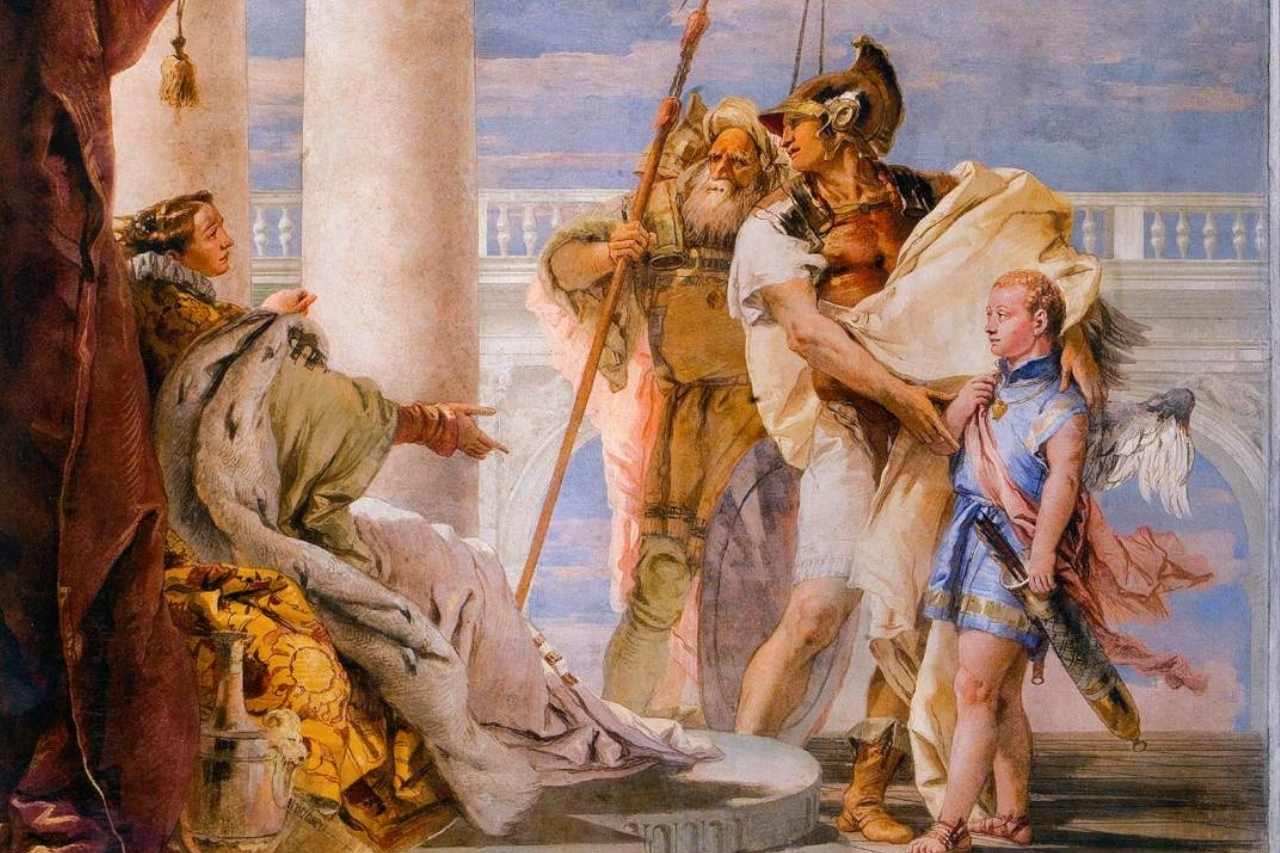
Ascanius in the Aeneid - all you need to know

  • Ascanius was the son of Aeneas and Creusa and was part of the entourage that escaped from Troy as the Greeks besieged the city and burned it to the ground.

  • Little was heard of Ascanius until the latter stages of the Aeneid when he accidentally wounded the pet stag of Sylvia, the daughter of Tyrrheus who was the ranger of King Latinus.

  • The Latins attacked the Trojans but the Trojans emerged victorious.

  • During the skirmish, the teenage Ascanius prayed to Jupiter to help him kill Numanus and it so happened as his spear struck the Latin to the ground.

  • Apollo then appeared to the young boy, encouraged him and told him of how gods would emerge from his descendants.

Due to the prophecy of Apollo, the Julia family of Rome traced their ancestry to Ascania. This work was commissioned by Emperor Caesar Augustus who instructed all poets to include gods in his ancestry.

By Ancient Literature

Created: February 15th, 2024

Modified: January 11th, 2025

Aeneas

Aeneas

A Dardanian hero. He was the son of Anchises and the goddess Aphrodite. Hesiod says that Aphrodite gave birth to Aeneas (Αἰνείας) at the peaks of Ida. Aeneas was of the Trojan royal line of Dardania. Aeneas was brought up on Mount Ida by nymphs wh...

April 24th, 1999 • Jimmy Joe
Alba Longa

Alba Longa

Alba Longa was on the Alban hills, in Latium, on the shore of Lake Albanus. The city was said to be founded by Ascanius, son of Aeneas and Creusa, who was a daughter of Priam and Hecuba. A succession line of 13 kings were listed. Alba Longa was th...

February 4th, 2008 • Jimmy Joe
Houses of the Rome

Houses of the Rome

Alba Longa Monarchy of RomeRelated Pages Tales of Rome House of Troy House of Troy (genealogy)Alba Longa The genealogy of Alba Longa shows how Romulus was the descendant of Aeneas from the royal house of Troy (Dardanian line). Romulus was the foun...

September 22nd, 2002 • Jimmy Joe
Aeneid

Aeneid

The Aeneid was written by a Rome's greatest poet named Virgil or Vergil (full name was Publius Vergilius Maro) and lived in 70-19 BC. Although Virgil wrote a couple of other works, it was the Aeneid which brought him fame after his death, during t...

March 31st, 2004 • Jimmy Joe
The Aeneid

The Aeneid

(Epic Poem, Latin/Roman, 19 BCE, 9,996 lines)Introduction - Who wrote Aeneid "The Aeneid" (Lat: "Aeneis") is an epic poem by Vergil (Virgil), the pre-eminent poet of the Roman Empire. It was his final work and the twelve books of the poem occupied...

October 25th, 2024 • Timeless Myths
Foundation of Rome

Foundation of Rome

Alba Longa Romulus and Remus Alternative Accounts of the FoundationAlba Longa Aeneas founded a new city called Lavinium or the hero renamed the city of Lauretum to Lavinium, after his new wife. Aeneas and Lavinia had a son named Silvius. His reign...

September 10th, 2000 • Jimmy Joe
Tales of Rome

Tales of Rome

Rome was a city on the south-east bank of the Tiber River, in the region called Latium. Rome was often called Roma, which is the proper name for the city. The site was prominently situated on seven hills. Romulus was the legendary founder of Rome....

September 10th, 2000 • Jimmy Joe
Turnus

Turnus

Turnus was the king of Rutulia and an enemy of Aeneas. Turnus was either the son of Pilumnus and Danae, who was the daughter of Acrisius, or he was the son of King Daunus of Rutulia and Venilia. Turnus was also the brother of Juturna, the goddess ...

April 24th, 1999 • Jimmy Joe
House of Troy and Dardania

House of Troy and Dardania

The first ruler of the region around Troad was Teucer, the son of the river god Scamander. It was Dardanus, son of Zeus and the Pleiad Electra, who founded the kingdom and the dynasty of Dardania and Troy (or Ilium). Often, the names of the Dardan...

July 28th, 1999 • Jimmy Joe
Lavinium

Lavinium

Lavinium was a city founded by Aeneas, who named it after his wife Lavinia, daughter of Latinus and Amata. It is possible that this city was Virgil's Laurentum, which didn't exist historically, and Laurentum was the original name for Lavinium and ...

February 4th, 2008 • Jimmy Joe
Timeless Myths

Exploring mythology and legends from around the world.

Explore Myths

All Stories Characters All Articles Search Site Map

Mythologies

Norse Mythology Classical Mythology Celtic Mythology Arthurian Legends Mythology Gods Ancient Literature

About Us

Introduction About Jimmy Bibliography FAQs Retro Version

Resources

Timeless Myths All Stories All Articles Characters
© 1999-2026 Timeless Myths • Copyright • Privacy Policy • Cookie Policy • Contact
Follow us: