Sir John Bagot Glubb and the Fate of Empires
In 1978, John Glubb published an inspiring essay with striking observations about the human race across the ages. In his essay, he found patterns in the rise and fall of empires that fit in the same timescale.
Considered one of our century’s best intellectual works, Glubb’s “The Fate of Empires and Search for Survival” presents a remarkable theory about civilization from several historical examples.
Who Was John Glubb? The second Lawrence of Arabia
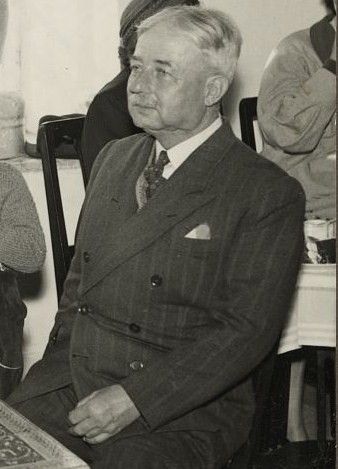
Sir John Bagot Glubb, also called Glubb Pasha, was a highly-honored British army officer and historian. He commanded the Arab Legion from 1939-1956. John Bagot Glubb was a son of a British army officer. He attended the Royal Military Academy and served in Europe during World War I.
John Bagot Glubb was born in 1897 in Preston, Lancashire. At the age of four, his family moved from England to Mauritius, where his father worked for three years. At the age of ten, Glubb attended school in Switzerland for a year. At an early age, Glubb has traveled to several countries, which has opened his mind to the outside world.
John Glubb joined the Royal Military Academy at Woolwich in 1914 and was commissioned by the Royal Engineers in 1915. Throughout World War I in Belgium and France, he was wounded three times and awarded the Military Cross. He earned a reputation for his bravery after serving in his first war.
In 1920, Glubb volunteered in Iraq as a regular army officer but resigned in 1926 to assume an administrative inspector’s role for the Iraqi government. He then left his post in 1930 and became a brigadier in the Transjordan’s Arab Legion.
Glubb became its commander in 1939 and used the army to support the Allies in World War II. During this time, the Arab army was considered one of the best-trained forces involved in the war. From 1939-1956, he commanded the Jordan Arab Legion. In 1951, he rallied the national guard to fight for Jordan against the Israelis.
People describe Glubb as a small and courageous man. He was known as the general who spent 36 years among Arabs and became their most decisive leader. They gave him the names of “Second Lawrence of Arabia” or “The Uncrowned King of Jordan.”
In 1956, due to Arab nationalists pressure to eliminate all western influences, he was dismissed from his role. However, after his dismissal, he became a symbol of British Imperialism because of Arab nationalists’ influence. Queen Elizabeth later knighted him.
John Bagot Gubb also considered himself a writer and historian. After retirement, he wrote several books about his life and his passions. One of the first books he published is called “A Soldier with the Arabs,” which was autobiographical. The book describes his work with Arabs and explains the cause of his dismissal in 1956. Glubb, 88, peacefully died in 1986 in his sleep at his Mayfield home in his native country England.
The Fate of Empires and Search for Survival

Glubb was a man of his time and class.
Through his immersion in foreign cultures and his open-mindedness, he developed a theory on hegemonic orders. He called it the “Fate of Empires.”
In his book, he described a rising civilization as a society where people have a sense of duty and service, practical attitude, strong merchant class, and desire for conquest. He also described falling civilizations’ characteristics, including frivolity, love of money instead of duty, excessive reverence for celebrities, and rise of intellect over action.
According to Glubb, despite the empire’s geographic, religious, cultural, and technological differences, they all follow the same pattern of expansion, development, decline, and collapse.
Using this knowledge, Glubb hopes that through understanding how empires decline, our countries today can stand a chance at avoiding the same fate. Although the rise and fall of civilization are as unstoppable as the change of seasons, countries can mitigate losses by preparing for the future. Glubb believes the theory is timeless and resonates even today, as proved by the global politics involving the West and China.
Stages of Empire: How empires rise and decay
Glubb defines “empire” as an organization that consists of a country and its colonies. Today, this will be what we call a superpower (USA, Russia, China, India, etc.). By studying ancient and modern empires, he concluded that empires’ average life cycle lasts around ten generations and about 250 years. This has not changed for almost 3,000 years.
Sir John Glubb observed that empires tend to go through stages in their existence. Each of these stages helped cause the progression to the next. Throughout the stages of empire, the values of people changed over time. Glubb further notes that military, political, religious, and economic developments combine to influence people to act and believe differently.
The Age of Pioneers (Outburst)
According to Glubb, this stage is characterized by a rapid development of tribes or small civilizations where leaders are motivated by greed or admiration for an existing empire. Individuals have great passion and vision to conquer new territories. They have strong values and are devoted to duty with strict moral codes.
After they conquered nations, they adapted the organization and technology of their defeated foes for their needs. In the book, Glubb’s examples included the Islamic breakout from the Arabian Peninsula in the 17th century. In Glubb’s words, these people who start these outbursts are “poor, hardy, often half-starved and ill-clad.”
The Age of Conquests

This stage is characterized by commercial and military expansion and dominance. Its primary aim is “honor and glory.” Warriors go on adventurous journeys to gain power and conquer land from others. It’s also the time when conquerors bring with them their own culture to the lands they conquered.
The Age of Commerce
The stage is characterized by a desire to earn money and profit. The empire primarily focuses on prosperity, and in this stage, businessmen take over. People value material success more than any other.
The warrior status will slowly begin to lose its popularity. Citizens will have a weak sense of duty, increased selfishness, manifested in their desire for wealth and comfort. There will also be a great desire for the exploration of new forms of wealth.
The Age of Affluence
This age is when commercial classes grow, leading to luxury, art creation, and architecture. During this time, the empire spends on creating highways, bridges, buildings, and great cities.
The empire focuses on defending its wealth and privilege. Young men will replace honor and adventure with money for themselves. Gradually, this stage removes citizen’s sense of duty. Conquest is seen as immoral and unjustifiable by many wealth-focused citizens. This will prompt leaders to resort to pacifism.
The Age of Intellect
This is the stage in which the pursuit of knowledge becomes of utmost importance.
Affluent people will have the privilege to learn new things. Young people will desire to acquire academic honors instead of military glory or wealth.
The stage also sees rapid advances in science, and there will be a surge in amazing scientific discoveries. However, none of these breakthroughs will save the empire from the ensuing chaos in the end. One of the most dangerous by-products of the Age of Intellect is the growth of the idea that the human brain can solve all world problems. People will think that mental cleverness can save any situation, and this will cause eventual failure in various fields.
Academic institutions will produce skeptics who will start to question the empire and undermine its authority. Intellectualism will lead to debates and discussion. There will be endless and incessant intellectual arguments that will go from bad to worse. The credibility of the state and its support system erodes because of a lack of action. Conflicts and division increase, and political factions become more polarised.
The Age of Decadence
After a long period of wealth and power, empires will start to decline. This is the stage where people choose to behave in unsustainable ways and unaware of their consequences. Historians often refer to this stage as the decline in religion, but Glubb shows more than religion.
The empire will suffer because of excessive consumption. Absurdly wealthy elites will emerge where the masses will admire them. People will relate increased consumption to happiness. These values will permeate the public: frivolity, aestheticism, cynicism, narcissism, fanatics, and fatalism —and all negative behaviors affect the population.
Final Thoughts: Are we on the road to civilization collapse?

To recap, we have covered the following:
John Glubb was a British army officer who gained popularity in the Arab world because, despite his small stature, he had a commanding presence and admirable decisiveness.
He was called by many names. He was called the “Second Lawrence of Arabia” and the “uncrowned king off Jordan” because of his decisiveness as an army general.
He held various posts in the British Army but was dismissed due to Arab nationalist pressure.
After his dismissal from the Arab Legion, Queen Elizabeth knighted him.
He considered himself a writer and a historian.
He authored several books, including the most popular, The Fate of Empires and Search for Survival.
In his book, The Fate of Empires, he laid down the principles and causes why powerful civilizations and empires rise from nothing only to destroy themselves in the end.
John Bagot Glubbs’s book is an excellent discussion on the rise and fall of empires from the past. It helps those who seek answers as to how small nations rise, turn to great civilizations, then fall.
From Glubb’s work, we have learned that societies do not merely perish; they destroy themselves. What we need today is to invest in our recovery from our self-imposed ruin.
We can create solutions that will lessen the chance of a future collapse becoming irreversible. We need to listen and understand the past to adjust and get ready for the future.