Timeless Myths Logo
Aphrodite Apollo Ares Artemis Athena Atlas Coeus Crius Cronus Demeter Dionysus Gaia Hades Hephaestus Hera Hermes Hestia Hyperion Iapetus Mnemosyne Oceanus Phobos Phoebe Poseidon Prometheus Rhea Tethys Themis Uranus Zeus
Bacchus Ceres Diana Juno Jupiter Mars Mercury Minerva Neptune Pluto Venus Vesta Vulcan
Amun Anubis Aten Atum Babi Bastet Bes Geb Hapi hathor heqet Horus Isis Khepri Khnum Khonsu Maat Nephthys Nut Osiris Ptah Ra Seshat Seth Shu Sobek Thoth
Alfheim Baldur Freya Freyr Frigg Heimdallr Helheim Idun Jotunheim Loki Nerthus Njord Odin Thor Tyr
Aengus Arawn Badb Brigid Cailleach Ceridwen Cernunnos Cu Chulainn Dagda Danu Gwydion Herne the Hunter Lugh Medb Morrigan Neit Nuada Taliesin Taranis
Chalchiuhtlicue Coatlicue Huitzilopochtli Mictlantecuhtli Mixcoatl Ometeotl Quetzalcoatl Tezcatlipoca Tlaloc Tonatiuh Xipe Totec Xochiquetzal Xolotl
Amaterasu Ame no Uzume Benzaiten Bishamonten Daikokuten Ebisu Fujin Fukurokuju Inari Izanagi Kagutsuchi Raijin Susanoo Tsukuyomi
Caishen Cangjie Dragon King Eight Immortals Erlang Shen Fuxi Guanyin Hou Yi Huxian Jade Emperor King Yama Leizi Lu-ban Mazu Nezha Nuwa Pangu Shennong Sun Wukong Xiwangmu Yue Lao Zhong Kui
Norse Classical Celtic Arthurian
Literature Stories Names
Aphrodite Apollo Ares Artemis Athena Atlas Coeus Crius Cronus Demeter Dionysus Gaia Hades Hephaestus Hera Hermes Hestia Hyperion Iapetus Mnemosyne Oceanus Phobos Phoebe Poseidon Prometheus Rhea Tethys Themis Uranus Zeus
Bacchus Ceres Diana Juno Jupiter Mars Mercury Minerva Neptune Pluto Venus Vesta Vulcan
Amun Anubis Aten Atum Babi Bastet Bes Geb Hapi hathor heqet Horus Isis Khepri Khnum Khonsu Maat Nephthys Nut Osiris Ptah Ra Seshat Seth Shu Sobek Thoth
Alfheim Baldur Freya Freyr Frigg Heimdallr Helheim Idun Jotunheim Loki Nerthus Njord Odin Thor Tyr
Aengus Arawn Badb Brigid Cailleach Ceridwen Cernunnos Cu Chulainn Dagda Danu Gwydion Herne the Hunter Lugh Medb Morrigan Neit Nuada Taliesin Taranis
Chalchiuhtlicue Coatlicue Huitzilopochtli Mictlantecuhtli Mixcoatl Ometeotl Quetzalcoatl Tezcatlipoca Tlaloc Tonatiuh Xipe Totec Xochiquetzal Xolotl
Amaterasu Ame no Uzume Benzaiten Bishamonten Daikokuten Ebisu Fujin Fukurokuju Inari Izanagi Kagutsuchi Raijin Susanoo Tsukuyomi
Caishen Cangjie Dragon King Eight Immortals Erlang Shen Fuxi Guanyin Hou Yi Huxian Jade Emperor King Yama Leizi Lu-ban Mazu Nezha Nuwa Pangu Shennong Sun Wukong Xiwangmu Yue Lao Zhong Kui
Norse Classical Celtic Arthurian
Literature Stories Names

Fate in the Aeneid: Exploring the Theme of Predestination in the Poem

roman-mythology

Fate in the Aeneid is a major theme that explores how the ancient Romans viewed the concept of predestination. The entirety of the poem hinges on Aeneas's destiny which is to set the foundations for the establishment of the Roman Empire.

We learn from the Aeneid that fate is in cast stone and nothing, both divine and human, can alter its course. This article will discuss the theme of fate and give relevant examples of fate in the Aeneid.
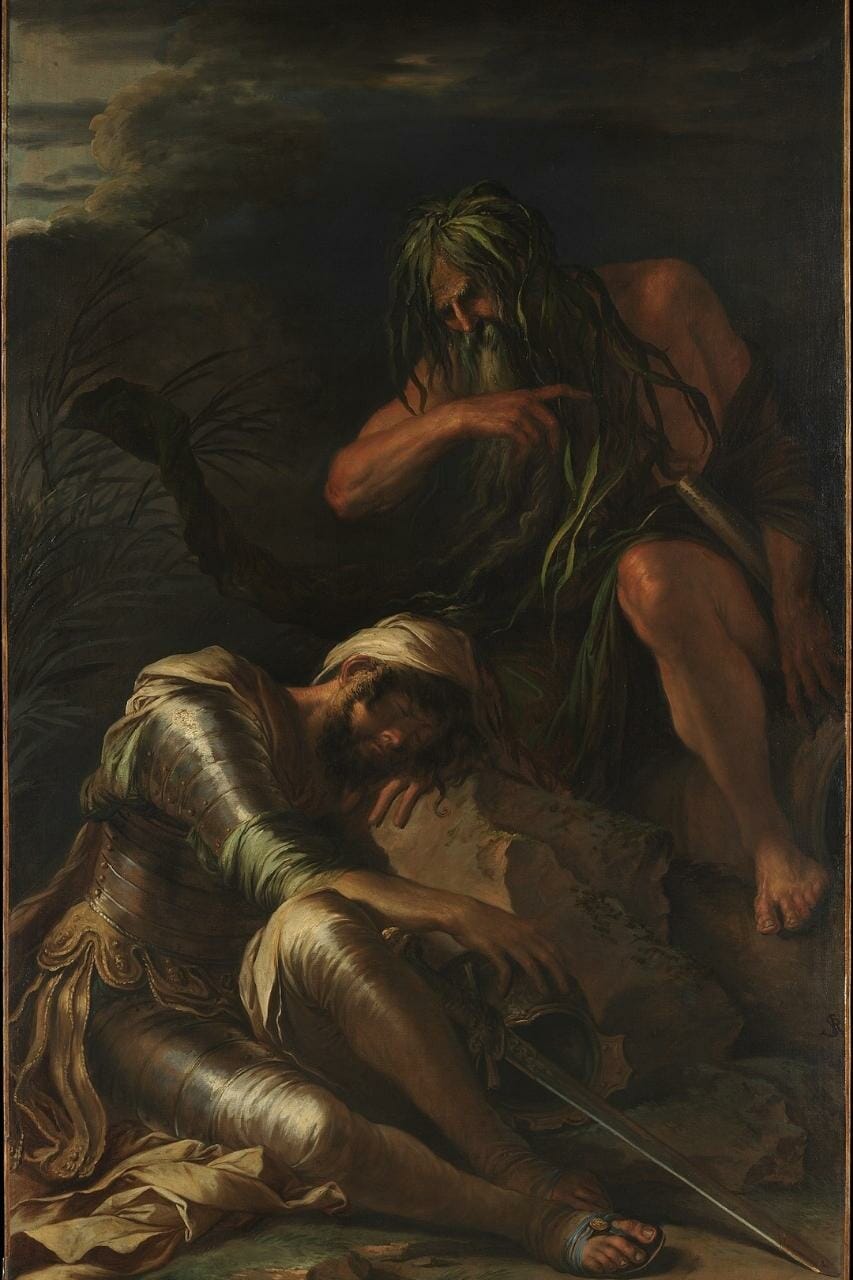
Fate in the Aeneid - exploring predestination in Virgil's epic poem

Fate in the Aeneid - exploring predestination

What Is Fate in the Aeneid?

Fate in the Aeneid explores how Virgil treats predestination in the epic poem. From the Aeneid, it can be deduced that whatever is destined to happen will happen regardless of the obstacles. Both the gods and their human vehicles are powerless in changing fate.

Fate in the Aeneid

Fate is one of the major themes in the book written by Virgil, the aspects of it are written and elaborated below:

The Fate of Aeneas

Aeneas was fated to found Rome and regardless of whatever befell him, his destiny was fulfilled. He had to face the vengeful Queen of the gods, Juno, who did all in her power to thwart his destiny but Aeneas displayed heroism in the Aeneid.

Hera had developed a hatred for the Trojans (the country of Aeneas) when their prince, Paris, chose Aphrodite as the prettiest goddess over her. Her anger drove her to exact revenge on the city and brought it to its knees after a drawn-out war that lasted 10 years.

However, her vengeance was not satisfied, thus when she got wind that the Trojans would rise again through Aeneas she pursued him. Juno used both force and persuasion to keep Aeneas from fulfilling his destiny. She persuaded the keeper of the winds, Aeolus, to send a storm that would drown Aeneas and his fleet. She worked through the fury of Allecto to incite violence against Aeneas and to hide his bride, Lavinia, from him.

Juno also used Dido, the Queen of Carthage, to distract Aeneas from his goal of reaching Italy. She manipulated Aeneas' love for Dido and was almost successful as Aeneas almost forgot about his destiny to settle with her.

Jupiter, her husband, whose role was to ensure that destinies were fulfilled, intervened and kept Aeneas on his path. Thus, though the gods and humans had the will to choose and act freely, they were powerless against fate; a situation referred to as primacy of fate.
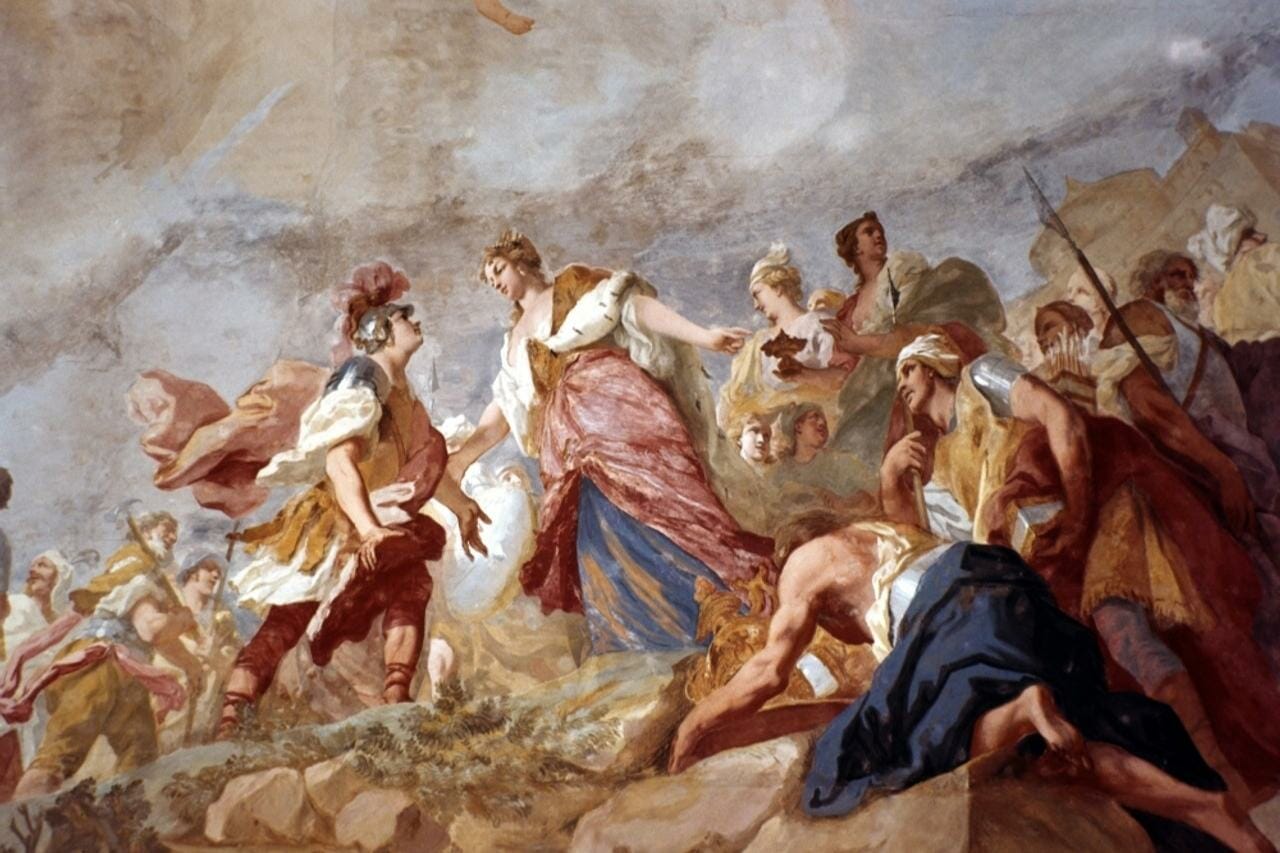
The importance of fate as a theme in the Aeneid

The importance of fate as a theme in the Aeneid

Juno's Aeneid About Fate

Juno acknowledges her powerlessness over fate, yet she strives to fight it. as he questions if he should give up, whether she is defeated or impotent when it comes to keeping the king of Teucrians away from Italy. Following this, he raises the question of whether it's fate that forbids him.

Fate of Ascanius

Though Ascanius played a minor role in the Aeneid, he, like his father was fated to play a crucial role in the founding of Rome. It wasn't just sheer luck that he, his father Aeneas, and his grandfather Anchises escaped the burning flames of Troy.

He accompanied his father on all his journeys, and until they finally settled in Latium. Once there, Ascanius accidentally killed the pet stag of Sylvia, the daughter of Tyrrheus, during a hunting expedition.

The hunting mistake nearly resulted in his death as the Latins rallied some troops to hunt him down. When the Trojans saw the Latins approaching they protected Ascanius and the gods granted them victory over the Latins.

During the skirmish, Ascanius prayed to Jupiter to "favor his audacity" as he threw a spear at Numanus, one of the Latin warriors. Jupiter answered his prayer and the spear killed Numanus – a sign that the gods favored Ascanius.

After the death of Numanus, Apollo appeared to the young Ascanius and prophesied to him. According to the god of prophecy, from the line of Ascanius would emerge "gods as sons". Apollo then ordered the Trojans to keep the boy safe from the war until when he was old enough.

The gods knew that he would continue the line of his father in Italy until Rome was established. Just as his father, Ascanius was fated to play an important role in the founding of Rome and it came to pass.

The Fate in the Aeneid and the Kings of Rome

The Kings of Rome, especially those from the Gens Julia, trace their ancestry through Ascanius, also known as Iulus. For example, Augustus Caesar, used the prophecy by Apollo to Ascanius to justify his government. Since the prophecy stated that Ascanius' descendants would include "gods as sons", Augustus Caesar's government attributed to itself divine power and authority. The Aeneid was also written when Augustus Caesar was king of the Roman Empire, thus the poem helped advance his propaganda of having divine origins.

Free Will in the Aeneid

Though the characters were fated in the Aeneid, they could choose whatever path they wished to take. Their fate was not forced on them as demonstrated by Aeneas when he chose to freely love Dido even though he had the destiny to fulfill. Their destinies were presented to them and they chose to follow through with them. However, their free will choices did little or nothing to thwart their destinies – exemplifying the complex relationship between fate and free will.

Conclusion

So far, we've explored the theme of fate in the Aeneid and looked at some examples of how fate played out in Virgil's epic poem. Here is a recap of all that we've covered in the article:

  • Fate as exemplified in the Aeneid was how the Romans understood the concept of predestination and the role of free will.

  • In the poem, Aeneas was fated to found Rome, and regardless of whatever obstacles were thrown at him, the prophecy was eventually fulfilled.

  • Both gods and humans were powerless against fate as demonstrated by Juno when she tried all she could to prevent Aeneas from fulfilling the prophecy but her efforts were useless.

  • Ascanius, the son of Aeneas, was also fated to continue his father's legacy so, when he killed Numanus, the gods ordered that he was to be protected till he comes of age.

  • The Kings of Rome used fate in the poem to justify their rulership and to affirm their divine authority and power as they traced their ancestry to Ascanius.

Free will in the poem meant that the characters were free to make decisions but these decisions had little effect on their ultimate destinations. Ultimately fate brought about the Aeneid resolution which was peace in the land of Italy.

By Ancient Literature

Created: February 16th, 2024

Modified: January 17th, 2026

Fate in the Iliad: Analyzing the Role of Fate in Homer's Epic Poem

Fate in the Iliad: Analyzing the Role of Fate in Homer's Epic Poem

What Is Fate in the Iliad? Fate in the Iliad is "how the gods determine the destiny of characters" in the epic poem and how the action of the characters drive them towards their fated ends. The Iliad itself is thought of as already fated as it is ...

February 16th, 2024 • Ancient Literature
Fate vs Destiny in Ancient Literature and Mythologies

Fate vs Destiny in Ancient Literature and Mythologies

Fate vs Destiny has a very subtle line between them that separates the two terms. In shallow meaning, the two words are very similar and also represent a similar school of thought but when you go into the detail you will understand that the words ...

February 16th, 2024 • Ancient Literature
Themes in the Aeneid: Exploring the Ideas in the Latin Epic Poem

Themes in the Aeneid: Exploring the Ideas in the Latin Epic Poem

The Aeneid's themes are plenty; each gives an idea of what shaped the lives of the ancient Romans. A theme such as fate tells of how the ancient Romans struggled with the concept, while the idea of divine intervention reveals their religiosity. Th...

February 16th, 2024 • Ancient Literature
Fates In the Odyssey: Odysseus' Destiny

Fates In the Odyssey: Odysseus' Destiny

Fate in the Odyssey showed how Odysseus suffered during his long journey back to his home in Ithaca. As fate is described as the development of occurrence beyond a person's control, it is determined by a supernatural power and is subject to change...

February 16th, 2024 • Ancient Literature
Omens in the Aeneid: How Virgil Used Signs to Predict the Future

Omens in the Aeneid: How Virgil Used Signs to Predict the Future

Omens in the Aeneid are signs that foreshadow future events while giving assurances of what is to come. Several times throughout the poem, the gods use omens to communicate to the characters. The signs then empower, encourage, or strengthen the re...

February 16th, 2024 • Ancient Literature
Fate in Antigone: The Red String That Ties It

Fate in Antigone: The Red String That Ties It

Fate in Antigone has been running after our Heroine since the events of Oedipus Rex. Her family's curse goes back to her father and his transgressions. To further understand the irony of Antigone's Fate, let us go back to Oedipus Rex, where it all...

February 16th, 2024 • Ancient Literature
Beowulf: Fate, Faith and Fatalism - The Hero's Way

Beowulf: Fate, Faith and Fatalism - The Hero's Way

From the beginning of Beowulf, fate plays a large role. Nothing that happens to the hero is truly by chance or even by his own will. The mysterious force known as fate guides Beowulf's every experience and adventure. From Hrothgar's payment of mon...

February 15th, 2024 • Ancient Literature
Violence in the Aeneid: The Instances of Conflicts in the Epic Poem

Violence in the Aeneid: The Instances of Conflicts in the Epic Poem

Violence in the Aeneid explores the subjects of conquest and defeat, glory and infamy, that characterized the establishment of the Roman Empire. The poem depicts the exploits of Aeneas whose heroic acts led to the founding of Rome, which later bec...

February 16th, 2024 • Ancient Literature
Why Did Achilles Kill Hector – Fate or Fury?

Why Did Achilles Kill Hector – Fate or Fury?

Was it love or pride that led Achilles to kill Hector? The Trojan war was a tale of love and pride, hubris and stubbornness, and a refusal to give up. The victory was won, but at the end of the day, what was the cost? Hector, prince of Troy, was t...

February 16th, 2024 • Ancient Literature
Kleos in the Iliad: Theme of Fame and Glory in the Poem

Kleos in the Iliad: Theme of Fame and Glory in the Poem

Kleos in the Iliad explores the theme of prestige and honor that drove major characters in Homer's epic poem. The setting of the poem provides a rich background for expounding glory for it was the hope of all the warriors that their deeds would be...

February 16th, 2024 • Ancient Literature
Timeless Myths

Exploring mythology and legends from around the world.

Explore Myths

All Stories Characters All Articles Search Site Map

Mythologies

Norse Mythology Classical Mythology Celtic Mythology Arthurian Legends Mythology Gods Ancient Literature

About Us

Introduction About Jimmy Bibliography FAQs Retro Version

Resources

Timeless Myths All Stories All Articles Characters
© 1999-2026 Timeless Myths • Copyright • Privacy Policy • Cookie Policy • Contact
Follow us: