Timeless Myths Logo

Explore myths and legends from cultures around the world

Featured

Classical Mythology
Classical Mythology Greek and Roman myths, gods, heroes, and epic tales
Norse Mythology
Norse Mythology Vikings, Asgard, Ragnarok, and the nine realms
Celtic Mythology
Celtic Mythology Irish, Welsh, and Gaelic legends and folklore
Ancient Literature
Ancient Literature Classical texts, translations, and literary analysis

All Mythologies

Arthurian Legends King Arthur, Camelot, the Round Table, and the Holy Grail Egyptian Mythology Pharaohs, pyramids, and ancient Nile deities Japanese Mythology Shinto gods, spirits, and legendary creatures Chinese Mythology Dragons, immortals, and celestial beings Aztec Mythology Mesoamerican gods, rituals, and creation myths

Discover gods and goddesses from every pantheon

Featured

Greek Gods
Greek Gods The Olympians, Titans, and primordial deities
Norse Gods
Norse Gods Odin, Thor, Loki, and the Aesir and Vanir
Egyptian Gods
Egyptian Gods Ra, Osiris, Isis, Anubis, and more
Japanese Gods
Japanese Gods Amaterasu, Susanoo, and Shinto kami

All Gods & Deities

Roman Gods Jupiter, Mars, Venus, and the Roman pantheon Celtic Gods The Tuatha Dé Danann and Celtic deities Aztec Gods Quetzalcoatl, Tezcatlipoca, and Aztec deities Chinese Gods Jade Emperor, Dragon Kings, and celestial beings View All 150+ Deities Browse the complete collection of mythological deities
View all gods & deities

Tales, legends, and character profiles from mythology

Featured

All Stories
All Stories Browse 800+ mythology and history stories
Characters
Characters Profiles of 67 mythological heroes, gods, and villains

All Stories

Mythology Stories Ancient myths and legends retold History Stories Historical tales from ancient civilizations Religion & Culture Religious traditions and cultural beliefs
View all stories

Tools, references, and site information

Featured

Name Generators
Name Generators Generate fantasy and mythology-inspired names
All Articles
All Articles Browse 1,800+ articles on mythology and history

All Resources

About Timeless Myths Learn about this mythology resource Bibliography Sources and references used on this site FAQ Frequently asked questions Contact Get in touch with us
Search
Classical Mythology Greek and Roman myths, gods, heroes, and epic tales Norse Mythology Vikings, Asgard, Ragnarok, and the nine realms Celtic Mythology Irish, Welsh, and Gaelic legends and folklore Arthurian Legends King Arthur, Camelot, the Round Table, and the Holy Grail Egyptian Mythology Pharaohs, pyramids, and ancient Nile deities Japanese Mythology Shinto gods, spirits, and legendary creatures Chinese Mythology Dragons, immortals, and celestial beings Aztec Mythology Mesoamerican gods, rituals, and creation myths Ancient Literature Classical texts, translations, and literary analysis
Greek Gods The Olympians, Titans, and primordial deities Roman Gods Jupiter, Mars, Venus, and the Roman pantheon Norse Gods Odin, Thor, Loki, and the Aesir and Vanir Egyptian Gods Ra, Osiris, Isis, Anubis, and more Celtic Gods The Tuatha Dé Danann and Celtic deities Aztec Gods Quetzalcoatl, Tezcatlipoca, and Aztec deities Japanese Gods Amaterasu, Susanoo, and Shinto kami Chinese Gods Jade Emperor, Dragon Kings, and celestial beings View All 150+ Deities Browse the complete collection of mythological deities View all gods & deities
All Stories Browse 800+ mythology and history stories Characters Profiles of 67 mythological heroes, gods, and villains Mythology Stories Ancient myths and legends retold History Stories Historical tales from ancient civilizations Religion & Culture Religious traditions and cultural beliefs View all stories
Name Generators Generate fantasy and mythology-inspired names All Articles Browse 1,800+ articles on mythology and history About Timeless Myths Learn about this mythology resource Bibliography Sources and references used on this site FAQ Frequently asked questions Contact Get in touch with us
Search Search the entire mythology archive

Scheria: The First Utopian City of Greek Mythology and the World

greek-mythology

Scheria was a utopic town in ancient Greek mythology where Odysseus ended his 10-year-long journey before returning to Ithaca. This region is very famous in the literary world because of Odysseus and also because of its utopic description by Homer in his book, Odyssey. This place was also home to the mysterious and nearly perfect people who were called the Masters of the sea. Here we bring you all the information on this unusual city of Greek mythology, Odysseus, and the inhabitants of Scheria.

Town of Scheria

The town of Scherei was also called Phaeacia, and even Faiakia. This city is mentioned by Homer in his book The Odyssey in which he describes largely the journey of the Odyssey over the period of 10 years before he returned back to his home.

The city and its inhabitants played no role in the infamous Trojan war but in the return of Odysseus back to Ithaca in the Odyssey. All in all, this city may be regarded as one of the most famous cities of Greek mythology.

Another very important point about the city is that Homer describes it as a utopian fantasy. This description might be the first of its kind in the whole of the literary world. The city, its inhabitants, its culture, the geography, and almost every single thing was described with a single word: perfect. This is the definition of the utopian world and Homer credited it to the city, an ancient region in Greek mythology, covered with water from all four sides.

The mythology is wildly famous for its intense characters and storylines. The great ancient Greek poets such as Homer and Hesiod are credited for writing and disseminating Greek mythology to the generations that came after them. The mythology features some of the most world-famous gods and goddesses like Zeus, Poseidon, Hades, Perseus, Medusa, and Achilles.
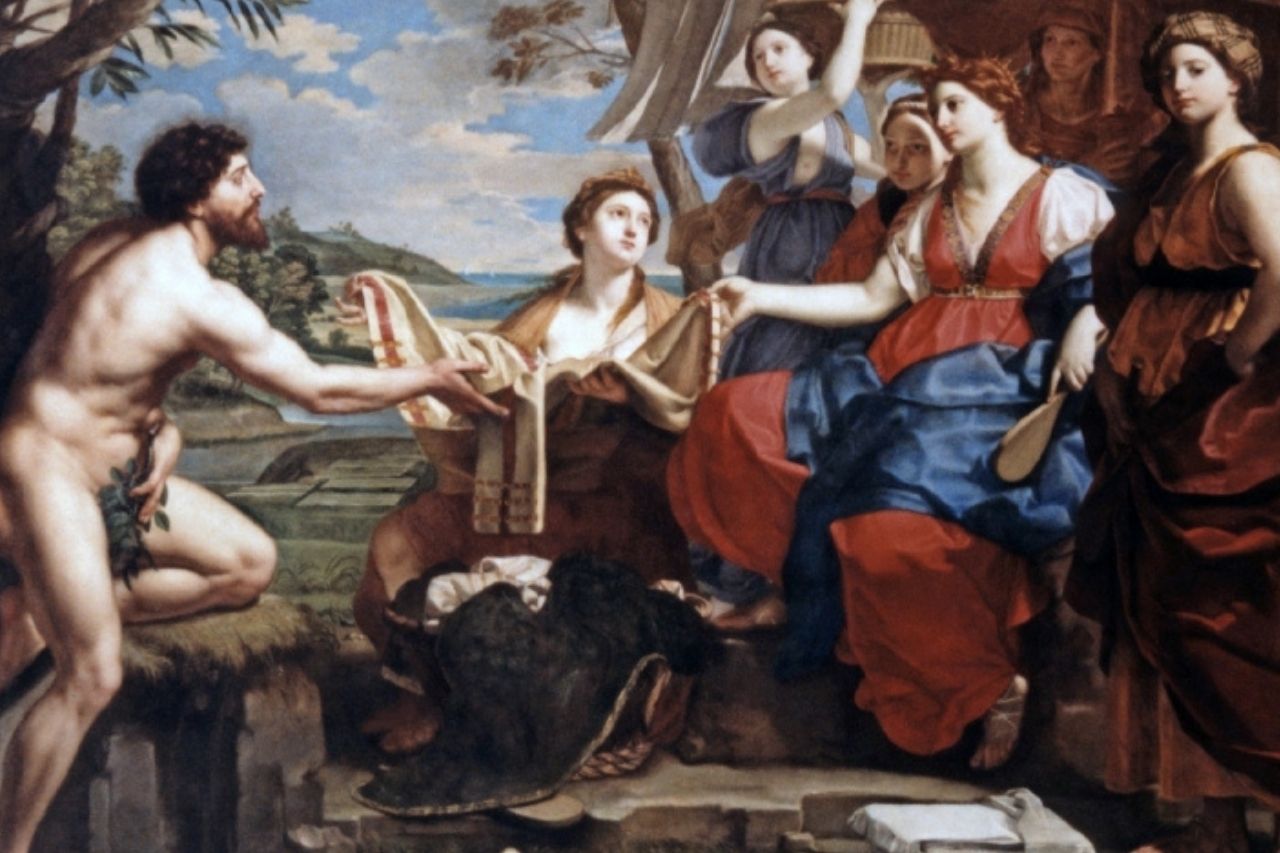
The Phaeacians - seafaring people of Scheria in The Odyssey

Location

The location of played a vital role in its utopic description. Centuries after Homer had described the city in his poetry, geographical experts, Polybius and Strabo attempted to explain and locate the geography of Scheria and broadly The Odyssey on the world map.

In addition, Polybius wrote a book on the geography of The Odyssey, explaining every step of Odysseus. Strabo however explained the location of both the utopic city and Ogygia, which was an island in The Odyssey by Homer.

According to Strabo, this city was located in the middle of the Atlantic ocean. This explains why and how it was surrounded by water from all four sides and also why its inhabitants were called masters of the sea.

In some of the references, it is shown to be a common Mediterranean town, with simple living and blood mortals. This is interesting to know as itr serves as a basis for utopic land and characteristics. If the former is true, it would fit normally in the world and its inhabitants would be very mediocre. In the latter condition, the city is a utopic paradise and its people are human marvels, both of which are home to many different Olympian-associated entities.

Lineage of the City

The name of the city can be roughly translated to the word "gray" which points to the fact that the people of the town were dark-skinned people. They are known to be the descendants of Poseidon, the Olympian god of water and brother of Zeus. Because Poseidon was their ancestor, they had great control over the seas and therefore were called masters of the sea.

So the lineage of Scheria began with Poseidon which ensures that there were many demigods among the mortals of the city. In addition, the kingdom was also called the kingdom of Phaeacia so its inhabitants were called Phaeacians in the Odyssey.
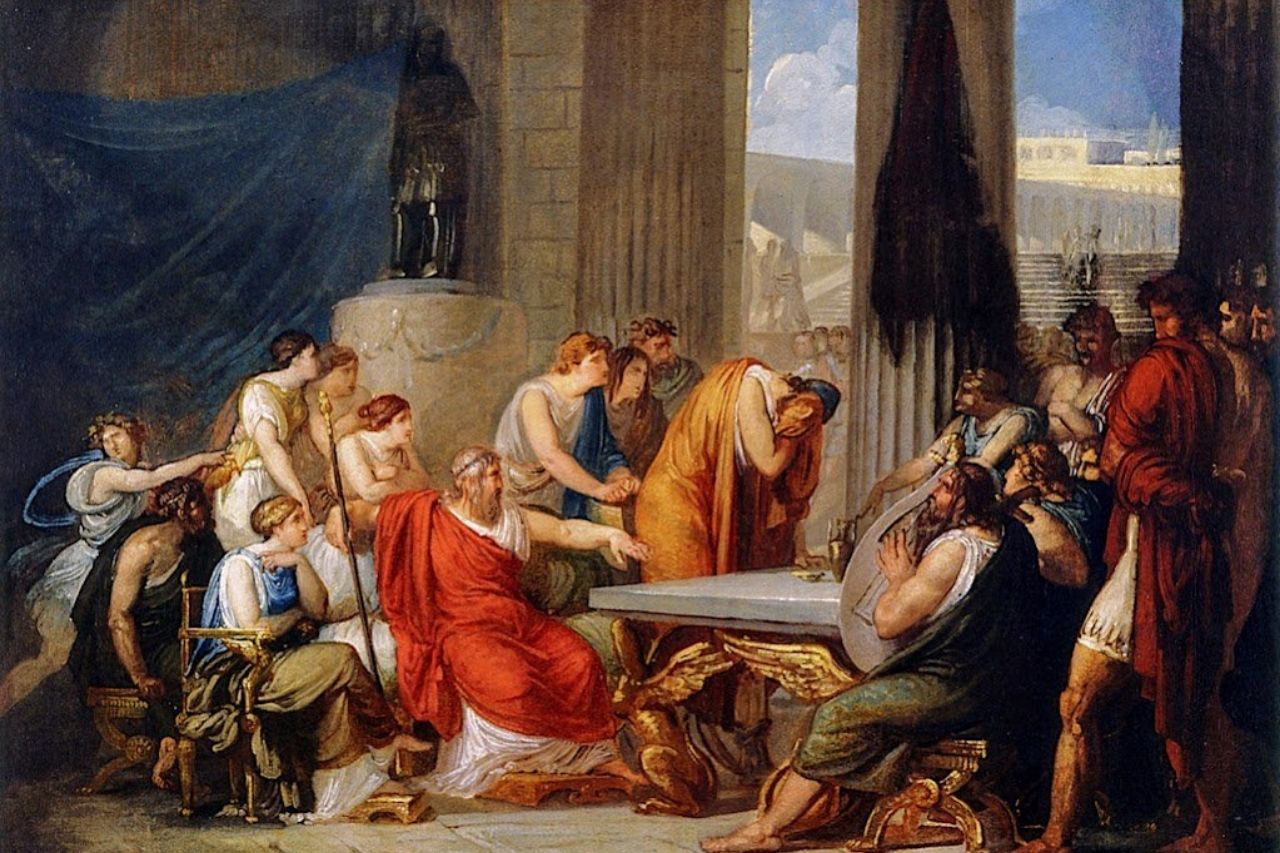
King Alcinous on his throne - ruler of the Phaeacians in Scheria

The Town in Odysseus

The Odyssey is one of the most known works of the ancient Greek poet and writer, Homer. This is the only poem in Greek history that mentions and relates the people and this uptopic city to mythology. This is why the poem has much importance. The poem however is not only about the Scherians but about the story of Odysseus.

Odysseus was the King of Ithaca. He has various names and epithets given to him in both Greek and Roman mythology. The poem follows the trials and tribulations that Odysseus faced when he left home, Ithaca, and returned back after ten years. He was the son of Laertes and Anticlea, his wife was Penelope, with whom he fathered two children namely: Telemachus and Acusilaus.

If we look at the genealogy of Odysseus, he is known as the great-grandson of the Olympian god, Hermes. In his struggle to get back home, Odysseus stumbles upon the city of Scheria and asks the people for help. Even though Odysseus is the King of Ithaca and a lot of islands and towns come under his kingdom, the people had no idea who he was. Other than in The Odyssey, Odysseus is also mentioned in the Iliad, also by Homer.

On the other hand, the reason why this town is famous in the book of Homer is because the book is the key reference to these detailed places and the mythology, in general. In addition, this town, in particular, was a spectacular place to be mentioned where people would relate it to their daily lives, since the plac seemed so magical, and would strive to make their lives the same.
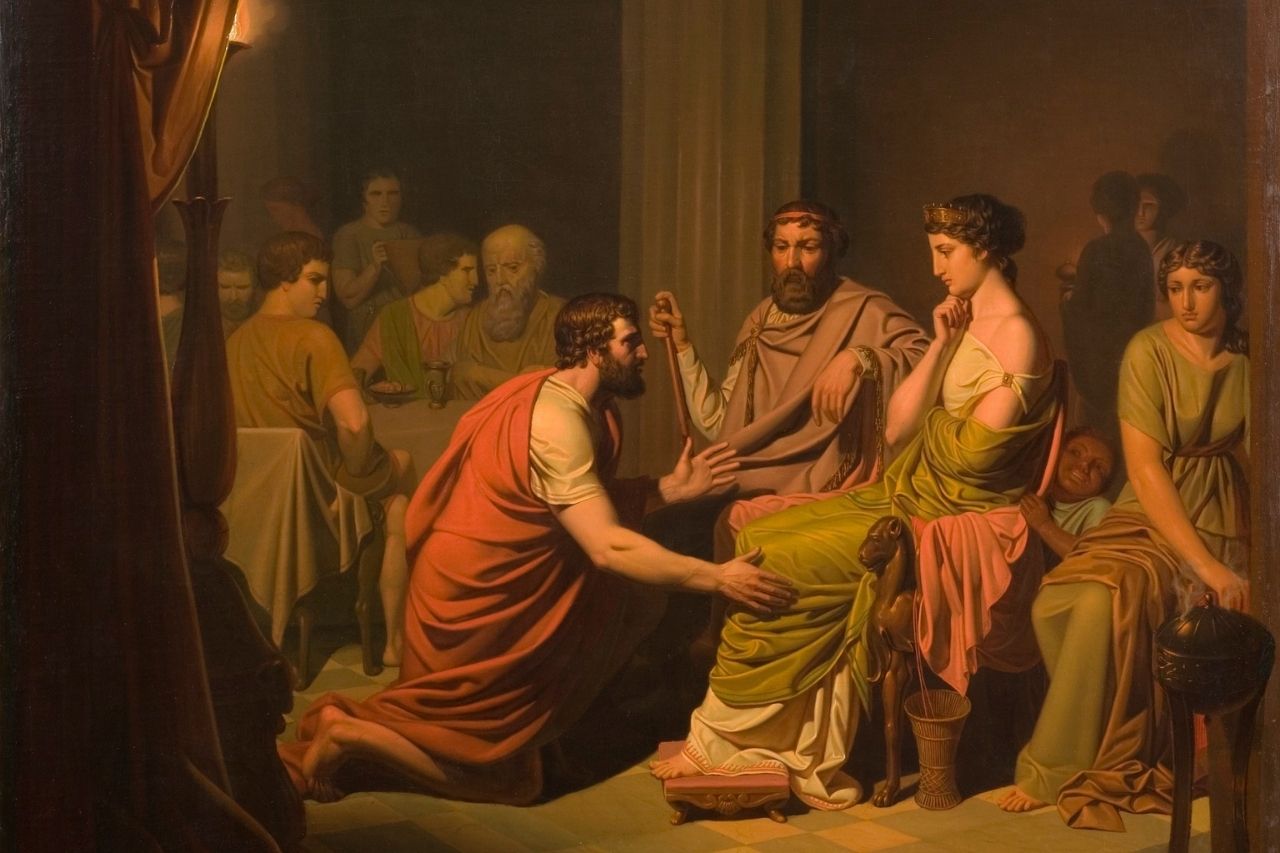
Odysseus recounting his tale to the Phaeacians

The City in The Trojan War

The people of the utopic city did not participate in the Trojan war. This goes on to show how separated the inhabitants were from the other parts of the Greek kingdom. These people were only concerned with their own work and life. They did not think of interfering in world matters and maybe that is why Homer calls this place a utopic paradise.

The inhabitants were known there perfectly built boats and ships that as Homer describes them: were as fast as a falcon. These ships would have been on the winning side in the Trojan war if they had taken any sides.
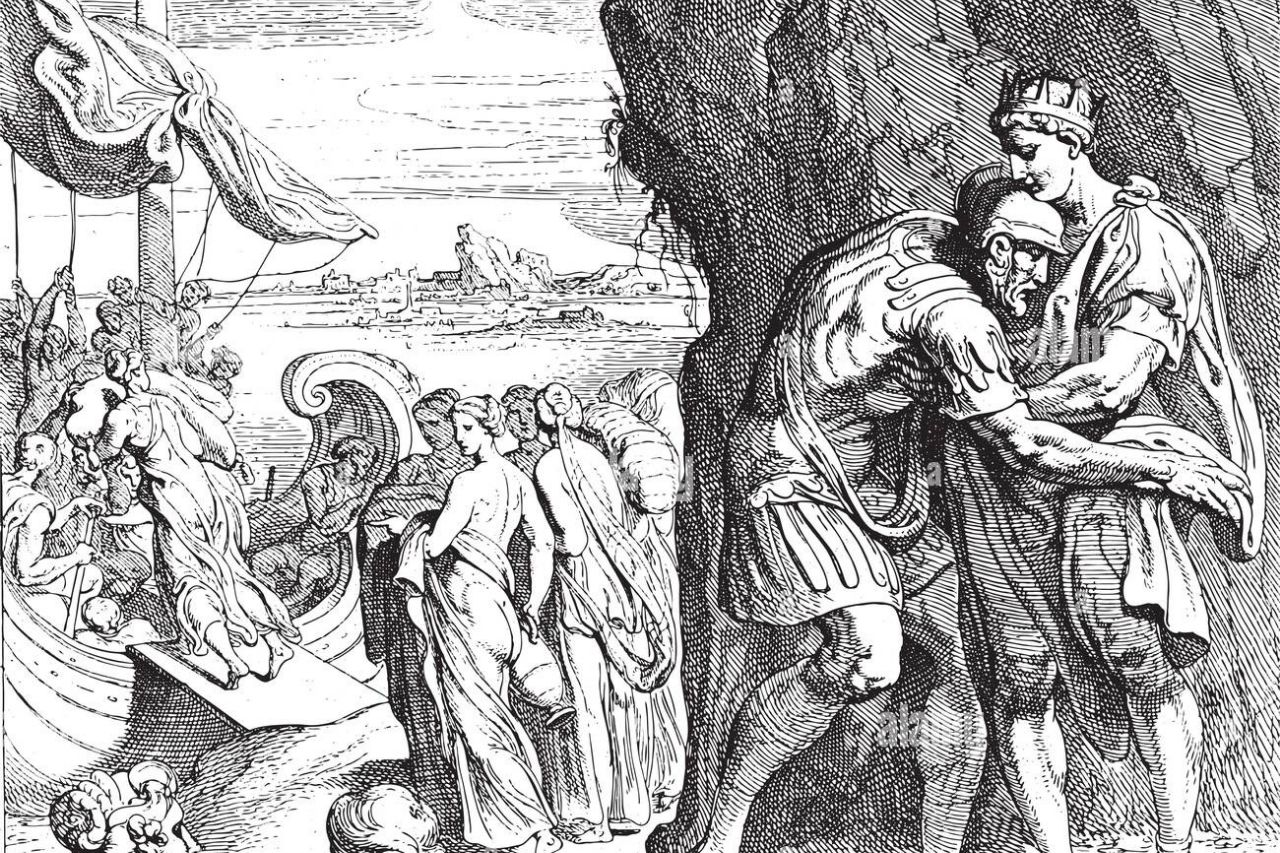
Odysseus bidding farewell to King Alcinous before departing Scheria

Conclusion

Scheria was a magnificent town in Greek mythology that was named in the Odyssey by Homer. This is the only poem in Greek history that mentions and relates the people and its city to mythology. Here are all the important points from the article as a conclusion:

  • Scheria was described as a utopic city with fantasized life, living, and more than normal inhabitants. The inhabitants were known as masters of the sea because they were the descendants of Poseidon.

  • According to Strabo, city was located in the middle of the Atlantic ocean.

  • The townspeople did not participate in the Trojan war but they helped Odysseus get back to Ithaca after his ten-year-long journey. He was the great-grandson of the Olympian god, Hermes.

  • Their signature ships and boast were described as the best of that time. Homer described their ships as fast as falcons.

The city was therefore one of the most interesting cities described in all of Greek mythology. This city would always be remembered as the city from which Odysseus returned back to Ithaca and its people sheltered him. Here we come to the end of the article.

By Ancient Literature

Created: February 16th, 2024

Modified: January 11th, 2025

Scherië

Scherië

Scherië was the home of the Phaeacians. Scherië was name given by earlier writers, while Apollonius Rhodius had called the island Drepane. Most scholars had identified Scherië as the island of Corfu, which was called Corcyra, during classical time...

August 8th, 1999 • Jimmy Joe
Was Homer’s Island of Scheria the Real Atlantis?

Was Homer’s Island of Scheria the Real Atlantis?

In contrast to the common view that Plato was the first person to write about Atlantis, some researchers try to argue that there are earlier Greek writers who mentioned it. One example is Homer. In the Odyssey, he wrote about an island called Sche...

November 18th, 2024 • Caleb Howells
Ionian Islands

Ionian Islands

The Ionian Islands are located on the western side of Greece, in the Ionian Sea. Only three islands had mythological importance, especially Ithaca, the home of the hero Odysseus.

August 8th, 1999 • Jimmy Joe
Scyrus

Scyrus

Scyrus (Skyrus) was an Aegean island northeast of Euboea. Scyrus was famous because its king, Lycomedes, was host to the aging hero Theseus. Theseus either accidentally fell to his death, or Lycomedes murdered the hero by pushing him off a cliff. ...

August 8th, 1999 • Jimmy Joe
Phthia Greece: The Setting of Achilles’ Life in Greek Mythology

Phthia Greece: The Setting of Achilles’ Life in Greek Mythology

Phthia Greece was an ancient city that is most famously known for its various Greek rulers. This ancient city is highly associated with Achilles, the Trojan war, and its after-effects in Phthia Greek mythology and Roman mythology. The city gave th...

February 16th, 2024 • Ancient Literature
Ithaca

Ithaca

An island in the Ionian Sea, east of the larger, neighbouring island of Cephallenia. It was the home and kingdom of Laërtes and his son Odysseus. Ithaca was a small and rocky island. When Menelaus, king of Sparta, was going to give some magnificen...

August 8th, 1999 • Jimmy Joe
Cythera

Cythera

Cythera is the large island south of the Peloponnesus, and the easternmost island in the group of islands known as the Ionian Islands. Cythera is a cult centre of Aphrodite. One of her epithets was Cythereia; Hesiod wrote: Her gods and men call Ap...

August 8th, 1999 • Jimmy Joe
Odysseus

Odysseus

King of Ithaca. The Romans identified Odysseus as Ulysses. Odysseus (Ὀδυσσεύς) was the hero of the epic poem called The Odyssey. Odysseus was the son of Laërtes (Laertes) and Anticleia, daughter of the thief Autolycus and Mestra. Other writers sai...

April 24th, 1999 • Jimmy Joe
Syracuse

Syracuse

Syracuse was one of the Greek cities in Sicily. The city was found by the Corinthians in 734 BC, located on the east coast, partly on the island of Ortygia, flanked by the Lesser Harbour and Great Harbour. Syracuse proper was on the island of Orty...

February 4th, 2008 • Jimmy Joe
Phaeacians in The Odyssey: The Unsung Heroes of Ithaca

Phaeacians in The Odyssey: The Unsung Heroes of Ithaca

Phaeacians in The Odyssey play a small but crucial role in Homer's Greek classic; the irony of how they meet our hero and become the Ithacan's lifesaver is worth noting. As Odysseus is freed from the island of Calypso, he travels the seas and is c...

February 16th, 2024 • Ancient Literature
Timeless Myths

Exploring mythology and legends from around the world.

Explore Myths

All Stories Characters All Articles Search Site Map

Mythologies

Norse Mythology Classical Mythology Celtic Mythology Arthurian Legends Mythology Gods Ancient Literature

About Us

Introduction About Jimmy Bibliography FAQs Retro Version

Resources

Timeless Myths All Stories All Articles Characters
© 1999-2026 Timeless Myths • Copyright • Privacy Policy • Cookie Policy • Contact
Follow us: