Timeless Myths Logo
Aphrodite Apollo Ares Artemis Athena Atlas Coeus Crius Cronus Demeter Dionysus Gaia Hades Hephaestus Hera Hermes Hestia Hyperion Iapetus Mnemosyne Oceanus Phobos Phoebe Poseidon Prometheus Rhea Tethys Themis Uranus Zeus
Bacchus Ceres Diana Juno Jupiter Mars Mercury Minerva Neptune Pluto Venus Vesta Vulcan
Amun Anubis Aten Atum Babi Bastet Bes Geb Hapi hathor heqet Horus Isis Khepri Khnum Khonsu Maat Nephthys Nut Osiris Ptah Ra Seshat Seth Shu Sobek Thoth
Alfheim Baldur Freya Freyr Frigg Heimdallr Helheim Idun Jotunheim Loki Nerthus Njord Odin Thor Tyr
Aengus Arawn Badb Brigid Cailleach Ceridwen Cernunnos Cu Chulainn Dagda Danu Gwydion Herne the Hunter Lugh Medb Morrigan Neit Nuada Taliesin Taranis
Chalchiuhtlicue Coatlicue Huitzilopochtli Mictlantecuhtli Mixcoatl Ometeotl Quetzalcoatl Tezcatlipoca Tlaloc Tonatiuh Xipe Totec Xochiquetzal Xolotl
Amaterasu Ame no Uzume Benzaiten Bishamonten Daikokuten Ebisu Fujin Fukurokuju Inari Izanagi Kagutsuchi Raijin Susanoo Tsukuyomi
Caishen Cangjie Dragon King Eight Immortals Erlang Shen Fuxi Guanyin Hou Yi Huxian Jade Emperor King Yama Leizi Lu-ban Mazu Nezha Nuwa Pangu Shennong Sun Wukong Xiwangmu Yue Lao Zhong Kui
Norse Classical Celtic Arthurian
Literature Stories Names
Aphrodite Apollo Ares Artemis Athena Atlas Coeus Crius Cronus Demeter Dionysus Gaia Hades Hephaestus Hera Hermes Hestia Hyperion Iapetus Mnemosyne Oceanus Phobos Phoebe Poseidon Prometheus Rhea Tethys Themis Uranus Zeus
Bacchus Ceres Diana Juno Jupiter Mars Mercury Minerva Neptune Pluto Venus Vesta Vulcan
Amun Anubis Aten Atum Babi Bastet Bes Geb Hapi hathor heqet Horus Isis Khepri Khnum Khonsu Maat Nephthys Nut Osiris Ptah Ra Seshat Seth Shu Sobek Thoth
Alfheim Baldur Freya Freyr Frigg Heimdallr Helheim Idun Jotunheim Loki Nerthus Njord Odin Thor Tyr
Aengus Arawn Badb Brigid Cailleach Ceridwen Cernunnos Cu Chulainn Dagda Danu Gwydion Herne the Hunter Lugh Medb Morrigan Neit Nuada Taliesin Taranis
Chalchiuhtlicue Coatlicue Huitzilopochtli Mictlantecuhtli Mixcoatl Ometeotl Quetzalcoatl Tezcatlipoca Tlaloc Tonatiuh Xipe Totec Xochiquetzal Xolotl
Amaterasu Ame no Uzume Benzaiten Bishamonten Daikokuten Ebisu Fujin Fukurokuju Inari Izanagi Kagutsuchi Raijin Susanoo Tsukuyomi
Caishen Cangjie Dragon King Eight Immortals Erlang Shen Fuxi Guanyin Hou Yi Huxian Jade Emperor King Yama Leizi Lu-ban Mazu Nezha Nuwa Pangu Shennong Sun Wukong Xiwangmu Yue Lao Zhong Kui
Norse Classical Celtic Arthurian
Literature Stories Names

The Length of Homer's Epic Poem: How Long Is The Odyssey?
Other
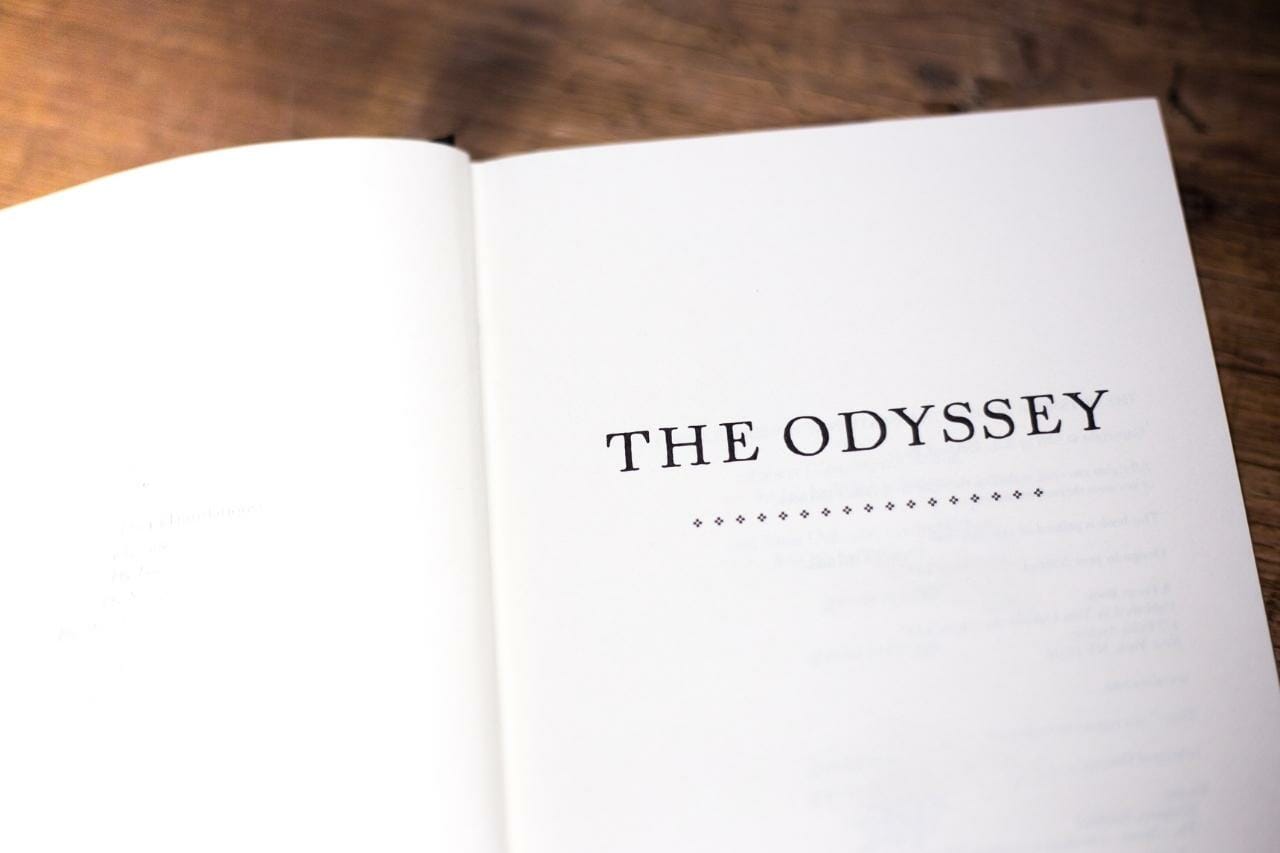
How long is the Odyssey

How long is the Odyssey

Homer's Odyssey is one of the two most famous ancient Greek epic poems (the first one was The Iliad). This is regarded as one of history's great stories, and it has had a significant impact on European literature. It is divided into 24 books and follows Odysseus, the ruler of Ithaca and one of the Trojan War Greek heroes, as he embarks on a long journey back to his "real place," or home, which is Ithaca. Continue reading to find out how long you will be hooked to this epic poem.

How Long Is the Odyssey?

The Odyssey is written in a dactylic hexameter, commonly known as the Homeric hexameter, and has 12,109 lines. Note that a hexameter is a type of line or rhythm with six stressed syllables, whereas a dactylic hexameter (used in ancient Greek poetry) usually consists of five dactyls and either a spondee (two long stressed syllables) or trochee (one long stressed syllable followed by an unstressed syllable). As to the page count, it depends on the format and translation of the version to be read. According to modern commercial listings, it can range from 140 to 600 pages.

How Long Is the Odyssey in Words?

The poem "Odyssey" consists of 134,560 words or an equivalent reading time of nine hours with an average reading speed rate of 250 words per minute.

Is the Odyssey Hard to Read?

Based on reviews, the Odyssey is not hard to read and is even easier when compared to the Iliad, Homer's other famous piece. As the original text of the poem is written in Greek, it is far easier to read if it is translated into a language that the reader is most familiar with.

How Long Is the Iliad?

The Iliad comprises 15,693 lines divided into 24 books. At 250 words per minute, the average reader will spend around 11 hours and 44 minutes reading this book.

Conclusion

The length of the story and the actual word count are factors to consider when deciding to read epic poems or novels. Below is the summary regarding the length of "the two most epic Greek poems:" The Iliad and The Odyssey by Homer.

  • The length of the Odyssey poem depends on the format, translation, and version, but the original is said to have 12,109 lines divided into 24 books.

  • It is composed of 134,560 words or an equivalent reading time of nine hours to an average reader with a speed of 250 words per minute.

  • In the story, the journey of Odysseus, or the Odyssey itself, took 10 years.

  • The poem is generally not hard to read and when compared to the first one, The Iliad, it is easier to read, understand, and enjoy.

  • The first epic poem, The Iliad, is composed of 15,693 lines and divided into 24 books.
How long is Homer's Odyssey

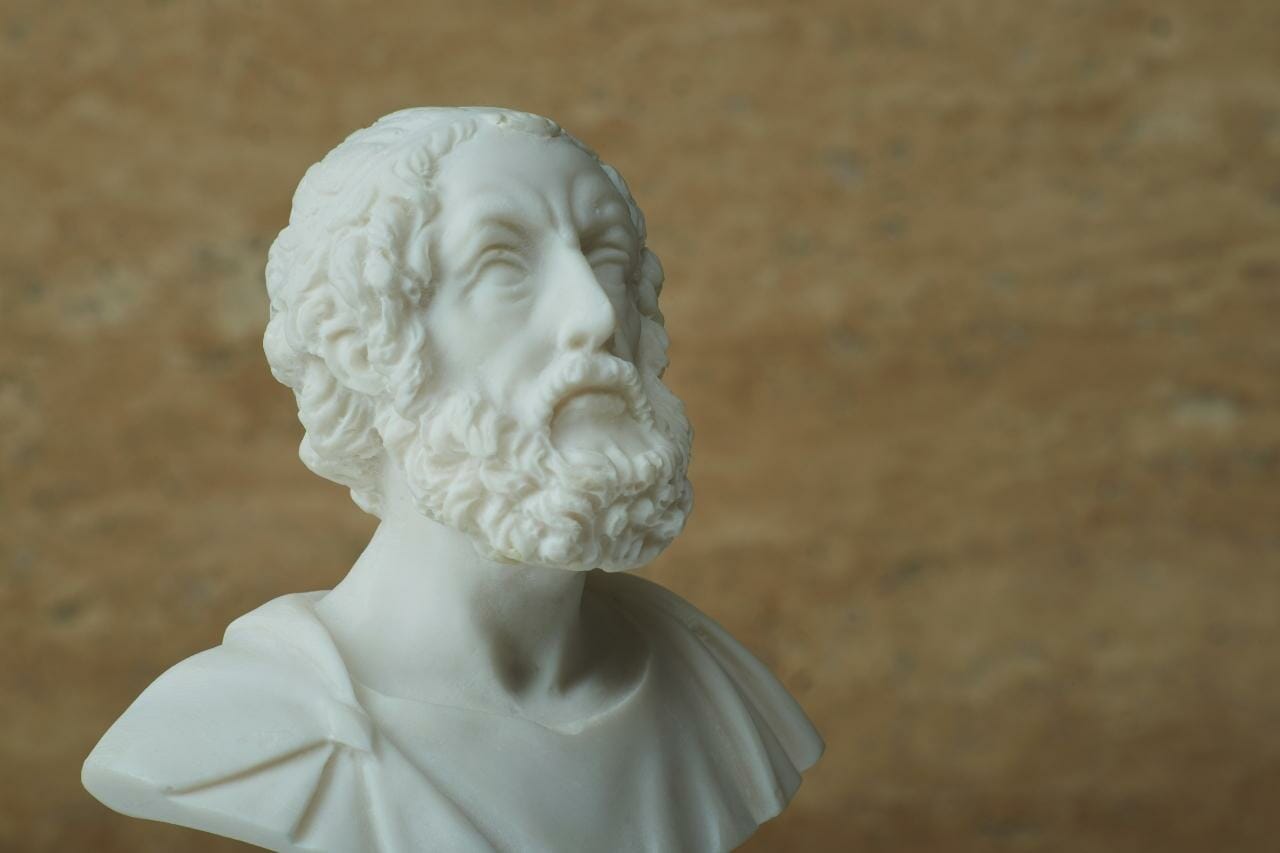
How long is Homer's Odyssey

In a nutshell, the length of the reading material would not matter to someone who is genuinely interested in reading and discovering the magnificent journey depicted in the epic poetry. What matters most in the end are the lessons learned from reading them.

By Ancient Literature

Created: February 16th, 2024

Modified: February 16th, 2024

The Odyssey

The Odyssey

(Epic Poem, Greek, c. 725 BCE, 12,110 lines)Introduction “The Odyssey” (Gr: “Odysseia”) is the second of the two epic poems attributed to the ancient Greek poet Homer (the first being “The Iliad”), and usually considered the second extant work of ...

January 1st, 2025 • Ancient Literature
Odyssey

Odyssey

The Voyage Home Return to IthacaThe Voyage HomeOdyssey Odyssey is an epic poem, written by Homer, about the adventures of the Greek hero Odysseus (Ὀδυσσεύς). Odysseus was the son of Laërtes (Laertes) and Anticleia. Odysseus had married Penelope, a...

May 17th, 1999 • Jimmy Joe
How Long Is the Iliad? The Number of Pages and Reading Time

How Long Is the Iliad? The Number of Pages and Reading Time

How Long Is the Iliad? The standard accepted version of the Iliad consists of exactly 15,693 lines all grouped into 24 books. The events of the story itself span 52 days but the details of the poem make it great for reading. The poem has received ...

February 16th, 2024 • Ancient Literature
In What Way Is the Odyssey an Epic: A Comprehensive Analysis

In What Way Is the Odyssey an Epic: A Comprehensive Analysis

An epic poem tells the story of heroic acts or significant historical or mythological events. In Homer's Odyssey, the poem recounts Odysseus' epic journey on his way back home. However, how was the poem considered an epic one? Continue reading to ...

February 16th, 2024 • Ancient Literature
Odysseus in the Iliad: The Tale of Ulysses and the Trojan War

Odysseus in the Iliad: The Tale of Ulysses and the Trojan War

Odysseus in the Iliad is a Greek warrior and wise man who left to fight in the Trojan War. His story was a famous one because of how clever he was in helping fight and create reconciliations between Agamemnon and Achilles. He was the King of Ithac...

February 16th, 2024 • Ancient Literature
The Odyssey Setting – How Did Setting Shape the Epic?

The Odyssey Setting – How Did Setting Shape the Epic?

In Homer's Odyssey, setting determines many of Odysseus' challenges and becomes a significant part of the tale as the characters and events. While the story involves a journey that lasted over 10 years, the tale is told during the last 6 weeks of ...

February 16th, 2024 • Ancient Literature
The Iliad

The Iliad

(Epic Poem, Greek, c. 750 BCE, 15,693 linesIntroduction - Who wrote the Iliad "The Iliad" (Gr: "Iliás") is an epic poem by the ancient Greek poet Homer, which recounts some of the significant events of the final weeks of the Trojan War and the Gre...

January 1st, 2025 • Ancient Literature
Invocation of the Muse Odyssey: The Author's Prayer

Invocation of the Muse Odyssey: The Author's Prayer

Invocation of the muse Odyssey, in Greek mythology, refers to the act of the author, Homer, requesting the muse to give him inspiration and blessing as he begins to write his work of literature, The Odyssey. Read on to discover more details about ...

February 16th, 2024 • Ancient Literature
Iliad vs Odyssey: A Tale of Two Epics

Iliad vs Odyssey: A Tale of Two Epics

While the Iliad vs Odyssey question is related and even considered sequential by some, there are various subtle and not-so-subtle differences. For example, The Iliad is more liberal with its mixing of the paranormal and fantasy and the mundane. Th...

February 16th, 2024 • Ancient Literature
Polyphemus in the Odyssey: The Strong Giant Cyclops of Greek Mythology

Polyphemus in the Odyssey: The Strong Giant Cyclops of Greek Mythology

Polyphemus in the Odyssey was described as a one-eyed giant monster who played an important role in Greek mythology. His appearance may be very different from ours, but like any ordinary human, he knows how to fall in love. Let's discover how, and...

February 16th, 2024 • Ancient Literature
Timeless Myths

Exploring mythology and legends from around the world.

Explore Myths

All Stories Characters All Articles Search Site Map

Mythologies

Norse Mythology Classical Mythology Celtic Mythology Arthurian Legends Mythology Gods Ancient Literature

About Us

Introduction About Jimmy Bibliography FAQs Retro Version

Resources

Timeless Myths All Stories All Articles Characters
© 1999-2026 Timeless Myths • Copyright • Privacy Policy • Cookie Policy • Contact
Follow us: