The Odyssey Setting – How Did Setting Shape the Epic?
In Homer's Odyssey, setting determines many of Odysseus' challenges and becomes a significant part of the tale as the characters and events.
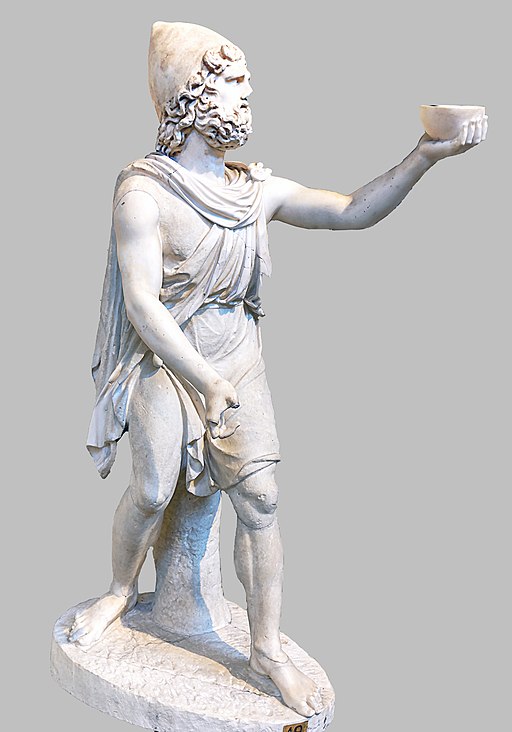
The Odyssey Setting
While the story involves a journey that lasted over 10 years, the tale is told during the last 6 weeks of Odysseus' journey.
After the fall of Troy, the story takes place when Odysseus sets out to return to his home in Ithaca. Tired of making war and anxious to return to his wife and child, Odysseus set off for his family, a journey that should have taken a few months at most.
Unfortunately for Odysseus, many forces, both natural and immortal, impeded his journey. Throughout the journey, he found himself challenged by immortal beings and the wrath of the very elements of earth and sea.
What Is the Setting of The Odyssey?
You can divide the setting of the Odyssey into three parts:
The location and environment in which Telemachus' role in the tale takes place as he follows his coming-of-age path and searches for his father
The location Odysseus is in as he relates his tale—during the time he is in the court of Alcinous and the Phaeacians
The places in which the tales Odysseus tells take place
The epic is divided by time, place, and even viewpoint. Although Odysseus is the epic's primary focus, he does not enter the tale until Book 5.
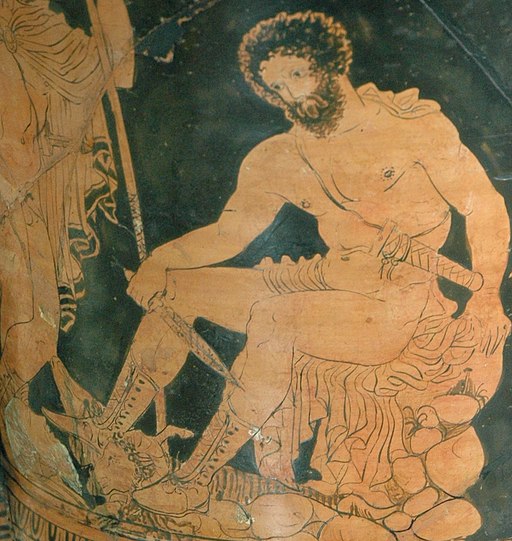
The Wanderings of Odysseus
What is the setting of the Odyssey in the first four books? The epic begins with Telemachus. It focuses on his struggle to overcome the contempt of familiarity in his homeland. He is a young man known to the island's leaders as a child and toddler. Athena came to his aid and assembled the island's leaders to protest the suitors seeking his mother's hand.
Telemachus' youth and lack of standing in his island home work against him. In the end, recognizing the need for his father's return and protect Penelope from an unwanted marriage, he traveled to seek assistance in Pylos and Sparta.
There he sought news from the allies of his father. In the new setting, where he came as a young man to those who knew his father best, his youth was less disadvantaged.
He stopped first in Pylos, where he was met with sympathy, but not much else. From there, he traveled to Sparta to meet with King Menelaus and Queen Helen. In Sparta, he finally gained success, learning from King Menelaus that Odysseus is held by the nymph Calypso.
He started back to Ithaca to get support to go and rescue his father. Readers are left with a cliffhanger with the suitors plotting to kill the young heir to the throne.
The Wanderings of Odysseus
Book 5 switched settings and points of view to Odysseus. The sea nymph's home was a lush island, surroundings that provided a strong contrast with Odysseus' desire to return home to Ithaca's stony island where his wife and son awaited his return.
Rejoicing in his escape, he set out from Calypso's island, only to be waylaid again by the vengeful sea-god Poseidon. Driven off course, he landed on the island of Phaeacia, where he recounted the tales of his travels to the king and queen in Books 9-12.
In the conversation with King Alcinous, Odysseus explained how he began his journey from Troy, where he and the Aecheans had defeated Trojans and destroyed the City.
He cleverly led into the story by asking a court singer to tell the Trojan Horse tale, which provided him with a natural lead-in to the story of how he came to Phaeacia and what happened along the way.
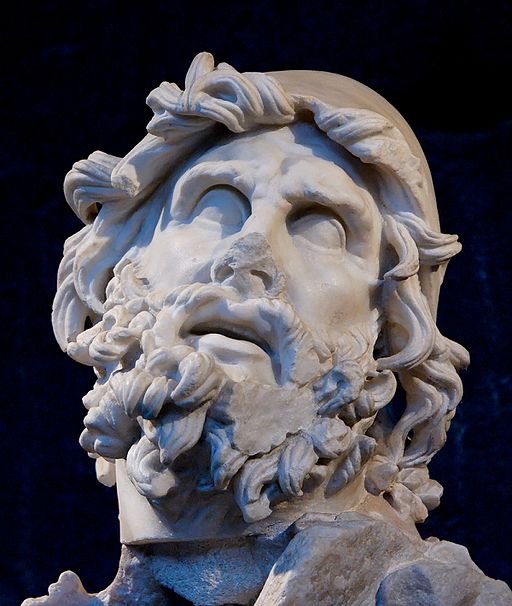
Odysseus, the hero of The Odyssey
Upon leaving Troy, they traveled first to Ismarus, where he and his men overtook the Cicones. They attacked and plundered the people, taking such food and drink and treasure as the coastal town contained and taking the women as slaves.
Odysseus's men, having spent the last ten years of their lives at war, were determined to enjoy their ill-gotten gains. They sat on the shore, enjoying their spoils and partying, despite Odysseus' urging to return to the ships and make off for home.
Some of the Cicones' survivors fled inland. They gathered their neighbours' forces and returned, routing Odysseus' men soundly and driving them back to their ships and out to sea. This is the last truly peaceful land Odysseus visited before he lands in Phaeacia.
The Odyssey settings varied from quiet, lush palace life to the horrors of the cyclops' cave to the Ithaca's stony shores that Odysseus calls home. Each setting gave Odysseus another opportunity to present a part of his personality or to reveal his skill and cleverness.
Upon leaving the Ciconess, Odysseus returned to the "wine-dark sea." There, the setting once again rose, showing its power as the sea proved a cruel host.
Storms sent by Zeus drove the ships so far off course they ended up landing in the distant land of the Lotus Eaters.
There, the men were lured by the inhabitants into eating the fruit and nectar of the lotus blossoms, which caused them to forget the idea of going home.
Once more, the comfort of the lush setting contrasted with Odysseus's desire to return home. Only by dragging them back to the ships one by one and locking them up was Odysseus able to pull them away from the island's appeal.
Odysseus went on to recount making his worst misstep yet. His ships landed on the Cyclops' mysterious island, where Polyphemus captured him and his men. The rough terrain and the cave that Polyphemus called home made it impossible for them to escape while the cyclops kept watch.
Odysseus managed to blind the monster and escape with his men, but his foolish hubris in revealing his real name to his enemy brought down Poseidon's wrath on his head.
The Journey Home: How Does the Setting Show Odysseus' Character?
As Odysseus completed his tale in Book 13, so the reader left the most epic setting in the Odyssey: the sea and the wild and beautiful places Odysseus visited on his travels.
Charmed by his tales, the Phaeacians agreed to help the wandering king return to his homeland.
The final books of the Odyssey take place in Odysseus' homeland of Ithaca. He learned and grew during his travels, and he is a different man from the one who went boldly against the Cicones.
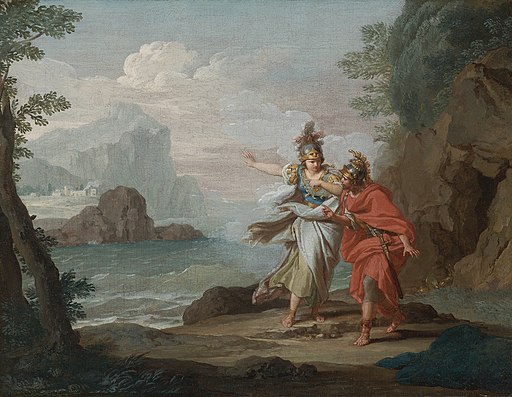
Athena guiding Odysseus home to Ithaca
No longer is he the bold warrior who marches in with several men and ships to support him. He approaches his beloved Ithaca with caution and enters an entirely new setting: the home of a swineherd.
Odysseus' noble demeanor contrasted with the humble hut of the slave where he has taken refuge. Eumaeus, a faithful slave, and Eurycleia, the nurse who cared for him as a child, recognized him and pledged to retake his throne.
He reunited with Telemachus, and together they planned to overcome the suitors so that Odysseus could reclaim his throne. The Odyssey time period setting of the Bronze age contributed to Odysseus's necessity to be known for his strength and skill in battle. His cleverness was an additional advantage as he faced his final, and perhaps most personally taxing, challenge.
Coming home, Odysseus not only had to regain his lost honor and place in his kingdom, but he also had to fight the suitors and convince Penelope of his identity. In the more familiar setting of his homeland of Ithaca, Odysseus' strength and character come to the surface.
All of the difficulties he faced had led him to this point. To complete his journey, he must face the suitors and drive them off to reclaim his place as the ruler of his home. Only then will Telemachus complete his own coming-of-age as Odysseus passes the island's leadership on to his son.
In his homeland, Odysseus was known for his excellent shows of prowess and strength. Penelope, still striving to ensure that if she were forced to re-marry, she would gain at least a husband worthy of Odysseus's memory, set a contest. She demanded that the suitors be able to string Odysseus's great bow and fire it through 12 axes, as he had done in the past.
Odysseus, in the familiarity of his homeland, regained his confidence. He alone was able to string the bow and perform the demanded feat. Once he had proven himself, he turned against the suitors and slaughtered them for their audacity and the insults to Penelope.
The familiarity of the setting of his own home proves to be Odysseus' final boon. Penelope demanded that her bed be moved from the bed-chamber she once shared with her husband if she is to be wed. The demand is a trick, one that Odysseus did not fall for easily. He responded that her bed could not be moved because one of the legs was made of a living olive tree.
He knew this because he had planted the tree and built the bed for her. Finally convinced that her husband was returned to her, Penelope accepted him.
Athena and Odysseus' aging father, Laertes, made peace with the families of the powerful suitors who had sought Penelope's hand, leaving Odysseus to pass the rest of his days peacefully. At the same time, Telemachus takes his rightful place as the heir and king of Ithaca.