Menelaus in The Odyssey: King of Sparta Helping Telemachus
Menelaus in The Odyssey is presented as Odysseus' friend and the king that offered Odysseus' son, Telemachus, assistance to find our hero's whereabouts. Menelaus, who welcomed the Ithacan party of Telemachus and his men with open arms.
He recounted the story of capturing Proteus, the divine old man of the Sea, to find his way back to Sparta.
But to fully grasp the role of Menelaus in The Odyssey, his importance, his symbolism, and how he gave Telemachus the courage and confidence to return home, we must see how the story unfolds.
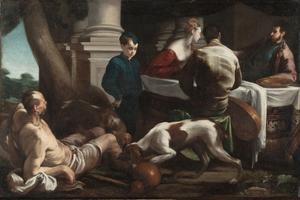
Menelaus in The Odyssey
Who Is Menelaus in The Odyssey?
Menelaus in The Odyssey was the gracious king of Sparta who welcomed Telemachus, Odysseus' son, and Pisistratus to feast in honor of his daughter's marriage to Neoptolemus, Achilles' son, He was the king of Sparta and the brother of Agamemnon. He was married to Helen of Troy, whom he had brought back from the fall of Troy.
He then recounted his story on how he traveled from Troy and his struggles in returning to Sparta: from encountering the Sea goddess Eidothea to his battle in capturing Proteus to find his brother Agamemnon and Ajax, as well as Odysseus' fate of course.
Menelaus helped the young son of Odysseus to gain confidence in his father's return as well as provide a role that helped Telemachus realize his capabilities as a king. Telemachus had learned diplomacy on his journey but with Menelaus, he learned the importance of camaraderie and connections. The role Menelaus played in Odysseus' return home was but a small fraction but his role in Telemachus' faith was the driving force that allowed the young prince to confidently return to Ithaca, reinvigorated to get rid of Penelope's suitors.
Why Did Telemachus Venture Off to Look For His Father?
The main reason why Telemachus went out of his way to find his father was because he was worried. His father was missing for more than ten years at this point and news had reached Ithaca that other kings already arrived at their homes after the Trojan war was over.
Naturally, Telemachus also wanted to avoid his mother getting remarried to an arrogant suitor. This is why he decided to leave Ithaca and reach out to Menelaus, the King of Sparta, who was back after his own journey and the war.
Let's go ahead and dive a little deeper into the story, however.
What Happened in Ithaca While Odysseus Was Gone: The Suitors
While Odysseus struggled in his journey to return to Ithaca, his family faced a struggle of their own. Due to his long absence, the Ithacan king was presumed dead, and Penelope was required to remarry another man to satisfy the people of the land and her father, who was also urging her to find another husband.

Penelope waiting for Odysseus
Penelope refused to do so but could not fight off the expectations of those around her. Instead, she allowed her suitors to pursue her under the guise of opening her heart to them. In actuality, she prolonged their courtship, waiting for Odysseus in secret. She gave out an excuse, telling her suitors she'd pick one of them after finishing her mourning weave, but every night she untangled her work to prolong the process.
The suitors had little to no respect for the house of Odysseus. They dined like kings, feasting every day and drinking every night, treating themselves as kings for years. Eventually, the home of Odysseus was in danger of losing all its resources to the suitors.
Telemachus to The Rescue
As such, Telemachus called a meeting to discuss the state of their kingdom. There he voiced his concerns to the Ithacan elders, and a plan was made to prevent further problems from the suitors' behavior from arising. He talked to the leader of the suitors and asked them to respect Penelope, Odysseus' wife, and her house, warning them of their behavior. The suitors did not listen and plotted to kill that human obstacle they couldn't seem to get rid of.
Fearing for the young man's life, Athena disguised herself as a mentor and urged Telemachus to venture the seas in search of his father. This would be the journey that would help Telemachus grow into his skin, sharpening his skills and giving him enough exposure to influence him and teach him how to be both a man and a king.
How Athena Helped Telemachus
With the consent of Zeus, Athena as Odysseus' family guardian traveled to Ithaca to spoke with Telemachus. Disguising herself in the form of Odysseus' old friend Mentes, Athena informed the young man that Odysseus was still alive.
The next day, Telemachus held an assembly at which he ordered the suitors to leave their palace. Antinous and Eurymachus, the most disrespectful of the suitors, rebuked Telemachus and asked for the visitor's identity. Suspecting the visitor is a goddess in disguise, Telemachus informed them that the man was simply an old friend of his father, Odysseus.
As Telemachus prepared to venture off to Pylos and Sparta, Athena revisited him in the form of Mentor, another one of Odysseus' old friends. She encouraged him, telling him that his journey will be fruitful. After that, she set out to town and assumed the disguise of Telemachus himself, collecting a loyal crew to operate his ship.
Pylos and Nestor Helping Telemachus
At Pylos, Telemachus and Athena witnessed an impressive religious ceremony in which dozens of bulls were sacrificed to the Sea god Poseidon. Although Telemachus had little to no experience with public speaking, Athena encouraged him to approach Nestor, the King of Pylos, and ask for his help.
Holding no information about Odysseus, Nestor recounted the story of the fall of Troy and the separation between Agamemnon and Menelaus, the two Greek brothers who led the expedition. Menelaus set sail for Greece immediately and was accompanied by Nestor while Odysseus remained with Agamemnon, who continued to make sacrifices for the gods on the shores of Troy.
Telemachus then found his chance to ask about the brother of Menelaus, Agamemnon. Nestor then explained that Agamemnon returned from Troy to find that Aegisthus, a base coward who remained behind, had seduced and married his wife, Clytemnestra. With her approval, Aegisthus murdered Agamemnon.
Nestor, having sympathy for Telemachus, sent his son Peisistratus and Telemachus to Sparta, informing Telemachus that Menelaus, the king of Sparta, may know his father's whereabouts. As the two set out by land the next day, Athena revealed her divinity by shedding the form of Mentor and changing into an eagle before the entire court of Pylos. She stayed behind to protect Telemachus's ship and crewmates.
Menelaus in The Odyssey: Telemachus Arriving at Sparta
In Sparta, Telemachus arrived at the low-lying city of Lacedaemon. From there, they rode straight to the home of Menelaus of Sparta. Menelaus was found in his house feasting with his many clansmen in honor of Neoptolemus and Hermione; the daughter of Menelaus was to marry the son of the warrior Achilles.
Upon arriving at the gate, a servant named Eteoneus saw Telemachus and immediately returned to king Menelaus' side telling him what had occurred. Menelaus then instructed the handmaidens to guide the Ithacan and Pylean party into a luxurious bath.
The king of Sparta himself greeted the Ithacan party and courteously told them to eat their fill. Taken aback by the extravagance, the young men sat down and dined and were even welcomed by Helen the Queen of Sparta herself. Later on, she recognized Telemachus as the son of Odysseus because of the clear family resemblance. The king and queen then recounted with melancholy the many examples of Odysseus's cunningness at Troy.
Helen recalled how Odysseus dressed as a vagrant, managed to distract Paris and Menelaus succeeded in bringing Helen back to Sparta. Menelaus also recounted the famous tale of the Trojan horse, orchestrated by Odysseus, allowing the Greeks to sneak into Troy to slaughter the Trojans. The following day, Menelaus would recount the story of his return back from Troy, which inevitably led to Odysseus' whereabouts.
How Menelaus Found Odysseus' Whereabouts
Menelaus discussed his adventure in Egypt, how he was abandoned on the island with no way home. He also informed Odysseus' son how he was stuck on the island of Pharos. With provisions low and wavering hope, a sea goddess named Eidothea took pity on him.
The goddess told him of her father Proteus, who would give him the information he needed to leave the island. But to do so, she had to capture and hold him long enough for the information to be shared.
With the help of Eidothea, Proteus' daughter, they planned the capture of her father. Each day, Proteus would lay with his seals on the sand, basking in the rays of the sun. There, Menelaus dug up four holes to capture the sea god. Despite such difficulty, Menelaus seized the god long enough for him to share the knowledge Menelaus desired.
Proteus informed him that his brother Agamemnon and Ajax, another Greek hero, survived Troy only to perish back in Greece. Menelaus was then told of Odysseus' whereabouts: according to Proteus he was stuck on an island kept by the nymph Calypso and that was all he knew. With this report, Telemachus and Peisistratus returned to Pylos and the young prince set sail for Ithaca.
What Did Menelaus Do in The Odyssey?
Menelaus provided information to Telemachus on the whereabouts of his father, Odysseus. As the king of Sparta, he offered food and a bath to Telemachus and the son of Nestor, Peisistratus. He also recounted the Trojan war story and how he struggled to return to his city, Sparta. He told them of meeting Proteus and how he managed to gain information on the fates of his brother Agamemnon and Ajax, another Greek soldier who perished in Greece.
Menelaus in The Odyssey: Telemachus' Father Figure
Menelaus, in this context, passed on to Telemachus the ideal qualities of a king because he had grown up without a father, and without a king – the young prince had no paternal figure to look up to. His examples of leadership were his mother and the elders of Ithaca, so all those who seemed to lack the drive, passion, and capabilities to lead the throne. As such, Telemachus grew up without any confidence in his skills as a leader, for no one had taught him how to be one.
Telemachus not only gained confidence and political skills in his journey, but he also understood the value of friendship and loyalty. Both Menelaus and Nestor gave him qualities he could absorb to be a right and just king.
From Nestor, he learned diplomacy, and from Menelaus, he learned of sympathy, loyalty, and the importance of friendship. He learned how to nurture relationships and that caring for his people would not be enough if he did not know how to help them in the first place. He also learned the art of generosity as Menelaus portrayed such qualities to him. Without his father's loyal friends, he would not have been able to become a man fit for the throne of Ithaca.
Conclusion
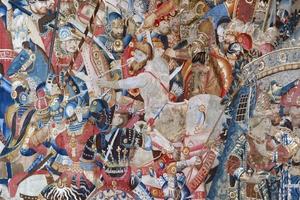
The Trojan War
Now that we've talked about Menelaus, who he was in The Odyssey, and his importance in the Greek epic poem, let's go over the critical points of this article:
Menelaus was the king of Sparta, brother of Agamemnon, and the Husband of Helen, who helped lead the Greeks in the Trojan war.
The king of Sparta offered Odysseus' son, Telemachus, assistance to find his father
Menelaus provided information to Telemachus on the whereabouts of his father, Odysseus
Menelaus passed on to Telemachus the ideal qualities of a king because he had grown up without a father and the young man had no paternal figure to look up to
Because of the kindness Menelaus showed Telemachus, Odysseus' son gained confidence in his capabilities as a leader and had faith that his father was close to coming back home
In conclusion, Menelaus was an important figure in Odysseus' son, Telemachus', coming of age story. Despite not being talked about much during the poem, Menelaus' presence in the Odyssey brings about crucial information regarding where Odysseus was at that time. After going through our article, you could even say that Menelaus signifies a key moment in the Homeric narrative, in which we get to finally dive into Telemachus' point of view on his father's absence.