Iliad vs Odyssey: A Tale of Two Epics
While the Iliad vs Odyssey question is related and even considered sequential by some, there are various subtle and not-so-subtle differences. For example, The Iliad is more liberal with its mixing of the paranormal and fantasy and the mundane.
The gods seem to take a much more active role in the Iliad's events, while they are less involved with mortal affairs in The Odyssey.
That's not to say the gods don't involve themselves in the events of The Odyssey.
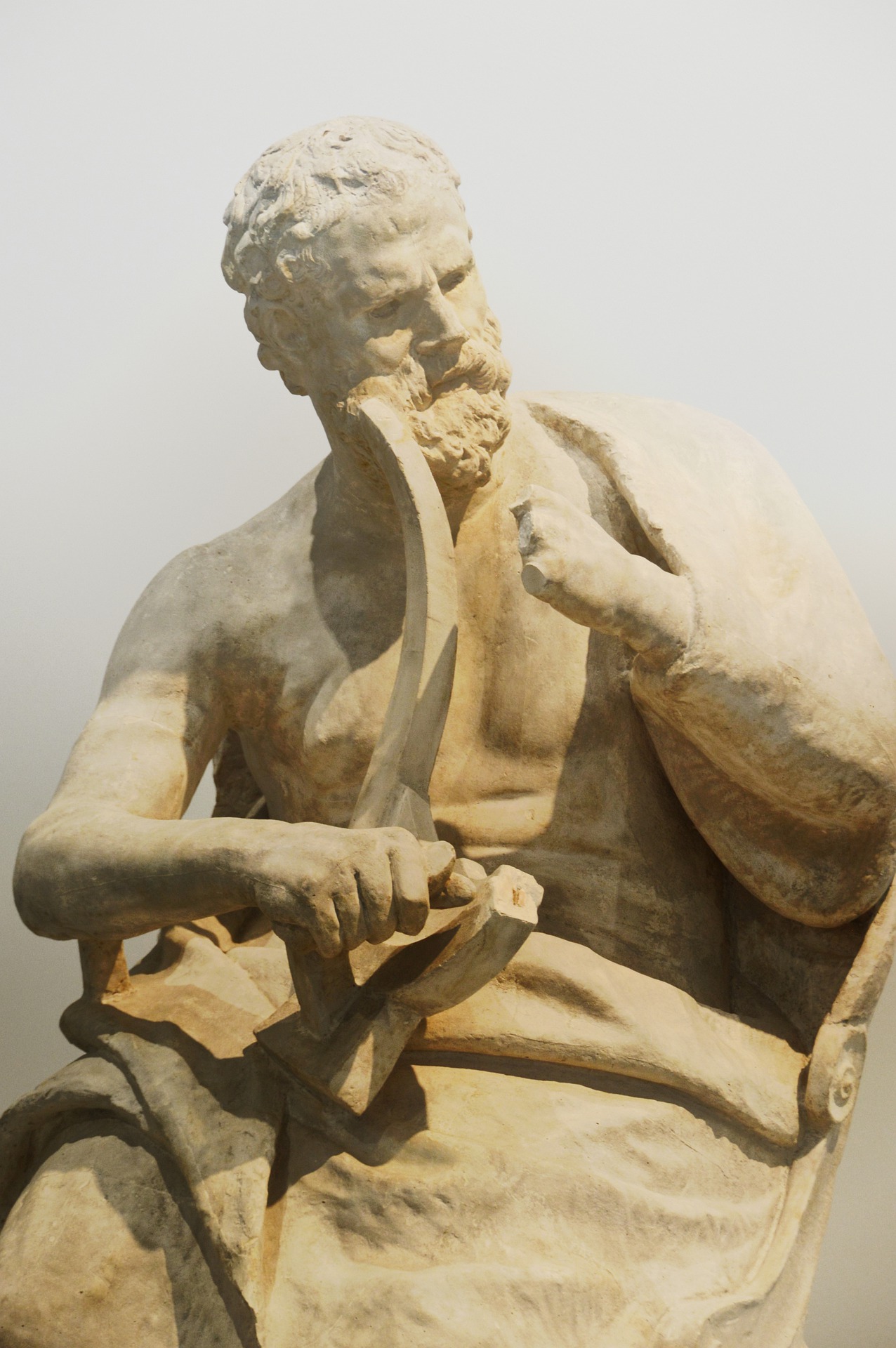
Statue of Homer, the writer of the Iliad and the Odyssey
What Is the Difference Between The Iliad and The Odyssey?
One of the first things to understand when you begin reading Homer's epics is how is The Iliad related to The Odyssey? In the simplest terms, The Odyssey is considered a sort of sequel to The Iliad.
Both epics consist of 24 books and revolve around a specific time during a much larger event. Clearly, the Trojan War, and everything leading up to it, was a much larger story than the events contained in The Iliad.
Odysseus' journey to return to his home of Ithaca was also a much larger story than is told in The Odyssey. In each book, Homer encapsulated a portion of the events to make a point and present a particular view of the storyline.
Between the two, however, there are some significant differences. While fantastical elements are a part of both stories, with gods appearing frequently and mythical beasts such as nymphs, cyclops, and giants taking part in the action, there is a shift in the Odyssey's retelling.
In The Iliad, the gods take an active role, interfering with Human affairs, carrying messages, and even joining the battling. At one point, Athena drives a chariot into battle and several gods are wounded in the fighting.
In The Odyssey, the gods take a much less involved approach. They don't participate in the events. Although they do intervene a time or two, they do not directly interfere except when god Hermes carries a message to Calypso, informing her that she must release Odysseus so that he may continue his journey.
1. Character Perspectives in The Iliad and The Odyssey
One big difference between Iliad and Odyssey that is frequently overlooked is the difference in the way the story is told. While The Iliad tells the story in a third-person omniscient narrative, The Odyssey is presented differently from the points of view of many characters.
The Odyssey is also written in the third person, but it is not from the omniscient narrator. In books IX through XII, Odysseus becomes the narrator, relating his own tales.
The choice of narration is a small point, but it colors the entire focus of both pieces of work. The Iliad is an overreaching tale that touches upon the arcs of several plot lines.
The main plot line was the story of Achilles and his hubris. Another arc is the fate of Troy. The gods' interference and involvement are other themes, as is the human characters' efforts to circumvent their will and win the battles.
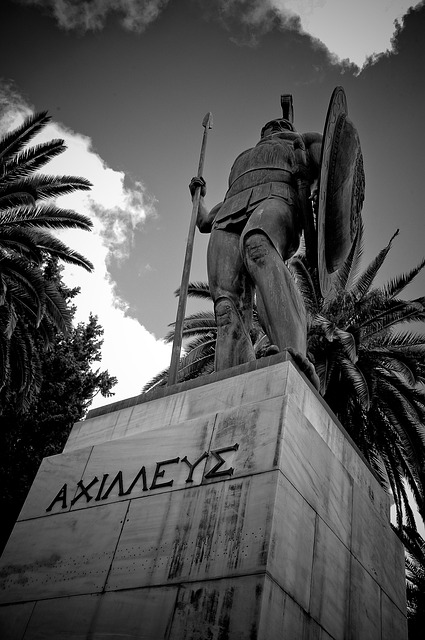
Statue of Achilles, the main character in the Iliad
Odysseus: A Man Who Spans the Epics
Odysseus first appears in The Iliad when the Greek Palamedes remind him of his obligation under Tyndareus' Oath. Following Odysseus' own advice, the Spartan King, Tyndareus, made each of Helen's suitors swear an oath. They would respect the union of Helen and the suitor she chose and pledge to defend the marriage.
Knowing he would not return from the war for 20 years if he went, Odysseus attempted to pretend insanity. He hitched a goat and an ox together to his plow and sowed his fields with salt. Palamedes placed his infant son, Telemachus, in front of the plow, forcing Odysseus to reveal his sanity by turning aside.
Odysseus plays an advisory role through most of the Trojan war. He is a skilled warrior but also a wise leader. When it was foretold that if Rhesus' horses drank from the river Scamander, Troy would not be taken. Odysseus, the Greek warrior, partnered with Diomedes, the Lord of War, to slip into the Trojan camp and kill the horses, preventing the prophecy's realization.
Although the incident is not related until the Odyssey, Odysseus conceived of the plan to build the giant wooden horse and trick the Trojans into taking it into their City, bringing about the final defeat.
2. A Tale of War and a Journey
It is impossible to complete a study of the differences in the Odyssey vs. Iliad without discussing each of the epics' overreaching themes.
The Iliad is the tale of a portion of the Trojan war.
It takes place largely within one area, and the conflict is between the individuals making up two main adversaries- the Acheans and the Trojans.
It is an epic story of war and battle and conflict, and the challenges facing the characters within the framework of those conflicts.
The Iliad is a tale of Man vs Man, as the two armies battle over the fate of not only the city but of the woman for whose love a foolish young prince was willing to start a war.
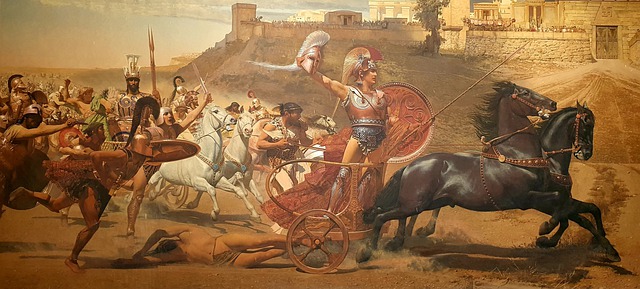
The Trojan War, depicting the key difference between the Odyssey and the Iliad
By contrast, The Odyssey is the story of one man and his epic journey to return to his beloved home. Standing in his way are not armies, but rather the gods, nature and fate.
The recurring theme of fate runs through the entire epic. Odysseus cannot escape the prophecy that was made before he even entered the war- that it would be 20 years before he would return.
Though the war ended after 10 years, it took him another decade to return to Ithaca, as he ran the gamut of challenges, losing men and ships along the way, until he returned battered and alone.
When he reached his home, there was a final obstacle to pass. His beloved wife, Penelope, had been rejecting suitors during his time away. He needed to prove his identity and defeat those who would have stolen his throne in his absence. While The Iliad is an epic tale of war and battle, The Odyssey is the story of a journey, a hero's heroic effort to return to his home.
3. Gods and Cyclops and Mortals
In both The Odyssey and The Iliad, the gods and other fantastic beasts feature large in the tales. However, there is a big difference between them.
In The Iliad, the gods are front and center, partaking in action directly as the story unfolds. Zeus himself is joined by goddess Athena, Hera, Poseidon, and Hermes, all of whom support the Greeks.
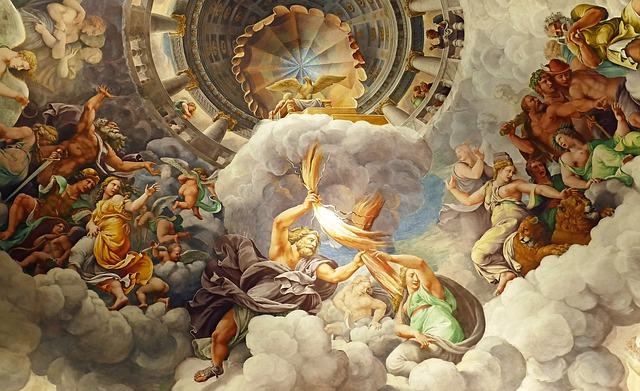
Painting of Greek Gods from the Odyssey and the Iliad
Meanwhile, the Trojans have their own immortal lineup in goddess Aphrodite, god Apollo, goddess Artemis and Leto. Each of the gods has personal reasons for their choices. Athena and Hera were insulted by the Trojan prince, Paris. He was selected as a judge between Athena, Hera, and Aphrodite, and chose Aphrodite, accepting her bribe of the love of the most beautiful woman in the world- Helen of Sparta.
In fact, Aphrodite intervenes when Paris becomes involved in a duel with Menelaus, Helen's first husband. In Book 4, Hera convinced Zeus to promise that Troy will be defeated.
Throughout the following books, the gods appear or are involved in every chapter, with scenes of the gods arguing over their involvement and the outcomes part of nearly every book.
In Odyssey, the gods are a bit more removed. Their intervention is related only through Odysseus' storytelling, but they are also far less directly involved.
Although Odysseus faces several mortal perils and loses both men and ships, suffering tragedy after tragedy, the gods rarely intervene directly, either in his fortune or misfortune. There are prophecies surrounding Odysseus' journey and the pitfalls he will face, but it is very little in the way of direct intervention. Unlike Hector, Paris, and Achilles, Odysseus is largely on his own.
4. Multitudes vs One Man's Story
The differences between The Iliad and The Odyssey are many, nearly as many as the multitude of characters in the Iliad's storyline. In every chapter, another major player joins the ranks until the main characters' list stretches to nearly 50 mortals and immortals.
The Odyssey, by comparison, has a cast of roughly half as many characters. Odysseus is the sole focus in the Odyssey, while the focus in the Iliad shifts depending upon the point in the story.
While it focuses upon a few major story arcs, the Iliad's story is truly the story of two nations and the balancing of the fates in the hands of fickle gods and goddesses.
By contrast, the Odyssey is the story of a single man and his journey to return home to his beloved homeland and family. The focus remains largely on Odysseus as he relates the tale to the King of the Phaeacians.
Once the King has heard his tale, he offers Odysseus safe passage back to his own country so that he can win back Penelope and his kingdom.
5. Epic Characterization and Storytelling Techniques
In the discussion of Odyssey vs Iliad, we must not overlook characterization and language choices.
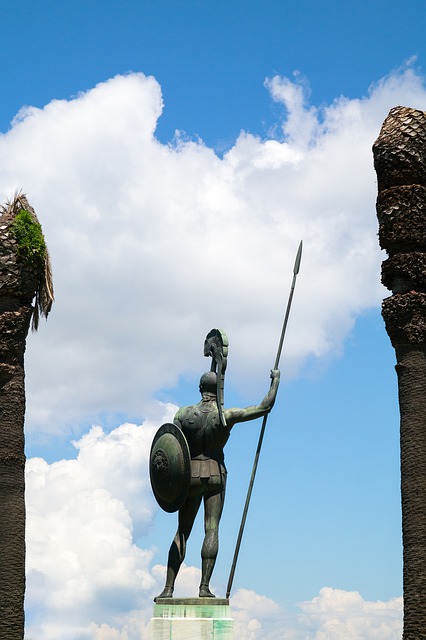
Achilles from the Iliad
Achilles, one of the primary Iliad characters and the focus of much of the epic's trajectory, is described by allusions to his physical attributes. He is referred to as "swift-footed," "lion-hearted," and "like to the gods."
Achilles is an impulsive actor who seeks power, glory, and flashy attention-grabbing behavior over steady and wise choices. According to the prophecy made about him, Achilles chose to join the war, gain honor and glory, and live a brief life.
Odysseus, on the other hand, is telling the story about his own journey. Therefore, the language and presentation are very different.
He avoids obvious praise of his own physical prowess. Instead, the stories are presented in a way that shines the best light of perspective upon him and his actions as he faced each challenge. Always, Odysseus is presented as the wise guide, leading his men through their perils.
When there are failure and loss, it is never the fault of Odysseus. It is the fickle men and their misdeeds or mistakes that cause their own demise. In one case, it is the greater strength of the enemy, the Laestrygonians, a race of giants, bring about the destruction of most of his fleet.
Odysseus' clever planning in holding back with one ship saves him and the remaining men from the terrible fate of the rest of his crew. Always, he is the tragic hero, never fully responsible for his own fate.
6. Timeless Timelines – 10 Years vs 20 Years
Ironically, the events described in The Iliad span roughly 10 years.
From the time Paris kidnaps Helen and sails with her to Troy to the eventual downfall of his City and Helen's retrieval by her husband spans a mere 10 years. By contrast, Odysseus' journey takes 20 years. When he leaves to enter the war, his son is a mere infant. His story spans both the war and the 10-year journey home. Combined, Odysseus' story spans both epics and 20 years.
Though the war spans 10 years, the story of The Iliad barely covers a few months of the war.
While The Iliad primarily focuses on Achilles' journey and downfall, the Odyssey follows Odysseus' journey from the time he begins the trip back to Ithaca and remains with him as he travels back across the oceans, facing unimaginable perils, to return to his homeland.
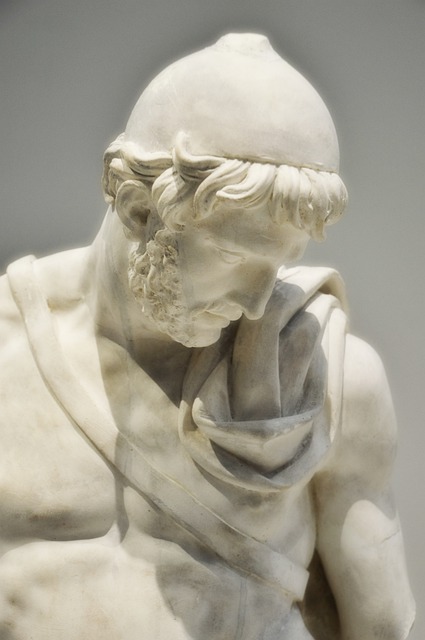
Statue of Odysseus, the hero of the Odyssey
7. Tragedy vs Hope – Diverging Plot Lines
The Iliad is primarily a tragedy. A story of war, of hubris and destruction, of greed and pride, and of death. The Iliad is an example of Fate at work, as prophecies are carried out in many lives.
There is some question whether it is truly fate or their own hubris and arrogance that brings about the Heroes' deaths in the Iliad. In particular, Achilles had several chances to turn away from his own foolish pride and arrogance and live a long and happy life.
In his injured pride over Briseis, his grief and fury over the death of Patroclus, and his hubris in the treatment of Hector's body, he chose his own path, a glory-filled but brief life.
Odysseus knew when he set out that he was fated not to return to Ithaca for 20 years. He tried to avoid being inducted into the war, but without success.
Once he was at war, he nonetheless stayed the course and became the primary advisor and counselor. By contrast, Achilles threw a toddler-worthy temper tantrum, retreating to his tent and refusing to fight after his war-prize, Briseis, was taken from him.
"Achilles was fated to die, but Odysseus would go on and gain what he wanted most: his family and his kingdom."
Endings
While The Iliad finished soon after the death of Hector, an event that Homer felt was the closing of the story arc, Odysseus' story completes with his final reclaiming of his kingdom, making his story one of hope.
The Iliad is a tragedy fueled by the pride and foolishness of the actors. From the first decision by Paris' parents to abandon him in the wilderness to him taking Helen from her homeland, the entire poem is one bad decision after another.
Patroclus takes advantage of having access to Achilles' armor, and his glory-seeking action leads to his death. Achilles' desire for vengeance drives him to mistreat Hector's body. Eventually, this leads to his death, which takes place after the close of the poem. Hector's death ends The Iliad, indicating that the epic's tone is the hopelessness of fate in conjunction with the pride of mortals.
By contrast, Odysseus, though he faces misfortunes, maintains his calm demeanor and makes judicious decisions. In this way, he can make his way home and gain his ultimate goal of regaining his family and kingdom.
The two stories compare and contrast a series of decisions by the characters and tell the story of Human experiences, both good and bad, driven by our own choices.