Hesiod vs Homer: A Cursory Look At the Two Great Greek Writers
Hesiod vs Homer compares the two great Greek epic poets of ancient Greek literature. The idea is to establish the similarities and differences between both men and their works. It is no doubt that the works of Homer and Hesiod give an insight into ancient Greek folklore and tradition. The article will also discuss the imaginary contest between Hesiod and Homer and who won the contest.
What Are the Differences Between Hesiod and Homer?
The major difference between Hesiod and Homer was that the former focused on shorter poems that involved work and ethics while the latter's work covered heroic adventures and epic wars. Also, Hesiod wrote about the origin and role of the Greek deities while Homer involved the gods in epic poems.
What Is Hesiod Best Known For?
Hesiod is best known for his work, Theogony, which served as a complete history of the origins, powers, roles and dominions of the various Greek deities. His purpose was to describe how Zeus became the supreme deity of the Greek pantheon and to explain the genealogy of the gods.
Hesiod's Popularity
The poet is also recognized as one of the foremost Greek thinkers with extensive knowledge of agriculture, economy, civil life, ethical values and astronomy. His work in agriculture is believed to have helped to solve the farming crisis the Greeks faced during his time.
Works and Days highlighted the need for labor and the benefits of hard work. It also abhorred idleness, and preached Hesiod justice while criticizing judges who handed unfair judgments. Hesiod was also interested in the civil and work life of the Greeks as evidenced by his Works and Days which described the life of the ordinary citizen.
Works and Days also contain Hesiod's advice to his brother, Perses, on how to live morally and responsibly. Though both authors are Greeks, Hesiod was a native of Ionia while Homer was born in Boeotia.
Hesiod is also recognized as the first Greek poet to include his persona in Greek mythology setting the trend for many Western poets down the centuries. He was nicknamed the patron of Greek Didactic poetry for his extensive work on the Theogony which detailed the origins of the Greek gods. Thus, the Greeks derived their pantheon from the work of Hesiod.
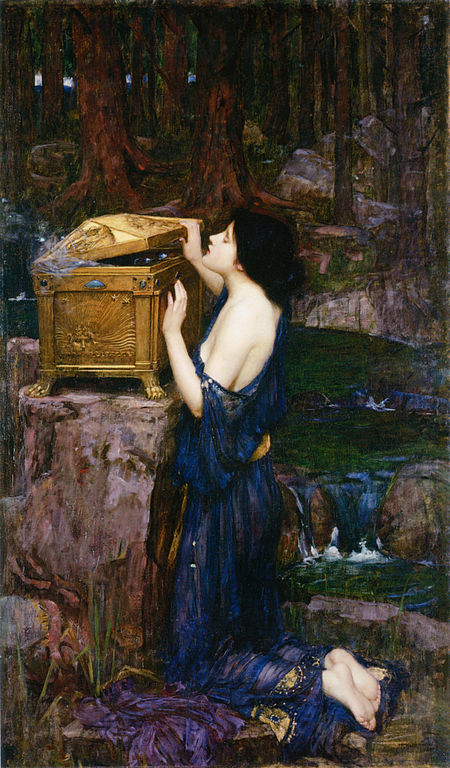
Pandora - a central figure in Hesiod's Works and Days
The Life of Hesiod
As already stated, Hesiod was born in the district of Boetia in central Greece. According to his poem, Works and Days, his father was a native of Cyme on the coastal plains of Asia Minor. According to Hesiod in his poem Works and Days, his father left Cyme and settled in Boetia where he had him and his brother Perses. Hesiod and his brother inherited a piece of land from their father which was a constant source of conflict between the brothers.
Hesiod accused his brother of bribing and conniving with some judges to cheat him out of the piece of land located near Mount Helicon. Later, his brother lost the land, became penniless and begged Hesiod for his daily bread. Scholars believe that Hesiod wrote his literary works between 750BC and 650 BC making him a contemporary of Homer.
Work and Days
In Works and Days, Hesiod writes about a contest between him and an imaginary poet, which many scholars believe is a reference to Homer. Hesiod stated that it was his first time crossing the sea when he partook in the funeral games for Amphidamas. The story follows that both poets asked each other questions with Homer answering Hesiod's with ease. Later, both bards were instructed to present the best passage from their works.
Based on the short scene in the poem, a later Greek writer named Alcidamas wrote the narrative Certamen. However, the narrative stops short of mentioning Homer by name.
According to the Certamen, Homer recited a passage from the Iliad that detailed the Greek army getting ready for battle while Hesiod presented a passage from Works and Days. The spectators rooted for Homer to win because they were enchanted with his recitation but they were disappointed. Hesiod won the contest and received a tripod as his prize. He dedicated the tripod, a religious artifice used in sacrifice, to the Muses whom he has always credited for giving him the gift of poetry.
What Is Homer Best Known For?
Homer is best known for his two epic poems, the Illiad and the Odyssey which narrate the events before, during, and after the Trojan War. His works are regarded as some of the best literature of all time across all cultures and traditions.
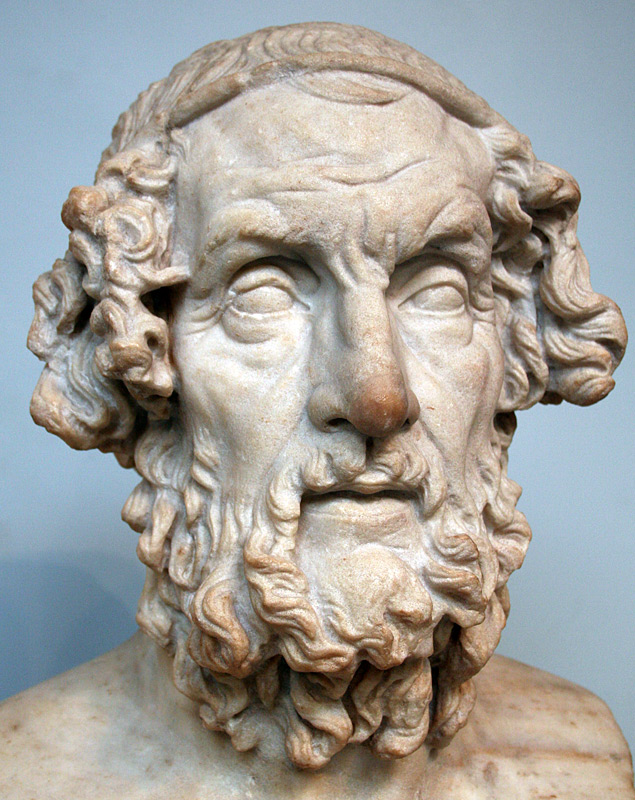
A bust of Homer - the legendary Greek poet
Homer's Popularity
Many people rever him as the greatest poet who ever lived and his literature has influenced many generations. The Odyssey and Iliad, for example, played a huge role in the foundations of the Roman Empire and literature.
Homer's epic poem, the Iliad, served as a backdrop for Virgil's Aeneid which narrates the founding of the Roman Empire. Greek philosophers like Plato view him as a teacher whose lessons proved instrumental to civic society. Homer's influence is felt in Western traditions today as his literature has greatly influenced Western poetry, drama, film and television.
Homer is regarded as one of the most prominent writers whose works have influenced literature across Europe. Homer's Illiad and Odyssey are often cited as the foundation of Classical Greek education and the basis of the Roman epic poem, the Aeneid.
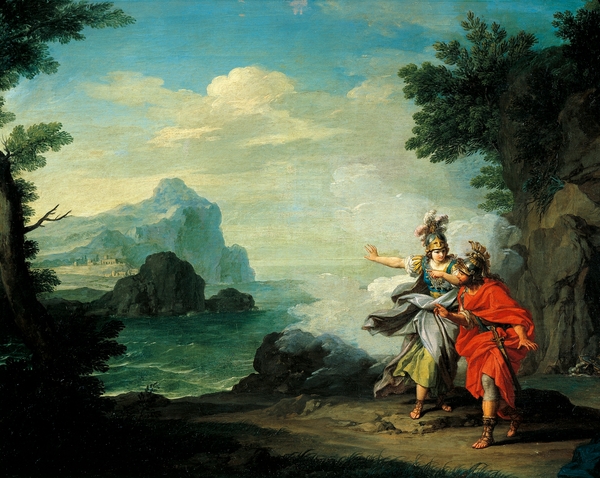
Athena reveals Ithaca to Ulysses - a scene from Homer's Odyssey
The Life of Homer
There are many stories about Homer's life but the most popular is that he was blind and hailed from Ionia, a region in Anatolia. This legend stems from the character Demodocus who was a blind bard in the Odyssey – many believe that Demodocus was a reference to Homer. The legends describe him as the son of the famous river, Meles, and Chriteis the nymph. Homer lived on the island of Chios on the northern Aegean Sea but wandered Greece plying his trade.
It is a notion that he died in the island of Ios after he was unable to solve a riddle posed by some fishermen. However, most of these stories are legends including some of the literary works attributed to him.
FAQ
Who Came First Hesiod or Homer?
According to Greek traditions, the Homer age preceded the age of Hesiod, though they are considered contemporaries.
What Did Hesiod and Homer Have in Common?
Aside from being among the foremost Greek poets, both writers composed their poems in dactylic hexameter which followed the Greek oral tradition.
Conclusion
This Hesiod vs Homer review has looked at the origins and major differences between two of the greatest poets of all time. We've realized that though both lived around the same period, their areas of focus were different from each other. Hesiod concentrated on the origins of the deities and how Zeus became the chief god while Homer wrote about epic wars and adventures. Homer's Illiad served as a backdrop to Virgil's Aeneid and the founding of Rome, on the other hand, Hesiod's Theogony determined the origins of the deities in the Roman pantheon.
Hesiod hailed from Boetia while Homer was born in Ionia in Anatolia. Both poets are highly respected with Hesiod earning the nickname patron of Didactic poetry. Contrastingly, Homer is seen as a teacher whose work helped shape Greek thought and civilization.