Makhae: The Personification of Battle
Makhae was famously known as Machae, Makhai, or Machai name, in the mythology of the ancient Greek. The Machai personify battle and combat and were often considered demons or gods. Let us look through and gather more information about the Makhai name in Greek mythology.
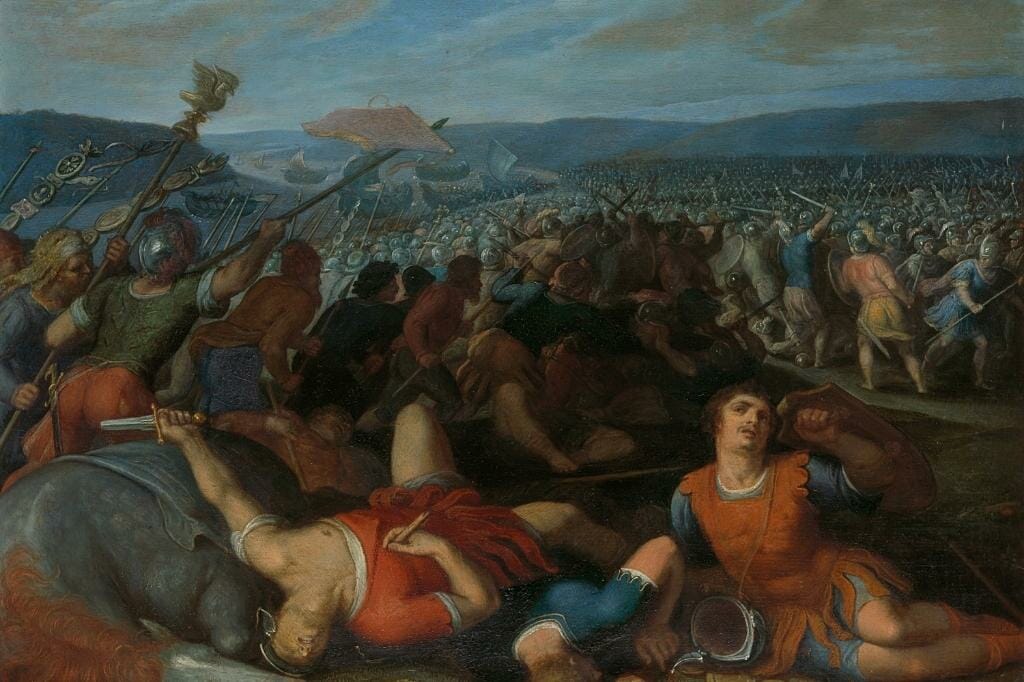
A dramatic depiction of ancient Greek battle - the essence of what the Makhae personify
The Origin of Makhae
Makhai meaning "battles" were the daemons or spirits of battle and combat in Greek mythology. The Makhai were sons and daughters of Eris, the goddess of chaos, discord, and strife, and grandchildren of Nyx, a primordial deity and the goddess of night. "Ma-kai" is the Machai pronunciation.
They can often be seen in battles among other spirits and deities linked to war and death, such as Ares, the god of war; Deimos and Phobos, the attendants of Ares; the Keros, Enyo, and their mother, Eris. Meanwhile, the other spirits associated with the Makhae include Alala, the spirit of war cry; Kydoimos, the spirit of confusion; Homados, the spirit of the battle noise; Proioxis, the spirit of the surge; and Palioxis, the spirit of the back rush.
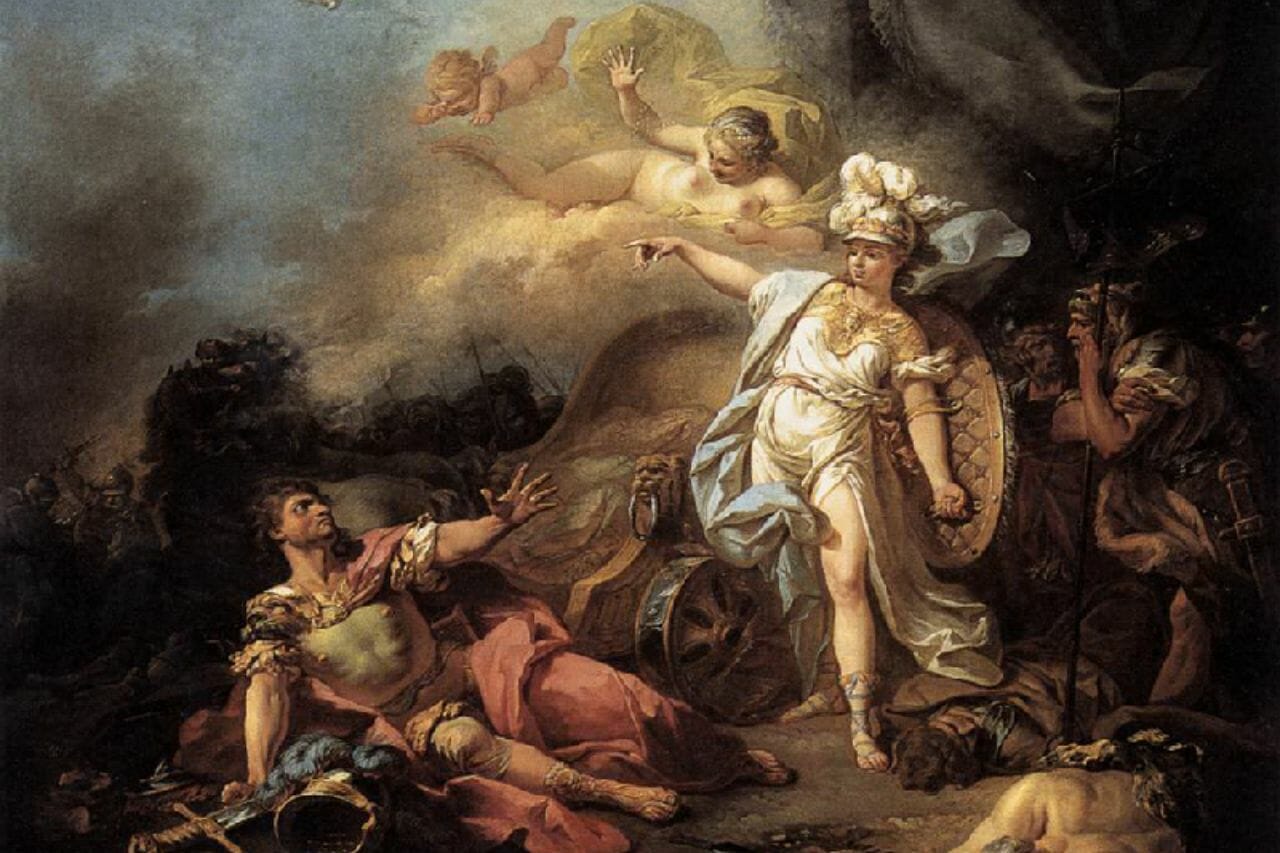
Ares, the god of war, was closely associated with the Makhae on the battlefield
History
In Greek mythology, Kronos the god of time was imprisoned together with his servants, the Makhae. They were held captive in Tartarus but were able to break free after the mortals stopped praying to the gods. The walls of Tartarus started to crumble while Ares and Hades created an alliance with Kronos and took command of the Makhae.
Poseidon, Zeus, Ares, and Hades were reunited in Tartarus in aiming to rebuild the walls, but Hades ordered the Makhae to attack them. They fought against Zeus and Poseidon, with Hades obtaining severe injuries while Ares defeated Zeus. Eventually, Poseidon teleported to the Mount of Idols where he also met his death because of his injuries.
Soon after, Ares tied up Zeus with the help of the Makhae and brought him to Kronos in order for Kronos to free himself by absorbing Zeus' powers. When Kronos claimed his freedom, he commanded the Makhae to confront Argos' army. They managed to slaughter numerous soldiers, but others were killed by Agenor.
The Makhae also subdued Andromeda's infantry, although the latter conquered one of the members of Makhae as they engaged in the fight. The Makhae eventually defeated Andromeda's army; however, when Zeus and the newly redeemed Hades used their powers as they joined the battle, they defeated most of the Makhae.
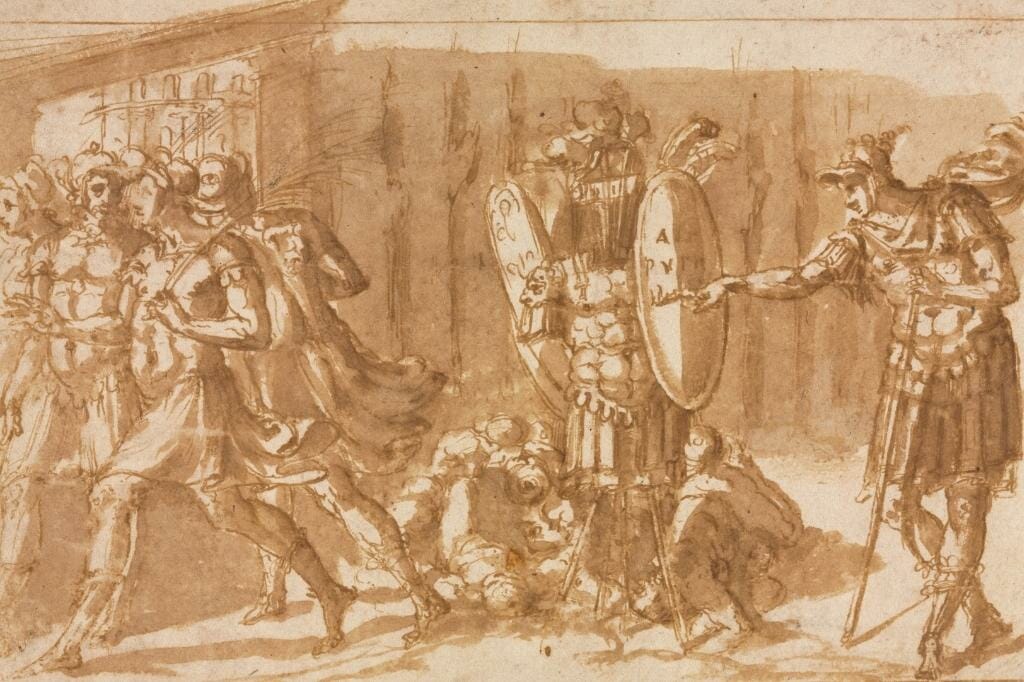
Greek warriors engaged in combat, representing the spirit of battle that the Makhae embodied
Features
The Makhae appeared monstrous with deformed faces, fiery eyes, and burned and corroded skin, showing lines of lava that seems to be made of coal or volcanic rock. They are both wearing a helmet, the left upper body wears proper leg armor while the right upper body wears a loincloth.
They wield short blade swords, and when they are on a clash, they spin and change sides constantly, holding two of these weapons in each hand so they are able to attack more than one person.
A remarkable ability of the Makhae is attracting fellow deities and spirits of war and death on the battleground to be able to destroy an entire battalion in one massive attack. In the story, the Makhae comprised a single creature or titan that is not faced by Perseus. They were created to pose as shock troops for the Titan army.
Siblings
The Makhae had numerous siblings who also personify wrongdoings and negative situations like murder, lies, forgetfulness, pain, and fights. Among them are Ponos of toil and hardship; Algae, which means "pain" in Greek and were the personifications of pain and suffering, both physical and mental, including sorrow, grief, and distress; and Horcus, who was the personification of the oath, the avenger of perjury, and the punitive companion of Dike, the goddess of justice.
The Makhae also had other siblings. The Hysminia or Hysminae means "conflict, combat, and battle" in Greek mythology. They were the daemons that personified fighting. The Ponoi or Phonoi in Greek mythology were the ones responsible for the murder and violent deaths that took place outside the battlefield.
They were the personifications of killing and murder; Limos means "starvation," and they are the gods or goddesses of hunger, starvation, and famine in Greek religion. The Neikea were the personifications of quarrels, grievances, feuds, and arguments in ancient Greece. The Pseudologoi were the gods who personified falsehood and lies.
Dysnomia, in ancient Greek, means "lawlessness," and was indeed the personification of this word. The Amphilogia or Amphillogiai were the goddesses who personified disputes and altercations.
Ate or Aite was the goddess of mischief, ruin, delusion, rash action, reckless impulse, and blind folly. She led men or gods down the path of suffering, inconsiderate actions, and ruin. Lethe was the personification of oblivion or forgetfulness, and the Androktasiai were the female daemons who personified "manslaughter."
Appearance in Popular Culture
The Makhae were also mentioned and used in popular culture several times. They made appearances in the adventure novel The Blood of Olympus written by Rick Riordan, which is based on Greek and Roman mythology. Here, the Makhae were as used by Asclepius in order to formulate a physician's cure.
Makhae can also be seen in video games. In "Titan Quest: Immortal Throne," the Makhae acts as the enemy that can be encountered in Hades, the final world of the game. Also, in "Titan's Awakening," during the 32nd chapter, the Makhae appear as an enemy during the second combat.
In addition, being depicted as the opponent featured in the video games, the Makhae were depicted in the movie as formidable and horrific-looking monsters. They appeared in the 2012 action fantasy film Wrath of the Titans.
As observed in the trailer, these vicious demons were represented as a two-headed monsters with double torsos. The head on the right seems to be less muscular than the head on the left, and their two upper bodies were attached together on the lower back.
Conclusion
The Makhae or Machae are the personified spirits of battle and combat in Greek mythology who were among the many children of Eris.
The Makhae can often be seen in battles amongst other spirits and deities linked to war and death.
They were considered gods or demons.
There are numerous spirits associated with the Makhae.
They had several siblings who also personified wrongdoings and gruesome situations.
They presumably live in the underworld or Hades.
The Makhae and other macabre beings, however monstrous and unpleasing, were the ones who maintained balance in this world, which we can say consists of good and bad.