Timeless Myths Logo
Aphrodite Apollo Ares Artemis Athena Atlas Coeus Crius Cronus Demeter Dionysus Gaia Hades Hephaestus Hera Hermes Hestia Hyperion Iapetus Mnemosyne Oceanus Phobos Phoebe Poseidon Prometheus Rhea Tethys Themis Uranus Zeus
Bacchus Ceres Diana Juno Jupiter Mars Mercury Minerva Neptune Pluto Venus Vesta Vulcan
Amun Anubis Aten Atum Babi Bastet Bes Geb Hapi hathor heqet Horus Isis Khepri Khnum Khonsu Maat Nephthys Nut Osiris Ptah Ra Seshat Seth Shu Sobek Thoth
Alfheim Baldur Freya Freyr Frigg Heimdallr Helheim Idun Jotunheim Loki Nerthus Njord Odin Thor Tyr
Aengus Arawn Badb Brigid Cailleach Ceridwen Cernunnos Cu Chulainn Dagda Danu Gwydion Herne the Hunter Lugh Medb Morrigan Neit Nuada Taliesin Taranis
Chalchiuhtlicue Coatlicue Huitzilopochtli Mictlantecuhtli Mixcoatl Ometeotl Quetzalcoatl Tezcatlipoca Tlaloc Tonatiuh Xipe Totec Xochiquetzal Xolotl
Amaterasu Ame no Uzume Benzaiten Bishamonten Daikokuten Ebisu Fujin Fukurokuju Inari Izanagi Kagutsuchi Raijin Susanoo Tsukuyomi
Caishen Cangjie Dragon King Eight Immortals Erlang Shen Fuxi Guanyin Hou Yi Huxian Jade Emperor King Yama Leizi Lu-ban Mazu Nezha Nuwa Pangu Shennong Sun Wukong Xiwangmu Yue Lao Zhong Kui
Norse Classical Celtic Arthurian
Literature Stories Names
Aphrodite Apollo Ares Artemis Athena Atlas Coeus Crius Cronus Demeter Dionysus Gaia Hades Hephaestus Hera Hermes Hestia Hyperion Iapetus Mnemosyne Oceanus Phobos Phoebe Poseidon Prometheus Rhea Tethys Themis Uranus Zeus
Bacchus Ceres Diana Juno Jupiter Mars Mercury Minerva Neptune Pluto Venus Vesta Vulcan
Amun Anubis Aten Atum Babi Bastet Bes Geb Hapi hathor heqet Horus Isis Khepri Khnum Khonsu Maat Nephthys Nut Osiris Ptah Ra Seshat Seth Shu Sobek Thoth
Alfheim Baldur Freya Freyr Frigg Heimdallr Helheim Idun Jotunheim Loki Nerthus Njord Odin Thor Tyr
Aengus Arawn Badb Brigid Cailleach Ceridwen Cernunnos Cu Chulainn Dagda Danu Gwydion Herne the Hunter Lugh Medb Morrigan Neit Nuada Taliesin Taranis
Chalchiuhtlicue Coatlicue Huitzilopochtli Mictlantecuhtli Mixcoatl Ometeotl Quetzalcoatl Tezcatlipoca Tlaloc Tonatiuh Xipe Totec Xochiquetzal Xolotl
Amaterasu Ame no Uzume Benzaiten Bishamonten Daikokuten Ebisu Fujin Fukurokuju Inari Izanagi Kagutsuchi Raijin Susanoo Tsukuyomi
Caishen Cangjie Dragon King Eight Immortals Erlang Shen Fuxi Guanyin Hou Yi Huxian Jade Emperor King Yama Leizi Lu-ban Mazu Nezha Nuwa Pangu Shennong Sun Wukong Xiwangmu Yue Lao Zhong Kui
Norse Classical Celtic Arthurian
Literature Stories Names

Antilochus: The Greek Mythology of the Greatest Prince of Pylos

Other

Antilochus was a Greek warrior who sought the hand of Helen in marriage and thus had to join the Greek expedition to Troy after Paris kidnapped Helen. He killed some notable Trojan warriors while defending the honor of his father, Nestor. Antilochus participated in the funeral games for the fallen hero, Patroclus, and performed well. Keep reading to know more about the strongest Pylian warrior.

Who Was Antilochus?

Antilochus was the son of King Nestor of Pylos and the commander of the Pylian troops during the Trojan War. He fought bravely and became the companion of Achilles after the death of Patroclus. He sacrificed himself to save his father as he was attacked by Memnon.

The Family

According to Greek mythology, Nestor and either Eurydice or Anaxibia gave birth to Antilochus. He had eight siblings; six brothers and two sisters and they were Pisidice, Thrasymedes of Pylos, Stratichus, Echephron, Polycaste, Aretus, Perseus, and Pisistratus.
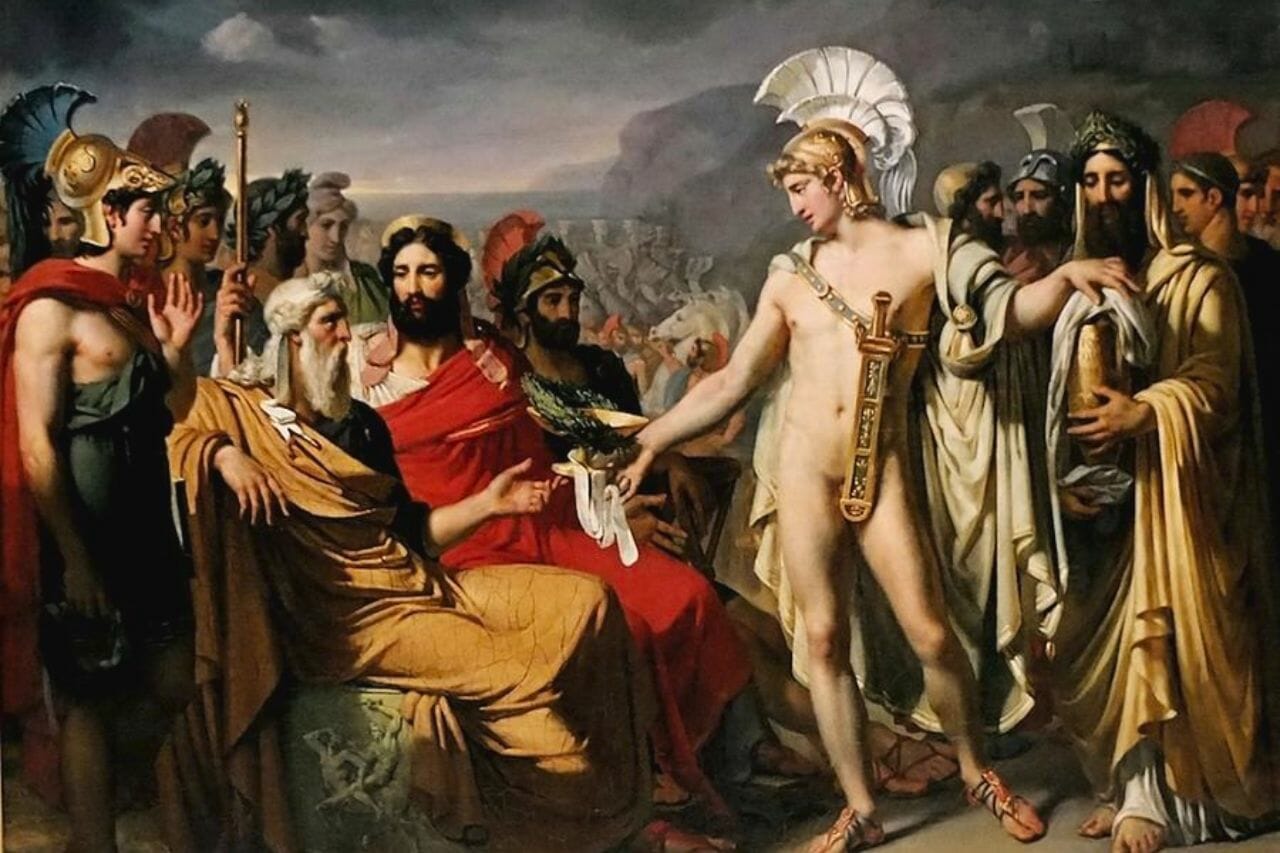
Now, in a different version of the myth, it is said that he had a son named Paeon while he was in Messenia in the Peloponnese region. However, later on, it is mentioned that the descendants of Heracles fought and drove Paeon's descendants from Messenia.

Featured In The Iliad

In Homer's epic poem, the Iliad, Antilochus followed his father, the king, and his elder brother, Thrasymedes, to sack Troy and return Helen. He was the youngest of his siblings but was allowed to command the Pylian fleet under the leadership of King Agamemnon.

His father, the King of Pylos, was too old to actively command the warriors of his kingdom. Antilochus fought bravely and downed several Trojan warriors that wandered his way on the battlefield. Some of the Trojan heroes who fell at the sword of Antilochus include Atymnius, Echepolos, Melanippus, Phalces, Ablerus, and Thoon.
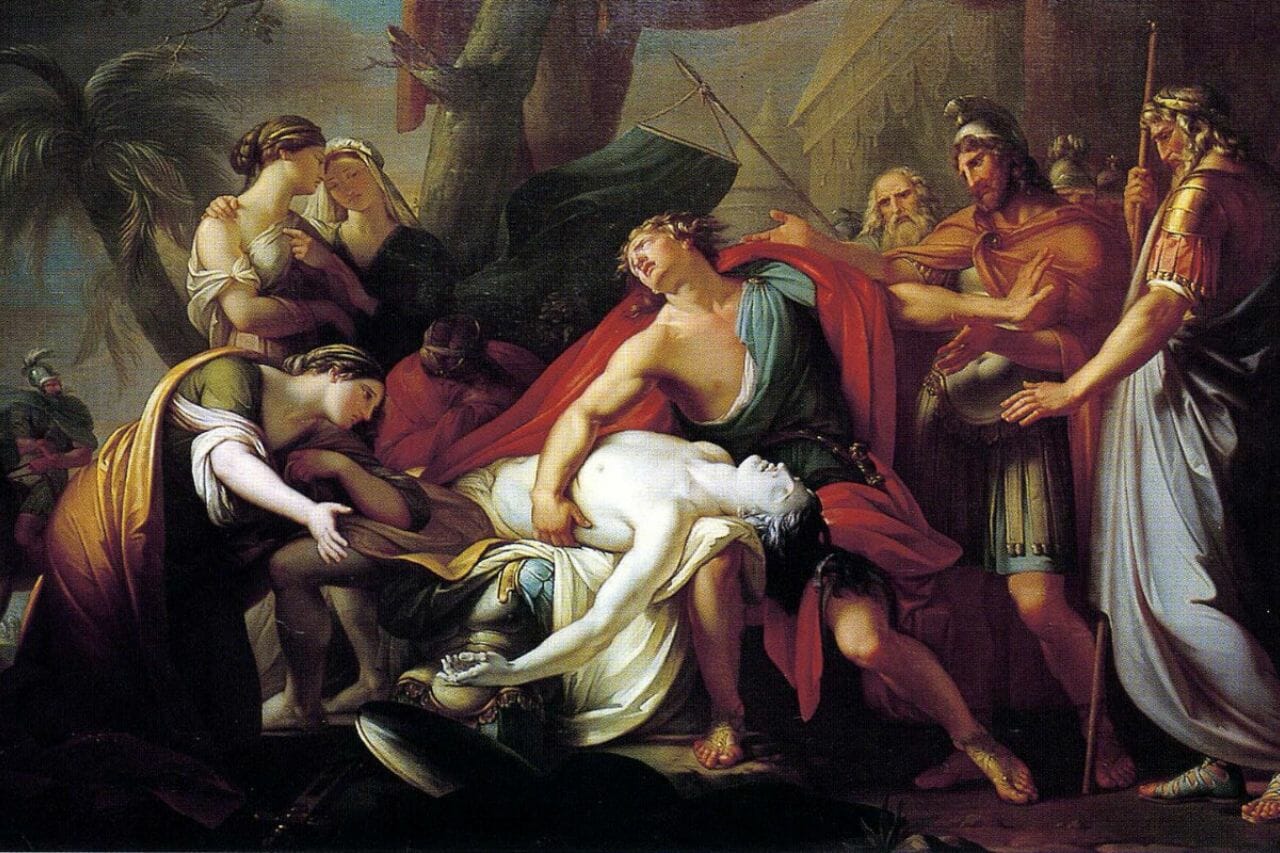
His exploits caught the eye of Achilles and the two became so close that when Patroclus died in battle, Antilochus was chosen to break the news to Achilles. However, after this news, he and Achilles became best friends and after this bond was formed, when he died in battle Achilles avenged his death with no mercy. In addition, during the funeral games of Patroclus organized by Achilles, he took part in the chariot and foot races and came second and third respectively.

The Myth in Posthomerica

In the poem Posthomerica by Quintus of Smyrna, Antilochus faced off with Memnon, the King of Aethiopia, during the Trojan War. Memnon was aggrieved that Antilochus had killed his great friend Aesop, thus he killed Antilochus in revenge.

When his father, the king, heard that his son had died in a duel with Memnon, he headed into the battle to find and killed that Memnon. However, the latter refused to fight him because of his age and the huge respect he had for the king.

However, he asked Achilles to avenge the death of his son, which he obliged. The two warriors fought with both wearing divine armor fashioned by Hephaestus making them invulnerable. Note that, Memnon was the son of Eos, the goddess of the dawn, and Tithonus, thus he was a demigod just like Achilles and could go toe-to-toe with him. Eventually, Achilles overcame him and killed him, avenging the death of his friend and pacifying his father.

The Myth in Aethiopis

The story of Antilochus in the epic Aethiopis is quite different from that conveyed in Posthomerica. In the Aethiopis, he had been warned by an oracle to beware of the Aethiopian which was Memnon.

However, when Memnon attacked his father, and he had to come and rush to help because his father was too old and weak to fight this demigod. He was enough to know that it would be his last but he fought valiantly and saved his father to the detriment of his own life.
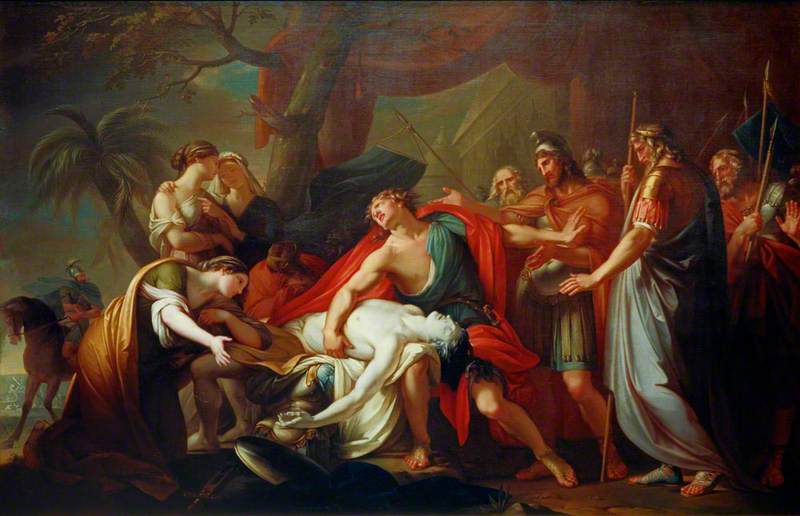
The death of Antilochus angered Achilles who killed many Trojans and drove them back to their city gates. There Paris shot an arrow that struck the heel of Achilles, his only weak spot, and killed him.

Other Variations of His Death

According to some versions of the myth, Antilochus was killed by Hector while others say that while he was in the temple of Apollo with Achilles, Paris came in and killed them both. In addition, the ashes of Achilles, Antilochus, and Patroclus were buried on the promontory of the city of Siegeion in Anatolia. That was the place where the citizens of Troy sacrificed their dead heroes.

Antilochus Pronunciation

The name is pronounced |antilukuhs|

In the Odyssey

In the Odyssey, written by the famous Greek poet Homer, Antilochus, Patroclus, and Achilles, the three best friends were reunited in the underworld. He depicted that they walked together in the Asphodel Meadows in the Underworld. The meadows were the place where ordinary souls lived after death. However, in the end, they dwelled or resided together in Leuke, a Greek island.

Conclusion

Now that we have come to the end of the article, we have read the Greek mythology of the Pylian Prince and discovered his exploits on the battlefield. Here is a recap of all that we've read:

  • He was born in Pylos to King Nestor and his wife either Eurydice or Anaxibia, depending on the version of the myth you're reading.

  • He had six brothers and two sisters and being the youngest, strongest, fastest and most ambitious, he was the commander of the Pylian fleet in the Trojan War.

  • Antilochus fought bravely and killed many Trojan heroes including Melannipus, Thoon and Ablerus and his bravery caught the attention of Achilles.

  • According to some versions of the myth, he sacrificed his life for his father Nestor while other versions claim that he was killed alongside Achilles in the temple of Apollo.

  • He is depicted in the Odyssey walking with his two friends, Achilles, and Patroclus in the Asphodel Meadows of the Underworld.

Antilochus had a son named Praeon while in Messinia, however, the descendants of Hercules later drove out the descendants of Praeon from Messinia.

By Ancient Literature

Created: February 15th, 2024

Modified: January 11th, 2025

Peleus: The Greek Mythology of the King of the Myrmidons

Peleus: The Greek Mythology of the King of the Myrmidons

Peleus was an Argonaut who fled the city of Aegina after he and his half-brother, Telamon, murdered their sibling, Phocus. The two brothers landed in Phthia for the purification ceremony only for Peleus to later kill the King of Phthia albeit in a...

February 16th, 2024 • Ancient Literature
Protesilaus: The Myth of the First Greek Hero to Step in Troy

Protesilaus: The Myth of the First Greek Hero to Step in Troy

Protesilaus was a Greek warrior who hailed from the city-state of Phylace and bravely led his men into war against the Trojans. He was also a suitor of Helen, thus the war was his way of proving his love to her. Though he fought bravely, Protesila...

February 16th, 2024 • Ancient Literature
Arcas: The Greek Mythology of the Legendary King of the Arcadians

Arcas: The Greek Mythology of the Legendary King of the Arcadians

Arcas was a beloved ancestor of the Arcadians and the person after which the Arcadia region in Greece was named. To enable the region to develop he taught the people how to farm and helped to spread agriculture throughout the area. Arcas eventuall...

February 15th, 2024 • Ancient Literature
Hector in the Iliad: The Life and Death of Troy's Mightiest Warrior

Hector in the Iliad: The Life and Death of Troy's Mightiest Warrior

Hector was the son of King Priam and Queen Hecuba of Troy and he was married to Andromache, the daughter of Eetion. The couple gave birth to a son called Scamandrius also referred to as Astyanax. In Homer's Iliad, Hector was known both for his bra...

February 16th, 2024 • Ancient Literature
Lycomedes: The King of Scyros Who Hid Achilles Among His Children

Lycomedes: The King of Scyros Who Hid Achilles Among His Children

When Calchas the seer prophesied that Achilles would die in the Trojan War, his mother Thetis took him to the island of Scyros and hid him there. She did that by convincing the king of Scyros, Lycomedes, to disguise Achilles as one of his daughter...

February 16th, 2024 • Ancient Literature
Memnon vs Achilles: The Battle Between Two Demigods in Greek Mythology

Memnon vs Achilles: The Battle Between Two Demigods in Greek Mythology

Memnon vs Achilles is the comparison of the two champions who fought each other during the war in Troy. Memnon was the King of Aethopia in Africa and the son of Eos, the goddess of the dawn. Achilles was also the son of the river nymph Thetis and ...

February 16th, 2024 • Ancient Literature
Nestor in the Iliad: The Mythology of the Legendary King of Pylos

Nestor in the Iliad: The Mythology of the Legendary King of Pylos

Nestor in the Iliad was the king of Pylos who was known for his wisdom and insight which helped several characters in the epic poem, though some of his counsel was controversial. He was known to be motivating and an inspiring human who gave speech...

February 16th, 2024 • Ancient Literature
Nestor

Nestor

Nestor (Νέστωρ) was the youngest son of Neleus and Chloris, daughter of Amphion. He was the brother of Pero, Periclymenus, and ten other brothers. In his youth, Nestor took part in a cattle raid and the war against Elis. He killed or wounded a hun...

April 27th, 1999 • Jimmy Joe
Achilles Greek Mythology: Discovering One of the Greatest Greek Heroes

Achilles Greek Mythology: Discovering One of the Greatest Greek Heroes

Achilles Greek mythology narrates the adventures of Achilles, the main character of the Iliad, before, during, and after the Trojan War. It tells of how he became invulnerable to attacks on the battlefield and how he died after his weakness was di...

February 15th, 2024 • Ancient Literature
Polyphemus in the Odyssey: The Strong Giant Cyclops of Greek Mythology

Polyphemus in the Odyssey: The Strong Giant Cyclops of Greek Mythology

Polyphemus in the Odyssey was described as a one-eyed giant monster who played an important role in Greek mythology. His appearance may be very different from ours, but like any ordinary human, he knows how to fall in love. Let's discover how, and...

February 16th, 2024 • Ancient Literature
Timeless Myths

Exploring mythology and legends from around the world.

Explore Myths

All Stories Characters All Articles Search Site Map

Mythologies

Norse Mythology Classical Mythology Celtic Mythology Arthurian Legends Mythology Gods Ancient Literature

About Us

Introduction About Jimmy Bibliography FAQs Retro Version

Resources

Timeless Myths All Stories All Articles Characters
© 1999-2026 Timeless Myths • Copyright • Privacy Policy • Cookie Policy • Contact
Follow us: