How Did Achilles Die? The Demise of Greeks' Mighty Hero
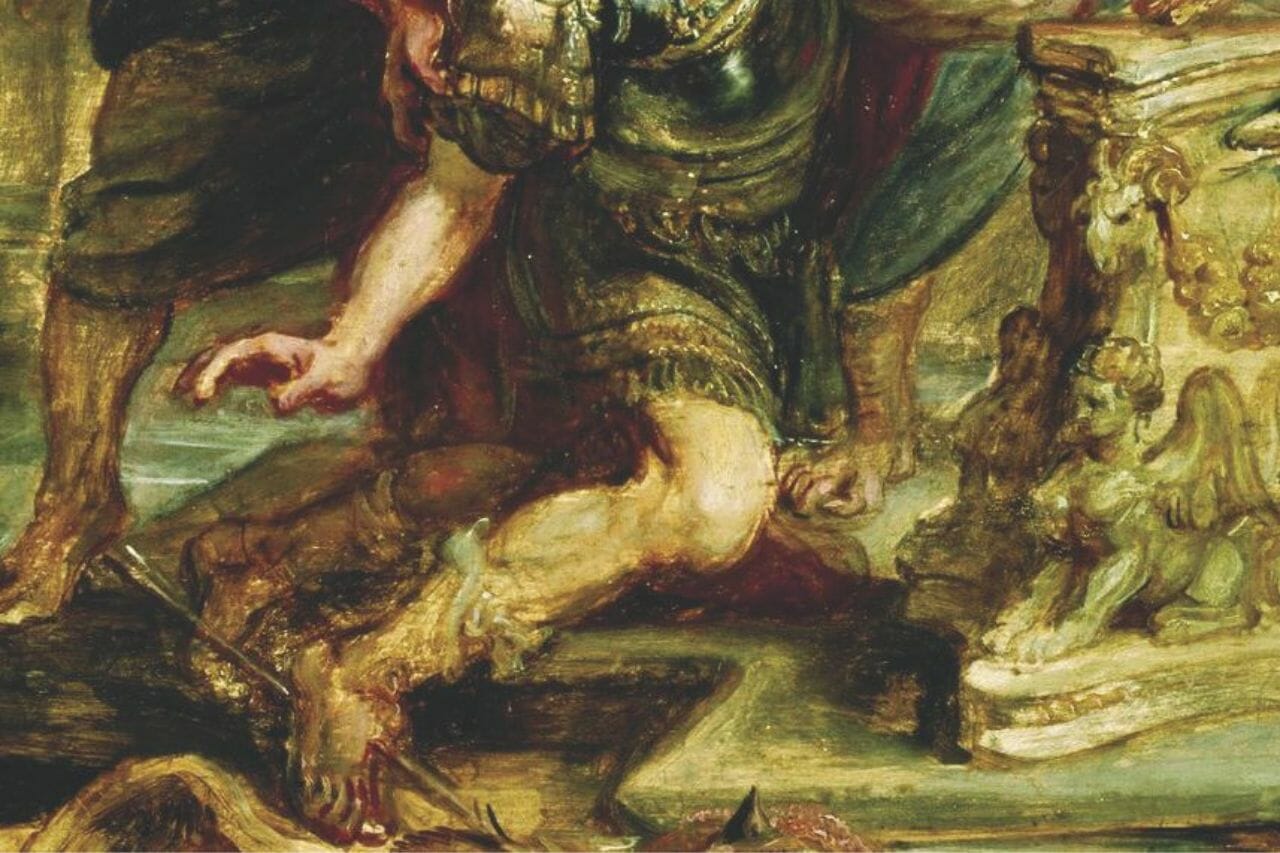
How did Achilles die? Achilles die for a number of reasons that all contributed to his demise: the gods conspired for his death, he was shot with an arrow to the most vulnerable part of his body, and possibly because of his negligence.
Despite his fame, others have difficulty deciding: Was Achilles real? In this article, read on to find out how this legendary Greek hero died, and decide for yourself whether he is real or not.
How Did Achilles Die?
Achilles was killed by Paris of Troy killed who avenged it for his brother Hector. He died in the city of Troy, during the Trojan War, in fulfillment of the oracle given unto him long before he became a warrior. Many scholars estimated that Achilles died in his early thirties.
Achilles and the Trojan War
Despite Achilles growing into a mighty warrior, there was still a time when his parents did everything in their power to make Achilles avoid the Trojan war and evade the terrible prediction ahead of him. He was sent to live in another kingdom, Skyros. He even resorted to acting and dressing like a girl just to disguise himself and not be taken to the ongoing war.
Yet, what's meant to happen really did happen. In search of the mighty warrior, King Odysseus finally reached Achilles, along with the daughters of King Lycomedes. With his wit and a series of tests, King Odysseus successfully recognized Achilles. Now convinced that through him, the Greeks could win the Trojan War, Achilles return and went to Troy.
The Trojan war continued, and by its tenth year, things really got ugly. A lot of crucial events happened that led history to where is it now.
Patroclus, Achilles' best friend (and/or lover), was killed by the Trojan champion Hector. Because of Patroclus' death, in revenge, Achilles killed Hector. Paris then avenged his brother, Hector, and killed the mightiest Greek champion, Achilles.
Different tales and stories of heroism had emerged from the long years of the Trojan war. Significantly, it emphasized the understanding that whatever is willed by the gods in heaven is surely bound to happen no matter how much us mortals try to evade our destiny.
The Story of Achilles Death
The most famous account of how Achilles died, although not mentioned in The Iliad, was that he died from the shot of an arrow into that small portion of his body left vulnerable by his mother: his left heel.
Accordingly, that shot was delivered by Paris, Prince of Troy, a non-genius when it comes to war and yet succeeded in killing the bravest hero of the Greeks. Other writings revealed that it was through the help of the god Apollo, the god of archery himself, whose power made the arrow go straight into Achilles' heel, the one vulnerable part of this heroic warrior.
In the penultimate scene of the Trojan war, Prince Paris killed Achilles to avenge his brother Hector, whom Achilles had brutally slain. On the other hand, many believed that Paris was merely a pawn of the gods and goddesses who grew wary of Achilles, who they saw now as a killing machine. Remarkably, the god Apollo has sided with the Trojans all throughout the war for they were his devotees.
As mentioned, Achilles' death wasn't told in The Iliad, yet Achilles' funeral was described in The Odyssey, Homer's sequel to The Iliad.
Brief Summary of Achilles
According to the vast Greek mythology, Achilles is the son of King Peleus and the exquisite sea deity Thetis. His mother Thetis was so lovely that even the sibling-gods Zeus and Poseidon were in a contest to win her hand. Had they not been fearsome of the prophecy stating that Thetis' offspring would become greater than the father, perhaps one of these gods would have sired Achilles, thus giving us another story.
In order for the heavens to fulfill its destiny, Thetis was wed to King Peleus of Phthia. King Peleus was described as one of the kindest men alive. Before they had Achilles, the couple had disastrous pregnancies leading to the deaths of their children.
When King Peleus and Thetis had Achilles, an oracle has revealed that Achilles would grow into a great and courageous warrior. Along with these exemplary attributes was also the foresight of him being killed within the walls of Troy.
Achilles' Abilities
After the incident, King Peleus and Thetis parted ways. Then, King Peleus brought his son under the care of his life-long friend Chiron the Centaur. Chiron, a highly respected mentor himself, taught and trained Achilles on all the necessary skills, from the arts to medicine and combat techniques, so that he will become the greatest warrior of his time.
In Homer's Iliad, Achilles was the Greeks' bravest, strongest, and most handsome warrior during the Trojan war. It must be the result of Chiron's thoughtful rearing of his beloved protégé. Not only did he teach him well, but he fed him well, too. Stories have it that Achilles was fed with lion intestines, she-wolf meat, and wild pig to make him grow into a mighty warrior, and indeed, mighty he became.
His strength was immense that he was considered invulnerable to mere mortals like us. His competence in combat was known all over Greece. Accordingly, his best friend Patroclus' strength was equal to 20 Hectors (Hector, at that time, was the strongest Trojan warrior), but Achilles was believed to be two times stronger than Patroclus, making him equal to 40 Hectors.
Achilles was also swift-footed; his speed is one to be reckoned with, and it was compared to the speed of the wind. This was a great advantage for a warrior like himself. Aside from his physical strength, Achilles was also gifted with an invincible shield forged by the god Hephaestus himself.
FAQ
What Was The Achilles Heel Myth?
For she couldn't bear the thought of outliving her beloved son and in order to reverse the prophecy for Achilles, Thetis decided to make her son indestructible by dipping the baby in the magical River of Styx. However, this act was not done perfectly, for the left heel where Thetis held her son to dip in the waters wasn't covered by the waters of the river. Making him susceptible to death by that spot alone.
On the other hand, another account said that it was Peleus who made Achilles somewhat vulnerable. Suspicious of Thetis' actions and plans for their son, King Peleus followed her to the River Styx. When Achilles' mother Thetis dipped the baby into the waters, Peleus grabbed his son, and because of this, he was not wholly bathed in the river, making his heels vulnerable.
Today, Achilles' heels refer to that one weakness we have that could prove to be disastrous. It is a chink to one's armor, no matter how much one perceives oneself as indestructible.
It must be noted though that this Achilles heel myth was considered a non-Homeric episode, as it was added later on and was not present in the original story of the Iliad.
What Is the Real Story of Achilles?
Yes, as Achilles was one of the most celebrated characters in Greek mythology and a central character in Homer's Iliad. Often talked about as the bravest Greek warrior of all time, he was so famous that even his death did not hinder the growing following that he had. But what made him so famous?
Achilles' great strength, exemplary skills, and competence in combat made him an A1 soldier of the Greeks. He has championed many wars, which led others to believe that he must be a god himself for having such magnificent capabilities.
Due to the complexities of his character, Achilles' story has been revised and narrated so many times that it was challenging to point out his real story. From among many accounts, one version has been solidified as true.
Conclusion
The Greek literature has given us an almost perfect character, Achilles. Heroic, powerful, and handsome, too, he was liked by many. Yet, like any other character in writings, he has that one shortcoming that made him not so perfect. Let us review what we have learned about Achilles:
He died when shot with a poisoned arrow that hit the only vulnerable part of his body: his heel. Thus, he wasn't an immortal (and not a god).
Paris killed him with the help of gods, specifically Apollo.
Despite the many attempts of his parents to circumvent his destiny, they did not succeed.
He died inside the walls of Troy during the Trojan war, as the oracle has revealed.
Despite Achilles' death, the Greeks still won the Trojan War.
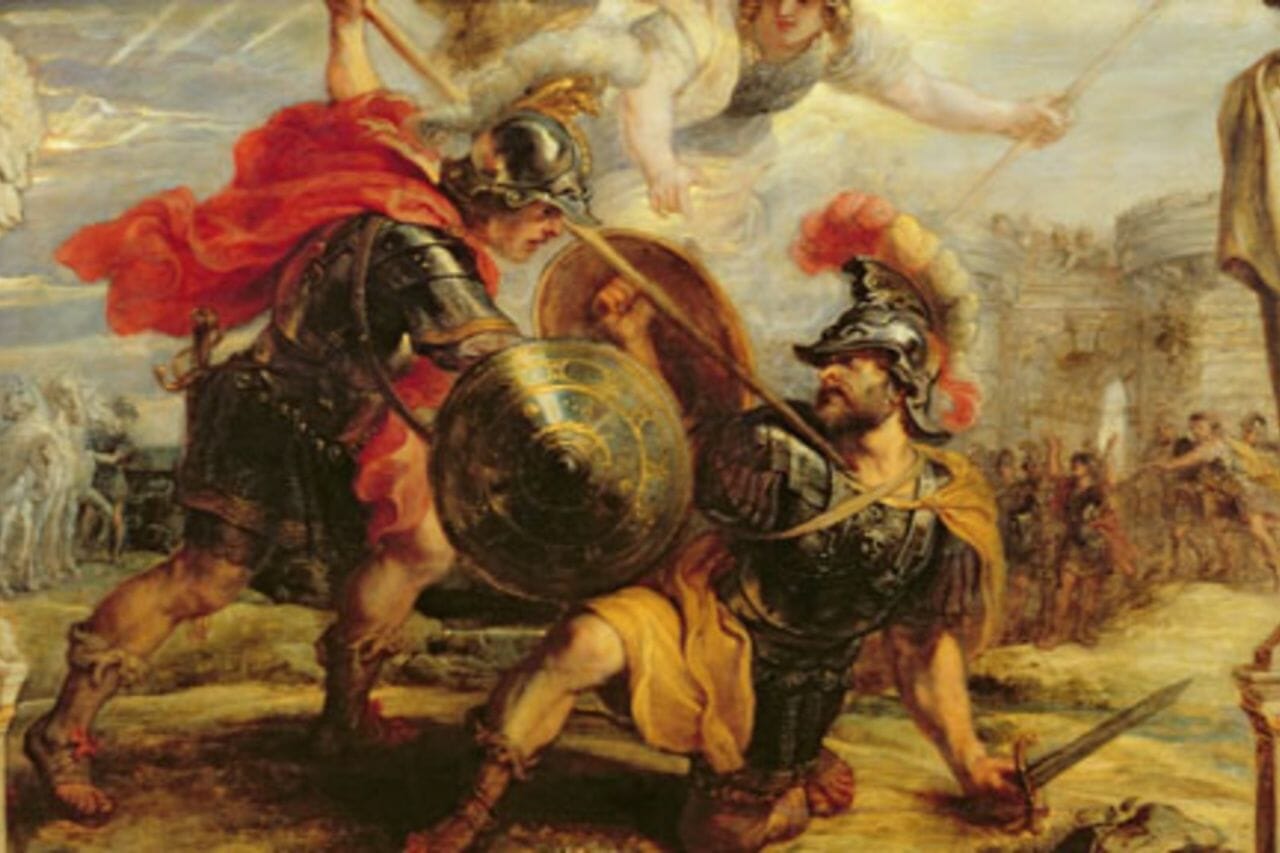
Achilles, as a character of a story has taught us lessons in life, has shown that for us to live longer, we need to practice caution at all times. Our demise is just around the corner, bidding its time to attack, especially if it was already preordained.