Timeless Myths Logo

Explore myths and legends from cultures around the world

Featured

Classical Mythology
Classical Mythology Greek and Roman myths, gods, heroes, and epic tales
Norse Mythology
Norse Mythology Vikings, Asgard, Ragnarok, and the nine realms
Celtic Mythology
Celtic Mythology Irish, Welsh, and Gaelic legends and folklore
Ancient Literature
Ancient Literature Classical texts, translations, and literary analysis

All Mythologies

Arthurian Legends King Arthur, Camelot, the Round Table, and the Holy Grail Egyptian Mythology Pharaohs, pyramids, and ancient Nile deities Japanese Mythology Shinto gods, spirits, and legendary creatures Chinese Mythology Dragons, immortals, and celestial beings Aztec Mythology Mesoamerican gods, rituals, and creation myths

Discover gods and goddesses from every pantheon

Featured

Greek Gods
Greek Gods The Olympians, Titans, and primordial deities
Norse Gods
Norse Gods Odin, Thor, Loki, and the Aesir and Vanir
Egyptian Gods
Egyptian Gods Ra, Osiris, Isis, Anubis, and more
Japanese Gods
Japanese Gods Amaterasu, Susanoo, and Shinto kami

All Gods & Deities

Roman Gods Jupiter, Mars, Venus, and the Roman pantheon Celtic Gods The Tuatha Dé Danann and Celtic deities Aztec Gods Quetzalcoatl, Tezcatlipoca, and Aztec deities Chinese Gods Jade Emperor, Dragon Kings, and celestial beings View All 150+ Deities Browse the complete collection of mythological deities
View all gods & deities

Tales, legends, and character profiles from mythology

Featured

All Stories
All Stories Browse 800+ mythology and history stories
Characters
Characters Profiles of 67 mythological heroes, gods, and villains

All Stories

Mythology Stories Ancient myths and legends retold History Stories Historical tales from ancient civilizations Religion & Culture Religious traditions and cultural beliefs
View all stories

Tools, references, and site information

Featured

Name Generators
Name Generators Generate fantasy and mythology-inspired names
All Articles
All Articles Browse 1,800+ articles on mythology and history

All Resources

About Timeless Myths Learn about this mythology resource Bibliography Sources and references used on this site FAQ Frequently asked questions Contact Get in touch with us
Search
Classical Mythology Greek and Roman myths, gods, heroes, and epic tales Norse Mythology Vikings, Asgard, Ragnarok, and the nine realms Celtic Mythology Irish, Welsh, and Gaelic legends and folklore Arthurian Legends King Arthur, Camelot, the Round Table, and the Holy Grail Egyptian Mythology Pharaohs, pyramids, and ancient Nile deities Japanese Mythology Shinto gods, spirits, and legendary creatures Chinese Mythology Dragons, immortals, and celestial beings Aztec Mythology Mesoamerican gods, rituals, and creation myths Ancient Literature Classical texts, translations, and literary analysis
Greek Gods The Olympians, Titans, and primordial deities Roman Gods Jupiter, Mars, Venus, and the Roman pantheon Norse Gods Odin, Thor, Loki, and the Aesir and Vanir Egyptian Gods Ra, Osiris, Isis, Anubis, and more Celtic Gods The Tuatha Dé Danann and Celtic deities Aztec Gods Quetzalcoatl, Tezcatlipoca, and Aztec deities Japanese Gods Amaterasu, Susanoo, and Shinto kami Chinese Gods Jade Emperor, Dragon Kings, and celestial beings View All 150+ Deities Browse the complete collection of mythological deities View all gods & deities
All Stories Browse 800+ mythology and history stories Characters Profiles of 67 mythological heroes, gods, and villains Mythology Stories Ancient myths and legends retold History Stories Historical tales from ancient civilizations Religion & Culture Religious traditions and cultural beliefs View all stories
Name Generators Generate fantasy and mythology-inspired names All Articles Browse 1,800+ articles on mythology and history About Timeless Myths Learn about this mythology resource Bibliography Sources and references used on this site FAQ Frequently asked questions Contact Get in touch with us
Search Search the entire mythology archive

How Old Was Achilles When He Died: A Conclusive Report

Mythology

How old was Achilles when he died?

How old was Achilles

This question has been asked many times, and rightfully so because there is no authentic data or explanation present. Achilles was an ancient Greek hero who rose to fame in the famous Trojan war. Here we bring you the details of the death of Achilles and all the events that led Achilles to the ground.

Keep reading as we have carefully sourced the most authentic information and here we articulate it to you.

How Old Was Achilles When He Died

Achilles was only 15 years old when he began fighting in the Trojan war and then died. The life and death of Achilles are quite dramatic which found their way into the famous poem, the Illiad, by Homer. Homer was a Greek poet, whose ancient poems brought Greek mythology to life. His poems became the basis of the culture and religion in ancient Greece.

The Age of Achilles When He Died In the War

In the Greek war, Achilles was fighting head-on with the enemy. On the other hand, Patroclus, Achilles’ dear friend, was killed on the battlefield by Hector, a Trojan prince and the greatest warrior of Troy. Achilles was devastated when he learned about the death of Patroclus.

Achilles ran towards the corpse of Patroclus and embraced it. The Trojan warriors saw that Achilles left his position and now has become vulnerable. Paris, who was the antagonist in the Trojan war, shot an arrow at Achilles’ heel and killed him.

The Iliad explains the death of Achilles in this way. Achilles, therefore, lost his life on the battlefield in Troy, at the age of 25. Many people argue that the death of Patroclus left Achilles without the energy and will to fight and win the war. His best friend was gone and soon afterward, so was Achilles.

Achilles: Trojan War
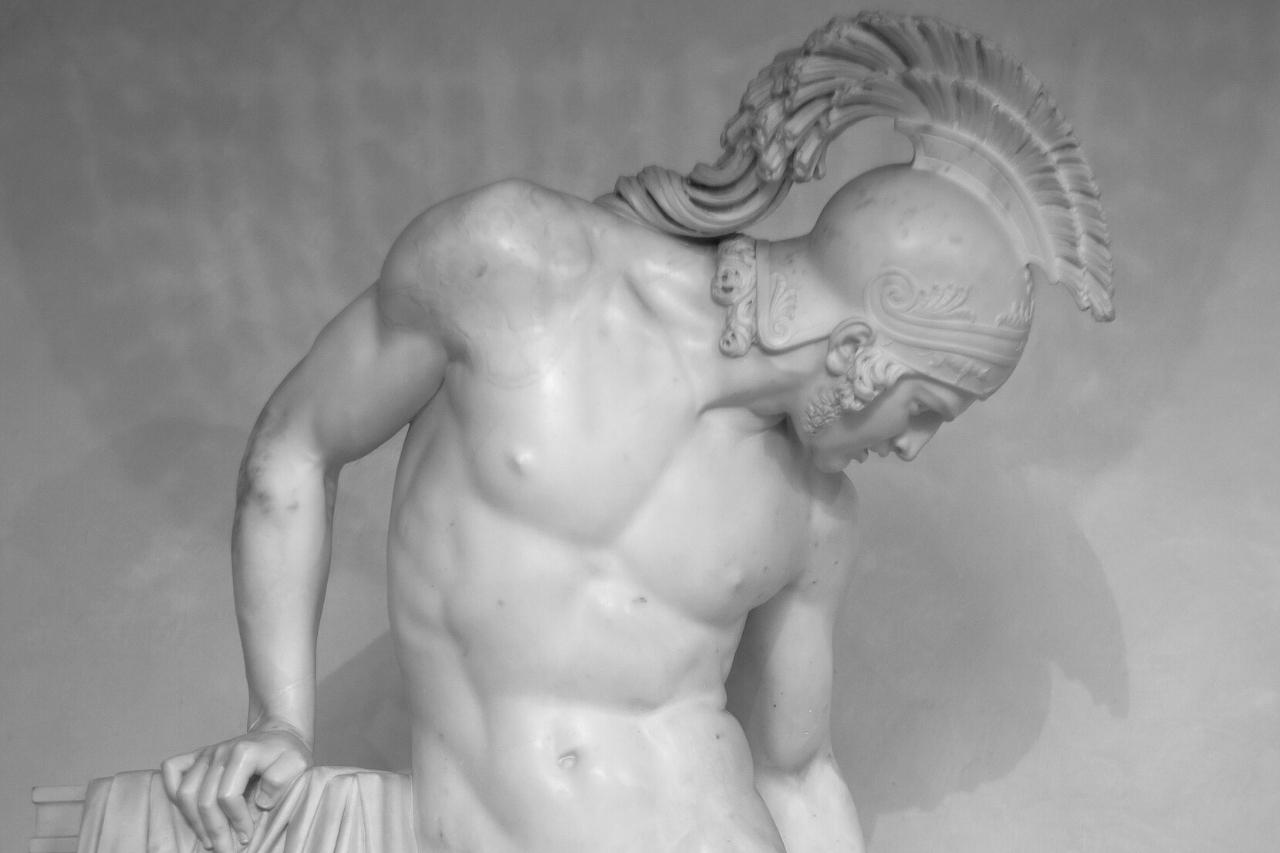
Achilles in Trojan War

Achilles was around 15 years old when the famous Greek event, the Trojan war started. He fought alongside the Greeks and his dear friend, Patroclus.

The Trojan war was famous for various reasons. It gave history great heroes and valuable life lessons.

The war started because of the interference of the Olympian Gods with the humans and their manipulation of human feelings.

Soon the war turned into a massacre. Many great fighters were lost in the war that went on for ten years.

Achilles was on the side of the Greeks. He arrived at Troy with 50 ships, carrying Myrmidons. Myrmidons are the people of an ancient Thessalian Greek tribe. These Myrmidons fought under Achilles and were very loyal to him.

Achilles’ Heel

Achilles’ heel plays a very important role in his story. When Thetis was looking for ways to make Achilles immortal, she came across away. All she had to do was dip Achilles in the waters of the river Styx. The river Styx is a river between Gaia (Earth) and the Underworld.

Thetis took Achilles to the Styx and dipped him several times in the river. She held Achilles by his heel and dipped him. Achilles’ whole body was dipped except for his heel which the Thetis was holding. So Achilles became immortal in this way.

According to the myth, Achilles’ body became immortal except for his heel because his heel was not dipped in the River Styx. This piece of information was well-known among Achilles’ peers and the surroundings. No one knew this mortal heel would be the death of Achilles.

FAQ

How Was Achilles’ Early Life Like?

Achilles was born to Thetis and Peleus. Thetis was the daughter of the sea god, Nereus. While Peleus was the King of Myrmidons which was an ancient Thessalian Greek tribe. So Achilles was born as a union of two strong entities with power.

There are many stories related to the conflict between Zeus and Thetis and how she refused to marry Zeus. The most famous and widely accepted tale is that Thetis turned down Zeus’ advances many times because she was loyal to Hera who was Zeus’ wife. In return, Zeus decreed Thetis to never marry an immortal and for his offspring to be born a mortal.

Thetis, therefore, married Peleus, a mortal. They had a son named Achilles. Due to Zeus’ decree, Achilles was born mortal. Thetis did not want to see his son live his life as a mortal and thus reverted to making him immortal by any means possible.

How Old Were Achilles and Patroclus?

Achilles and Patroclus were 25 years old when they were killed in the Trojan war. They both were very close to each other and after their deaths, their remains were buried together to give their friendship an eternal life together.

When Was Achilles Born and Killed?

Achilles was born around 15 years before the Trojan war was fought. Homer explains the death of Achilles in the Iliad. According to the Iliad, Achilles had died in the Trojan war when an arrow, shot by Paris, struck Achilles in his heel. The same heel that was left undipped in the River Styx by his mother Thetis.

How Did Achilles Die in the Trojan War?

Achilles was shot by Paris in his heel. Some say the arrow was guided by the god Apollo and some say the arrow was poisonous. Nevertheless, the arrow killed Achilles.

Conclusion

How old was Achilles when he died

Achilles was one of the bravest and most celebrated soldiers in the mythology. So famous that even now, he is remembered in golden words and paid homage to.

Here we conclude with some important points to remember:

  • Achilles was 25 years old when he died in the war alongside his companion and friend Patroclus.

  • Achilles was born as a mortal but his mother, Thetis made him immortal by dipping him in the River Styx by holding him from his heel which was left dry.

  • Achilles’ whole body was immortal except for his heel.

  • Paris shot Achilles in the heel and killed him in the famous war. Achilles was buried alongside Patroclus.

The astounding soldier of the Greek army, Achilles will be remembered by many generations to come. His bravery and skills were surely unmatched and we have Homer to thank for bringing his life to light.

By Timeless Myths

Created: May 3rd, 2022

Modified: March 15th, 2024

Achilles

Achilles

Achilles (Άχιλλεύς) was the son of Peleus and the Nereïd Thetis. Ligyron was the name given to Achilles at birth. While still an infant, Thetis tried to make her son immortal. One account says that she anointed Achilles in ambrosia before laying h...

April 24th, 1999 • Jimmy Joe
How Did Achilles Die? The Demise of Greeks' Mighty Hero

How Did Achilles Die? The Demise of Greeks' Mighty Hero

How did Achilles die? Achilles die for a number of reasons that all contributed to his demise: the gods conspired for his death, he was shot with an arrow to the most vulnerable part of his body, and possibly because of his negligence. Despite his...

February 16th, 2024 • Ancient Literature
What Did Achilles Look Like: A Complete Analysis of His Looks

What Did Achilles Look Like: A Complete Analysis of His Looks

What did Achilles look like? This is a question that is asked many times just because of the popularity Achilles has gained with the narration of the Iliad. The Iliad by Homer is a poem that describes Greek mythology and its heroes. Read ahead to ...

May 13th, 2022 • Timeless Myths
Achilles Greek Mythology: Discovering One of the Greatest Greek Heroes

Achilles Greek Mythology: Discovering One of the Greatest Greek Heroes

Achilles Greek mythology narrates the adventures of Achilles, the main character of the Iliad, before, during, and after the Trojan War. It tells of how he became invulnerable to attacks on the battlefield and how he died after his weakness was di...

February 15th, 2024 • Ancient Literature
Who Killed Patroclus? The Assassination of a Godly Lover

Who Killed Patroclus? The Assassination of a Godly Lover

The death of Patroclus is critical to Achilles' participation in the Trojan war. Achilles had been sulking in his tent, refusing to join the battle. It was not until Patroclus' death that he rejoined the war and led the Greeks to victory. The ques...

February 16th, 2024 • Ancient Literature
Why Did Achilles Not Want To Fight? Pride or Pique

Why Did Achilles Not Want To Fight? Pride or Pique

Achilles was a great hero in Greek mythology, the son of the mortal king Peleus and the Nereid Thetis. The Myrmidons, the people of his father well known to be fierce and fearless warriors. Thetis is one of the sea-nymphs who are a part of Poseido...

February 16th, 2024 • Ancient Literature
Was Achilles a Real Person – Legend or History

Was Achilles a Real Person – Legend or History

Was Achilles a real person? The answer is uncertain. He may have been a great warrior of human birth, or he might have been a compilation of the deeds of many great warriors and leaders of the day. The truth is, we do not know if Achilles was a ma...

January 1st, 2025 • Ancient Literature
Why Did Achilles Kill Hector – Fate or Fury?

Why Did Achilles Kill Hector – Fate or Fury?

Was it love or pride that led Achilles to kill Hector? The Trojan war was a tale of love and pride, hubris and stubbornness, and a refusal to give up. The victory was won, but at the end of the day, what was the cost? Hector, prince of Troy, was t...

February 16th, 2024 • Ancient Literature
Patroclus' Death in the Iliad

Patroclus' Death in the Iliad

Patroclus – Death by Hubris Patroclus' death was one of the most poignant and powerful scenes in the Iliad. It reveals the futility of mortals endeavoring to go against the gods and the price of reckless behavior. Recklessness and arrogance are re...

February 16th, 2024 • Ancient Literature
Trojan War

Trojan War

Catalogues of Ships Greek Forces Trojan ForcesOther Information Funeral Games of Patroclus Trojan HorseGreek Forces Agamemnon was the commander-in-chief of the Greek forces. The Greek forces brought a total of 1227 ships to Troy. Neoptolemus joine...

August 8th, 1999 • Jimmy Joe
Timeless Myths

Exploring mythology and legends from around the world.

Explore Myths

All Stories Characters All Articles Search Site Map

Mythologies

Norse Mythology Classical Mythology Celtic Mythology Arthurian Legends Mythology Gods Ancient Literature

About Us

Introduction About Jimmy Bibliography FAQs Retro Version

Resources

Timeless Myths All Stories All Articles Characters
© 1999-2026 Timeless Myths • Copyright • Privacy Policy • Cookie Policy • Contact
Follow us: