Who Killed Patroclus? The Assassination of a Godly Lover
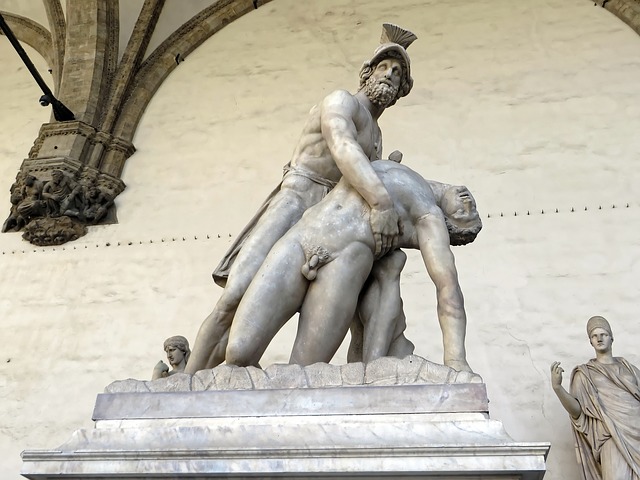
Death of Patroclus monument
The death of Patroclus is critical to Achilles' participation in the Trojan war. Achilles had been sulking in his tent, refusing to join the battle. It was not until Patroclus' death that he rejoined the war and led the Greeks to victory.
The question of who killed Patroclus is a complicated one.
Was it Patroclus' own hubris that cost him his life?
Achilles' impulsiveness and sulking that drove him to the field of battle?
Or does the blame fall entirely upon Hector, the Trojan prince whose spear pierced him?
How Does Patroclus Die?
Patroclus was with Achilles long before the Trojan war was thought of. As a youth still living in his father's house, he fought with another child and killed him. In concern for his son's well-being, his father sent him to Achilles's father as a servant and mentor to the younger boy.
Patroclus, in time, became more than simply a teacher and protector of Achilles. Some writers speculate that the two became lovers, though Homer never makes their relationship clear. The writing is ambiguous about the actual nature of the relationship between the two, but one thing is abundantly clear—that it is a very close bond.
The question of who killed Patroclus is more complicated than who struck the fatal blow. Patroclus' death is the culmination of a series of events perpetrated by the actions of various characters.
From Patroclus' own troubled youth onward, his life and death were marked by impulsiveness.
So how does Patroclus die in the Iliad? The short answer is Hector put a spear into his guts, killing him. The truth, however, takes a bit more unpacking. Patroclus' own hubris, and the hubris of his leaders, also contributed to the events leading up to his death.
Who Was Patroclus?
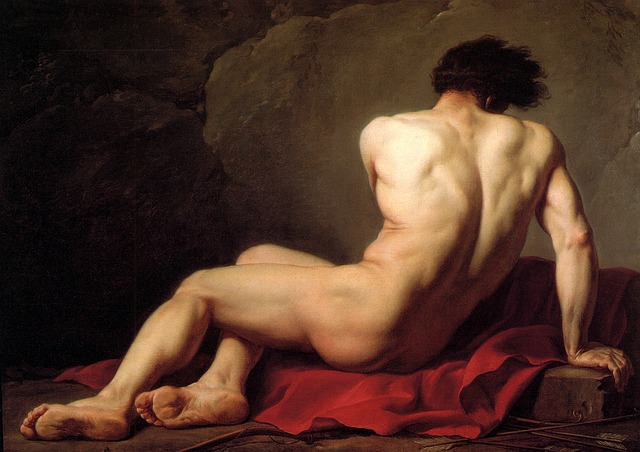
Picture of Patroclus
Patroclus was more than Achilles' squire and mentor. He was also his cousin. Patroclus was the son of Menoetius, the King of Opus.
Through his grandmother Aegina, he was Achilles' cousin, once removed. Their relationship's exact nature is uncertain in Homer's writings, but later writings lean heavily toward the two men being lovers.
Certainly, Achilles' response to Patroclus' death would imply that the bond was, at least, a strong one.
When he killed another child in anger over a game, Patroclus' father, Menoetius, gave him to Peleus, Achilles' father. It has been speculated that the two fathers felt that Patroclus required the steadying responsibility of being a mentor to young Achilles.
Achilles' mother, Thetis, a nymph, had dipped Achilles in the River Styx as an infant, making him all but indestructible. Patroclus was given charge of a child who had the strength to withstand his temper and who required a firm leader in his life to counter his own strong-willed tendencies.
Hector vs. Patroclus: How Did It Come to This?
Hector was a Trojan prince, elder brother to Paris, whose kidnapping or seduction, depending upon Helen's interpretation, caused the war between the Trojans and the Greeks.
As one of the princes in line to inherit the throne, Hector was a valiant fighter who went out frequently to lead the army in their battling. His true foe would seem Agamemnon or Achilles, the Greek fighters' leaders, but Achilles, in a pique of temper, had withdrawn from the battlefield and refused to fight.
Patroclus goes to Achilles, weeping over the losses the Greeks have suffered without his presence. At first, Achilles mocks him for weeping, but Patroclus responds that he weeps for the loss and honor of his men.
He begs Achilles to be permitted to take his godly armor and wear it to lead the men, in hopes of driving the Trojans back at least from the ships. Achilles agrees, though a bit grudgingly, and warns Patroclus only to drive the Trojans away from the ships and return.
Patroclus, once released to his mission, beat back the Trojans and continued. He attacked so fiercely, in fact, that he beat them back to the very walls, and there, he met his doom.
Achilles and the Godly Temper Tantrum
Though Achilles granted Patroclus permission to take his godly armor, he didn't expect the outcome. The armor itself was a gift from his mother.
Hephaestus, the blacksmith to the gods, crafted it. The armor was reinforced at the heels with silver to cover his one vulnerable point.
Homer described it as bronze, marked with stars to honor Achilles' place as a half-god, near-immortal.
Despite the prophecy that he would either gain great glory in the war, die young, or live a long and unobtrusive life, Achilles sought glory by fighting. Thetis' fears for her son were not enough to protect him in the end.
Patroclus, in the Iliad, comes to Achilles and begs to use his armor to strike fear in the hearts of the Trojan soldiers and drive them back from the ships. Achilles agrees but insists that his friend don his guise to drive the soldiers away from the ships. He does not wish Patroclus to join in the fighting.
However, Patroclus does not listen to his friend, and Hector kills Patroclus near the gates of the City. Achilles' reaction to Patroclus' death was explosive rage.
The Death of Patroclus
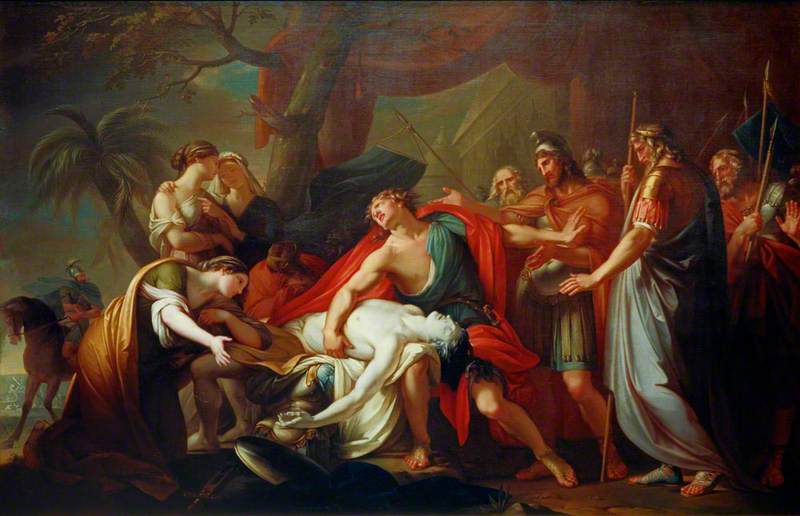
commons.wikimedia.org
The Trojans were prepared for many things, but they did not expect Patroclus wear the armor of Achilles. The Trojan forces fell back and fled to their own walls. Patroclus, heedless of Achilles' warnings, pursued them, even killing the son of Zeus, Sarpedon.
The killing of the son of a god was the defining moment in Patroclus' story. Zeus would not allow a crime against one of his own to stand, and Patroclus had signed his own death warrant.
The god Apollo intervened, removing Patroclus' wits. The Trojan Euphorbos was able to strike a blow against the warrior, and Hector finished the job with his spear.
Hector managed to steal Achilles' armor from the body. Still, Menelaus and Ajax, the son of Telmon, protected the body on the battlefield, driving the Trojans back and preventing them from stealing the body and desecrating it.
In his fury and grief, Achilles refuses to allow Patroclus to be buried for several long days until the ghost of the fallen man himself appears and begs for a proper burial so that he can pass into Hades, the land of the dead.
Patroclus' body was burned in a massive funeral pyre, along with many of his companions' hair, which they cut off as a sign of their grief and fealty. Achilles then turns his rage and grief against Troy. Thetis has a second set of armor crafted for him, and he dons it before setting loose on the City.
Achilles' Revenge
Achilles' rage broke over Troy like a tsunami raging into a shore. Prior to Patroclus' death, Agamemnon comes and begs Achilles to return to the battlefield. He even offered to return Briseis, the slave woman who started the disagreement between them, but Achilles never budged.
However, Achilles is moved by his friend's death and returns to gain vengeance on Patroclus' killers. He kills so many Trojans that he clogs a river, angering the god who occupies the waters. When challenged by the minor deity, he even fights the god and beats him back before continuing his bloody path to Troy's gates.
In a moment of foolish nobility, Hector decides to remain outside the gate and try to fight Achilles. His wife Andromache meets him at the gate, holding their infant son Astyanax and pleading with him not to face the vengeful warrior.
Hector knows that Priam, his father, is doomed to fall to the Greeks and feels it is his duty to his City to go forward and fight. When Achilles comes to Hector, he turns and runs. Achilles chases him around the City three times before Hector turns to face him.
Achilles throws his spear, missing Hector, but Athena, Achilles' mentor, in disguise, returns it to his hand. Hector throws his spear and also misses. When he turns to his brother, who he believed behind him, he finds himself alone for a replacement, facing an armed Achilles.
Hector, wearing Achilles' own stolen armor, charges the warrior. His downfall is that his opponent is familiar with the armor. Achilles pierces the one place where Hector is unprotected, killing Hector.
Hector had begged that his body be returned to his family if he lost the fight, but Achilles dragged it behind his chariot and took his revenge on the man who killed Patroclus by defiling his body.
Finally, Priam, Hector's own father, comes to beg Achilles to return his son's body. Achilles, taking pity on the elderly king, releases Hector back to Troy for a proper burial. At the same time, the Greeks engage in their mourning of Patroclus, and two of the great heroes of the Trojan war are laid to rest by their various armies.