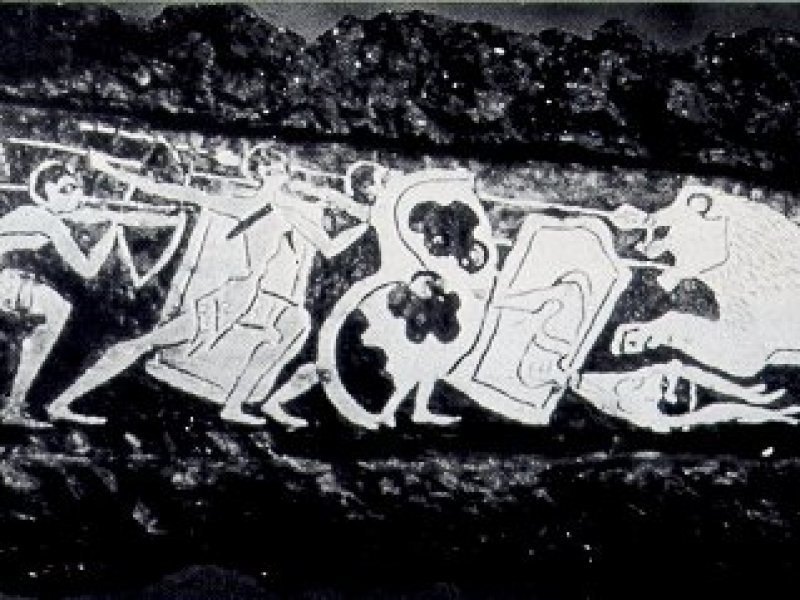
Who Killed Ajax? Iliad's Tragedy
Ajax the Great was considered second only to Achilles among the Greek heroes. He was the son of Telmon, the grandson of Aeacus and Zeus, and was cousin to Achilles. With such an impressive family lineage, Ajax had much to gain (and lose) in the Trojan war.
Who Was Ajax?
Ajax's famous lineage begins with his grandfather, Aeacus. Aeacus was born of Zeus from his mother, Aegina, daughter of a river god Asopus. Aeacus brought forth Peleus, Telamon and Phocus, and was grandfather to both Ajax and Achilles.
Ajax's father, Telamon, was born to Aeacus and a mountain nymph by the name of Endeis. He was the elder brother to Peleus. Telamon sailed with Jason and the Argonauts and took part in the hunt for the Calydonian Boar. Telamon's brother Peleus was the father of the second famous Greek Hero, Achilles.
Ajax's birth was greatly desired. Heracles prayed to Zeus for his friend Telemon and his wife, Eriboea. He desired that his friend would have a son carry on his name and legacy, continuing to bring glory to the family name. Zeus, favoring the prayer, sent an eagle as a sign. Heracles encouraged Telemon to name his son Ajax, after the eagle.
Zeus' blessing resulted in a healthy, strong baby boy, who grew into a strapping young man. In The Iliad, he is described as being of great strength and stature, being the strongest of all the Greeks. He earned a nickname, the bulwark of the Achaeans, for his size and strength. A ship's bulwark is the wall that rises and protects the upper decks from waves, providing a sturdy frame and rail. The Bulwark of the Achaeans was a barrier, a defender of his people and their armies.
With a lineage like that behind him, Ajax couldn't help but become a great hero. He was fated to follow his own path into myth and legend by the family legends he carried in his past. It's not surprising that Ajax the Great was set up for one of the greatest falls from grace in Greek mythology. So, with such a star-studded, iron-clad lineage and reputation, how did Ajax die? Unlike almost every other Greek hero, Ajax did not die in battle. He took his own life.
Why Did Ajax Kill Himself?
Ajax was a proud man. He was known as the Greek's second-best warrior, the best on the field when Achilles refused to join the battling. So why would a great warrior take his own life? With everything to gain and everything to lose on the field of battle, what could drive a man of his stature to such a decision? Why did Ajax kill himself?
Achilles had left the battle early on due to the behaviors of his cousin, Agamemnon. The pair had each taken a woman as a slave from a raid. Agamemnon had stolen Chryseis. The woman was the daughter of Chryses, a priest of Apollo. Chryses appealed to Agamemnon for her freedom. When he could not gain his daughter's return through mortal means, he prayed fervently to god Apollo for assistance. Apollo responded by releasing a terrible plague on the Achaean army.
The prophet Calchas revealed that the return of Chryseis could only end the plague. Resentful and angry at the loss of his prize, Agamemnon demanded that he be given Briseis in her place. Achilles was so angry at the loss of his own prize that he withdrew from battle and refused to return. It was not until the loss of Patroclus, his best friend and possible lover, that he returned to the fighting. In his absence, Ajax was the primary fighter for the Greeks.
During this time, Ajax fought Hector in a one-on-one duel, which was ended in a draw, neither warrior was able to overcome the other. The two warriors honored one another's efforts with gifts. Ajax gave Hector a purple sash he had worn around his waist, and Hector gave Ajax a fine sword. The two parted as respectful enemies.
Following Patroclus' death, Achilles went on a rampage, destroying as many Trojans as he was able. In the end, Achilles fought and killed Hector. After dishonoring Hector's body in his fury and grief over Patroclus' death, Achilles was eventually killed in battle, leaving an important decision to be made. With Achilles dead, there were two great Greek warriors left: Odysseus and Ajax. Greek mythology reveals that Achilles' armor was specially forged at the behest of his mother, Thetis. She hoped that the armor would protect him against the prophecy that he would die young by gaining glory for himself and Greece.
The armor was a fine prize, and it was determined that it should be given to the most powerful warrior. Odysseus, a Greek warrior, not because of his greater prowess, but because of his speaking and presentation skill, was granted the honor of being given the armor. Ajax was furious. Feeling slighted and rejected by the army for which he had risked so much and fought so hard, he turned against his comrades. Ajax might have slaughtered the entire army single-handedly had the goddess Athena not intervened.
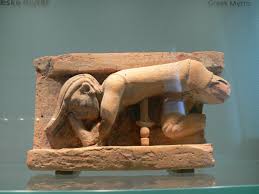
Athena, taking pity on the Greeks who Ajax's fury would have decimated, placed an illusion. She convinced Ajax that he was attacking his comrades when a cattle herd had been substituted for the soldiers. He slaughtered the entire herd before he realized his mistake. In a fit of miserable fury, regret, guilt, and grief, Ajax felt that suicide was the only end that offered him any chance at maintaining his dignity. He hoped to preserve what he was able of the glory he had gained for his family and was unable to face the dual shame. He had been denied the chance to own Achilles' armor, and had turned against his own people. He felt he had no further recourse but death. He fell upon the very sword he had won from Hector, embracing death with his enemy's sword.
Reluctant Warriors of the Trojan War
In truth, Ajax was one of the few who perhaps deserved to have been given the armor. Agamemnon set out to round up the men bound by The Oath of Tyndareus. Odysseus tried to dodge fulfilling his oath by pretending madness. He hooked a mule and an ox to his plow. He began sowing the fields with handfuls of salt. Unperturbed by Odysseus' ploy, Agamemnon placed Odysseus' infant son in front of the plow. Odysseus had to turn aside to avoid injuring the baby. It revealed his sanity, and he had no choice but to join the war.
Achilles' mother Thetis, a nymph, had been given a prophecy. Her son would either live a long, uneventful life or die in a war, bringing great glory to his own name. To defend him, she hid him among women on an island. Odysseus cleverly lured Achilles out of hiding by offering a variety of items, including weapons. He sounded a war horn, and Achilles instinctively reached for the weapon to come to the island's defense.
Of the three greatest Greek champions, Ajax alone joined the war of his own free will, without needing to be coerced or tricked. He came to answer his oath to Tyndareus and gain glory for his name and his family's name. Unfortunately for Ajax, his glory-seeking was outshone by those with less rigid ideas of honor and pride, leading to his downfall.
Ajax the Warrior
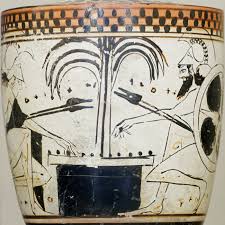
Ajax came from a long line of warriors and often fought alongside his brother Teucer. Teucer was skilled with using a bow and would stand behind Ajax and pick off soldiers while Ajax covered him with his impressive shield. Interestingly, Paris, King Priam's son, was similarly skilled with a bow, but he did not share a parallel relationship with his brother Hector. The pair might have been as impressive as Ajax and Teucer, but they chose not to fight as a team.
Ajax's lack was in his skill in diplomacy, but not in skill as a warrior. He trained alongside Achilles under the centaur Chiron. By all accounts, he was a war hero of great stature who contributed mightily to the Greeks' success over the Trojans. He was one of those sent by Agamemnon to try to convince Achilles to return to the field of battle after their falling out. His skill was as a fighter, however, and not as a speaker. Achilles would not hear the warrior's pleas, even accompanied by the words of the silver-tongued Odysseus.
Rather than fight his battles with words, Ajax's strength was with his sword in battle. He is one of the very few Greek warriors to come through the war without a serious wound in battle. He received almost no assistance from the gods and fought bravely. He was highly skilled in combat, and unlike many of those who were first in the fighting, he had little in the way of divine intervention. In the story, he is a relatively minor character, but he was one of the foundations of the Greek victory in truth.
Always the Second, Never the First
Despite his moniker, Ajax the Great, Ajax was doomed to be second in everything he endeavored throughout both The Odyssey and The Iliad. In The Iliad, he is second to Achilles in battle, and in The Odyssey, he falls short in comparison to Odysseus.
Although Ajax and Achilles had trained together, Achilles, son of a nymph, was clearly favored by the gods. Often, Achilles is shown receiving assistance from the gods or his immortal mother, while Ajax is left to fight his own battles without any such help. Why was Ajax passed over while Achilles was favored by the gods? His family was equally noble. Ajax's father, Telamon, was the son of King Aeacus and Endeis, a mountain nymph. Ajax himself participated in several great battles and adventures. The gods' whims are as changeable and unpredictable as the wind, and Ajax seemed always to fall short of gaining their favor and assistance.
Despite the lack of divine intervention, Ajax held his own throughout most of the war. It was he who faced Hector first and he who almost kills Hector in their second encounter. Unfortunately for Ajax, Hector was fated to fall to Achilles far later in the war.
When the Trojans, led by Hector, break into the Mycenaean camp and attack the ships, Ajax holds them off almost single-handedly. He carries an enormous spear and leaps from ship to ship. In the third encounter with Hector, Ajax is disarmed and forced to retreat, as Zeus is favoring Hector. Hector managed to burn one Greek ship in that encounter.
Ajax has had his share of successes. He is responsible for the deaths of many of the Trojan warriors and lords, including Phorcys. Phorcys was so bold going into battle that he wore a double corset rather than carry a shield. He is the leader of the Phrygians. As one of Hector's allies, he is an important kill in the list of Ajax's victories through the war.
Ajax and the Rescue of Patroclus and Achilles
In a last-ditch effort to regain Achilles' assistance in the fight, Patroclus goes to Achilles and begs the use of his famous armor. By wearing it into battle, Patroclus hopes to drive the Trojans back and defend the Greek ships. Seeing Achilles' famous armor being worn is a trick to dishearten the Trojans and defeat them by trickery. It works, all too well. Patroclus, in his quest for glory and revenge, carries the ruse on too far. Hector kills him near the Trojan city wall. Ajax was present when Patroclus died, and he and Menelaus, the husband to Helen of Sparta, managed to drive off the Trojans, preventing them from stealing Patroclus' body. They can return him to Achilles.
Even Achilles requires retrieval after his death. Enraged by the death of Patroclus, he goes out on a rampage against the Trojans. He kills so many soldiers that the bodies clog a river, angering the local river god. Achilles does battle with the river god and wins before going on to continue his slaughter. When he comes on the Trojan walls, Hector recognizes that he is the one Achilles truly seeks. To spare his city from further assault, he goes out to face Achilles.
Achilles chases Hector around the entire city three times before Hector turns to face him, tricked by the gods into thinking he has a chance to win this battle. It has been determined, however, that Achilles will get revenge. He kills Hector and takes his body back, dragging it behind his chariot. He desecrates the body, refusing to allow it to be buried. Finally, Hector's father slips into the Greek camp to plead with Achilles to return his son's body. Achilles relents and releases the body for burial.
Following the funeral rites, the battling continues. Achilles goes out once more against the Trojans, accompanied by Ajax and Odysseus. The kidnapper of Helen, Paris, fires a single arrow. This is no ordinary arrow. It is dipped in the same poison that killed the Hero Heracles. The arrow is guided by the god Apollo to strike the one place where Achilles is vulnerable- his heel.
When Achilles was an infant, his mother dipped him into the River Styx to imbue him with immortality. She held the child by the heel, and so that one place where her firm grip blocked the water, he was not granted a covering of immortality. Paris' arrow, guided by the hand of a god, strikes true, killing Achilles.
In the battle that ensued, Ajax and Odysseus fight fiercely to maintain control of his body. They will not allow it to be taken by the Trojans, possibly to be desecrated as Achilles had done to the Trojan Prince Hector. They battle fiercely, with Odysseus holding off the Trojans while Ajax wades in with his mighty spear and shield to retrieve the body. He manages the feat and carries Achilles' remains back to the ships. Achilles is subsequently burned in the traditional funeral rites, and his ashes mixed with those of his friend, Patroclus.
Achilles and Ajax: Cousins in Arms
The fine armor becomes the point of contention. It was forged on Mount Olympus by the blacksmith Hephaestus, made especially for Achilles at the behest of his mother. Ajax's great jealousy and fury at being unrecognized for his efforts and loyalty to Achilles drive him to his tragic end. Although he did not have the divine help that Achilles had, nor his cousin's respect and standing with the other leaders, he had the same jealous and proud nature.
Achilles left the fighting because his war prize, the slave woman, was taken from him. His pride and affront cost the Greeks a great deal in terms of defeat. In the end, Achilles' fit of pique contributes to the loss of his friend and possible lover, Patroclus. Similarly, Ajax's desire for recognition and glory led him to covet the fine armor's prize. Surely, he has earned it through his multiple victories and fierce fighting throughout the war. He felt that the armor should go to him, rightfully as the second-best warrior of the armies. Instead, it was given to Odysseus, triggering Ajax's death by suicide.