What is the Role of Athena In The Iliad?
Athena in the Trojan War acts as a mentor to Achilles, battling on the side of the Achaeans. Achilles is a hot-headed warrior, impulsively rushing into battle with little discipline. Athena tries to rein in his impulsivity and direct his strength and ability to gain victories.
She wants to see Troy fall and manipulates and interferes, even defying Zeus himself in her efforts. Athena's efforts begin early on. In book 3, Paris, the son of King Priam, has offered a challenge to the Achaean warriors. He is willing to fight a duel to decide the outcome of the war. Helen, the lady at the heart of the dispute, will go to the winner.
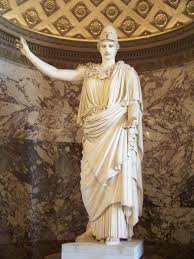
Athena, goddess of wisdom and warfare
Menelaos, a Greek warrior of some prowess, accepts the challenge. The king, Priam, goes to the battlefield to meet with the Achaean leader, Agamemnon, and settle the duel's details. When Menelaos and Paris finally face-off, Menelaus can wound Paris. The duel, and the war, might have been ended. Still, Aphrodite, working against Athena for the Trojans' side, intervenes, snatching Paris up off the battlefield and spiriting him away to his bedroom in Troy, ending the duel with no discernable outcome.
The duel results in a temporary truce, a time each of the armies can regroup and catalog their soldiers and ships. Zeus is considering ending the war after 9 years, sparing Troy from destruction. This is a plan strongly opposed by Hera, Zeus' wife. She wants to see Troy destroyed and argues strongly to reignite the war. Zeus, swayed by Hera, sends Athena to start the fighting again.
Athena, seeing an opportunity to further her own agenda, agrees. She's not about to give the Trojans a chance at gaining an advantage. She needs a clever and subtle way to reignite the fighting. Athena seeks out a Trojan nobleman, Pandaros, and convinces him to fire an arrow at Menelaos. While not fatal or even serious, the wound is painful and requires Menelaos to retreat from the field temporarily. With an attack on one of the Greek's most valiant and proud warriors, the truce is broken, and Agamemnon leads the soldiers to war once more.
What Was Athena's Role In The Iliad
Although Zeus has forbidden the gods and goddesses from interfering in the war, Athena takes an active role. She has chosen a Hero, Diomedes, whom she has given the gifts of exceptional strength and courage. Also, Diomedes can discern gods from mortal men, and with this ability, has managed to avoid fighting immortals. Diomedes has an important role to play in the war. He's featured in several important battles and provides several key victories.
In book 8, Zeus tells the gods that he will end the war and orders that they cannot interfere on either side. He has chosen the Trojans to win during this day. Hera and Athena both try to intervene on the Achaeans' behalf, but Zeus blocks their efforts. He foretells Patroclus' death and Achilles' return to battle. Achilles, the great warrior, seeks vengeance for Patroclus' death, bringing his wrath and strength back into the fight and beating the Trojans back.
For a time, Zeus blocks the gods' interference, forbidding them from involving themselves further in the mortal's battles. The Acheans and Trojans are on their own. Patroclus convinces Achilles to let him don his armor to drive the Trojans back from the ships. Although Patroclus had been the more level-headed of the pair, acting as Achilles' mentor, keeping the younger man calm and directed, he is doomed to fall to his own pride. His hubris and glory-seeking lead him to go beyond Achilles' instructions. Rather than just defending the ships, he drives the Trojans back, brutally slaughtering them until he reaches the city walls, where Hector finally kills him. A battle ensues over Patroclus' body. Finally, Hector manages to steal Achilles' prized armor, but the Acheans successfully retrieve the body.
Achilles is devastated and furious at the loss of his friend. He goes into deep mourning. Agamemnon takes advantage of the situation to reconcile with Achilles. He goes to Achilles and pleads with him to seek vengeance for Patroclus' death. He blames their quarrel on Zeus and convinces him to return to the field of battle by returning Briseus and offering other fine gifts in reconciliation. Achilles, infuriated by Patroclus' death, launches an attack on the Trojans.
Zeus Unleashes the Gods
Meanwhile, in Book 20, Zeus calls a meeting of the gods and announces that gods are now permitted to join the battling. Hera, Athena, Poseidon, Hermes and Hephaistos take the Greeks' side, while Ares, god Apollo, Artemis, the goddess of the hunt, and goddess Aphrodite defend the beleaguered Trojans. The battle begins again. Achilles' wrath has been unleashed. Rather than try to rein in Achilles' temper or direct him while he unleashes his temper, Athena allows him to rampage unchecked, protecting him as he battles. He kills so many of the enemy that the River Xanthos' god rises, trying to drown him with large waves. Athena and Poseidon intervene, saving him from the angry river god. Achilles continues his brutal slaughter, driving the Trojans back to their gates.

Zeus unleashing the gods to join the battle
As the Trojans retreat, Hector recognizes that the death of Patroclus has roused Achilles' fury. Knowing he is responsible for the renewed assault, he is determined to face Achilles himself. He goes out to face him but is overcome with fear. Achilles chases him three times around the city walls until Athena intervenes, assuring Hector he will have divine help. Hector turns to face Achilles, full of false hope. He doesn't realize he's been tricked until it's too late. The two do battle, but Achilles is the victor. Achilles drags Hector's body behind his chariot, shaming Hector in the way he had meant to treat Patroclus.
Achilles' abuse of Hector's body goes on for nine days, until the gods, angered at his lack of respect, intervene once more. Zeus declares that Priam must be permitted to ransom his son's body. Thetis, Achilles' mother, goes to him and informs him of the decision. When Priam comes to Achilles, for the first time, the young warrior thinks of another's grief as well as his own. He knows that he is destined to die in this war.
He considers his own father's grief at his coming death and allows Priam to take Hector's body back to be laid to rest. The Iliad ends with the Trojans tending the funeral rites for Hector. In later writings, we learn that Achilles was indeed killed in a battle later in the war and that the famed Trojan Horse's trickery finally won the war.
How Athena Character Traits Affected her Role
Athena, who appeared as a goddess of wisdom to Homer, carried several roles as she worked to support the Acheans in the Iliad. In Roman literature, she appeared in another form as Minerva, the goddess worshipped by the earlier Minoans. As Minerva, she was the goddess of domesticity, looking after the home and family. She was presented as being urbane, civilized, and clever. Protecting her hearth and home, she was also virginal and born directly of Zeus, without a mother's need. As a favorite of Zeus, she was favored and had quite a lot of leeway in her mortal affairs interference.
The Greek culture was far more warlike than previous worshippers, so she morphed into a goddess of war in their mythology. She maintained her patronage of skills such as weaving and creating items for the home and weapons and armor. Remaining virginal herself, she neither took lovers nor brought forth children of her own.
In the Trojan war, she and Ares took opposite sides and an opposite approach to battle. Athena offers a superior advantage over Ares as she is civilized, intelligent, and controlled, where Ares was focused on the violence and bloodlust. Ares represents passion, while Athena favors discipline.
Athena encourages the characters she influences toward justice and balance, while Ares sought out hubris and recklessness. Athena's calm, cool-headed counsel provided the Greeks with a serious edge in several battles. Without her interventions, Ares may have taken advantage of Achilles' recklessness to bring disaster for the Greeks.
She is the goddess of humility, taking a thoughtful and practical approach to battle and seeking counsel, rather than relying on rage and brute strength. In many ways, Athena is a mentor, guiding the warrior. A fighter's strength is only as good as his ability to wield it. Athena encouraged warriors to train and hone their patience and discipline. She was symbolized often by the owl and the snake.
In addition to her role in Iliad, Athena frequently appears throughout the Odyssey, performing as a mentor to Odysseus, a Greek warrior. Odysseus was the key to Achilles becoming involved in the Trojan war. Odysseus was known for his cleverness and cool-headed courage in battle, traits he gained in part from his training with the goddess of war. Her influence carried on from Odysseus and was represented in Patroclus, who helped balance Achilles' temper.
Athena was also portrayed as a mentor to Perseus and Hercules. Her influence over these heroes gave them the qualities of calm in the face of strife, quiet strength, wisdom and prudence in their dealings. Brute strength is only useful if it is properly directed. Athena enhanced strength with wisdom and direction, instilling discipline and control to enhance the warrior's passion and strength.