Timeless Myths Logo
Aphrodite Apollo Ares Artemis Athena Atlas Coeus Crius Cronus Demeter Dionysus Gaia Hades Hephaestus Hera Hermes Hestia Hyperion Iapetus Mnemosyne Oceanus Phobos Phoebe Poseidon Prometheus Rhea Tethys Themis Uranus Zeus
Bacchus Ceres Diana Juno Jupiter Mars Mercury Minerva Neptune Pluto Venus Vesta Vulcan
Amun Anubis Aten Atum Babi Bastet Bes Geb Hapi hathor heqet Horus Isis Khepri Khnum Khonsu Maat Nephthys Nut Osiris Ptah Ra Seshat Seth Shu Sobek Thoth
Alfheim Baldur Freya Freyr Frigg Heimdallr Helheim Idun Jotunheim Loki Nerthus Njord Odin Thor Tyr
Aengus Arawn Badb Brigid Cailleach Ceridwen Cernunnos Cu Chulainn Dagda Danu Gwydion Herne the Hunter Lugh Medb Morrigan Neit Nuada Taliesin Taranis
Chalchiuhtlicue Coatlicue Huitzilopochtli Mictlantecuhtli Mixcoatl Ometeotl Quetzalcoatl Tezcatlipoca Tlaloc Tonatiuh Xipe Totec Xochiquetzal Xolotl
Amaterasu Ame no Uzume Benzaiten Bishamonten Daikokuten Ebisu Fujin Fukurokuju Inari Izanagi Kagutsuchi Raijin Susanoo Tsukuyomi
Caishen Cangjie Dragon King Eight Immortals Erlang Shen Fuxi Guanyin Hou Yi Huxian Jade Emperor King Yama Leizi Lu-ban Mazu Nezha Nuwa Pangu Shennong Sun Wukong Xiwangmu Yue Lao Zhong Kui
Norse Classical Celtic Arthurian
Literature Stories Names
Aphrodite Apollo Ares Artemis Athena Atlas Coeus Crius Cronus Demeter Dionysus Gaia Hades Hephaestus Hera Hermes Hestia Hyperion Iapetus Mnemosyne Oceanus Phobos Phoebe Poseidon Prometheus Rhea Tethys Themis Uranus Zeus
Bacchus Ceres Diana Juno Jupiter Mars Mercury Minerva Neptune Pluto Venus Vesta Vulcan
Amun Anubis Aten Atum Babi Bastet Bes Geb Hapi hathor heqet Horus Isis Khepri Khnum Khonsu Maat Nephthys Nut Osiris Ptah Ra Seshat Seth Shu Sobek Thoth
Alfheim Baldur Freya Freyr Frigg Heimdallr Helheim Idun Jotunheim Loki Nerthus Njord Odin Thor Tyr
Aengus Arawn Badb Brigid Cailleach Ceridwen Cernunnos Cu Chulainn Dagda Danu Gwydion Herne the Hunter Lugh Medb Morrigan Neit Nuada Taliesin Taranis
Chalchiuhtlicue Coatlicue Huitzilopochtli Mictlantecuhtli Mixcoatl Ometeotl Quetzalcoatl Tezcatlipoca Tlaloc Tonatiuh Xipe Totec Xochiquetzal Xolotl
Amaterasu Ame no Uzume Benzaiten Bishamonten Daikokuten Ebisu Fujin Fukurokuju Inari Izanagi Kagutsuchi Raijin Susanoo Tsukuyomi
Caishen Cangjie Dragon King Eight Immortals Erlang Shen Fuxi Guanyin Hou Yi Huxian Jade Emperor King Yama Leizi Lu-ban Mazu Nezha Nuwa Pangu Shennong Sun Wukong Xiwangmu Yue Lao Zhong Kui
Norse Classical Celtic Arthurian
Literature Stories Names

The Role of Women in the Iliad: How Homer Portrayed Women in the Poem
literary-analysis
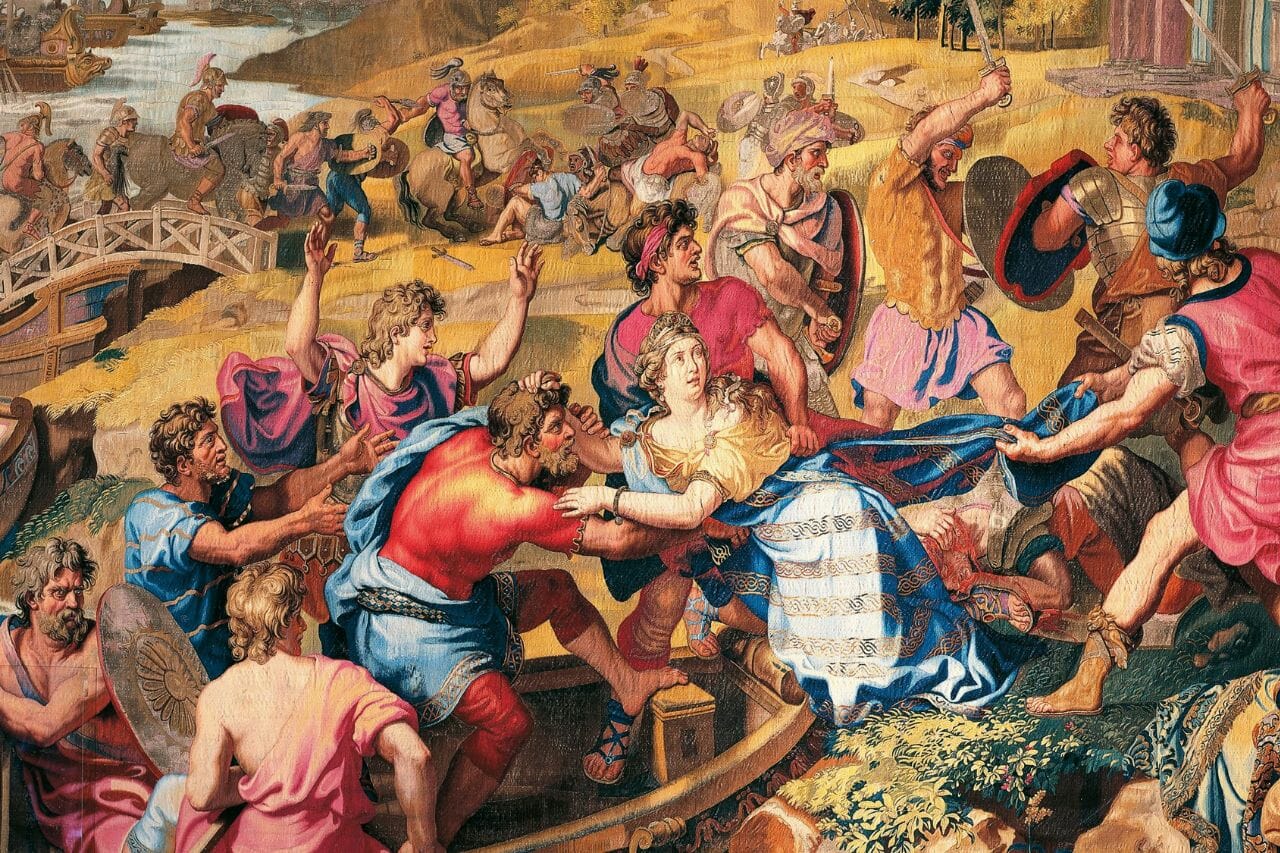
Helen of Troy - The Role of Women in the Iliad

Helen of Troy - The Role of Women in the Iliad

The Role of Women in the Iliad with their treatment of female characters in the Iliad and Odyssey can be seen as dehumanizing by today's standards but in the days of Homer, it was acceptable.

Though there were women warriors such as the Amazons, most of the women who were mentioned in the Iliad were either wives or slaves.

Thus, women were reduced to objects of lust and pleasure for men. This article would explore the various roles women played in the epic poem and how they drive the plot.

What Is The Role of Women in the Iliad?

The role of women in the Iliad served two major purposes; men used them as objects of pleasure and possession and women used sex to manipulate men. Also, they played minor roles in the major events of the epic poem, with the poet reserving significant roles for the men.

Women Used as Property in the Iliad

One way Homer represented women's role in Ancient Greek society was how he used women as objects in the poem. The cause of the Trojan War was every man in the Greek world viewed Helen of Troy as property to be possessed. Many suitors had lined up for her hand in marriage including kings but she eventually ended up with Paris who kidnapped her and sparked the 10-year war.

The Treatment of Helen in the Iliad

The goddesses in the Iliad were no exception – they treated mortal women the same way the mortal men handled them. This was exemplified by Aphrodite's decision to gift Helen of Troy to Paris for choosing her (Aphrodite) as the most beautiful goddess in comparison to Hera and Athena.

However, Aphrodite did not consider the feelings of Helen, who is seen as the ideal woman in the Iliad, nor did she think about the repercussions of her actions. As far as she could use Helen for her selfish gains, she didn't care whatever happened to her.

The Treatment of Briseis and Chryseis

Another view of women being used as objects was the case of Briseis and Chryseis. These were girls who were captured as spoils of war and used as sex slaves. Briseis belonged to Achilles while Chryseis was a slave to Agamemnon. However, Agamemnon had to return Chryseis to her father due to a plague that was caused by the god Apollo.

Out of anger, Agamemnon captured Achilles's slave girl, Briseis, and this sparked a quarrel between the two Greek heroes.

As illustrated by one of Agamemnon's quotes from the Iliad about gender roles:

But fetch me another prize, and straight off too,

Else, I alone of the Argives go without honor

That would be a disgrace

You are all witness – my prize is snatched away

Achilles resolved never to take part in the war again and he stayed through to his resolve until Hector killed his best friend Patroclus. In this regard, the three women, Briseis, Chryseis and Helen were seen as properties, not persons and were treated as such.

Homer Uses Women to Manipulate Men in the Iliad

In various instances, women are portrayed as manipulators who use sex to make men do their bidding. Strong female characters in the Iliad were not exempt from using sex to have their way. During the war, the Olympian gods took sides and tried to manipulate events in order to give an upper hand to their favorites. Hera was on the side of the Greeks, probably due to her losing the beauty competition to Aphrodite.

So, when Zeus ordered all the gods to stop interfering in the war, Hera decided to get Zeus to relax the rule by sleeping with him. Her intention was to initiate events that'll cause the temporary truce to be broken and cause more deaths in Troy. Hera succeeded in sleeping with Zeus, thus tipping the scales in favor of the Greeks. However, Zeus later found out what his wife was up to and called her a "trickster."

This illustrates the age-old erroneous perception of women as deceivers and schemers who always had some evil up their sleeves. Men were seen as creatures full of uncontrollable lust who always fell for the schemes of women.

The Women Were Used to Drive the Plot of the Iliad

Though the women have minor roles in the epic poem, they help to drive its plot. The capture of Helen is the starting point of the 10-year war between the two nations. It sets in motion several events that'll even cause division among the gods and cause them to fight each other. Not only does she initiate the war, but her presence in Troy also drives the plot as the Greeks relentlessly fought to return her.

Also, Homer uses Aphrodite to enhance the plot when the goddess swoops in and rescues Paris from dying at the hands of Menelaus. If Menelaus had killed Paris, the war would have come to an abrupt end as Helen would be returned and the fighting would be needless.

Also, Athena restarts the war after a brief respite when she causes Pandarus to shoot an arrow at Menelaus. When Agamemnon heard what happened to Menelaus, he swears to bring vengeance on whoever was responsible; and that was how the war restarted.

Women Evoking Emotions of Sympathy and Pity

Throughout the poem, women are used to evoking cathartic feelings of sympathy and pity. Andromache, the wife of Hector, typifies this when she pleads with her husband not to go to war. The way she mourns her husband evokes sympathy for her as she envisions life without Hector. She goes through the formal female lamentations and displays raw emotions of grief that would move the audience.

Hecuba's mourning of her son Hector also shows how women were used to eliciting sympathy. Her anxiety when she learned that her husband, Priam, was going to retrieve the body of Hector illustrates her love for her husband. Hecuba and Andromache's lamentations when mourning Hector are recognized as one of the most famous speeches in the epic poem.

Summary

So far, we've discovered the role of women in the Iliad including their portrayal and how they drive the plot of the poem. Here is a recap of all that we've studied so far:
The Role of Women in the Iliad

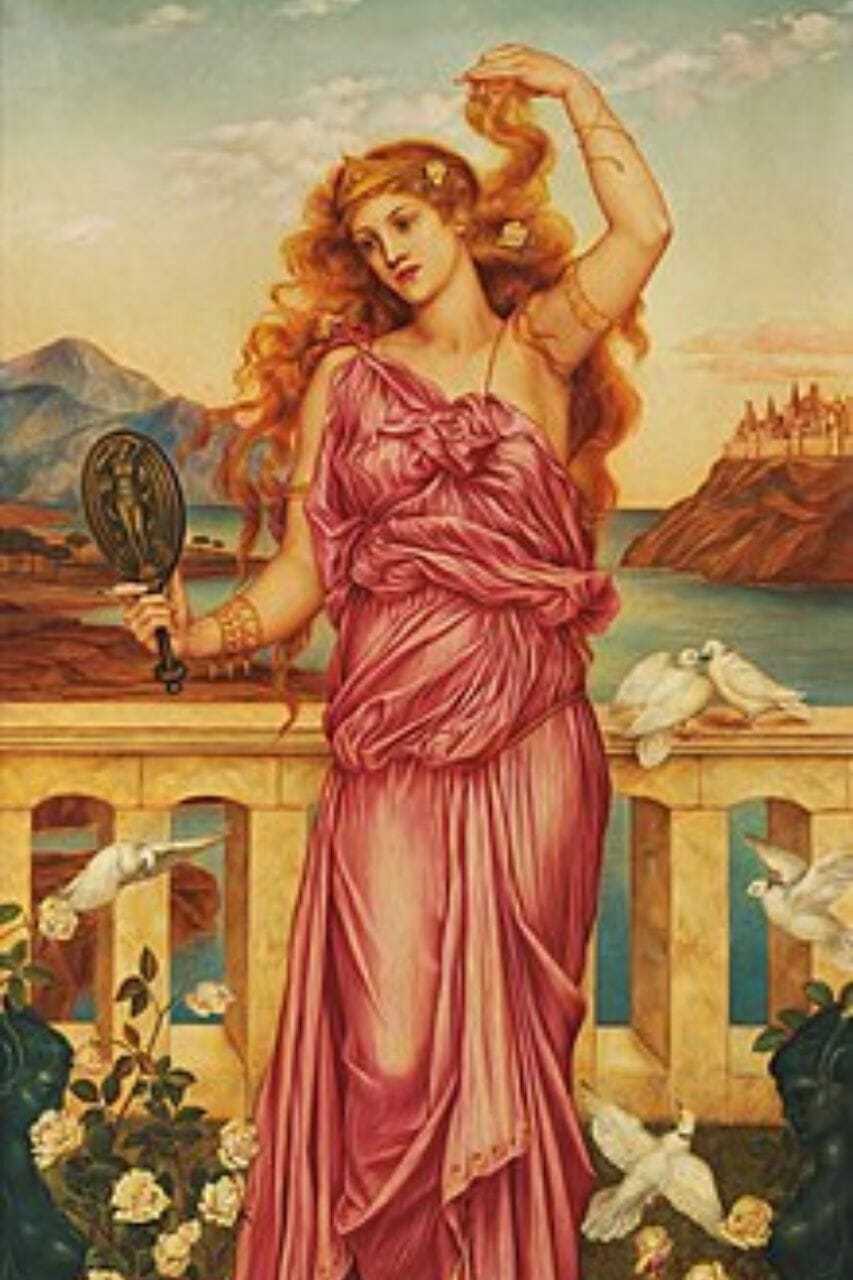
The Role of Women in the Iliad

  • The role of women in the Iliad illustrates how women were viewed in Ancient Greece and how they were used to enhance the plot of the poem.

  • In the Iliad, women were thought of as prized possessions or objects that could be used and traded as in the case of Helen, Chryseis and Briseis.

  • Also, women were portrayed as tricksters who used sex to make men do their bidding as illustrated by Hera when she seduced Zeus to tip the scales in favor of the Greeks.

  • Homer used women such as Helen and Athena to initiate the plot and enhance it respectively, especially when Athena restarted the war after convincing Pandarus to shoot at Menelaus.

  • Women were used to evoking feelings of grief and sympathy as illustrated by Hecuba and Andromache who mourned their son and husband respectively.

Gender roles in the Iliad were diverse and men played significant parts. Though women's role in the Iliad is a minor one, their importance to the overall flow of the poem cannot be understated.

By Ancient Literature

Created: February 16th, 2024

Modified: January 9th, 2025

Hera in the Iliad: The Role of the Queen of the Gods in Homer's Poem

Hera in the Iliad: The Role of the Queen of the Gods in Homer's Poem

Hera in the Iliad follows all the schemes of the queen of the gods to turn the tide of the war in favor of the Greeks. Some of her attempts were successful while others yielded little or no results. Eventually, her favored side, the Greeks, wins t...

February 16th, 2024 • Ancient Literature
What Roles Did the Gods in The Iliad Play?

What Roles Did the Gods in The Iliad Play?

The gods in the Iliad, as in most Greek mythology, heavily influenced events as they unfolded. While Zeus, the king of the gods, remained neutral, several lesser gods and goddesses chose sides, championing either Greek or Trojan causes. The entire...

February 16th, 2024 • Ancient Literature
What is the Role of Athena In The Iliad?

What is the Role of Athena In The Iliad?

Athena in the Trojan War acts as a mentor to Achilles, battling on the side of the Achaeans. Achilles is a hot-headed warrior, impulsively rushing into battle with little discipline. Athena tries to rein in his impulsivity and direct his strength ...

February 16th, 2024 • Ancient Literature
Honor in the Iliad: The Penultimate Aim of Every Warrior in the Poem

Honor in the Iliad: The Penultimate Aim of Every Warrior in the Poem

Honor in the Iliad was more valuable than life, therefore, everyone strived to achieve it. Characters such as Achilles, Agamemnon, Odysseus, Patroclus and even the old Nestor did what they did for the honor that they would receive. To the ancient ...

February 16th, 2024 • Ancient Literature
Epithets in the Iliad: Titles of Major Characters in the Epic Poem

Epithets in the Iliad: Titles of Major Characters in the Epic Poem

The epithets in the Iliad are replete with that are usually titles that praise a character or reveal their unique characteristics. Since the Iliad is a poem and meant to be recited, many scholars believe that epithets help the narrator to remember...

February 17th, 2024 • Ancient Literature
Apollo in The Iliad – How Did a God's Vengeance Affect the Trojan War?

Apollo in The Iliad – How Did a God's Vengeance Affect the Trojan War?

The story of Apollo in The Iliad is one of the acts of vengeance of a wrathful god and the effect it has on the course of the war. The gods' interference is a theme throughout the story, but Apollo's actions, though they seem somewhat removed from...

February 15th, 2024 • Ancient Literature
Who Were The Iliad Main Chracters?

Who Were The Iliad Main Chracters?

The main characters in The Iliad included women and men, mortal and immortal, victims, warriors, and gods. Their stories are intertwined and overlapping throughout the epic, weaving the tapestry threads known as the Trojan War. The Trojan war char...

February 16th, 2024 • Ancient Literature
Iliad vs Odyssey: A Tale of Two Epics

Iliad vs Odyssey: A Tale of Two Epics

While the Iliad vs Odyssey question is related and even considered sequential by some, there are various subtle and not-so-subtle differences. For example, The Iliad is more liberal with its mixing of the paranormal and fantasy and the mundane. Th...

February 16th, 2024 • Ancient Literature
Fate in the Iliad: Analyzing the Role of Fate in Homer's Epic Poem

Fate in the Iliad: Analyzing the Role of Fate in Homer's Epic Poem

What Is Fate in the Iliad? Fate in the Iliad is "how the gods determine the destiny of characters" in the epic poem and how the action of the characters drive them towards their fated ends. The Iliad itself is thought of as already fated as it is ...

February 16th, 2024 • Ancient Literature
Female Characters In The Odyssey – Helpers and Hindrances

Female Characters In The Odyssey – Helpers and Hindrances

What roles are played by the female characters in the odyssey? They are either Helpers or Hindrances. Women in the Odyssey offer an insight into the roles of women in general in ancient Greece during the time of the epic's writing. The society of ...

February 16th, 2024 • Ancient Literature
Timeless Myths

Exploring mythology and legends from around the world.

Explore Myths

All Stories Characters All Articles Search Site Map

Mythologies

Norse Mythology Classical Mythology Celtic Mythology Arthurian Legends Mythology Gods Ancient Literature

About Us

Introduction About Jimmy Bibliography FAQs Retro Version

Resources

Timeless Myths All Stories All Articles Characters
© 1999-2026 Timeless Myths • Copyright • Privacy Policy • Cookie Policy • Contact
Follow us: