Timeless Myths Logo
Aphrodite Apollo Ares Artemis Athena Atlas Coeus Crius Cronus Demeter Dionysus Gaia Hades Hephaestus Hera Hermes Hestia Hyperion Iapetus Mnemosyne Oceanus Phobos Phoebe Poseidon Prometheus Rhea Tethys Themis Uranus Zeus
Bacchus Ceres Diana Juno Jupiter Mars Mercury Minerva Neptune Pluto Venus Vesta Vulcan
Amun Anubis Aten Atum Babi Bastet Bes Geb Hapi hathor heqet Horus Isis Khepri Khnum Khonsu Maat Nephthys Nut Osiris Ptah Ra Seshat Seth Shu Sobek Thoth
Alfheim Baldur Freya Freyr Frigg Heimdallr Helheim Idun Jotunheim Loki Nerthus Njord Odin Thor Tyr
Aengus Arawn Badb Brigid Cailleach Ceridwen Cernunnos Cu Chulainn Dagda Danu Gwydion Herne the Hunter Lugh Medb Morrigan Neit Nuada Taliesin Taranis
Chalchiuhtlicue Coatlicue Huitzilopochtli Mictlantecuhtli Mixcoatl Ometeotl Quetzalcoatl Tezcatlipoca Tlaloc Tonatiuh Xipe Totec Xochiquetzal Xolotl
Amaterasu Ame no Uzume Benzaiten Bishamonten Daikokuten Ebisu Fujin Fukurokuju Inari Izanagi Kagutsuchi Raijin Susanoo Tsukuyomi
Caishen Cangjie Dragon King Eight Immortals Erlang Shen Fuxi Guanyin Hou Yi Huxian Jade Emperor King Yama Leizi Lu-ban Mazu Nezha Nuwa Pangu Shennong Sun Wukong Xiwangmu Yue Lao Zhong Kui
Norse Classical Celtic Arthurian
Literature Stories Names
Aphrodite Apollo Ares Artemis Athena Atlas Coeus Crius Cronus Demeter Dionysus Gaia Hades Hephaestus Hera Hermes Hestia Hyperion Iapetus Mnemosyne Oceanus Phobos Phoebe Poseidon Prometheus Rhea Tethys Themis Uranus Zeus
Bacchus Ceres Diana Juno Jupiter Mars Mercury Minerva Neptune Pluto Venus Vesta Vulcan
Amun Anubis Aten Atum Babi Bastet Bes Geb Hapi hathor heqet Horus Isis Khepri Khnum Khonsu Maat Nephthys Nut Osiris Ptah Ra Seshat Seth Shu Sobek Thoth
Alfheim Baldur Freya Freyr Frigg Heimdallr Helheim Idun Jotunheim Loki Nerthus Njord Odin Thor Tyr
Aengus Arawn Badb Brigid Cailleach Ceridwen Cernunnos Cu Chulainn Dagda Danu Gwydion Herne the Hunter Lugh Medb Morrigan Neit Nuada Taliesin Taranis
Chalchiuhtlicue Coatlicue Huitzilopochtli Mictlantecuhtli Mixcoatl Ometeotl Quetzalcoatl Tezcatlipoca Tlaloc Tonatiuh Xipe Totec Xochiquetzal Xolotl
Amaterasu Ame no Uzume Benzaiten Bishamonten Daikokuten Ebisu Fujin Fukurokuju Inari Izanagi Kagutsuchi Raijin Susanoo Tsukuyomi
Caishen Cangjie Dragon King Eight Immortals Erlang Shen Fuxi Guanyin Hou Yi Huxian Jade Emperor King Yama Leizi Lu-ban Mazu Nezha Nuwa Pangu Shennong Sun Wukong Xiwangmu Yue Lao Zhong Kui
Norse Classical Celtic Arthurian
Literature Stories Names

Mezentius in the Aeneid: The Myth of the Savage King of the Etruscans

roman-mythology

Mezentius in the Aeneid was a King who antagonized the Trojans as they settled in Latium. The Romans referred to him as "Despiser of the gods" due to his perceived disregard for the divine. He had a son Lausus who he loved more than his life but unfortunately died.

Keep reading to know more about this Etruscan King and how he died in Virgil's epic poem.
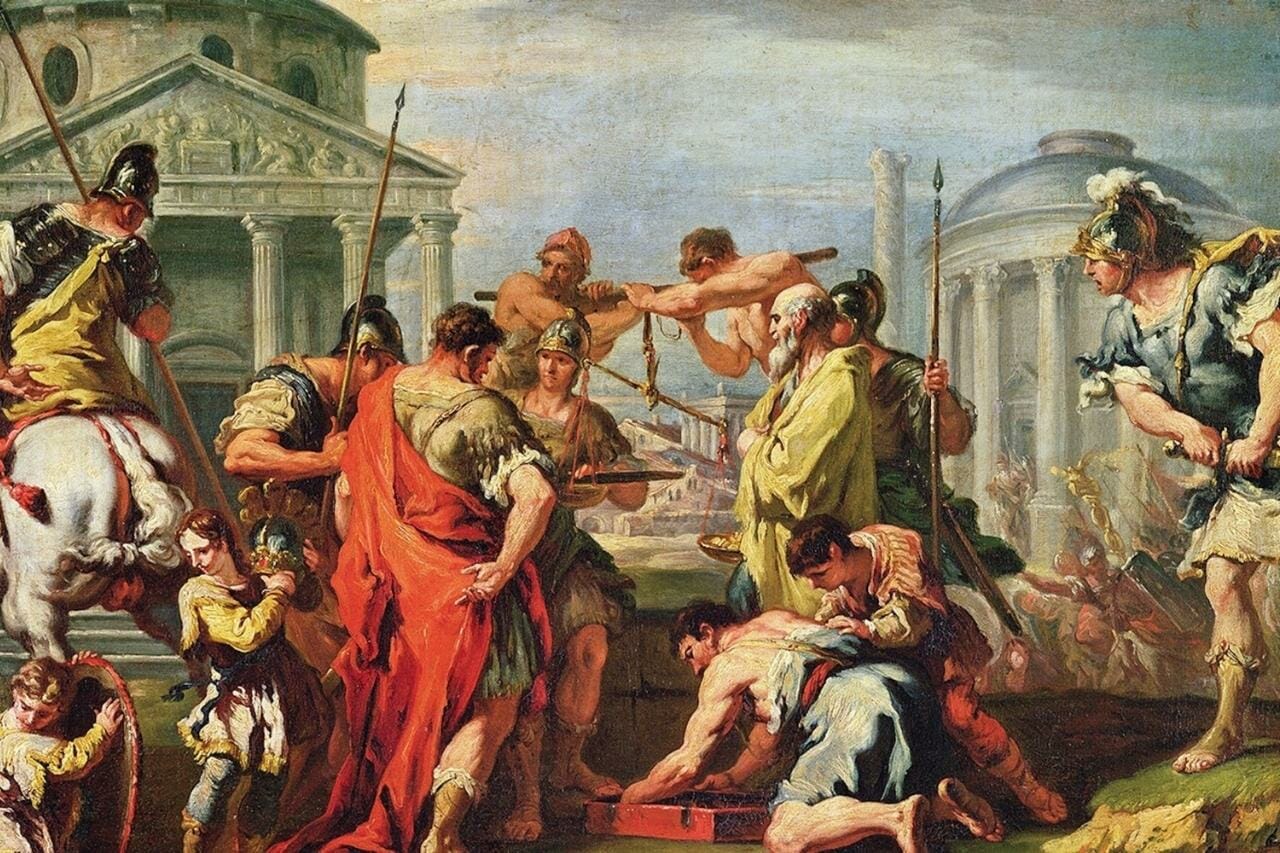
Mezentius, the savage King of the Etruscans in the Aeneid

Mezentius, the savage King of the Etruscans

Who Was Mezentius in the Aeneid?

Mezentius was a King of the Etruscans who resided in the south-eastern part of ancient Italy. He was famous for his savageness on the battlefield and never spared anyone. He fought Aeneas in the book but was no match for the epic hero.

Mezentius's Life and Adventure

Mezentius was the king who joined his forces in order to fight against the Trojan Army. Read below all about this wicked epic king:

Mezentius' Encounter With Aeneas and Pallas' Death

Mezentius joined forces with Turnus, the leader of the Rutulians, to wage war against the Trojans. During the battle, Turnus killed Pallas in the book, the foster son of Aeneas, by spearing him in his midsection.

Pallas' death grieved Aeneas for, though, they were not related by blood, Pallas and Aeneas shared a special bond. Thus, Aeneas slashed his way through the Latin forces in the search for Turnus but Juno, the Queen of the gods, intervened and saved Turnus.

Since Aeneas could not find Turnus, he turned his attention to Mezentius and pursued him. Mezentius was no match for Aeneas and he suffered a devastating blow from Aeneas' spear.

As Aeneas was about to deal the fatal blow to Mezentius, his son, Lausus, came to his rescue, allowing Mezentius to escape to safety. Aeneas then advises Lausus to abandon the fight and save his life, but his pleas fell on deaf ears as the young Lausus was eager to prove his worth.

Aeneas then killed Lausus without breaking a sweat and when the news got to Mezentius, he came out of his hiding to fight the son of Anchises. He fought bravely and held off Aeneas for a while by riding his horse around him.

Aeneas, however, became victorious when he struck Mezentius' horse with a spear and it fell. Unfortunately, the horse's fall pinned Mezentius to the ground rendering him helpless.
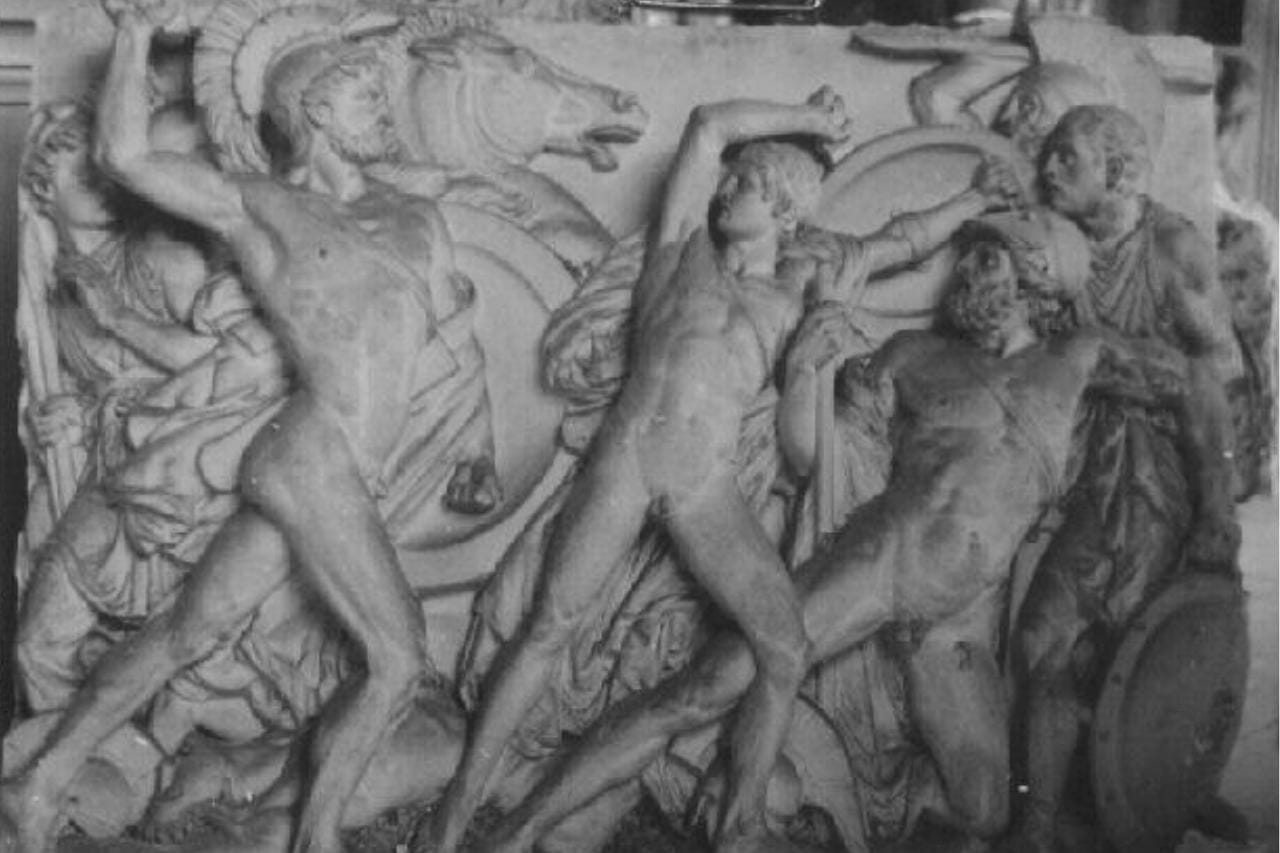
Mezentius fighting Aeneas in the Aeneid

Mezentius in battle in the Aeneid

Final Moments of Mezentius in the Aeneid

While he was pinned to the ground, Mezentius refused to ask for mercy for he was puffed up with pride. Before he died, he begged Aeneas to bury his body with his son so that they would be together in the afterlife. Aeneas then dealt the final blow to Mezentius and killed him.

Mezentius Aeneid in Book 8

In Book 8 of the Aeneid, it was mentioned that Mezentius was overthrown by the Etruscans for his cruelty. Mezentius' cruelty was a common theme in Homeric poem as Homer portrayed him as an evil King whose people were peaceful. Thus, it is likely that Virgil's Mezentius was inspired by the Mezentius of Homer.

Conclusion

The article has looked at the role and the death of Mezentius in Virgil's epic poem, the book. Here is a summary of all that this article has discussed so far:

  • Mezentius was a cruel King of the Etruscans who joined forces with Turnus, the leader of the Rutuli, to fight against Aeneas and his Trojan army.

  • During the battle, he faced off with Aeneas's foster son, Pallas, and he murdered him.

  • This angered Aeneas who slashed his way through the enemy lines looking for Mezentius, but Juno intervened and Mezentius was spared.

  • Finally, Aeneas encountered Mezentius and wounded him fatally, but just when Aeneas was about to deal the final blow, Lausus swoops in to save him.

  • Mezentius then escaped and his son, Lausus, dueled with Aeneas but he was no match for the experienced epic hero as he killed him effortlessly.

When Mezentius got wind of what had happened to his son, he ran back into the battle to avenge the death of his beloved son. Mezentius fought bravely by riding his horse around Aeneas but Aeneas eventually killed him after his horse fell and pinned him to the ground.

By Ancient Literature

Created: February 16th, 2024

Modified: January 17th, 2026

Turnus

Turnus

Turnus was the king of Rutulia and an enemy of Aeneas. Turnus was either the son of Pilumnus and Danae, who was the daughter of Acrisius, or he was the son of King Daunus of Rutulia and Venilia. Turnus was also the brother of Juturna, the goddess ...

April 24th, 1999 • Jimmy Joe
Violence in the Aeneid: The Instances of Conflicts in the Epic Poem

Violence in the Aeneid: The Instances of Conflicts in the Epic Poem

Violence in the Aeneid explores the subjects of conquest and defeat, glory and infamy, that characterized the establishment of the Roman Empire. The poem depicts the exploits of Aeneas whose heroic acts led to the founding of Rome, which later bec...

February 16th, 2024 • Ancient Literature
Peleus: The Greek Mythology of the King of the Myrmidons

Peleus: The Greek Mythology of the King of the Myrmidons

Peleus was an Argonaut who fled the city of Aegina after he and his half-brother, Telamon, murdered their sibling, Phocus. The two brothers landed in Phthia for the purification ceremony only for Peleus to later kill the King of Phthia albeit in a...

February 16th, 2024 • Ancient Literature
Arcas: The Greek Mythology of the Legendary King of the Arcadians

Arcas: The Greek Mythology of the Legendary King of the Arcadians

Arcas was a beloved ancestor of the Arcadians and the person after which the Arcadia region in Greece was named. To enable the region to develop he taught the people how to farm and helped to spread agriculture throughout the area. Arcas eventuall...

February 15th, 2024 • Ancient Literature
Fate in the Aeneid: Exploring the Theme of Predestination in the Poem

Fate in the Aeneid: Exploring the Theme of Predestination in the Poem

Fate in the Aeneid is a major theme that explores how the ancient Romans viewed the concept of predestination. The entirety of the poem hinges on Aeneas's destiny which is to set the foundations for the establishment of the Roman Empire. We learn ...

February 16th, 2024 • Ancient Literature
Erichthonius: The Mythical King of the Ancient Athenians

Erichthonius: The Mythical King of the Ancient Athenians

Erichthonius of Athens was a great ruler who taught his people how to use horses to make their lives easier and better. The ancient Greeks believed that he was born from the earth but was raised by Athena, the goddess of war. Erichthonius grew to ...

February 16th, 2024 • Ancient Literature
Etruria

Etruria

The people who spoke the extinct Etruscan language were called Etruscans by the Romans, but Tyrrhenians or Tyrrenians by the Greeks. The sea was named after the Etruscans - the Tyrrhenian Sea. Their land was called Etruria, a region that comprised...

February 4th, 2008 • Jimmy Joe
Aeneid

Aeneid

The Aeneid was written by a Rome's greatest poet named Virgil or Vergil (full name was Publius Vergilius Maro) and lived in 70-19 BC. Although Virgil wrote a couple of other works, it was the Aeneid which brought him fame after his death, during t...

March 31st, 2004 • Jimmy Joe
Aeneas

Aeneas

A Dardanian hero. He was the son of Anchises and the goddess Aphrodite. Hesiod says that Aphrodite gave birth to Aeneas (Αἰνείας) at the peaks of Ida. Aeneas was of the Trojan royal line of Dardania. Aeneas was brought up on Mount Ida by nymphs wh...

April 24th, 1999 • Jimmy Joe
Ardea

Ardea

The capital of the Rutali people or the Rutalians, and home of Turnus. Ardea was a city on the Latin coast. According to the Aeneid, Turnus led the Rutalians into war because Latinus favoured Aeneas as his son-in-law. Turnus was originally betroth...

February 4th, 2008 • Jimmy Joe
Timeless Myths

Exploring mythology and legends from around the world.

Explore Myths

All Stories Characters All Articles Search Site Map

Mythologies

Norse Mythology Classical Mythology Celtic Mythology Arthurian Legends Mythology Gods Ancient Literature

About Us

Introduction About Jimmy Bibliography FAQs Retro Version

Resources

Timeless Myths All Stories All Articles Characters
© 1999-2026 Timeless Myths • Copyright • Privacy Policy • Cookie Policy • Contact
Follow us: