Phorcys: The Sea God and The King From Phrygia
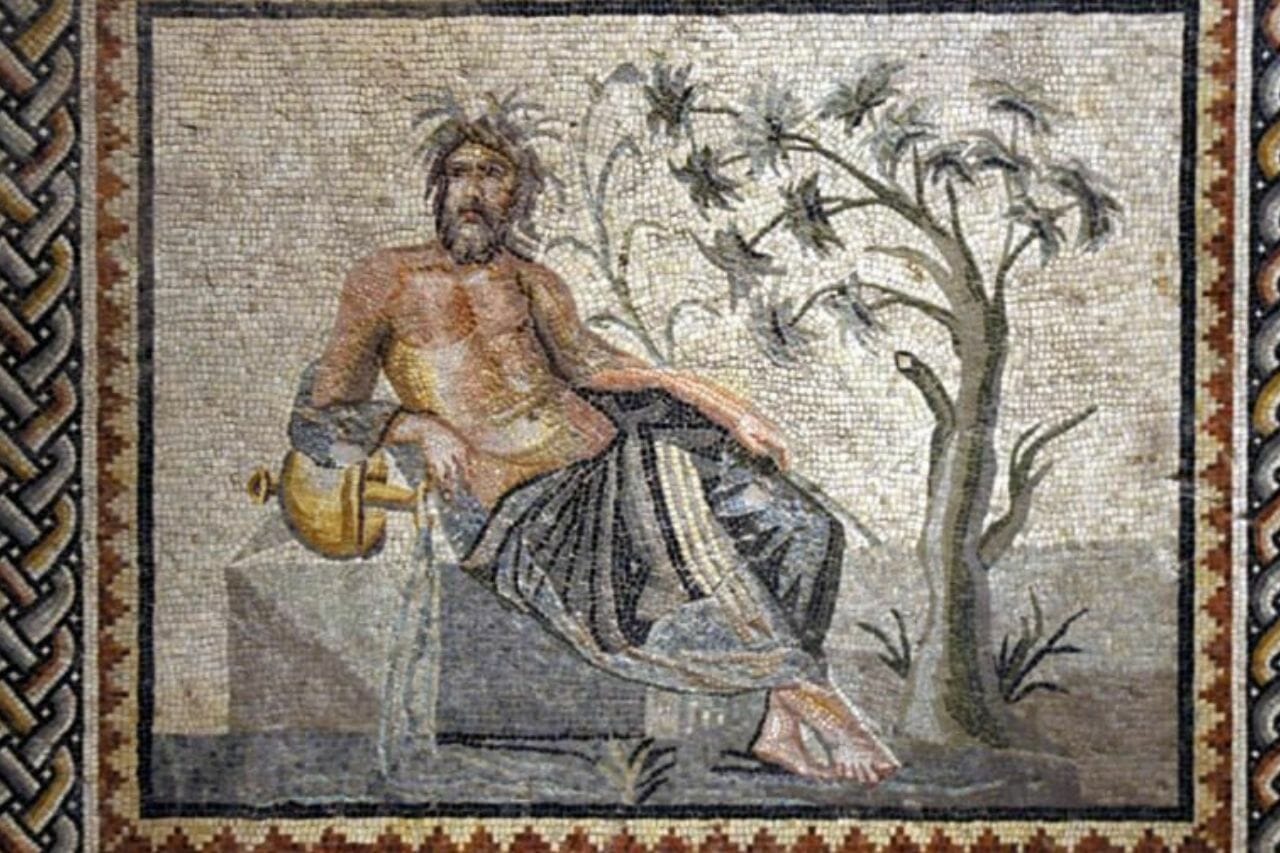
In Greek mythology, Phorcys is a name given to two different creatures. These creatures have different stories and are mentioned in separate works by Homer and Hesiod. Both the creatures are important to the mythology in their own ways. In this article, we differentiate between the two Phorcys of Greek mythology and learn about their life and death.
Who Is Phorcys?
The first version of Phorcys seen in mythology is Phorcys the sea god. He was a famous god of the sea and other water bodies. His powers were amazing and he controlled the water like no other. He was surely a handsome god, with blue eyes and a muscular body.
Phorcys the Sea God
Even though he was the god of the sea, he lived outside the water bodies. He would only go inside them when it was required to do so other than that he lived outside. Phorcys is not the first sea god. Before him, many sea gods came who were bigger in ranks than him like Oceanus.
Phorcys is mentioned in Theogony by Hesiod. His life, his marriage, and his children are mentioned by Hesiod in a descriptive way. His children would grow up to be even more famous in mythology than him.
Origin of Phorcys
Phorcys was a primordial being in mythology. He was born to Pontus and Gaia according to Hesiod. Pontus and Gaia were the most primitive gods of mythology. Gaia is the mother goddess of every god and goddess in mythology and the goddess of Earth. Whereas Pontus is the primordial Greek god of the sea in mythology but his powers were not only limited to the seas or water bodies.
According to Orphic hymns, Phorcys was the son of Cronus and Rhea, the titan sibling duo. Cronus was the first Titan god who had ultimate power over everything and Rhea was his sister who was also a Titan. These titans were born from Gaia and Uranus so they were the first generation of gods in Greek mythology.
Among the two couples that could have birthed Phorcys, the couple of Pontus and Gaia is more famously favored. The reason behind this is that this narrative is more widely heard and read rather than the narrative which states that Phorcys is the son of Cronus and Rhea. So Phorcys the sea god is the son of Pontus and Gaia (Earth).
Characteristics of Phorcys
Phorcys was not a creature to be reckoned with. He had extreme control over his waters and could drown anyone in no time. He was compared to Nereus and Proteus, the great Titan gods of the sea and other water bodies because of his characteristics and powers.
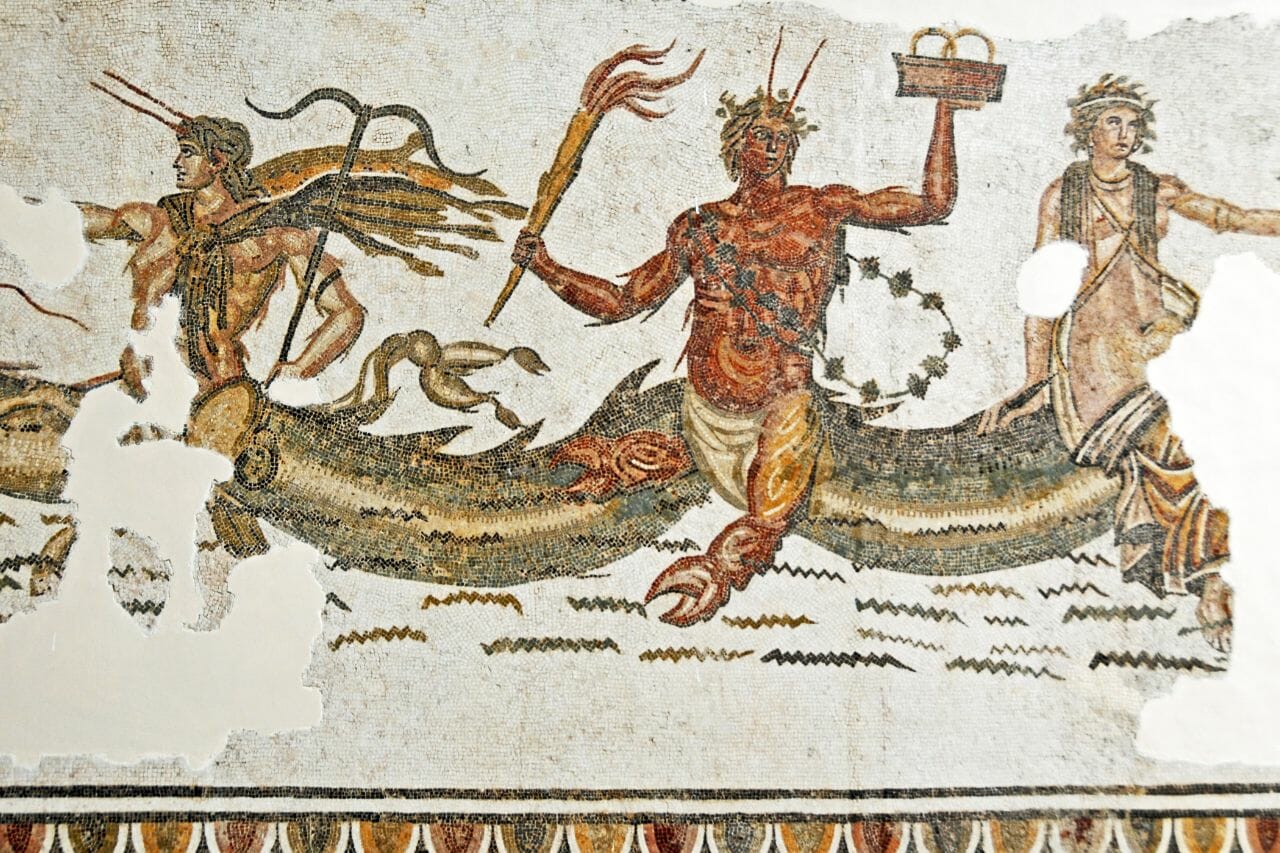
In some of the other places in the literature, Phorcys was not depicted as a man but as a combination of two different creatures. He was shown as a fish-tailed merman with crab-claw forelegs and red, spiky skin. This depiction also suits his character as he was a sea god.
Phorcys had all the characteristics of a sea god. He could do anything with water, he could say anything to water bodies and they would do exactly as he said. This was the beauty of his god powers. He was exceptional and a great god of the sea in Greek mythology.
Phorcys of Phrygia
The other type of Phorcys is from Phrygia. He is nothing like the Phorcys who was a sea god. This depiction of Phorcys is very different and most humane. He was an ally of King Priam in the Trojan war and is mentioned in the Illiad by Homer as the ally who helped King Priam defend his beloved city of Troy against the Greeks.
He was the son of Phaenops. Unfortunately, there is no more information about the Phrygian king. The Illiad does not explain anything about his life, his family, his marriage, or even his children. The only worth mentioning thing about Phircys of Phrygia is that he aided King Priam in the Trojan war and died helping his friend on the battlefield.
Origin of Phorcys
Phorcys is known as the son of Phaenops in the Illiad. Phaenops is a name that is given to three different characters in mythology. Hence, it is difficult to decide which was really the father of Phorcys. Nevertheless, Phorcys had a rich background and had his own army.
Phrygia is a small kingdom in the central part of Anatolia, which is now Asian Turkey, centered on the Sangarios River. After many conquests from various kingdoms, it became a region of the great empires of the time.
Characteristics of Phorcys
As the Illiad does not explain much about the character of Phorcys of Phrygia, his characteristics are quite simple and most expected ones. He was surely from a wealthy royal background since he had an army to lead in the Trojan war. He was close friends with King Priam of Troy which is why he asked him for help in his time of need.
Another important characteristic of Phorcys is that he was an exceptional fighter who fought many hidden dangers. The story of his combat alongside Priam and his sons is surely impressive.
Phorcys and the Trojan War
The Trojan war was the greatest war in Greek mythology that lasted for around 10 years. It killed uncountable people and wounded many more. The war started when Paris, King Priam of Troy's son, abducted Helen of Sparta and brought her to Troy. This triggered a chain of events that led to the fall of Troy. Helen's husband, Menelaus gathered his armies and declared a war on Troy.
King Priam was the king of Troy at the time. He was in great distress because the number of Greeks was humungous and the Trojans were far less than them. Troy would fall in some days and they would not even stand a chance to fight the Greeks.
For this reason, King Priam turned to his allies. He begged a lot of kings and armies to join his cause and to save his son and his city, Troy. There seemed to be a lot of hesitation from the allies because going against the Greeks would cause them a lot of suffering economically and in their friendly relations with them. However, a lot of armies decided to help the Trojans and one of such armies was the Phorcys.
Phorcys agreed to help and aid the Trojans in the Trojan war. He prepared his army and they all said goodbyes to their Phrygia. They left for Troy with everything they could need for the war. They knew that they were ready to fight but they also knew that this might be their last fight.
The Trojan war was a nasty business for the allies on both sides. The allies of the Greeks and the Trojans were mixed into something that did not concern them at all. Both sides lost so much more than just men. They lost their estates, their rations, their civility, and most of all time because the war continued for around 10 years which is not a small time.
Nevertheless, that's what allies do, they show up in the face of war and do not abandon their friends. This is the culture that has been running from the start of time and would run its course till the end of it.
Death of Phorcys
Phorcys was right when he predicted that this would be his last battle because he was killed in the Trojan war. While in combat, Phorcys was killed by Ajax, who was a decorated and famous Greek war hero and the son of King Telamon and Periboea. The death of Phorcys was tragic.
His corpse was sent back to Phrygia for a proper funeral and burial. Many of his Phrygians showed up at his funeral procession as a sign of sorrow. After his death, the rest of the Phrygians in the Trojan war fought with more strength. They wanted to make their king proud and be proud of them and surely they did.
FAQ
Were There Any Greek Sea Gods Before Oceanus?
No, there was no Greek sea god before Oceanus. He was the son of Uranus and Gaia and was the first Titan sea god.
Which Phorcys Was More Stronger Than the Other?
Phorcys the sea god was stronger than Phorcys of Phrygia. This is obvious because on one side there is a primordial god of the sea, who has unspeakable powers and abilities and on the other hand, there is a human who fought alongside King Priam as an ally in the Trojan war.
Conclusion
Phorcys is a name that is used for two different characters in Greek mythology. The Illiad by Homer and Theogony by Hesiod mentions both the characters at separate times. One character is very primitive and the other character exists at the time of the Trojan war. Here are the main points from the article explaining the differences between the two Phorcys:
The two Phorcys are Phorcys the sea god and Phorcys from Phrygia. The sea god is a stronger, more well-known character in the mythology with so much power and mention. Whereas the biggest achievement of Phorcys of Phrygia is related to his participation in the Trojan war. Both of them are of good nature and have impressive personalities.
Phorcys the titan sea god is said to be the son of either Cronus and Rhea or Pontus and Gaia. The more famous among the two couples being Phorcys' parents is the one with Pontus and Rhea.
Phorcys was an exceptional sea god. He was compared to Nereus and Proteus because of his strengths and valor.
Phorcys of Phrygia was the son of Phaenops. Phrygia was his city and he controlled the armies. He was asked for help by King Priam in the Trojan war.
Phorcys fought alongside the Trojans in the Trojan war. He fought till his last breath. He was killed by the decorated Greek war hero, Ajax on the battlefield. Phorcys was taken back to his city where after his funeral, was buried with dignity.
Here we come to the end of the article on Phorcys. We hope it was a pleasant read for you.