Timeless Myths Logo
Aphrodite Apollo Ares Artemis Athena Atlas Coeus Crius Cronus Demeter Dionysus Gaia Hades Hephaestus Hera Hermes Hestia Hyperion Iapetus Mnemosyne Oceanus Phobos Phoebe Poseidon Prometheus Rhea Tethys Themis Uranus Zeus
Bacchus Ceres Diana Juno Jupiter Mars Mercury Minerva Neptune Pluto Venus Vesta Vulcan
Amun Anubis Aten Atum Babi Bastet Bes Geb Hapi hathor heqet Horus Isis Khepri Khnum Khonsu Maat Nephthys Nut Osiris Ptah Ra Seshat Seth Shu Sobek Thoth
Alfheim Baldur Freya Freyr Frigg Heimdallr Helheim Idun Jotunheim Loki Nerthus Njord Odin Thor Tyr
Aengus Arawn Badb Brigid Cailleach Ceridwen Cernunnos Cu Chulainn Dagda Danu Gwydion Herne the Hunter Lugh Medb Morrigan Neit Nuada Taliesin Taranis
Chalchiuhtlicue Coatlicue Huitzilopochtli Mictlantecuhtli Mixcoatl Ometeotl Quetzalcoatl Tezcatlipoca Tlaloc Tonatiuh Xipe Totec Xochiquetzal Xolotl
Amaterasu Ame no Uzume Benzaiten Bishamonten Daikokuten Ebisu Fujin Fukurokuju Inari Izanagi Kagutsuchi Raijin Susanoo Tsukuyomi
Caishen Cangjie Dragon King Eight Immortals Erlang Shen Fuxi Guanyin Hou Yi Huxian Jade Emperor King Yama Leizi Lu-ban Mazu Nezha Nuwa Pangu Shennong Sun Wukong Xiwangmu Yue Lao Zhong Kui
Norse Classical Celtic Arthurian
Literature Stories Names
Aphrodite Apollo Ares Artemis Athena Atlas Coeus Crius Cronus Demeter Dionysus Gaia Hades Hephaestus Hera Hermes Hestia Hyperion Iapetus Mnemosyne Oceanus Phobos Phoebe Poseidon Prometheus Rhea Tethys Themis Uranus Zeus
Bacchus Ceres Diana Juno Jupiter Mars Mercury Minerva Neptune Pluto Venus Vesta Vulcan
Amun Anubis Aten Atum Babi Bastet Bes Geb Hapi hathor heqet Horus Isis Khepri Khnum Khonsu Maat Nephthys Nut Osiris Ptah Ra Seshat Seth Shu Sobek Thoth
Alfheim Baldur Freya Freyr Frigg Heimdallr Helheim Idun Jotunheim Loki Nerthus Njord Odin Thor Tyr
Aengus Arawn Badb Brigid Cailleach Ceridwen Cernunnos Cu Chulainn Dagda Danu Gwydion Herne the Hunter Lugh Medb Morrigan Neit Nuada Taliesin Taranis
Chalchiuhtlicue Coatlicue Huitzilopochtli Mictlantecuhtli Mixcoatl Ometeotl Quetzalcoatl Tezcatlipoca Tlaloc Tonatiuh Xipe Totec Xochiquetzal Xolotl
Amaterasu Ame no Uzume Benzaiten Bishamonten Daikokuten Ebisu Fujin Fukurokuju Inari Izanagi Kagutsuchi Raijin Susanoo Tsukuyomi
Caishen Cangjie Dragon King Eight Immortals Erlang Shen Fuxi Guanyin Hou Yi Huxian Jade Emperor King Yama Leizi Lu-ban Mazu Nezha Nuwa Pangu Shennong Sun Wukong Xiwangmu Yue Lao Zhong Kui
Norse Classical Celtic Arthurian
Literature Stories Names

Potamoi: The 3000 Male Water Deities in Greek Mythology
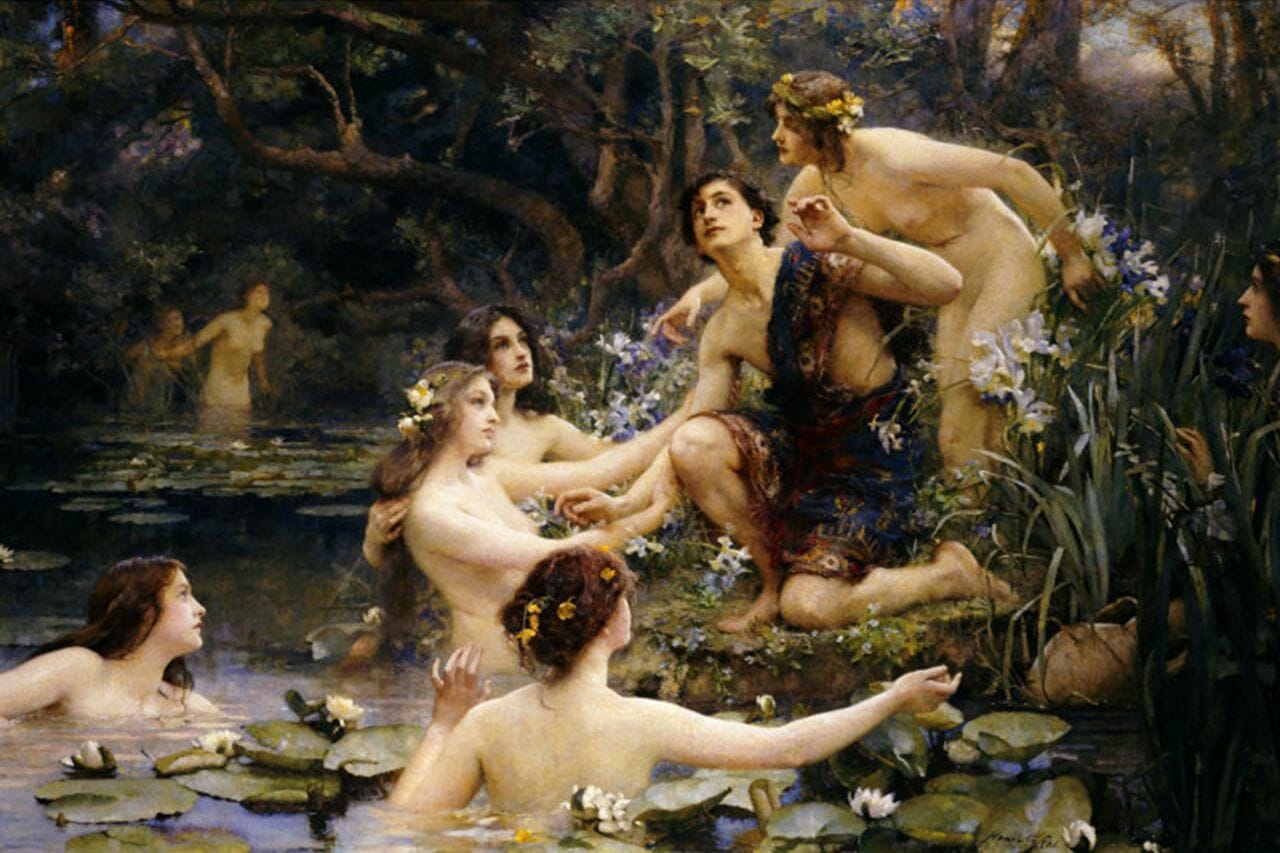
greek-mythology

Potamoi the Greek gods of rivers

The Potamoi were the 3000 sons of Oceanus and Tethys, both of which are Titans born to Uranus and Gaia. They were the brothers of the Oceanids and the father of the naiads: Potamoi daughter. The Potamoi were the gods of the sea and river bodies in Greek mythology. Here we bring you all the information on these creatures, keep reading, and you'll know all about Potamoi.

Potamoi

The Potamoi were the water and river deities, Oceanus and Tethys born from the Titan gods, Uranus and Gaia. Oceanus was the god of the sea and Tethys was the goddess of rivers. This sibling gave birth to the Oceanids, the female water deities, and Potamoi, the male water deities.

Potamoi in Greek Mythology

Greek mythology is full of extraordinary creatures. These creatures have special mentions in the literature and most of the time they have stories that greatly impacted mythology. One of such creatures is the Potamoi. Even though you will find it written everywhere that they are 3000 in number but in reality, their number is known and the figure 3000 is used only to show their innumeracy.

Throughout Greek mythology, the Potamoi and the Oceanids are mentioned at various points and in scenarios since their number was big, to begin with. Oceanus and Tethys gave birth to their sons and daughters in the river and the Oceanids and the Potamoi lived their lives in the same river too thus making them the water deities.

Characteristics of Potamoi

The Potamoi were 3000 in number which is a huge number for a creature. Interestingly, not all Potamoi looked the same. In literature, there are three ways that the Potamoi would be depicted:

  • a bull with the head of a man

  • a bull-headed man with the body of a serpent-like fish from the waist down

  • as a reclining man with an arm resting upon an amphora jug pouring water

Like the Oceanids, the Potamoi were also very attractive and handsome. They were the princes of the seas and surely looked like them. Among all the Potamoi, a few of them would be tasked with administrative work, some would look after the group, and some would just be on their own, away from the pack.

Some of the Potamoi also took part in the Trojan war which shows their strength to fight. Even though they were the gods of the river and were born there, a lot of them left their rivers and walked the Earth. This is the reason why they are found in almost every story in Greek mythology in some form.

Famous Potamoi Gods in Greek Mythology

As they were present in a vast number, there are many Potamoi gods that are very famous in mythology. Here we list some of them:

Achelous

He was the god of the Achelous River, which is the largest river in Greece. He gave his daughter in marriage to Alcmaeon. He wanted to marry Deiranira but was defeated by Heracles in a wrestling contest.

Alpheus

He was the Oceanidwho fell in love with the water nymph Arethusa. He pursued her to Syracuse, where Artemis transformed her into a spring.

Inachus

Inachus was the first king of Argos. After his death, the throne of Argos was given to his son Argus.

Nilus

Nilus was the famous Egyptian river god. He fathered many daughters that married the descendants of Inachus and formed an everlasting dynasty of kings in Egypt, Libya, Arabia, and Ethiopia for the longest time.

Peneus

He was the river god of Thessaly, the river flowed from the edge of Pindus. He was Daphne and Stilbe's father. Apollo loved Peneus and was immensely interested in her.

Scamander

Scamander fought on the side of the Trojans during the Trojan War against the Greeks. He was offended when Achilles polluted his waters with many Trojan corpses; as revenge, Scamander overflowed his banks which nearly drowned Achilles.

FAQ

Could Oceanids Marry Potamoi?

Yes, the Potamoi and the Oceanids could marry in Greek mythology. The Oceanids and the Potamoi were sibling groups born to the Titans, Oceanus, and Tethys. They were also the river deities. In Greek mythology, brothers and sisters could marry each other if they fell in love or if the situation demanded it.

What is Panes Mythology?

Panes is a side of Greek mythology that explains the story of Panes, who are the rustic spirits of highlands and mountains. They live in solitude and come out only when they want something from the world.

Conclusion

The Potamoi are unique characters in Greek mythology. They have extraordinary parentage and sibling connections. Here are the main points about the Potamoi from the above article:
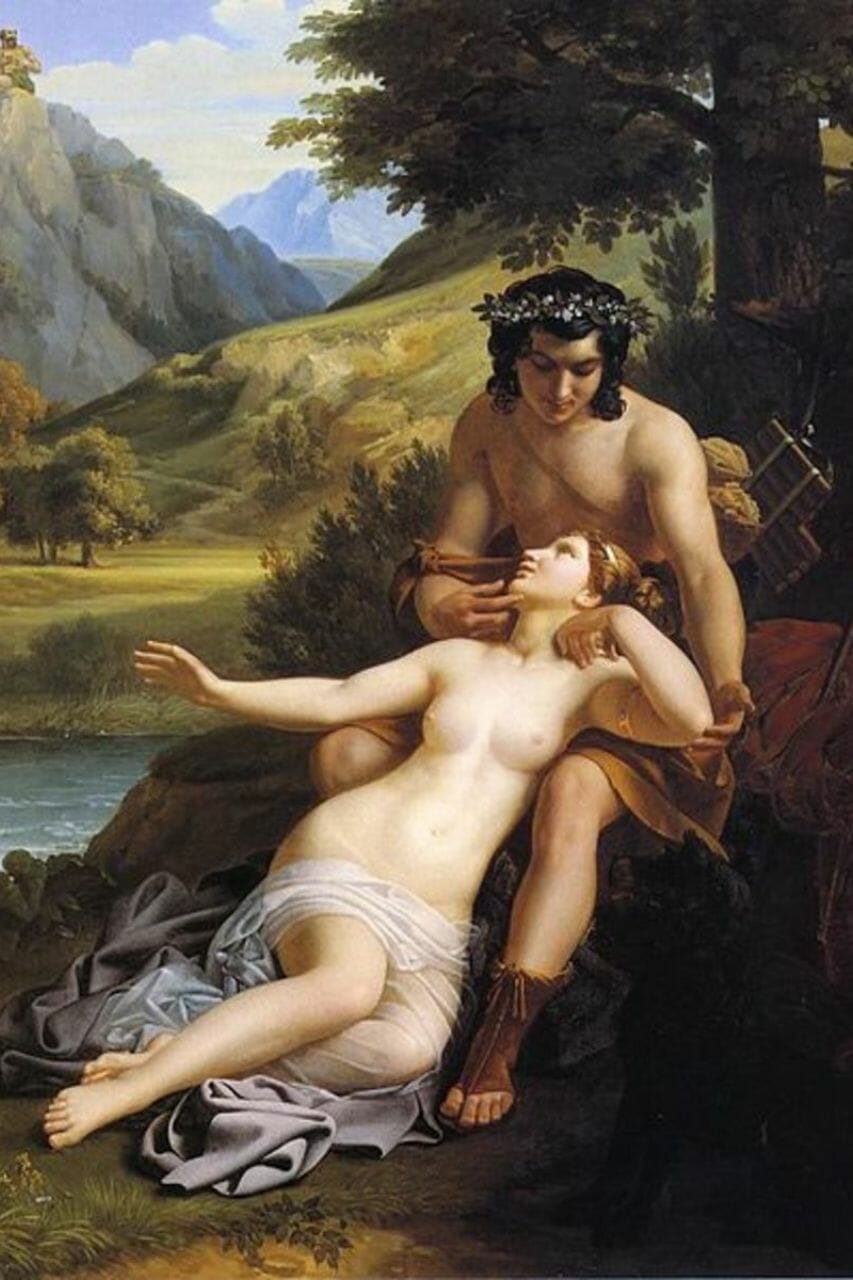
Potamoi in Greek mythology

The Potamoi were the male water deities of Greek mythology

  • The Potamoi is the river gods born to the Titans, Oceanus, and Tethys. They are described as being 3000 in number, but this is just a number to represent their innumeracy because they were born in countless numbers.

  • The Potamoies were the brothers of Oceanids, who were the beautiful female water deities. They lived together and a lot of times got married to each other.

  • The Potamoi fathered the water nymphs called the naiads. These creatures were as beautiful as the Oceanids and were famous for luring the men into the river.

  • Some of the most famous Potamoi are Scamander, Nilus, Achelous, Alpheus, and Peneus.

The Potamoi were the river gods of Greek mythology. The stories of their bravery, good heart, and amazing fighting abilities are numerous. Even though they are the sons of two Titans, they are not counted as the Olympians since they did not live on Mount Olympus. Here we come to the end of the article.

By Ancient Literature

Created: February 16th, 2024

Modified: January 13th, 2025

Oceanids

Oceanids

The Oceanids were daughters of Oceanus and Tethys. There were three thousand daughters of the Titans. Oceanus also had an equal number of sons who were all river gods. Being an Oceanid didn't necessarily mean that the nymph was a water deity. The ...

August 31st, 2002 • Jimmy Joe
Male Nymph: The Wild Minor Male Deities of the Greeks

Male Nymph: The Wild Minor Male Deities of the Greeks

The male nymph would have similar functions as the well-known female nymphs; they are also connected to a particular location and are generally believed to be nature spirits. Even though they also exhibit a huge difference from these beautiful nym...

February 16th, 2024 • Ancient Literature
Oceanus

Oceanus

Oceanus: The Procreating Pacifist Titan God of Water Oceanus ,Titan god of the sea, existed long before Poseidon. During the great war between the new Olympian gods and the Titans, he remained neutral, so he wasn’t punished with imprisonment. Stil...

April 2nd, 2002 • Timeless Myths
Greek Pantheon

Greek Pantheon

Below are several family trees showing the pantheon of the Greek gods. The first, very large genealogy shows the Greek deities based on Hesiod, Homer and many other writers, while the other trees are based on the more obscure Orphic myths. Pantheo...

July 28th, 1999 • Jimmy Joe
Minor Greek Deities

Minor Greek Deities

This page provides a description of some of the minor Greek deities. The minor deities are grouped into five categories. These categories are – Sky Deities; Earth Deities; Water and Sea Deities; Other Deities; and Personifications. Sky Deities Wat...

April 24th, 1999 • Jimmy Joe
Proteus

Proteus

A minor sea-god. Proteus was the eldest son of the Titans Oceanus and Tethys. Proteus was often referred to as the "Old Man of the Sea". Proteus' 2999 brothers were all river gods, except for him. Proteus had the ability to change his shape as wel...

April 24th, 1999 • Jimmy Joe
Oceanus

Oceanus

Titan and god of the river Oceanus (Ocean). Oceanus was the eldest son of Uranus and Gaea. The river Oceanus was said to flow in a circular stream around the earth, which was conceived of as a flat disk. Oceanus married his sister Tethys. All of h...

April 19th, 1999 • Jimmy Joe
Greek Gods

Greek Gods

The Greek gods and goddesses are probably the most recognized pantheon of gods in the western world. Many of their names are mentioned in daily phrases, and most people in the Western world know the majority of these deities. Their stories have be...

April 2nd, 2002 • Timeless Myths
Pontus (Sea)

Pontus (Sea)

A personification of the sea. Pontus was born, along with Uranus ("Sky") and Ourea ("Hill"), from Gaea. Pontus literally means the "sea". Pontus lay with his mother Gaea and became the father of Nereus and Phorcys, and also Eurybia, Thaumas (fathe...

April 19th, 1999 • Jimmy Joe
Pantheon

Pantheon

The Pantheon is a temple to all the gods and goddesses. Here, you will find myths of the gods and goddesses from Greece and Rome. The Greek deities have been divided into groups of gods, eg. Olympians and Titans. The stories of the various Creatio...

April 19th, 1999 • Jimmy Joe
Timeless Myths

Exploring mythology and legends from around the world.

Explore Myths

All Stories Characters All Articles Search Site Map

Mythologies

Norse Mythology Classical Mythology Celtic Mythology Arthurian Legends Mythology Gods Ancient Literature

About Us

Introduction About Jimmy Bibliography FAQs Retro Version

Resources

Timeless Myths All Stories All Articles Characters
© 1999-2026 Timeless Myths • Copyright • Privacy Policy • Cookie Policy • Contact
Follow us: