Senusret III: The Brilliant Leader Who Built the Kingdom of Egypt
Senusret III (1878–1860 BC) was a spectacular leader behind the massive economic development of Egypt. Also known as Sesostris III, he was the fifth king of the 12th dynasty who was honored as a deity while still on his throne because of his tremendous achievements during his reign.
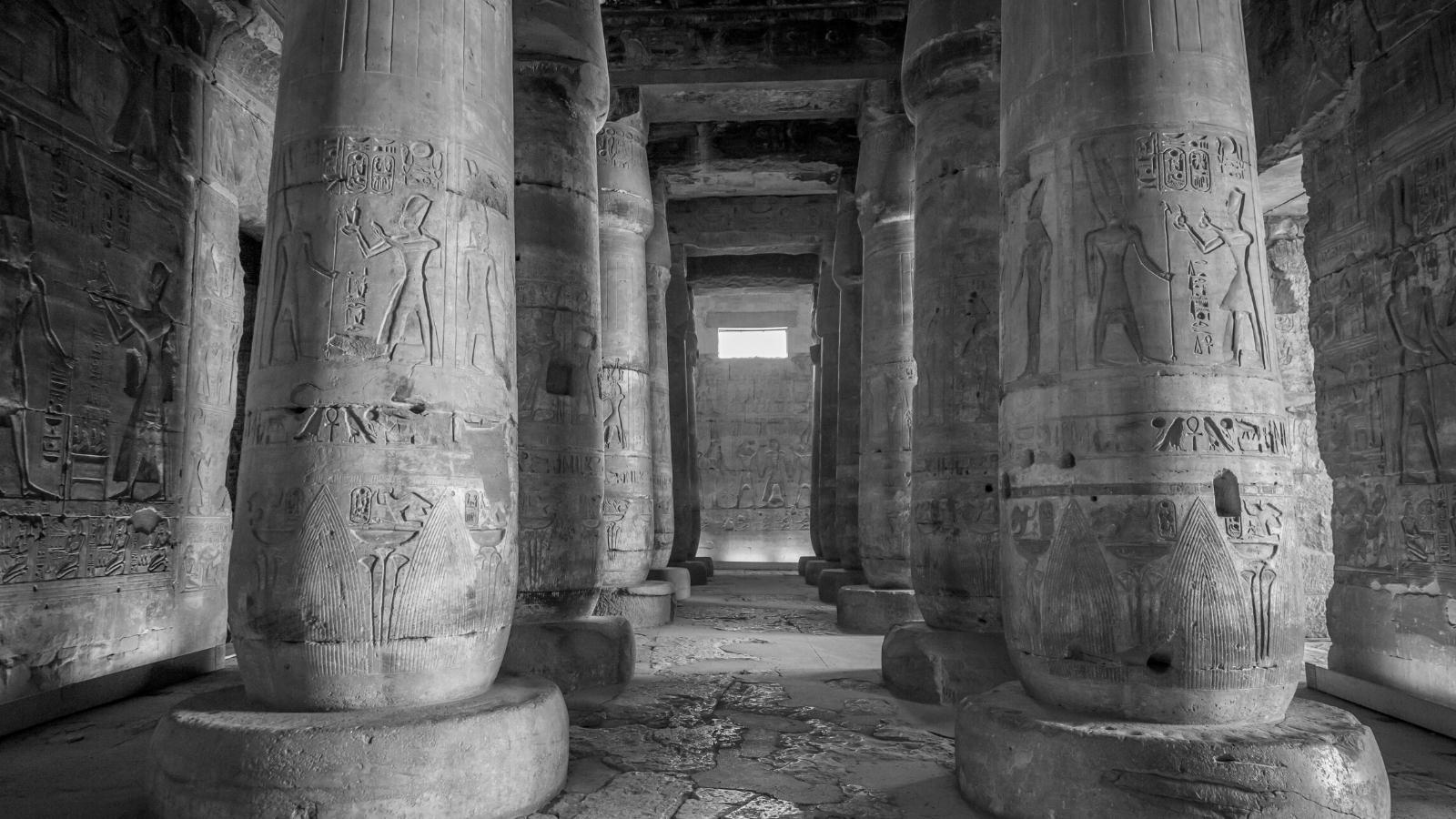
For many historians, his regime was the epitome of success in the Middle Kingdom, and many believed that it was the Golden Age in the history of Egypt. Readings about him can tell you how he showed his excellence in running the economy, the military, and the government. He was considered the most powerful king of the dynasty, and his greatness even surpassed that of his early predecessors.
Who Was Senusret III?
Born in the family of Senusret II and Khenemetneferhedjet I, Senusret III was also recognized by his other names, such as Senwosret III and Sesostris III. His wives included Itakayt, Khenemetneferhedjet II, and Neferthenut. Senusret III had four daughters; namely, Sithathor, Meret, Senetsenebtysy, and Menet, and his only son, Amenemhat III, succeeded him on his throne.
The reign of Pharaoh Senusret III was the greatest in his time. He spearheaded the substantial improvement in science, architecture, literature, and art.
He also made sure that the country expanded in trading with other nations. Literature about his monarchy would tell you how he emerged as a monumental leader who brought Egypt to economic and military stability.
Among his greatest accomplishments was the construction of the Canal of the Pharaohs, which served as a shining glory of his administration. You would wonder at the engineering prowess of the people at that time because the Canal of the Pharaohs was an ambitious project connecting the Nile and the Red Sea through Wadi Tumilat.
To date, you could witness the relevance of that great canal as the precursor of the famous Suez Canal.
In addition to the Canal of the Pharaohs, Senusret III also ordered the improvement of another waterway passing through the first cataract of the Nile. Armed with his desire to promote infrastructure projects, he strongly campaigned for the subsequent control of Nubia and constructed river forts for easier transportation and trade. These forts were found in Shalfak, Toshka, Semna, Uronarti, and Buhen.
To know more about the developmental projects of Senusret III, you have to unveil the quarrying explorations that started during his time. He began massive quarrying works in Sinai, where he also established important shrines and temples in the country. You know that his reverence to gods was the reason why he built a temple for Re-Atum, which was the center of worship of the sun in Heliopolis.
Associated with his legacy was the legend of Sesostris, who was known for his military triumphs that led to the bountiful economic progress of the nation. Historians have regarded the story of Sesostris as a myth, but the people recognized him for his courage and prowess.
Later, it was revealed that the works led by Sesostris were the same developments marshaled by Senusret III because they were the same person.
The people of Egypt were grateful for having Senusret III as their warrior-king because he was the embodiment of the Egyptian quest for a reliable leader and defender. He brought harmony and peace to Egypt and built the people’s confidence because they were secured from the attacks of their enemies.
He was an invincible warrior feared by his enemies and a wise counsel in times of need. These qualities of a king gave him the highest honor and reverence equal to that of a deity.
His name Senusret III also meant “man of the goddess Wosret.” Given that Wosret was a Theban goddess, Senusret III was also worshipped there, where he proved his incomparable fighting skills. Senusret III was known to Egyptians as the great king.
He was presented with the headcloth of nemes and Wadjet’s cobra. He was depicted wearing a pleated kilt coupled with a tail of a bull that people could see hanging between his legs. His complete ensemble came with nine bows between his feet that represented the defeated enemies of Egypt.
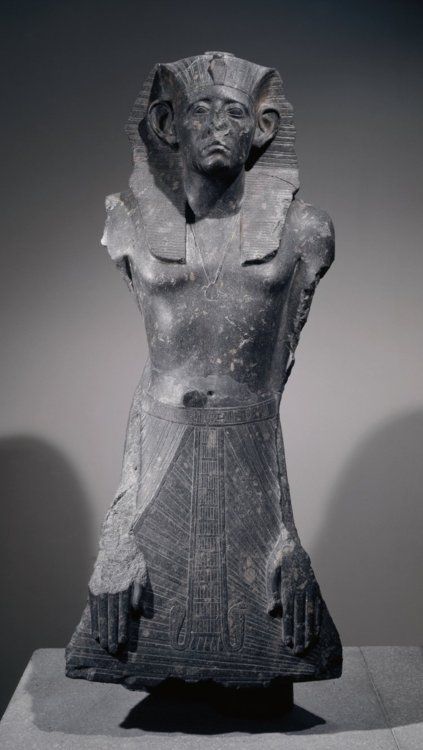
Egyptian kings before him were good-looking and dignified, but Senusret III was presented with strangely thick eyelids, giving him a somber countenance. He was the king with hollow eyes, wrinkled and haggard cheeks, huge ears, a lined face with a grimacing appearance, and protruding lips. On the other hand, his body was muscular and young, resembling a majestic king.
Historians are certain about the fragmentary head of Senusret III, which was believed to exist between 1879 and 1840 BC. This peculiar image of an ancient king is considered a treasure in the accounts of Egyptian history because of his wisdom and accomplishments.
Nobody knew why he projected himself so unusually, but later on, other kings followed his style, which historians explained as the kings’ way of showing their virtues. You could recall what other historians explained about his appearance. Some assumed that he was lonely and disillusioned. Just like an ordinary human, he was worried and overwhelmed by his duties as king.
Despite the people’s campaign to call him a deity, Senusret III showed his reality, which was disappointing and difficult. Another interpretation of his character was his being an autocratic ruler. He showed a strict and unhappy mood to distance himself from his people and, therefore, encourage fear.
Furthermore, his military campaigns were considered fierce and determined. He tried to prevent foreigners from entering Egypt, such that he proposed the building of a new border. Meanwhile, he appointed his son, Amenemhat III, as the king’s coregent to oversee his ambitious projects. He also wanted to train the young man in excellent ways to lead his beloved Egypt.
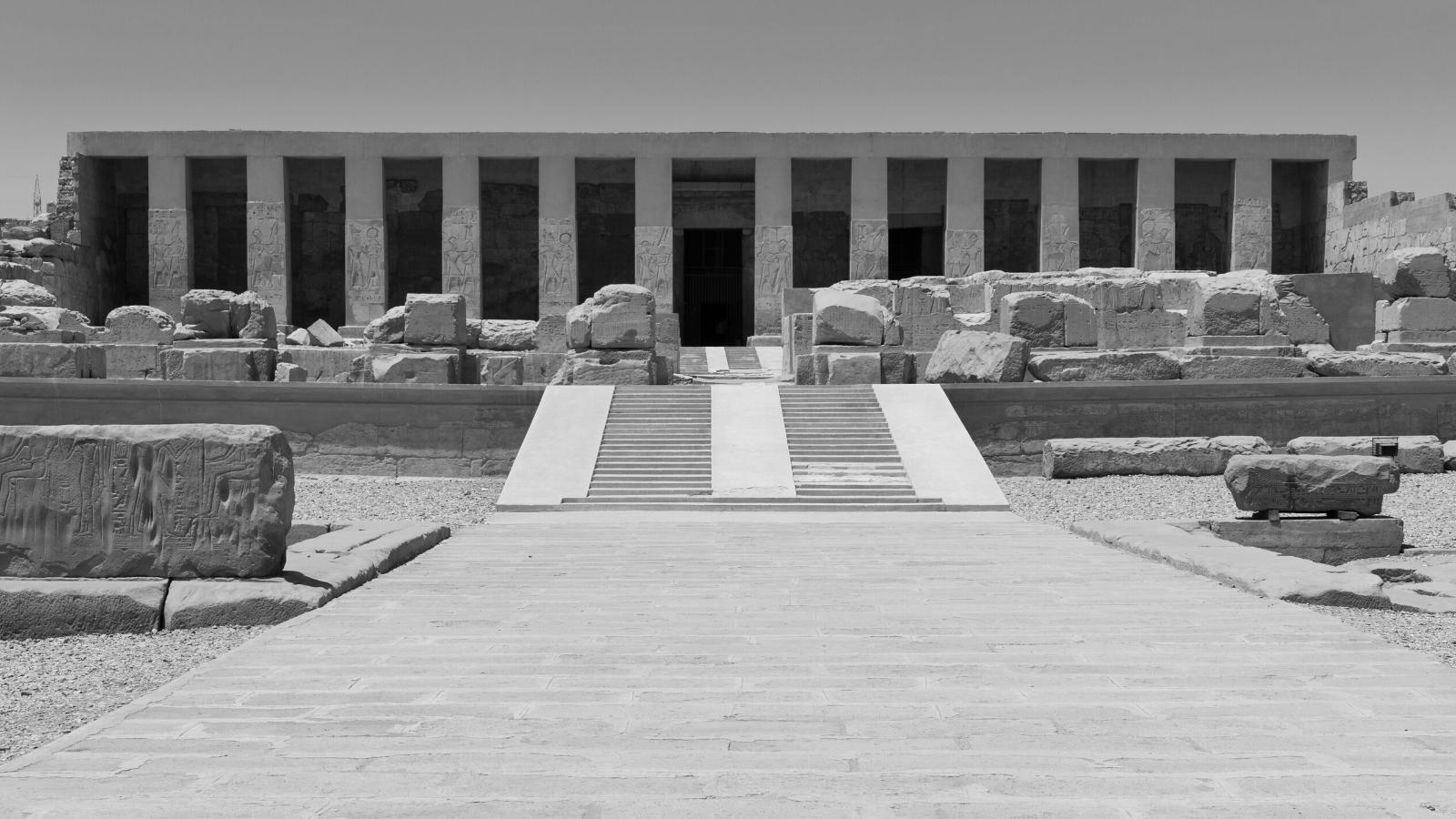
Senusret III established a town and a remarkable temple in Abydos and Medamud. He also built his mortuary temple there, which you could consider a significant part of his legacy. To rule Egypt wholeheartedly, you would need the assistance of great officials who would run the laws of the land. Senusret III was lucky to have reliable men on his throne, including his viziers Nebit and Khnumhotep.
They played crucial roles in the kingdom, while his treasurer, Ikhernofret, was a trusted caretaker of wealth in Abydos. Another treasurer was Sobekemhat, who was regarded with royal honor when he died for his loyalty and immeasurable contributions to the kingdom. Senankh was tasked to clear the canal at Sehel. Finally, the most trusted friend to the king was Horkherty.
Some scholars who study Biblical chronology have proposed that Senusret III's reign may have overlapped with the time of the Biblical Joseph story. This theory, based on calculations placing the Exodus around 1446 BC, would put Joseph's arrival in Egypt around 1876 BC during the Middle Kingdom. However, it should be noted that this is just one of several competing theories—others place Joseph in the 3rd Dynasty (identifying him with Imhotep) or the 13th Dynasty—and mainstream Egyptology does not confirm any specific Biblical synchronization.
As an astute ruler, Senusret III created three main regions, namely, Lower Egypt, Upper Egypt, and the southern part of Elephantine, which were headed by a council under the power of the vizier. With this system, nomarchs were weakened. This had affected the affluent lifestyle of powerful families.
The new system of government resulted in a stronger centralized rule, in which the military groups of the rich were dissolved. The king was given more power and sovereignty in this system. You can remember that a caste system was also present in Egyptian society, but this was abolished under the rule of Senusret III.
Previously, there were the upper-class nobles and the workers and the lower-class officers and their large families. In the new system, highly paid officers were supported, which in turn invited more people to work in the fields of arts and sculpture. Those artists produced functional arts instead of designs only for aesthetic purposes.
They made sure that they created something valuable and practical. Some examples of these works were paintings with historical value, statues depicting a god, and temples for worship. Even a brooch should have practical value rather than just being a simple embellishment. Senusret III encouraged the people to think of creative ways to use art in a practical sense.
To enhance the people’s faith, Senusret III built more temples for worship, such as the Temple of Amun at Karnak. He also added a well-decorated temple for Montu, the god of the people of Thebes. He commissioned the construction of forts in Nubia to oversee the immigration of people in the south.
His military campaigns showed his fighting skills and strategic maneuvering. His victories, such as his expansion of the southern part of Egypt that led to the invasion of Nubia and the northeast part of Canaan, were recorded in history. He subdued Nubia several times from 1872 BC to 1860 BC and was triumphant, except for his last attempt, which was an abandoned campaign.
Senusret III was a fighter, but behind him was a religious persona. He humbly worshipped ancient gods and promoted a peaceful relationship between pharaohs and priests. This amicable relationship between the two was beneficial for the two leaders.
Senusret III enjoyed high respect from his people, including the Nubians, who considered him a god. Egyptians and Nubians later lived in harmony, exemplified by the divine unity between the two. People adored him even after his death.
How Did Senusret III Die?
You could assume that his greatness deserved a grand pyramid. Hence, Senusret III proposed a colossal pyramid complex located in the northeastern part of the Red Pyramid in Dashur.
Its beauty rivaled all pyramids built in the 12th dynasty in terms of magnitude, opulence, and relevance. You could not be sure whether Senusret III was buried there because he also owned another imposing pyramid in Abydos.
Archeologists reported that his pyramid was 105 square meters wide and 78 meters high. Considering that it was built on mud bricks, architects have assumed that the builders did not use the standard size of molds. To describe the interior, you would not miss the burial chamber, which was made of granite. Then, there was a second chamber with five limestone beams in pairs.
This complex was designed with small mortuary temples and smaller pyramids for the queens. There were a total of seven smaller pyramids for the king’s wives. Later, excavations have unveiled the treasures of two significant queens, Sithathor and Meret.
Senusret III served Egypt in the mightiest way a king could do, and you could see how the people loved him. Archeologists could not find many references to his death, but his legacy outlived his name. He became a household name in Egypt for his heroism and great leadership.
Conclusion
Senusret III was a celebrated king of the Middle Kingdom. His advocacy was enormous, and he led Egypt in a brilliant campaign for economic and military expansions.
Let’s recall the key points of his legacy:
Senusret III reigned in what was deemed as the Golden Age in the history of Egypt.
The people revered and considered him a living deity because he embodied all the great qualities of a god.
He displayed honor, justice, wisdom, and courage as a king and as a military commander.
With his ambitious plans, Egypt was developed and held the highest economic stability in the region at that time.
As a sincere leader, his people adored him for his vision, and his people prayed to him even centuries after his demise.
Senusret III enjoyed the favor of his people. Up to his death, he was revered as the divine king who led Egypt toward progress and peace.