Timeless Myths Logo

Explore myths and legends from cultures around the world

Featured

Classical Mythology
Classical Mythology Greek and Roman myths, gods, heroes, and epic tales
Norse Mythology
Norse Mythology Vikings, Asgard, Ragnarok, and the nine realms
Celtic Mythology
Celtic Mythology Irish, Welsh, and Gaelic legends and folklore
Ancient Literature
Ancient Literature Classical texts, translations, and literary analysis

All Mythologies

Arthurian Legends King Arthur, Camelot, the Round Table, and the Holy Grail Egyptian Mythology Pharaohs, pyramids, and ancient Nile deities Japanese Mythology Shinto gods, spirits, and legendary creatures Chinese Mythology Dragons, immortals, and celestial beings Aztec Mythology Mesoamerican gods, rituals, and creation myths

Discover gods and goddesses from every pantheon

Featured

Greek Gods
Greek Gods The Olympians, Titans, and primordial deities
Norse Gods
Norse Gods Odin, Thor, Loki, and the Aesir and Vanir
Egyptian Gods
Egyptian Gods Ra, Osiris, Isis, Anubis, and more
Japanese Gods
Japanese Gods Amaterasu, Susanoo, and Shinto kami

All Gods & Deities

Roman Gods Jupiter, Mars, Venus, and the Roman pantheon Celtic Gods The Tuatha Dé Danann and Celtic deities Aztec Gods Quetzalcoatl, Tezcatlipoca, and Aztec deities Chinese Gods Jade Emperor, Dragon Kings, and celestial beings View All 150+ Deities Browse the complete collection of mythological deities
View all gods & deities

Tales, legends, and character profiles from mythology

Featured

All Stories
All Stories Browse 800+ mythology and history stories
Characters
Characters Profiles of 67 mythological heroes, gods, and villains

All Stories

Mythology Stories Ancient myths and legends retold History Stories Historical tales from ancient civilizations Religion & Culture Religious traditions and cultural beliefs
View all stories

Tools, references, and site information

Featured

Name Generators
Name Generators Generate fantasy and mythology-inspired names
All Articles
All Articles Browse 1,800+ articles on mythology and history

All Resources

About Timeless Myths Learn about this mythology resource Bibliography Sources and references used on this site FAQ Frequently asked questions Contact Get in touch with us
Search
Classical Mythology Greek and Roman myths, gods, heroes, and epic tales Norse Mythology Vikings, Asgard, Ragnarok, and the nine realms Celtic Mythology Irish, Welsh, and Gaelic legends and folklore Arthurian Legends King Arthur, Camelot, the Round Table, and the Holy Grail Egyptian Mythology Pharaohs, pyramids, and ancient Nile deities Japanese Mythology Shinto gods, spirits, and legendary creatures Chinese Mythology Dragons, immortals, and celestial beings Aztec Mythology Mesoamerican gods, rituals, and creation myths Ancient Literature Classical texts, translations, and literary analysis
Greek Gods The Olympians, Titans, and primordial deities Roman Gods Jupiter, Mars, Venus, and the Roman pantheon Norse Gods Odin, Thor, Loki, and the Aesir and Vanir Egyptian Gods Ra, Osiris, Isis, Anubis, and more Celtic Gods The Tuatha Dé Danann and Celtic deities Aztec Gods Quetzalcoatl, Tezcatlipoca, and Aztec deities Japanese Gods Amaterasu, Susanoo, and Shinto kami Chinese Gods Jade Emperor, Dragon Kings, and celestial beings View All 150+ Deities Browse the complete collection of mythological deities View all gods & deities
All Stories Browse 800+ mythology and history stories Characters Profiles of 67 mythological heroes, gods, and villains Mythology Stories Ancient myths and legends retold History Stories Historical tales from ancient civilizations Religion & Culture Religious traditions and cultural beliefs View all stories
Name Generators Generate fantasy and mythology-inspired names All Articles Browse 1,800+ articles on mythology and history About Timeless Myths Learn about this mythology resource Bibliography Sources and references used on this site FAQ Frequently asked questions Contact Get in touch with us
Search Search the entire mythology archive

Sinis: The Mythology of the Bandit Who Killed People for Sport
greek-mythology

Sinis the robber

Sinis was a robber who was cast out of the Isthmus of Corinth, probably due to his criminal activities. He spent the rest of his life on the road waiting for passersby who he would eventually rob and kill. He became sinister and struck fear in the hearts of all travelers until he finally met his death. Keep on reading to find out who killed Sinis.

Sinis's Origin

Sinis has different parentages depending on the source of the myth. One source indicates that he was born to another notorious bandit called Procrustes and his wife Sylea. Procrustes was known for killing his victims by stretching them till their appendages tore off their bodies. Thus, it was no surprise when his son Sinis took after him, albeit killing people in a different way.

Another source also portrays Sinis as the son of Canethus, a nefarious Arcadian prince who, along with his brothers, played dangerous pranks on people. It was told that they once mixed the entrails of a child with food and gave it to a peasant who begged them for a meal.

Unknowingly, the peasant was Zeus in disguise, who had heard of their evil pranks and decided to test them. Zeus got upset with what Canethus and his brothers did and threw thunderbolts at them, killing them on the spot.

Canthus fathered Sinis with Henioche, the Princess of the city of Troezen in the region of Argolis. Unlike her husband, Henioche was a good handmaiden who accompanied Helen to Troy. Though Sinis has different parents, all the sources portray the father, as a criminal. It is therefore not far-fetched to opine that Sinis came from a family of notorious hooligans.

Sinis Greek Mythology

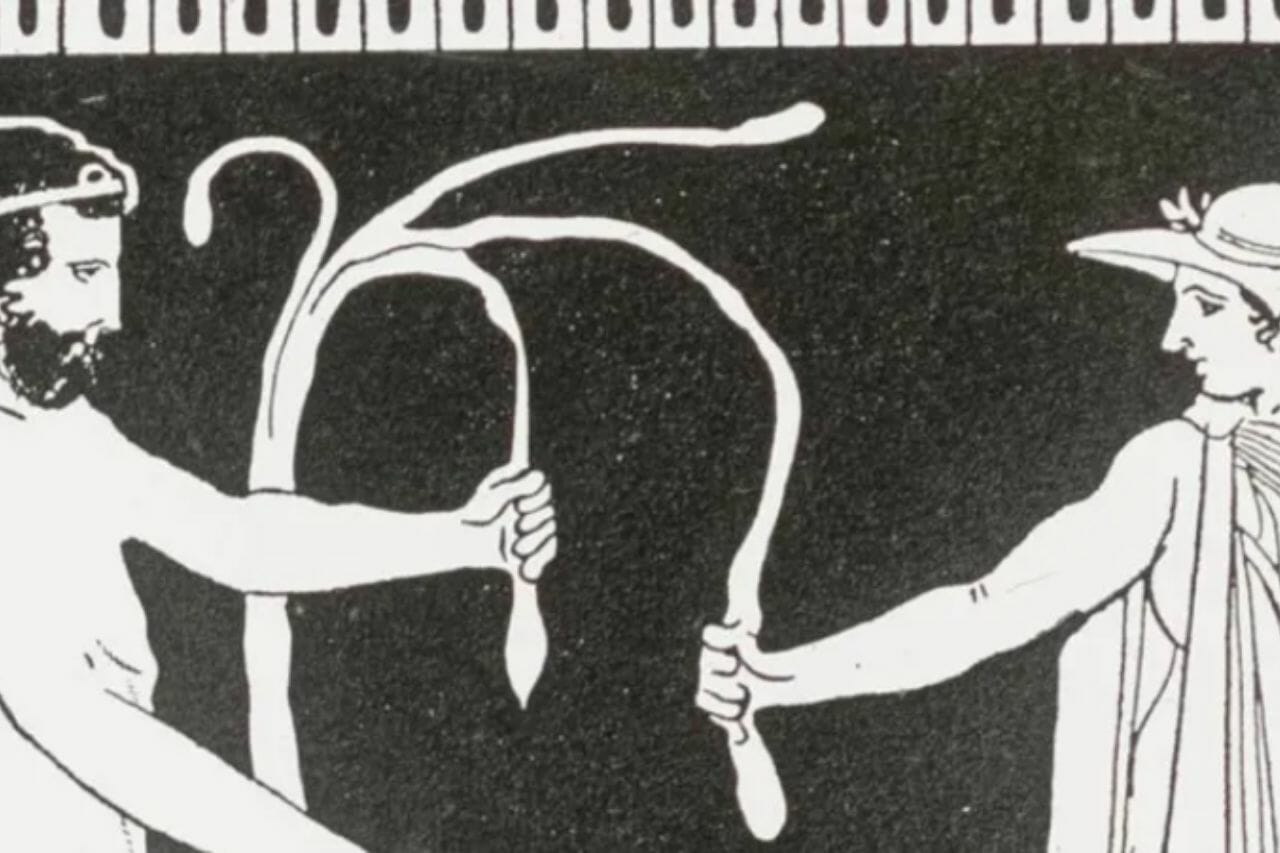
As already stated, Sinis was a bandit who stood on the road of the Corinthian Isthmus and robbed the travelers of their belongings. Once he was done robbing, he forced the travelers to bend tall pine trees to the ground to amuse himself.

When his victims got tired of bending the trees and let go, the tree flung them into the air and they died on landing. The method he chose to end the lives of his victims earned him the nickname Sinis the Pine-bender or Pityocamptes.

According to other sources, Sinis would tie his victims between two bent pine trees after robbing them. Each arm and leg would be tied to a different tree with his victim in the middle and the tree bent to the ground. Once he was done tying his victim, he released the bent pine trees which would then rebound and tear his victims apart. He continued this barbaric act till he eventually came in contact with Theseus, founder of Athens.

How Did Sinis Die?

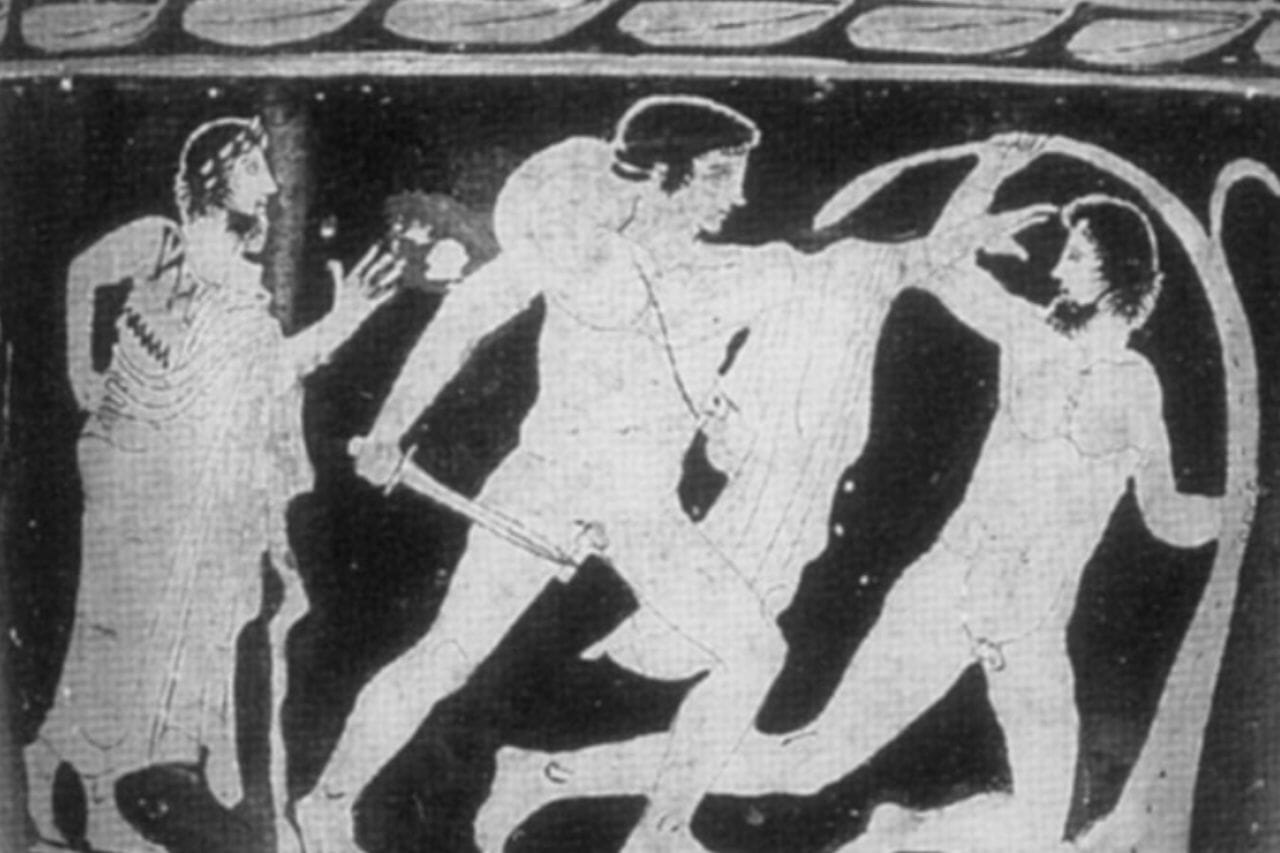
Theseus killed Sinis the same way Sinis killed his victims. According to one myth, Theseus forced Sinis to bend the pine trees in the same manner as his victims. Then when his strength got sapped, he let the pine tree go which threw him into the air and he died as soon as his body hit the ground.

Another Sinis Theseus mythology indicates that Theseus tied Sinis to two pine trees on each side of his body. He then bent the pine trees till the arms and legs of Sinis tore from each part of the body. Theseus killed Sinis as part of his Six Labors and later married his daughter, Perigune, and the couple gave birth to a son which they named Melanippus.

Sinis Meaning

Sinis in English means a mocker, a person who is cynical, or one who likes to ridicule or underestimate another.

Conclusion

We've just encountered the short mythology of Sinis and how he killed his victims. Here is a summary of all that we've read so far:
Sinis origins

  • Sinis was a bandit who was cast out of the city due to his activities and he terrorized travelers along the Corinthian Isthmus.

  • According to one myth, he did this by coercing his victims to bend pine trees to the ground and when they got tired of bending and let go of the tree, it flung them to their death.

  • Another myth narrated that he tied his victims between two pine trees and bent the pine trees apart till his victims' arms and legs tore off their bodies.

This activity earned him the nickname pine-bender until he met Theseus who killed him the same way his victims.

By Ancient Literature

Created: February 16th, 2024

Modified: February 16th, 2024

Lamia: The Deadly Infant-eating Monster of Ancient Greek Mythology

Lamia: The Deadly Infant-eating Monster of Ancient Greek Mythology

Lamia started as a beautiful young queen who fell in love with Zeus, according to Greek folk traditions. However, certain circumstances changed her appearance into an ugly monster who tormented both children and adults. She was powerful and was kn...

February 16th, 2024 • Ancient Literature
Sciron: The Ancient Greek Robber and a Warlord

Sciron: The Ancient Greek Robber and a Warlord

Sciron was an infamous robber in Greek mythology. Around the same time, there was a fierce warlord, also named Sciron. On one side was a trickster who robbed people and left them to die at the hands of a sea monster whereas on the other hand was a...

February 16th, 2024 • Ancient Literature
Empousa: The Story of the First Vampire in Greek Mythology

Empousa: The Story of the First Vampire in Greek Mythology

Empousa is a demonic creature who is believed to be the foundation of the characteristics of modern-day vampires. She was a descendant of a spirit infamous for targeting wayward children and the goddess of magic, divination, and witchcraft. With h...

February 16th, 2024 • Ancient Literature
Artemis and Orion: The Heartbreaking Tale of a Mortal and a Goddess

Artemis and Orion: The Heartbreaking Tale of a Mortal and a Goddess

Artemis and Orion in Greek mythology are lovers who faced a tragic ending in their love story. The relationship between Orion, a mere mortal, and Artemis, the goddess of hunting, was devastated by none other than her twin brother, Apollo, who was ...

February 15th, 2024 • Ancient Literature
Zeus vs Cronus: The Sons Who Killed Their Fathers in Greek Mythology

Zeus vs Cronus: The Sons Who Killed Their Fathers in Greek Mythology

Zeus vs Cronus is a very fascinating debate since both the characters who killed their fathers. Cronus and Rhea are the parents of Zeus while Cronus was the son of Uranus and Gaea in Greek mythology. Zeus and Cronus made Greek mythology what it is...

February 17th, 2024 • Ancient Literature
Mezentius in the Aeneid: The Myth of the Savage King of the Etruscans

Mezentius in the Aeneid: The Myth of the Savage King of the Etruscans

Mezentius in the Aeneid was a King who antagonized the Trojans as they settled in Latium. The Romans referred to him as "Despiser of the gods" due to his perceived disregard for the divine. He had a son Lausus who he loved more than his life but u...

February 16th, 2024 • Ancient Literature
Scylla in the Odyssey: The Monsterization of a Beautiful Nymph

Scylla in the Odyssey: The Monsterization of a Beautiful Nymph

Scylla in the Odyssey is the female sea monster encountered by Odysseus and his men on their journey back home. She haunted the rocks on one side of the Strait of Messina, opposite another sea monster named Charybdis. The story of these creatures ...

February 16th, 2024 • Ancient Literature
Antilochus: The Greek Mythology of the Greatest Prince of Pylos

Antilochus: The Greek Mythology of the Greatest Prince of Pylos

Antilochus was a Greek warrior who sought the hand of Helen in marriage and thus had to join the Greek expedition to Troy after Paris kidnapped Helen. He killed some notable Trojan warriors while defending the honor of his father, Nestor. Antiloch...

February 15th, 2024 • Ancient Literature
Ipotane: The Look-alikes of Centaurs and Sileni in Greek Mythology

Ipotane: The Look-alikes of Centaurs and Sileni in Greek Mythology

The Ipotane is a mystical creature that belongs to various mythologies but most prominently is seen in Greek mythology. It is a morphologically diverse creature that is half human and half horse. Many creatures with different parts of different an...

February 16th, 2024 • Ancient Literature
Artemis and Callisto: From a Leader to an Accidental Killer

Artemis and Callisto: From a Leader to an Accidental Killer

Artemis and Callisto shared a leader-follower relationship in Greek mythology that would end in tragedy. Callisto was one of the most devoted followers of the virgin goddess Artemis, sworn to chastity and dedicated to the hunt. Their initially pos...

February 15th, 2024 • Ancient Literature
Timeless Myths

Exploring mythology and legends from around the world.

Explore Myths

All Stories Characters All Articles Search Site Map

Mythologies

Norse Mythology Classical Mythology Celtic Mythology Arthurian Legends Mythology Gods Ancient Literature

About Us

Introduction About Jimmy Bibliography FAQs Retro Version

Resources

Timeless Myths All Stories All Articles Characters
© 1999-2026 Timeless Myths • Copyright • Privacy Policy • Cookie Policy • Contact
Follow us: