Who Is The Tragic Hero In Antigone? The King, Creon & Antigone
Creon is often mentioned as the tragic hero in Antigone, the third of the Theban plays. Is it possible, though, that an Antigone tragic hero essay could take another tack? Is it possible there is more than one tragic hero of Antigone?
A tragic hero is most commonly a character who, despite their good intentions, is doomed to fail, suffering or defeat. Ordinarily, the hero's own hubris or other character flaw is the cause of their downfall. The most classic tragic hero of all, of course, is Oedipus himself. Doomed from even before his birth by a prophecy, Oedipus does all he can to avoid his fate. His own pride and lack of knowledge work against him, and in the end, he fulfills the tragic prophecy.
His storyline ends, and that of his children picks up in Antigone. Tragic hero stories ordinarily contain a character who falls to their own hubris.
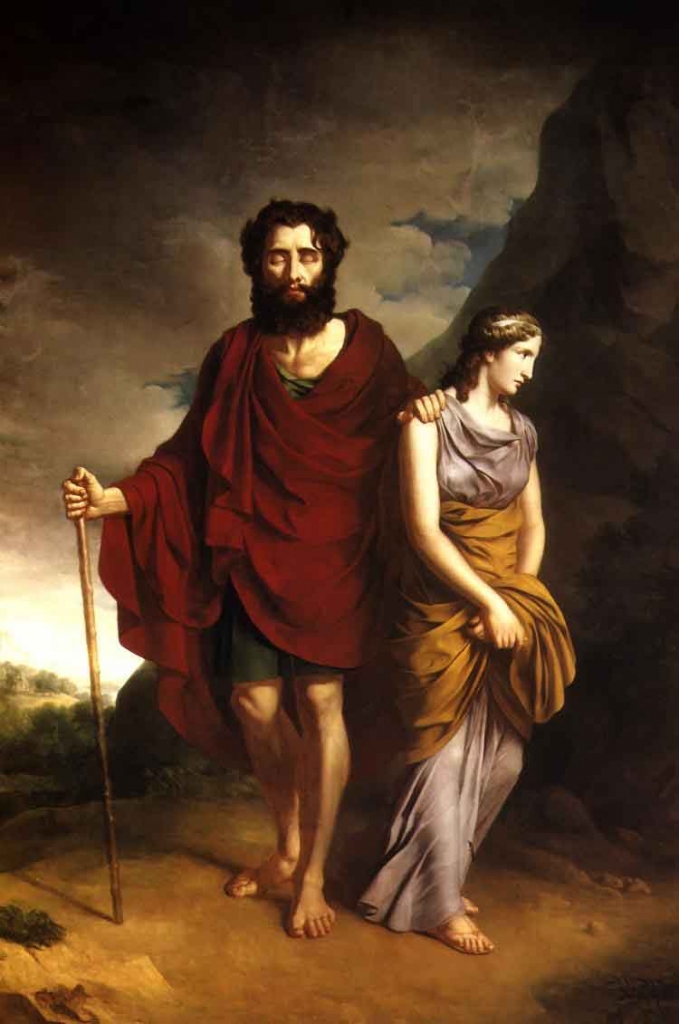
How is Antigone a tragic hero?
Her heroism's tragedy is a bit more subtle than that of Creon's because her "fatal flaw" is a positive trait rather than a negative one. Her flaw is not pride nor hubris, but rather a fierce dedication and love of her family.
How Is Antigone a Hero?
The first criteria for being a "tragic hero" is, of course, for a character to be a hero. A hero is known for unusual "courage, outstanding achievements, or noble qualities." Antigone fulfills all three criteria. She shows a great deal of courage both in Oedipus at Colonus, when she steadfastly accompanies her father, and in Antigone. Her courage becomes clear from the play's opening lines, when she vows to her sister Ismene that she will bury their brother, with or without Creon's approval. Her loyalty to her family is stronger than her fear of the punishment promised by the king.
Her outstanding achievement includes going, in the night, and defying the orders of her uncle, Creon, to bury her brother Polyneices. To do this, she must slip past the guards and do difficult and heavy work very quickly and likely in the dark, as secretively as possible.
Her noble character is expressed in her unwavering loyalty to her family. Her character is subtly emphasized at the beginning of the play when she meets Ismene to inform her of her plans. Ismene, fearing Creon's wrath, refuses to join her sister or help her. Antigone announces that she will go with or without Ismene's help. Ismene begs her not to carry out such a foolish and reckless act, but Antigone is determined and leaves the palace while her sister returns to her own rooms, too afraid of the consequences to stand up to Creon's stubbornness.
The Tragedy of Antigone
The "tragic" part is a bit more complicated. Ordinarily, a tragic hero is doomed by some flaw in their own character. Oedipus was doomed by his lack of knowledge- not knowing he was adopted. He was the victim of two negative traits: ignorance and hubris. His attempts to circumvent the prophecy and the will of the gods are borne of his belief that he can outrun the prediction. Oedipus, upon hearing the prophecy that he will murder his father and marry his mother, flees. And by fleeing from his home in Corinth to try to escape the prophecy, he unknowingly puts himself in the position of fulfilling it.
Antigone does not suffer hubris, nor is she ignorant of her situation. She understands her uncle's decree and the danger of defying it, but she chooses to risk Creon's anger in favor of her loyalty to her family. Antigone recognizes Creon's stubbornness and insists upon going against his unjust decree to bury her dead brother, a noble gesture. While it could be argued that Antigone's pride is what drives her, it is difficult to deny the courage of her sacrifice.
Why is Antigone the Tragic Hero?
The play Antigone is unusual because it contains two tragic heros. The more obvious one is Creon, whose stubborn pride costs him nearly everything. Having already lost his two nephews to war, he loses his niece and his own son. The tragic losses of Antigone and Creon's son could have been avoided. But why is Antigone a tragic hero? In large part, the cause of her martyrdom is Creon's pride.
The uncle and his niece are both strong-willed characters. Antigone shows unusual courage for a female in Greek mythology. While most women are portrayed as wives, daughters, or mothers, Antigone has lost a father, and her husband plays a relatively minor part in the conflict. Her loyalty to her brother and her insistence on giving him proper burial rights contrast sharply with other characters' behaviors.
Her own mother, Jocasta, once tried to have her son, Oedipus, murdered as an infant to prevent the tragic prophecy. Because of Jocasta's lack of will and strength to carry out the deed herself, Oedipus lived. It is fate why Antigone and her siblings that Jocasta failed. They would not have existed if Oedipus had died as an infant. The siblings' very existence was cursed by the relationship Oedipus entered with his own biological mother, who also became his children's mother.
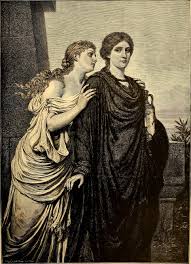
Ismene's character is more typical of a woman in Greek mythology. Indecisive and aware of her "place" in the palace hierarchy, Ismene refuses to go against authority. She begs Antigone to think of her, knowing she will be left alone if Antigone's deed is discovered. She is terrified for Antigone, but not strong enough to join her in her defiance. It is not until after the deed is carried out that Ismene tries to join Antigone in her punishment, so that she won't have to live without her sister.
Ismene is weak and indecisive, but her sister has a strength of character. Antigone's loyalty and steadfastness gave her the strength to do what she felt was right. She stood against Creon's decree to go to the battlefield and give Polyneices a suitable burial. She has already lost her father and both brothers, and she refuses to see her brother's body desecrated.
Women in Greek mythology faced very different challenges from their male counterparts. Oedipus' battle with authority was more open. He fought Laius, and unknowingly killed his own father. Later he faced the Sphinx terrorizing the area, and defeated that as well.
Antigone acted in defiance of authority, standing up against her uncle's unjust orders. Her fight was much more passive than Oedipus' had been, but it was equally difficult. Defying the king meant certain death. Antigone went into her battle fully aware of the consequences of her actions. She deemed her own life a reasonable price to pay for her dead brother's dignity and her loyalty to her sibling's memory.
Antigone Pays the Price
When Creon learns of her disobedience, he confronts her, but she refuses to back down, reminding him that the very law of nature and the gods are on her side. Creon, furious at being defied by a woman, insists that he would rather have her executed than spare her as his son's future wife. Haemon, Creon's son, is predictably upset at his father's stubborn refusal to pardon his cousin/wife. Even with Ismene pleading for her sister's life, Creon refuses to spare her. Finally, he is convinced to seal her into a tomb rather than have her directly executed. He declares that since she wished her brother buried, she will have her wish, but she will join him, sealed for eternity in a tomb.
Once more, Ismene's lack of strength is used as a subtle contrast to emphasize Antigone's courage. Ismene begs to be allowed to join her sister in death, but Antigone refuses, saying her life "is enough." Ismene, distraught, leaves the room and is not heard from again in the play. She was unable to join her sister in committing the crime of defying Creon. Antigone will not allow her either the horror or the honor of joining her in death for a crime she did not commit.
It is not until the blind prophet, Tiresias, comes and informs Creon that he has brought the wrath of the gods upon Thebes with his stubborn refusal to fulfill the natural law and bury Polyneices that he relents. He goes to the tomb with Haemon to release Antigone, but they find that Antigone has hung herself in despair.
Antigone's last act of defiance was to join her father and brothers in death. At this moment, she becomes a truly tragic hero. Pride and fear drove her to hang herself just before she would have been rescued and released from her fate. Haemon, furious and grieving, swings his sword to kill his own father in revenge for his bride. He misses and stabs himself. He dies with Antigone, and Creon is left with only the weaker of the sisters.