Timeless Myths Logo
Aphrodite Apollo Ares Artemis Athena Atlas Coeus Crius Cronus Demeter Dionysus Gaia Hades Hephaestus Hera Hermes Hestia Hyperion Iapetus Mnemosyne Oceanus Phobos Phoebe Poseidon Prometheus Rhea Tethys Themis Uranus Zeus
Bacchus Ceres Diana Juno Jupiter Mars Mercury Minerva Neptune Pluto Venus Vesta Vulcan
Amun Anubis Aten Atum Babi Bastet Bes Geb Hapi hathor heqet Horus Isis Khepri Khnum Khonsu Maat Nephthys Nut Osiris Ptah Ra Seshat Seth Shu Sobek Thoth
Alfheim Baldur Freya Freyr Frigg Heimdallr Helheim Idun Jotunheim Loki Nerthus Njord Odin Thor Tyr
Aengus Arawn Badb Brigid Cailleach Ceridwen Cernunnos Cu Chulainn Dagda Danu Gwydion Herne the Hunter Lugh Medb Morrigan Neit Nuada Taliesin Taranis
Chalchiuhtlicue Coatlicue Huitzilopochtli Mictlantecuhtli Mixcoatl Ometeotl Quetzalcoatl Tezcatlipoca Tlaloc Tonatiuh Xipe Totec Xochiquetzal Xolotl
Amaterasu Ame no Uzume Benzaiten Bishamonten Daikokuten Ebisu Fujin Fukurokuju Inari Izanagi Kagutsuchi Raijin Susanoo Tsukuyomi
Caishen Cangjie Dragon King Eight Immortals Erlang Shen Fuxi Guanyin Hou Yi Huxian Jade Emperor King Yama Leizi Lu-ban Mazu Nezha Nuwa Pangu Shennong Sun Wukong Xiwangmu Yue Lao Zhong Kui
Norse Classical Celtic Arthurian
Literature Stories Names
Aphrodite Apollo Ares Artemis Athena Atlas Coeus Crius Cronus Demeter Dionysus Gaia Hades Hephaestus Hera Hermes Hestia Hyperion Iapetus Mnemosyne Oceanus Phobos Phoebe Poseidon Prometheus Rhea Tethys Themis Uranus Zeus
Bacchus Ceres Diana Juno Jupiter Mars Mercury Minerva Neptune Pluto Venus Vesta Vulcan
Amun Anubis Aten Atum Babi Bastet Bes Geb Hapi hathor heqet Horus Isis Khepri Khnum Khonsu Maat Nephthys Nut Osiris Ptah Ra Seshat Seth Shu Sobek Thoth
Alfheim Baldur Freya Freyr Frigg Heimdallr Helheim Idun Jotunheim Loki Nerthus Njord Odin Thor Tyr
Aengus Arawn Badb Brigid Cailleach Ceridwen Cernunnos Cu Chulainn Dagda Danu Gwydion Herne the Hunter Lugh Medb Morrigan Neit Nuada Taliesin Taranis
Chalchiuhtlicue Coatlicue Huitzilopochtli Mictlantecuhtli Mixcoatl Ometeotl Quetzalcoatl Tezcatlipoca Tlaloc Tonatiuh Xipe Totec Xochiquetzal Xolotl
Amaterasu Ame no Uzume Benzaiten Bishamonten Daikokuten Ebisu Fujin Fukurokuju Inari Izanagi Kagutsuchi Raijin Susanoo Tsukuyomi
Caishen Cangjie Dragon King Eight Immortals Erlang Shen Fuxi Guanyin Hou Yi Huxian Jade Emperor King Yama Leizi Lu-ban Mazu Nezha Nuwa Pangu Shennong Sun Wukong Xiwangmu Yue Lao Zhong Kui
Norse Classical Celtic Arthurian
Literature Stories Names

Why did Oedipus blind himself?
greek-mythology
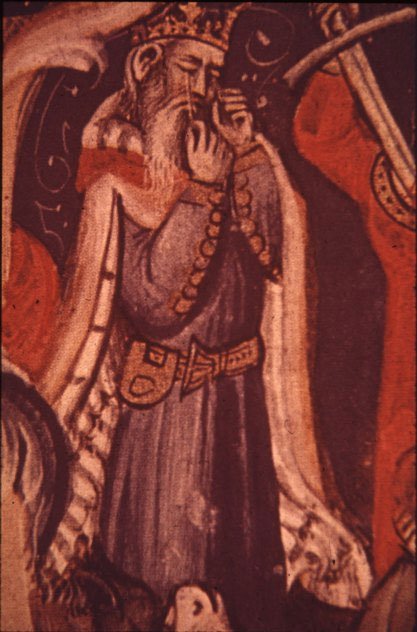
Oedipus blinded after discovering the truth

commons.wikimedia.org

The tale of Oedipus is well known within Greek Mythology. Born to King Laius and Queen Jocasta of Thebes, Oedipus was destined to be damned all his life. Upon birth, a prophecy surrounding him foresaw that he would murder his own father and marry his own mother. The prophecy led him to be abandoned, and later, saved and adopted by the childless king and queen of Corinth.

Later in life, Oedipus reigned over Thebes, not knowing that he has fulfilled the prophecy until a plague strikes the city. His determination to find a cure and the reasons behind it led to the shocking truth that he had, in fact, killed his own father and married his own mother. This truth led to the demise of his wife and mother and brought Oedipus to blind himself using two golden pins from Jocasta's regal dress. Metaphorically, this is an act of punishment that Oedipus put on himself because he is ashamed of what he has done.

Early Life

King Laius and Queen Jocasta had been longing to have a child of their own. Seeking the advice from the oracle in Delphi, they were upset upon the answer given to them.

The oracle prophesied that if they bore a child, a son from their blood and flesh, he will grow up and later kill his own father and marry his own mother. This came as a shock to both King Laius and Queen Jocasta. Hearing this, King Laius tries to stay away from Jocasta to not sleep with her, but eventually, Jocasta was pregnant with a child.

Jocasta gave birth to a son, and Laius decided to abandon the child upon the mountains and leave it to die. He ordered his servants to pierce the child's ankle so that it would not be able to crawl, and even later in the child's life, to inflict harm unto him.

Laius then gave the child to a shepherd who was ordered to bring the child to the mountains and leave him there to die. The shepherd was so overwhelmed by his feelings that he could not do it, but he was also afraid of disobeying the king's order. Coincidentally, another shepherd, a Corinthian, passed by the same mountain with his flocks, and the Thebes shepherd handed over the child to him.

Oedipus, the Corinthian Prince

The shepherd brought the child to the court of King Polybus and Queen Merope of Corinth. Both king and queen were childless, so they decided to adopt him and raise him as their own upon being presented with the child. And with that, they named him Oedipus, which means "Swollen Ankle."

As Oedipus grew up, he was told that both King Polybus and Queen Merope were not his birth parents. And so, to learn about the truth about his parents, he ended up in Delphi, seeking answers from the Oracle.

Instead of being presented with the answer that he was looking for, he was told that he would kill his father and marry his mother. Upon hearing this, he was horrified and didn't want the prophecy to come true, so he decided to flee from Corinth.

As he wandered, he crossed paths with a chariot carrying King Laius, his birth father. An argument arose as to whom should pass first, which resulted in Oedipus killing the charioteer and his father, King Laius. However, one of Laius' servants managed to escaped from Oedipus' wrath.

Meeting with the Sphinx

Soon after, Oedipus met with the Sphinx, who was gate-guarding the entrance into Thebes' city. The Sphinx presented Oedipus with a riddle. She would let Oedipus pass if he managed to solve her riddle, but if not, he would be devoured.

The riddle goes like this: "What walks on four feet in the morning, two in the afternoon, and three at night?"

Oedipus gave careful thought and answered "Man," and the answer was correct to the Sphinx's dismay. Defeated, the Sphinx then hurled herself off the stone she was sitting on and died.

Following his victory in defeating the Sphinx and freeing the city from it, Oedipus was rewarded the hand of the queen as well as the throne of Thebes.

Strikes of the plague

Several years passed, and a plague hit the city of Thebes. Oedipus sent Creon, his brother-in-law, to Delphi to consult with the Oracle. Creon returned to the city and told Oedipus that the plague was divine retribution for killing the former king that has never been brought to justice.

Oedipus swore to get to the bottom of the matter. He had no idea that the killer was actually himself. He consulted the blind seer, Tiresias, on the matter, but Tiresias pointed out that Oedipus was, in fact, the one who was responsible for the killing.

Oedipus refused to believe that he was the one responsible. Instead, he accused Tiresias of plotting with Creon to dethrone him.

The truth unravels
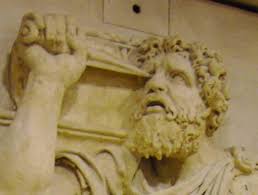
Oedipus blinds himself with golden pins

commons.wikimedia.org

Jocasta tried to comfort Oedipus and informed him about what had happened to her late husband during the process. To Oedipus' dismay, it sounded similar to what he had encountered years ago that led to the argument with the unknown charioteer.

Eventually, Oedipus figured out that he had killed his own father and married his own mother soon after. After hearing and learning about the unsettling truth, Jocasta decided to take her own life by hanging herself in her chamber. Oedipus found Jocasta's lifeless body, and took two golden pins from her regal dress and pricked both of his eyes out.

Creon exiled Oedipus, who was accompanied by his daughter, Antigone. Soon after, both of them ended up in a town outside Athens, called Colonus. According to a prophecy, this is the town that Oedipus was supposed to die in, and there he was buried in a grave dedicated to the Erinyes.

By Ancient Literature

Created: January 11th, 2022

Modified: January 17th, 2026

How Does Oedipus See Himself?

How Does Oedipus See Himself?

Oedipus is a prominent character in two of Sophocles' three plays about him and his family. The plays were written over a thirty-six-year span of the playwright's career, and while they concern events surrounding Oedipus and his family, they are n...

February 16th, 2024 • Ancient Literature
Oedipus

Oedipus

Laïus (Laius or Laios; Λάιος) became the king of Thebes after the death of Amphion and Zethus. He married Jocasta (Ἰοκάστη; some authors call her Epicasta), daughter of Menoeceus and sister of Creon. Laius had at one time visited Pelops, king of P...

May 6th, 1999 • Jimmy Joe
Oedipus

Oedipus

(Tragedy, Latin/Roman, c. 55 CE, 1,061 lines)Introduction “Oedipus” is a tragedy by the Roman playwright Seneca the Younger, written around 55 CE. It is a retelling of the story of the unlucky King Oedipus, who finds out that he has unknowingly ki...

October 25th, 2024 • Timeless Myths
Why Does Oedipus Leave Corinth? The Reasons Oedipus Abandons His Home

Why Does Oedipus Leave Corinth? The Reasons Oedipus Abandons His Home

Why does Oedipus leave Corinth in Oedipus Rex? He left to escape a prophecy, but the answer doesn’t become clear to the audience until the story is well underway. Oedipus eventually leaves Corinth after he was called a bastard by one of the guests...

January 11th, 2022 • Timeless Myths
The Disbelief of Tiresias: Oedipus' Downfall

The Disbelief of Tiresias: Oedipus' Downfall

By disbelieving Tiresias, Oedipus guaranteed his own downfall in the tale of Oedipus Rex. Analysis of the story often focuses on the tragedy of Oedipus, who unknowingly murdered his own father and married his mother. The idea of fate is often disc...

January 11th, 2022 • Ancient Literature
What Is The Tragic Flaw Of Oedipus

What Is The Tragic Flaw Of Oedipus

An oracle informs Laius of Delphi that he can only save the city of Thebes from certain destruction if he never fathers a child. The prophecy further predicts that if he fathers a son, the boy will murder him and take his wife for his own. Laius t...

February 16th, 2024 • Ancient Literature
Oedipus Tiresias: The Role of the Blind Seer in Oedipus the King

Oedipus Tiresias: The Role of the Blind Seer in Oedipus the King

Oedipus Tiresias follows the events involving the blind prophet and how those events influence the outcome play, Oedipus Rex. Tiresias is one of the Oedipus Rex characters featured in several Greek tragic plays, including Antigone and The Bacchae....

February 16th, 2024 • Ancient Literature
Oedipus Rex

Oedipus Rex

(Tragedy, Greek, c. 429 BCE, 1,530 lines)Introduction – Oedipus Story “Oedipus the King” (Gr: “Oidipous Tyrannos”; Lat: “Oedipus Rex”) is a tragedy by the ancient Greek playwright Sophocles, first performed in about 429 BCE. It was the second of S...

January 1st, 2025 • Ancient Literature
When did Oedipus Kill his Father – Find it out

When did Oedipus Kill his Father – Find it out

The literal answer is that the event took place in the second play of the trilogy, Oedipus Rex. There are debates, however, over the exact timeline. The murder is never recounted in real-time in the play. It is only referred to by various characte...

January 11th, 2022 • Ancient Literature
Why Is Oedipus a Tragic Hero? An Analysis of Oedipus’s Character

Why Is Oedipus a Tragic Hero? An Analysis of Oedipus’s Character

Oedipus’ tragic flaw, his great leadership qualities, and the punishment he suffers are some of the most discussed themes in literature. In this article, you’ll find out who Oedipus is, what his tragic flaw is, and how it leads to his downfall. Bo...

April 3rd, 2022 • Timeless Myths
Timeless Myths

Exploring mythology and legends from around the world.

Explore Myths

All Stories Characters All Articles Search Site Map

Mythologies

Norse Mythology Classical Mythology Celtic Mythology Arthurian Legends Mythology Gods Ancient Literature

About Us

Introduction About Jimmy Bibliography FAQs Retro Version

Resources

Timeless Myths All Stories All Articles Characters
© 1999-2026 Timeless Myths • Copyright • Privacy Policy • Cookie Policy • Contact
Follow us: