Jocasta Oedipus: Analyzing the Character of the Queen of Thebes
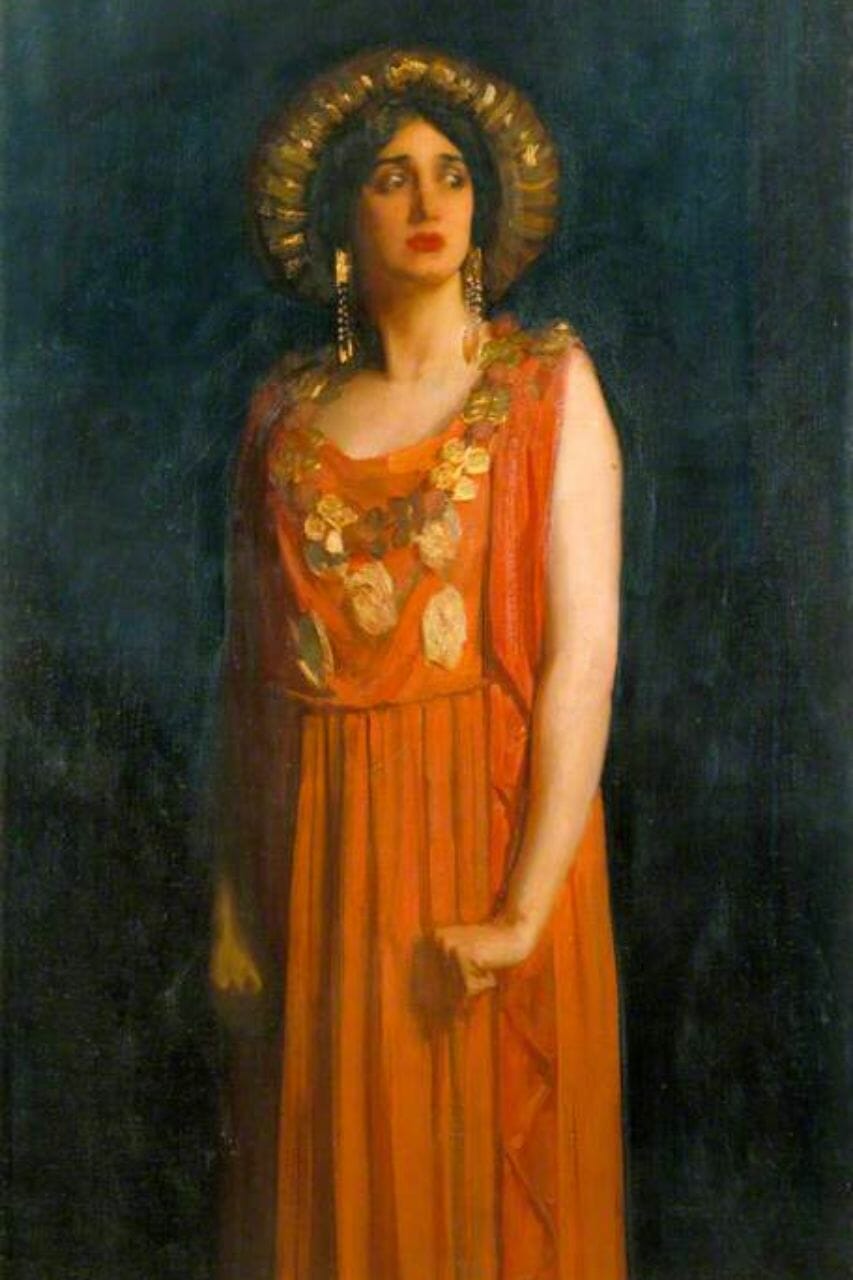
Jocasta, Queen of Thebes
Jocasta Oedipus is the queen of Thebes and wife of King Laius who received a prophecy that she would give birth to a boy who would kill her husband and marry her. Therefore, she and her husband decided to kill the boy by exposing him on Mount Cithaeron. Many have described her as a cruel mother while others feel that her actions were in good faith.
This article will discuss the character of Jocasta and how she drives the plot in the play.
Who Is Jocasta Oedipus?
Jocasta Oedipus is the mother and wife of the main character Oedipus in Greek mythology. She is one that exhibits a level-headed, calm nature and peace in the family when there is a storm. She dies tragically when she discovers that she's had children with her son, King Oedipus.
Jocasta Was Cruel
Jocasta was cruel towards her first son when she agreed to kill him. In a previous prophecy, she and her husband were warned not to have any child or else he would murder Laius and marry her. Jocasta could have prevented this by using any of the ancient contraceptives at the time. To be fair to the queen of Thebes, one account of the myth claimed that the son was accidentally conceived when Laius was drunk.
Once, she conceived she knew what the outcome would be and she prepared herself mentally for it. When her son was born they went to the oracle to divine the future of the boy and were told that he would kill his father and marry his mother. The gods also recommended that they killed the boy to curb his accursed destiny. Jocasta agreeing to go through with the heinous act revealed that she was not worthy of her son.
Jocasta and her husband then pierced the feet of the newborn with pointed sticks which caused his feet to be swollen and that was how the boy got his name. The couple then watched as one of their servants, Menoethes, carried off the boy to Mount Cithaeron to be killed, all the while doing nothing. The boy's incessant cries did nothing to melt the stony heart of the queen for she was determined to protect herself and her husband.
Jocasta Maintained Peace in the Family
Despite her apparent cruelty, Jocasta always called for calm during the midst of a storm in the family. Whenever he was upset and was raging fire and brimstone, the calm presence of Jocasta soothed him and her choice of words pacified him. During the heated argument between Creon and him, Jocasta served as a mediator who doused the flames between the two. He had accused Creon of conspiring with the killers of Laius and was hiding the murderer.
He also accused Creon of conniving with the blind seer Tiresias to overthrow him. This was after Tiresias had called the murderer of King Laius. However, Creon insisted that he was content with the life of luxury that he had and had no intentions of adding the problems associated with kingship.
Jocasta stepped in and try to instill shame in both men by telling them in one of the Jocasta quotes, "Have you no shame? Poor misguided men. Such shouting. Why this public outburst? Aren't you ashamed, with the land so sick to stir up private quarrels."
Jocasta's goal was to get both men to cease the arguments and to seek an amicable solution to the plight in the land. Had it not been for her intervention, the two men would have continued the squabble which could have resulted in fisticuffs. However, her intervention brought some form of sanity as both men ceased the shouting match so the problem could be solved. Jocasta's presence helped to maintain peace in the family, especially between the brothers, Oedipus and Creon.
Jocasta Disbelieved the Deities
Jocasta expressed her unbelief in the deities when he feared that the prophecy was being fulfilled. The king had just finished narrating how he received a prophecy from the Delphic oracle that he would kill his father and marry his mother. His fear was intensified when he was told that King Laius was killed at the three-way crossroads for he remembered he had killed a man there in the past. However, he was temporarily relieved when he was told that King Laius was not killed by one man but by a group of bandits.
Jocasta assured him that the gods sometimes made mistakes with their prophecies, therefore they shouldn't be wholly believed. She narrated how the gods foretold that her husband Laius would be killed by his son. However, King Laius was killed by a group of bandits at the three-way crossroads. She used that narration to justify her conclusion that not all the prophecies of the gods come to pass.
Nevertheless, as fate would have it, Queen Jocasta eventually found out that Laius was killed by his own son. She also discovered that she had married her own son and had children with him. The thought of these abominable acts drove her to commit suicide at the end of the tragic play. From Jocasta death, we learn that the gods were always right and their prophecies were spot on.
Jocasta Was a Faithful Lover
Jocasta loved her son to the core and did everything to protect him including taking his side against Creon. When he went toe-to-toe with Creon over the murder of King Laius, Creon tried to reason with him but her son wanted him dead.
Being the brother of Jocasta, one would have thought that she the queen would have sided with him over her husband. The latter is because the Oedipus and Jocasta relationship was built on love.
Yet, she chose to follow her husband and tried to calm him down after Tiresias revealed that he was the murderer that he sought. She even blasphemed the gods by insinuating that they sometimes made errors in their prophecies, all in a bid to appease her husband. Not once did she question or shout at her husband, now, but she always maintained her patience. Even when she realized that he was her son and husband at the same time, she tries to protect him by advising him to desist from probing further.
However, the curiosity got the better of him and he investigated only to find out that he was the murderer of King Laius. She was older than him and was more experienced but her love for her husband meant she had to humble herself.
She never lorded her age or experience over him but was subservient to his wishes. Jocasta stayed with her son even to her death, she was a faithful wife, though fate did not smile on her.
The Backstory of Jocasta
Also known as Iocaste or Epicaste, Jocasta was the princess of Thebes while her father, King Menoeceus, ruled the city. Jocasta's troubles began when she married the cursed prince of Thebes Laius. Laius had been cursed for raping Chrysippus, the son of King Pelops of Pisa. The curse was that he would be killed by his son and his son would marry his wife and have children with her.
Thus, when he married Jocasta, she became affected by it as her son, grew up to kill Laius and marry her. She had four children with her husband/son; Eteocles, Polynices, Antigone, and Ismene. Later, she killed herself after she discovered that the curse placed on her husband had finally come true.
Given the timeline of events in the epic poem, one may wonder, "How old is Jocasta in Oedipus Rex?". We are not told the age of Jocasta or any of the characters but we can certainly say that she was a generation older than her husband. Jocasta daughter, Antigone, did not take after her mother's calmness, she rather chose the stubbornness of her father and she paid dearly for it.
Conclusion
So far, we've analyzed the character of the Theban queen, Jocasta, and have discovered some admirable character traits. Here is a recap of all that we have read so far:
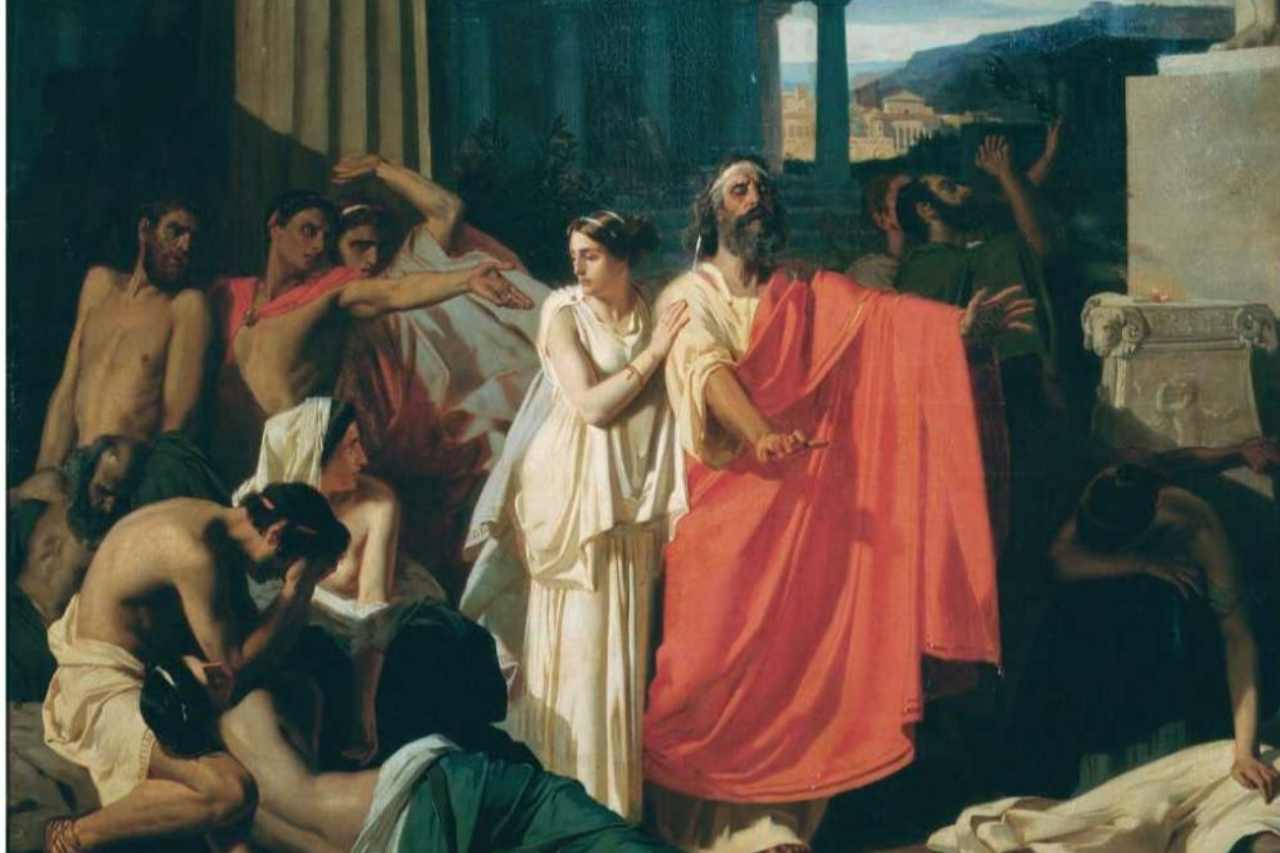
Jocasta Oedipus - all you need to know
Jocasta was a cruel mother who went through with killing her first son because the gods had recommended that he be killed to avert the child's cursed destiny.
Though she was cruel, Jocasta maintained calm and peace in the family during stormy times especially when Creon and Oedipus had serious arguments.
She was a faithful wife who took her husband's side in all matters and tried to calm him down even if it meant blaspheming the deities.
Jocasta felt that the gods sometimes made mistakes in their prophecies and conveyed the same to him when he worried that the prophecy of the Delphic oracle was coming to fruition.
Jocasta's backstory revealed that she was oblivious of the curse until she married Laius who had the curse for raping, Chrysippus, the son of Pelops.
Jocasta was an intelligent, patient, and level-headed woman whose patience served as a foil to the hot temperament. She did everything in her power to protect her son and her family, even from the truth even though the truth eventually prevailed.