The Battle of Badon

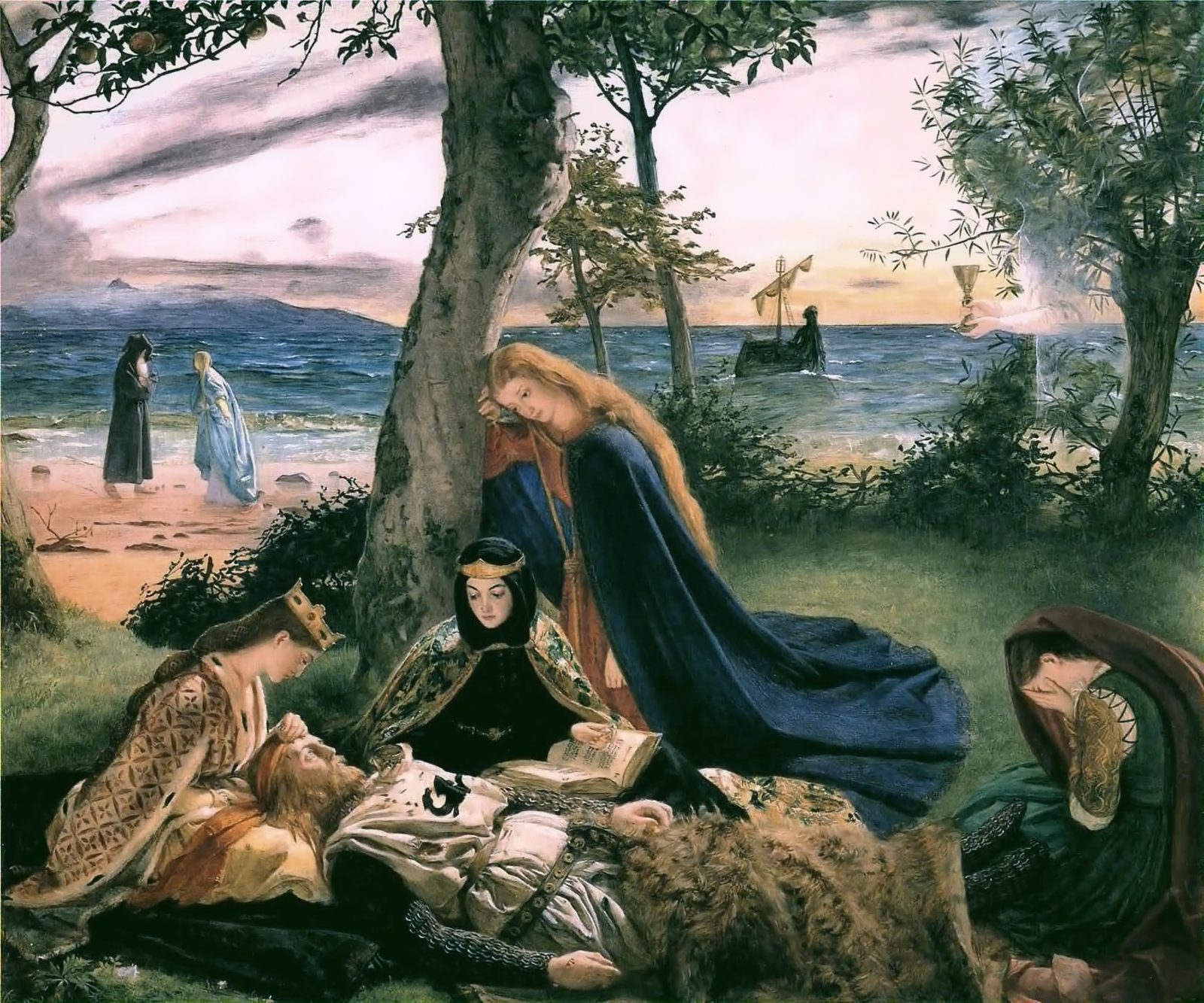
One of the most significant events in the Arthurian legends is the Battle of Badon. In fact, this battle is also hugely significant to the true history of the Arthurian period. It is the only battle fought by King Arthur for which we can definitely say we have contemporary evidence supporting its historicity. It is one of the most hotly debated topics in the study of Post-Roman Britain. What do we know about it? And how does it feature in the Arthurian legends?
What was the Battle of Badon?
The Battle of Badon was the climactic battle between the Britons and the Saxons in the first half of the sixth century. Since about 430, the Saxons (together with the Angles and Jutes) had been progressively conquering more and more of Britain.
They were spreading out from the eastern coast, and from the southeast in particular. Their conquests were causing many Britons to flee to the west of Britain or to other lands entirely.
The Anglo-Saxons did not receive severe resistance for many years. However, likely in the 470s, a military leader named Ambrosius Aurelianus fought powerfully against them. He started a campaign which helped the Britons to recover. From that point on, sometimes the Britons were successful in battle, and sometimes the Anglo-Saxons were successful.
Eventually, after an unknown period of time, the Battle of Badon was fought. This was decisive battle in the Saxon wars. It was a British victory. Their victory was so crushing that it effectively ended the wars between the Britons and the Saxons. This peace lasted for at least 43 years.
The Battle of Badon in Gildas’ De Excidio
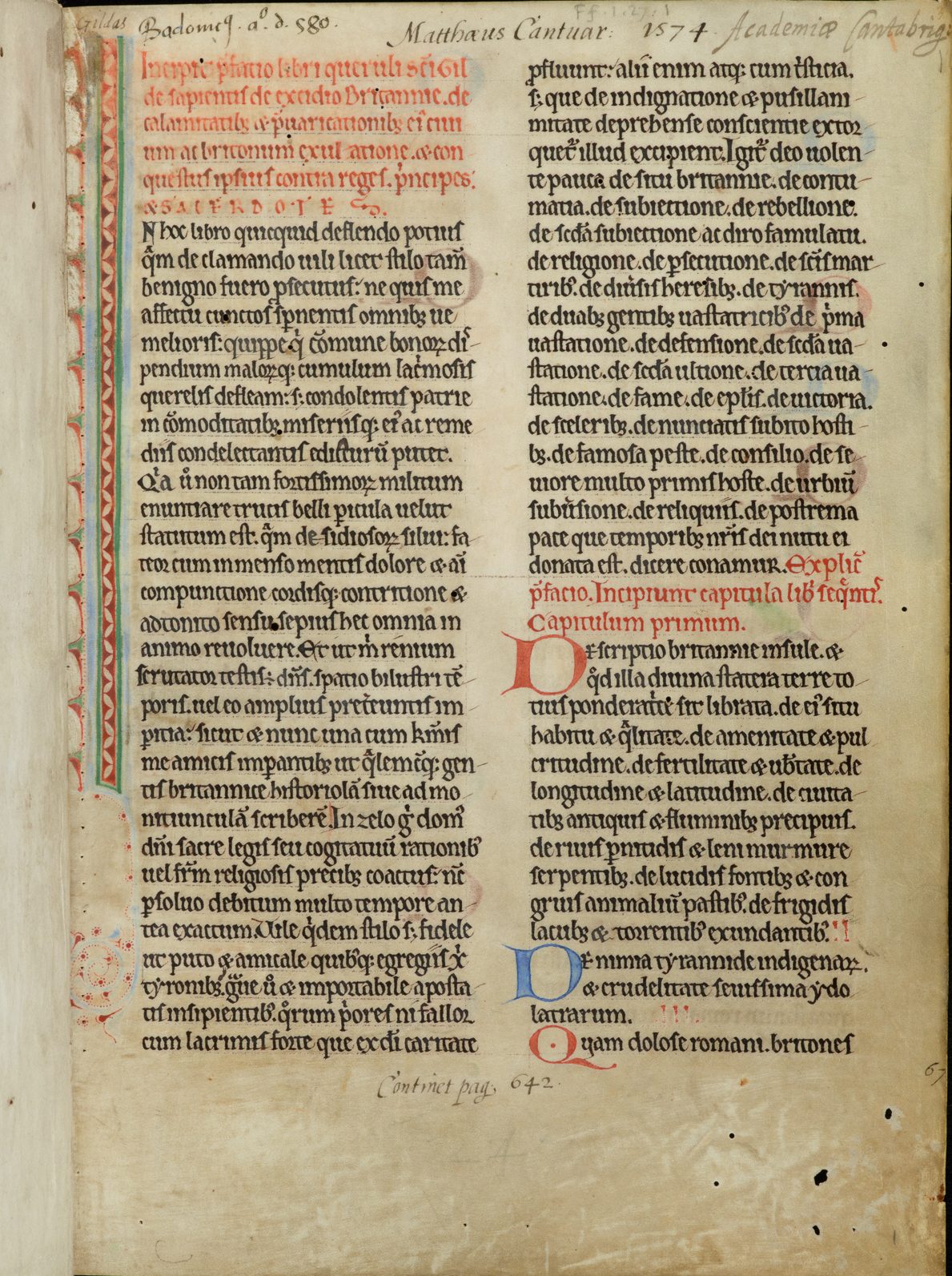
The earliest writer to mention the Battle of Badon was Gildas. He was a sixth century writer from Britain. His text, known as De Excidio, is the only sixth century text from Britain known to have survived down to today.
Gildas’ De Excidio is not a historical record as such, but a sermon. Nonetheless, he does relate the basic history of Britain, and his reference to the Battle of Badon is accepted as historical by virtually all scholars. After mentioning the campaign started by Ambrosius, Gildas tells us the following:
“After this, sometimes our countrymen, sometimes the enemy, won the field, to the end that our Lord might in this land try after his accustomed manner these his Israelites, whether they loved him or not, until the year of the siege of Mount Badon, when took place almost the last, though certainly not the least slaughter of our cruel foes.”
This passage tells us a few important things. Firstly, it tells us that this was not merely a pitched battle. Rather, it was a siege. Evidently, then, there was a settlement of some kind on Mount Badon. Also, Gildas’ words tell us that this battle was not literally the final battle against the Saxons, although it was almost the last and was apparently the decisive battle that led to the end of the war.
The Confusing Reference to 43 Years
Just after this passage, Gildas explains when the Battle of Badon took place. However, his wording here is notoriously difficult to interpret. He relates the battle to the passage of 43 years, although what exactly this 43-year period refers to is debated. The Latin used by Gildas is unusual, and it is possible that our surviving manuscripts are somewhat corrupted.
The most traditional explanation is that Gildas was saying that he was writing 43 years after the battle occurred. This is still the current consensus among academics. However, it is not the only opinion.
As early as the time of Bede, an eighth century English historian, there was another interpretation of Gildas’ words. According to this understanding, Gildas was placing the Battle of Badon 43 years after the arrival of the Anglo-Saxons.
Which View is Correct?
There are some scholars who subscribe to this alternative view, but not many. It raises some significant chronological issues. Crucially, there is evidence from archaeology and two contemporary Gallic texts that the Anglo-Saxons arrived in Britain before 430.
Counting forward 43 years would take us to 473 at the very latest. Yet, Bede places Ambrosius’ campaign in the reign of Emperor Zeno, who did not start to reign until 474. The Battle of Badon occurred sometime after the start of Ambrosius’ campaign, which means it cannot possibly have occurred before 474.
Therefore, the idea that the Battle of Badon occurred 43 years after the arrival of the Saxons is not in harmony with the other available evidence. This indicates that the traditional scholarly view is correct: Gildas was saying that he was writing 43 years after the Battle of Badon.
The Battle of Badon in Later Records
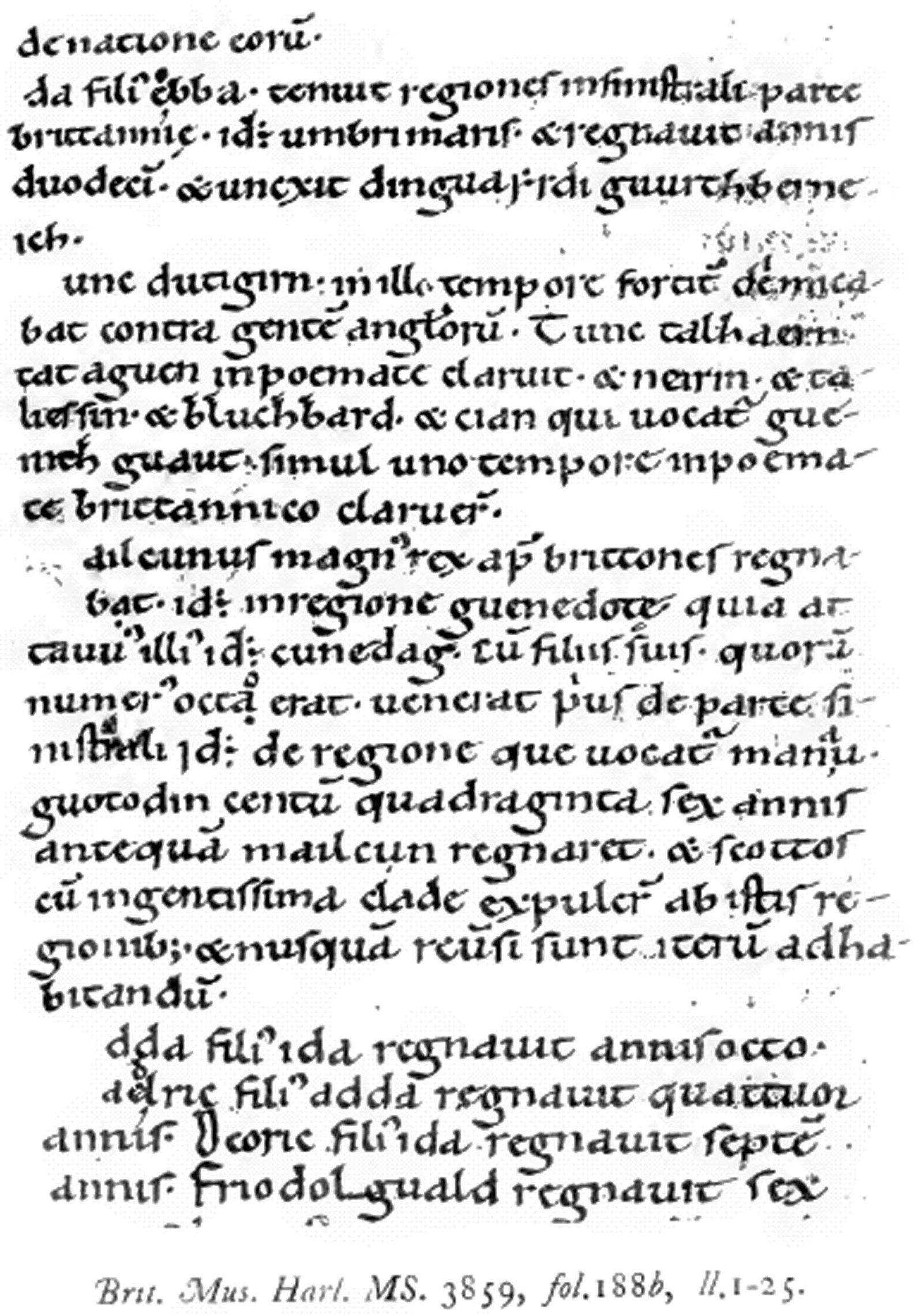
The Battle of Badon is mentioned in various later records. Unsurprisingly, it was remembered fondly by the Britons, being one of the key events in their favour in the Post-Roman era. Aside from being mentioned by Bede, who quoted Gildas almost verbatim, it is next seen in the Historia Brittonum.
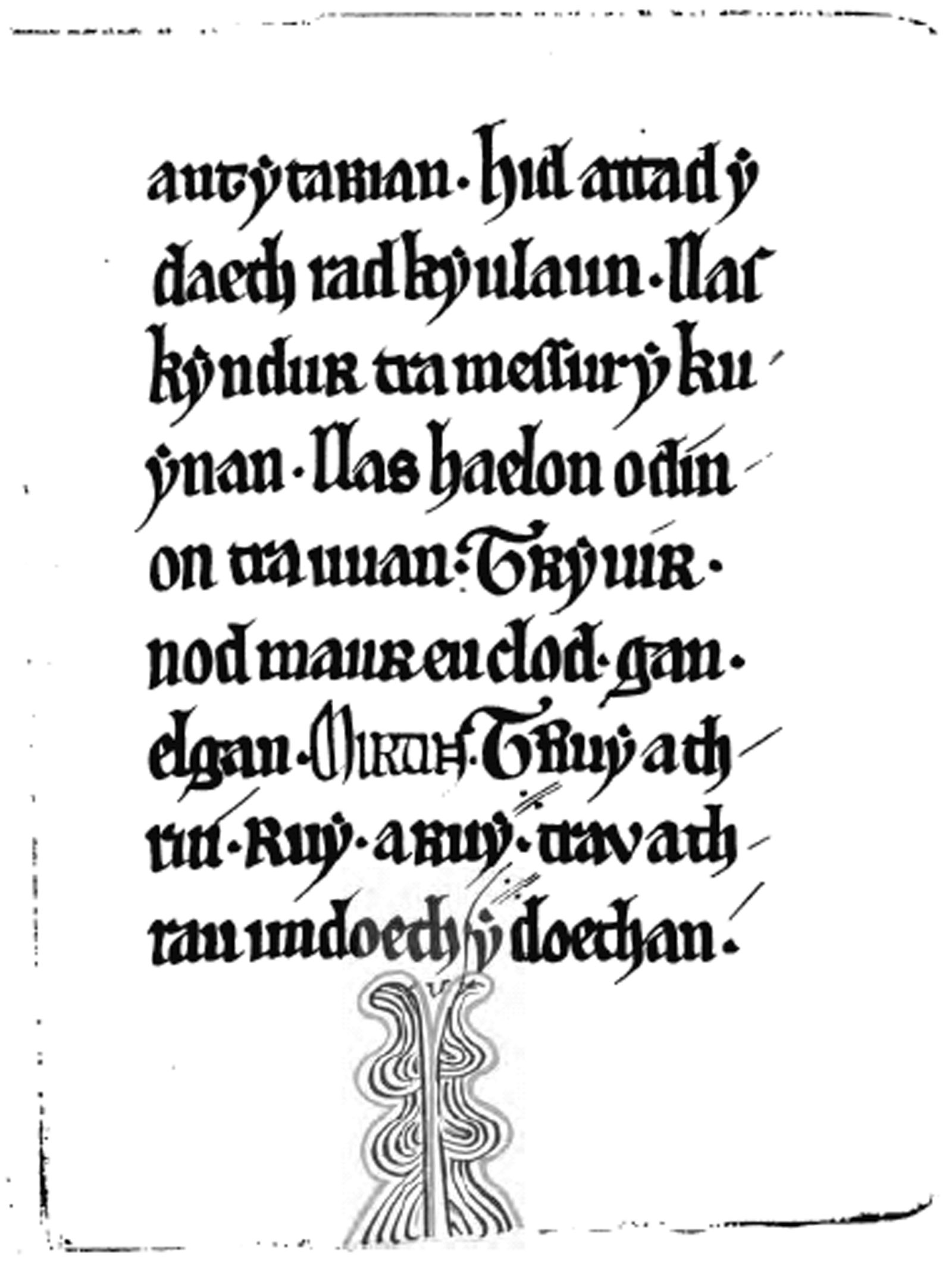
The Historia Brittonum is a ninth century document traditionally attributed by Nennius (although this attributed is no longer widely accepted). It recounts the history of Britain, including the early Post-Roman period. It mentions the Battle of Badon at the end of a list of 12 major battles fought by the Britons against the Anglo-Saxons. On the British side, various kings and military leaders were involved. The leader of this grand alliance was Arthur.
This document does not go into much detail about the Battle of Badon or its relation to other events. Nonetheless, the basic fact that it places Badon at the end of a campaign of 12 battles, rather than somewhere in the middle, is consistent with Gildas’ account.
This is the Historia Brittonum’s version of events:
“The twelfth battle was on Mount Badon in which there fell in one day nine hundred and sixty men in one onset of Arthur, and no one overthrew them but he himself only.”
Notice that Arthur alone was said to have killed 960 Saxons. This obvious exaggeration has led some scholars to view the whole passage as historical unreliable. On the other hand, other scholars have explained this detail as many that Arthur’s own men killed 960 Saxons, as distinct from the number killed by the other kings and military leaders working with Arthur.
Attributing the Victory to Arthur
The Historia Brittonum is the first record which explicitly attributes the Battle of Badon to a specific leader. It famously attributes the victory to Arthur, the King Arthur of legend. All subsequent records about the battle follow suit.
Some scholars take objection to this attribution. They claim that the real victor at Badon was the military leader named Ambrosius Aurelianus. He was mentioned by Gildas, while Arthur was not. This is the primary basis for the idea that the Battle of Badon was originally one of Ambrosius’ battles and was later misattributed to Arthur.
However, this is a complicated issue, and we will delve into it in more detail later.
The Welsh Annals
The next document which mentions the Battle of Badon is the Annales Cambriae, sometimes known as the Welsh Annals. This is a tenth century chronicle which documents important events in the history of Britain from the Post-Roman era.
In an entry dated to 516, we find the following information:
“The Battle of Badon, in which Arthur carried the Cross of our Lord Jesus Christ for three days and three nights upon his shoulders and the Britons were the victors.”
Again, we see that this victory is attributed to Arthur. It is only significant that this is the only battle between the Britons and the Saxons that is mentioned in the fifth and sixth century sections of the Annales Cambriae. This demonstrates how important the Battle of Badon was to the Britons. They remembered this great victory above all other battles against the Saxons of that period.
William of Malmesbury
The Battle of Badon is mentioned by a variety of writers after the Annales Cambriae. Many of them simply make reference to it without adding anything notable to our knowledge. One notable exceptional to this is William of Malmesbury.
He wrote History of the Kings of England in 1125. In one interesting passage, he refers to the Arthurian period. Like Gildas, he mentions Ambrosius Aurelianus’ important role during the early part of that era. He also mentions Arthur, and what he says is most interesting. He wrote:
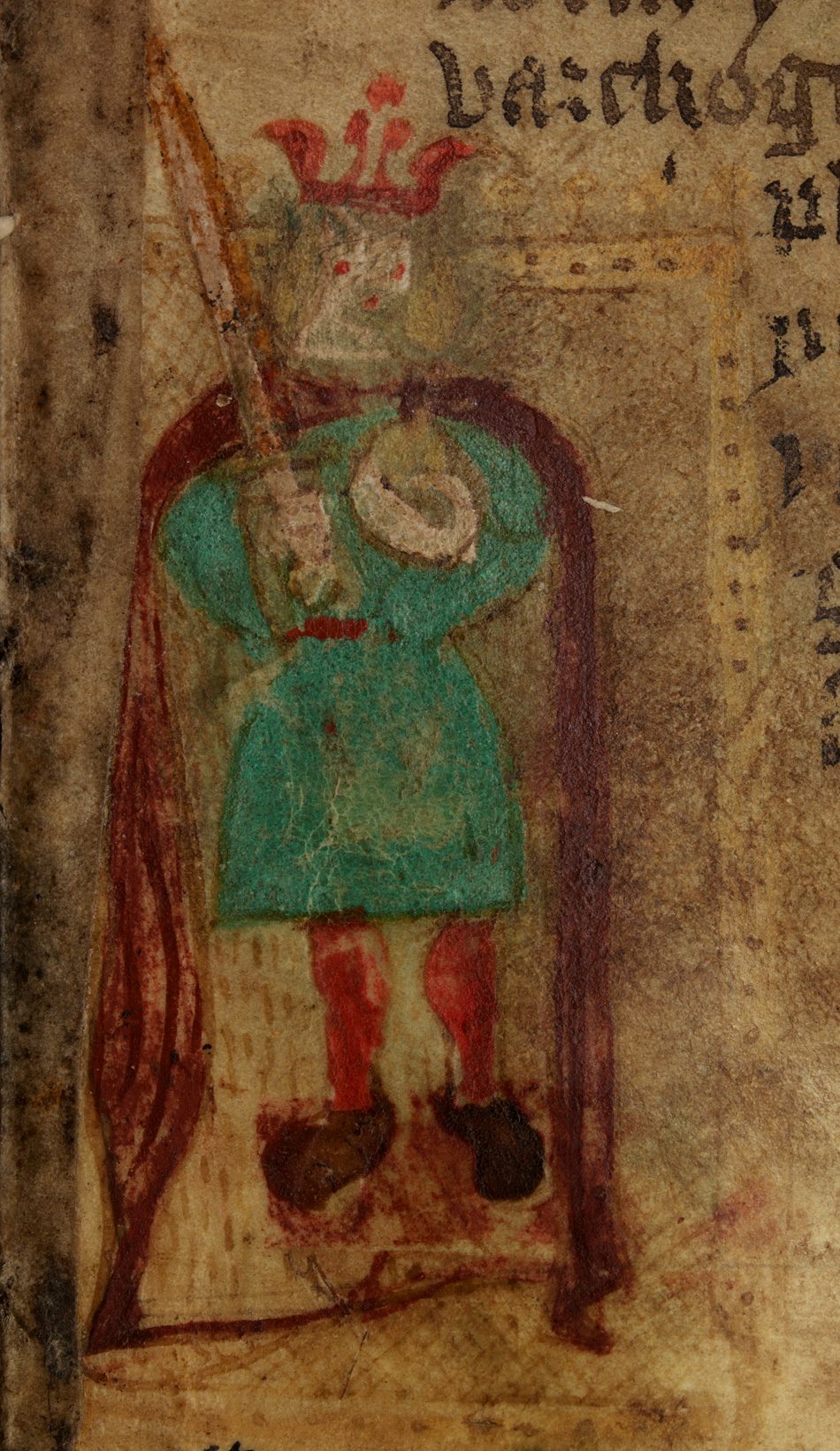
“Ambrosius, the sole survivor of the Romans, who became monarch after Vortigern, quelled the presumptuous barbarians by the powerful aid of warlike Arthur. This is that Arthur, of whom the Britons fondly fable even to the present day; a man worthy to be celebrated, not by idle fictions, but in authentic history. He, indeed, for a long time upheld the sinking state, and roused the broken spirit of his countrymen to war. Finally, at the siege of Mount Badon, relying on an image of the Virgin which he had affixed to his armour, he engaged nine hundred of the enemy “single-handed, and dispersed them with incredible slaughter.”
This passage is interesting for one key reason: it claims that Ambrosius and Arthur were contemporaries. Notice that it says that Ambrosius quelled the Saxons ‘by the powerful aid of warlike Arthur’. This suggests that Arthur was a military general who served under King Ambrosius.
Exactly where William got this idea is unclear. He refers to Badon as a ‘siege’, which is simply only seen in the earliest sources; it is not described as such in the Historia Brittonum nor the Annales Cambriae. Is this evidence that William had access to an otherwise lost early tradition? It could be, or it could be his own inference based on a comparison of Gildas’ De Excidio with the Historia Brittonum.
In any case, this appears to be the closest that any medieval text ever got to attributing to victory at Mount Badon to Ambrosius. Nonetheless, William still attributes it more directly with Arthur.
The Battle of Badon According to Geoffrey of Monmouth
The first extensive account of the Battle of Badon comes from Geoffrey of Monmouth. He wrote the Historia Regum Britanniae (HRB) is c. 1137. Allegedly, this was a translation of a much older Welsh document, although many scholars believe that Geoffrey simply created the text himself.
Because of being the first extensive account of Arthur’s career, this is also the earliest document which describes the connection between Badon and the previous Saxon battles in Arthur’s career. Although we obviously cannot confirm the historicity of this narrative, it is certainly worth considering.
The Background to the Battle of Badon
According to the HRB, Arthur drove the Saxons towards the north of Britain during his battles with them. He ended up fighting a decisive battle against them in the Caledonian Forest in Scotland. After defeating them there, he forced them to agree to leave Britain and sail back to their Germanic homeland.
The Saxons, however, did not stick to their agreement. Before they arrived at their destination, they turned around and headed back to Britain. This time, they attacked a completely different part of the country. They landed at Totnes in Devon and ravaged the southwest, working their way up to the Severn Sea.
The Siege of Badon
After arriving at the region of the Severn Sea, the Saxons besieged the settlement on Mount Badon. Geoffrey’s account identifies Badon with Bath. We will examine the plausibility of that identification later.
According to this account, Arthur was busy campaigning against the Picts and the Scots when this siege started. After receiving news of what was happening, he rushed down south and prepared and army to fight the Saxons. His chief bishop, a historical figure named Dubricius, gave a rousing talk to his troops. Arthur then set out with his army and battled against the enemy.
The fighting lasted for two days. The first day did not result in a clear victory for either side, although the Britons gained the upper hand by forcing the Saxons to abandon the siege. They retreated to a temporary camp that they had set up on a nearby mountain.
Victory for the Britons
On the second day of fighting, the tables turned completely. Now, it was the Saxons who were being besieged. Arthur and his army besieged them at their camp on the mountain. However, this effort resulted in great losses to the Britons.
Eventually, after intense fighting on both sides, Arthur managed to lead his people to victory. At this point, Geoffrey includes the detail that Arthur killed 470 Saxons all by himself. This is clearly equivalent to the statement in the Historia Brittonum that Arthur killed 960 Saxons singlehandedly, although the number in Geoffrey’s account is much lower.
Finally, the Britons defeated the Saxon army. Geoffrey explains that there were actually three Germanic kings at this battle. Two of them were killed at Badon, while the third one fled with a small group of survivors. One of Arthur’s allies chased after him and killed him. Thus, the Saxons were resoundingly defeated.
Interestingly, this description of at least one more conflict while chasing the fleeing Saxons may relate to Gildas’ description of the Battle of Badon as ‘almost the last’ battle against them.
The Battle of Badon in the Dream of Rhonabwy
Geoffrey’s Historia Regum Britanniae had a major impact on almost all subsequent Arthurian literature. However, one notable tale about the Battle of Badon which does not seem to have been influenced by Geoffrey is the Dream of Rhonabwy.
This is a Welsh tale dating from c. 1200. Despite dating from decades after Geoffrey of Monmouth, the content of the tale has led many scholars to believe that it preserves Welsh traditions from before Geoffrey (generally referred to as ‘pre-Galfridian traditions’).
According to this tale, the Battle of Badon was an arranged event between Arthur and the Saxon king, named Osla. They both agreed on a time and location to hold the battle. This is decidedly different from the narrative in Geoffrey’s account. Yet, both versions seem to agree in making the Battle of Badon essentially disconnected from the rest of Arthur’s Saxon battles.
In this account, the battle is not actually fought. It is postponed until a later time, after the events of the story come to a close. Nonetheless, this record is useful for preserving pre-Galfridian traditions concerning the nature of the event and where it took place.
Where was Mount Badon?
That last point is one of the most controversial issues concerning the Battle of Badon. There is intense debate regarding its location. The main reason why is that there is not any location in Britain today which perfectly preserves the name, although there are many locations which might match the name.
Bath, Somerset
Geoffrey identified it with Bath, and Welsh tradition partially agrees with him. Most Welsh texts which mention Badon refer to it as ‘Caer Faddon’, which is the Welsh name for Bath. This also agrees with the generally scholarly consensus that it was somewhere in the southwest of Britain. However, there are several key issues with the identification of Bath with Badon.
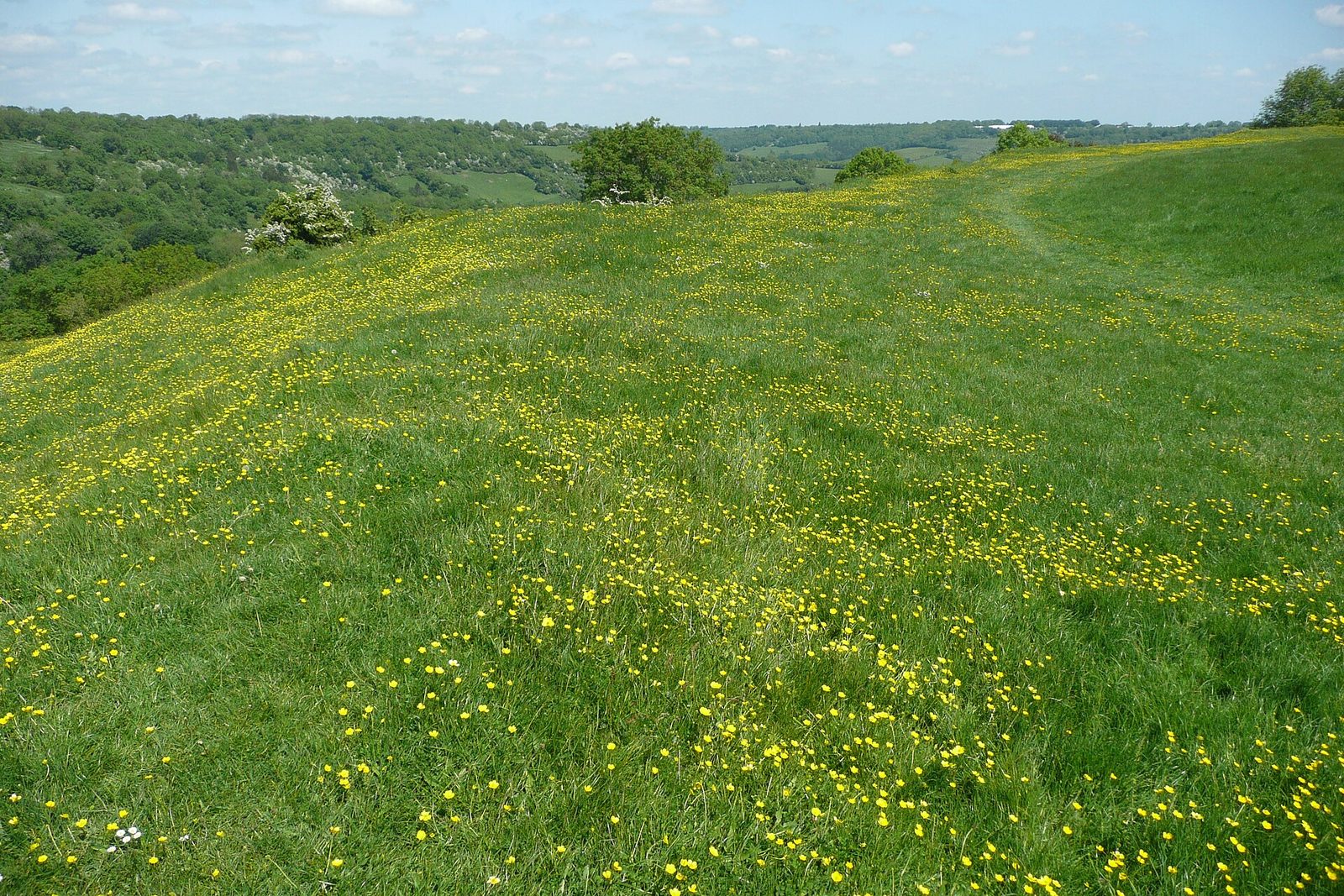
Firstly, Gildas uses the Latin word ‘mons’, which definitely means ‘mountain’. Crucially, there is no mountain at Bath. For this reason, some scholars have tried to connect Badon with a nearby mountain, rather than the city of Bath itself. The most common suggestion is Solsbury Hill, just 2 miles from the city.
However, Solsbury Hill only rises to a height of 625 feet, or less than 200 meters. Would Gildas really have called this a ‘mons’? The word ‘collis’ (meaning ‘hill’) would surely have been more appropriate.
Secondly, it is true that Solsbury Hill has a hillfort atop it, as required by Gildas’ reference to a ‘siege’. However, this appears to have been abandoned around 100 BCE and was never reoccupied. There is some evidence for medieval fieldwork there, but that simply indicates farming, not a settlement.
Thirdly, it is true that the name of this city in medieval English (‘Bathanceaster’, as seen in the Anglo-Saxon Chronicle) appears similar to ‘Badon’. However, this name comes from the English word for ‘bath’, due to the Roman baths at the city. Why would Gildas have known the site by its English name? This is especially implausible considering the Saxons did not conquer Bath until 577.
In fact, the Saxons initially called the city ‘Akemanceaster’. They only began referring to it by the baths there centuries after Gildas’ time.
For these reasons, it is exceedingly unlikely that Bath was the true site of Badon.
Liddington Castle, Wiltshire
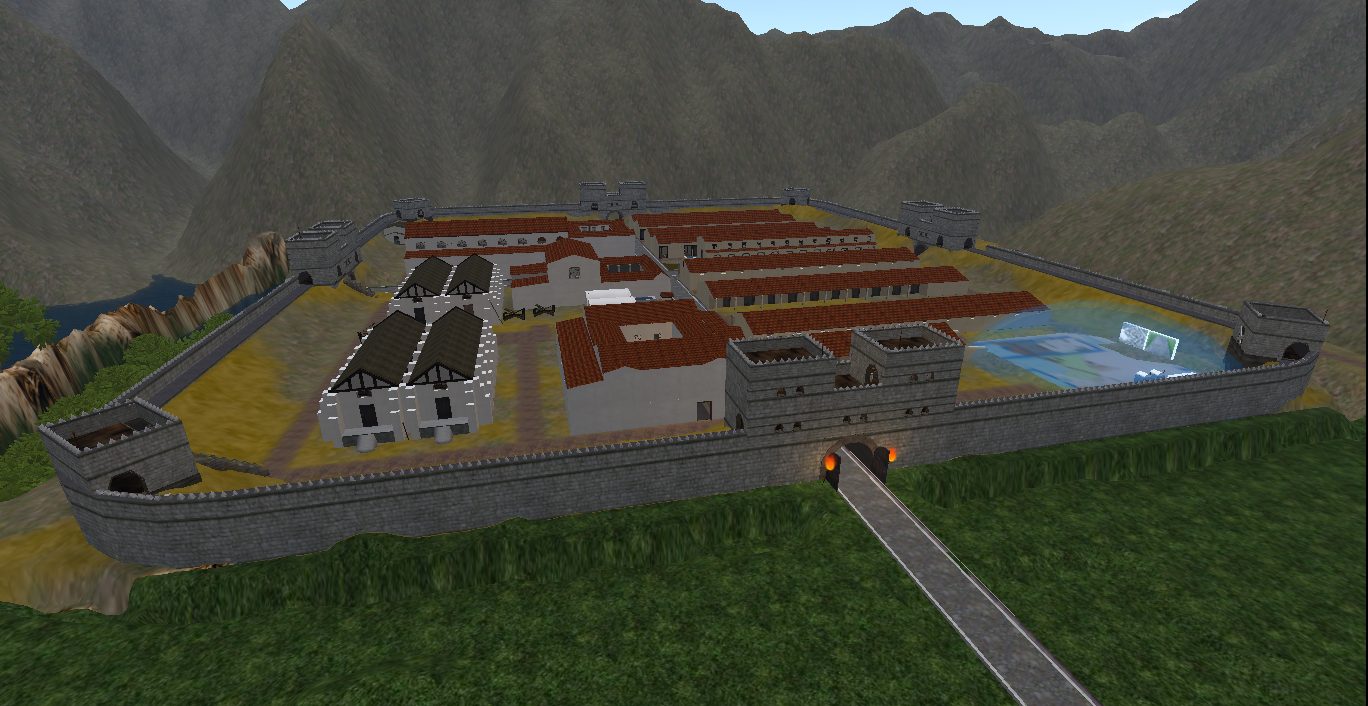
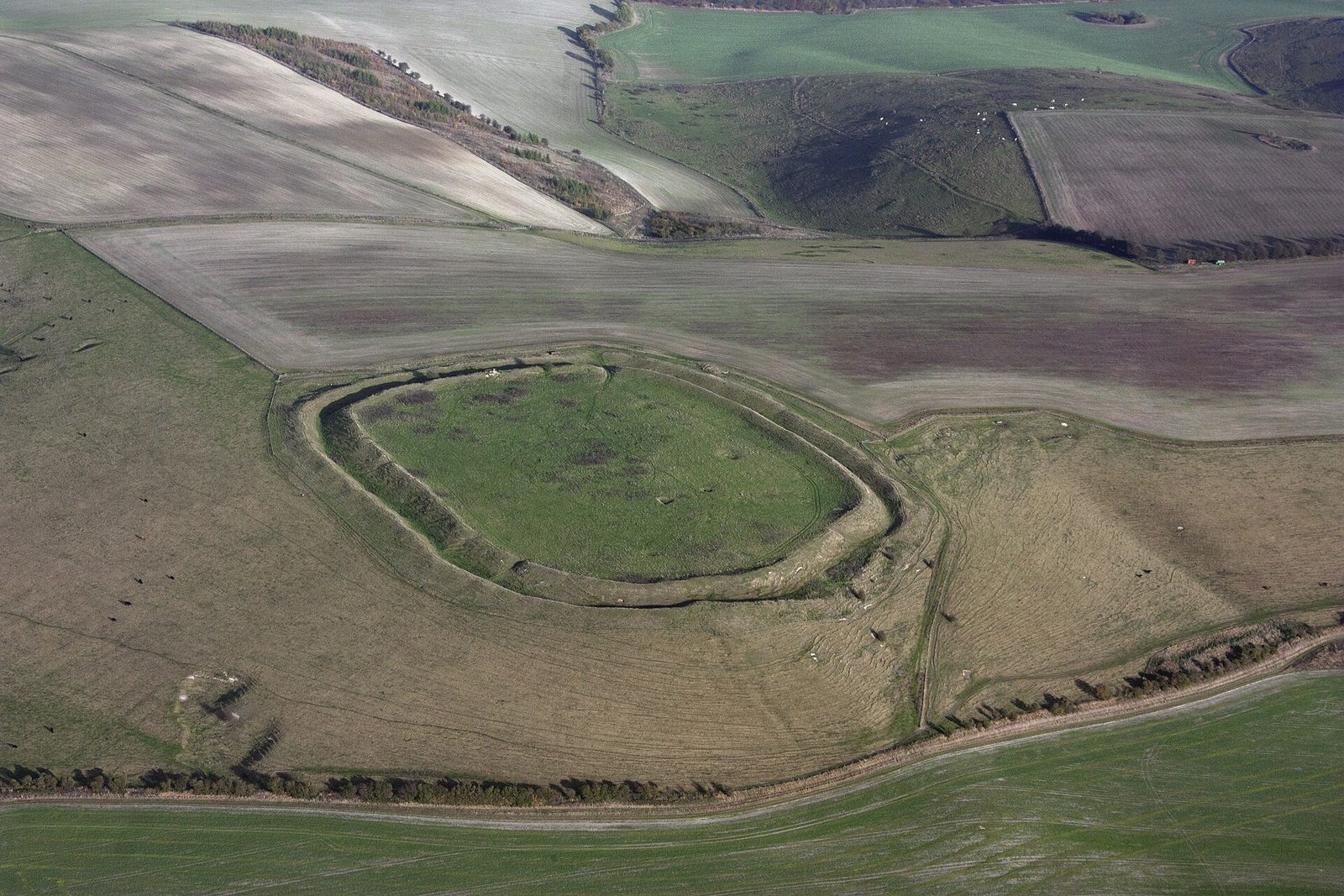
Another commonly suggested contender is Liddington Castle in Wiltshire. This is an imposing hillfort with impressive defensive earthworks.
However, despite its popularity, it has several key problems. First and foremost, there is no clear reason to link this to the place name ‘Badon’. There is a village half a mile away named ‘Badbury’, but that is all.
Secondly, there is no clear evidence for occupation of this hillfort in Arthur’s time. It appears to have been abandoned in the fifth century BCE, with limited evidence for Roman activity.
Badbury Rings, Dorset
Perhaps the most popular suggestion among modern researchers is Badbury Rings in Dorset. This is attractive for a few reasons. For one thing, it is directly associated with the name ‘Badbury’, which could plausibly mean ‘Badon fort’. It is also an imposing hillfort, similar to Liddington Castle.
Furthermore, it is in a strategic location. Badbury Rings is near an intersecting ‘maze of Roman roads’, as one scholar put it. This makes it an attractive location for an important battle.
Additionally, unlike Liddington Castle, there is clear evidence that Badbury Rings was reoccupied in the Post-Roman era. This means that it could plausibly have been the site of a siege.
However, there are some issues with this suggestion. Firstly, some scholars believe that the name ‘Badbury’ comes from ‘Badda’s fort’. Since ‘Badda’ is a Germanic personal name, this would mean that Gildas must have been using the English name for the site. While not impossible, this does seem very unlikely.
Secondly, it does not fit Welsh tradition about the location of the battle, which we will go on to see more about in the next section.
Mynydd Baedan
Perhaps the most likely location for Mount Badon is Mynydd Baedan. This is a site in Glamorgan, south Wales. Unlike some other suggested locations, it is prominent enough that it fits Gildas’ use of the word ‘mons’. The very fact that it is called Mynydd (meaning ‘Mount’) Baedan demonstrates this.
There are many defensive earthworks covering Mynydd Baedan, as well as a fortified camp on a neighbouring peak.
Does the Name Work?
However, the most obvious attraction about this site is the fact that ‘Baedan’ is tantalisingly similar to ‘Badon’. There is no proof that this name goes back to the sixth century, but it does go back more or less to our earliest records about this area.
Some critics of this theory claim that the name ‘Baedan’ cannot be related to ‘Badon’. However, the very fact that we do not have records of Mynydd Baedan from before c. 1100 means that we simply do not know what form this name originally took. We do not know whether it could be a corruption rather than a regular evolution.
For example, the place name ‘Ffynnon Faeddog’ is earlier recorded as ‘Ffynnon Fadog’, even though ‘Fadog’ should not have evolved into ‘Faeddog’ according to the regular rules of language development. Therefore, it may well be that something similarly unexpected occurred in the case of Badon, leading to it becoming locally known as ‘Baedan’.
Notably, a ninth century version of Bede’s history records Mount Badon under the name ‘Beadonascan dune’. Somewhat similarly, the Anglo-Saxon Chronicle appears to refer to a later Battle of Badon (in the seventh century) using the form ‘Biedanhead’.
These two forms – ‘Beadon’ and ‘Biedan’ – are so close to ‘Baedan’ as to render mute the argument that Mynydd Baedan could not be Mount Badon on linguistic grounds. Sometimes, place names simply do not obey the rules that we would expect them to obey.
Does the Location Work?
The general location also makes it a favourable site. One manuscript of Gildas’ De Excidio places Badon near the mouth of the Severn. This fits Mynydd Baedan, which is not even 6 miles from the Severn Sea. The Dream of Rhonabwy also places Badon not far from the Severn, supporting this tradition.
Thus, Mynydd Baedan fits the location indicated by Welsh tradition much better than any other suggested location, apart from perhaps Bath. But unlike Bath, Mynydd Baedan fits the criterion of actually being a mountain.
Some researchers have claimed that Mynydd Baedan is too far to the west to be Mount Badon. The argument goes that the Saxons did not get as far as Welsh until many decades after the Battle of Badon was fought.
However, this argument falls down for a few reasons. For one thing, there are many scholars who have accepted Bath as a strong contender, such as Frank D Reno, Leslie Alcock, and Rodney Castledon. And even the scholars who do reject it almost never do so for geographical issues. Yet, crucially, Bath is almost just as far west as Mynydd Baedan. If the Battle of Badon could plausibly have been fought at Bath, it is surely just as plausible to place the battle at Mynydd Baedan.
Most scholars place the Battle of Badon around the year 500, yet the Anglo-Saxon Chronicle reports that the Saxons did not get as far west as Bath until 577. This is never used to show that Badon could not have been Bath. Obviously, in this case, it is understood that the Anglo-Saxon Chronicle was likely reporting places where the Saxons conquered and held onto, rather than places where they raided but were later driven out of.
The same logic can easily apply to Mynydd Baedan. While the Saxons do not seem to have permanently established settlements as far as Wales until the early seventh century, this does not mean that they could not have campaigned further than that in the sixth century.
In fact, Gildas explicitly tells us that they did. In his description of the early stages of the Saxon conquest, before even mentioning Ambrosius, he tells us that the Saxon assault reached from the eastern side of the island clear to the opposite sea. At the closest, this would mean that got at least as far as the Severn Sea.
Gildas even suggests that they got as far as the martyrdom of Julius and Aaron, which later records unanimously place at Caerleon in south east Wales, not far at all from Mynydd Baedan.
The Significance of South East Wales
The idea that the Mynydd Baedan was the site of Mount Badon makes sense for at least one crucial reason: It is on the western side of the Severn. In contrast, all the other suggested locations are on the same side of the Severn as the main Saxon territories. Why is this noteworthy?
One commentator on this subject, Greame Fife, noted that ‘the river Severn, broad as a sea at its mouth, begins to drive a long wedge up into the heart of western Britain,’ and that it gives the impression that it ‘divides Wales from the rest of Britain as emphatically as the Channel separates the island from Gaul.’
He suggests that Arthur may have won a victory which caused the Saxons to retreat across the Severn, giving the impression of a thoroughly emphatic victory. In contrast, a victory which caused the Saxons to retreat but without any significant divider between them and the Britons may not have been viewed as such an emphatic and decisive event.
For this reason, placing Mount Badon at Mynydd Baedan allows for the kind of decisive victory described by Gildas.
King Urgennius of Badon
There is one final detail which is frequently overlooked. In the Historia Regum Britanniae, Geoffrey provides a list of various allies of Arthur who come to his special coronation. One of these allies is a certain ‘King Urgennius of Badon’.
This name, ‘Urgennius’, looks like it is a reference to Urien Rheged, whose name was earlier spelt ‘Urbgen’. However, Urien Rheged appears elsewhere in Geoffrey’s list, so this must be a different person.
The only figure known from other records who could possibly be Urgennius is a figure mentioned in the 11th century Life of St Cadoc. Here, we find a reference to a certain king named ‘Wrgannus’. He is the only attested person from this era whose name could have become Geoffrey’s ‘Urgennius’.
Significantly, this Wrgannus is described as the king of part of Glamorgan. Since Geoffrey describes Urgennius as being the king of Badon, this connection supports the conclusion that Badon was somewhere in Glamorgan.
Conclusion
In summary, the Battle of Badon was a major victory for the Britons in the sixth century. It turned the tide of the war and established a decades-long peace between the Britons and the Saxons. It was one of the most important events in early Post-Roman Britain. It is also one of the only battles in that early era which we can definitely say was historical.
FREQUENTLY ASKED QUESTIONS
When Did the Battle of Badon Happen?
Gildas says that it took place 43 years before he was writing. Most scholars place his writing near the mid-sixth century, which would put Badon around the turn of that century. However, Rachel Bromwich suggested that Maelgwn (one of Gildas’ contemporary kings) might have reigned in the late-sixth century, which would have the knock-on effect of placing Badon closer to the middle to that century. The Historia Brittonum places the Battle of Badon between the reign of Octha (c. 516) and that of Ida of Bernicia (547). The Annales Cambriae places it in 516.
Who Fought at the Battle of Badon?
It was a battle between the Britons and the Saxons. According to legend, Arthur was the leader of the Britons, although some scholars believe that they were instead led by Ambrosius Aurelianus. There is no agreement regarding the leader of the Saxons. Some researchers conclude it was Ælle of Sussex. One Welsh tradition names the leader as ‘Osla’, while Geoffrey of Monmouth names the leader ‘Cheldric’. Some have identified Cheldric as Cerdic of Wessix, with Osla being that king’s grandfather Esla.
Who Won the Battle of Badon?
The Britons were resoundingly victorious.
Sources
Reno, Frank, Historic Figures of the Arthurian Era: Authenticating the Enemies and Allies of Britain’s Post-Roman King, July 2015
Field, P. J. C., Arthur’s Battles, 2008
http://www.legendofkingarthur.co.uk/battles-king-arthur.htm
https://www.earlybritishkingdoms.com/arthur/kabattles.html