The Battle at the City of the Legion

In the Arthurian legends, the Battle at the City of the Legion was one of King Arthur’s battles against the Anglo-Saxons. This battle is particularly interesting for researchers of the Arthurian period, because it appears in the first record describing Arthur’s career, yet many scholars claim that this was taken from records about a battle which originally was not attributed to Arthur at all. Therefore, this is often involved in discussions about the historicity of Arthur himself. What do the available records really tell us about the Battle at the City of the Legion? And what are some of the competing theories about it?
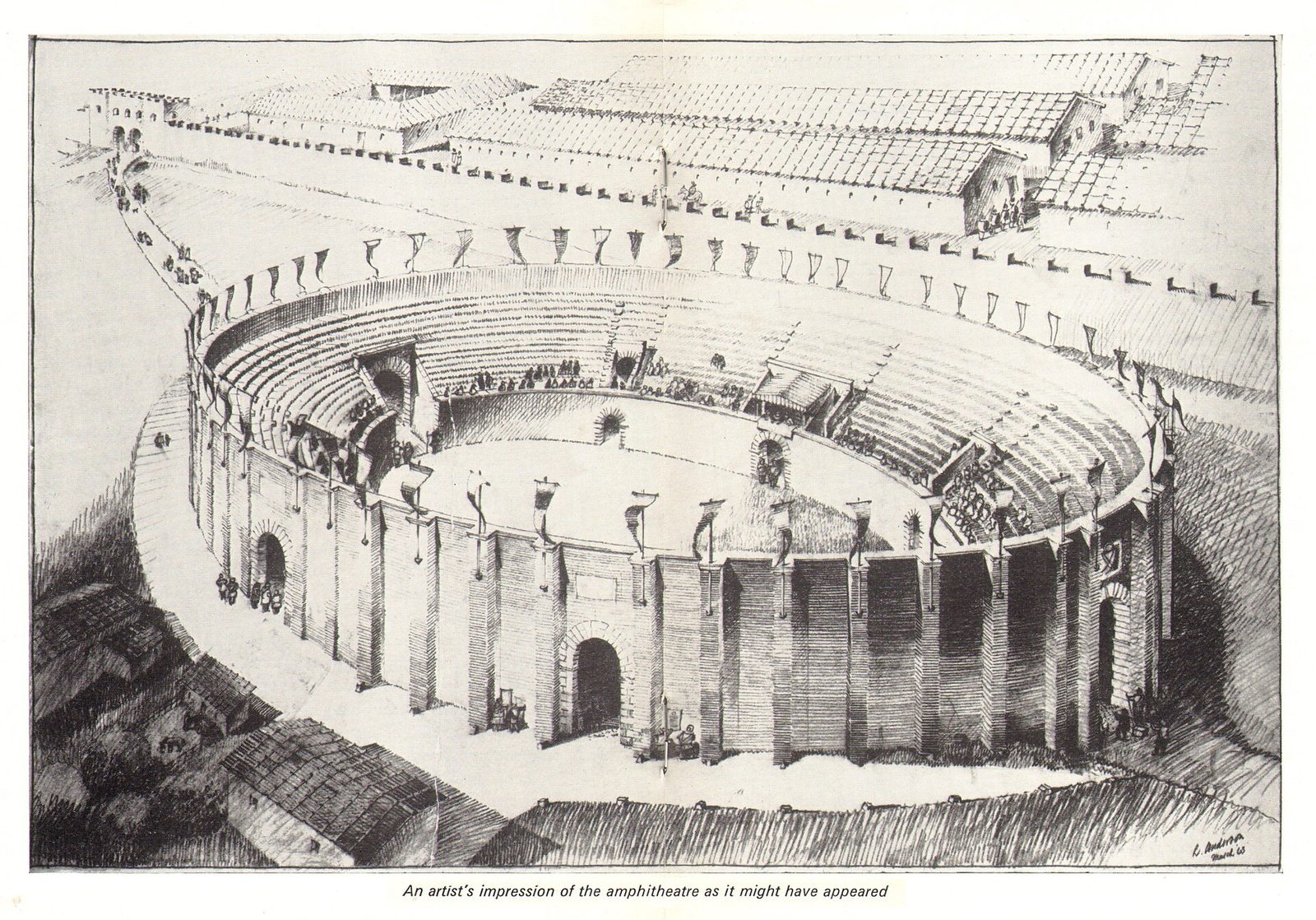
What was the Battle at the City of the Legion?
The Battle at the City of the Legion was the ninth of Arthur’s famous 12 battles against the Anglo-Saxons. Since c. 430, those Germanic nations had been conquering more and more of Britain. Arthur led a counter-offence against them, and the Battle at the City of the Legion was one of these battles.
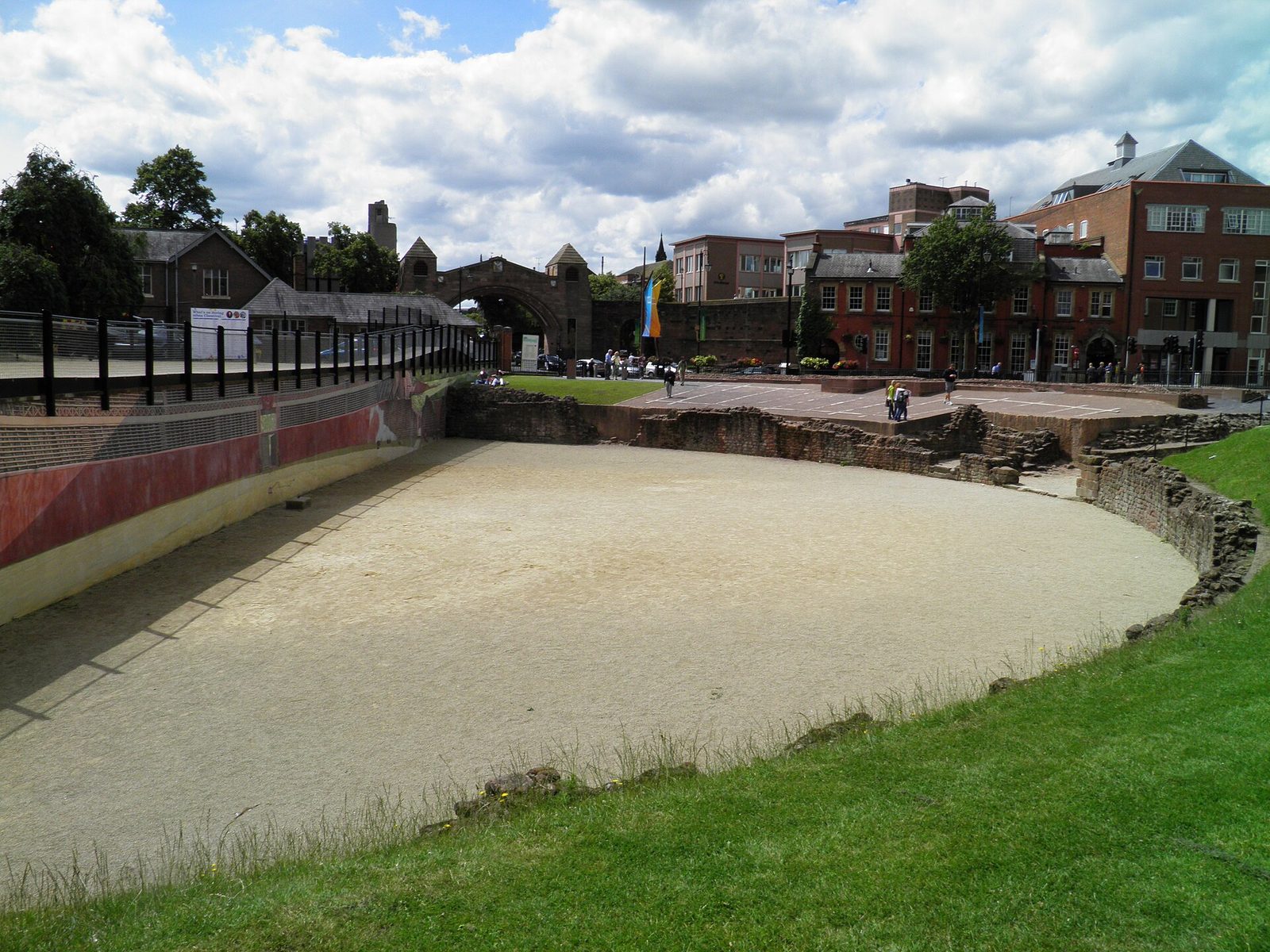
This battle took place at a location called the City of the Legion. Since it took place at a city, it may well have been a siege, although the source which mentions this battle does not explicitly say this. Unlike with the majority of Arthur’s battles, there are not very many different sites that have been suggested as the location of this battle. Most researchers place it either at Chester or at Caerleon.
Other records show that a battle at Chester occurred in c. 616. Because of this, many scholars have tried to argue that the Arthurian Battle at the City of the Legion was taken from records about this historical conflict and anachronistically applied to Arthur.
For this reason, this is one of the most commonly used examples of supposed evidence that the earliest record of Arthur’s career is unhistorical. Naturally, there is a lot of debate about the validity of this argument.
The Battle at City of the Legion in the Historia Brittonum
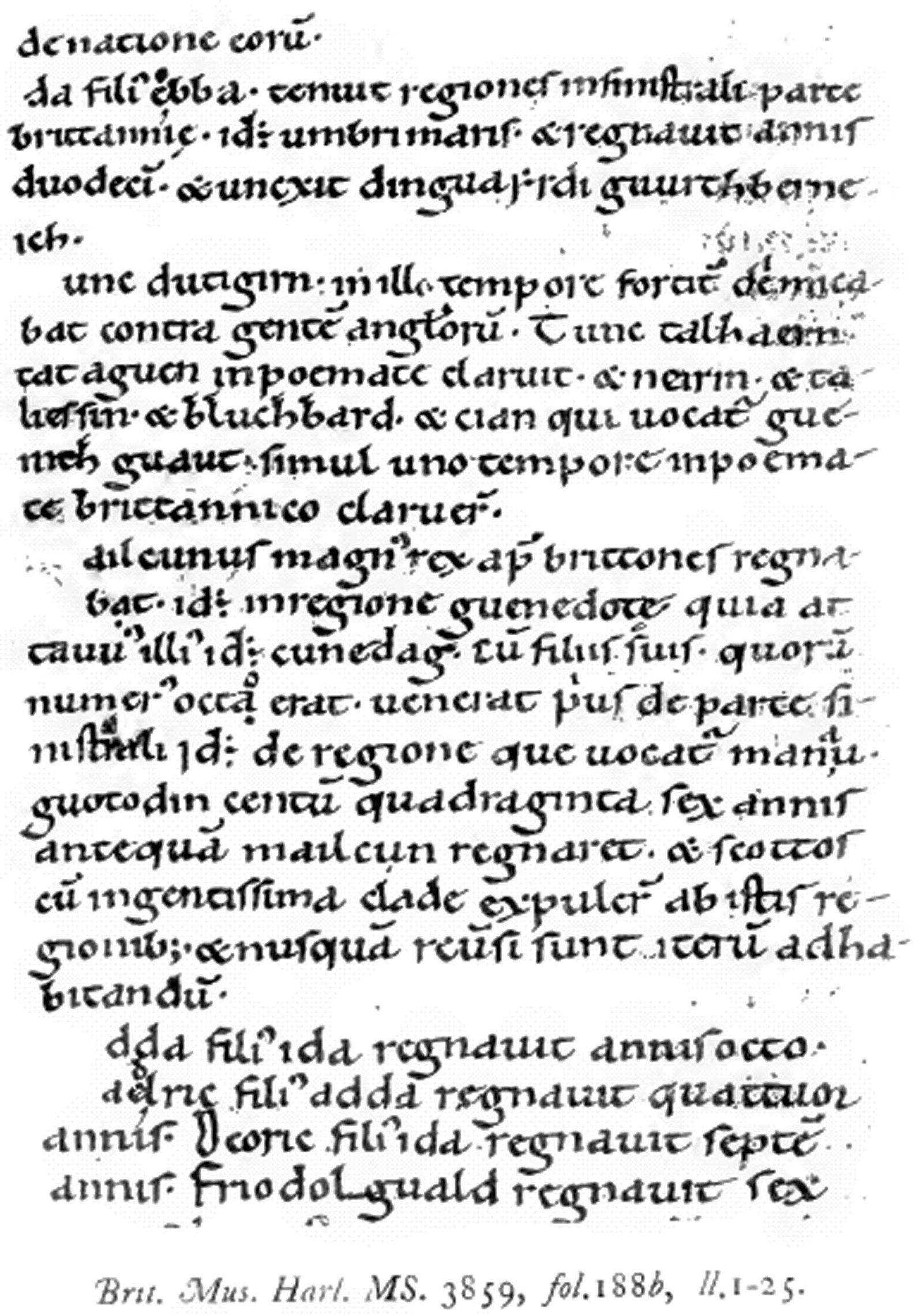
The Battle at the City of the Legion is mentioned in the Historia Brittonum, in the earliest surviving account of Arthur’s career. This document was written in c. 830. The account of this battle is as follows:
“Then it was that the magnanimous Arthur, with all the kings and military force of Britain, fought against the Saxons. And though there were many more noble than himself, he was twelve times chosen their commander, and was as often conqueror… The ninth was at the City of the Legion.”
According to this brief account, Arthur led an alliance of kings and military leaders into battle against the Saxons at the ‘City of the Legion’. Along with the claim that Arthur was victorious, that is all the information provided in this account. Some translations add the statement ‘which is called Cair Lion’ – giving the Welsh name for this battle site – but this does not appear to have been in the original.

The Battle at the City of the Legion in Later Records
The Battle at the City of the Legion does not receive any particular focus in later Arthurian records. It is mentioned in the sense that all 12 of Arthur’s battles against the Saxons are mentioned by later writers, but it generally does not receive any special attention. One possible exception to that is Geoffrey of Monmouth’s Historia Regum Britanniae, as we will go on to see shortly.
Of course, if the theory that this battle was identical to the historical Battle of Chester in c. 616 is correct, then there are actually many later records which refer to this specific conflict, such as the tenth-century Annales Cambriae. However, this theory is open to debate.
Geoffrey of Monmouth’s Historia Regum Britanniae
In c. 1137, Geoffrey of Monmouth wrote the Historia Regum Britanniae, presenting a full account of Arthur’s career. In the section about Arthur’s Saxon wars, several of the 12 battles from the Historia Brittonum are mentioned, but not all of them. At first sight, it seems that Geoffrey completely skipped the Battle at the City of the Legion.
Far from meaning that Geoffrey’s account is definitely unhistorical or incompatible with the Historia Brittonum, there are at least two ways of harmonising the two records of Arthur’s career.
En Route to Badon
Firstly, let us consider what Geoffrey does tell us about Arthur’s activities. He mentions the Battle at the Celidon Wood, which the evidence strongly suggests was in the south of Britain, not the north. Arthur is said to have thoroughly defeated the Saxon army there. He then went to fight the Picts in Scotland.
On his way to the territory of the Picts, he may have fought the Battle at Guinnion Fort, even though Geoffrey does not specifically mention it. There are other examples of Geoffrey skipping battles which we know really occurred. Guinnion Fort can likely be identified with Binchester Roman Fort, on the main Roman road heading north into Scotland.
While Arthur was there, the Saxons started besieging Badon, which Geoffrey placed in the southwest. Arthur then abandoned his conflict with the Picts and rushed south. Again, although Geoffrey does not mention it, Arthur could have had another clash with the Saxons en route to Badon. While heading to the southwest of Britain from the north, Arthur could easily have passed one of the popular sites identified as the City of the Legion.
For example, there is Chester, near the border of northeast Wales. Or, further south, there is Caerleon in southeast Wales. He could have passed either of these locations while heading towards Bath (where Geoffrey places Badon) or Mynydd Baedan (the most likely location of Badon). Or, if he took a more easterly route, then the Roman roads would have taken him past York, another popular location for the City of the Legion.
Out of Chronological Order
There is an alternative way of harmonising Geoffrey’s account with the earlier Historia Brittonum. This theory argues that Geoffrey actually did mention the Battle at the City of the Legion in his version of Arthur’s career.
This theory relies on the idea that the Historia Brittonum did not necessarily present all of the 12 battles in chronological order. The basis for this theory is the fact that the passage concerning these 12 battles appears to have been taken from a battle poem, according to some of the most authoritative scholars on this period.
This being the case, it is perfectly likely that some of the battle sites were moved around to allow them to rhyme properly, for the sake of the poem. Therefore, it could be that the Battle of the City of the Legion actually occurred before the Battle of the Celidon Wood, rather than after.
Interestingly, Geoffrey of Monmouth specifically presents Arthur as fighting against the Saxons at one of the most popular locations identified as the real City of the Legion. After mentioning one of the battles on the River Dubglas, Geoffrey tells us that Arthur pursued the Saxons up to York.
Since York is one of the most popular locations for the City of the Legion (behind Chester and Caerleon), this siege could very plausibly be the battle mentioned in the Historia Brittonum.
Issues with This Theory
One potential issue with this explanation is that the Historia Brittonum simply calls the event a battle, rather than a siege. However, the same applies to Badon, yet we know from Gildas’ near-contemporary account that Badon was a siege rather than just a battle. Therefore, this objection does not hold up.
A more significant objection is the fact that Geoffrey of Monmouth does not present this siege of York as a victory for Arthur. In fact, Arthur ends up abandoning the siege upon hearing news of a large army of Saxon reinforcements approaching.
However, Geoffrey does tell us that Arthur sent an army to deal with a previous wave of Saxon reinforcements some miles distant from the city during the siege, which was a definite British victory. This successful engagement was part of the wider siege of York, so it could plausibly have been remembered as ‘the Battle of the City of the Legion’.
Nonetheless, there is no smoking gun which confirms this theory. It is therefore impossible to say for sure whether this siege of York really was the Battle at the City of the Legion, or whether that battle occurred en route to Badon, or even elsewhere in Arthur’s career.
Where was the City of the Legion?
Like with the sites of the other 11 battles, the location of the City of the Legion has been the subject of fierce debate. However, the majority of researchers identify this city with either Chester or Caerleon, with York also being a popular identification.
Caerleon
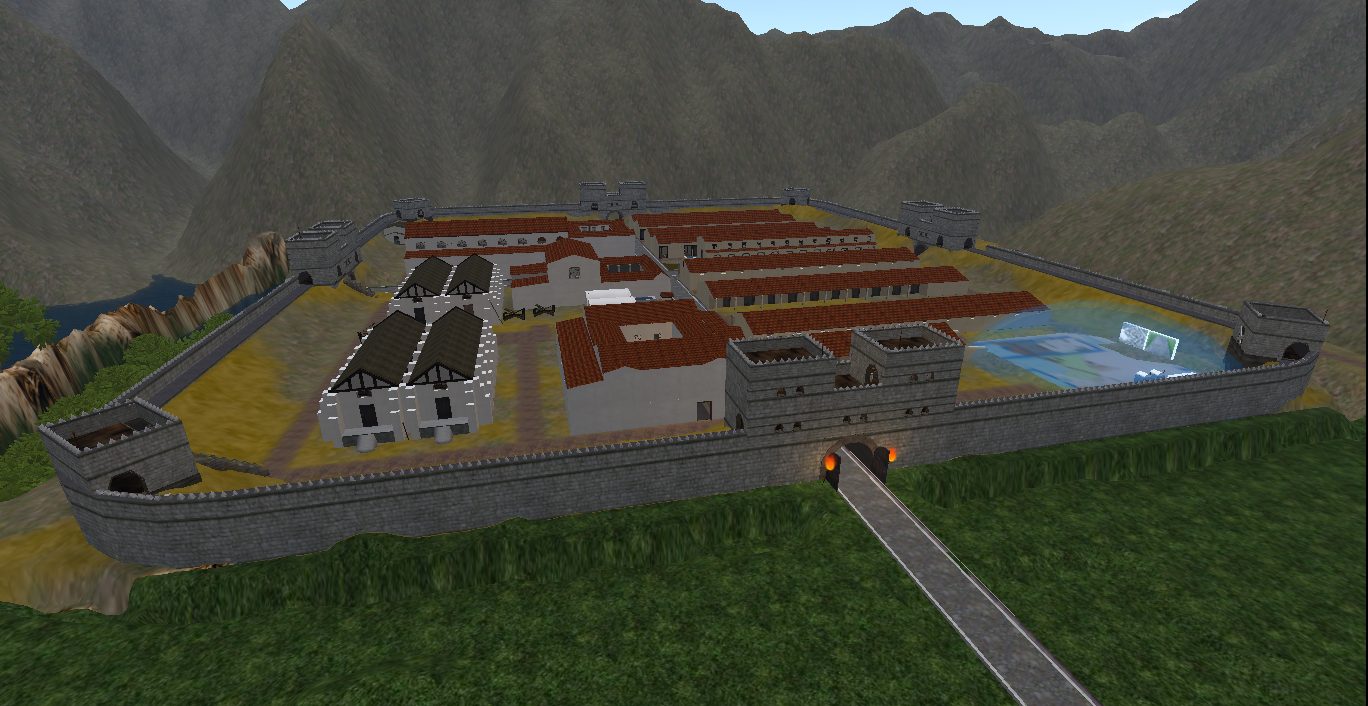
Caerleon in southeast Wales is one of only two places in Britain that are known for a fact to have been called by a name that translates to ‘City of the Legion’. It was known by this name because, for many years during Roman Britain, it was the home of the Legio II Augusta.
There is even evidence that it was known by this name as far back as the Arthurian era itself. In De Excidio, written by Gildas in the sixth century, there is a reference to the martyrdom of Julius and Aaron in the ‘City of the Legions’. Later tradition places them at Caerleon in Wales. For example, their place of martyrdom appears in the register in the Book of Llandaff, from the 12th century.
In addition, Geoffrey of Monmouth himself refers to the ‘City of Legions’ various times. He makes it clear that he means Caerleon, identifying it with the seat of Bishop Dubricius, a historical figure of southeast Wales.
Furthermore, this is very close to Mynydd Baedan, the likely location for Mount Badon. This supports the idea that a battle could have occurred here, perhaps in the prelude to the Battle of Badon.
On these bases, some researchers are adamant that Caerleon is the intended location in the Historia Brittonum’s battle list.
Objections to This Location
Despite the apparent simplicity of this theory, it is not without its problems. For one thing, it most commonly appears as ‘Caerleon-upon-Usk’, rather than just ‘Caerleon’ by itself. This is because the city of Chester was also known by the same name, so the city in southeast Wales was designated ‘-upon-Usk’ to distinguish it from Chester (the Usk is a river in southeast Wales).
For example, we see this distinction in the Historia Brittonum itself. In the list of cities, we find ‘Cair Legion’ and ‘Cair Legeion Guar Usic’. On this basis, some have argued that Caerleon would not have been referred to merely as the ‘City of the Legion’ in the battle list.
However, this is not a solid objection. For one thing, if we accept Gildas’ ‘City of the Legions’ as being Caerleon, supported by later tradition, then this proves that Caerleon was sometimes known by that name without the distinguishing ‘-upon-Usk’. Admittedly, this identification in itself is controversial.
More significantly, if the Historia Brittonum’s battle list originally came from a poem, then the name of this battle site would have logically been adjusted to make it rhyme. The composer needed it to rhyme with the preceding ‘Guinnion’, meaning that he needed to end this line with ‘Legion’ rather than ‘Usk’.
Perhaps the single best objection to this identification is the fact that Gildas’ reference to the martyrium of Julius and Aaron in the ‘City of the Legions’ implies that it was inaccessible to him and his fellow Britons at the time of his writing. This could surely not apply to Caerleon in the sixth century. This suggests that Gildas’ City of the Legions was somewhere further east.
However, not all scholars understand Gildas’ reference in the same way. Some argue that he simply meant the martyrium had been destroyed. This would actually work well with the theory that Caerleon had been the site of a battle with the Saxons. On the other hand, some scholars argue that Gildas’ City of the Legions can be neither Caerleon nor the City of the Legion of Arthur’s battle list on the basis that Gildas uses the plural ‘Legions’ rather than the singular ‘Legion’.
Really, there is no reason why Caerleon definitely could not have been the City of the Legion of the Historia Britonnum’s battle list. The biggest objection is simply that it is not the most inherently logical site, in view of the reasons considered here.
Chester
A more inherently logical location is Chester. Like Caerleon, this was directly known by a name that translates to ‘City of the Legion’. Unlike Caerleon, this was not given any distinguishing place-name element; it was simply called ‘Cair Legion’, as we see in the Historia Brittonum’s list of cities.
The reason it was known by this name is because it was the base of the Legio II Adiutrix. Just like with Caerleon, this permanent legionary fortress led to this city becoming known in medieval times as the City of the Legion, or ‘Cair Legion’. Today, in Welsh, it is known simply as ‘Caer’, while in English it is known simply as ‘Chester’ (the exact English equivalent of the Welsh word ‘caer’). It was formerly known as ‘Legacaestir’ in English, though the first element was eventually dropped.
Furthermore, the Annales Cambriae – a 10th century chronicle from Wales – refers to ‘Urbis Legion’ in an entry widely understood as referring to Chester. This is virtually a perfect match for the Historia Brittonum’s ‘City of the Legion’, which is called ‘Urbe Legionis’.
Based on this clear linguistic evidence, the vast majority of scholars consider Chester to be the City of the Legion referred to in the Arthurian battle list. Many of them claim that it is a virtual certainty.
An additional bit of supporting evidence that has otherwise not been acknowledged is that this would work quite well within the narrative of the Historia Regum Britanniae. Thinking back to the idea that the Battle at the City of the Legion was an unmentioned battle that took place en route to Badon from the territory of the Picts, Arthur would very plausibly have gone past Chester.
Objections to This Theory
Despite the water-tight appearance of this identification, there are some issues. For one thing, there is no definitive evidence that the ‘Urbis Legion’ in the Annales Cambriae is to be identified with Chester. It could easily be Caerleon instead, or possibly somewhere else. Notably, the Annales Cambriae actually gives a slightly different name for Chester just a few entries later, when describing the Battle of Chester. There, this document calls it ‘Caer Legion’.
If ‘Urbis Legion’ really was Chester, then why would the writer of the Annales Cambriae refer to it by a different name just a few entries later? This objection severely weakens the supposedly perfect linguistic match between Chester and the Historia Brittonum’s City of the Legion.
Another objection to this theory is that it does not appear to match Gildas’ reference to the City of the Legions, just like how Caerleon does not match either. There is no evidence at all that Chester was within Anglo-Saxon territory as early as the time Gildas was writing.
This means that Chester was not actually the earliest recorded city to be known by a name which could have produced the Historia Brittonum’s ‘Urbis Legionis’. In reality, it was the city to which Gildas was referring.
York
York is not as favoured as Caerleon or Chester as the identification of the City of the Legion, but it does have its supporters. For example, scholars such as P. J. C. Field, Linda Malcor, and Daniel Hunt have supported this identification.
Although it is never directly recorded as ‘the City of the Legion’ or ‘Cair Legion’ in any unambiguous references, the reason for supposing that it could have been called that is clear enough. In Roman Britain, there were three permanent legionary fortresses. One was in Chester, one was in Caerleon, and one was in York.
If Chester and Caerleon both came to be known as the ‘City of the Legion’ due to their former status as legionary fortresses, then surely the same could apply to York. This is the argument put forward by proponents of this theory.
Additionally, York continued functioning as a permanent legionary fortress long after the legions at Caerleon and Chester had been withdrawn. It seems that the legion at Caerleon was removed at some time in the third century, while the one at Chester appears to have been removed in the fourth century.
On the other hand, the legion at York appears to have remained there until about the year 400. Therefore, it would have been the most recent ‘City of the Legion’ to any Post-Roman era writer.
Strategic Arguments
It is easy to see the appeal in this identification. Caerleon and Chester (the latter in particular) were both quite far from Anglo-Saxon activity in the first half of the sixth century. That is not to say that it would have been impossible for the battle to have take place at either of those locations. However, Chester especially would require a march of several days from Anglo-Saxon territory.
On the other hand, York is known to have been within Anglo-Saxon hands before the turn of the mid-sixth century, as archaeology has shown. It was also in the same part of the country as some of the most confidently-identified of Arthur’s battles.
For example, within the territory demarcated by the River Glen in Lincolnshire in the south and Binchester in the north, York is right in the middle. This immediately makes it a more attractive identification than either Caerleon or Chester, which are far outside what appears to be the core area of Arthur’s Saxon battles.
Political Importance
Furthermore, York was an extremely important city. During the Roman era, York was a major administrative centre. As well as being a permanent legionary fortress, it was the capital of Britannia Inferior, the portion of Roman Britain corresponding to northern England and the Midlands. It was the largest city in that whole region. In fact, in all of Britain, it was second only to London in importance. It was eventually made a colonia, the highest rank a Roman city could achieve.
Evidence that York continued to hold an important position in the Post-Roman era is found from the Historia Brittonum. When mentioning the Anglian King Ida, the alleged founder of the Kingdom of Bernicia, the text specifically says that he was king in ‘Cair Ebrauc’, which is York.
Consider the extreme importance of York in the Roman period, and evidently the Post-Roman period too, in conjunction with the fact that it is right in the heart of the territory demarcated by several firmly-located Arthurian battles. With this in mind, it would be astonishing if Arthur did not engage in battle against York during his Saxon campaign.
Evidence from Arthurian Tradition
As we have already seen, Geoffrey of Monmouth explicitly describes Arthur as raising a siege against York. He sent out a part of his army to defeat some incoming Saxon reinforcements, which was a British victory. Even if the siege itself was not a resounding success according to the HRB, that does not preclude it from being mentioned in the Historia Brittonum’s battle list.
After all, the Hanes Gruffydd ap Cynan claims that the first of Arthur’s 12 battles was a British defeat, in conflict to what the Historia Brittonum says. Therefore, the fact that a later tradition presents Arthur’s siege of York as not being a decisive victory does not mean that it cannot be identified with one of the battles of the Historia Brittonum’s list. And as has already been mentioned, the defeat of incoming Saxon reinforcements may well have been viewed as part of the same conflict.
Samson of York
In addition, Geoffrey of Monmouth names the archbishop of York as Samson, saying that he was expelled by the Saxon invaders. Somewhat later in his account, he mentions Samson of Dol, a historical Welsh figure of the sixth century. It is not unambiguous that they are meant to be the same person, but many authorities accept that Geoffrey was not intending to speak of two separate Samsons.
This being the case, why did Geoffrey make Samson of Dol the archbishop of York? Historically, Samson never went to York or even in that direction. He was active in southeast Wales for some time, and then he moved to Brittany and became prominent there (Dol being a location in that territory).
There is no obvious explanation, but it is notable that Samson was historically active near the territory of Caerleon. He was closely associated with Dubricius, yet Geoffrey of Monmouth specifically calls Dubricius the archbishop of the City of Legions (Caerleon).
Therefore, a reasonable suggestion is that Samson was connected to York by mistaken tradition due to the historical fact that he was associated with Caerleon, or the ‘City of Legions’, in southeast Wales. This confusion would only work if York, too, was known as the ‘City of Legions’ or some similar name.
Evidence from Gildas
Perhaps the strongest evidence of all that York really was known as the City of the Legions comes from Gildas. As we have already discussed, he refers to the shrines of Julius and Aaron in the City of the Legions as being inaccessible to the Britons.
He states that this is because of the ‘grievous divorce of the barbarians’, almost universally accepted as a reference to some kind of partition between Brythonic and Anglo-Saxon territory. Therefore, Gildas’ words strongly suggest that the City of the Legions was within Saxon territory at the time he was writing.
As various scholars have noted, this infamous passage is extremely difficult to explain in the context of Caerleon or Chester. To say that either of those locations was within Saxon territory at any point in the sixth century would run counter to everything that is known about the course of the Anglo-Saxon conquest of Britain.
However, as P. J. C. Field has emphasised, this cannot simply be ignored. As he explained:
“Whatever mistakes Gildas may make about the history of Britain in earlier generations, his De excidio, with all its limitations, is much the best historical source for the history of Britain in his own lifetime, and its testimony is in principle capable of outweighing all the rest of the evidence put together.”
Therefore, regardless of the fact that York is never explicitly called the City of the Legion or Legions in later medieval records, the testimony from Gildas single-handedly proves that there was a City of the Legions within Saxon territory. The argument that Chester and Caerleon were the only places known by that name is based on later, and therefore inferior, evidence, meaning that we can dismiss such an argument in favour of Gildas’ clear statement.
Urbs Legionum
The final proof that York really was the City of the Legions referred to by Gildas is the simple fact that he calls it ‘Urbs Legionum’.
The word ‘urbs’ in Late-Roman usage referred to a major city. It was only in later centuries that it came to be used more loosely. Given the type and quality of Gildas’ Latin, it is very likely that he would have said ‘civitas’ or ‘castra’ if he had been referring to Caerleon or Chester, neither of which were major cities. Gildas does display an awareness of the difference between these words.
In contrast to those two sites, York could perfectly be described as an ‘urbs’, since it was indeed a major Roman city.
Furthermore, the use of the plural ‘Legionum’ points specifically to York. At Caerleon, the Legio II Augusta was the only legion that ever occupied it. At Chester, the Legio II Adiutrix built an initial fortress, but this was then entirely rebuilt by the Legio XX Valeria Victrix just 14 years later, which then stayed there. So only one legion ever occupied that fortress in its completed form.
In contrast, York was occupied by the Legio IX Hispana for roughly 40 years, and then the Legio VI Victrix occupied it for the rest of its history. As Field explains, it had also been ‘favoured with flying visits from emperors with accompanying favourite legions.’
Therefore, Gildas’ use of the plural ‘Legionum’ applies to York far better than it does to either Caerleon or Chester. True, later medieval documents also sometimes apply the plural to Caerleon and Chester. However, those references can plausibly be traced back to Gildas’ own use of the expression.
Objections to This Location
The one main objection to this identification is the simple fact that no later medieval document explicitly calls York the City of the Legion. Unlike in the case of Caerleon and Chester, its name to the Welsh and the English derived directly from the Roman name for it, Eboracum.
However, it is self-evident that a place can be known by multiple names. Caerleon and Chester themselves prove this. They both had their own Roman names. There must have been a time around the early Post-Roman Period in which people gradually started replacing their Roman names with the descriptive name ‘City of the Legion’.
In the case of York, we can see from Gildas that this process had started, although the later evidence shows that the descriptive name ‘City of the Legions’ never replaced the official Roman name. But that is all that it means. It does not mean that York was never known as the City of the Legions in the Arthurian period.
Regarding the plural ‘Legions’ rather that ‘Legion’, Field notes that the Historia Brittonum’s ‘source’s uninflected legion would have applied equally to those places that had associations with several legions and to those that had associations with only one.’
Was the Battle at the City of the Legion taken from the Battle of Chester?
This battle is most directly responsible for the suspicion surrounding the Arthurian battle list, because there was a historical Battle of Chester in c. 616 and Chester was also a ‘City of the Legion’. Therefore, this has led many scholars to conclude that this battle list is composed of various unrelated medieval battles all meshed together.
In reality, this conclusion is based entirely on the flawed logic that two battles cannot occur at the same location. History reveals the folly of such thinking. Various sites have been the subject of multiple battles throughout history.
The location truly is the only reason for such a conclusion, because nothing else about the Arthurian Battle of the City of the Legion bears any relation to the Battle of Chester. The former is presented as a victory, while the latter was a crushing defeat which was remembered as a tragedy in later Welsh tradition.
Conclusion
In conclusion, the Battle at the City of the Legion was the ninth of Arthur’s 12 battles against the Saxons as recorded in the Historia Brittonum. Many scholars believe that it took place at Chester, although Caerleon and York are also popular suggestions. The weight of evidence from Arthurian tradition and the locations of the other battles indicate that York is the most likely location. It may well be that this battle actually took place earlier in Arthur’s Saxon wars, and can be identified with his siege of York as recorded by Geoffrey of Monmouth.
FREQUENTLY ASKED QUESTIONS
Who Won the Battle at the City of the Legion?
The Battle at the City of the Legion was won by Arthur and his fellow Britons.
Where was the City of the Legion?
The City of the Legion could have been Caerleon, Chester, or York. However, the weight of evidence indicates that York is the most likely location.
Was the Battle at the City of the Legion the Same as the Battle of Chester in 616?
There is no evidence for this claim. The two battles have different outcomes and are not associated with any of the same people.
Sources
Fitzpatrick-Matthews, Keith, The ‘Arthurian Battle List’ of the Historia Brittonum, 2018
Robb, Graham, The Debatable Land: The Lost World Between Scotland and England, 2018
Breeze, Andrew, The Historical Arthur and The Gawain Poet: Studies on Arthurian and Other Traditions, 2023
Sullivan, Tony, The Early Anglo-Saxon Kings, 2023
Gidlow, Christopher, Revealing King Arthur: Swords, Stones and Digging for Camelot, 2011
Field, P. J. C., Gildas and the City of the Legions, 1999
Fitzpatrick-Matthews, Keith, The xxuiii ciuitates brittanni? of the Historia Brittonum: Antiquarian Speculation in Early Medieval Wales, 2015
Field, P. J. C., Arthur’s Battles, 2008
Jackson, Kenneth, Once Again Arthur’s Battles, 1945
http://www.legendofkingarthur.co.uk/battles/9-leigion.htm