The Battle at the Celidon Wood

The Battle at the Celidon Wood is an important battle in the Arthurian legends. It was a major clash between King Arthur and the Saxons. This battle appears in the earliest description of Arthur’s career, and it also has a notable place in later Arthurian tradition. It is also notable for being the least controversial of all of Arthur’s battle sites. In this article, we will analyse what the sources reveal about this event and what we can conclude about it in relation to other Arthurian events.
What was the Battle at the Celidon Wood?
The Battle at the Celidon Wood was one of Arthur’s many battles against the Anglo-Saxons, who had been progressively conquering more and more of Britain since c. 430. It was part of his campaign to impede their progress or even drive them back. It was the seventh of 12 battles allegedly fought against the invaders. It came after the Battle on the River Bassas but before the Battle at the Guinnion Fort.
This battle is significant for a few reasons. Firstly, it features in later Arthurian tradition, such as Geoffrey of Monmouth’s Historia Regum Britanniae (c. 1137), where it is given some prominence. It also may be the subject of a Welsh poem called Cad Goddeu, although this is uncertain. In any case, this is certainly one of the more prominent of Arthur’s 12 battles.
Furthermore, this battle is also notable for apparently being securely placed in terms of geography. While there is fierce debate over the locations of the sites of the other 11 battles, most researchers agree on the location of this one.
The Battle at the Celidon Wood in the Historia Brittonum
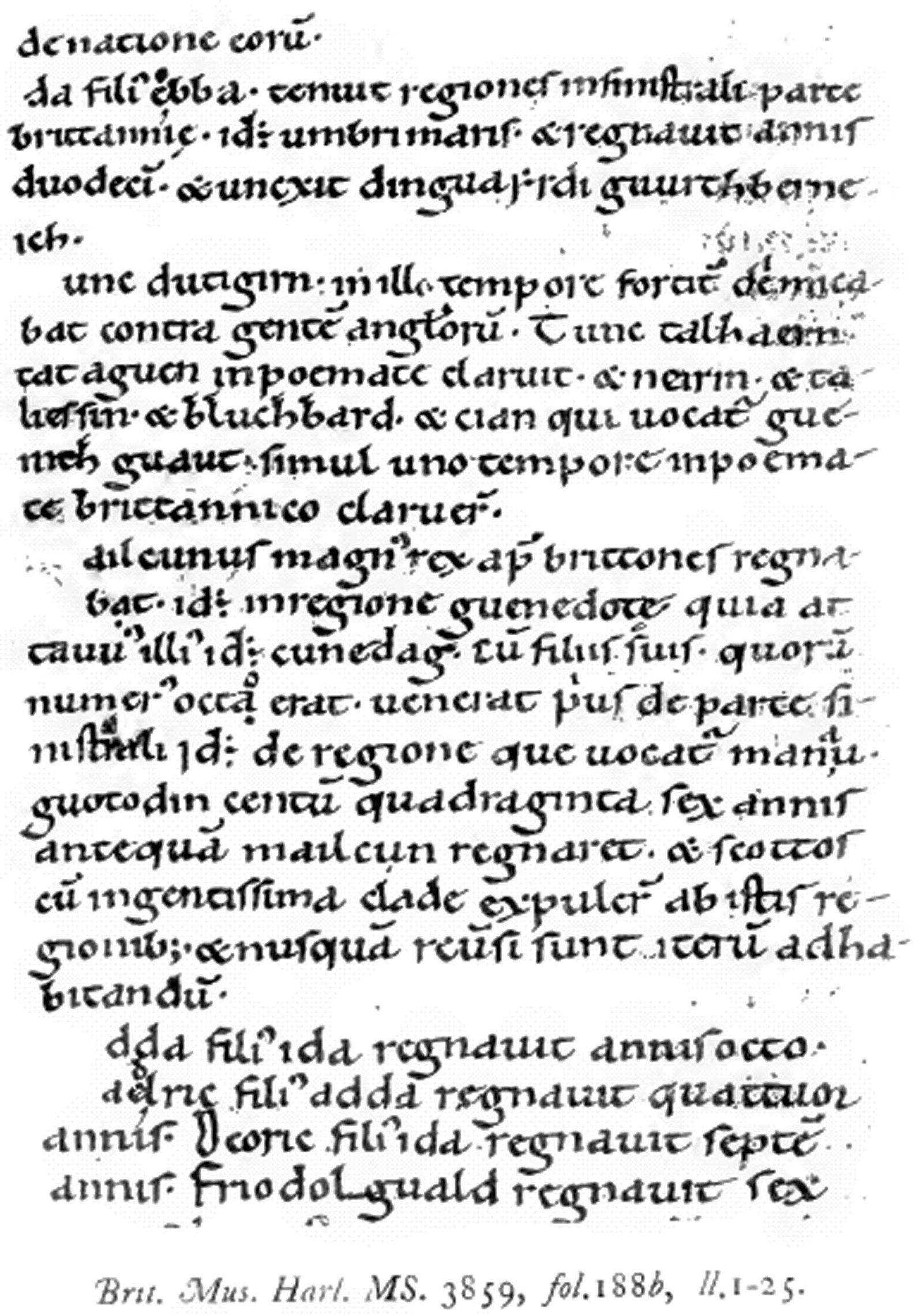
The Battle at the Celidon Wood first appears in the Historia Brittonum, written in c. 830. This is the earliest surviving document to describe Arthur’s career, and it presents a list of 12 battles at which he fought the Saxons. Here is the passage which mentions the Battle at the Celidon Wood:
“Then it was that the magnanimous Arthur, with all the kings and military force of Britain, fought against the Saxons. And though there were many more noble than himself, he was twelve times chosen their commander, and was as often conqueror… The seventh in the wood Celidon, which the Britons call Cat Coit Celidon.”
According to this account, Arthur led an alliance of kings and military leaders into battle against the Saxons. The seventh conflict was here at the Celidon Wood. Aside from that, the only information contained here is the fact that it was called by the Britons ‘Cat Coit Celidon’.
The word ‘Cat’ is Old Welsh for ‘battle’, while the word ‘Coit’ means ‘wood’. Therefore, the phrase ‘Cat Coit Celidon’ simply means ‘the battle of Celidon Wood’. This might appear to be superfluous information, not revealing anything new about the battle. However, the fact that the writer of this account specifically tells us what the Britons called this battle, while not mentioning the same for the other battles, may well indicate that this conflict was particularly notable to the Britons for some reason.
The Battle at the Celidon Wood in Later Records
The idea that this battle was particularly notable is supported by the prominence that it receives in later tradition. It has a very special importance given to it in Geoffrey of Monmouth’s Historia Regum Britanniae. And while we cannot state this with certainty, it may well be the subject of a fascinating Welsh poem.
This battle site also has the rare privilege of featuring in later medieval romance tales about King Arthur, such as in the Vulgate Estoire del Saint Graal.
Geoffrey of Monmouth’s Historia Regum Britanniae
In about 1137, Geoffrey of Monmouth wrote the Historia Regum Britanniae, which contains a detailed account of Arthur’s entire reign. In his account of Arthur’s Saxon campaign, he does not include all of the 12 battles mentioned in the Historia Brittonum (perhaps because not all of those 12 battles were actually against the Saxons). Yet, the Battle at the Celidon Wood is included, and it has a prominent role.
Geoffrey explains that Arthur defeated the Saxons near some rivers next to Lincoln, which almost certainly correspond to the Battles on the River Dubglas from the Historia Brittonum. As the Saxons fled, Arthur pursued them. The account claims that this pursuit continued all the way to the Celidon Wood, where the next battle occurred.
This narrative skips the Battle on the River Bassas, which comes between Dubglas and Celidon in the Historia Brittonum’s list. This may be because Geoffrey’s account is abbreviated, meaning that Arthur actually pursued them first to Bassas and then on to Celidon. Or, perhaps the Battle on the River Bassas occurred elsewhere in Arthur’s career.
The Battle and Its Aftermath
In any case, the Battle at the Celidon Wood occurred at some point after Dubglas, and it involved Arthur pursuing them to this location. Geoffrey’s account reads as follows:
“Here they again joined battle with the Britons, and made a brave defence, whilst the trees that were in the place secured them against the enemies’ arrows. Arthur, seeing this, commanded the trees that were in that part of the wood to be cut down, and the trunks to be placed quite round them, so as to hinder their getting out; resolving to keep them pent up here till he could reduce them by famine. He then commanded his troops to besiege the wood, and continued three days in that place.”
After this three-day siege, the Saxons begged for clemency. They said that they would leave their plunder behind and return to Germany. They even promised to pay him tribute from their home country. Arthur agreed to these terms, and the Saxons left.
Despite this, the Saxons ended up changing their minds. They sailed back to Britain before they had even reached Germany and began plundering the southwest of the country, leading to the Battle of Badon.
Harmonising the Historia Brittonum with the Historia Regum Britanniae
Geoffrey’s account seems like a major contradiction of the battle list presented in the much earlier Historia Brittonum. In that source, Celidon is the seventh battle, meaning that there are still another five battles after that until the climactic Battle of Badon.
This cannot simply be a mistake on Geoffrey’s part, since the Historia Brittonum would have been available to him as a valuable Arthurian source. Any departure from it must be intentional, which is likely due to Geoffrey having access to other sources which no longer survive until today.
There is a way of reconciling the two accounts. Many scholars agree that the Historia Brittonum’s narrative of the 12 battles comes from a battle poem. This being the case, it is likely that the battle sites were arranged into the order given by this poem for the sake of rhyming, without necessarily any regard for chronology.
Furthermore, it could easily be the case that not all of the 12 battles were actually against the Saxons. Although the writer of the Historia Brittonum introduces the account about Arthur by saying ‘then it was that the magnanimous Arthur… fought against the Saxons’, this statement of fact does not require all of the subsequent battles mentioned to have been fought against the same enemy.
Therefore, it could be that the Battle at the Celidon Wood really did immediately precede the Battle of Badon. This would mean that the intervening battles in the Historia Brittonum occurred at other points in Arthur’s career.
Cad Goddeu
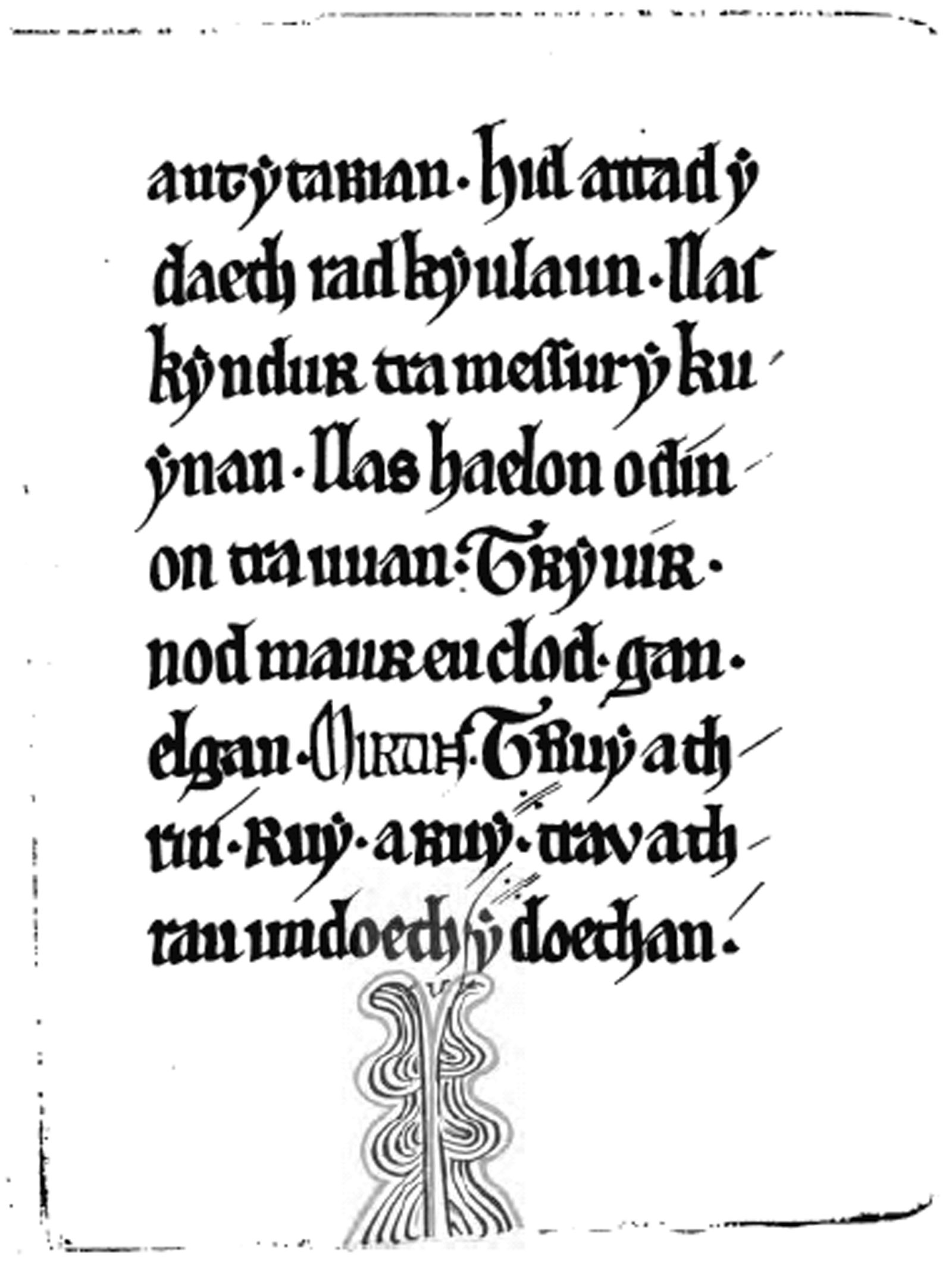
Another source which might mention the Battle at the Celidon Wood is Cad Goddeu. This is a Welsh poem found in the Book of Taliesin, a collection of poems allegedly composed by Taliesin, a bard from Arthur’s time.
This poem relates a mythological tale of a battle that occurred in a wood or forest. A magician named Gwydion causes the trees of the forest to come to life and fight for him, serving as his army during the battle.
This tale is famously difficult to interpret, but a number of scholars have suggested that it is a mythologised version of Arthur’s battle of Celidon Wood. Such scholars include Ifor Williams, Marged Haycock, and Caitlin Green. Rachel Bromwich also mentioned the possibility.
The poem, which claims to have been composed by Taliesin, places the composer at the battle. Since Taliesin was a contemporary of Arthur, this at least places the battle in the right general era. Furthermore, Arthur himself is mentioned in the poem, although it is not explicitly said that he was involved in the battle.
All told, it is a reasonable supposition that Cad Goddeu may be a mythological version of the Battle at the Celidon Wood, although it is far from certain.
Did the Battle at the Celidon Wood Really Drive out the Saxons?
Geoffrey of Monmouth’s account presents the Battle at the Celidon Wood as if it were the most significant battle in Arthur’s career, second only to the climactic Battle of Badon. It supposedly resulted in the Saxon army actually being driven out of Britain, albeit temporarily. Is there any evidence of this?
Firstly, we need to consider what Geoffrey actually claims. He does claim that Arthur drove the Saxon army out of Britain, but this is not the same as claiming that all Saxons were expelled from the island. There is certainly no evidence of a mass expulsion of the Anglo-Saxons from Britain in the first half of the sixth century. Yet, a single army being forced to leave would not be extraordinary in any way.
There is, in fact, some limited evidence for a reverse migration of Saxons in the sixth century. This is seen both from archaeology and also from literary sources. For instance, a ninth century record states that Theuderic, king of the Franks, allowed Angles from Britain to settle in his kingdom in the early 530s.
Furthermore, there is the fact that the Historia Brittonum makes a point of highlighting the name that the Britons gave to this battle, and this battle alone. This strongly indicates that there was something very special about the Battle at the Celidon Wood.
So, although there is no way of confirming it, the narrative suggested by Geoffrey of Monmouth is plausible.
Did This Army Return to Fight at Badon?
Less plausible is the idea that the army defeated at Celidon then went on fight at Badon. There are several examples in Geoffrey of Monmouth’s Historia Regum Britanniae of Geoffrey conflating two unrelated armies or groups of raiders. Therefore, it is more likely that the Saxon army which raided the southwest and ended up fighting at Badon was a separate group, unconnected to the army that Arthur defeated at the Celidon Wood.
Where was the Celidon Wood?
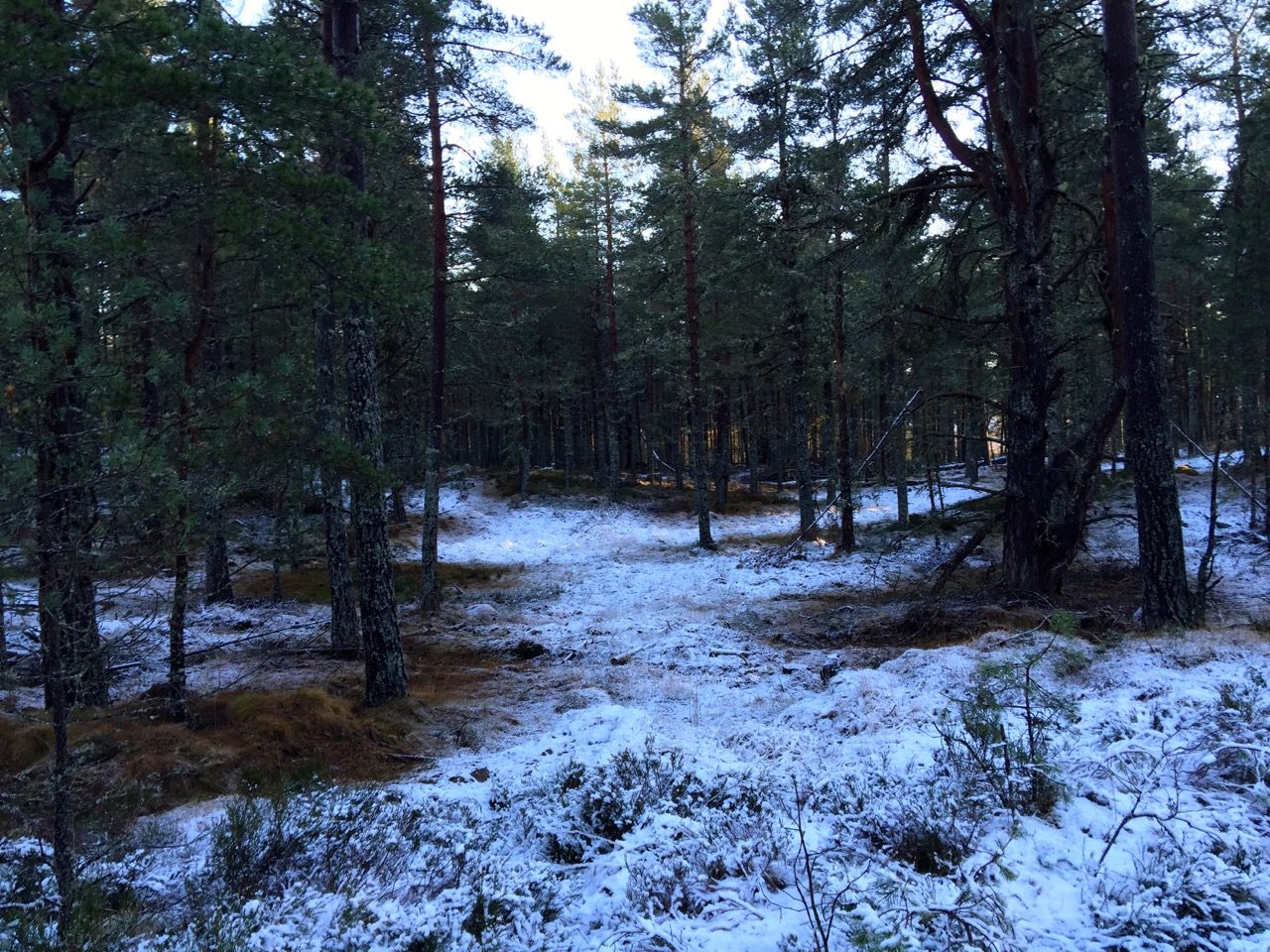
Another big question, as with the other battle sites from Arthur’s famous 12 battles, is where this battle was fought. Unlike with the other locations, most commentators agree that the Celidon Wood is related to the Caledonian Forest referred to in Roman sources. However, not everyone agrees. And even among those who do agree with this connection, there is disagreement over the precise location.
The Caledonian Forest
Let us begin our analysis by considering the most straightforward interpretation. This interpretation claims that the Celidon Wood is exactly synonymous with the Caledonian Forest. So, where was this forest?
It is referred to in a number of Roman sources. Unfortunately, they do not give its exact location. Pliny the Elder, writing in about 77 CE, wrote that Roman knowledge of the island of Britain did not extend beyond the Caledonian Forest. This would suggest that the Caledonian Forest extended south about as far as Hadrian’s Wall, since it was only in the same year that Pliny wrote that Agricola started campaigning further north than that.
A More Northern Forest?
Some scholars accept that the Caledonian Forest originally extended as far south as this. However, many others prefer to place it in the region of central Scotland, north of the Firth of Forth. One reason for this is that the actual tribe known as the Caledonii, or the Caledonians, were placed by Roman writers far to the north of Hadrian’s Wall – far to the north, even, of the Antonine Wall.
Due to this, some commentators have claimed that this battle must be unhistorical, because there is no way that Arthur could have been engaged in a battle so far to the north of Britain, and certainly not against the Saxons.
However, the Romans quickly expanded their use of the term ‘Caledonians’ to include all peoples north of Hadrian’s Wall. Likewise, they used the term ‘Caledonia’ for that whole region, not just the territory of the tribe specifically called Caledonians.
Therefore, there is no reason why the term ‘Caledonian Forest’ could not have been applied to wooded areas that extended right to the border of Hadrian’s Wall. In fact, if the main part of it was north of Hadrian’s Wall, then it would have logically had that name even if part of it extended just south of the wall.
Inglewood Forest
Some researchers have proposed that the Inglewood forest, specifically, was the site of Arthur’s Battle at the Celidon Wood. According to Christopher Bruce, Inglewood was ‘one of the forests in the Caledonian region’.
This is surely a controversial statement, since this forest was in Cumbria, entirely south of Hadrian’s Wall. Nonetheless, Pliny the Elder’s reference to the Caledonian Forest is in harmony with this.
Support from Arthurian Tradition
Furthermore, a number of references to the Celidon Wood in Arthurian tradition support a location not too far to the north. Most notably, tradition about Myrddin Wyllt (the bard who became Merlin in the Arthurian legends) claims that he fled to ‘Coed Celyddon’ after the Battle of Arderydd.
Arderydd is usually identified as Arthuret, near Carlisle in Cumbria. It seems phenomenally unlikely that an individual would have fled all the way from Arthuret to the region north of the Antonine Wall. Such an act would be excessive, to say the least. This supports the idea that the Inglewood, in the same immediate region as Arthuret, was the ‘Coed Celyddon’, or Celidon Wood, of medieval Welsh texts.
Is This Too Far North?
Placing the battle as far north as the region beyond the Antonine Wall would indeed seem incredibly unlikely. However, the Inglewood Forest was not at all very far from where we know the Saxons were active by the mid-sixth century.
From Bamburgh (which the evidence indicates was founded in c. 547) to Arthuret is a mere 60 miles, or three days walking distance. There is no reason at all why a raiding army could not have travelled that distance, where they were then met by Arthur.
This is especially so when we remember that the Saxon army, according to Geoffrey of Monmouth, was pursued by Arthur to this forest. The Saxons were not there of their own accord. They had not decided to make the long journey because it was convenient for their raids. No, they were fleeing Arthur after being defeated in battle. The battle then occurring outside their normal area of activity would not be unusual. And, needless to say, the absence of archaeology for a single campaign is not remarkable whatsoever.
Objections to This Location
Aside from the geographical issues that we have already discussed, one notable problem with a northern location like this one is that it does not make any sense whatsoever of the Saxon army’s actions. Geoffrey says that Arthur pursued them from the River Dubglas to the Celidon Wood, yet the River Dubglas was almost certainly in Lincolnshire. This would mean that the Saxon army fled north and ran away from their side of the country.
More logically, they would have fled to the south or south east, or perhaps directly east or north east. Any of these locations would have taken them towards Anglo-Saxon territory, where reinforcements could have helped them. Fleeing towards the Caledonian Forest (whether it was as far south as Inglewood Forest or not) is frankly inexplicable.
The Forest of Celyddon
However, not all scholars agree with the identification of the Celidon Wood with the Caledonian Forest. Some prefer a location further south. One theory connects the name of this forest with a figure who appears in Welsh legend called Celyddon Wledig. According to this theory, the Celidon Wood was the wood, or forest, or this man Celyddon.
Celyddon is described as the father of Cilydd and grandfather of Culhwch. Although not much is known about this figure, everything that is known connects them with south Wales, and the east in particular. This would indicate that the Celidon Wood was somewhere in southeast Wales.
The most obvious choice for a notable forest in this area would seem to be Wentwood, which is the largest ancient woodland in Wales. The Forest of Dean is another possibility.
Scholar Peter Bartrum noted that Coed Celyddon is mentioned in a Welsh tale about Tristan. He then goes on to note that, in this context, it is unlikely that the Caledonian Forest is meant. Since Tristan is usually placed in Cornwall or south Wales, this supports the idea that Coed Celyddon was somewhere in the south. Wentwood or the Forest of Dean would be plausible identifications in this context.
Objections to This Location
One weak point in this theory is the pure lack of any major supporting evidence for it. More significantly, just like with the Caledonian Forest, it makes no strategic sense for the Saxons to have fled into a forest in southeast Wales, since that was enemy territory.
The Weald
Some scholars have gone so far as to place the Celidon Wood as far south as the Weald. This is a large area that encompasses parts of Hampshire, Surrey, East Sussex, West Sussex, and Kent. The name ‘Weald’ comes from an Old English word meaning ‘forest’.
In ancient and medieval times, the Weald was densely populated with trees. It was, by far, the most significant forested area in the south east. Some medieval texts give it the name ‘Andredes weald’ or ‘Andredesleage’, meaning ‘the Wood of Andred’. This was in reference to Anderida, a Roman fort in the area.
However, these were English names for the forest, not Welsh names for it. No one knows for sure what the Welsh called it. Could this have been the Celidon Wood?
Support from Ancient Texts
One key bit of support for this is found in the writings of Florus, an ancient Roman writer. He wrote, probably in the second century CE, that Julius Caesar had ‘pursued the Britons into the Caledonian forests’. Of course, Caesar did not campaign anywhere near Scotland. His activities in Britain were restricted entirely to the south east.
Therefore, this would appear to be a demonstrable example of the term ‘Caledonian forests’ being used in the context of the south east of Britain. Presumably, the Weald is meant here.
Support from Arthurian Tradition
Additional support comes from Arthurian tradition. In Geoffrey’s Historia Regum Britanniae, there is a long passage relating some of Merlin’s prophecies. A mysterious woman (unnamed and possibly figurative) is mentioned, and the following description concerning her is very significant:
“She shall bear in her right hand the wood of Caledon, and in her left the forts of the walls of London.”
In ancient and medieval texts, ‘left’ meant north and ‘right’ meant south. We see this in the Historia Brittonum, for example, where it says that the Picts settled in the left-hand part of Britain. This was based on the concept of ‘forwards’ meaning facing the sunrise, which is in the east.
Therefore, if this mysterious and possibly figurative woman bore the ‘wood of Caledon’ in her right hand, while London was in her left hand, this would logically mean that London was to the north while the wood of Caledon was to the south.
This is in complete conflict with the conventional placement of the Celidon Wood in the north of Britain. Nonetheless, it does appear to be what Geoffrey’s text says here, and it is consistent with Florus’ reference to the Caledonian forests in the context of Caesar’s campaign.
The Weald was by far the most significant forest south of London, so the Weald is very probably the ‘wood of Caledon’ referred to in Geoffrey’s text.
Strategic Sense
Furthermore, this accords much better with the likely location of the previous battle site, Bassas. The best etymological match for the ‘River Bassas’ from the Historia Brittonum is Bassingbourn in Cambridgeshire.
Geoffrey’s account of Arthur pursuing the Saxons from Lincoln all the way to the Celidon Wood makes a lot more sense in the context of a southern location than a northern location, since Bassingbourn is directly between Lincoln and the Weald, but it is not between Lincoln and the Caledonian Forest.
The Saxon army would surely have fled further into their own territory rather than into a forest within British territory. The latter course of action would essentially be strategic suicide, while the former scenario is logical.
Objections to This Location
The biggest objection that could be levelled against this theory is the relative paucity of evidence that this forest was ever known as the Celidon Wood. Nonetheless, the little evidence that we do have seems quite definitive.
Furthermore, there is the fact that some Welsh texts (such as the ones related to Myrddin) do explicitly place a Coed Celyddon in Cumbria. Yet, there is nothing impossible about two areas having the same name. There are many examples of such a phenomenon across Britain.
A third objection is the fact that Geoffrey describes Arthur as in the middle of subduing the Picts when he hears that the Saxons had turned around and were attacking the southwest of Britain. This could be used to try to show that Arthur was already in or near the territory of the Picts (north of Hadrian’s Wall) when he defeated the Saxons.
However, it could simply be that Arthur journeyed up north to battle the Picts after the Battle at the Celidon Wood. After all, that is exactly what Geoffrey describes him as doing after the final battle with the Saxons in the south east; Arthur immediately travelled north to attack the Picts. Therefore, the fact that Geoffrey presents Arthur as fighting the Picts shortly after the Battle at the Celidon Wood does not prove that he intended to place the Celidon Wood in that region.
Conclusion
In summary, the Battle at the Celidon Wood was the seventh of Arthur’s 12 famous battles as recorded in the Historia Brittonum. It is one of the most significant of those battles for a few reasons. For one thing, it appears prominently in Geoffrey of Monmouth’s later account of Arthur’s career. It also might be the subject of a separate Welsh poem. Furthermore, there is almost universal acceptance that the Celidon Wood was identical to the Caledonian Forest from Roman records. However, not all scholars agree, and it must be said that such an identification does not make any strategic sense. A location in the south, such as the Weald in particular, is far more strategically logical and is supported by Arthurian tradition and the ancient text of Florus.
FREQUENTLY ASKED QUESTIONS
Who Won the Battle at the Celidon Wood?
The Battle at the Celidon Wood was won by Arthur and his fellow Britons.
Where was the Celidon Wood?
The Celidon Wood is usually identified as the Caledonian Forest in Scotland. However, other locations have been proposed. A particularly likely alternative is the Weald, which fits the account in the Historia Regum Britanniae.
Why was the Battle at the Celidon Wood Important?
This battle was hugely significant to Arthur’s Saxon campaign according to the Historia Regum Britanniae, because he managed to force the Saxon army to concede defeat and agree to return to Germany.
Sources
Reno, Frank, Historic Figures of the Arthurian Era: Authenticating the Enemies and Allies of Britain’s Post-Roman King, July 2015
Ashley, Mike, A Brief History of King Arthur, 2013
Field, P. J. C., Arthur’s Battles, 2008
Jackson, Kenneth, Once Again Arthur’s Battles, 1945
Green, Thomas, Britons and Anglo-Saxons: Lincolnshire AD 400-650, 2012
Bartrum, Peter, A Welsh Classical Dictionary, 1993
Gidlow, Christopher, The Reign of Arthur, 2005
Bromwich, Rachel, Trioedd Ynys Prydein: The Triads of the Island of Britain, 2014
http://www.legendofkingarthur.co.uk/battles/7-celidon-wood.htm