The Battle on the River Bassas

The Battle on the River Bassas is one of the most intriguing battles from the Arthurian legends. It was one of Arthur’s famous 12 battles against the Anglo-Saxons, mentioned in the earliest source describing Arthur career. Unlike most of the other battles, virtually nothing is known of it. In particular, the location of this battle has been the subject of intense speculation, with nothing even approaching a consensus growing around it. In this article, we will examine what the available information tells us, and we will compare the competing theories about the location of this battle.
What was the Battle on the River Bassas?
The Battle on the River Bassas was the sixth of Arthur’s 12 battles mentioned in the Historia Brittonum. It is mentioned in a passage concerning Arthur’s campaigns against the Anglo-Saxons, who had been conquering more and more of Britain since c. 430. The Battle on the River Bassas is not given an explicit date, but the Historia Brittonum suggests that it occurred at some point in the first half of the sixth century.
Despite being the sixth battle, it was only the third battle site in Arthur’s Saxon campaign. This is because battles two, three, four, and five all occurred at the second battle site.
Bassas is most famous for being extremely difficult to place. With most of the other battle sites, there is general agreement regarding a few plausible locations. However, with the River Bassas, it has proved so elusive that no consensus whatsoever has formed regarding it.
It is also notable for being perhaps the only one of the 12 battles for which there is no tradition at all outside of the Historia Brittonum. Truly, this is the most elusive and mysterious of Arthur’s 12 battles.
The Battle on the River Bassas in the Historia Brittonum
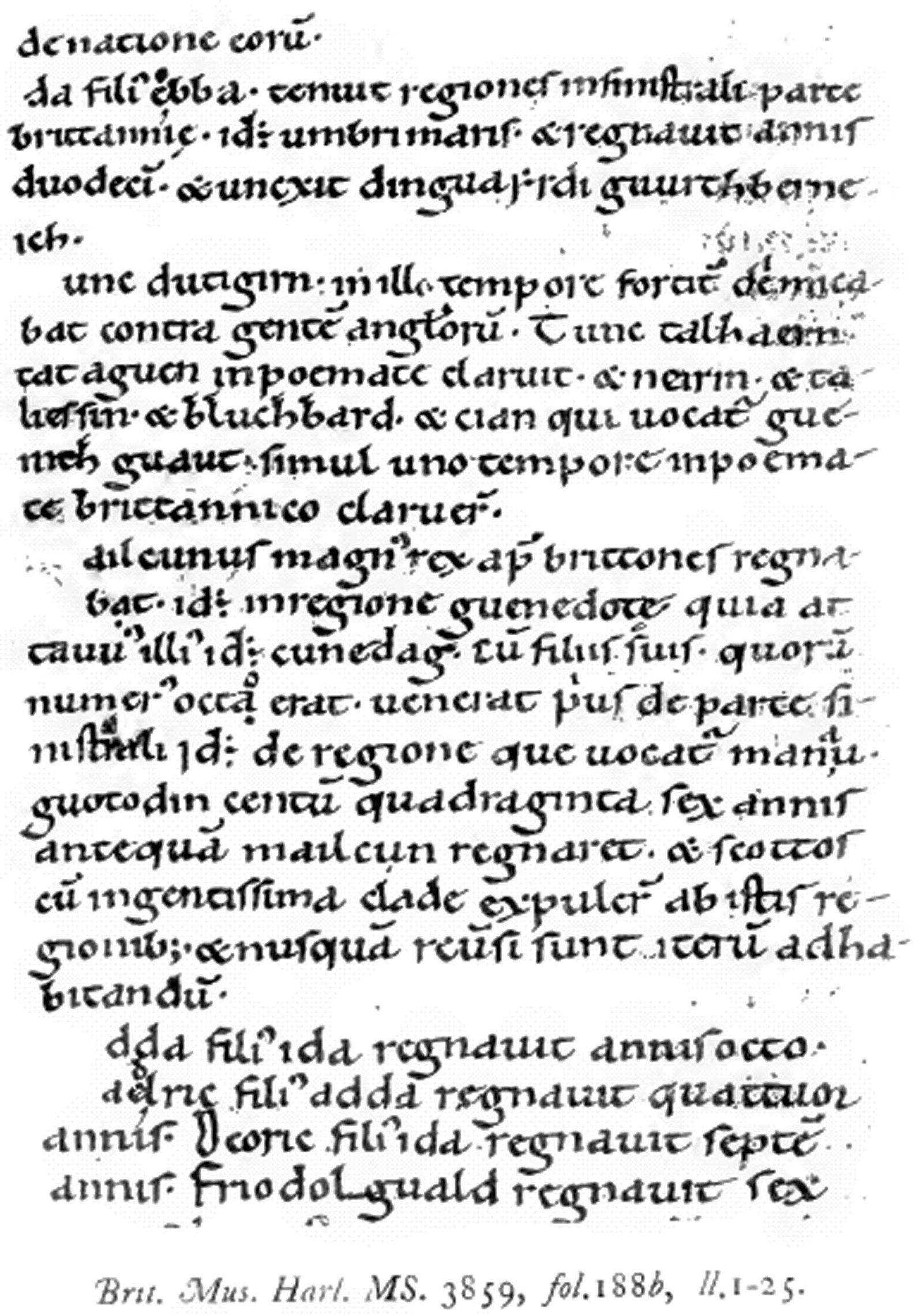
The first (and seemingly only) mention of this battle is in the Historia Brittonum, written in c. 830 and traditionally ascribed to a monk named Nennius. The account about the battle reads as follows:
“Then it was that the magnanimous Arthur, with all the kings and military force of Britain, fought against the Saxons. And though there were many more noble than himself, he was twelve times chosen their commander, and was as often conqueror… The sixth, on the River Bassas.”
This is all that the Historia Brittonum has to say about this battle. We can see that various kings and military leaders were involved in the battle, beyond just Arthur himself, although Arthur was the leader of this alliance. We can also see that the battle was fought on a river, and the name of the river was ‘Bassas’.
The Battle on the River Bassas in Later Records
As well as the mystery surrounding the location of this battle, it is also peculiar for not appearing in any later records. The battle does not make an appearance in Welsh tradition, nor is it mentioned in Geoffrey of Monmouth’s landmark Historia Regum Britanniae. In contrast, arguably all the other battles from Arthur’s campaign appear in separate traditions.
Geoffrey of Monmouth’s Historia Regum Britanniae
However, this does not mean that the presence of this battle in the Historia Brittonum cannot necessarily be harmonised with Geoffrey of Monmouth’s account. His Historia Regum Britanniae, written in c. 1137, contains a full narrative of Arthur’s campaign against the Saxons.
The account describes how Arthur was travelling up towards York, and then on the way he fought a battle on the ‘River Duglas’. Then, after pursuing the Saxons and besieging them at York, he went south again and fought another river battle.
Some might want to associate this second river battle with the Battle on the River Bassas, since the Historia Brittonum places Bassas after Dubglas. However, Geoffrey specifically places this second river battle in the region of Lindisia. This is almost certainly the ‘Linnuis’ mentioned in the Historia Brittonum as being the region in which the River Dubglas was located.
Since the Historia Brittonum directly tells us that multiple battles were fought at the River Dubglas, it is very likely that this river battle after the siege of York in Geoffrey’s HRB is just another one of those battles, not the Battle on the River Bassas.
The Possible Placement of the Battle on the River Bassas
After successfully defeating the Saxons at this river in Lindisia, Geoffrey describes how Arthur pursued the Saxons all the way to the Caledonian Forest. The account reads thusly:
“The rest in a great consternation quitted the siege and fled, but were closely pursued by Arthur, till they came to the wood of Celidon, where they endeavoured to form themselves into a body again, and make a stand. And here they again joined battle with the Britons.”
This strongly implies that the Britons and the Saxons did not fight a proper battle between the river in Lindisia and the ‘wood of Celidon’, or the Caledonian Forest. The Battle of the Celidon Wood is the next battle in the Historia Brittonum’s list, after Bassas. If we take Geoffrey’s account as being completely accurate, then the Battle on the River Bassas cannot really have been fought between the battles of Dubglas and the Celidon Wood.
On the other hand, perhaps Geoffrey’s description is just slightly inaccurate. Perhaps there was another battle between the two forces during the pursuit that ended up climaxing in the Caledonian Forest. This would not cause any major conflict with Geoffrey’s text.
If Not Then, When?
The above is, of course, just speculation. There is another possibility that would explain the absence of Bassas from Geoffrey’s account. This possibility calls into question two common assumptions:
The first assumption is that the passage in the Historia Brittonum relating Arthur’s 12 battles actually relates them in strictly chronological order. In conflict with this is the popular theory that this passage originally came from a battle poem, the likes of which we see for several other Welsh rulers from the sixth and seventh centuries. This theory is supported by many prominent scholars, including John T Koch.
If the battle sites were placed where they were in the poem for the sake of rhyming, then the Bassas could have occurred on some completely separate occasion – even a completely separate campaign.
The second assumption is that all 12 battles were fought against the Anglo-Saxons. While this does seem like the most likely possibility, it is not the only possible interpretation. The Historia Brittonum does start the passage by saying: ‘Then it was that the magnanimous Arthur fought… against the Saxons.’ However, this statement of fact does not necessarily mean that all of the battles subsequently mentioned were against the Saxons.
Other tradition attests to Arthur engaging in battles against native British kings on occasion. There is even some active support for the idea that not all of these 12 battles were actually fought against the Saxons, as evidenced by tradition regarding the Battle of Tribruit.
If we accept this in the case of Bassas, then it may be that it does not appear in Geoffrey’s account of Arthur’s campaign simply because it did not occur during that part of his career.
Where was the River Bassas?
However, the most famously elusive issue with Bassas is the issue of where it was located. Suggested sites have covered almost all regions of Britain. Unlike with most of the other battles, there is not even any agreement as to whether it was somewhere in the north of the country or somewhere in the south.
The Place Name ‘Bassas’
Even the very name ‘Bassas’ has presented scholars with serious difficulties. No one can agree on what it means. Historian Andrew Breeze stated that ‘Bassas makes no sense in Celtic’. Respected Celticist Kenneth Jackson decided that Bassas was unidentifiable, largely due to the difficult name. Because of this very difficult name, some researchers (including Breeze) have concluded that it is corrupted.
Interestingly, one manuscript of the Historia Brittonum lends some support to this viewpoint. Although it is not the earliest version of this document, the manuscript in question records this place name as ‘Lusas’ rather than ‘Bassas’. Nonetheless, it seems that most scholars agree that ‘Bassas’ is closer to the correct name, despite being unidentifiable today.
There have been some attempts to devise a sensible Celtic etymology for ‘Bassas’. Many scholars suggest that it is related to the Welsh word ‘bas’, which means ‘shallow’. However, this would not explain the second part of the word ‘Bassas’. Furthermore, there are apparently no rivers in Britain today which preserve this word as part of their name, which makes it evidently unlikely that it was used as the name of a river.
A similar explanation is the Latin word for ‘low’, which is ‘bassus’. This, at least, would go further towards explaining the second half of the name. However, it is not common for place names in Britain to be named after Latin words, which makes this unlikely.
Another explanation is that it comes from the Anglo-Saxon personal name ‘Bassa’. There are a number of places around Britain with this element in their name. However, some scholars feel that it is unlikely that the battle site would be remembered by the Britons under an English name. Others, in contrast, feel that this is perfectly possible if the battle took place within what was already Saxon territory.
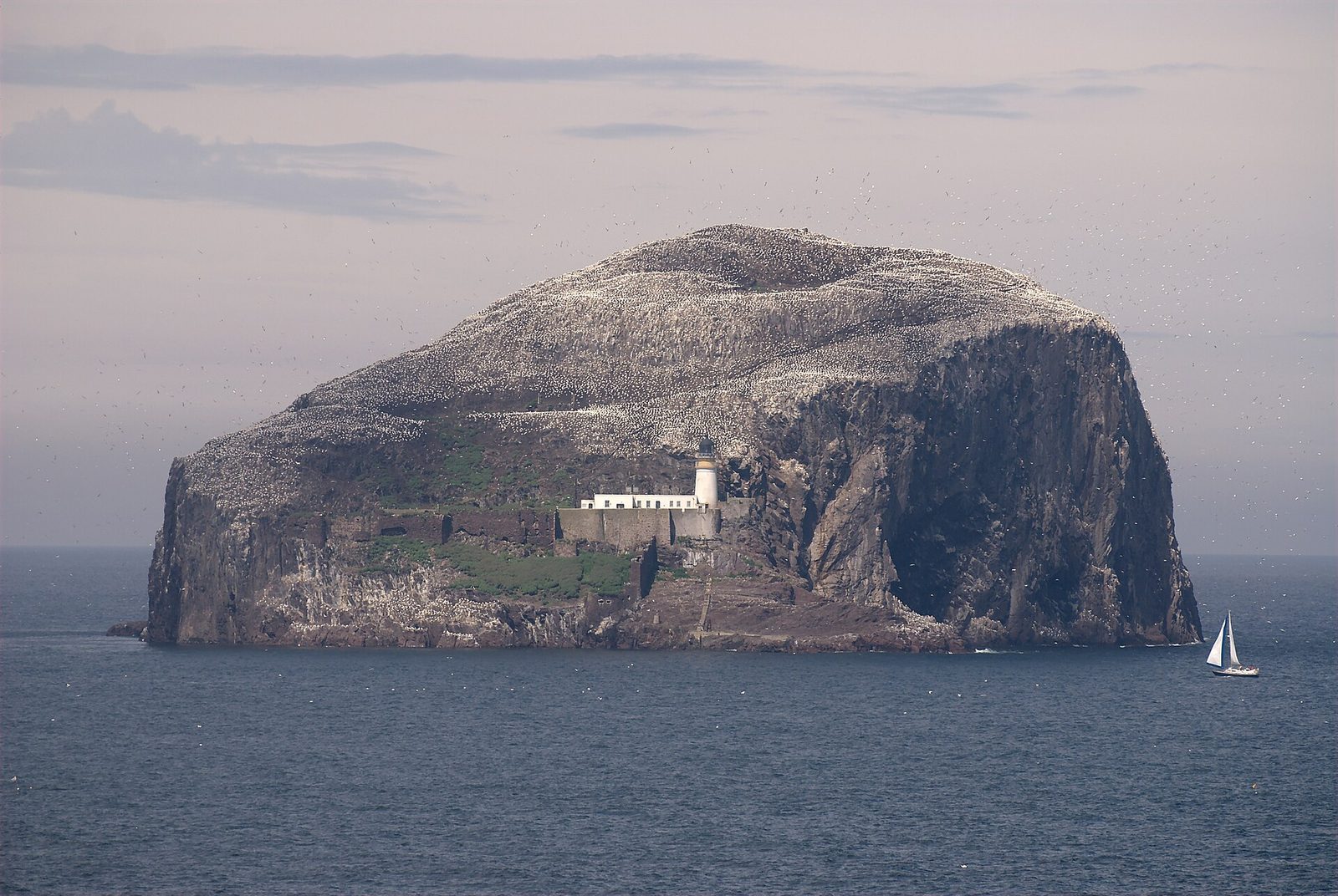
Bass Rock, Firth of Forth
One of the most commonly-suggested locations (probably just because it is rather famous in its own right today) is Bass Rock in southeast Scotland. This is in the Firth of Forth region. It is an enormous rock mass, reaching 350 feet in height, about 1 mile from the shore.
The obvious attraction with this location is the name ‘Bass’. Beyond that, there is very little to recommend this theory.
Objections to This Location
One easy objection to this location is the fact that it is not a river. Yet, the Historia Brittonum clearly refers to the ‘River Bassas’. It might be argued that one of the nearby rivers on the mainland might have been named after this rock mass, although this seems like a stretch.
Furthermore, some scholars have argued that the ‘Bass’ in this place name is much more recent than the Arthurian period. Scottish place-name expert Peter Drummond argues that it likely comes from the word ‘bass’ in the sense of a type of basket to carry fish, and that it was likely named after that by the local fishermen due to its appearance.
Dunipace, Falkirk
Another location in Scotland that has been suggested is Dunipace, Falkirk. This is a village on the north bank of the River Carron. Two mounds just next to the river are called the ‘Hills of Dunipace’. According to those who would place Arthur in this area, the place name ‘Dunipace’ means ‘Hill of Bass’, therefore arguably being the original Bassas.
Interestingly, on the south bank of the River Carron, there is an ancient ruin which was recorded in the 13th century as being ‘Furnus Arthur’, or ‘Arthur’s Oven’. This has been used to support the idea that Arthur was active in this area.
Objections to This Location
The principal objection to this theory is the fact that deriving the last half of ‘Dunipace’ from the word ‘Bass’ is rather arbitrary, and deriving it from ‘Bassas’ is even more so. Many scholars derive it from the Latin word for peace, which is ‘pax’, concluding that it means ‘Hill of Peace’.
On the other hand, there are scholars who argue that it comes from the Gaelic word ‘bais’, meaning ‘death’. Could this Gaelic word have evolved into ‘Bassas’ for the writer of the Historia Brittonum? It is an interesting conjecture, although unprovable. The oldest spelling of Dunipace appears to be ‘Dunipais’. Whether or not this could have come from ‘Bassas’ (or they shared an origin), there is no active reason to think that this was the case.
There is also no evidence that either of the two rivers in the area, the Carron and the Bonny, were ever known as the Bassas.
Cambuslang, Glasgow
A surprisingly popular suggestion is Cambuslang, Glasgow. This is a town within the boundaries of Greater Glasgow. It is just south of the River Clyde. According to this theory, the ‘bus’ part of the name ‘Cambuslang’ comes from ‘Bassas’.
In support of this theory is the fact that the church in this town is believed to have been founded by Cadoc, an associate of King Arthur. Furthermore, in the account about this founding (contained in the 11th century Life of St Cadoc), it is said that a powerful king named Caw was slain by another British king during a battle at this site.
Caw is mentioned in a number of Arthurian records. His son Hueil is recorded as fighting against Arthur and being slain by him. Perhaps Arthur was also the king who fought and killed Caw at Cambuslang. The record about Caw being killed says that ‘by devilish impulse [Caw], with troops of [his] plunderers, arrived on these coasts for the sake of pillaging.’ Therefore, we might even suppose that Caw was working with the Saxons against his fellow Britons.
Objections to This Theory
The primary objection to this theory is that there is no reason to believe that the place name ‘Cambuslang’ has anything to do with ‘Bassas’. It seems that the overwhelming majority of scholars agree that the element ‘Cambus’ is an entire word in its own right, signifying a bend in a river. The town of Cambuslang is, indeed, on a notable bend on the River Clyde.
Therefore, there is no evidence that the ‘bus’ part was a separate element which could potentially be connected to ‘Bassas’.
Furthermore, there is no evidence that the River Clyde was ever known as the River Bassas. The Britons knew this river as the ‘Clut’ or ‘Clud’.
Baschurch, Shropshire
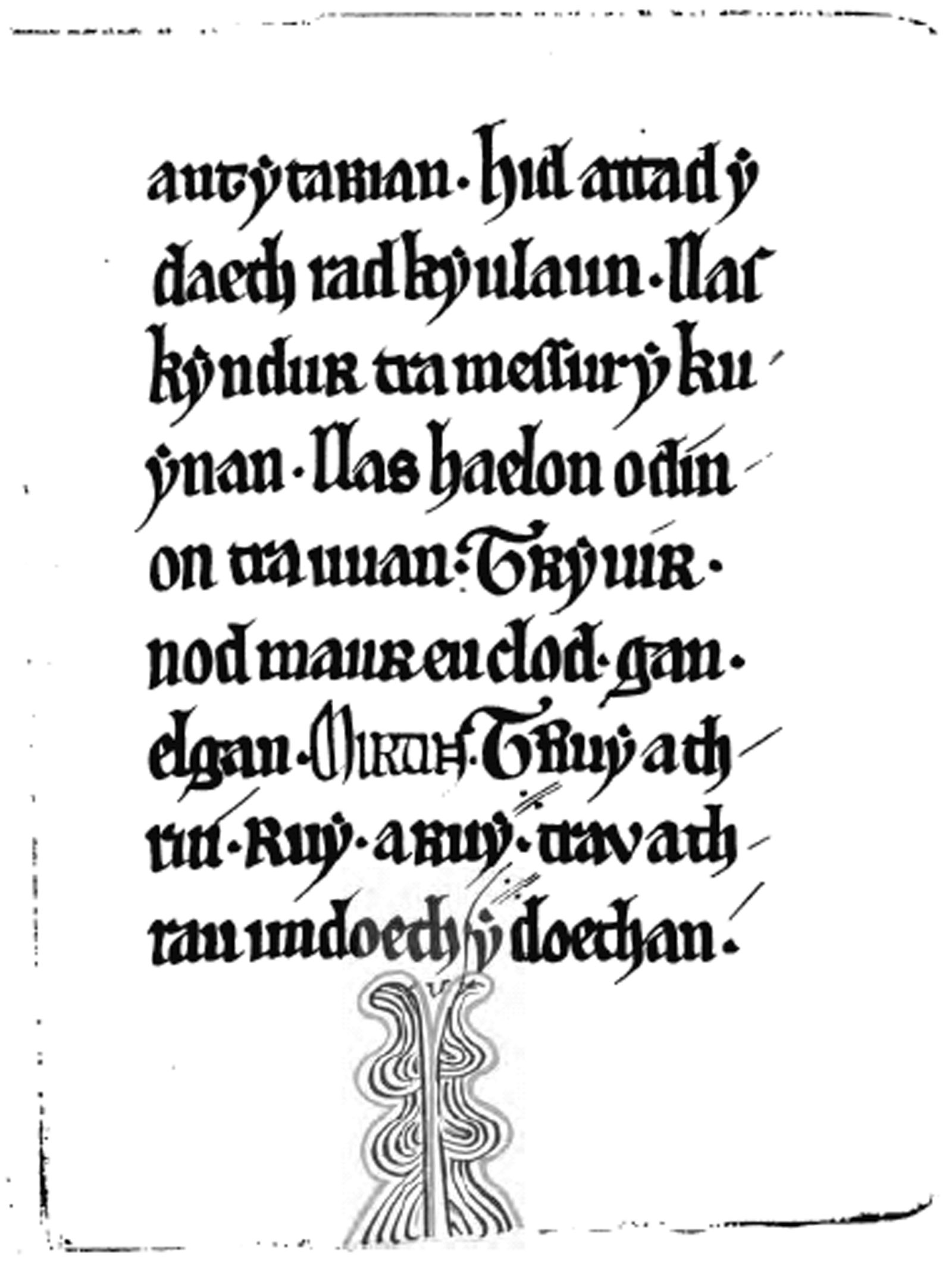
A much more convincing theory is that Bassas was somehow connected to Baschurch. This is a large village in Shropshire, near the eastern border of Wales. Welsh records refer to this area as ‘Eglwyssau Bassa’, which means ‘the Churches of Bassa’. They are referred to as such in a poem dated to the ninth century but about the death of a seventh century Welsh king, Cynddylan.
This is one of the few places which we can say for sure was known as ‘Bassa’ (almost identical to ‘Bassas’) in medieval Welsh records. This makes it a very attractive site for Bassas. There is a prominent river nearby, the River Perry.
It is true that this does not have the name ‘Bassas’, but there does not appear to be any record showing that the name of this river goes back to anywhere near Arthurian times. Therefore, it could have previously had a different name.
While not right next to known areas of Anglo-Saxon activity, it is close enough to easily have been accessible by them in the mid sixth century. On the other hand, if the suggestion that Arthur’s 12 battles were not all against the Saxons is correct, this could have been the site of a battle between Arthur and another British king, such Cynan Garwyn. He was the king of this area and the surrounding region in the sixth century and is recorded as waging war against south Wales, which is often given as Arthur’s centre of activity in Welsh tradition.
Objections to This Location
There are no major objections to this theory. Although the name ‘Bassa’ does not perfectly fit ‘Bassas’, the final ‘s’ could easily have been added to the name for the sake of rhyming in the battle poem from which the Historia Brittonum’s account was likely derived.
Bassingbourn, Cambridgeshire
Another likely location is Bassingbourn, Cambridgeshire. In fact, in terms of etymology, this may well be the single best match for the River Bassas in all of Britain. The element ‘Bassing’ comes from ‘Bassa’ and ‘ingas’. The first part is a Saxon personal name, while the second part denotes a tribe or clan. The element ‘bourn’ refers to a stream. Therefore, Bassingbourn literally means ‘the stream of Bassa’s people’.
This is an almost perfect match with the ‘River Bassas’ from the Historia Brittonum. The River Cam flows right past this town and is presumably the ‘stream’ referred to in the name of the town.
Bassingbourn is further south than the likely location of the River Glein or the River Dubglas, but it is in the same general region of the country. It could very easily be the case that Arthur pursued the Anglo-Saxons further south into their home territory after his victories at the Battles of the River Dubglas.
While it is true that Geoffrey of Monmouth does not specifically mention this battle, this may just be due to the abbreviated nature of his narrative.
Objections to This Location
There are two main objections to this theory.
Firstly, it is deep within Anglo-Saxon territory. However, as we have just noted, it is not very far from two other uncontroversial locations for Arthur’s battles. Therefore, it would not be a stretch to propose that he pursued them further into their territory. There is no need to assume that this battle occurred near the border between Brythonic and Saxon territory.
Secondly, this location depends on an Anglo-Saxon personal name. However, since this Bassingbourn was well within Anglo-Saxon territory, there is no reason why it could not have been known as the River Bassas even within Arthur’s own time.
Conclusion
In summary, the Battle on the River Bassas is the most enigmatic of all of Arthur’s battles. It was the sixth of Arthur’s famous 12 battles, and the River Bassas was the third battle site. It is not mentioned in Geoffrey of Monmouth’s narrative, although this may just be due to his account being abbreviated and skipping some battles. On the other hand, it may be that it was not part of Arthur’s Anglo-Saxon campaign. The origin of the place name ‘Bassas’ has proven notoriously difficult to pin down, let alone place on a map. The two most likely locations are Baschurch in Shropshire and Bassingbourn in Cambridgeshire. The latter location appears to fit better with the first two battle sites in the list of 12.
FREQUENTLY ASKED QUESTIONS
Who Won the Battle on the River Bassas?
According to the Historia Brittonum, this battle was a victory for Arthur and the Britons. They defeated the Anglo-Saxons.
Where was the River Bassas?
The location of the River Bassas is unknown. However, it might have been the River Perry, just next to Baschurch in Shropshire. Perhaps the most likely location, though, is the part of the River Cam which flows right past Bassingbourn (the ‘stream of Bassa’s people’) in Cambridgeshire.
What Does ‘Bassas’ Mean?
It may come from the possessive form of the Anglo-Saxon personal name ‘Bassa’. Or, it may come from a Celtic root, such as a word related to the Welsh ‘bas’ (meaning ‘shallow’) or Irish ‘bais’ (meaning ‘death’).
Sources
Reno, Frank, Historic Figures of the Arthurian Era: Authenticating the Enemies and Allies of Britain’s Post-Roman King, July 2015
Ashley, Mike, A Brief History of King Arthur, 2013
Breeze, Andrew, British Battles 493–937: Mount Badon to Brunanburh, 2020
http://www.legendofkingarthur.co.uk/battles/6-bassas.htm https://www.earlybritishkingdoms.com/arthur/kabattles.html