The Battle of Mount Agned, or Breguoin

The Battle of Mount Agned appears in the Arthurian legends as the eleventh of Arthur’s battles against the Saxons. It is well known for being particularly difficult to identify with any location in Britain. It is also remarkable for being the only one of Arthur’s 12 battles for which two completely different names are given across the different manuscript versions. In this article, we will examine what the sources reveal about this battle and what the competing theories are.
What was the Battle of Mount Agned?
The Battle of Mount Agned was the eleventh (and thus the penultimate) of King Arthur’s famous series of 12 battles. These battles were predominantly fought against the Anglo-Saxons, who had been progressively conquering Britain since c. 430.
Little is known about this battle, since it does not receive any prominence in later records about Arthur. However, it is well known to modern scholars by virtue of two confusing factors. Firstly, the name ‘Agned’ appears to be meaningless and is notoriously difficult to connect with any location in Britain. Secondly, some manuscripts of the source text for this battle provide a completely different name for it, a phenomenon unseen for any of Arthur’s other 11 battles.
Furthermore, some scholars argue that this battle is mentioned in a Welsh poem assigned to a different victor. This is used as evidence that its connection to Arthur is unhistorical. In turn, some scholars use this to argue that Arthur himself was not real.

The Battle of Mount Agned in the Historia Brittonum
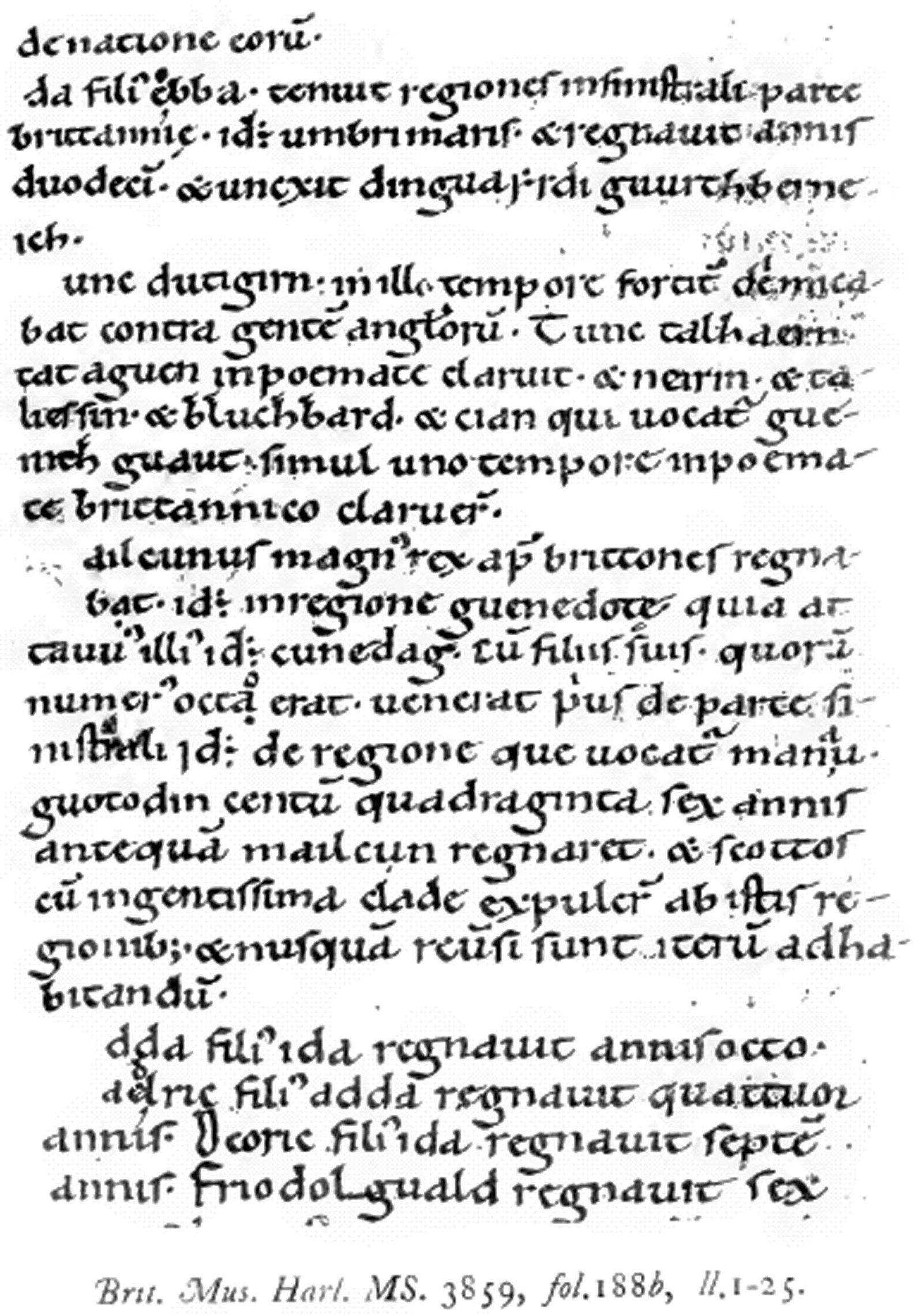
The Battle of Mount Agned first appears in the Historia Brittonum, written in c. 830. This provides the earliest record of Arthur’s career, which explains that Arthur fought against the Saxons. The account provides a very brief summary of his career by listing 12 different battles at which he fought. The account reads:
“Then it was that the magnanimous Arthur, with all the kings and military force of Britain, fought against the Saxons. And though there were many more noble than himself, he was twelve times chosen their commander, and was as often conqueror… The eleventh was on the mountain called Agned.”
According to this, Arthur led an alliance of kings and military forces against the Saxons. At this eleventh battle, they fought at a mountain called Agned. That is all the information that is provided about the battle.
Textual Variations
Unlike with most of the other battle sites in the Historia Brittonum, this battle site is subject to major variations across the different manuscripts of this text. These variations are extremely important when it comes to correctly understanding the nature of this battle.
A tenth century manuscript of the Historia Brittonum provides a completely different name for the battle site. Rather than calling the mountain ‘Agned’, this manuscript calls it ‘Breguoin’. Another manuscript records the name as ‘Breuoin’. These manuscripts also include an explanatory phrase, saying that this battle is known as ‘Cat Bregion’.
This is why some translations of the Historia Brittonum read:
“The eleventh was on the mountain Breguoin, which we call Cat Bregion.”
In fact, the majority of surviving manuscripts contain an allusion to this place name. Very few versions of the Historia Brittonum refer to ‘Agned’ alone. Most others, which are generally fairly corrupt and later than the ones just discussed, include both place names. For example, one common variant is ‘agned cath bregomion’.
Textual analyses strongly favour the conclusion that something like ‘Breguoin’ was in the original, and that this is not merely a later addition. In fact, while two manuscripts omit this place name, there are also two manuscripts which omit ‘Agned’. Therefore, there is no reason to favour Agned over Breguoin as the true name of this battle site.
The Corruption of ‘Agned’
A number of scholars argue that ‘Agned’ as it appears in the Historia Brittonum simply cannot be an accurate form of whatever the original word was. Some see it as a slight spelling mistake for a different place name. Others see it as a garbled combination of part of the original wording of this line. In any case, there is general agreement that ‘Agned’ does not have any discernible Brythonic meaning.
Using linguistic reasoning, Kenneth Jackson argued that ‘Agned’ is literally an impossible form in Old Welsh, since a ‘g’ before an ‘n’ was not permissible in the phonology of that form of Welsh. Therefore, he argues that it must be a corruption of ‘Angned’ (where the ‘g’, presumably, would be preserved as part of the first element of the place name, and therefore would be not affected by the following ‘n’).
However, this is still not very helpful, because as Jackson himself notes, ‘Angned’ is likewise meaningless. Therefore, his emendation is not very helpful.
Another argument comes from Keith Fitzpatrick-Matthews. He argues that the original line in the Historia Brittonum read: ‘breguoin id est cat bregion’ (which translates to: ‘Breguoin, that is, the Battle of Bregion’). He thus concludes that ‘Agned’ came from a distortion of ‘breguoin id’.
While an interesting suggestion, the leap involved in such a corruption is rather significant. This does not seem like a convincing explanation.
The Corruption of ‘N’ into ‘U’
The most convincing explanation that has so far been offered is that ‘Agned’ is a corruption of ‘Agued’. This is a known and acceptable Welsh word, and the corruption of a ‘u’ into an ‘n’ is also common and unremarkable. Therefore, this is by far the simplest explanation, requiring the fewest assumptions or leaps of logic.
Somewhat more complicated is the issue of whether this was actually a place name. The word itself, ‘agued’, means ‘death’, ‘affliction’, ‘adversity’, and the like. Scholar Andrew Breeze argues that this was, indeed, a place name. In his argument, he refers to other British place names which make reference to death, murder, etc.
Even so, the best location which Breeze could come up with was Pennango, an unknown but recorded site in southern Scotland, north of Hawick. Yet, he acknowledges that ‘ango’ here could only be, at best, a later element used in place of the original, since it does not actually come from the same root as ‘agued’. Therefore, this is not particularly convincing either.
Much more convincing is the suggestion of Graham Isaac of the University of Wales. He highlighted the fact that the Arthurian battle list of the Historia Brittonum is very likely to have originally come from a Welsh battle poem. Many leading authorities on this period accept this theory.
This being the case, the original Welsh poem could have used ‘agued’, not as a place name, but as a word. There is an example from an early Welsh poem of this word being used in a line translated as ‘a host in dire straits’. Perhaps the original Arthurian battle poem referred to how Arthur caused considerable adversity or affliction for the Saxons during this battle.
This would be similar to other statements which we see in this passage of the Historia Brittonum. For example, at the eighth battle, the account says that Arthur ‘put the Saxons to flight, and pursued them the whole day with great slaughter.’ The final battle is described as ‘a most severe contest’. Therefore, the idea that there was a line in the original poem referring to Arthur putting the Saxons under great distress (using the word ‘agued’) is not unbelievable or implausible in any way.
It is likely, therefore, that ‘Agned’ originally came from ‘agued’, a word in the original Arthurian battle poem (perhaps used at the end of a line, possibly to rhyme with the preceding ‘Tribruit’) which was mistaken for a place name by the author of the Historia Brittonum, but which some early copyists rejected following their good sense.
Cat Bregion
Another interesting detail provided by the Historia Brittonum (when following the best manuscript evidence) is that this battle was called ‘Cat Bregion’ by the Welsh. The word ‘cat’ is ‘cad’ in modern Welsh, meaning ‘battle’. So, this battle was known to the Welsh as the Battle of Bregion.
It seems superficially obvious that ‘Bregion’ is simply another variant of ‘Breguoin’. However, a number of scholars reject such an idea. They argue that this is just not possible. Kenneth Jackson explained how Old Welsh ‘gu’ and ‘g’ are not interchangeable, as they had very different sounds. This fact, combined with the ‘i’ and ‘o’ being the opposite way round, led Jackson to conclude that ‘Bregion’ and ‘Breguoin’ are totally unrelated words.
Because of this, Jackson suggested at one time that the reference to ‘Cat Bregion’ was a gloss added by someone who did not know where Breguoin actually was. He suggested that the name Breguoin simply reminded the copyist of a battle known to the Welsh as Cat Bregion, hence why the copyist identified the two, but that the two events were not the same. Later, he suggested that this could actually have been a descriptive term (meaning ‘Highlands’) based on the area in which the battle occurred.
However, Jackson himself acknowledged in a footnote that ‘Bregion’ could be a textual variant of ‘Breguoin’ (or ‘Bregomion’, as the name also appears). In fact, he says that this could ‘easily’ be the case. Textual errors, of course, need not be determined by phonological rules. Jackson himself, in the same paper, made an argument requiring an original ‘gu’ to have been miscopied as ‘g’, with the ‘u’ dropped.
Furthermore, there are countless examples false equivalencies in medieval Welsh translations of Latin texts. It was not uncommon whatsoever for the Welsh to use an approximation rather than a direct transliteration. Since ‘Bregion’ is a perfectly good and understandable Welsh word – meaning ‘hills’ – it may be that the Welsh simply chose to use this form rather than a more precise adaption of the less familiar ‘Breguoin’.
The Battle of Mount Agned, or Breguoin, in Later Records
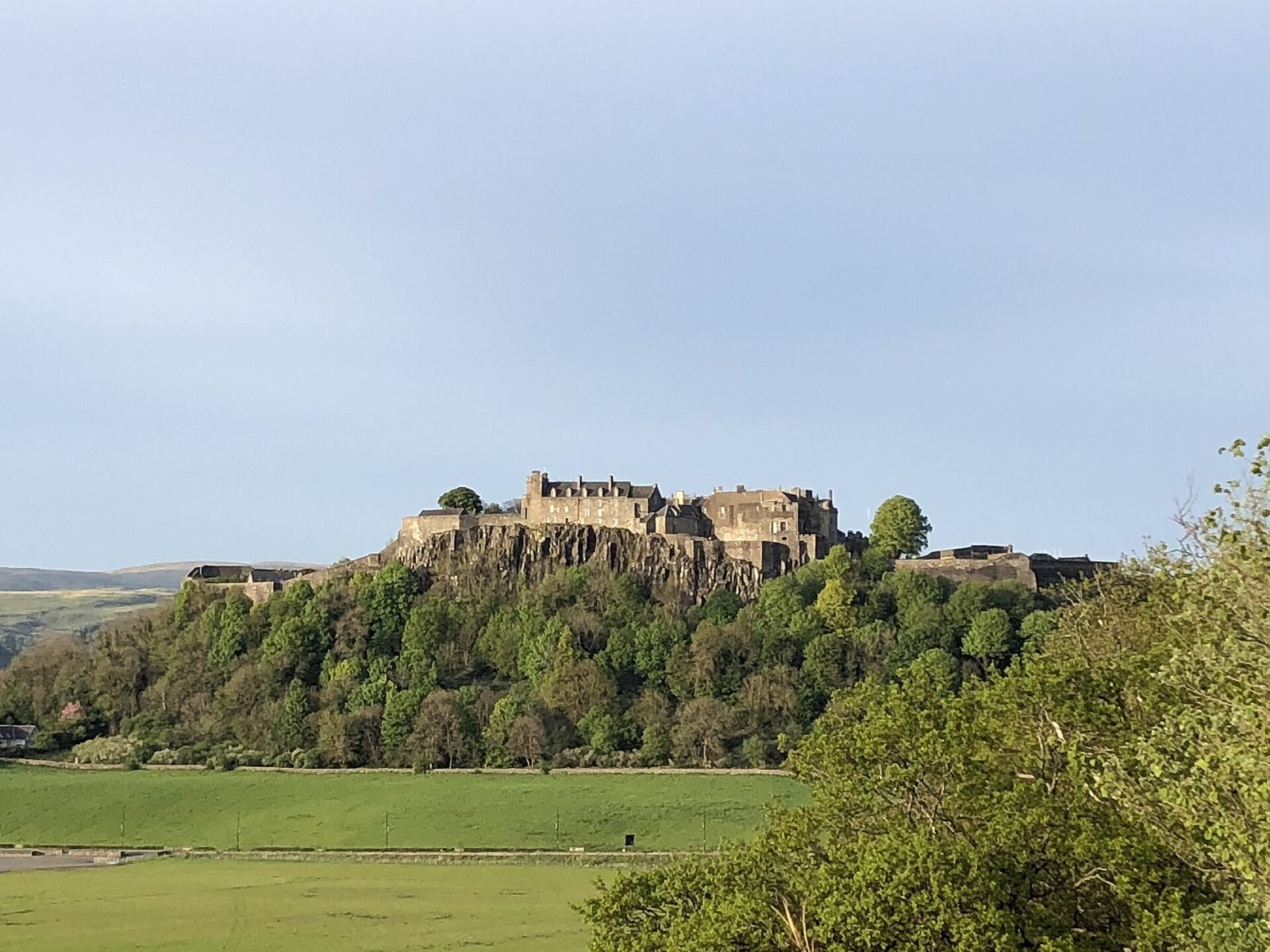
The Battle of Mount Breguoin does not explicitly appear in subsequent records about King Arthur. It is alluded to, along with the rest, in subsequent writings about his 12 battles generally. However, it appears that there are no legends or tales about Arthur written after the Historia Brittonum which specifically talk about his eleventh battle.
Geoffrey of Monmouth’s Historia Regum Britanniae
The Historia Regum Britanniae, written by Geoffrey of Monmouth in c. 1137, is a landmark piece of literature for the Arthurian legends. It describes Arthur’s whole career in quite some detail. Yet, it does not mention the Battle of Mount Breguoin. How can we reconcile this with the Historia Brittonum’s overview of Arthur’s career?
The simple reality is that Geoffrey’s HRB skips various battles which we know occurred during certain historical campaigns. Examples of this are seen in his account of Julius Caesar’s two invasions of Britain. Thus, it is not shocking to see that Geoffrey skipped some of Arthur’s battles. We can still perceive where they might have occurred within his account of Arthur’s career.
En Route to Badon
According to Geoffrey of Monmouth, Arthur was fighting against the Picts in Scotland, somewhere near the region of Dumbarton Castle, when he heard that the Saxons were attacking the southwest portion of the island. They had laid siege to Mount Badon. Arthur rushed south to stop them, which led directly to the Battle of Badon.
We can almost certainly identify the conflict with the Picts with the Battle on the Shore of Tribruit, the tenth battle of the Historia Brittonum’s battle list. And the Battle of Badon, of course, was the twelfth and final battle. Therefore, it is evident that the Battle of Mount Breguoin would have occurred somewhere en route from Scotland in the north to Badon in the south.
The Book of Taliesin
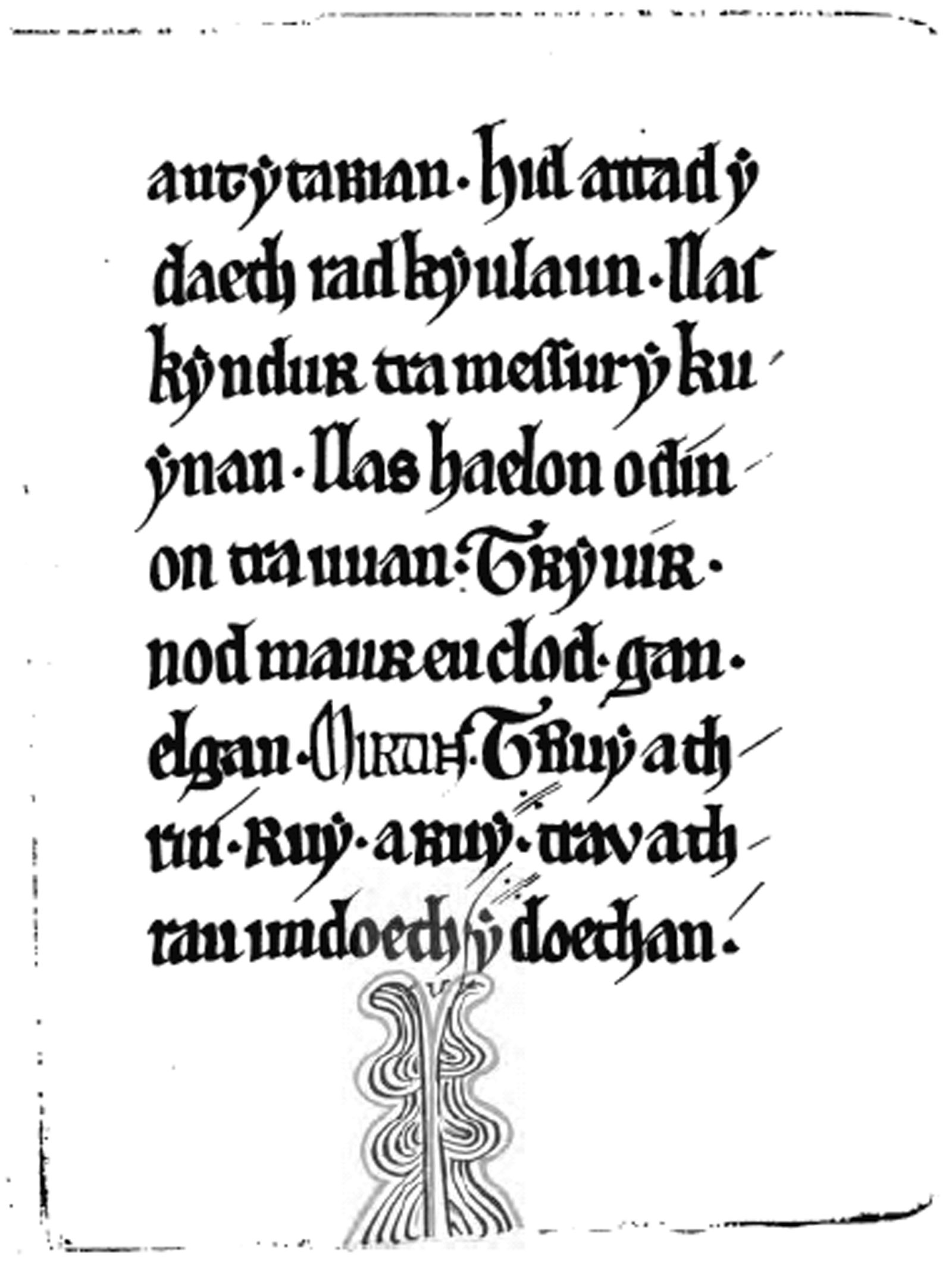
There is a very interesting potential reference to this battle from a source which actually predates the Historia Brittonum. The source is a poem found in a book known as the Book of Taliesin. Taliesin was a bard from the mid- to late-sixth century. Although not all of the poems in the Book of Taliesin are accepted as genuine, scholars generally agree that at least some of them truly do date back to about his time.
One of these poems recounts the exploits of Urien, a historical king of a territory called Rheged in the second half of the sixth century. This Urien appears in later medieval records, including Geoffrey’s Historia Regum Britanniae, as an associate of King Arthur.
In this poem, there is a reference to Urien fighting ‘kat gellawr brewyn’, that is, the Battle of the Cells of Brewyn. It is generally accepted that ‘Brewyn’ is a later form of ‘Breguoin’. On this basis, most researchers accept that Breguoin and Brewyn are the same location.
Was This Battle Misapplied to Arthur?
This conclusion makes a lot of sense. However, this has also led to a less justifiable conclusion. Scholars who would wish to see the Historia Brittonum’s battle list as a compilation of various disparate battles drawn from existing sources and anachronistically applied to Arthur use this as a supposed piece of evidence for their conclusion.
In turn, this has been used to support the theory that Arthur was not historical. Thus, the Battle of Breguoin has an important part to play in the discussion of Arthur’s historicity.
This conclusion relies on the assumption that two different battles would not take place at the same location. Therefore, so the logic goes, if there are two references to battles at the same location, they must actually be the same battle. Such logic is, of course, incorrect. There are countless examples of multiple battles occurring at the same location. There is no reason, then, why Urien and Arthur could not both have fought battles at Breguoin separately.
Arthur and Urien as Contemporaries
There is another solution to this supposed problem. Welsh tradition firmly makes Arthur a contemporary of Urien and various other figures who are usually placed in the mid- to late-sixth century. We also see this in Geoffrey of Monmouth’s presentation of Arthur’s career. It is usually assumed that these are anachronisms. However, there is very little basis for such a conclusion.
There is no reason why Arthur could not have lived later than commonly believed. As Rachel Bromwich acknowledged, there is some evidence that Maelgwn Gwynedd was a king of the late-sixth century (making him a contemporary of Urien). Gildas’ words place Maelgwn in the generation after Badon, Arthur’s final victory against the Saxons. This would easily allow Arthur to have been an older contemporary of Urien.
The Historia Brittonum explicitly says that Arthur led an alliance of kings during his battles against the Saxons. Therefore, there should be nothing surprising about finding one or more of the 12 battles mentioned in association with some other British kings from Arthur’s time.
If Urien was one of the kings led by Arthur, then it makes sense that we find a reference to one of Arthur’s battles in a poem about Urien’s exploits. Perhaps this was the battle at which Urien had the most prominent role.
Where was Mount Agned, or Breguoin?
The search for this battle site has proven particularly complicated. This is because of the two different names given for the site in the different manuscripts. Some researchers have tried to identify ‘Agned’, while others have focused their search on the place name ‘Breguoin’, while others have tried to find a location that harmonises with both place names.
As we have already seen, the evidence overwhelmingly supports the conclusion that ‘Agned’ is a corrupt form, and that the correct name for this battle site is ‘Breguoin’. This being the case, we will not examine any of the suggested locations that are based on ‘Agned’, with one notable exception.
Edinburgh
Despite the battle itself not appearing, Geoffrey of Monmouth’s Historia Regum Britanniae does specifically mention Mount Agned. This has regularly been drawn into discussions about the location of this battle.
Geoffrey of Monmouth identified Mount Agned with a place called the Castle of the Maidens. He does not explicitly say where the Castle of the Maidens was, but he associates it with Dumbarton Castle.
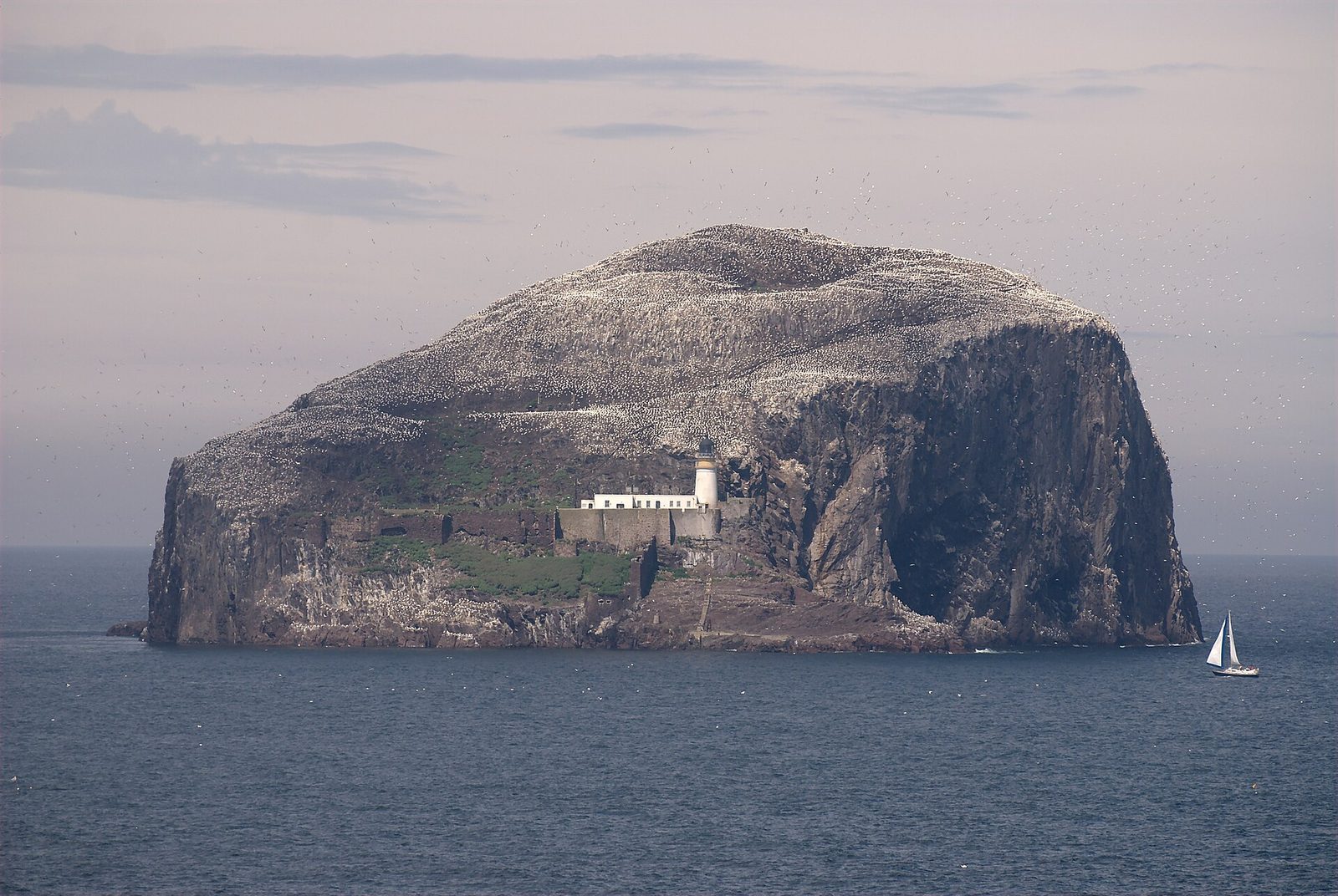
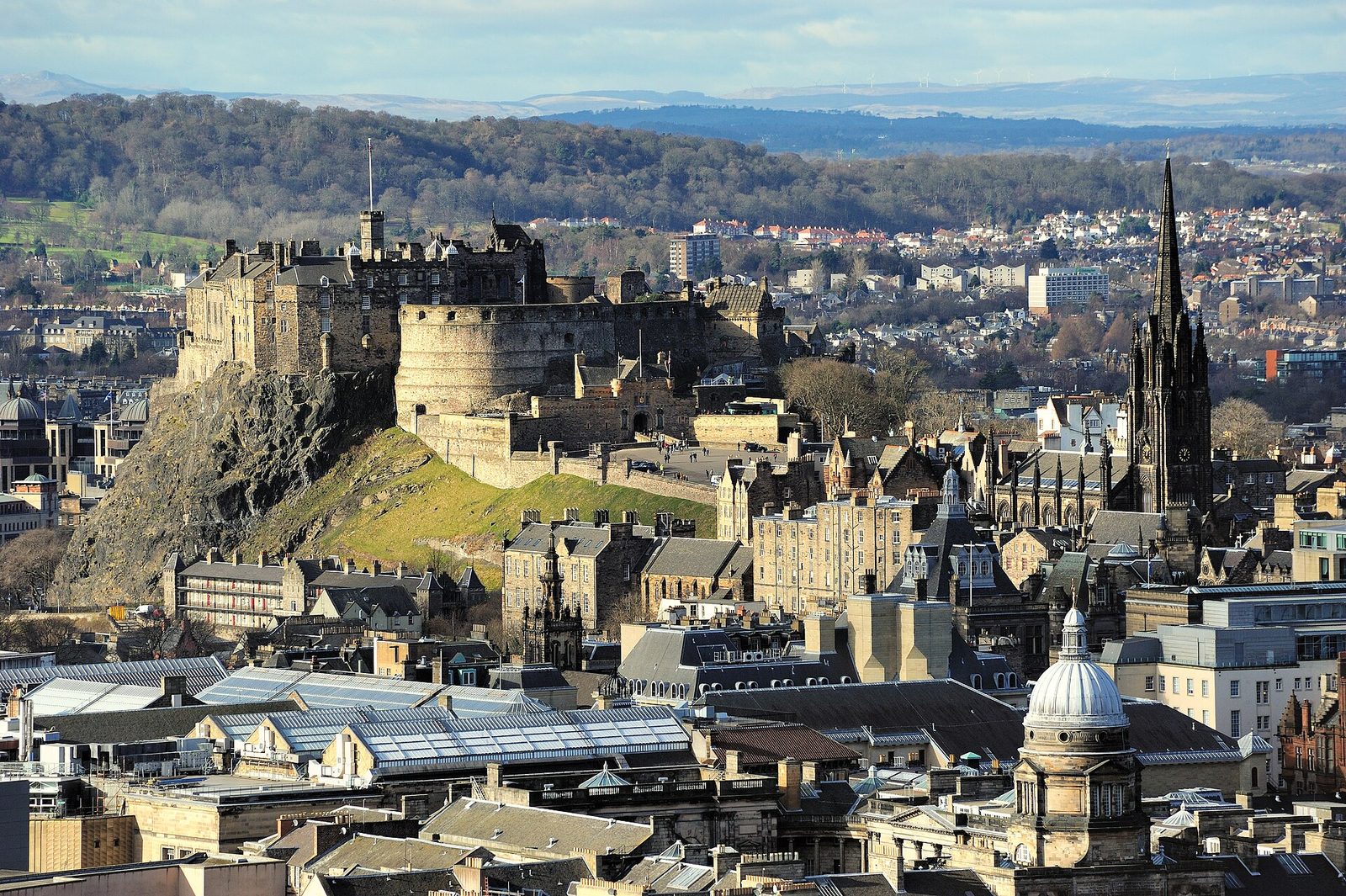
Dating from just a few years after Geoffrey wrote, there is a record of Edinburgh being referred to as the Castle of the Maidens. Subsequent medieval records also use that term for this location. Edinburgh is in the same part of Scotland as Dumbarton Castle, so it does seem evident that Geoffrey identified Mount Agned with Edinburgh.
Interestingly, Geoffrey also calls this place ‘Mons Dolorosus’, or ‘Dolorous Mountain’. It is fascinating to note that this fits perfectly with the best suggestion for the origin of ‘Agned’ – that it is a corruption of ‘agued’, meaning ‘afflication’.
Because of the early popularity (which is only now dying out) of ‘Agned’ as the correct form, a huge number of researchers have favoured Edinburgh as the site of this battle. This is encouraged by the fact that the peak of the hills in Edinburgh is called Arthur’s Seat.
In addition, the early Welsh poem Pa Gur suggests that Arthur fought a battle at a placed called Mynydd Eidyn, which is securely identified as Edinburgh. Since none of the other battle sites from the Historia Brittonum’s list have traditionally been identified as Edinburgh, this seems to confirm that Arthur’s Battle of Mount Agned really was Edinburgh.
Objections to This Location
The primary objection to this location is the fact that, as we have already seen, ‘Agned’ is a corrupt form. The correct name for this battle site was certainly the name which evolved into ‘Breguoin’, not whatever lies behind ‘Agned’.
We have already seen that the word ‘Agned’ in the Historia Brittonum very probably came from a scribal mistake for the word ‘agued’, meaning ‘affliction’. With this in mind, consider the fact that Geoffrey calls the Castle of the Maidens – that is, Edinburgh – the Dolorous Mountain. If this really was a traditional name for Edinburgh, then perhaps the same scribal mistake independently resulted in Geoffrey giving the name ‘Agned’ to this place.
Regarding the reference to Edinburgh in Pa Gur, the subsequent lines from that poem heavily suggest that it is to be identified with Arthur’s Battle on the Shore of Tribruit. Therefore, it cannot simultaneously be the site of his eleventh battle.
Cadbury, Somerset
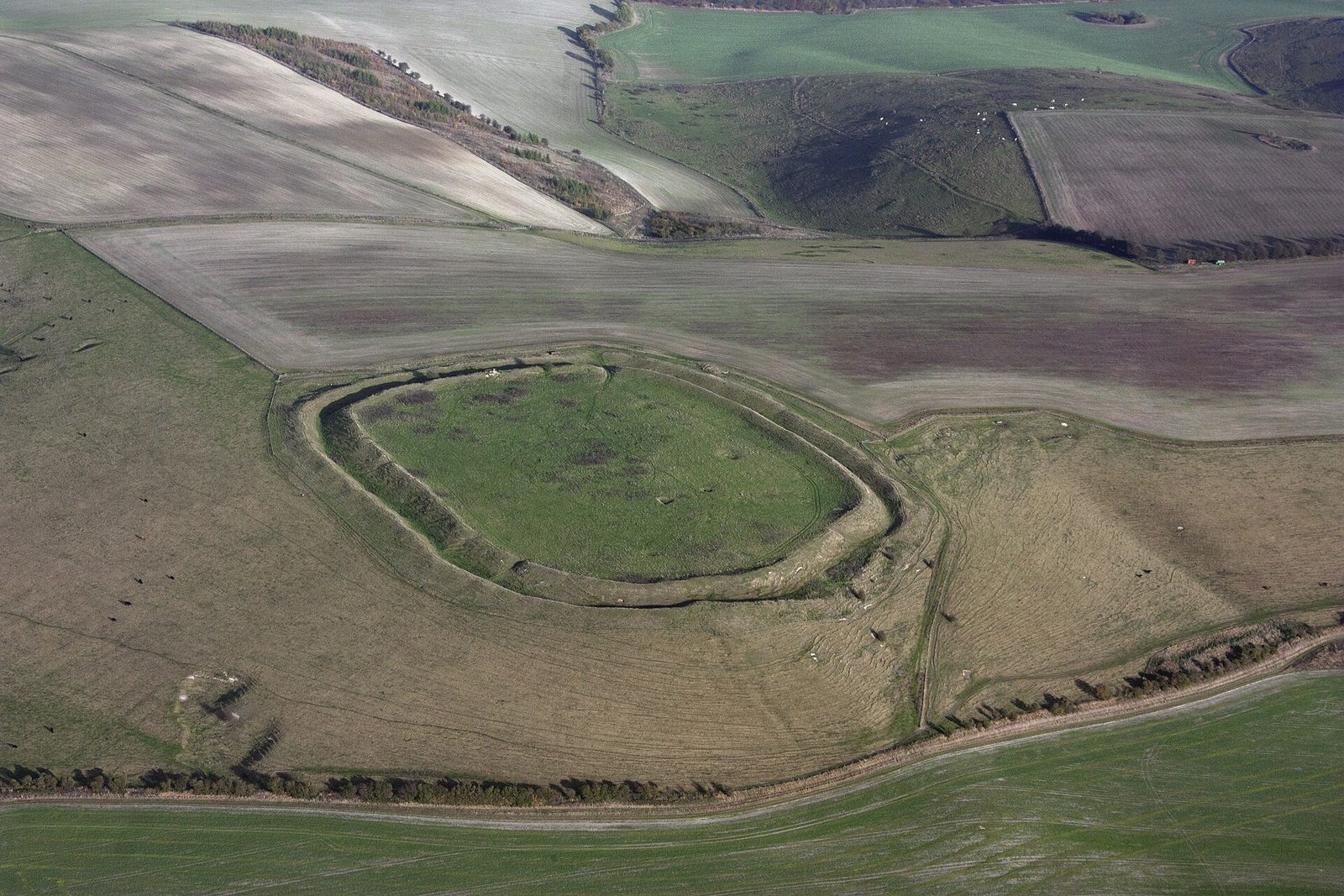
Another traditional location has been Cadbury in Somerset. This is based on two late manuscripts of the Historia Brittonum, which add the gloss: ‘in Sumerseteschire, quem nos Cathbregion appellamus.’ This gloss claims that this battle occurred in Somersetshire. This reading has traditionally been understood to mean that the battle site itself, rather than simply the battle, was called ‘Cathbregion’.
Based on this, some researchers have searched for a ‘Cathbregion’ in Somersetshire. The most obvious possibility is Cadbury Castle. Another reason this is popular is because this is fairly close to some of the traditional locations for Badon, Arthur’s final battle of the 12. This is commonly placed at Bath or at Badbury Rings in Dorset.
Objections to This Location
There are two key objections to this site, both of them linguistic. Firstly, this relies on one specific reading which clearly comes from a misinterpretation. ‘Cathbregion’ is not the name of the battle site. It comes from a misunderstanding of ‘Cat Bregion’, meaning ‘Battle of Bregion’. We find an equivalent comment placed after the reference to the Battle of the Celidon Wood, where the Historia Brittonum adds that this is called ‘Cat Coit Celidon’.
Secondly, there is no evidence that ‘Cadbury’ could come from ‘Cathbregion’. The second part, ‘bury’, comes from the Anglo-Saxon ‘byrig’. While this is somewhat closer to ‘Bregion’, the two words are still clearly unrelated.
Bravonium, Herefordshire
Another commonly suggested location is Bravonium in Herefordshire. Etymologically, this is a much better match than Cadbury. It is also based on an accurate understanding of the text of the Historia Brittonum – that is, that the battle site was called ‘Breguoin’, not ‘Cathbregion’.
The Latin ‘v’ usually became ‘gu’ in Old Welsh. Also, it was common for an ‘a’ near the beginning of a word to become ‘e’ (for example, we see this with the name ‘Ambrosius’, which became ‘Embreis’ in Old Welsh). Therefore, the evolution of ‘Bravonium’ into ‘Breguoin’ is superficially attractive. At the very least, it is a mostly viable theory.
Incidentally, this location would work well with a route from the north to Badon, if we place Badon in either Bath or Mynydd Baedan.
Objections to This Location
The primary objection to this location is linguistic. According to Kenneth Jackson, the place name ‘Bravonium’ would naturally evolve into ‘Breguein’ in Old Welsh. This is very close, though not identical, to Arthur’s ‘Breguoin’. For those who firmly abide by strict linguistic rules, this means that Bravonium cannot be the site of this battle.
However, despite Keith Fitzpatrick-Matthew’s rejection of this site as not ‘linguistically possible’, following Jackson, no reasonable person could reject this site merely on the basis of a single letter. Jackson himself acknowledged that ‘Breguoin’ certainly could be a corruption of ‘Breguein’. The corruption of an ‘e’ to an ‘o’ is an extremely mild one. For sure, it is much less dramatic than Fitzpatrick-Matthew’s own suggested corruption of ‘Breguoin id’ to ‘Agned’.
A more significant objection is the fact that Breguoin can almost certainly be identified with Brewyn, which Welsh poetry associates with Urien. Since Urien was a king active around the border of Scotland and England, it is likely that Brewyn (and therefore Breguoin) was in that area. Bravonium in Herefordshire is a considerable distance from Urien’s area of activity.
Of course, it is not impossible that Urien travelled far to the south to assist Arthur with a battle. However, it is not the most natural conclusion. Therefore, although there is nothing impossible about identifying Bravonium with Breguoin, it is not the most natural identification either.
Bremenium, Northumberland
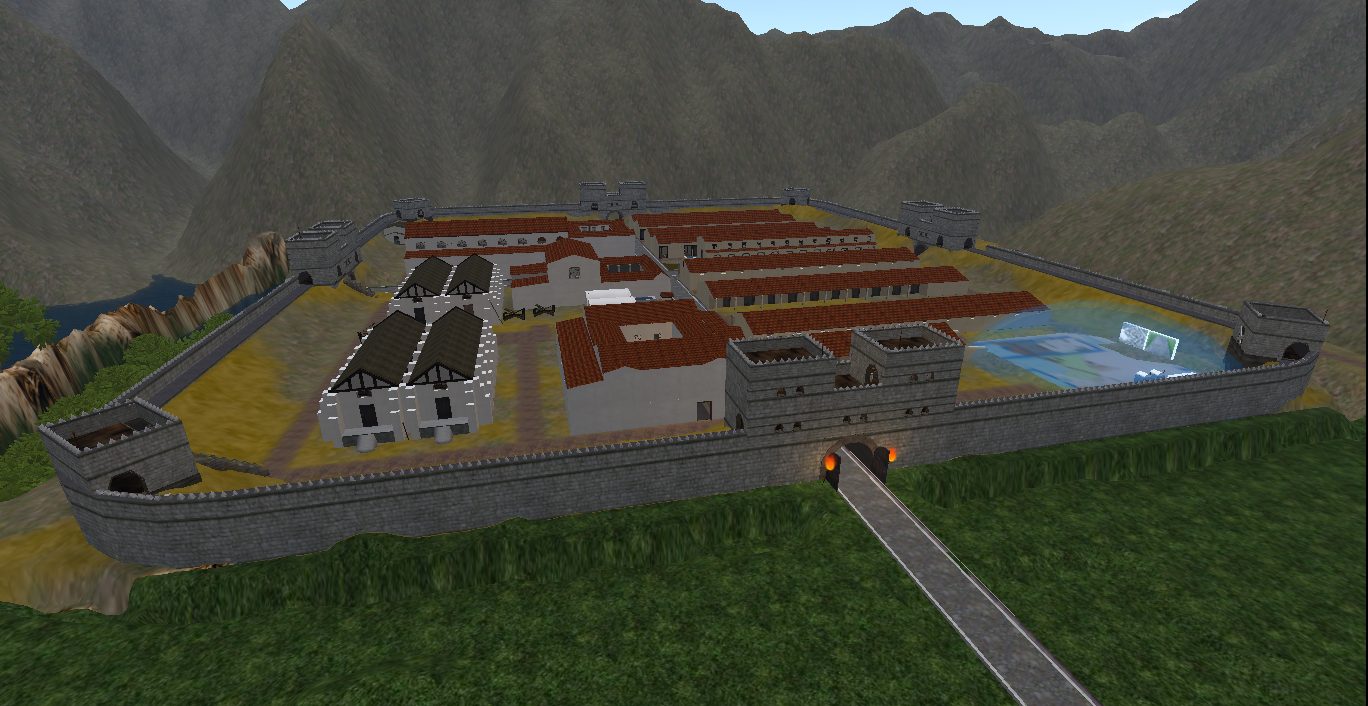
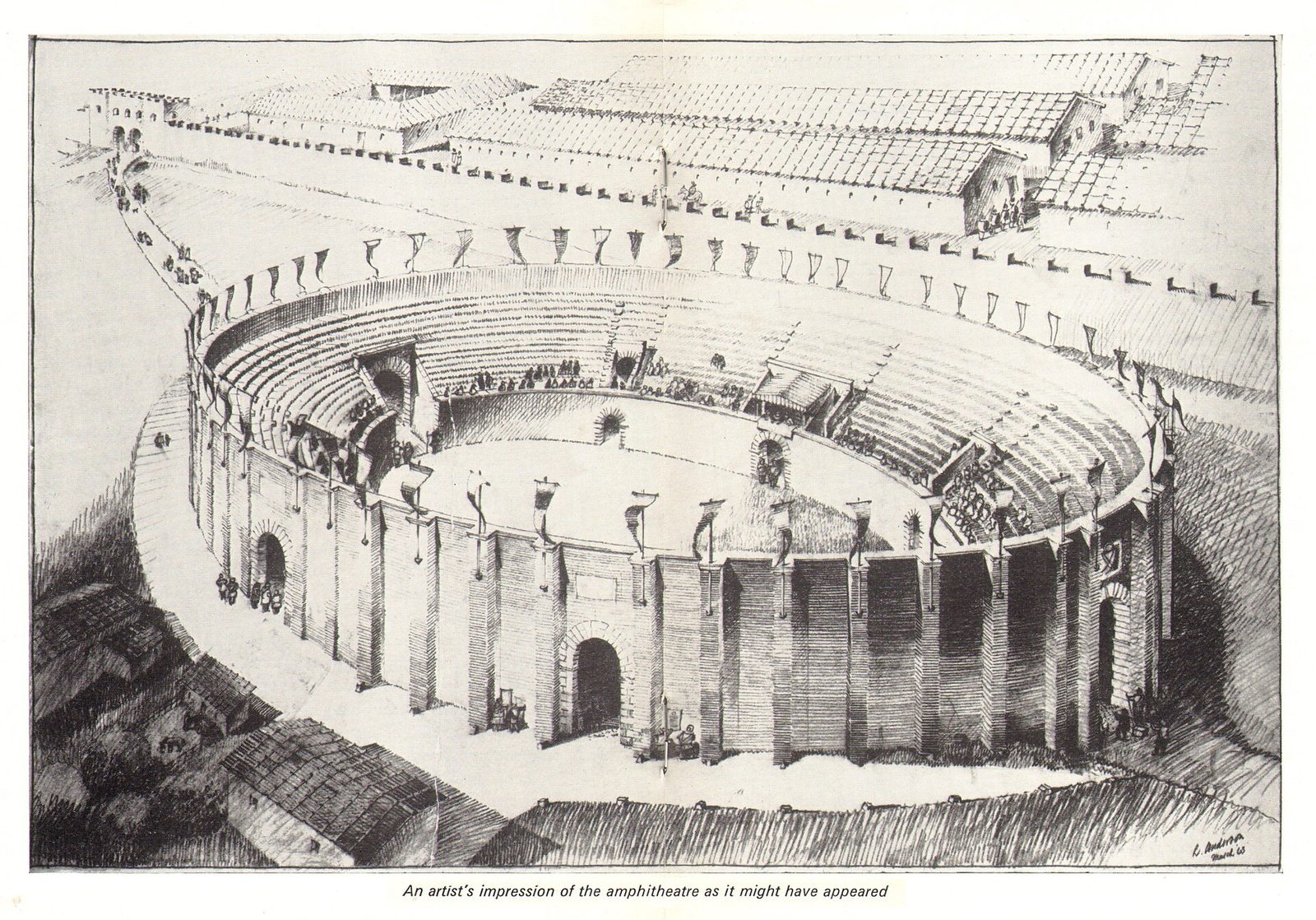
The overwhelming academic consensus today is that Breguoin can be identified with Bremenium, a Roman military fort at Rochester, Northumberland. After the publication of his landmark 1945 article about Arthur’s battles, Kenneth Jackson was made aware of the evident connection between Breguoin and Brewyn, which helped him to realise some linguistic arguments that he had previously missed.
As Jackson explained, the Latin ‘b’ and ‘m’ could become the ‘v’ sound in Welsh. This was written as ‘u’. However, a variant Old Welsh spelling for ‘u’ was ‘gu’ (even though, when going directly from Latin, ‘gu’ should come from the Latin ‘v’, not ‘b’ or ‘m’). The very fact that one manuscript of the Historia Brittonum records the site as ‘Breuoin’ rather than ‘Breguoin’ illustrates this point.
Therefore, rather than coming from a Latin ‘v’, the ‘gu’ in this place name could potentially have come from a Latin ‘b’ or ‘m’. Meanwhile, Old Welsh ‘ui’ could come from one form of the Latin ‘e’. On these grounds, Jackson suggested that the earlier form of ‘Breguoin’ could have been ‘Brevuin’, which in turn would come from ‘Bremen-‘.
The only location which fits this name perfectly is the Roman fort of Bremenium. Jackson also pointed out that this fits very well with Urien’s area of activity. Furthermore, he argues that the ‘cells of Brewyn’ mentioned in the Welsh poem could easily be a reference to the ‘ruined foundations and cellars of the Roman fort’.
There are other arguments that Jackson does not mention. The most likely location for the previous battle, at Tribruit, is Edinburgh. If Arthur was rushing south to stop a Saxon attack on Badon, the main Roman road south from Edinburgh would go right past Bremenium. Conversely, a route past Bravonium is not so clearly guaranteed, although still possible.
Furthermore, while Bravonium is not implausibly far from Saxon raiding activity, we know that the Anglo-Saxons were trying to establish themselves in Northumberland in this era, because they settled in Bamburgh just a few years later, in 547.
Objections to This Location
Most scholars have simply repeated Jackson’s identification, taking it for granted as a definitive linguistic match. However, a closer look at Jackson’s argument reveals that this case is not as watertight as is usually assumed.
Crucially, notice that ‘Bremenium’ would evolve into ‘Brevuin’, in turn evolving into ‘Breuuin’. While it is true that ‘gu’ was an alternative spelling for ‘u’, this would produce ‘Breguuin’, not ‘Breguoin’. Exactly like with ‘Bravonium’ producing ‘Breguein’, there is still a one-letter difference. Therefore, it is incorrect to say that ‘Bremenium’ is a closer linguistic match to ‘Breguoin’ than ‘Bravonium’. In fact, they are both equally far.
Furthermore, ‘Breguein’ is the spelling that we would naturally expect ‘Bravonium’ to evolve into, whereas ‘Bremenium’ could have evolved into other forms, much further from ‘Breguoin’ than Jackson’s hypothetical reconstruction. There are many examples of the Latin ‘m’ not becoming a ‘v’ (and then ‘u’ or ‘gu’) in later Welsh spelling.
Additionally, Jackson acknowledged that he is not aware of any evidence that ‘v’ became ‘gu’ as early as when these manuscripts of the Historia Brittonum were written, since the earliest examples of this phenomenon that he was aware of date to the end of the 11th century. This is never acknowledged in discussions of this subject. Yet, Jackson personally felt that there was no reason to doubt that such a change could have occurred so early.
In summary, then, the linguistic connection between ‘Bremenium’ and ‘Breguoin’ is actually not as strong as the linguistic connection between ‘Bravonium’ and ‘Breguoin’. In fact, it is slightly weaker. Yet, the evidence from Breguoin’s connection to Urien, as well as its placement in the narrative of Arthur’s career, tilts the evidence in favour of Bremenium.
Conclusion
In conclusion, the Battle of Mount Agned was more properly the Battle of Mount Breguoin. This was the eleventh of Arthur’s famous 12 battles. It seems to have occurred while Arthur was travelling south from Edinburgh, from the Battle on the Shore of Tribruit. Urien also fought at this site, possibly as one of Arthur’s allied kings. Most scholars consider Breguoin to be identifiable with the Roman fort of Bremenium in Rochester, Northumberland. However, Bravonium in Herefordshire is also a distinct possibility.
FREQUENTLY ASKED QUESTIONS
Who Won the Battle of Mount Agned, or Breguoin?
The Battle at Mount Breguoin was won by Arthur and his fellow Britons.
Where was Breguoin?
Breguoin is likely identifiable as Bremenium, the Roman fort at Rochester, Northumberland. However, Bravonium in Herefordshire is another possibility. It is more likely from a linguistic perspective but less likely in view of other evidence.
Is Mount Agned or Breguoin the Correct Form?
The textual and linguistic evidence strongly supports the conclusion that ‘Agned’ is a corrupt form. It may be from the word ‘agued’, meaning ‘affliction’, and was misinterpreted as a place name at some point. ‘Breguoin’ is certainly the more correct name for this battle site.
Sources
Fitzpatrick-Matthews, Keith, The ‘Arthurian Battle List’ of the Historia Brittonum, 2018
Jackson, Kenneth, Arthur’s Battle of Breguoin, 1949
Jackson, Kenneth, Once Again Arthur’s Battles, 1945
Sullivan, Tony, The Battles of King Arthur, 2022
Ashley, Mike, A Brief History of King Arthur, 2013
Field, P. J. C., Arthur’s Battles, 2008
http://www.legendofkingarthur.co.uk/battles/11-cat-bregion.htm