The Battle on the Shore of Tribruit

In the Arthurian legends, the Battle on the Shore of Tribruit was one of Arthur’s 12 famous battles from the Historia Brittonum. This is a particularly interesting battle, since it appears in an independent, early Arthurian Welsh poem. It is also fascinating for the extensive debate regarding the etymology of the name and its location, which has proven more difficult than in the case of most of Arthur’s other battle sites. In this article, we will examine the various different theories and see what the evidence indicates.
What was the Battle on the Shore of Tribruit?
The Battle on the Shore of Tribruit was one of King Arthur’s famous 12 battles. All 12 of these battles are usually assumed to have been fought against the Saxons. Certainly, the earliest source to mention this set of battles strongly implies this.
However, the Battle on the Shore of Tribruit appears in Welsh poetry, and the references therein appear to contradict such an idea. Rather, the poetic references to Tribruit cast it in the context of fighting against fellow Britons. We will go on to see how such apparently-conflicting sources can be harmonised.
The Battle on the Shore of Tribruit in the Historia Brittonum
The Battle on the Shore of Tribruit first appears in the Historia Brittonum, written in c. 830. It includes it in its account of Arthur’s career, during which he fought against the Saxons. The passage in question reads as follows:
Then it was that the magnanimous Arthur, with all the kings and military force of Britain, fought against the Saxons. And though there were many more noble than himself, he was twelve times chosen their commander, and was as often conqueror… The tenth was on the bank of the river which is called Tribruit.”
This passage informs us that Arthur led the kings and military forces of Britain against the Saxons. It does specify that he was ‘chosen their commander’ 12 times, which means that this alliance of kings and military leaders was involved in the battle at Tribruit.
However, this does not necessarily mean that all 12 of those battles were fought against the Saxons, although that is the most inherently logical conclusion in the absence of any reason to think otherwise.
In any case, this passage tells us that the battle took place at a location called Tribruit, and that it occurred on the bank of a river.
Textual Variations
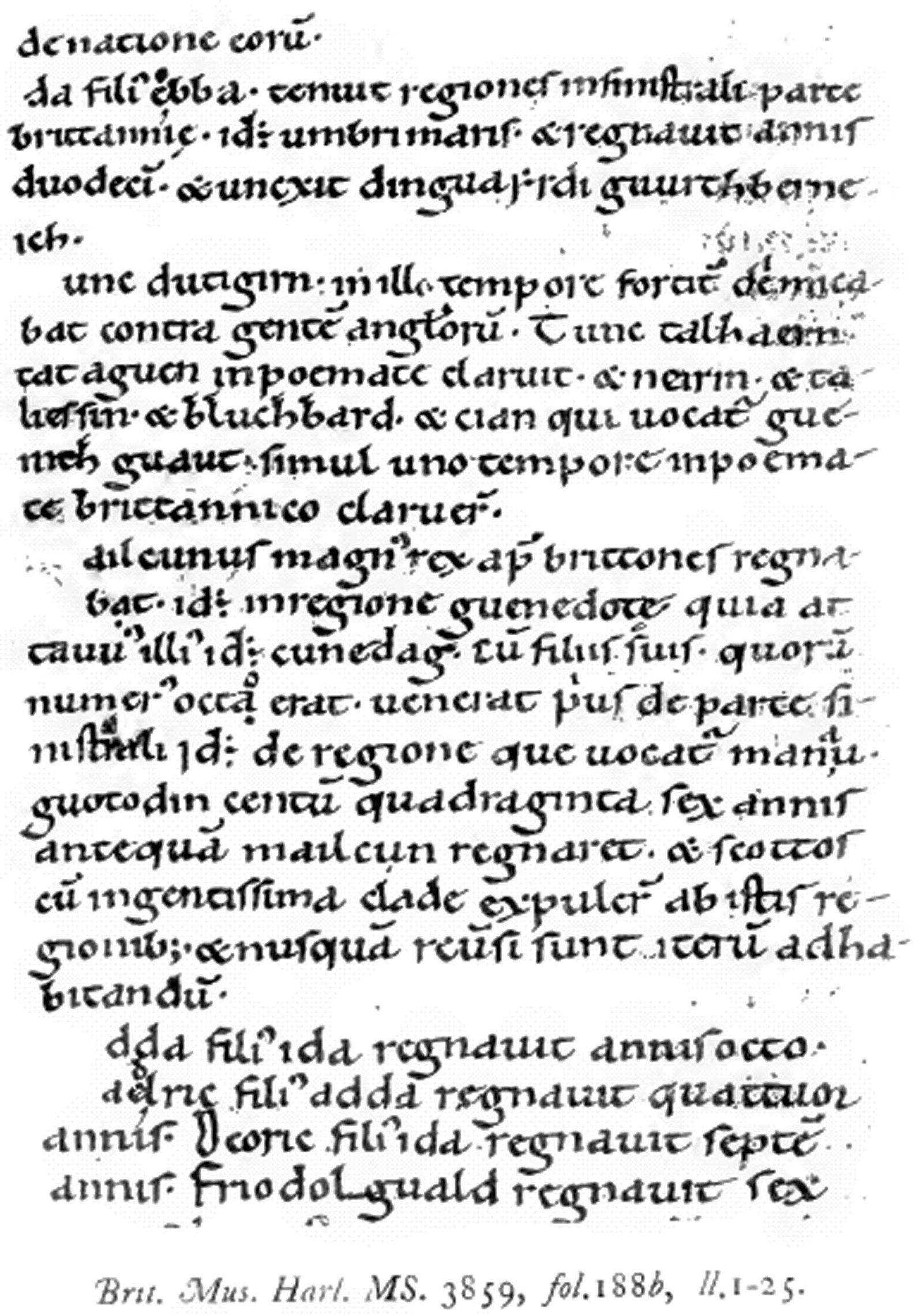
Not all manuscripts of the Historia Brittonum read the same way. One version spells the name ‘Tribuit’, without the second ‘r’. Many other manuscripts spell it ‘Ribroit’. Still another manuscript spells it ‘Trahtreuroit’, where the word ‘Tribruit’ has been slightly corrupted and fused with a prefix.
The spelling ‘Ribroit’ is easily explained as a slight corruption of ‘Tribruit’, with the first letter being dropped and the ‘u’ changed into an ‘o’.
The spelling ‘Trahtreuroit’ also involves a corruption of ‘Tribruit’. The ‘u’ has, again, been changed into an ‘o’. But before this, we see that the ‘b’ has become a ‘u’ (due to the ‘b’ and ‘u’ both being used to represent the ‘v’ sound), and the ‘i’ has become an ‘e’. All perfectly understandable corruptions.
More significantly, this form has the prefix ‘Trah’. This evidently comes from the Old Welsh ‘Traith’, since Welsh poetry closely associates Tribruit with that word.
The fact that ‘Tribruit’ really is the correct form of this place name, rather than, say, ‘Ribroit’, is shown by the fact that it appears in Middle Welsh poetry as ‘Tryfrwyd’, which would be ‘Tribruit’ in Old Welsh.
Was the River Called ‘Tribruit’?
There is one common misconception surrounding this battle. In most commentaries about it, this battle site is called ‘the River Tribruit’. However, the text does not actually say specifically that the river was called the ‘Tribruit’. What it really says is: ‘the bank of the river which is called Tribruit.’
This could mean that the name ‘Tribruit’ was applied to the river, but it could just as easily mean that Tribruit was the name of the bank. In fact, based on the Latin wording found in some manuscripts of the Historia Brittonum, some scholars (notably Kenneth Jackson) have argued that interpreting ‘Tribruit’ as the name of the bank rather than the river is the preferred reading.
In fact, the collocation of the Welsh words ‘Traeth Tribruit’ unambiguously shows that ‘Tribruit’ was the name of the bank, not the river, since ‘traeth’ refers to a type of bank or shore.
What Type of River-Bank?
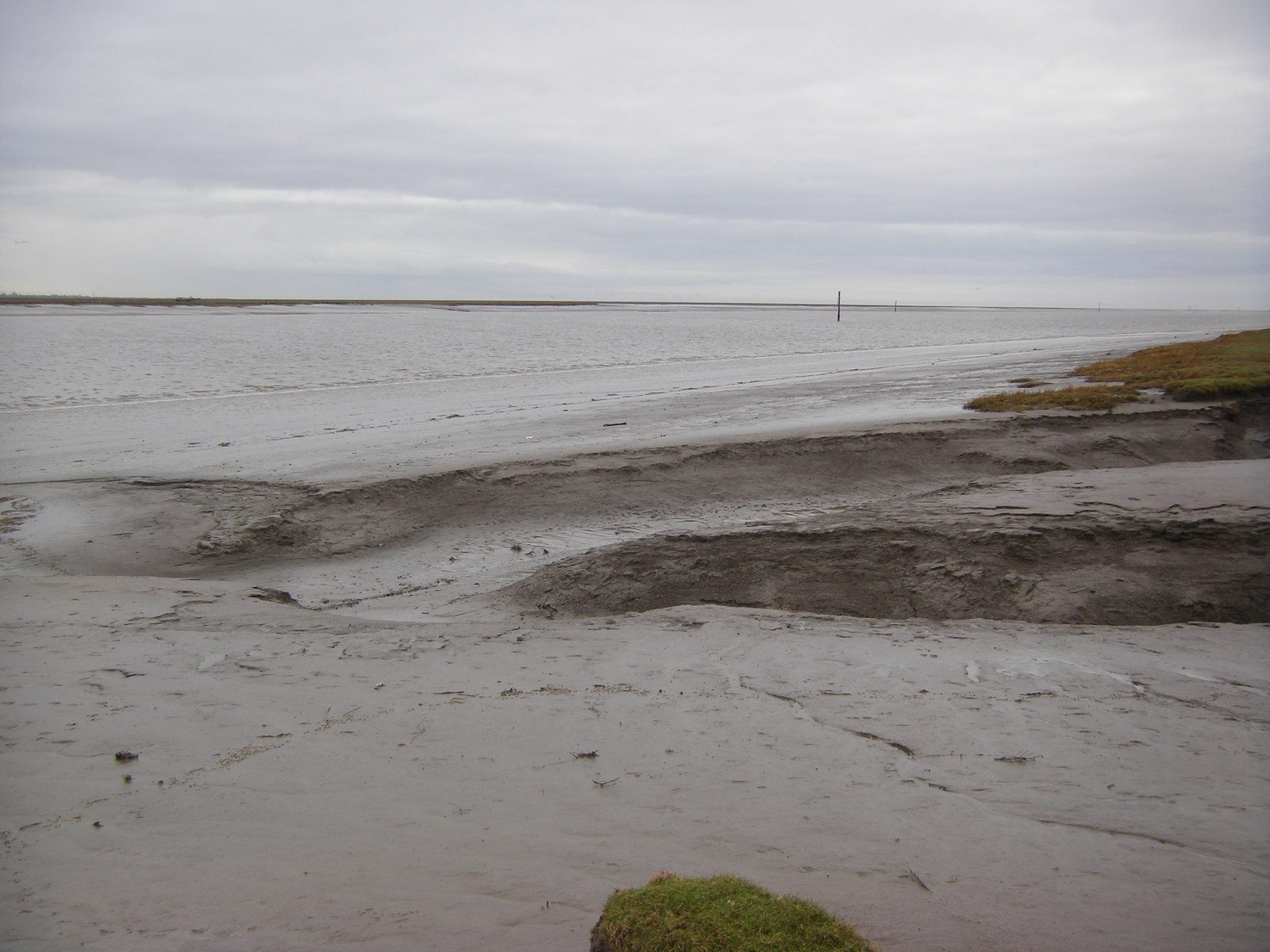
The Historia Brittonum uses a word which is usually translated simply as ‘bank’, but it has a somewhat different meaning than that English word. The word in question is ‘litus’, which refers to the shore, beach, or river bank.
The Welsh word ‘traeth’ is more specific, referring especially to the shore. It has been described as referring to the area of sand between low and high tide. Like the Latin ‘litus’, it can also be used in the context of rivers, but only to refer to the sandbanks of a tidal estuary. It cannot be used in the context of an inland river.
Since the Historia Brittonum does specifically refer to a river, this must mean that it is referring to the tidal estuary of a river.
The Battle on the Shore of Tribruit in Later Records
The Battle on the Shore of Tribruit was remembered as an Arthurian battle independently of the Historia Brittonum. This is very useful to the investigation of where it took place and who was involved.
Pa Gur
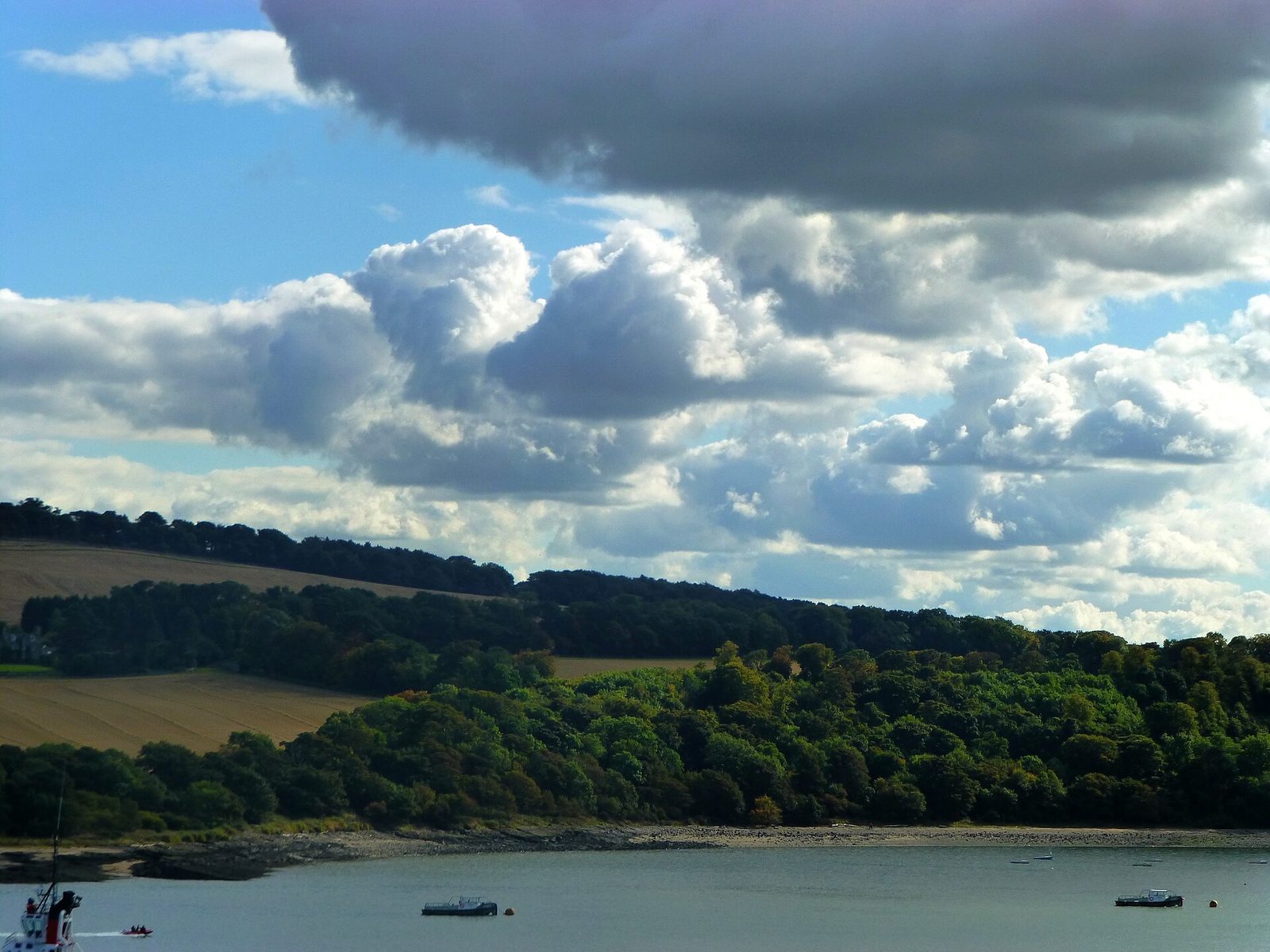
Pa Gur is one of the earliest Arthurian sources. Its date of composition is usually placed in the ninth century, although some scholars place it a century or two later. In any case, it is an early and valuable source, and clearly contains Arthurian traditions that are independent of the Historia Brittonum.
This poem describes various notable exploits of Arthur and his men. In one place, it states that a figure named Manawydd ‘brought shattered shields from Tryfrywd’.
In another place, Pa Gur states the following:
“They fell by the hundred
Before Bedwyr the Perfect,
On the shores of Tryfrwyd,
Fighting with Garwlwyd.”
Bedwyr was one of Arthur’s closest associates and eventually became the famous Sir Bedivere in the Arthurian romance legends. Although Arthur himself is not mentioned in Pa Gur as fighting at Tryfrwyd, it is usually accepted that he was the overall commander at this battle in which Bedwyr fought.
The Enemy at the Battle
Interestingly, this poem specifically names the enemy as a certain ‘Garwlwyd’. This figure is identified by Patrick Sims-Williams and others as Gwrgi Garwlwyd, a character from Welsh tradition who is both evil and made a contemporary of Arthur.
This is fascinating, because ‘Gwrgi Garwlwyd’ is clearly a British name, not a Saxon one. This means that Pa Gur presents the battle as a conflict between Arthur and a Brythonic leader, rather than a conflict between Arthur and the Saxons.
Harmonising This with the Historia Brittonum
Based on this information, what can we conclude? Well, there are two possible ways of harmonising this information with the description of the battle from the Historia Brittonum.
One possibility is that Gwrgi Garwlwyd was a Brythonic leader working with the Saxons. However, there is no mention of the Saxons anywhere in Pa Gur. Thus, this explanation is highly implausible.
A more likely explanation is that not all of the Arthurian battles in the Historia Brittonum were actually meant to be against the Saxons. After all, the battle list very likely comes from a battle poem, which was used by the compiler of the Historia Brittonum to provide an overview of Arthur’s career. He does introduce Arthur’s career by saying that then it was that he fought the Saxons, but this does not necessarily mean that all of the subsequent battles mentioned were against that same enemy.
In view of the battle list’s likely origin as a battle poem, which are not known for limiting themselves to a single enemy, it is very likely that the Battle on the Shore of Tribruit was, in fact, originally a battle against a British enemy, not a Saxon one.
Geoffrey of Monmouth’s Historia Regum Britanniae
The Battle on the Shore of Tribruit does not explicitly appear within Geoffrey of Monmouth’s account of Arthur’s career. However, in view of the aforementioned evidence, there is one obvious place in which we can fit it.
After the Battle at the Celidon Wood – which was very likely in the Weald in southern England – Geoffrey of Monmouth presents Arthur as travelling to the territory of the Picts to fight against them. Later, he hears about a Saxon attack on Badon, leading him to abandon his war against the Picts and rush to the southwest of Britain. The Battle of Badon immediately follows.
Between the Battle at the Celidon Wood (the seventh battle in the Historia Brittonum’s battle list) and the Battle of Badon (the twelfth and final battle in the list), some of the other battles could have occurred during Arthur’s journey north, to the territory of the Picts, while others could have occurred during his journey south, towards Badon.
Yet, within this window of opportunity, Arthur’s battle against the Picts is the only time in which Geoffrey describes Arthur as fighting a British opponent in the middle of his Saxon campaign. On this basis, it seems very likely that the Battle on the Shore of Tribruit can be identified with this battle referred to by Geoffrey of Monmouth, in which Arthur fought the Picts.
Where was the Shore of Tribruit?
The most controversial aspect of the Battle on the Shore of Tribruit, like with all of Arthur’s 12 battles, is the issue of where in Britain it took place. Researchers have raised possibilities covering basically all of Britain, from Scotland in the north, to the south of England, to Wales or even Cornwall in the west. Many scholars conclude that it is simply unlocatable.
What Does ‘Tribruit’ Mean?
One of the main issues involved in locating Tribruit has been determining what the place name ‘Tribruit’ actually means. One attractive theory is that it contains the element ‘tri’, meaning ‘three’. Some scholars, such as Keith Fitzpatrick-Matthews, have argued that such an origin is impossible, because Old Welsh ‘tri’ would not produce Middle Welsh ‘try’ (as in ‘Tryfrwyd’).
However, this criticism is based on Kenneth Jackson’s landmark article ‘Once Again Arthur’s Battles’. In reality, in a footnote within that article, Jackson observed that some rare compounds do display ‘try’ in Middle Welsh for ‘three’. One example he gives is ‘trychant’, meaning ‘three hundred’.
Therefore, although it is admittedly unlikely that the initial element of ‘Tribruit’ means ‘three’, it is not impossible, despite the claims of some researchers.
Some scholars have tried to argue that ‘Tribruit’ comes from ‘Trifrut’, with the first part meaning ‘three’ and the second part, ‘frut’, meaning ‘stream’. Therefore, they interpret the name to mean ‘three streams’. However, other linguists have argued that the ‘bruit’ in ‘Tribruit’ cannot be related to ‘frut’. Although it could be a corruption, the consistency of the spelling of this place name not only in the different manuscripts of the Historia Brittonum but also in Welsh poetry strongly argues against that.
The Most Commonly-Accepted Etymologies
The most commonly-accepted etymology is also the most obvious and natural one. It is explained as coming from ‘tri’, with the sense of ‘through’, and ‘bruit’, with the sense of ‘pierced’ or ‘broken’. These two elements together perfectly match the Historia Brittonum’s ‘Tribruit’.
Confirmation of this understanding is seen from the fact that this word is actually found in Middle Welsh literature as an adjective to refer to a shield being ‘pierced through’. It is also sometimes used as a noun to refer to a battle, presumably in the sense of the ranks of soldiers being pierced or broken through.
An etymology that was suggested more recently, by Patrick Sims-Williams in 1991, is that ‘bruit’ in this context means ‘speckled’, because that is indeed one of its meanings. In this case, ‘Tribruit’ would mean ‘very speckled’ (the Old Welsh ‘tri’ can also mean ‘thorough’ as well as ‘through’).
However, since the primary meaning of ‘bruit’ is apparently ‘pierced’, it is unclear why ‘very speckled’ should be preferable over ‘pierced through’, especially since the latter is the attested meaning of ‘tryfrwyd’ as a word in Welsh literature.
Treyford, Chichester
One superficially attractive suggestion for the location of Tribruit is Treyford in Chichester. This is near the south coast of England. This theory suggests that ‘Treyford’ preserves the name ‘Tribruit’, or perhaps that the element ‘bruit’ (‘frwyd’ in Middle Welsh) is a corruption of ‘ford’.
A version of this theory argues that the etymology of ‘Tribruit’ is ‘three streams’. Significantly, Chichester Harbour has three main channels. Therefore, this would mean that Chichester Harbour was the original Tribruit, while Treyford a few miles away preserves the actual name.
Objections to This Location
The main objection to this theory is that it is very weak for linguistic reasons. The place name ‘Treyford’ appears as ‘Treverde’ in the Doomsday Book, and it is straining credibility to argue that ‘verde’ could be a version of ‘bruit’ or ‘frwyd’.
Regarding the connection with Chichester Harbour’s three main channels, this relies on interpreting the name as meaning ‘three streams’. As we saw before, the initial ‘Tri’ could mean ‘three’, but it is highly unlikely that ‘bruit’ could be a corruption of ‘frut’, the Old Welsh word for ‘stream’, in view of the consistency of the spelling of Tribruit.
Furthermore, a location in the extreme south would contradict the context of Tryfrwyd’s appearance in the Welsh poem Pa Gur, which implies that it was in the north of Britain. We will examine that evidence in more detail later.
River Ribble, Lancashire
A more popular location that is often proposed for Tribruit is the River Ribble in Lancashire. This has been argued for by Linda Malcor. The main piece of evidence in favour of this identification is the fact that the River Ribble is joined by two other rivers near its estuary. This means that it could match the suggested ‘three streams’ etymology of ‘Tribruit’.
Objections to This Theory
The main objection to this theory is, again, the fact that it is entirely based on a false etymology of ‘Tribruit’. Malcor acknowledges this in one place and argues that the more commonly-accepted etymology, ‘pierced through’, ‘could just as easily describe the estuary of the Ribble as any other place where three rivers meet a beach.’
In fact, her own logic works against her. The etymology of ‘Tribruit’ could apply to any place where three rivers meet at a beach, so why connect it to the Ribble? However, in reality, there is no reason why we would have to limit ourselves to three rivers. Using the same logic, any river arriving at the sea could be said to ‘pierce through’ the landscape.
Therefore, the simple fact is that there is no active reason to connect Tribruit to the Ribble as opposed to any other random river that empties into the sea. And there are many of these across Britain.
Regarding the information from Welsh tradition, we must note again that this does not fit the northern location heavily implied by Pa Gur when it references Tryfrwyd.
River Brue, Somersetshire
The River Brue in Somersetshire has also been proposed as the real Tribruit. This would place the battle in the southwest of Britain. The basis for this theory is primarily the perceived similarity between ‘Brue’ and the latter part of ‘Tribruit’. However, the geographical proximity to some of the main candidates for Mount Badon (such as Bath) also make it an attractive idea.
Objections to This Theory
The main objection to this theory is that there is no real evidence that ‘Brue’ is related in any way to ‘Tribruit’. In fact, modern scholars believe that this river name comes from Celtic ‘briwo’, cognate with Welsh ‘bryw’, meaning ‘brisk’. There is no evidence that it was originally something closer to ‘Tribruit’.
Furthermore, this is also incompatible with the northern location implied by the Welsh poem Pa Gur.
River Teviot, Scottish Borders
A location suggested by researcher Adam Ardrey is the River Teviot, which is in the Scottish Borders. His main basis for this theory is its geographical proximity to the previous two battles identified by him, as well as the similarity between the name ‘Teviot’ and one version of the name ‘Tribruit’. The version in question is ‘Trahtreuroit’.
Removing the prefix meaning ‘shore’, this version yields ‘Treuroit’ or ‘Trevroit’. This is tantalisingly close to ‘Teviot’, the name of this river in the Scottish Borders. In addition, this location is much closer to the northern location indicated by the Pa Gur.
Objections to This Theory
The main objection to this theory is the fact that it relies on one specific spelling supported by only two manuscripts of the Historia Brittonum, rather than the spelling which is best supported by the weight of evidence.
Even more critically, the earliest reference to the River Teviot, written in the same era as the Historia Brittonum, refers to this river as the ‘Tefgeta’ (although traditionally misread as the ‘Tesgeta’). The dissimilarity between ‘Tribruit’ and ‘Tefgeta’ is abundantly clear.
Fords of Frew, Stirling
A more promising theory associates Tribruit with the Fords of Frew. This is a location along the Forth, not too far from Edinburgh. Interestingly, the Welsh poem Pa Gur mentions Tryfrwyd just a few lines after mentioning Dun Eidyn – that is, Edinburgh.
Furthermore, the name of this location, ‘Frew’, is believed to come from Welsh ‘frut’, meaning ‘stream’. On this basis, the name of this ford has been connected to the place name ‘Tribruit’, in line with one of the proposed etymologies that we examined previously.
Objections to This Location
Once again, the linguistic evidence does not support this theory. It relies on connecting ‘Tribruit’ with the word ‘frut’, but as we have already seen, such an etymology would require a remarkably consistent corruption across all manuscripts of the Historia Brittonum and the independent Pa Gur reference to this battle site.
Therefore, although the proximity to Edinburgh is attractive, the lack of a linguistic connection to ‘Tribruit’ means that there is no particular reason to associate it with the Arthurian battle site.
Firth of Forth, Lothian
By far the most convincing location has to be the Firth of Forth, specifically on the Lothian coast (that is, the southern coast). This was suggested long ago by William F. Skene, although his basis for doing so was invalid. He noted that the Welsh name for the Forth was the ‘Gweryd’. He believed that this could be a version of ‘wruid’, the second element in one of the spellings of Tribruit in Welsh poetry.
Other researchers have combined this with the word ‘Traeth’, meaning shore. This produces ‘Traethgweryd’. Removing the ‘g’, as often happened, would leave ‘Traethweryd’. Supposedly, ‘Tribruit’ or ‘Tryfrwyd’ could be another version of this.
Needless to say, this is a tortuous explanation and far from convincing at all. For this reason, unfortunately, many researchers have abandoned the Firth of Forth as a potential site for Tribruit. Nonetheless, there is much more evidence than just Skene’s unconvincing etymology.
Evidence from Pa Gur
One of the strongest pieces of evidence for this location is from the Welsh poem Pa Gur. Many researchers have acknowledged that this appears to place Tribruit in the north of Britain, although the significance of its statements has been rather overlooked.
One of the two passages which mention Tryfrwyd reads:
“They fell by the hundred
Before Bedwyr the Perfect,
On the shores of Tryfrwyd,
Fighting with Garwlwyd.”
What is often ignored is that the reference to Edinburgh comes immediately before this passage. This passage is preceded immediately by the lines:
“In Mynydd Eidyn,
He contended with Cynfyn;
By the hundred there they fell.”
The fact that this idea of falling by the hundred is stated at the end of these lines and then repeated in the following line in the context of Bedwyr fighting at Tryfrwyd strongly implies that this is referring to the same conflict. There is no indication that we should read these seven lines as being about two separate battles.
Comparing the Enemies
Further support for this comes from the fact that both groups of lines state the enemy at the conflict they are describing. The reference to Mynydd Eidyn (that is, Edinburgh) refers to the enemy as ‘Cynfyn’. This is a word meaning ‘dog-heads’.
Compare this with the name of the enemy of Bedwyr at Tryfrwyd. He is called ‘Garwlwyd’. As we saw previously, scholars understand this to be a reference to Gwrgi Garwlwyd, an evil figure from elsewhere in Welsh tradition.
The name ‘Gwrgi’ means ‘man-dog’, while the epithet ‘Garwlwyd’ means ‘rough grey’. Therefore, Gwrgi Garwlwyd appears to have been presented as a kind of man-dog or man-wolf. As scholar Peter Bartrum pointed out, this indicates that Gwrgi Garwlwyd may well have been one of the dog-heads (‘Cynfyn’) mentioned just a few lines previously. In fact, Bartrum suggests that he may have been their leader.
This certainly makes a lot of sense. Therefore, the fact that the passage reads as if the conflict at Mynydd Eidyn was one and the same as the conflict at Tryfrwyd, along with the fact that the enemy named as fighting at Tryfrwyd appears to be the leader of the group mentioned as fighting at Mynydd Eidyn, strongly implies that they were the same conflict.
This means that Tryfrwyd, or Tribruit, was not just near Edinburgh. It was literally at Edinburgh, or somewhere in the immediately surrounding vicinity.
Where Gwrgi Garwlwyd Lived
Another point that has commonly been overlooked is that Gwrgi Garwlwyd supports a northern location for Tribruit independently of the connection to Pa Gur’s reference to Edinburgh. After all, he does appear in Welsh tradition outside of that poem.
Virtually nothing is known of him aside from the fact that he was an evil man-eater. However, there is one detail revealed by the Welsh Triads. These records of Welsh tradition tell us the name of his killer.
Gwrgi’s killer was called Diffydell. He and his two brothers are specifically called the ‘chieftains of Deifr and Bryneich’ (the Welsh names for Deira and Bernicia). Immediately, we see that Gwrgi’s killer was associated with the area close to the border of Scotland and England.
Furthermore, Diffydell’s two brothers are recorded in this same triad as killing Gwenddoleu and Edelfled. The former was a historical king who fought at the Battle of Arderydd, likely Arthuret near Carlisle, very near the Scottish border. That, in fact, is where he died, therefore directly associating one of Diffydell’s brothers with that area. Edelfled, the other victim, is identified by scholars as Æthelfrith of Northumbria.
Since both of Diffydell’s brothers killed men who were active near the border of Scotland, then it stands to reason that Diffydell himself was active in the same general area. This indicates that his victim, Gwrgi, just like Gwenddoleu and Edelfled (Æthelfrith), was a leader near the border of Scotland and England.
Evidence from Geoffrey of Monmouth
Placing Tribruit at Edinburgh fits in very well with the evidence from Geoffrey of Monmouth’s account of Arthur’s life. After mentioning that Arthur had to abandon his war against the Picts and head south towards Badon, he mentions that Arthur had ‘left his nephew Hoel sick at Alclud.’
This shows that, according to Geoffrey’s narrative, Arthur had been fighting the Picts somewhere in the vicinity of Alclud. The fighting was almost certainly not at Alclud itself, nor the immediate vicinity, since Arthur would logically not leave his sick nephew in a warzone. Nonetheless, they must have been near enough to Alclud for that to be a convenient place to leave him.
Alclud is the stronghold now known as Dumbarton Castle. This is level with Edinburgh, some 50 miles to the west.
Evidence from Later Tradition
Further support for this comes from later Arthurian tradition. Chretien de Troyes, writing in the same century as Geoffrey of Monmouth, referred to a character called Triboet. Some scholars have recognised this as a possible variant of ‘Tribruit’ (recall the variant ‘Tribuit’ seen in one manuscript of the Historia Brittonum).
Significantly, Triboet was said to have lived next to a place identified by modern scholars as the Firth of Forth. There are a number of examples of characters in the Arthurian romances preserving earlier place names. For example, the name of Sir Owain’s lover, Laudine, almost certainly comes from the name of the kingdom she was from, Lothian.
Therefore, it may well be that this character Triboet, who lived near the Firth of Forth, preserves evidence that Tribruit was a location in that part of Scotland.
How the Etymology Matches the Firth of Forth
The Historia Brittonum specifies that this battle took place on the estuary banks of a river. Since Pa Gur appears to confirm that Tryfrwyd (that is, Tribruit) was at Edinburgh, the river in question is presumably to be identified with Water of Leith. That is the main river which today flows through the middle of Edinburgh. An identification with another nearby river, such as the Esk, cannot be excluded, but naturally is less likely.
However, how does this fit the etymology of ‘Tribruit’? Recall that it is not the river itself that was called ‘Tribruit’, but the estuary banks. Now, for what reason would the estuary banks of Water of Leith, where it meets the Firth of Forth, be called ‘Tribruit’?
Recall that ‘Tribruit’ means ‘pierced through’. This is clearly an apt description of the Firth of Forth. The Firth of Forth truly pierces through the side of Scotland, almost dividing Scotland completely in two due to almost meeting the Clyde on the west.
Tacitus, the Roman writer, noted that the Forth and the Clyde almost separate the northern part of Scotland from the rest of Britain. As well as piercing or breaking through in a geographical sense, this naturally had socio-political effects. Bede observed that the Firth of Forth separated the land of the Scots from the land of the English. The same observation is repeated in a description of Scotland from c. 1200, known as De Situ Albanie, as well as in a description from later in that century by John of Eversden.
Even before then, modern scholars note that the Firth of Forth appears to have divided the land of the Romano-Britons from the land of the Picts.
Therefore, the Firth of Forth has always been a great divider, piercing through Scotland and breaking the land between rival groups.
Objections to This Location
While objections to Skene’s linguistic argument in favour of the Forth have long been recognised and are valid, there are no existing objections to the argument that Tribruit was at Edinburgh.
Conclusion
In summary, the Battle on the Shore of Tribruit was the tenth battle of Arthur’s battle list as recorded by the Historia Brittonum. However, contrary to the most common assumption, it appears that it was not fought against the Saxons. Rather, it seems that it was fought against the Picts, against a leader named Gwrgi Garwlwyd. This evidence is gleaned from Pa Gur, an early Welsh poem which also features the battle. The place name ‘Tribruit’ likely means ‘pierced through’. It can very probably be identified with a location on the shore of the Firth of Forth just next to Edinburgh.
FREQUENTLY ASKED QUESTIONS
Who Won the Battle on the Shore of Tribruit?
The Battle on the River Tribruit was won by Arthur and his fellow Britons.
Where was the Shore of Tribruit?
The Welsh poem Pa Gur appears to directly associate Tribruit with Edinburgh, indicating that it was the shore of the Firth of Forth, specifically where Water of Leith meets it.
Who were Arthur’s Enemies at the Battle on the Shore of Tribruit?
Rather than being Saxons, it appears that Arthur fought the Picts at this battle, where they were led by a man named Gwrgi Garwlwyd.
Sources
Fitzpatrick-Matthews, Keith, The ‘Arthurian Battle List’ of the Historia Brittonum, 2018
Ashley, Mike, A Brief History of King Arthur, 2013
Robb, Graham, The Debatable Land: The Lost World Between Scotland and England, 2018
Matthews, John & Matthews, Caitlin, The Complete King Arthur: Many Faces, One Hero, 2017
Reno, Frank, Historic Figures of the Arthurian Era: Authenticating the Enemies and Allies of Britain’s Post-Roman King, 2015
Field, P. J. C., Arthur’s Battles, 2008
Jackson, Kenneth, Once Again Arthur’s Battles, 1945
https://www.heroicage.org/issues/2/ha2lac2.htm#note42
https://fife-placenames.glasgow.ac.uk/placename/?id=5
https://www.earlybritishkingdoms.com/arthur/kabattles.html
http://www.facesofarthur.org.uk/articles/guestdan2b.htm
http://www.legendofkingarthur.co.uk/battles/10-river-trat.htm