The Battle at Guinnion Fort

In the Arthurian legends, the Battle at Guinnion Fort was one of King Arthur’s battles against the Anglo-Saxons. What makes it particularly notable is that the earliest records of Arthur’s battles gives this particular battle more focus and detail than it does to any of his other battles. This indicates that there was something special about it. It has also been the subject of countless different theories regarding its location. In this article, we will examine what the sources reveal about this battle and what some of the main competing theories are.
What was the Battle at Guinnion Fort?
The Battle at Guinnion Fort was the eighth of Arthur’s famous 12 battles against the Saxons. It came after the Battle at the Celidon Wood and before the Battle at the City of the Legion. As with all the others, according to the Historia Brittonum and most later sources that referred to the 12 battles, Arthur was victorious against the Saxons at this battle.
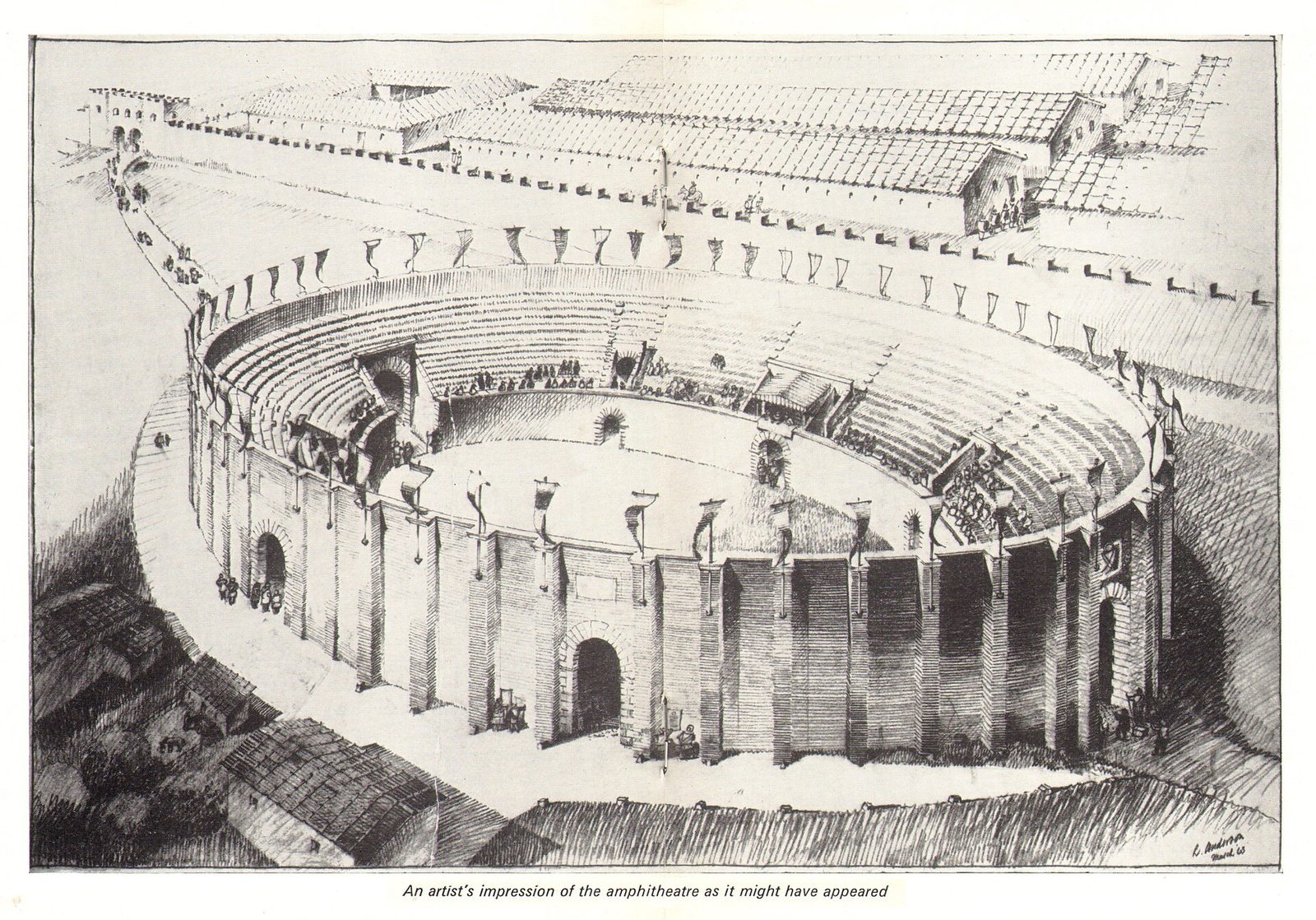
It took place at a fortress of some kind called ‘Guinnion’, which eludes easy identification. The fact that it took place at a fortress may imply that it was a siege rather than a regular pitched battle, although this cannot be confirmed.
One thing that makes the Battle at Guinnion Fort stand out from the other battles of Arthur is that the earliest source describing Arthur’s career gives much more focus on this one than any of the others. This source explains that, at this battle, Arthur carried the image of the Virgin Mary on his shoulders.
The Battle at Guinnion Fort in the Historia Brittonum
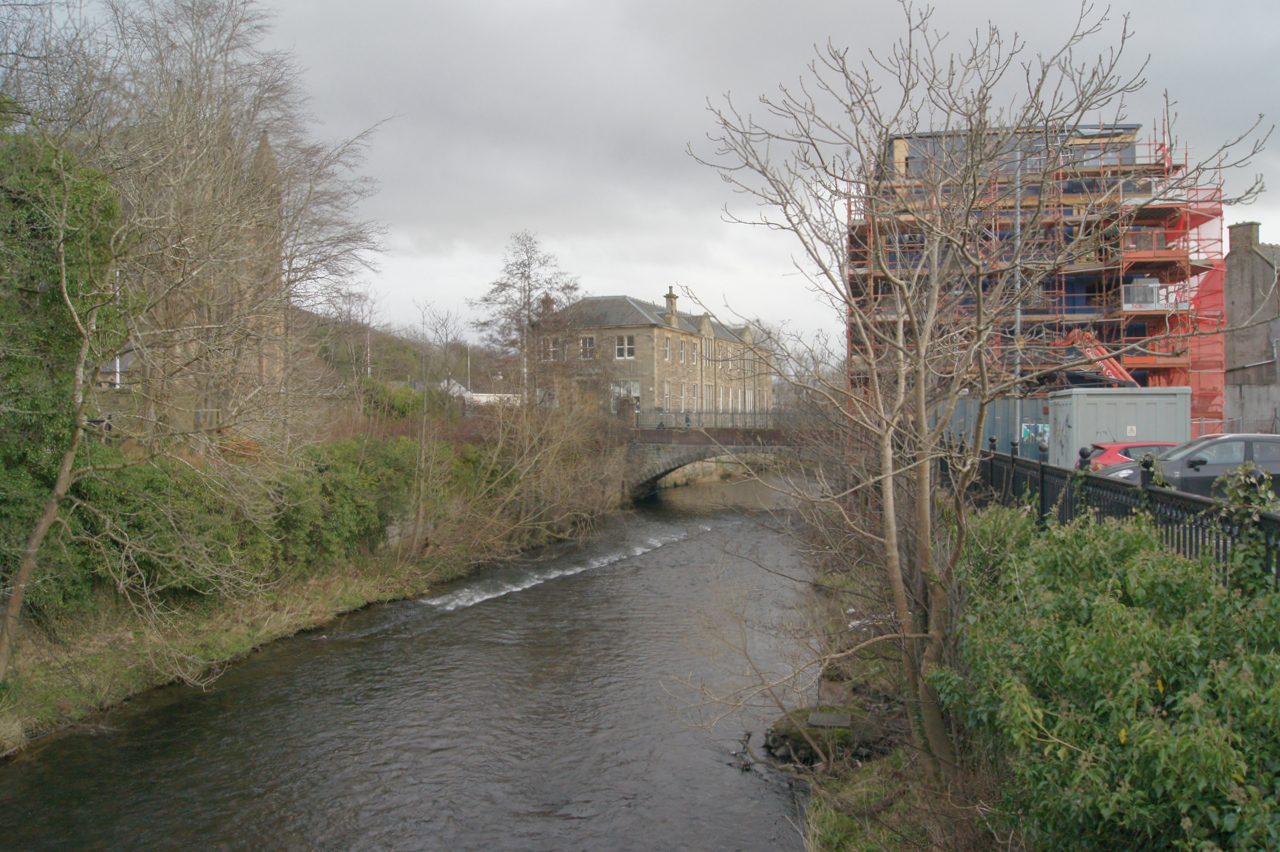
The earliest surviving source mentioning the Battle at Guinnion Fort is the Historia Brittonum, written in c. 830. It presents an account of Arthur’s career, focusing entirely on 12 battles which it puts in the context of his campaign against the Saxons. Its account of the Battle of Guinnion Fort is as follows:
“Then it was that the magnanimous Arthur, with all the kings and military force of Britain, fought against the Saxons. And though there were many more noble than himself, he was twelve times chosen their commander, and was as often conqueror… The eighth battle was at Guinnion Fort, and in it Arthur carried the image of the holy Mary, the everlasting Virgin, on his shoulders, and the heathens were put to flight on that day, and there was great slaughter upon them, through the power of Jesus Christ and the power of the holy Virgin Mary, his mother.”
According to this, Arthur led an alliance of kings and military leaders into battle against the Saxons. At the Battle at Guinnion Fort, Arthur ‘put the heathens to flight’ that day and inflicted a ‘great slaughter’ upon them. Perhaps this means that this was a particularly crushing defeat for his enemies.
Carrying the Image of the Virgin Mary on His Shoulders
However, the most notable part of this description is the statement that Arthur ‘carried the image of the holy Mary, the everlasting Virgin, on his shoulders’. This is notable for two main reasons. Firstly, this is a very surprisingly early reference to veneration of Mary.
The more significant point of interest, though, is the statement that Arthur carried her image on his ‘shoulders’. At first glance, this does not seem to make much practical sense.
For this reason, the vast majority of scholars understand this to be a mistranslation of the Welsh word for ‘shield’, which is ‘scuit’. It is understood that the writer of the Historia Brittonum misunderstood this to be ‘scuid’, the Welsh word for ‘shoulders’. This is a sensible theory.
The Historia Regum Britanniae’s Explanation
Interestingly, the Historia Regum Britanniae indicates that the apparent issue with this passage has long been noted. In that source, there is a description of Arthur preparing himself for a battle (not the Battle of Guinnion Fort). It says that King Arthur placed ‘on his shoulders his shield called Pridwen; upon which the picture of the blessed Mary, mother of God, was painted.’
This indicates that Geoffrey, the writer of the Historia Regum Britanniae, was well aware of the impracticality of the statement in the Historia Brittonum, so he wanted to devise a way of making it more logical. Thus, he presented Arthur as having an image of Mary on his shield, which he places on his shoulders.
There is, of course, the possibility that this is what the writer of the Historia Brittonum meant all along. After all, we know that Roman soldiers did sometimes strap their shield over one of their shoulders. Procopius, writing in the mid-sixth century, also mentions a certain type of soldier who had a small shield strapped high on their shoulder.
Therefore, it might be that when the writer of the Historia Brittonum referred to Arthur as carrying the image of Mary on his shoulders, the intention was always for this to be understood as a reference to an image on a shield.
Nonetheless, the fact that the Welsh words for ‘shield’ and ‘shoulder’ are virtually identical do make the common modern explanation very appealing as well.
The Battle at Guinnion Fort in Later Records
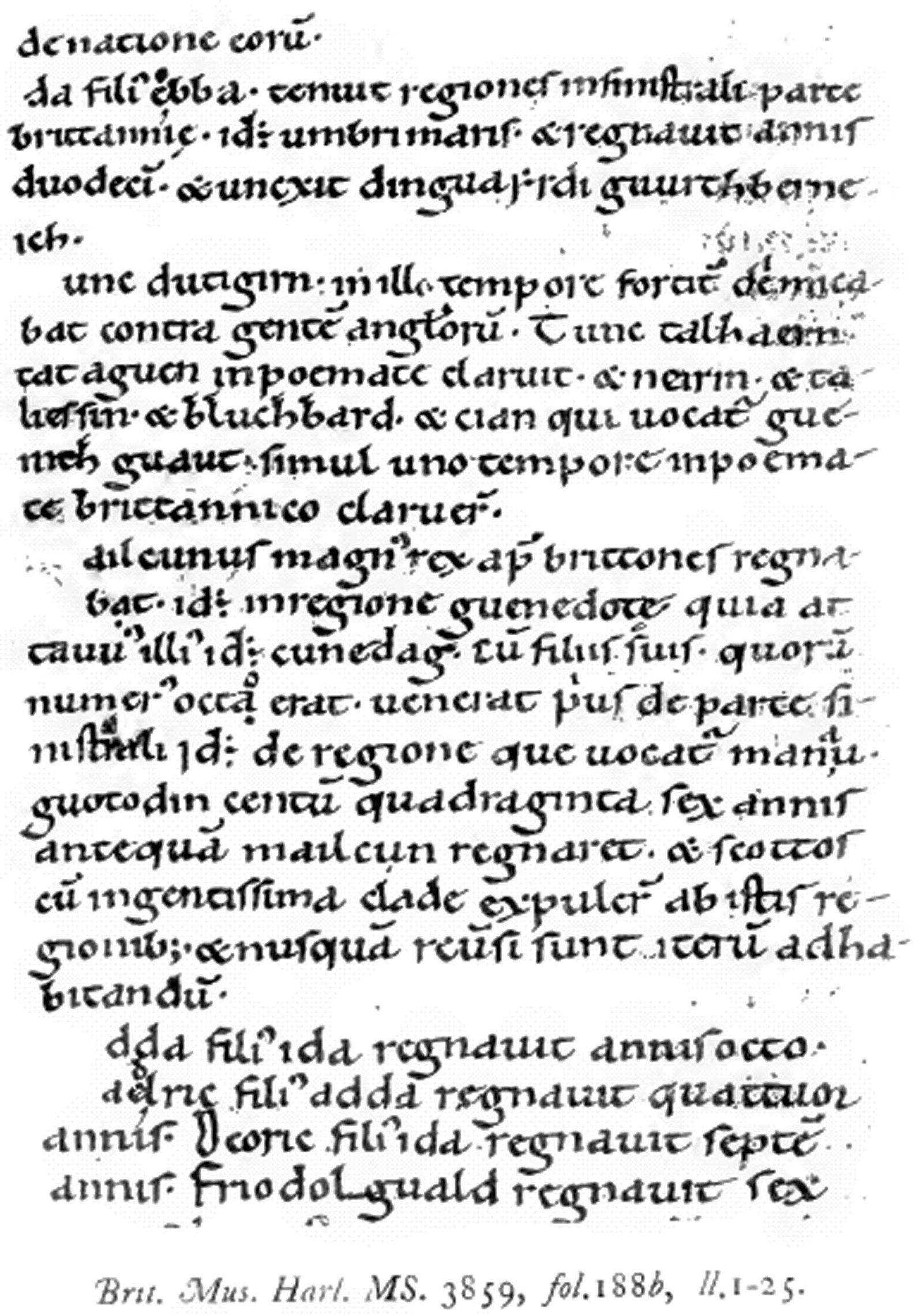
The Battle at the Guinnion Fort is mentioned in later records in that it is included in later references to Arthur’s 12 battles, such as in the writings of Henry of Huntingdon. Also, it appears in a manuscript of the Historia Brittonum which appears to be a later, separate tradition that has been added to the account. However, aside from this, it does not seem to have a big part in later Arthurian tradition.
However, it is possible that we can identify it with one of the battles mentioned by Geoffrey of Monmouth, as we will go on to see later.
The Historia Brittonum’s Gloss
In what appears to be a 12th-century manuscript of the Historia Brittonum, there is a gloss, or an addition written in the margin of the manuscript, about the Battle at Guinnion Fort. This gloss is designed to explain the cross that Arthur carried at this battle.
Of course, as we have already seen, the Historia Brittonum actually says that Arthur carried the image of Mary, not a cross. A later document, the Annales Cambriae, says that Arthur carried a cross at the Battle of Badon. Evidently the writer of this document was thinking of the two statements together. In any reads, the gloss reads:
“For Arthur travelled to Jerusalem. And there he made a cross to the same size as the cross of our salvation, and there it was consecrated. And for three days continuously he fasted and kept vigil and prayed in the presence of our Lord’s Cross, that the Lord should grant him victory over the pagans through this sign, which was done. And he carried with him an image of Saint Mary, fragments of which are still preserved at Wedale, in great veneration.”
According to this, fragments of the image of Mary that Arthur carried were preserved at Wedale. This is a reference to Stow of Wedale, where there was an early medieval church which was replaced in more modern times by a church called St Mary of Wedale.
Geoffrey of Monmouth’s Historia Regum Britanniae
In c. 1137, Geoffrey of Monmouth wrote the Historia Regum Britanniae, which is a landmark piece of literature in the Arthurian legends. Geoffrey presents an account of Arthur’s career, including his battles against the Saxons. He does not explicitly refer to ‘Guinnion Fort’ at any point during his account, and it seems that he skipped it entirely. However, that is not necessarily the case.
Unmentioned in Geoffrey’s Account
Let us first consider the most obvious possibility: Geoffrey skipped this battle. One problem with this is that it does not seem to make much sense within the broader narrative of the account.
At the previous battle, which took place at the Celidon Wood, Geoffrey explains that Arthur expelled the Saxon army out of Britain entirely. However, the army then decided to attack the southwest of Britain, sailing over there while Arthur was occupied with the Picts and the Scots in the north of Britain. The Saxons besieged Badon, and Arthur immediately abandoned the conflict with his northern enemies and dealt with the Saxon siege.
At first sight, this does not seem to allow for any skipped battle between Celidon and Badon. While the Saxons could potentially have fought another battle with the Britons on their way to Badon, this could not have involved Arthur according to Geoffrey’s account, since he was occupied with northern affairs and only returned south after the siege of Badon had already started.
On the other hand, Arthur could have fought against an unrelated Anglo-Saxon army on his journey between the Celidon Wood and the territory of the Picts and the Scots.
Battles Out of Order
Another possible explanation is that the 12 battles as described in the Historia Brittonum are not actually in strict chronological order. After all, it appears that this list of battles likely came from a battle poem, so it is distinctly possible that the battles were shifted around to make them rhyme.
This being the case, it could be that the Battle at the Guinnion Fort occurred earlier in Arthur’s campaign. It might have occurred just prior to the Battle on the River Dubglas, which is the first one that Geoffrey mentions. Also, Arthur is said by Geoffrey to have pursued the Saxons from Dubglas to York, and then, after a battle at Lincoln, he pursued them to the Celidon Wood.
Therefore, the Battle at the Guinnion Fort could have occurred during the pursuit between any of those locations, and was simply skipped over by Geoffrey.
Identical to the Siege of Winchester
Alternatively, it could have taken place during a later battle against the Saxons. Now, it is true that Badon famously brought the Saxon war to an end. However, Geoffrey speaks about Saxon troops supporting the civil war led by Mordred (spelt ‘Modred’ by Geoffrey), the nephew of Arthur who tried to usurp the throne.
According to the Historia Regum Britanniae, ‘the wicked traitor, Modred, had sent Cheldric, the Saxon leader, into Germany, there to raise all the forces he could find.’ Therefore, since the Saxons were heavily involved in this civil war, the Battle of the Guinnion Fort might be one of the battles leading up to the climactic Battle of Camlann.
After the initial opposition to Arthur’s landing, there is just one notable battle that occurs between Mordred’s and Arthur’s troops before their final clash at Camlann. Mordred was said to have taken refuge in Winchester, which Arthur then besieged. Geoffrey presents Mordred as ‘marching out with his troops prepared to fight his uncle.’ He goes on to say:
“In the battle that followed hereupon, great numbers lost their lives on both sides; but at last Modred’s army suffered most, so that he was forced to quit the field shamefully.”
Therefore, this was a battle between Arthur and at least a notable amount of Saxon troops which took place at a site which Geoffrey records as ‘Winchester’, and at which Arthur was the victor. Given that quite a few researchers have argued that ‘Guinnion’ might mean Winchester, this may well be significant.
However, we have no way of confirming this theory. What we do know is that the Historia Brittonum’s battle list does not include Camlann. If it was including the battles involved in Mordred’s usurpation, then why would it mention the siege of Winchester but not the Battle of Camlann?
After the Battle of Badon
Another possibility is that Geoffrey mentioned this battle outside the context of Arthur’s Saxon battles. This also relies on the theory that the list of 12 battles in the Historia Brittonum is not in order, but it takes the theory even further.
Although the passage mentioning the 12 battles begins by stating that Arthur then ‘fought against the Saxons’, this does not necessarily mean that all of the battles subsequently mentioned were against that same enemy. Other battle lists from Welsh poetry do not limit themselves to just one enemy.
Admittedly, the Historia Brittonum does specifically say that Arthur defeated ‘the heathens’ at Guinnion. However, the Anglo-Saxons were not the only non-Christians in Britain in the sixth century. While Christianity had spread to Scotland by this time, there were undoubtedly still many non-Christian groups in the area, as the available records indicate.
Therefore, the Battle of Guinnion Fort could have been one of Arthur’s battles against the Picts and the Scots in the north of Britain. The Historia Regum Britanniae presents Arthur as defeating those enemies during their siege of Alclud. After pursuing them from that location, he next besieges them at Muray, in northeast Scotland.
While these sieges are possibilities, there is no active reason to connect either of them to ‘Guinnion Fort’. Still, these sieges remain possibilities.
Where was Guinnion Fort?
A more pressing question for most researchers is the issue of where the Battle at the Guinnion Fort actually was. Suggestions cover almost the entire country, from Scotland to the southern coast of England.
What Does ‘Guinnion’ Mean?
One of the big issues is that there is little agreement as to the proper etymology of ‘Guinnion’. Many scholars believe that it is connected to ‘gwin’, the Welsh word for ‘white’. On the other hand, other researchers feel that it is more likely to be connected to the Latin ‘venta’, which seems to have become ‘guint’ through at least some lines of transmission.
Slightly complicating the matter is the fact that not all manuscripts of the Historia Brittonum agree regarding its spelling. For example, we also find ‘Guinnon’, ‘Guinon’, and ‘Gunnion’. Knowing the exact spelling would help with determining its origin, but it is overly optimistic (contrary to certain scholars) to say that we can know for sure which spelling is correct.
Stow of Wedale
Let us begin our analysis by considering the most traditional location. This is the location indicated by the 12th-century gloss found in one manuscript of the Historia Brittonum. As we saw earlier, this gloss claimed that fragments of the image of Mary that Arthur carried during the battle were held at the church at Wedale.
This implies that the writer of this 12th-century gloss believed that the battle took place in the vicinity of Stow of Wedale, Scotland. Although many scholars reject this as nothing more than medieval invention, some scholars accept this suggested location.
According to tradition, the name ‘Wedale’ means ‘Dale (in the sense of ‘valley’) of Woe’. Since this is an English name, it would make sense that this would be what the English called a location where they were defeated in battle. Furthermore, historians agree that the church at Wedale dates back to about the year 600, almost the era of King Arthur.
The very fact that the church was dedicated to Mary could also be used to argue in favour of this theory.
The Fort Itself
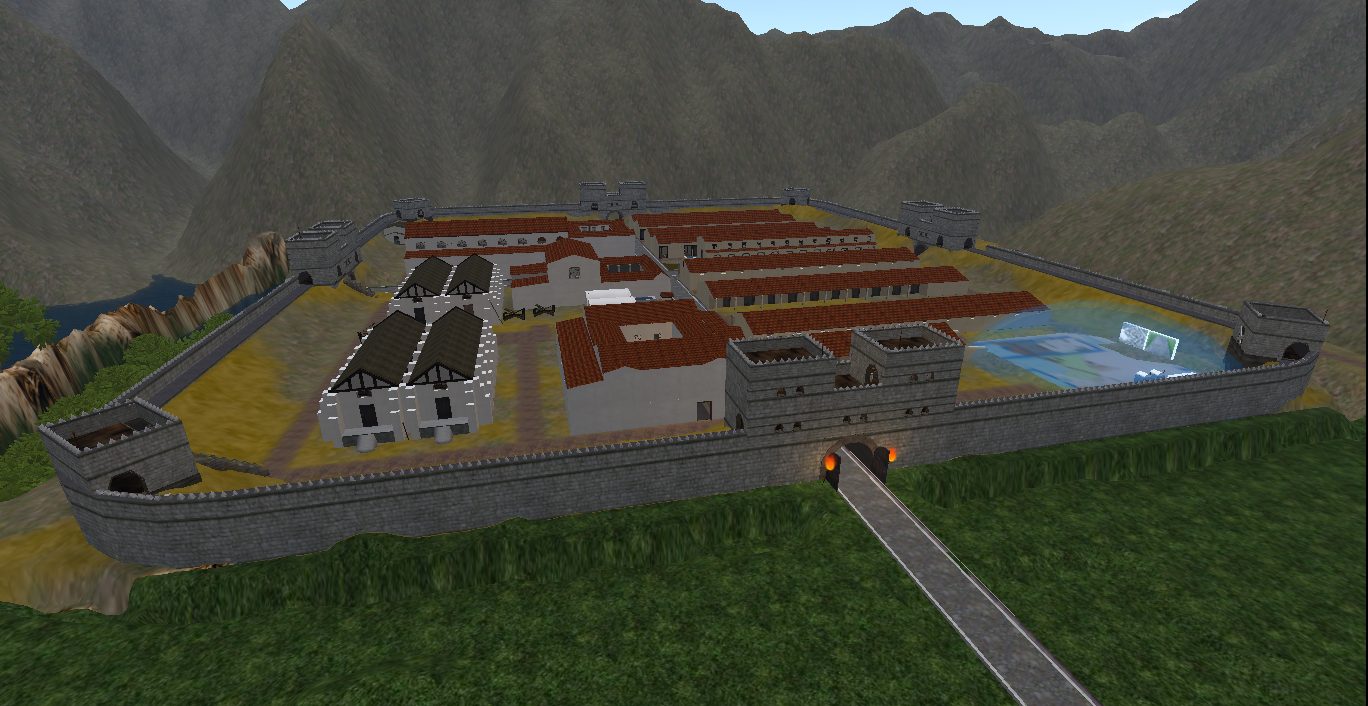
Regarding Guinnion Fort itself, proponents of this theory point out that William Roy, in his 1793 publication The Military Antiquities of the Romans in North Britain, identified a Roman fort near Stow. Supposedly, this likely had white walls, which matches with the most common understanding of the meaning of ‘Guinnion’.
Objections to This Location
One of the primary objections is that this location is too far north for a battle with the Saxons. However, Bamburgh is accepted as being founded by the Anglo-Saxons in 547, and Stow of Wedale is hardly any further north than that. Furthermore, if Arthur pursued them from a more southerly location, this would negate any argument about them being further north than they would be expected to have been.
A more notable objection is that the vast majority of linguists do not support the tradition that ‘Wedale’ comes from ‘Dale of Woe’. Rather, they believe that the first part comes from ‘weoh’, meaning ‘shrine’. Therefore, ‘Wedale’ would mean ‘Dale (or valley) of the Shrine’. Since ‘Stow’ itself means ‘holy place’, this is objectively the more likely etymology.
Furthermore, the nearest notable Roman fort in the area is Oxton camp, which is some 8 or 9 miles away. This is hardly close enough to warrant a connection. There is also no reason to think that this camp in particular was specially associated with the colour white, more so than any other random Roman camp. There is thus no real basis whatsoever to connect this site with the place name ‘Guinnion’.
Regarding the claim contained in the 12th-century gloss, historian Christopher Gidlow nicely summed up the situation by explaining:
“We need suspect no more than that Wedale had a fragmentary image of the Virgin, which the writer has tied to the Historia to create a respectable pedigree.”
Winchester
A more popular suggestion is that Guinnion Fort was Winchester. Although many scholars seem to accept ‘Guinnion’ as being related to the word for ‘white’, which was ‘guin’, whereas Winchester comes from the Latin ‘venta’, there is some evidence that Winchester was indeed sometimes spelled with an initial ‘Guin’.
For example, the Historia Brittonum contains a list of cities of Britain. One of these is called Caer Guintguic. This is most commonly accepted as being a reference to Winchester. It is accepted that the first element of this name, ‘Guint’, comes from Latin ‘venta’. By the ninth century, when the Historia Brittonum was written, only two places in Britain were still remembered by a form of that Latin word: Caerwent in Wales and Winchester in England.
The Historia Brittonum’s list of cities also includes a ‘Caer Guent’, which is thought more likely to refer to Caerwent in Wales. Therefore, that just leaves Winchester as a candidate for Guintguic.
If Winchester was known as ‘Guintguic’, then could it also have been known as ‘Guinnion’? One historian argued that ‘guic’ is a corruption of ‘iog’, which is a suffix placed onto the end of a word to indicate a location. The argument then goes that the suffix ‘ion’ was used similarly. This means that an alternative way of writing ‘Guintguic’ could have been ‘Guinnion’.
Furthermore, the word translated ‘Fort’ in ‘Guinnion Fort’ is the Latin word ‘castello’, which is understood to indicate a Roman fort specifically. In the name ‘Winchester’, the latter part of the name comes from ‘caestre’, which is a borrowing into English of the Latin ‘castrum’, which means ‘camp’ and is closely connected to the Latin word ‘castello’. Thus, arguably, Winchester matches this detail as well.
Additionally, Winchester was still occupied and seems to have been an important Anglo-Saxon centre in the sixth century, making it a prime location to attack.
Although not mentioned by Geoffrey of Monmouth, it is not hard to imagine that after dealing a crushing defeat to a Saxon army in the Celidon Wood, most likely identified as the Weald in southern Britain, Arthur would have decided to move on to a nearby prominent Saxon centre.
Objections to This Location
One primary objection to this theory is the fact that there is no record in which Winchester is directly attested as ‘Guinnion’. While it is true that Winchester does seem like the most likely candidate for ‘Guintguic’, the connection between Guintguic and Guinnion is only speculative.
Even if the proposed equivalence of the two names could have worked, there is still no direct evidence that such an alternative spelling was ever actually used.
Furthermore, the suggestion that ‘guic’ is a corruption of ‘iog’, which in turn could have been replaced for ‘ion’, is controversial. Other scholars have argued that ‘guic’ is more likely to be the equivalent of Welsh ‘gwig’, meaning ‘wood’, in reference to the significant woodlands near Winchester in the past.
Another objection that has been proposed, although not with good reason, is that it would be strange for the writer of the Historia Brittonum to use one spelling for Winchester in the list of cities, and then use a different spelling in the Arthurian battle list. Since the battle list likely came from a battle poem, it was not the writer of the Historia Brittonum who chose the spelling in that passage.
In short, the evidence for Winchester as Guinnion is overall fairly plausible, although lacking direct confirmation.
Binchester, Durham
However, by far the most popular suggestion for Guinnion is Binchester. There was a Roman fort here known as Vinovium. Most scholars who have discussed this have supported the conclusion that ‘Vinovium’ would evolve into ‘Guinnion’.
Furthermore, archaeological evidence appears to indicate that this was a place of importance in fifth and sixth century Britain. One scholar wrote that it ‘seems to have been refurbished as a strong-point in the fifth and sixth century as part of the British defence of the north against the Saxons.’ This makes it a likely location for a clash between British and Saxon forces in Arthur’s time. Additionally, it is just next to the Roman Dere Street, which adds to its strategic importance.
Supported by the Historia Regum Britanniae
How might this fit into Geoffrey’s narrative of Arthur’s Saxon campaign? Well, after defeating the Saxons at the previous battle, at the Celidon Wood, Geoffrey presents Arthur as heading off to deal with the Picts and Scots, obviously in the north of Britain.
If the Celidon Wood can be identified with the Weald in southern Britain, which does seem most likely, then consider Arthur’s journey up north to arrive at the territory of the Picts. Dere Street is the only Roman road that went directly towards that region, meaning that Arthur would inevitably have passed Binchester on his way to fight against those northern enemies.
Therefore, identifying Guinnion as Binchester makes perfect sense in the context of Geoffrey’s narrative, even though he does not specifically mention this battle in his account. Given that it also appears to be the best linguistic match, this is surely significant.
Objections to This Location
The biggest objection to this theory is the mere fact that there are so many other places in Britain which arguably match ‘Guinnion’ as well. It seems that virtually every place beginning with ‘Guin’ in some form has been suggested at one time or another. The sheer number of alternative yet plausible candidates makes Binchester less certain than it otherwise would be.
Apart from this, the only real objection is that not all scholars agree that ‘Vinovium’ would produce ‘Guinnion’. And, in fact, it would not. It would actually produce ‘Guinouion’. Notice the double ‘n’ in contrast to the single ‘n’. Note, too, the extra syllable (‘ou’) in the middle of ‘Guinouion’.
To accommodate this, some scholars argue that ‘Guinnion’ is a mistake for ‘Guinuion’, in which case, the only difference would be the dropping of the middle ‘o’ from ‘Guinouion’. Alternatively, other scholars point to some manuscripts of Ptolemy’s writings (in which this Roman fort is named) which spell the name with a double ‘n’. This still leaves the problem of the extra syllable, but it is not uncommon for place names to be simplified with the passage of time.
In any case, the majority of scholars do consider Vinovium to be the most logical origin of ‘Guinnion’ on linguistic grounds, despite the objections of the minority.
Conclusion
In summary, the Battle at the Guinnion Fort was the eighth of Arthur’s famous 12 battles against the Anglo-Saxons as recorded by the Historia Brittonum. It was evidently a battle of great importance, since the Historia Brittonum devotes particular attention to this one. Here, Arthur was said to have carried the image of the Virgin Mary on his shoulders. Arthur led the Britons to victory. There are numerous places all over Britain which have been suggested for the real Guinnion Fort, although the most likely location appears to be Vinovium, the Roman fort at Binchester.
FREQUENTLY ASKED QUESTIONS
Who Won the Battle at Guinnion Fort?
The Battle at Guinnion Fort was won by Arthur and his fellow Britons.
Where was Guinnion Fort?
No one today knows for sure where Guinnion Fort was. A 12th-century tradition claimed that it was near Stow of Wedale. However, Winchester in the south of England is a more likely location. The most likely location, though – both for linguistic and strategic reasons – is the Binchester Roman fort, which was anciently known as Vinovium or Vinnovium.
What Did Arthur Do at the Battle at Guinnion Fort?
According to the Historia Brittonum, Arthur carried the image of the Virgin Mary on his shoulders at the Battle of Guinnion Fort. The word ‘shoulders’ here is commonly thought to be a mistranslation of the almost identical Welsh word for ‘shield’. On the other hand, the reference to ‘shoulders’ might be correct, with the intended sense being that Arthur had the image on his shield, which he was carrying on his shoulders.
Sources
Fitzpatrick-Matthews, Keith, The xxuiii ciuitates brittanni? of the Historia Brittonum: Antiquarian Speculation in Early Medieval Wales, 2015
Breeze, Andrew, “Historia Brittonum” and Britain’s Twenty-Eight Cities, 2016
Matthews, John, The Complete King Arthur: Many Faces, One Hero, 2017
Gidlow, Christopher, The Reign of Arthur, 2005
Reno, Frank, Historic Figures of the Arthurian Era: Authenticating the Enemies and Allies of Britain’s Post-Roman King, July 2015
Ashley, Mike, A Brief History of King Arthur, 2013
Field, P. J. C., Arthur’s Battles, 2008
Jackson, Kenneth, Once Again Arthur’s Battles, 1945
Venning, Timothy, The King Arthur Mysteries: Arthur’s Britain & Early Medieval World, 2021
Sullivan, Tony, The Battles of King Arthur, 2022
http://www.legendofkingarthur.co.uk/battles/7-celidon-wood.htm