Mordred, the Treacherous Nephew of King Arthur

Mordred is one of the most important characters in the Arthurian legends. He is responsible for bringing an end to Arthur’s reign of relative stability and peace. He ushered in a period of civil unrest or warfare. According to some traditions, he was even the one who killed King Arthur. What do we really know about Mordred? How did his legend evolve over the centuries? Was he even real?
Who Was Mordred?
Mordred was the nephew of King Arthur in the Arthurian legends. At first, he served Arthur faithfully. In fact, he gained a reputation as an excellent commander. Evidently for this reason, Arthur eventually made him regent of Britain while he was away in Gaul.
However, when this happened, Mordred took the opportunity to usurp the throne for himself. He also, according to some traditions, forcibly married Guinevere, Arthur’s wife. Other traditions say that she was unfaithful to Arthur and willingly joined Mordred. In any case, the king’s nephew engaged in a dramatic rebellion against Arthur.
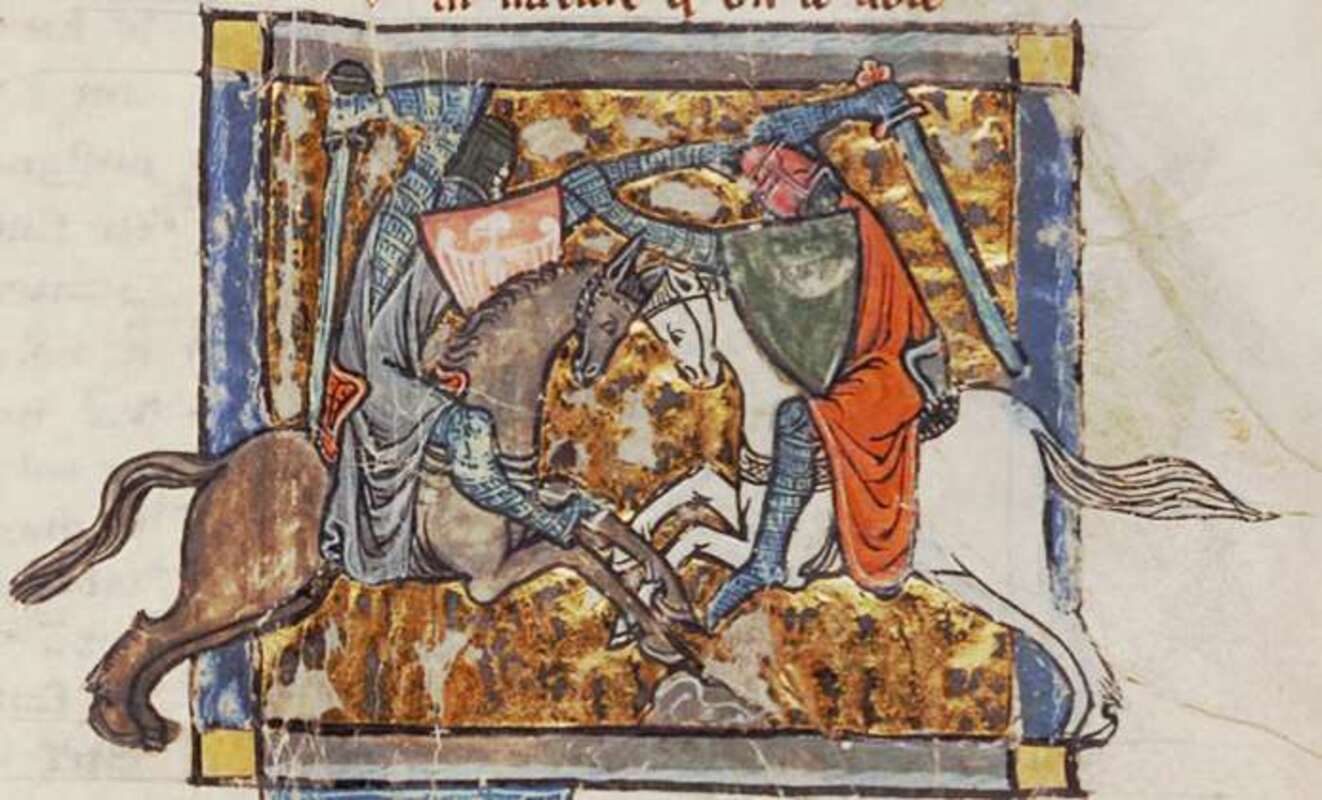
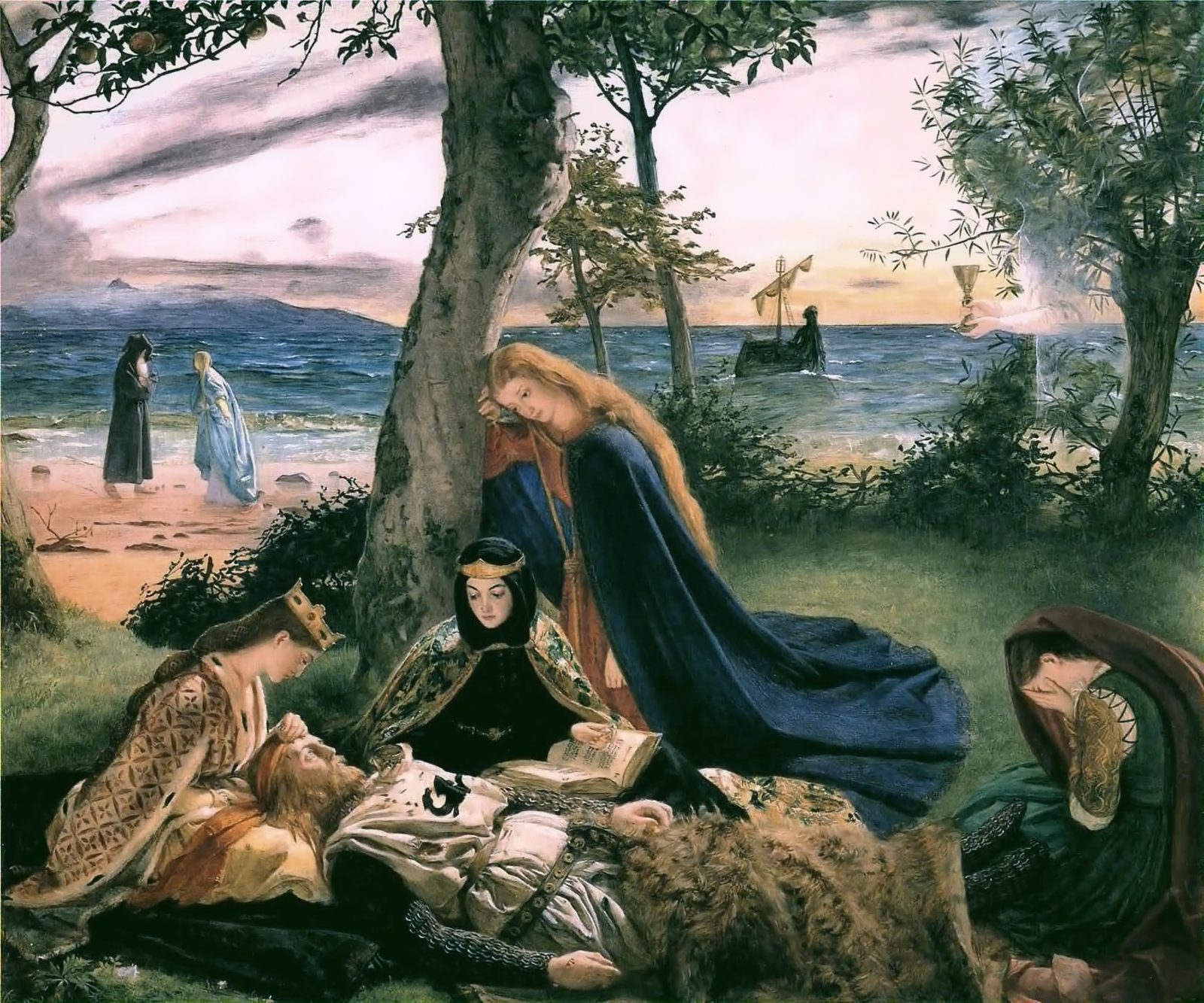
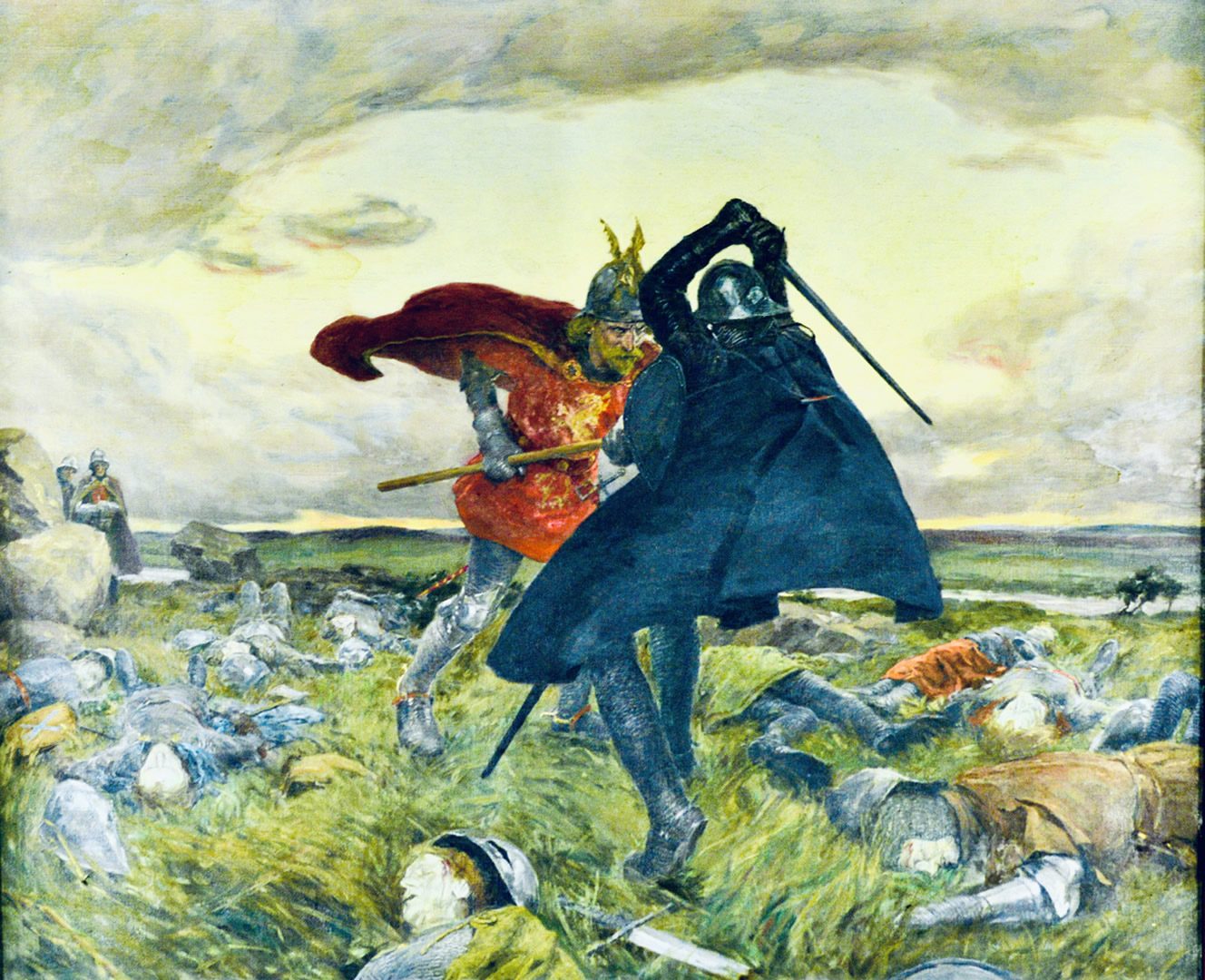
This started a fierce civil war which culminated in the infamous Battle of Camlann. This came to be remembered in Welsh tradition as a great tragedy. Mordred died at this battle, and some traditions claim that he also caused Arthur’s death.
Mordred is one of the most persistent characters of the Arthurian legends. He appears in some of the absolute earliest Arthurian sources, and he continues to be featured as a prominent character right through the European romance tales.
The question of whether there was any historical basis to the figure of Mordred is something that is still debated by scholars. However, we will examine the evidence in this article and see what the available facts are.
Mordred’s Name
Something worth clarifying is that there are a few different spellings of Mordred’s name. The form ‘Mordred’ is actually fairly late, but it is used here because it is by far the most famous spelling. In the earliest known record mentioning him, his name is spelt ‘Medraut’.
This spelling is the Old Welsh form. In Middle Welsh, it evolved into ‘Medrawt’, ‘Medrawd’, and similar variations. These are the forms used in most Welsh texts that speak about him. In modern Welsh, this is ‘Medrod’, though only a few academic sources use this spelling.
The most notable variation is that found in Geoffrey of Monmouth’s Historia Regum Britanniae, written in c. 1137. This was a highly influential work. The famous spelling ‘Mordred’ was derived from this. However, Geoffrey himself spelled it ‘Modredus’, which is relatively close to the earlier Welsh form.
It appears that his name was modified from ‘Modred’ to ‘Mordred’ because the prefix ‘Mor’ brought to mind the Latin word for ‘death’, in line with Mordred’s villainous role in the legends.
The Origin of the Name
There is some controversy surrounding the origin of this name. Significantly, scholars have long noted that Geoffrey’s ‘Modredus’ is a Cornish or possibly Breton form. According to the regular linguistic rules of the Celtic languages, it is not possible for ‘Modred’ to be derived directly from the Welsh ‘Medraut’.
This has raised questions over how Geoffrey got his form. Linguistically, the two names seem to be unrelated, yet the records in which they are used clearly describe the same person. While there is still some debate over this issue, the best explanation appears to be the following:
As first suggested by August Hunt (and then by Meredith Cane a few years later), the original form was likely the Latin ‘Moderatus’. This passed into Cornish as ‘Modred’, the origin of Geoffrey of Monmouth’s spelling.
The original Old Welsh form of this name would have been ‘Modrod’. Somehow, this was corrupted into ‘Medraut’. Scholar Oliver Padel suggested that this occurred through influence from the Welsh word ‘medru’, meaning ‘to hit’.
Mordred’s Family
Mordred was from a very prominent family in Britain. The earliest source which describes his familial relationships is Geoffrey of Monmouth’s Historia Regum Britanniae. In this, Mordred is described as the son of Anna, the sister of King Arthur. This makes him Arthur’s nephew.
Mordred’s family on his father’s side was also very powerful and important. His father, according to Geoffrey of Monmouth, was King Lot of Lothian. He was the brother of King Urien and King Augusel. This identifies Lot with Llew from Welsh records. Llew, according to those records, was the brother of Urien and Arawn, clearly identifiable as Geoffrey’s Urien and Augusel.
Llew was the son of Cynfarch. In some other records, he is called ‘Lleuddun’, ‘Leudon’, and ‘Ludun’. Geoffrey’s ‘Lot’ and the ‘Llew’ of Welsh records evidently came from different ways of abbreviating the name.
This was one of the most powerful families of Britain. Urien, Mordred’s uncle, ruled near the border of Scotland and England, along the western coast. He was the most powerful king of the region. Llew ruled over an area in southern Scotland, seemingly in the southeast.
Thus, Mordred was a northern prince, although his mother (the sister of Arthur) was from the south. Interestingly, his mother is called Gwyar in Welsh tradition, suggesting that perhaps Geoffrey confused two different sisters of Arthur.
Mordred’s brother was Gawain. In the later Arthurian romance tales, Gawain became one of Arthur’s most loyal and virtuous knights, creating an interesting contrast between the two brothers.
Mordred had two sons who continued his rebellion after his death. Their names, according to later legends, were Melehan and Melou. Gildas refers to these two ‘royal youths’, although without mentioning their genealogy.
Mordred’s Wives
The available sources appear to give Mordred two or possibly even three wives. The earliest source, Geoffrey’s HRB, says clearly that King Arthur’s wife Guinevere (spelt ‘Guanhumara’ by Geoffrey) wickedly married Mordred when he usurped the throne.
This is a straightforward claim, but it is complicated by Welsh tradition. In a source known as the Welsh Triads, which is a collection of legendary traditions organised into collections of three, there are references to a conflict between Guinevere (spelt ‘Gwenhwyfar’ in this source) and her sister Gwenhwyfach. This conflict led to the Battle of Camlann.
Welsh tradition from other sources shows that Gwenhwyfach was thought to be the wife of Mordred. There is also a triad that speaks of a conflict between Mordred and Guinevere. On the basis of all of this information, as well as linguistic evidence, a number of scholars have suggested that Gwenhwyfach was a legendary derivation of Guinevere herself.
Mordred’s Other Wife
As well as Guinevere (evidently remembered in some traditions as a separate person, ‘Gwenhwyfach’, perhaps to save the honour of Arthur’s queen) some sources also give Mordred another wife. Hectre Boece, the Scottish historian of the early 16th century, wrote about Mordred and claimed that he married the daughter of ‘Gawolane’, a great prince of the Britons.
This Gawolane has sometimes been identified as Cadwallon, the king of Gwynedd. However, for chronological reasons, this is unlikely. The more traditional understanding has been that he was Caw, the father of Gildas and a prominent prince of the North. On chronological and geographical grounds, it would be perfectly reasonable to suggest that Mordred married a daughter of Caw.
Later sources identify Mordred’s wife as Cwyllog, a daughter of Caw in some Welsh sources. However, it is unclear whether Cwyllog was fictional or not. Some scholars suggest that she came from a backformation from the name of a church.
Mordred’s Earliest Appearance
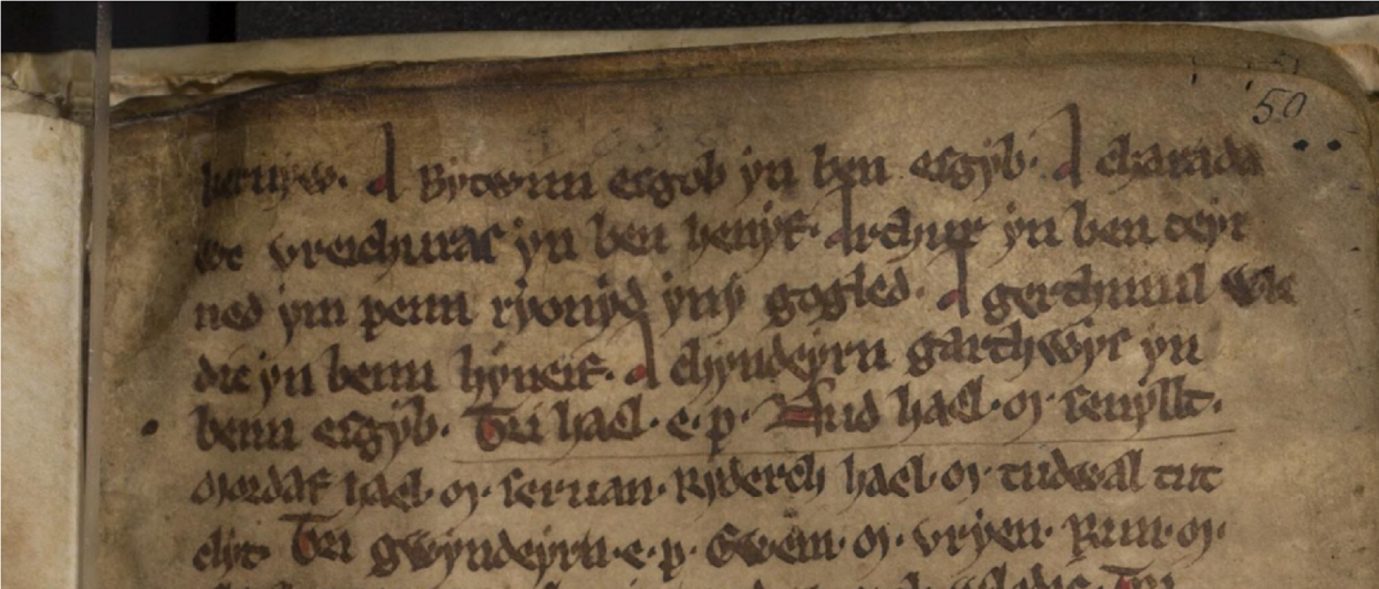
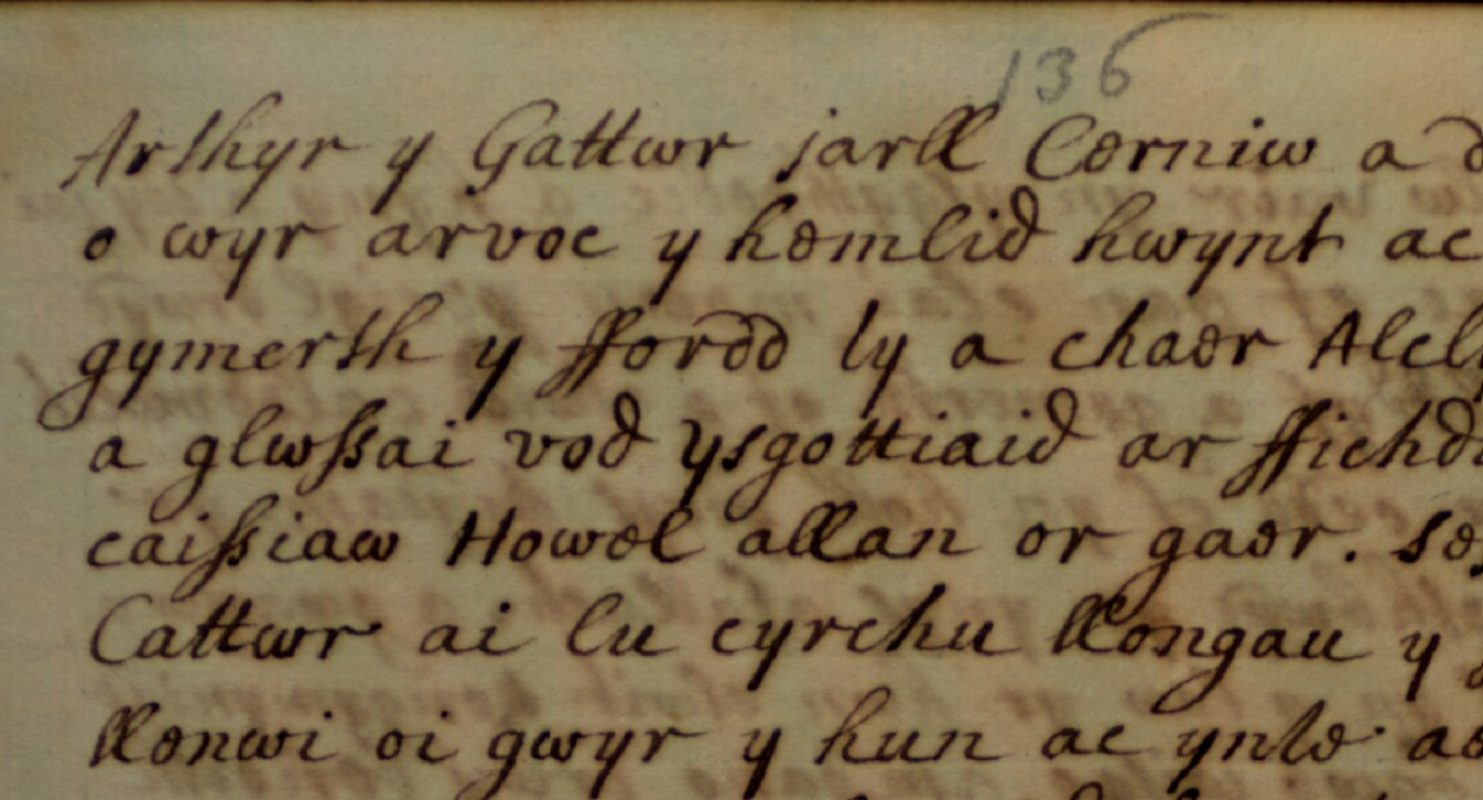
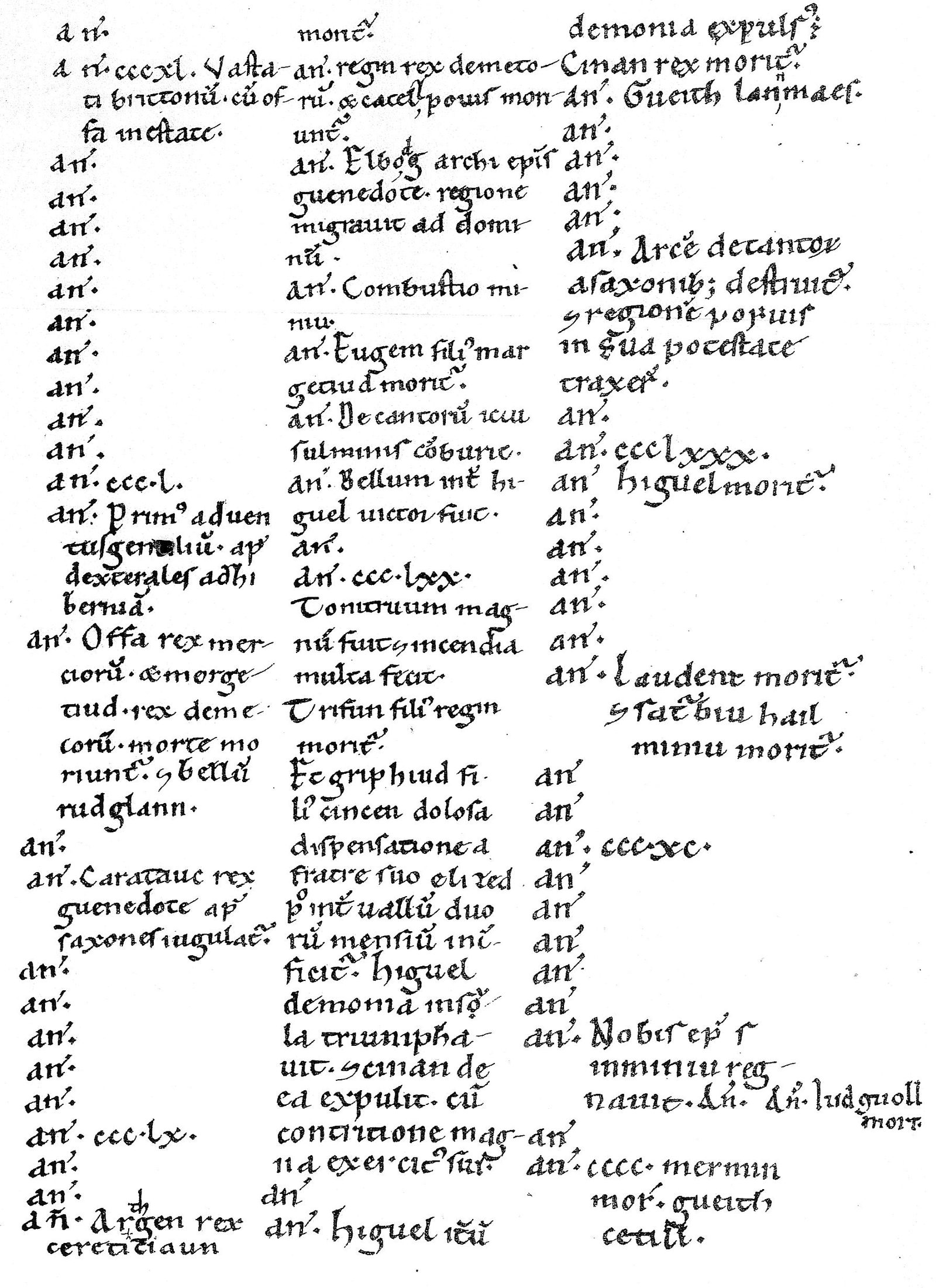
Let us now consider Mordred’s earliest appearance. He is mentioned in the Annales Cambriae, which is a chronicle written in the tenth century that describes events in medieval Welsh history. This is one of the very earliest Arthurian sources. The entry in the chronicle reads:
“The battle of Camlann, in which Arthur and Medraut fell: and there was plague in Britain and Ireland.”
According to this, Mordred (whose name is spelt ‘Medraut’ here) was involved in the Battle of Camlann. This battle is featured numerous times in Welsh tradition, showing that it was a major event. He and Arthur both ‘fell’, though whether that strictly means that they died or not is uncertain.
The entry is dated to the year 537. However, virtually all other information about Mordred from later Latin documents and Welsh tradition indicates that he was probably not even born until after this.
Was Mordred Always a Traitor?
Famously, one key detail that this entry does not supply is which side Mordred was on. Was he on Arthur’s side, or was he fighting against him? Later records, of course, unanimously make Mordred the enemy of Arthur at Camlann, but this original entry does not specify.
However, there is no legitimate reason to think that the unanimous testimony of later tradition is incorrect. The absence of any trace of a tradition that Mordred was Arthur’s ally at Camlann is notable.
Furthermore, Camlann was almost certainly a civil war. Gildas, writing in the sixth century, explains that there was peace from foreign wars from the Battle of Badon up until the time he was writing. He was writing forty-three years after Badon. Yet the Battle of Camlann is placed just twenty-one years later in the Annales Cambriae. This means that it occurred during a period that was free from foreign wars, but which Gildas says was plagued by civil conflicts.
Therefore, although the earliest record of Mordred does not specifically say that he fought against Arthur, the war in which he was involved was almost certainly a civil war. Thus, this is consistent with the later tradition about Mordred.
Mordred’s Life according to the Historia Regum Britanniae
The next document which describes Mordred is Geoffrey of Monmouth’s Historia Regum Britanniae, written in c. 1137. This presents a full account of King Arthur’s career, and as such, it provides a brief overview of Mordred’s career, although not a detailed one, since he is not the focus of the account.
Early Life
The Historia Regum Britanniae does not go into much detail at all about Mordred’s early life or career. The only information it really provides is the fact that he was the son of Lot by Anna, the sister of Arthur.
This statement appears in a passage about Arthur reinstalling Lot as king of his kingdom, Lothian, after he had been driven out by invaders. This indicates that Mordred would have grown up in that area, south-eastern Scotland.
The next time Mordred appears in the account is when Arthur makes him regent while he was away in Gaul, fighting a war against the Romans. The very fact that Arthur entrusted Mordred with the kingdom indicates that Mordred was a respected leader, even though none of his accomplishments are mentioned, nor even the fact that he served Arthur, although this must have been the case.
Usurpation of the Throne
The next mention of Mordred comes after the description of Arthur’s European war. After defeating the Romans at one major battle, Arthur started marching towards Rome itself. But then, he was forced to return to Britain. As the account itself explains:
“He had news brought him that his nephew Modred, to whose care he had entrusted Britain, had by tyrannical and treasonable practices set the crown upon his own head; and that queen Guanhumara, in violation of her first marriage, had wickedly married him.”
So according to this, Mordred usurped the throne and took Guinevere as his queen. This is interesting, since Mordred was already the regent and thus the de facto ruler of Arthur’s realm. Presumably this usurpation involved more of a declaration of his kingship, and perhaps an insistence of loyalty on the part of the other kings, than any dramatic action.
Whatever it was that Mordred actually did to demonstrate his intent, it became clear that he intended to keep the throne for himself, rather than return it to Arthur.
Gathering Enemy Forces
Mordred knew that war with Arthur was inevitable. Therefore, he prepared a large army. Naturally, Arthur had made many enemies during his career. Geoffrey explains that Mordred ‘drew to his assistance all whom he knew to be enemies of his uncle’.
Among these were the Scots and the Picts in Scotland, as well as the Scots from Ireland. Geoffrey does not specifically mention any Romano-British leaders on Mordred’s side, although we can probably assume that there were supposed to have been some.
Another major component of Mordred’s rebel army were large numbers of Saxons troops. Mordred is said to have sent a certain Saxon leader named Cheldric to Germany to gather an army. In return, Mordred promised him the portion of Britain between the Humber and Scotland (essentially the northern part of modern-day England) as well as the part of Kent that they had in Vortigern’s time.
Impeding Arthur’s Landing
The next part of Geoffrey’s account indicates Mordred’s dynamic leadership and ability as a commander, even though he eventually loses to Arthur. Rather than waiting for Arthur to make his way towards the core of his kingdom, Mordred immediately confronts Arthur’s army at their attempted landing.
Geoffrey describes how Arthur and his army attempted to return to Britain by the port of Rutupi. In reality, this would be impossible in a sixth century setting, since Rutupi would have been firmly within Saxon territory by that time. This must be a mistake for a different location, such as the port of Llongborth.
In any case, Mordred took the initiative to prevent Arthur from getting back on shore. A fierce battle took place, in which Mordred’s army killed many of Arthur’s men. However, Arthur eventually broke the strength of Mordred’s forces, causing him to flee.
The Siege at Winchester
Mordred fled with his army to Winchester. Arthur arrived and besieged it. The siege apparently did not last long. Again, we see Mordred’s initiative in battle. Rather than just waiting in the city and trying to survive as long as possible, Geoffrey describes how Mordred ‘used all methods to encourage his adherents, and marching out with his troops prepared to fight his uncle.’
Not only did Mordred here take the initiative to engage Arthur in battle again, but Geoffrey also states that he roused his army for the fight. They, too, needed to have the courage to leave the city and engage in open battle, which Mordred gave them.
Nonetheless, despite his evident talent as a leader, Mordred lost this battle too. He did, however, inflict heavy losses on Arthur’s army.
The Battle of Camlann
Geoffrey tells us that Mordred and his army fled from Winchester to Cornwall. Arthur pursued him and caught up with him at the ‘River Cambula’, accepted by scholars as a reference to the River Camel in Cornwall. This is evidently Geoffrey’s identification of Camlann.
In fact, it appears that Arthur caught up with Mordred partly because Mordred, again, decided to take the initiative to engage Arthur in battle. Geoffrey explains that since Mordred was ‘always the quickest at making an attack,’ he ‘immediately placed his troops in order, resolving either to conquer or to die, rather than continue his flight any longer’.
He divided his army into one main body and three auxiliary ones. Just like at Winchester, he roused his army with a persuasive speech, emboldening them.
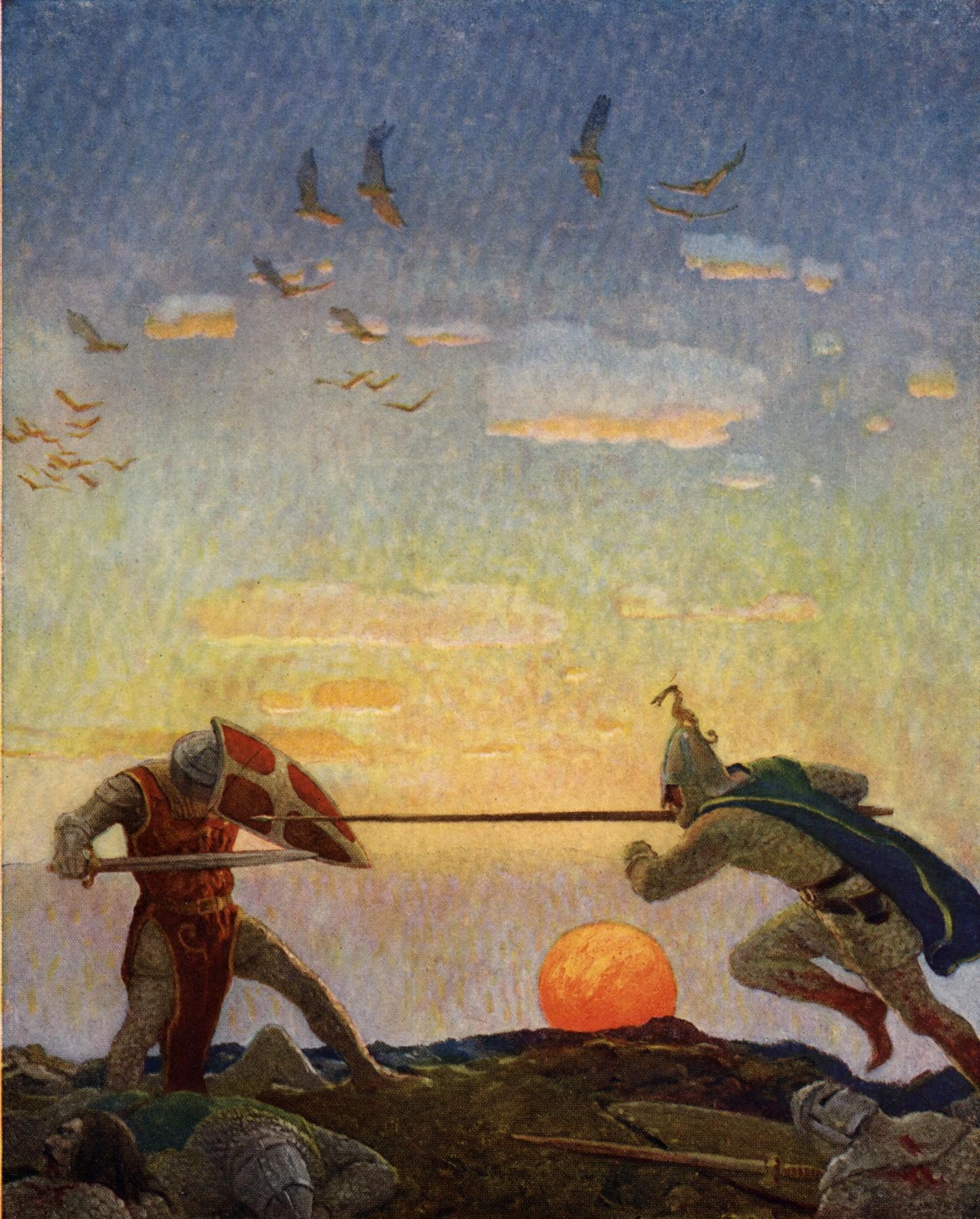
However, despite his prowess in battle and his efficacy as a leader, he was not able to beat Arthur. The king and his forces pushed through to the part of the rebel army where Mordred himself was. They inflicted a great slaughter of the rebels, and Mordred himself fell in this charge. Geoffrey does not specifically say that Arthur personally slew Mordred, although that possibility is left open.
Mordred in Welsh Tradition
It seems that all the surviving references to Mordred in Welsh documents actually post-date the Historia Regum Britanniae. However, that does not mean that they are derived from that work. It is very evident that they are clearly not.
For one thing, the spelling of Mordred’s name in Welsh tradition almost invariably begins with ‘Me-’ instead of ‘Mo-’. This is derived directly from the spelling used in the Annales Cambriae, which long predates Geoffrey of Monmouth.
The entry about Mordred in the Annales Cambriae clearly has a strong link to tradition in the Welsh language, since it refers to the Battle of Camlann in that entry using the Welsh word for ‘battle’ instead of the Latin word. Therefore, it is clear that Mordred was already a part of tradition in the Welsh language by the ninth century, and was not just known from Latin records.
Furthermore, the references to Mordred in Welsh tradition are often so different from Geoffrey’s description that it is clear that they did not derive from what he wrote.
The Welsh Triads
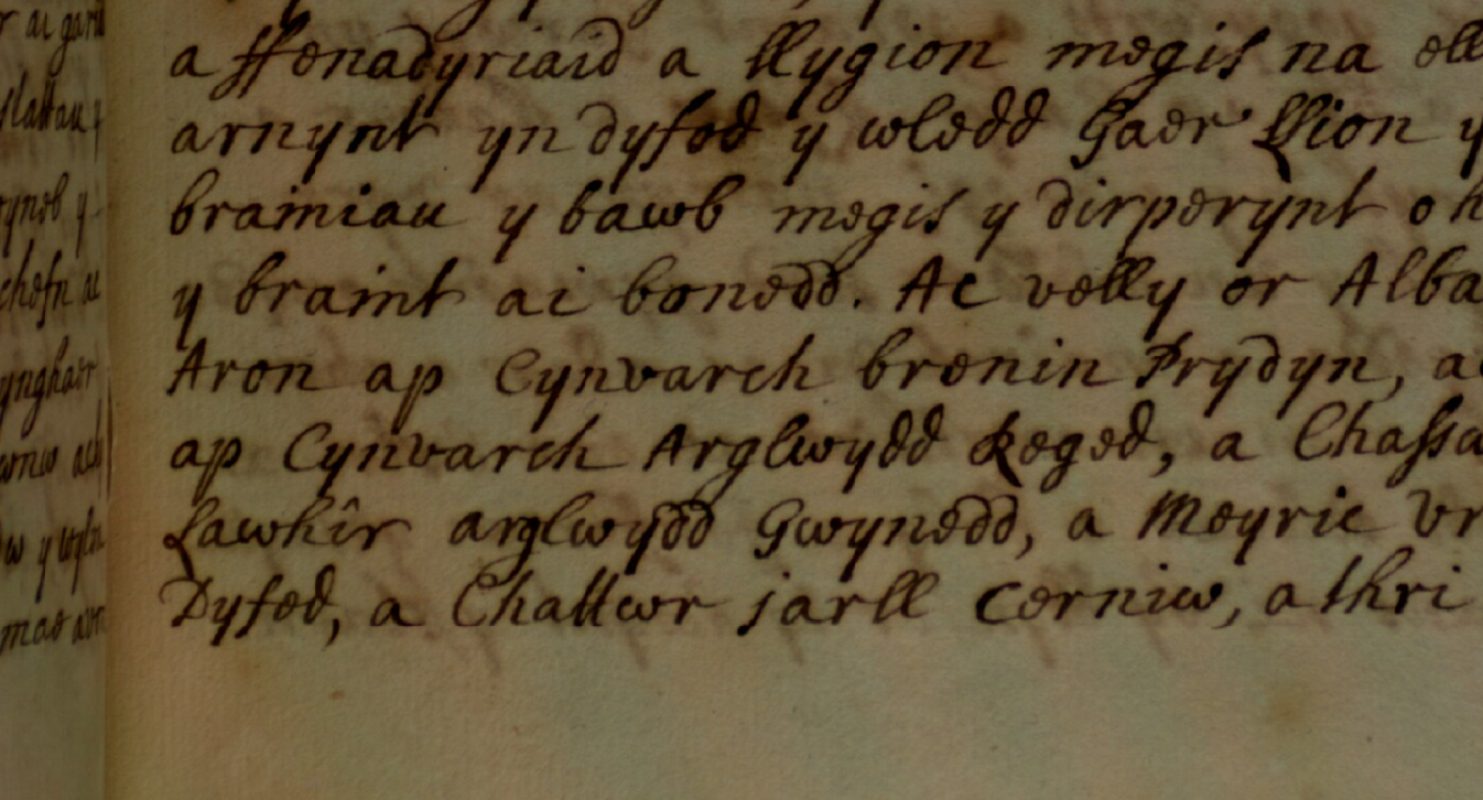
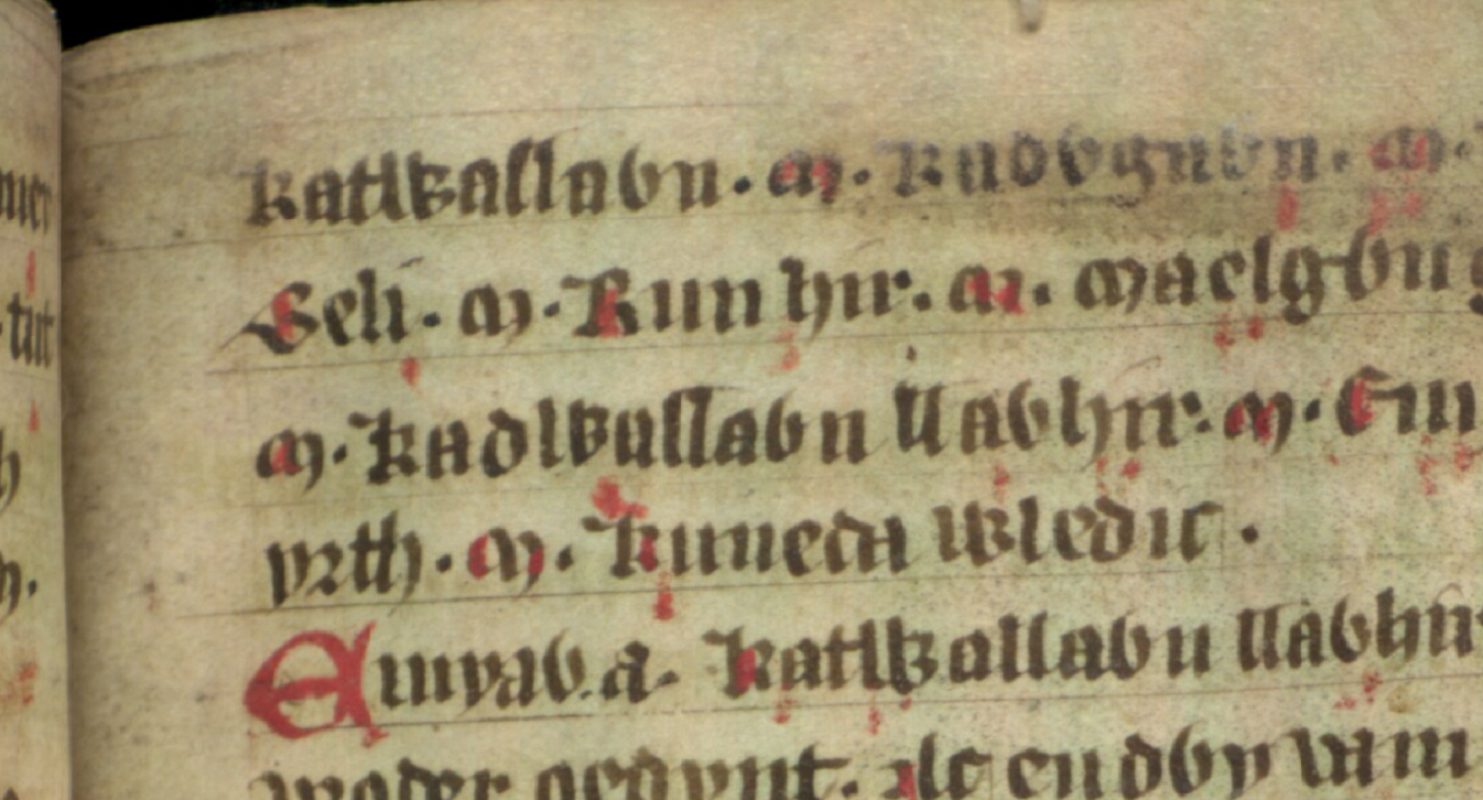
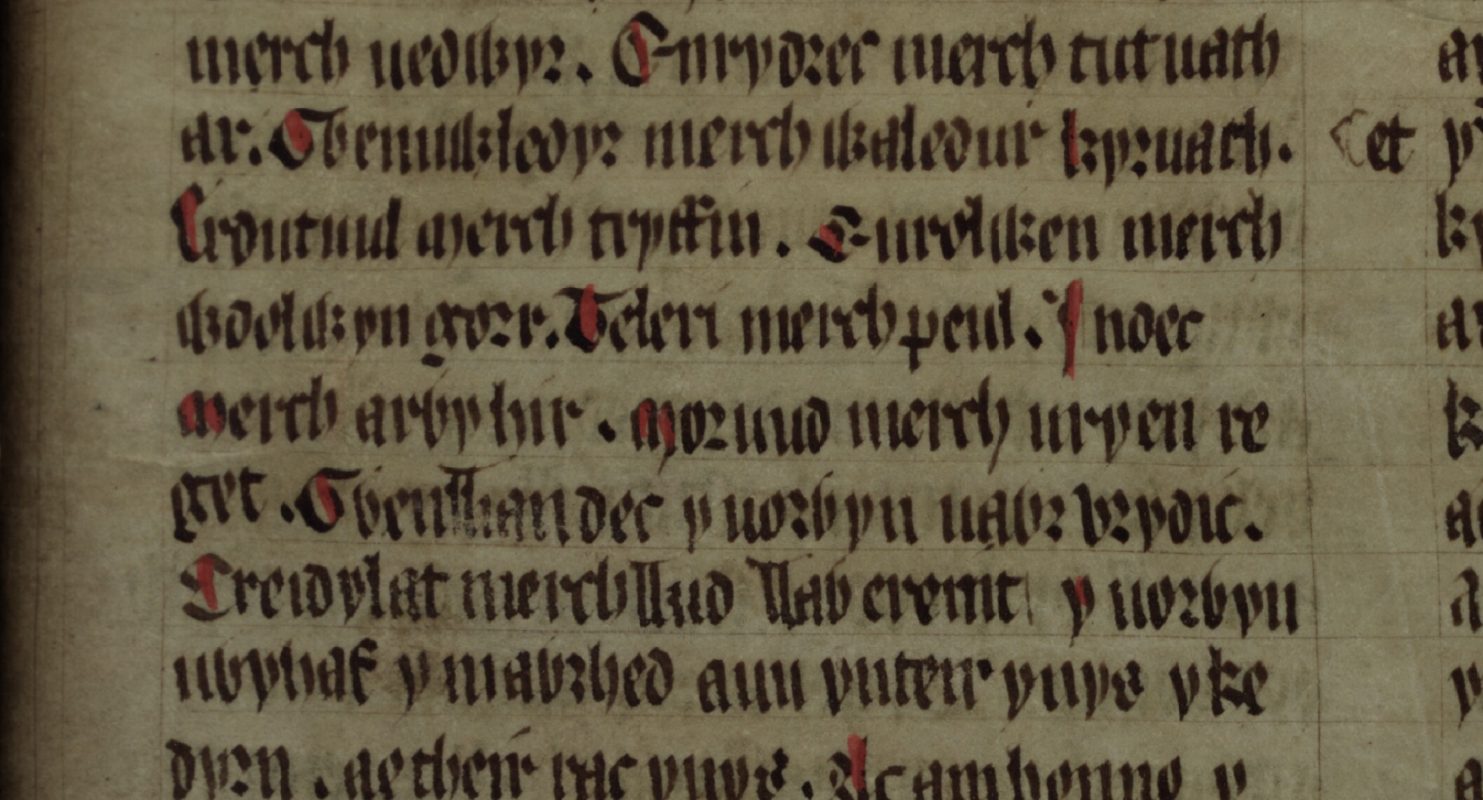
Mordred’s most prominent position in Welsh tradition is in the collection of Welsh legends called the Welsh Triads. These triads reveal snippets of information about Mordred.
One triad refers to the fact that Mordred ravaged Arthur’s court at Celliwig, leaving neither food nor drink there. On this occasion, Mordred dragged Guinevere from her throne and struck her. This, it seems, describes the moment when Mordred usurped the throne. While Geoffrey says that Guinevere married Mordred willingly, this triad indicates that Mordred used force to get his way.
In this same triad, it says that Arthur ravaged Mordred’s court and left neither food nor drink there. Exactly when in the civil war with Mordred this supposedly occurred is unclear. In a variant version of a different triad, Arthur strikes Mordred, and this is associated with the Battle of Camlann.
Another triad recounts essentially the same legend of rebellion as told by Geoffrey of Monmouth, although with some minor differences in the details. One interesting point provided by this triad is that it gives Mordred’s motivation for the usurpation – or at least, his motivation for choosing that particular moment. Describing the aftermath of Arthur’s war against the Romans, it says:
“When Medrawd heard that Arthur’s host was dispersed, he turned against Arthur, and the Saxons and the Picts and the Scots united with him to hold this Island against Arthur.”
So according to this, Mordred took the opportunity to usurp the throne of Britain after hearing how Arthur’s army had suffered from their last battle against the Romans, the Battle of Siesia.
The Dream of Rhonabwy
Mordred is also mentioned in a Welsh tale called The Dream of Rhonabwy. In this tale, a character called Iddawg explains that he sowed discord between Arthur and Mordred. Apparently, Arthur sent Iddawg to present terms of peace to Mordred, but Iddawg intentionally presented the request in an insulting way, resulting in Mordred refusing peace.
This story is also referred to in one manuscript version of the Welsh Triads. Scholar Rachel Bromwich accepted that this story, as well as the references to conflict between Arthur and Mordred from the other triads, may well reflect genuine Welsh tradition from before the Historia Regum Britanniae.
Was Mordred Originally a Hero?
In most discussions of Mordred, one major issue involves whether or not he was originally conceived of as a treacherous usurper. It is commonly said that Welsh makes Mordred one of Arthur’s loyal knights, even a symbol of excellence and moral virtue. This, supposedly, is inconsistent with the tradition of him being a traitor and thus indicates that the usurpation legend is unhistorical.
In reality, the evidence does not really support this idea. Or at least, it is a much more complicated issue than just that. As we have just seen, much of Welsh tradition definitely does present Arthur and Mordred as being in conflict with each other, and that includes triads which appear to be independent of Geoffrey of Monmouth (such as the one about them ravaging each other’s courts).
Furthermore, it is worth looking at exactly what the sources are which supposedly contradict the idea that Mordred was a traitor.
One of the Three Royals Knights
One triad which we have not yet considered is the triad known as the Three Royal Knights of Arthur’s Court. Mordred (spelt ‘Medrod’ here) is included as one of the three. About them, the triad explains:
“There was neither king nor emperor in the world who could refuse them, on account of their beauty and wisdom in peace; while in war no warrior or champion could withstand them.”
The description of Mordred here has been viewed by many as inconsistent with his role as a traitor.
References by Welsh Poets
Similarly, a number of medieval Welsh poets referred to Mordred. Some of these references are ‘indeterminate in their character’, as explained by Rachel Bromwich. Others appear to refer to Mordred positively.
For example, the poet Meilyr, in 1137 or just after, composed a poem praising his former lord Gruffydd ap Cynan. In this poem, he referred to him as having ‘the nature of Medrawd’, apparently in reference to Mordred’s courage in battle.
Meilyr’s own son, named Gwalchmai, also referred to Mordred. He praised his patron, Madog ap Maredudd, as having Arthur’s strength and ‘Medrawd’s good nature’. Again, this appears to be inconsistent with the idea of Mordred being a traitor.
Issues with This Theory
There are some important issues with this theory. One key issue is that it ignores the fact that it is entirely possible to refer to how Mordred was before he usurped the throne. After all, it is absolutely clear in the traditions that do speak of Mordred’s treachery that he was not evil from the start.
As highlighted previously, the very fact that Arthur entrusted Mordred with the kingdom shows that he must have been a capable leader. Geoffrey’s account repeatedly makes a point of showing this. He even goes as far as explicitly saying that Mordred was ‘always the quickest at making an attack’. In fact, Geoffrey describes him as ‘the boldest of men’.
Therefore, the reference by the Welsh poet Meilyr to Mordred’s courage in battle is completely in line with what Geoffrey describes. This also ties in with the description of Mordred in the triad about the Three Royal Knights of Arthur’s Court.
That triad also referred to Mordred’s wisdom. Again, this is in line with how Geoffrey portrays Mordred. The very fact that Arthur chose Mordred as regent is indicative of his wisdom, but this is reinforced by his ability to stir his men to courage, which requires persuasiveness.
Does this Explanation Really Work?
However, is it really logical that the Welsh poets would have mentioned Mordred’s positive qualities if he was also known for having turned villainous in the end? Would that really have been a positive comparison for their patrons?
An example of this exact situation appears in the Bible. King Solomon was famous for his material glory and his wisdom. Yet, he was also known for becoming unfaithful and wicked in the final part of his life. Despite this, with full knowledge of his unfaithful end, the gospels show Jesus himself positively comparing himself to Solomon. He also used Solomon as a positive example to whom he compared others.
Thus, the concept of using someone as a positive standard even if they ended up wicked is demonstrably a valid one. Furthermore, the chronology of this issue requires it to be the case.
After Meilyr’s poem (which is exactly contemporary with the Historia Regum Britanniae), all the other references to Mordred from the Welsh poets and the triads date to after Geoffrey wrote. Geoffrey’s book was incredibly influential, both inside Wales and outside. With the publication of his book, Mordred absolutely came to be known as a treacherous usurper.
The fact that the Welsh poets continued to use Mordred for some positive comparisons evidently is not inconsistent with his reputation as a traitor at the end of his life, because that reputation was already well established by the time all but one of these Welsh references appear.
Later Legends about Mordred
After Geoffrey of Monmouth’s Historia Regum Britanniae, various European and English writers wrote about the legend of Arthur. These legends continue giving some prominence to Mordred. In fact, probably to make Arthur’s downfall more poetic, many of the later legends make Mordred Arthur’s son.
These later legends provide a lot more information about Mordred’s service to Arthur before his usurpation. However, contrary to the Welsh tradition and what is implied by Geoffrey of Monmouth, they portray Mordred as villainous essentially from the start. He is shown to attack, rape and murder women, and get involved in conflicts between royal families.
In these later legends, Mordred starts his usurpation by revealing the affair between Guinevere and Lancelot, one of Arthur’s other knights. This sparks a war between them, leading to Arthur pursing Lancelot to France. Mordred takes this opportunity to make himself king.
Did Mordred Really Exist?
As one of the most significant figures in the Arthurian legends, Mordred’s historicity is an important issue. Was he a historical figure? Was he a mythical figure who was later historicised? Or was he just a fiction who gradually emerged as the Arthurian tradition evolved?
As we saw earlier, his uncle was Urien Rheged, a historical sixth century king, as was his cousin Owain. His father was Lleuddun, a likely-historical king of Lothian. His two sons were mentioned by the contemporary writer Gildas. Therefore, the character of Mordred is surrounded by various figures known to have really existed.
In addition, the battle with which Mordred is associated – the Battle of Camlann – is historically plausible, given the information provided by Gildas about civil conflict about a generation after the Battle of Badon. None of this proves that Mordred himself really existed, but it does mean that he is firmly in the centre of a wider tradition that is definitely rooted in the true history of the sixth century.
Furthermore, there is also the obvious fact that he appears in the written record as early as the tenth-century Annales Cambriae. The evidence that this entry was based on existing Welsh tradition pushes the evidence for Mordred even further back.
Evidence from Gildas
One piece of more specific evidence for Mordred’s existence comes from Gildas. In his description of Britain after the Battle of Badon, he specifically says that it was the generation that grew up after Badon, which never knew the pain of foreign warfare, which caused the civil conflict which was still around in his own time.
The Historia Regum Britanniae does not provide Mordred’s age at the Battle of Camlann, but it does indicate that his brother Gawain was born at the same time as, or just after, the Battle of Badon. Since there is no reason to think that there was a large age gap between them, Mordred would likewise have logically been of that same generation, the generation which grew up after Badon.
Although this does not confirm Mordred’s existence, it does support what the legends say about him.
Conclusion
In summary, Mordred is one of the most crucial figures of the Arthurian legends. He is the figure who finally manages to cause the downfall of Arthur’s rule. It was Mordred who, according to legend, introduced an era of civil conflict among the Britons. He was the nephew of Arthur, the son of Arthur’s sister Anna, or Gwyar. Despite some modern claims to the contrary, it is likely that he was always considered an antagonist to Arthur. Whether he really existed or not is impossible to say, but all the available evidence favours the conclusion that he did.
Sources
Padel, Oliver, Arthur in Medieval Welsh Literature, 2013
Bartrum, Peter, A Welsh Classical Dictionary, 1993
Bromwich, Rachel, Trioedd Ynys Prydein: The Triads of the Island of Britain, 2014
https://mistshadows.blogspot.com/2018/06/my-suggestion-to-professor-oliver-j_20.html