Indeg daughter of Garwy Hir, Concubine of King Arthur

Indeg daughter of Garwy Hir is a very obscure figure from the Arthurian legends, but she is important inasmuch as she was said to have been one of King Arthur’s three main concubines. In this article, we will examine the various disparate references to her and her family members and attempt to construct a plausible profile of her family’s connection to Arthur.
Who Was Indeg daughter of Garwy Hir?
Indeg is a figure who appears in the Arthurian legends in several Welsh texts. She is best known as one of King Arthur’s concubines, or mistresses.
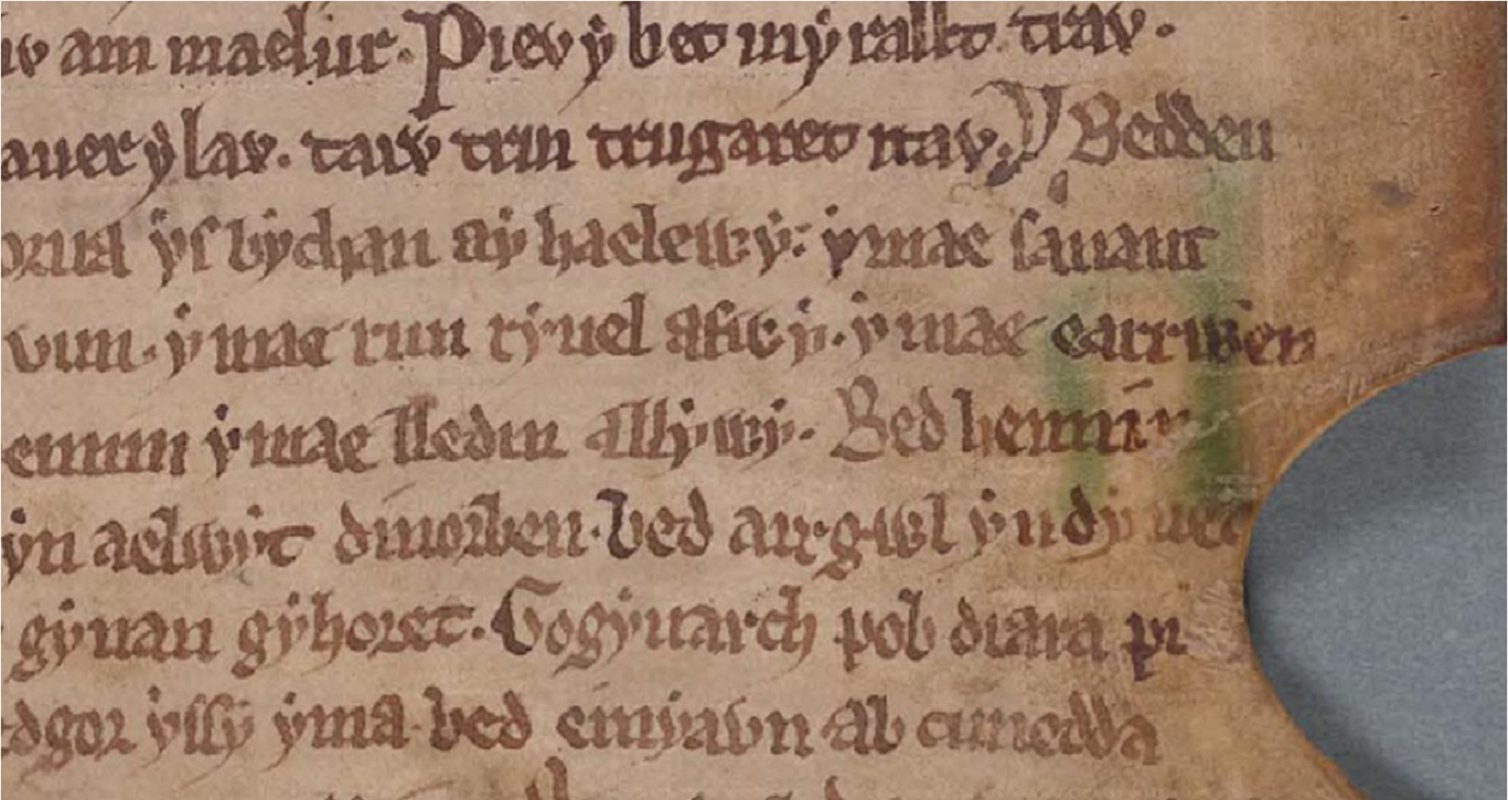
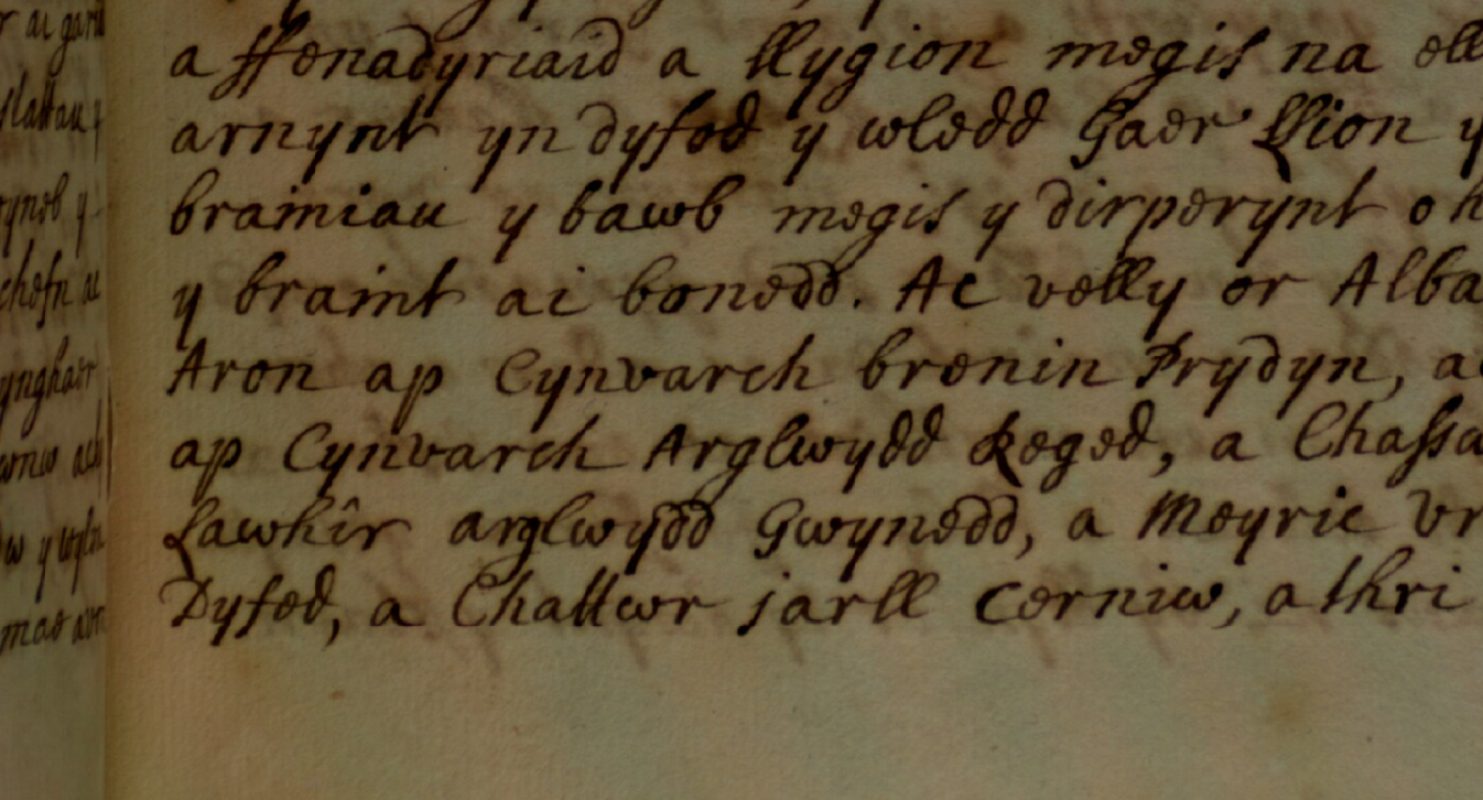
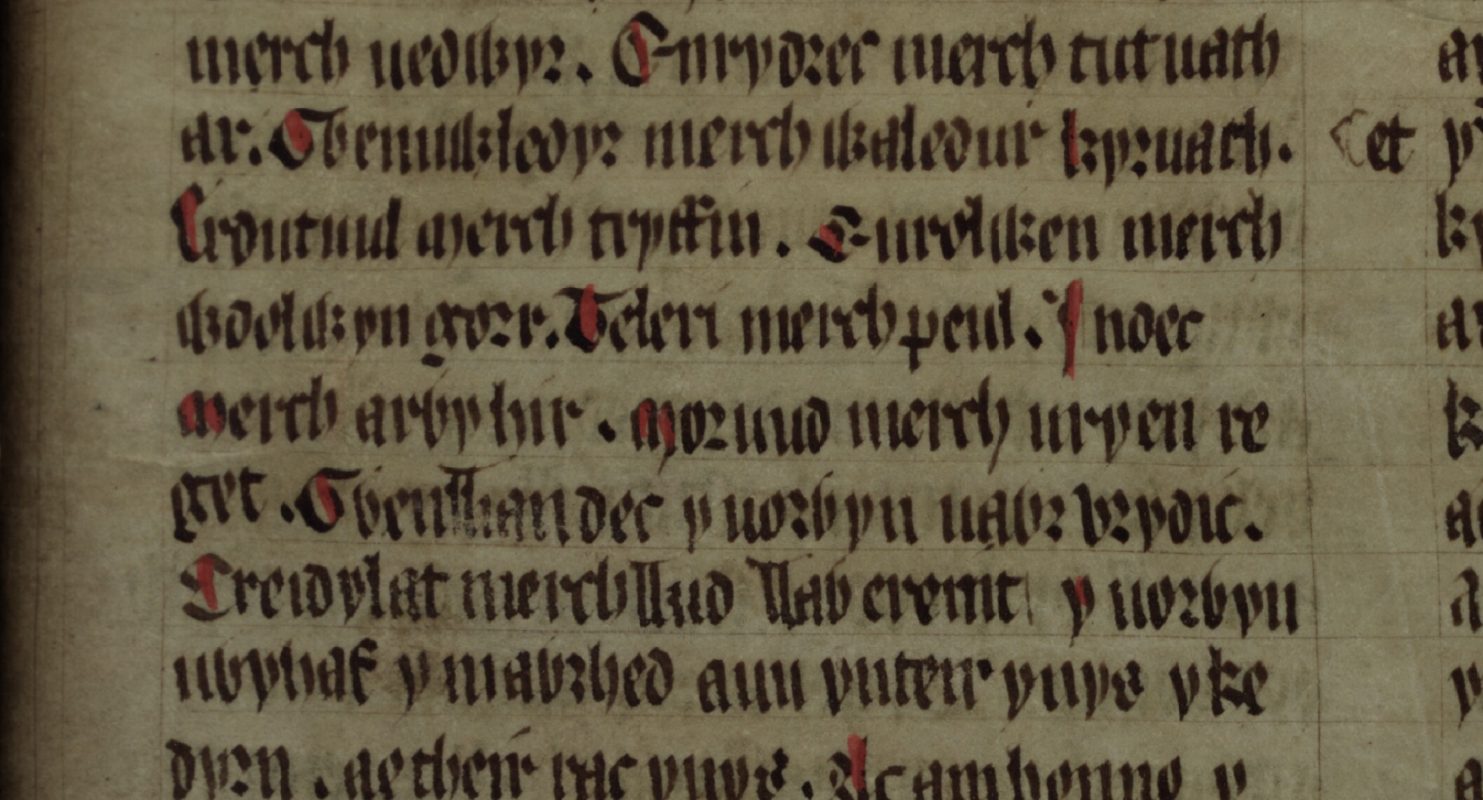
The main source text for this figure is the Welsh Triads. She appears in Triad 57, immediately after the triad listing Arthur’s Three Great Queens (the three Gwenhwyfars). The thematic connection between the two triads is obvious, so much so that Triad 57 actually begins with the Welsh word for ‘and’, showing that it is clearly related to the previous triad.
The triad begins:
“And his Three Concubines were these:”
Indeg as Arthur’s Concubine
As we can see here, Indeg is called a concubine. She was thus a lesser wife than Arthur’s three great queens, whom he appears to have married successively rather than concurrently. In many online sources, the word ‘mistresses’ is used instead of ‘concubines’, suggesting that these were women with whom Arthur simply had a brief encounter.
However, the word ‘concubines’ is consistently used by scholar Rachel Bromwich in her authoritative edition of the Welsh Triads. This suggests that these women had a more official connection to Arthur than merely being mistresses, but they did not achieve the status of full queen.
Triad 57 then goes on to mention the names of the three concubines, along with their parentage. Indeg is the first one mentioned. This suggests, all other things being equal, that she was the earliest of the three women to become Arthur’s concubine, since the triads are often (although not always) in chronological order. However, we will examine this in more detail later.
Indeg’s Name
There are various different manuscripts that contain the Welsh Triads, meaning that there are often several different attested spellings of the names contained therein. The case of Indeg is no different.
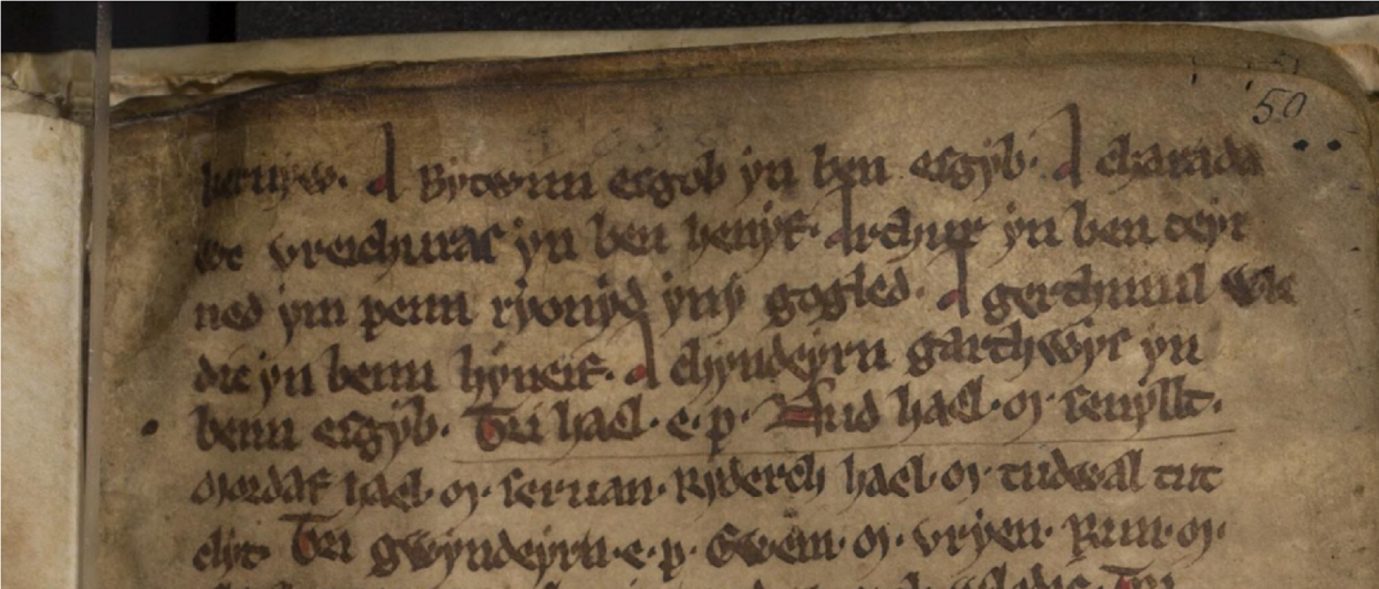
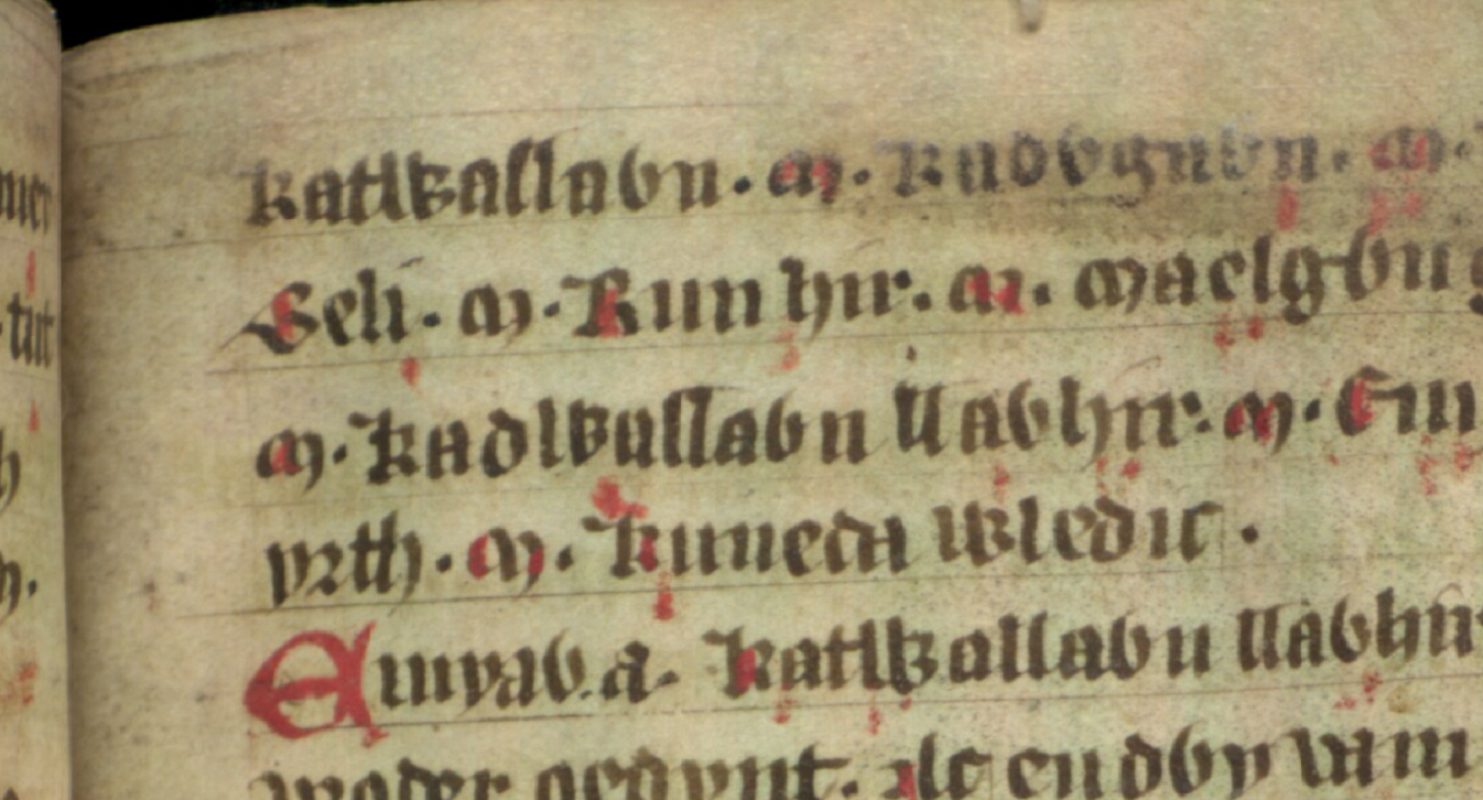
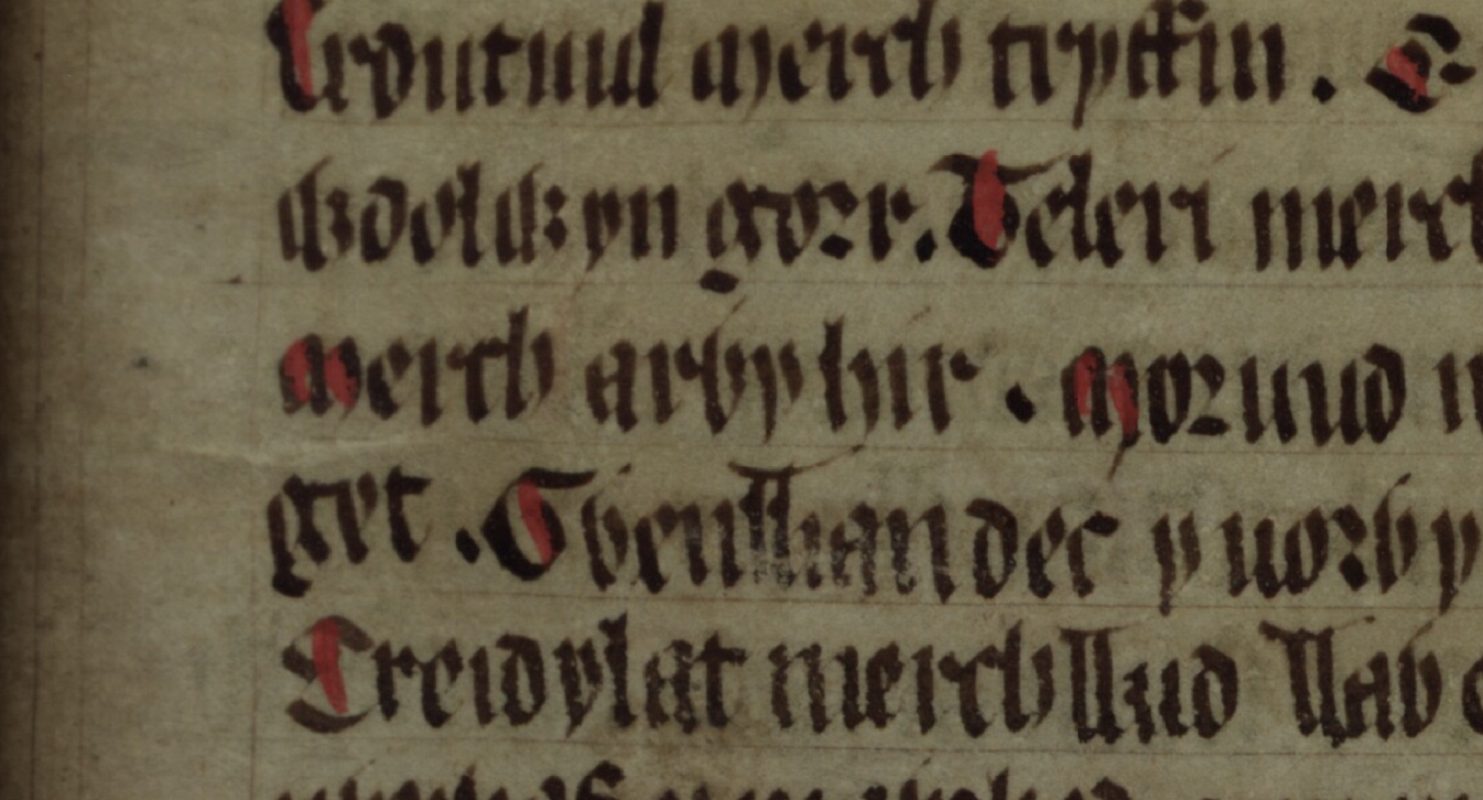
The form ‘Indeg’ is used by modern sources because this is the expected modern Welsh spelling of the name. However, in the White Book of Rhydderch, which contains the earliest version of this triad, her name is actually spelt ‘Indec’. The change from a final ‘c’ to a ‘g’ is common in modern Welsh (as in ‘Cadog’ from ‘Cadoc’, for example).
In another manuscript, her name is spelt slightly differently. It is spelt ‘Undeg’. Here, the final ‘c’ has already become a ‘g’, but the initial vowel has become a ‘U’.
Another variant spelling from the Welsh Triads is ‘Andec’. Again, the main difference is in the initial vowel, which is ‘A’ in this case.
The initial ‘I’ is favourable for two reasons. For one thing, it is used in the White Book of Rhydderch, which, as already mentioned, is the earliest surviving source for this triad. Secondly, the same spelling, ‘Indec’, is also used in another early text in which this figure appears. Let us now examine that other text in more detail.
Indeg in Other Welsh Texts
Outside of the Welsh Triads, it appears that there are only two Welsh texts which make reference to Indeg daughter of Garwy Hir. It is the first of these which spells her name ‘Indec’, just like in the White Book of Rhydderch.
Indeg in Culhwch and Olwen
The text in question is the Welsh prose tale known as Culhwch and Olwen. This is the earliest Welsh prose Arthurian tale, dating to c. 1100. It contains the story of Culhwch attempting to gain the hand of Olwen in marriage, engaging on numerous adventures to do so. Arthur and his men help him on those adventures.
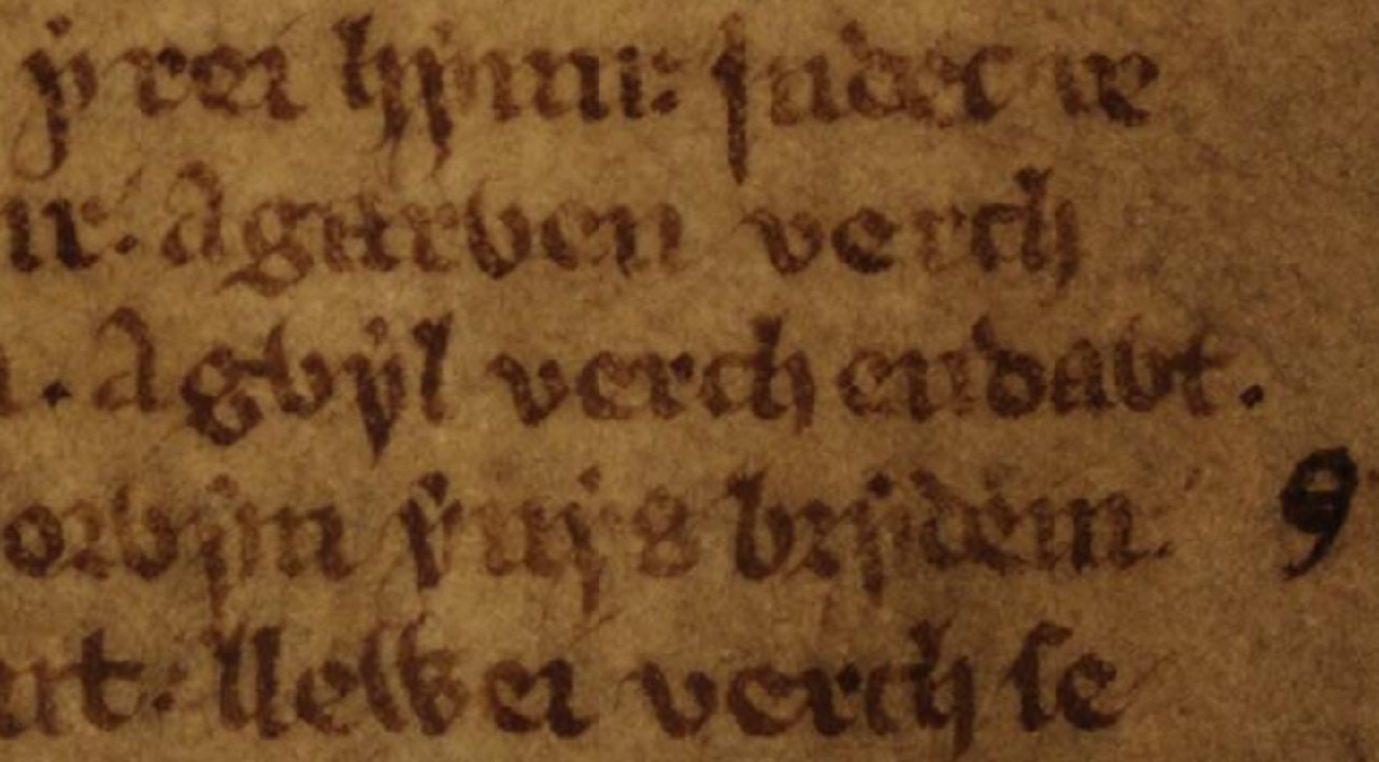
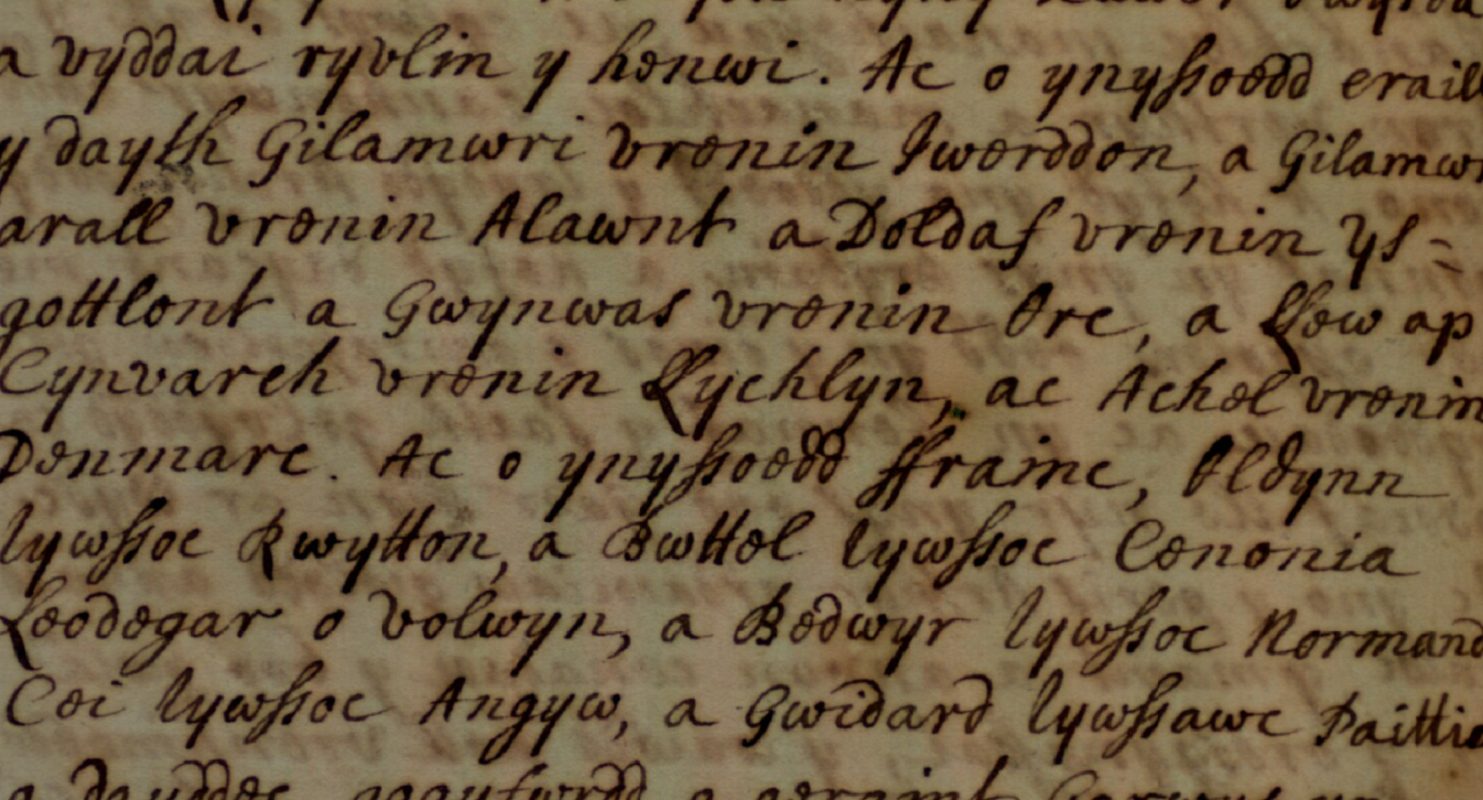
In one passage of the story, numerous allies of Arthur are listed, followed by references to various important women within his kingdom. Unsurprisingly, Arthur’s queen Gwenhwyfar is listed first. Several women further down, we find a reference to Indeg daughter of Garwy Hir.
In this passage, she is not specifically described as the concubine of Arthur. This is not necessarily unusual, though, since almost none of the women’s names are followed by explanations of who they were. In any case, this does show that she was considered to have been a notable and important woman within Arthur’s kingdom. This is consistent with the tradition that she was one of Arthur’s concubines.
Indeg in Gruffudd ap Maredudd’s Poem
It would appear that the only other reference of note to Indeg in the medieval Welsh sources is an obscure reference in a poem which does not directly name her. The poem was written by Gruffudd ap Maredudd in the fourteenth century.
The passage which mentioned Indeg reads:
“Mine is the same share of suffering as Arthur had from the uplands of Britain,
For the sake of a beautiful, generous girl,
(The token of her fame shall be burnished,
One with skin the hue of snow), for the daughter of Garwy Hir.”
This brief reference to Arthur’s love for Indeg does not name her, but her identity is evident from the naming of her father.
What This Passage Reveals
From this poetic passage, we learn several things about her. She was apparently notably fair-skinned, having skin ‘the hue of snow’. She is also described as beautiful and generous.
Of particular note is the first line in this passage. The fact that Arthur is said to have suffered for the sake of this beautiful girl suggests that there was originally a story about his efforts to win her love or perhaps to complete certain difficult tasks to win her hand in marriage, similar to the story of Culhwch and his love for Olwen.
Alternatively, it may have to do with some trial involved in rescuing her after she had already become his concubine. In any case, it is evident that Arthur was said to have suffered in some way in as a result of his love for Indeg.
What is especially interesting about this is that Arthur is said to have suffered for this reason in the uplands of Britain. What exactly this means is unclear. The ‘uplands’ presumably refers to one of the mountainous regions of Britain. This might be a reference to the mountains of North Wales, the Peak District, the Lake District, or even the Scottish Highlands.
Based on just these references, we cannot narrow this down any further. Fortunately, however, there is quite a bit of information available about her family, and this can help us to understand better who Indeg was and where and when she lived.
Indeg’s Family
In this section, we will examine what we know about Indeg’s family. This will allow us to place her more precisely, both in terms of where she lived and also when she lived.
Father
The most direct piece of information that we have about Indeg is that her father was Garwy Hir. His epithet, ‘Hir’, means ‘Tall’. Hence, he was Garwy the Tall, evidently meaning that he was a large man.
There are a variety of poetic references to Garwy Hir from the bards of medieval Wales, although most of them are only passing references that provide no helpful information about him. Generally, these simply indicate that he was remembered as a great lover.
The most helpful reference would appear to be from Hywel ap Einion Llygliw of the fourteenth century. He reveals that the object of Garwy’s love was a woman named Creirwy. We will consider her in more detail next.
Where Garwy Likely Lived
For now, let it be noted that Hywel’s reference to Garwy was in the context of a poem to a prince of Powys. This means that Garwy was evidently a legendary figure who was at least relatively well known in Powys in the fourteenth century.
This might indicate that this was the area of Garwy’s origin, although it is only indicative.
Supporting this conclusion is a poetic reference to Garwy by a different Hywel. This was Hywel ap Owain Gwynedd of the twelfth century. He mentions that Garwy loved someone in Llys Ogyruann.
A place by this exact name is unknown from other records, but it is very likely a reference to one of the royal courts of Gogfran Gawr. His name also frequently appears as ‘Ogfran’ and similar variations. Several sites in Powys are described in Welsh tradition as belonging to him, usually being known by names similar to ‘Caer Ogyfran’.
Hence, it seems likely that Llys Ogyruann is supposed to have been another site belonging to Gogfran (or possibly another name for one of the attested sites). The fact that Gogfran was firmly associated with Powys harmonises well with the observation that Garwy and his love for someone in Llys Ogyruann was mentioned in a poem directed to a prince of Powys.
Mother
We cannot say for certain who the mother of Indeg was. However, there is the obvious likelihood that her mother was the woman recorded as the lover of Garwy, Indeg’s father. As we have already seen, the bard Hywel ap Einion Llygliw stated that his lover was a woman named Creirwy.
We have also seen that the bard Hywel ap Owain Gwynedd mentioned Garwy’s love for a woman at Llys Ogyruann, which likely corresponds to one of the legendary courts of Gogfran in Powys.
Based on this evidence, we can see that Indeg’s presumed mother, Creirwy, was evidently relatively well known in North Wales, given the geography of the bards who composed the two aforementioned poems, particularly towards the east (where Powys is) rather than the west.
Which Creirwy Was the Mother of Indeg?
There are only three women named Creirwy to be found in the medieval records about the Arthurian period. One was from Scotland, and another was from Brycheiniog. The Creirwy from Brycheiniog is plausible on a geographical basis, but there is an even better candidate.
The third Creirwy was the daughter of Ceridwen, a relatively famous figure from Welsh mythological tradition. Ceridwen appears in the tale Hanes Taliesin and is presented as having magical powers. She is shown to live at Llyn Tegid with her husband, Tegid Foel.
Llyn Tegid is in Gwynedd, very near the border of Powys. It is about 20 miles (a day’s walking distance) directly west of Oswestry, at which there was formerly a site known as Caer Ogyrfan. This latter site could plausibly have been the location of Llys Ogyruann, with which Garwy and Creirwy were associated.
With these facts in mind, it seems very likely that Garwy’s lover Creirwy should be identified with Creirwy the daughter of Ceridwen. Hence, she was evidently a princess from this minor dynasty in North Wales.
Creirwy does not feature prominently in Welsh tradition, but she does appear in the Welsh Triads in Triad 78. She is listed as one of the Three Fair Royal Ladies of the Island of Britain.
Where Did Indeg Live?
What does this mean for Indeg? It means that she was apparently a relatively minor princess born from Garwy, perhaps a subking of Powys, and Creirwy, a princess from Gwynedd.
This information helps us to establish where Indeg likely lived. The home of Ceridwen is firmly placed at Llyn Tegid in Gwynedd. The Llys Ogyruann with which Garwy is associated can likely be identified with Caer Ogyrfan at Oswestry, or a nearby location.
Therefore, Indeg’s family home can logically be placed in either of those two locations, or somewhere within the 20-mile stretch in between them. Of course, Creirwy and Garwy may have moved somewhere else entirely after getting married, but we have no active reason to think that.
We should also bear in mind the fact that Gruffudd ap Maredudd’s poem appears to associate Indeg with the ‘uplands of Britain’. This suggests that she lived in a mountainous region. While the mountains of northern Powys are much smaller than those of Gwynedd, it may be that this is a reference to North Wales generally.
We might even propose that the tradition to which Gruffudd was referring described Arthur as going on several quests across North Wales so as to win the hand of Indeg, similar to what Culhwch had to do in Culhwch and Olwen. Of course, this is merely speculation.

Her New Home with King Arthur
While the aforementioned argument is related to her family home, Indeg would presumably have moved after becoming one of Arthur’s concubines. We can logically conclude that she would have been brought closer to Arthur’s personal territory, where she would have lived as a member of his royal court.
Arthur, for his part, is most consistently associated with southeast Wales. For example, the Mirabilia of the ninth century connects him to the southern half of Wales and Ergyng, just across the present-day border of southeast Wales and England.
Welsh tradition firmly associates Arthur with the royal court of Gelliwig in a region named Cerniw. Medieval records attest to a location called Gelliwig in Gwent, where there is evidence that there was historically a region called Cerniw.
In addition, the Lives of the Saints generally associate Arthur with that general region. For example, the Life of St Illtud implies that Arthur’s royal court was not far from the court of Poulentius, described as a king of Glamorgan. The Life of St Cadoc also places Arthur in Glamorgan, both as a young man and decades later as a reigning king.
Therefore, it is most likely that Indeg was brought down from her family home in North Wales to somewhere within Arthur’s kingdom in the southeast. Where exactly she lived, we cannot say.
When Did Indeg Live?
Now that we have seen who Indeg’s family was and roughly where she lived, what can we say regarding when she lived? Since the lineage of her father, Garwy, is entirely unknown, the key lies in analysing her mother, Creirwy.
Although Creirwy’s parents, Ceridwen and Tegid, are known from the records, firm chronological information about when they lived is not easy to establish. Another one of their children, a daughter named Tegfedd, is recorded as the wife of Cedig ap Ceredig ap Cunedda. While Cunedda’s chronology is quite well established, his birth having occurred in c. 370, there is strong evidence that this particular lineage involving Cedig is defective.
Notably, the story of Ceridwen in Hanes Taliesin is directly about the birth of Taliesin himself. It is generally agreed that Taliesin was primarily a mid- to late-sixth century bard. For instance, he outlived King Urien (one of his patrons), who died in the 590s. Therefore, placing his birth in approximately 520 at the earliest seems reasonable.
This would mean that Ceridwen, presented as Taliesin’s mother in Hanes Taliesin, would likely have been born in c. 500. This would mean that Creirwy should have been born in approximately 520, like her brother Taliesin, and then her own daughter Indeg would have been born another twenty years later, in c. 540.
How This Harmonises with King Arthur’s Chronology
It might be thought that these dates are much too late to allow Indeg to have been the concubine of King Arthur. The date of his death is commonly placed in 537, on the basis of the Annales Cambriae, a tenth century chronicle.
It is for this reason that even Taliesin, in the generation before Indeg, is regularly stated to have not historically been a contemporary of Arthur despite what Welsh tradition claims.
However, there is considerable early evidence that the dates in the Annales Cambriae are several decades too early. If we use the earlier material found in the Historia Brittonum, a whole century before the Annales Cambriae, we find strong support for this later Arthurian chronology.
Evidence from the Historia Brittonum
For example, while that tenth-century chronicle places Arthur’s final victory against the Saxons in 516, the Historia Brittonum indicates a much later date. It tells us that during Arthur’s engagements against the Saxons, they sought ever more support from the continent. The passage then directly says that this continued until the reign of Ida of Bernicia, whose reign started in 547 and continued until 559.
Furthermore, Gildas was a sixth-century monk who placed that final battle against the Saxons forty-three years before he wrote, which was during the reign of King Maelgwn (and others). This means that Maelgwn was reigning forty-three years after that battle.
The Historia Brittonum places the start of Maelgwn’s rule 146 years after Cunedda arrived in North Wales. Scholars such as Bartrum and Bromwich agree that this arrival likely occurred after 425. Hence, this would place the start of Maelgwn’s rule in 571 at the earliest.
The fact that the Historia Brittonum directly makes Maelgwn a contemporary of bards such as Taliesin and Aneirin supports this chronology.
Evidence from Welsh Poetry
An early Welsh poem which may well have authentically been composed by Taliesin is Trawsganu Kynan Garwyn mab Broch. This records a conflict between Cynan Garwyn and Aircol. Cynan was a mid- to late-sixth century king, and Aircol was the father of Vortipor, one of the other kings who were still ruling when Gildas was writing.
Hence, Vortipor’s reign must have been in the second half of the sixth century. Otherwise, the career of his father Aircol would not have overlapped with that of Cynan Garwyn.
This supports the conclusion that Gildas was writing well into the second half of the sixth century. In turn, this would mean that Arthur’s final victory against the Saxons occurred at about the middle of that century.
What This Means for Indeg
Since, by all accounts, King Arthur’s reign continued for many years after this final battle against the Saxons, this allows for plenty of time for Indeg to have grown old enough after her birth in c. 540 for her to have become the concubine of Arthur.
This revised Arthurian chronology based on the earliest evidence would allow for her concubinage to have begun as late as 560, or even later.
Rather than being an anachronism, the Welsh tradition of Arthur having Indeg, the niece of Taliesin, as a concubine simply reinforces the evidence for this late chronology.
Additional Evidence from Indeg’s Other Uncle
The fact that this chronology is internally consistent is shown by the tradition surrounding Indeg’s other uncle. The uncle in question was Morfran, son of Ceridwen and Tegid. He was the brother of Creirwy, Indeg’s mother.
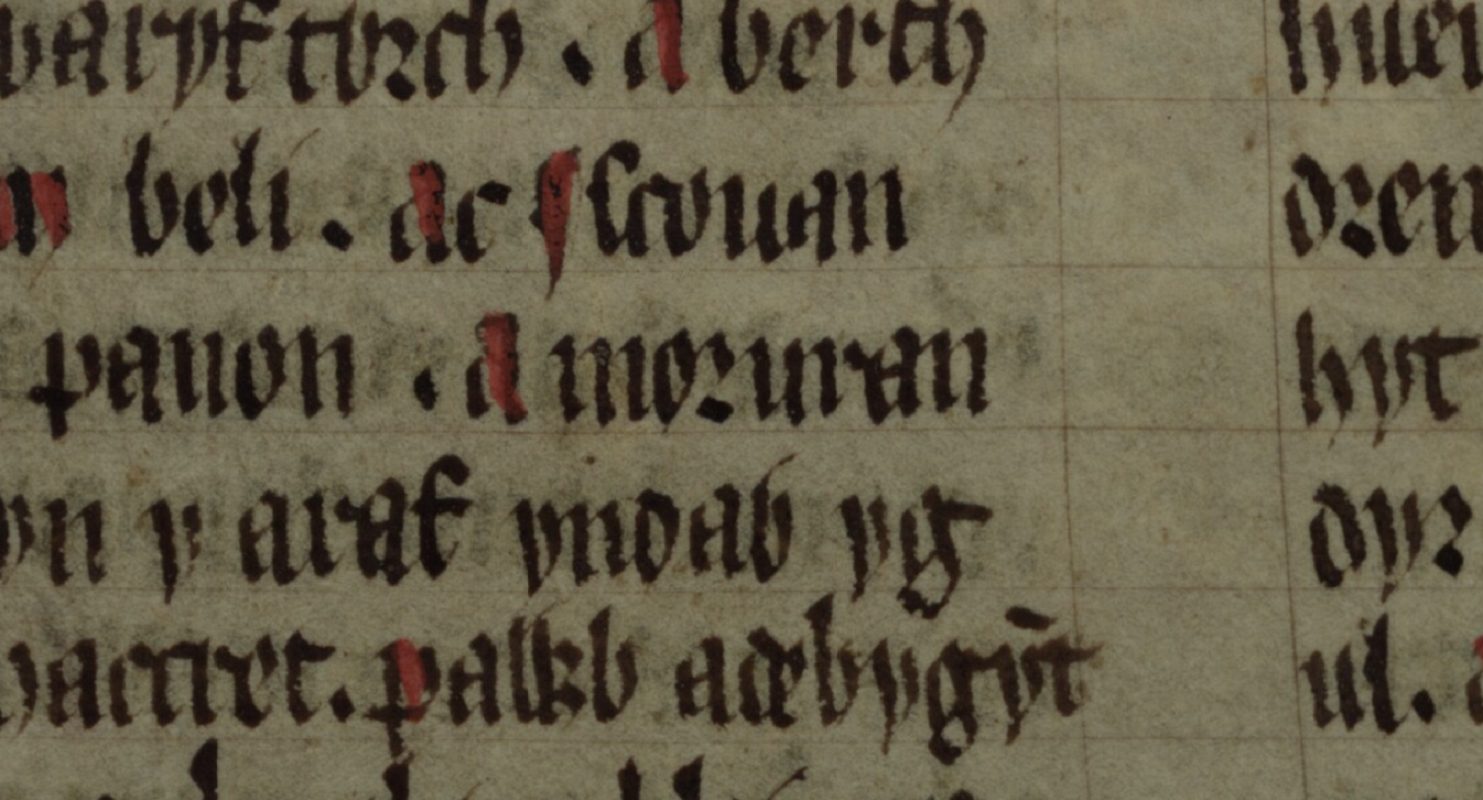
In Culhwch and Olwen, Morfran is listed as one of Arthur’s men. He is described as being one of the men who fought at the Battle of Camlann, Arthur’s final battle. The text says that he was so ugly that people fighting at the battle thought that he was a demon, which is one of the reasons that he was able to survive.
Among other things, this supports the conclusion that Indeg was much younger than Arthur, in line with the estimate of c. 540 for her birth. The evidence from Culhwch and Olwen itself is that Arthur’s son Gwydre was already an adult (albeit young) by the time of the Battle of Badon.
The Battle of Camlann occurred some twenty years or so later, according to the Annales Cambriae. Hence, combining this information would mean that Arthur was likely in his sixties at the time of the Battle of Camlann.
If Indeg’s uncle, Morfran, was still young enough to be active in battle by the time that event took place, then he was almost certainly not older than Arthur. Therefore, his niece would have been at least a generation younger than Arthur, if not more.
Hence, the evidence is entirely consistent that Indeg was born well into Arthur’s reign and was much younger than him. This is the conclusion we reach from both the information about Taliesin and the information about Morfran.
How This Also Supports the Revised Arthurian Chronology
It is also worth briefly pointing out how Morfran’s involvement in the Battle of Camlann not only supports the conclusion that Indeg was much younger than Arthur, but also supports the absolute date of approximately 540 for her birth.
The Battle of Camlann was said to have been between Arthur and his nephew Mordred, or Medrawd. As early as the Annales Cambriae, where the battle is first mentioned, Medrawd is shown to have been involved.
Welsh tradition makes Medrawd the son of Llew, brother of Urien Rheged. Thus, Medrawd was Urien’s nephew and the first cousin of Urien’s own son Owain. The evidence about Urien firmly places him in the mid to late sixth century. Hence, his nephew Medrawd obviously must have been a figure of the second half of the sixth century.
This supports the conclusion that the date of the Battle of Camlann should be moved forward several decades, in line with placing the Battle of Badon in about the middle of the sixth century and keeping Camlann about twenty years after it.
Therefore, with Indeg’s uncle Morfran involved in that battle as a warrior, it is evident that he cannot have been born any earlier than the early sixth century. More comfortably, he may have been born c. 520, like Taliesin. Hence, this strongly supports placing Indeg’s birth in c. 540.
Was Indeg Really King Arthur’s First Concubine?
Earlier, it was mentioned that Indeg’s appearing first in the triad in which she is mentioned suggests, all other things being equal, that she was probably Arthur’s first concubine.
Now that we have seen the information about her chronology, it is notable just how late into his reign she must have been born. She is unlikely to have become Arthur’s concubine any earlier than c. 560. Is it really reasonable to believe that she was the first concubine that he had?
Unfortunately, there is very little information available about the other two concubines mentioned in the triad about them. Therefore, there is nothing known about them that definitely requires them to have become Arthur’s concubines before Indeg.
Nevertheless, the information that we do have about them allows for them to have become Arthur’s concubines a fair bit earlier than 560. This argues against Indeg being the first concubine.
Furthermore, there is a record of another concubine (or possibly mistress) of Arthur’s who is not mentioned in this triad. Her name is Eleirch, and she appears in just a single record as the lover of Cydfan by Arthur. This is found in Bonedd yr Arwyr.
Eleirch was the daughter of a man named Iaen. He appears with his sons in Culhwch and Olwen. For a number of reasons, explained in detail in the article Cydfan, Son of King Arthur, it would appear that Eleirch was likely the first cousin of Arthur.
For this reason, it is likely that Eleirch was a similar age to Arthur, if somewhat younger. In any case, she would have almost certainly become his concubine substantially earlier than Indeg.
Therefore, we can say that it is very likely that Indeg was not actually Arthur’s first concubine. Whether she was the first of those mentioned in the triad is more difficult to say, but it seems unlikely. It could easily be the case that she was mentioned first because she was the most famous. Notably, of the three of them, only Indeg receives a mention as one of the most notable women of Britain in Culhwch and Olwen.
Conclusion
In conclusion, we can see that despite being a very minor character in the Arthurian legends, we can work out quite a lot about Indeg. She was the daughter of a man named Garwy Hir, who may well have been a subking of Powys. Her mother was Creirwy, a princess from Gwynedd, daughter of Ceridwen and Tegid Foel. Hence, Indeg was the niece of Morfran, a combatant at the Battle of Camlann, and Taliesin, the famous bard.
Indeg was remembered for being beautiful and generous. Furthermore, it appears that there was a now-lost tradition about Arthur going through some difficulty to win Indeg’s hand in North Wales, or perhaps to save her from some danger. Although now there are only a handful of traces of her in Welsh tradition, the evidence indicates that she was formerly much better known, especially going by the evidence from Culhwch and Olwen.
Sources
Bartrum, Peter, A Welsh Classical Dictionary, 1993
Bromwich, Rachel, Trioedd Ynys Prydein: The Triads of the Island of Britain, 2014
Wilhelm, James J & Lacy, Norris, The Romance of Arthur: An Anthology of Medieval Texts in Translation, 2015
Lloyd-Morgan, Ceridwen & Poppe, Erich, Arthur in the Celtic Languages: The Arthurian Legend in Celtic Literatures and Traditions, 2019
Howells, Caleb, King Arthur: The Man Who Conquered Europe, 2019
Bromwich, Rachel & Simon Evans, D, Culhwch ac Olwen, 2012
Parker, Will, Culhwch and Olwen Translation (footnote 117), 2016
https://nightbringer.se/the-legend-of-king-arthur/arthurian-characters/c-arthurian-persons/cydfan/