Cadwallon Lawhir, King of Gwynedd

Cadwallon, king of Gwynedd, is one of King Arthur’s allies in the Arthurian legends. Although he does not feature prominently in the legends, he is given a position of prestigious among Arthur’s many allies. He is also known to have been a historical figure, which makes him even more interesting. By examining the evidence closely, we can also see that there are some tales adjacent to the Arthurian legends which seem to talk about him as well.
Who Was Cadwallon Lawhir, King of Gwynedd?
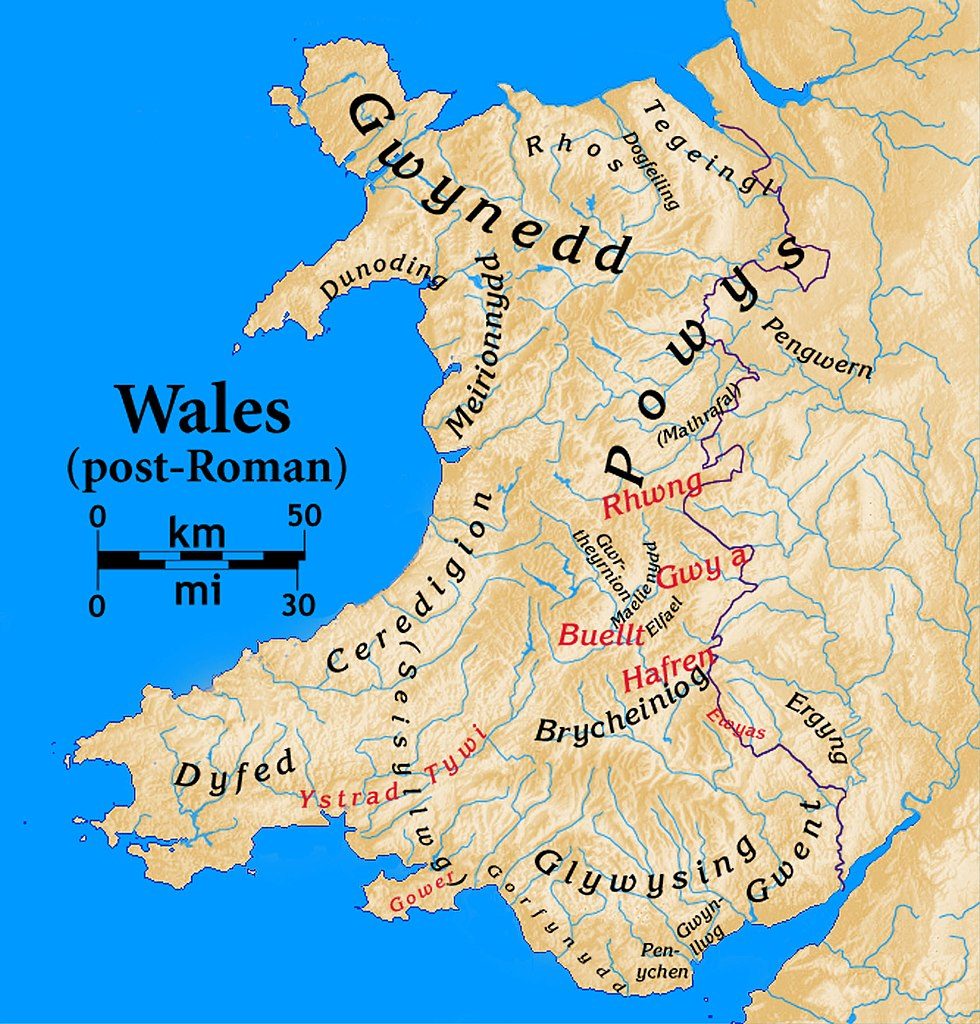
Cadwallon was the king of the kingdom of Gwynedd, which encompassed the northwest corner of Wales, including the island of Anglesey. This was one of the most powerful kingdoms of Britain in the sixth century in the era that Gildas was writing, in the generation after Cadwallon.
Therefore, it seems very likely that Gwynedd was also powerful while Cadwallon was ruling. This would make sense of how the Arthurian legends portray Cadwallon’s position in Arthur’s realm. He is implied to have been one of the most important and mightiest kings of Britain during the height of Arthur’s career.
In fact, the evidence suggests that Cadwallon may have been the king who elevated Gwynedd to this prominent position of power in the first place. Indeed, there are some legends that appear to be about Cadwallon outside of the Arthurian tales which strongly imply this.
Name
Cadwallon’s name appears in several different forms across different sources. Some examples are:
Cadwallo
Cadwal
Cadwallawn
Casswallawn
Sometimes the letter ‘K’ in used instead of the letter ‘C’ at the beginning.
Epithet
The epithet of this king was Lawhir. This is composed of two elements, ‘llaw’ and ‘hir’. The first means ‘hand’, while the second means ‘long’. In other words, his epithet means ‘Long-Hand’.
Some scholars have understood this in a literal sense, in that Cadwallon had large hands or long arms. Notably, some records give his son, Maelgwn, the epithet ‘Hir’, which would mean ‘Tall’ on its own. Hence, it may be that Cadwallon’s family in general were tall or large people.
Alternatively, some have suggested that this should be understood in a more figurative sense. For example, it has been argued that this may be a reference to the extent of his power. Another possibility is that it refers to his generosity, his hand being extended to others.
Family
What do we know about the family of Cadwallon? Unlike many other Arthurian characters, the Welsh texts provide us with extensive details about this king’s family. While many of these details cannot be confirmed as being historical, let us examine what the medieval records claim.
Son
Cadwallon’s most famous son is undoubtedly Maelgwn. He is often known as Maeglwn Gwynedd, his epithet coming from his kingdom. It seems very unlikely that Maelgwn did not have any siblings, but if he did, they do not appear to have been preserved in the surviving records.
Maelgwn is mentioned by Gildas, a monk from the sixth century, in a document known as De Excidio. There, he is called Maglocunus and is referred to as the ‘dragon of the island’. While many scholars have tried to argue that the ‘island’ in this context means Anglesey, a prominent part of the kingdom of Gwynedd, there is no real basis for this. Gildas consistently means Britain when he refers to ‘the island’.
Hence, this suggests that Maelgwn was recognised as being the preeminent warrior of Britain at the time Gildas was writing, much as Arthur’s father (and likely Arthur himself) had been referred to as the ‘Pendragon’, or Chief Warrior. This is reinforced by the fact that Gildas explicitly calls him one of the most powerful kings of Britain.
Maelgwn was one of the kings who, according to legend, came to be recognised as the high king of Britain in the years following King Arthur’s death. We find this legend in Geoffrey of Monmouth’s Historia Regum Britanniae, as well as certain Welsh texts.
Wife
What do we know about Cadwallon’s wife? She was named Meddyf, the daughter of Maeldaf ap Dylan Draws of Nanconwy. This latter location, also known as Nant Conwy, is in the kingdom of Gwynedd.
Meddyf’s mother was a daughter of Tallwch, the father of Tristan, or Drystan, in Welsh tradition. Hence, this would mean that Cadwallon was married to Tristan’s niece. Whether Cadwallon had other wives or not, we do not know. In any case, it was this wife of Cadwallon’s who became the mother of Maelgwn.
Ancestry
On the surface, the question of who Maelgwn’s father was seems easy to solve. Virtually all the available records say that it was a figure named Einion Yrth, the son of Cunedda Wledig. This latter figure, ostensibly Cadwallon’s grandfather, was an important founding figure across much of Wales, especially in the north.
Cunedda was said to have driven out the Irish from various parts of Wales, such as the territories of Gwynedd and Ceredigion. His sons are then said to have divided these parts of Wales between themselves, meaning that many of the Welsh dynasties were, supposedly, descended from Cunedda.
Problems with Cadwallon’s Supposed Ancestry
However, there are some problems with this. When we look at the earliest available information about this dynasty, we can see that this traditional ancestry does not appear to be correct.
The earliest information comes from the Historia Brittonum, written in c. 830. About Cadwallon’s son Maelgwn, this source says the following:
“The great king, Mailcun, reigned among the Britons, that is, in the district of Guenedota, because his great-great-great-grandfather, Cunedda, with his twelve sons, had come before from the left-hand part, that is, from the country which is called Manau Gustodin, one hundred and forty-six years before Mailcun reigned, and expelled the Scots with much slaughter from those countries, and they never returned again to inhabit them.”
According to this, Maelgwn was the great-great-great-grandson of Cunedda. The Latin word used here is the word ‘atavus’, which does specifically denote a great-great-great-grandfather, although it could also be used more generically to refer to an ancestor. However, other generic words for ‘ancestor’ exist, making it likely that the use of this specific word was because of its more technical meaning.
Since Cadwallon was the father of Maelgwn, this would mean that he was the great-great-grandson of Cunedda. However, according to the lineage preserved in the genealogical records, Cadwallon was Cunedda’s grandson. This suggests that there should actually be two extra generations in the genealogical records, which generations have since been lost.
This conclusion is supported by the explicit time frame provided in this passage. It says that Maelgwn reigned 146 years after Cunedda arrived in Guenedota (that is, Gwynedd). If Cadwallon was merely the grandson of Cunedda, then this time frame is highly implausible.
On the other hand, if we allow for two extra generations, as per the word ‘atavus’, then the chronology is much more comfortable.
What Was Cadwallon’s Actual Ancestry?
The actual ancestry of Cadwallon is more difficult to establish. All we know for sure – if we accept the information in the Historia Brittonum – is that there should have been two extra generations in this line of descent.
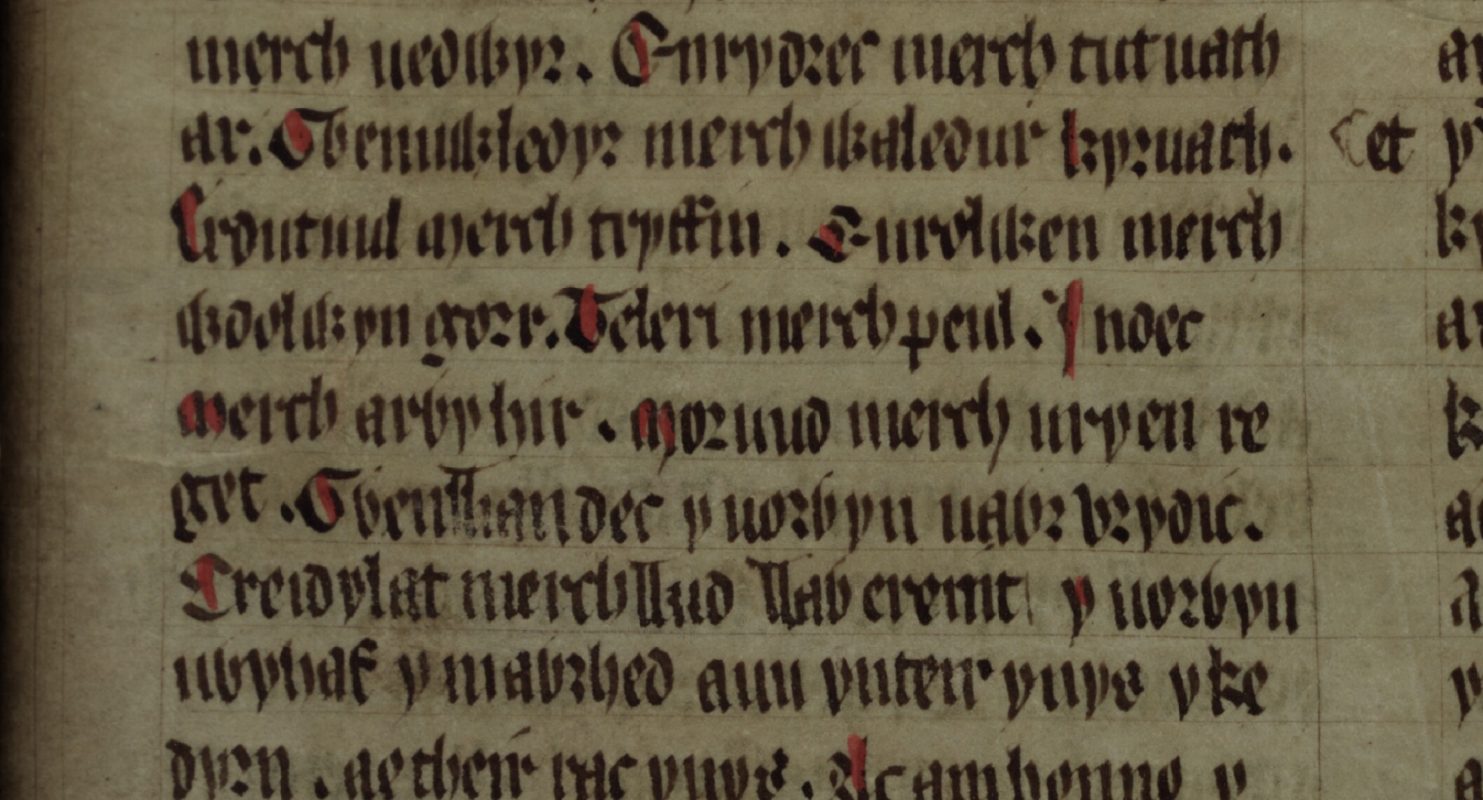
Fortunately, there is at least one extant alternate version of Maelgwn’s ancestry which may well provide the answer to this mystery. It is found in the White Book of Rhydderch, the Peniarth MS 4. Here, we find Cadwallon’s family given as:
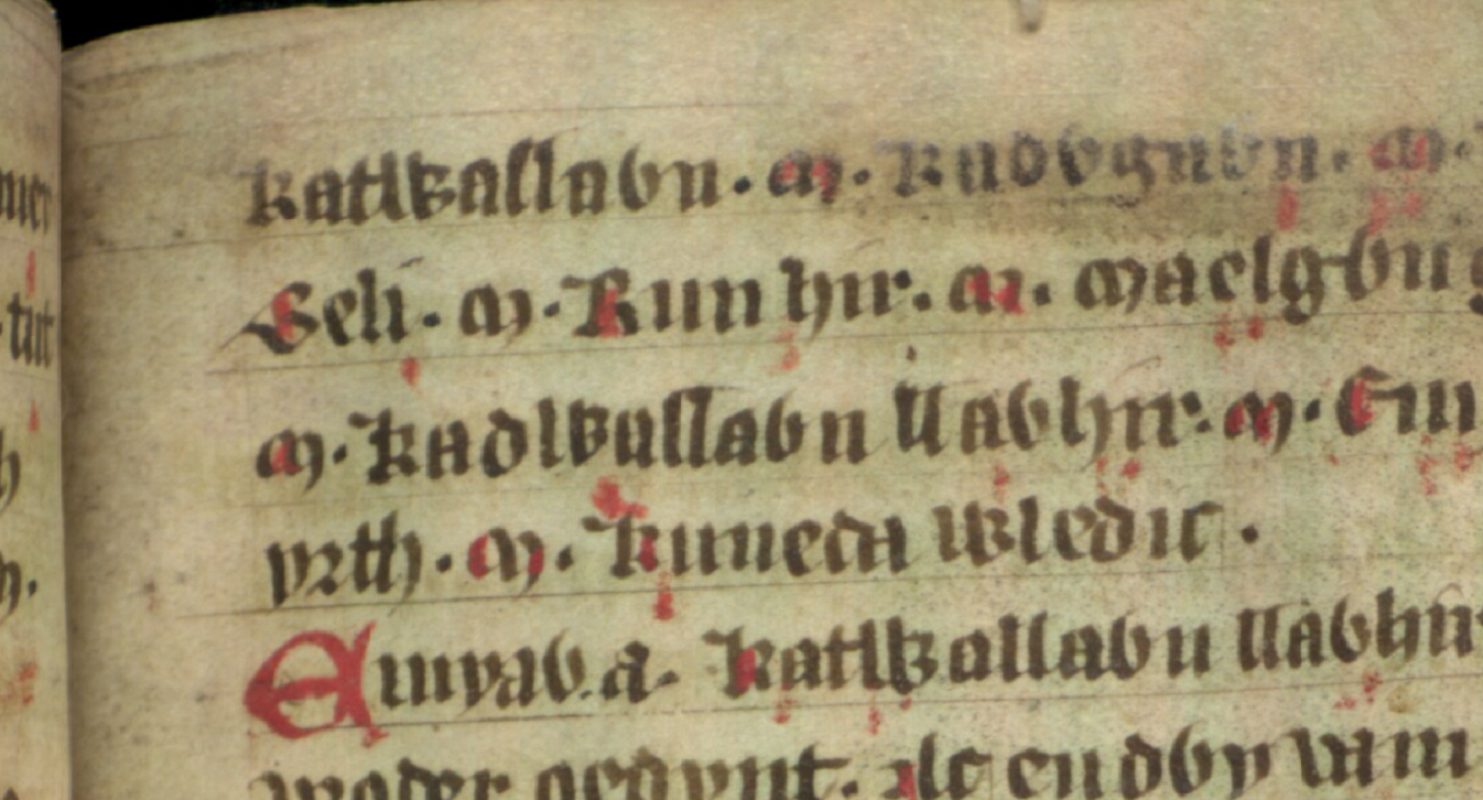
“katwaladyr vendigeit ap katwallawn ap katwan ap iago ap beli ap run ap maelgwn gwyned ap einion wwr ap pabo post prydein.”
It is very notable that Maelgwn is made the descendant of Einion ap Pabo Post Prydain. The absence of Cadwallon is likely not significant here, since there are many examples across the genealogies of individual generations being elided by mistake.
What this means, then, is that Cadwallon was apparently the grandson of Pabo Post Prydain, and not Cunedda.
In reality, though, this is also impossible. Pabo Post Prydain appears in other records, and he is shown to be a son of Arthwys of Elmet, who was born in c. 500 (see the article Was Arthwys son of Mar the Real King Arthur?). If Cadwallon was his grandson, that would put his birth in c. 540 at the earliest. This is much too late.
Nevertheless, this alternative record of Cadwallon’s family is valuable and may well point us in the right direction.
Cadwallon’s True Ancestors
Did Cunedda have a descendant named something like ‘Pabo’ who may have been confused for Pabo Post Prydain? As it happens, there is a record of such a figure. In the genealogies found in the Harleian MS 3859, a figure named Ebiau is made the son of Dunaut, son of Cunedda.
In later documents, this figure’s name is written as ‘Pobiawn’ and ‘Peibiaw’. This could easily have become corrupted into ‘Pabo’, or been mistaken for the same name, leading to the misidentification of this figure as the more famous Pabo Post Prydain.
If we identify this Ebiau, or Peibiaw, with the Pabo Post Prydain of Maelgwn’s genealogy in the White Book of Rhydderch, then that would place an extra two generations between Cadwallon’s father Einion and Cunedda. The generations in question would be Ebiau and Dunaut (also known as Dunod).
Supporting evidence for this reconstruction is found in the Jesus College MS 20, where we find the following genealogical list:
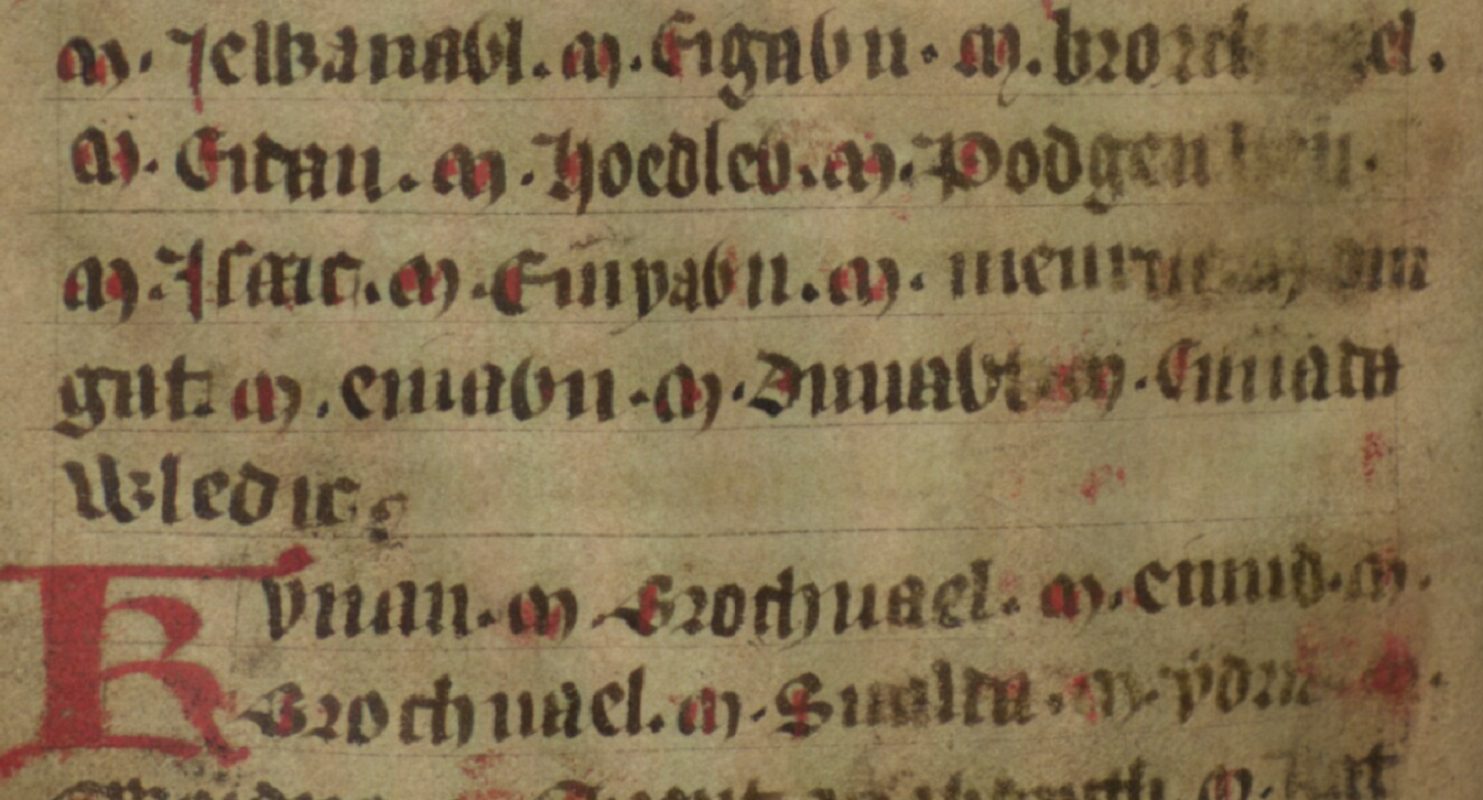
“dingat m eiuawn m dunawt m cunada wledic.”
Dingat appears in the equivalent version in the Harleian MS 3859 as the son of Ebiau. Hence, the Jesus College genealogies place ‘eiuawn’, or Einion, in the place of the Harleian genealogies’ ‘Ebiau’. While the former could be interpreted as a corruption of the latter, as Bartrum did, this is not the only possibility.
It is equally acceptable to interpret the Jesus College version as missing Ebiau, while the Harleian version misses Einion. As mentioned earlier, it is not uncommon for genealogical records to occasionally skip generations. Furthermore, the names ‘Ebiau’ and ‘Einion’ are relatively similar, meaning that perhaps some scribes concluded that they were accidental repetitions.
In other words, the original line of descent may have been:
Cadwallon ap Einion ap Ebiau (Peibiaw) ap Dunod ap Cunedda
This proposed line of descent is fully consistent with the information in the Historia Brittonum about Cunedda being Maelgwn’s great-great-great-grandfather, as well as the information about 146 years separating Maelgwn’s reign from Cunedda’s arrival in North Wales. It also conveniently explains the alternate version of Cadwallon’s family line seen in the White Book of Rhydderch.
Cadwallon in the Arthurian Legends
Let us now examine how Cadwallon appears in the legends of King Arthur, in which he is one of the king’s most powerful allies.
Geoffrey of Monmouth’s Historia Regum Britanniae
The first Arthurian source which explicitly connects Cadwallon with King Arthur is the Historia Regum Britanniae, written by Geoffrey of Monmouth in c. 1137.
King Arthur’s Special Coronation
In this source, Cadwallon first appears in the passage describing Arthur’s special coronation, which he performs after establishing peace across Britain.
The coronation takes place at Caerleon-upon-Usk, southeast Wales, which is implied to be Arthur’s capital. Numerous allies from all over Britain and even from outside Britain attend this special event. As Geoffrey describes those who go to Arthur’s court, Cadwallon is one of the first ones mentioned. The list of allies begins:
“Accordingly there came Augusel, king of Albania, now Scotland; Urian, king of Mureif; Cadwallo Lewirh, king of the Venedotians, now called the North Wales men; Stater, king of the Demetians, or South Wales men; Cador, king of Cornwall.”
Based on this, we can see that Cadwallon Lawhir (or ‘Cadwallo Lewirh’, as Geoffrey calls him) was one of the five most prestigious and important kings in Arthur’s extended realm.
Later, four of these five kings (Urian being excluded) bear golden swords before Arthur during the actual coronation ceremony.
Death
Despite Cadwallon’s evident prominence in Britain in Arthur’s time, he does not explicitly appear again in the rest of Geoffrey’s narrative of Arthur’s career. In fact, not even the Venedotians, the men of North Wales, appear again.
This is evidently due to the fact that the kingdom of southeast Wales, which was Arthur’s kingdom, historically did not have particularly strong connections to northwest Wales, Cadwallon’s kingdom.
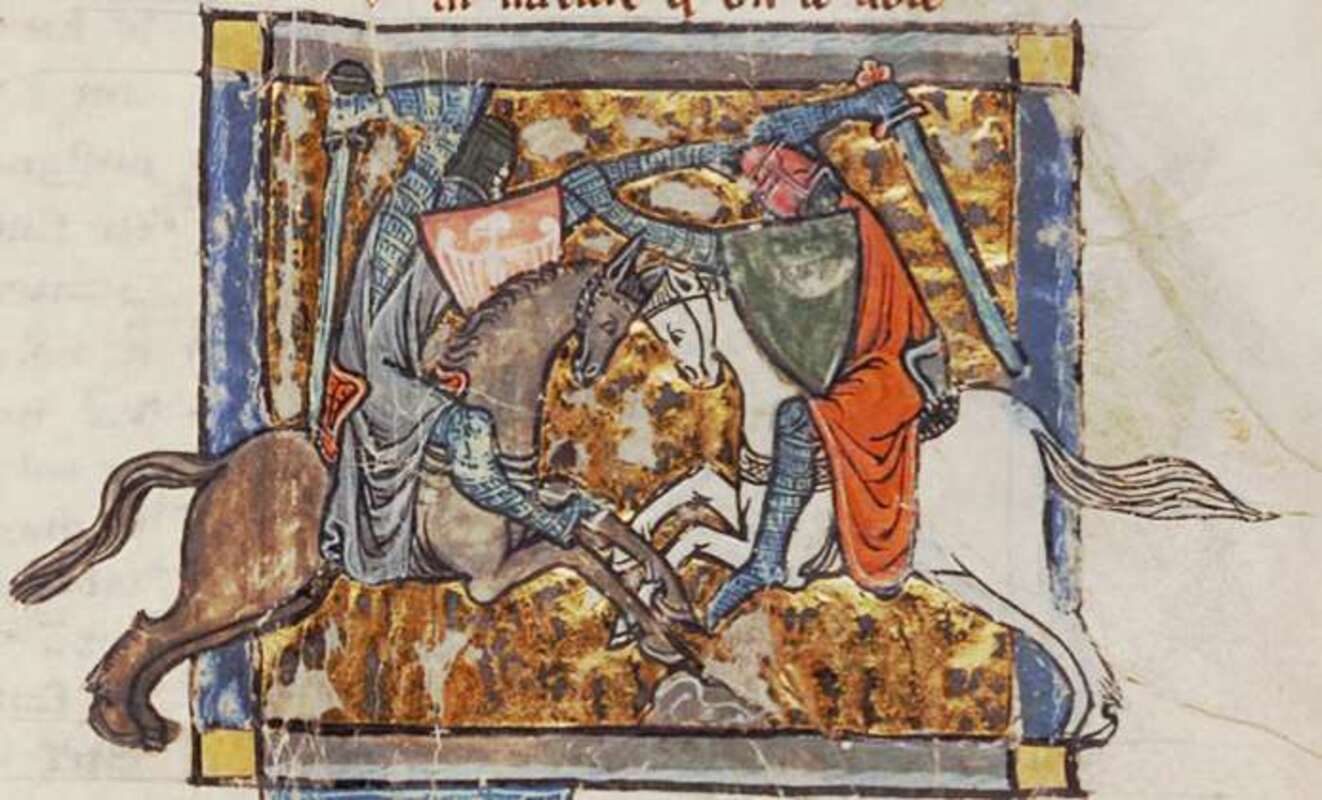
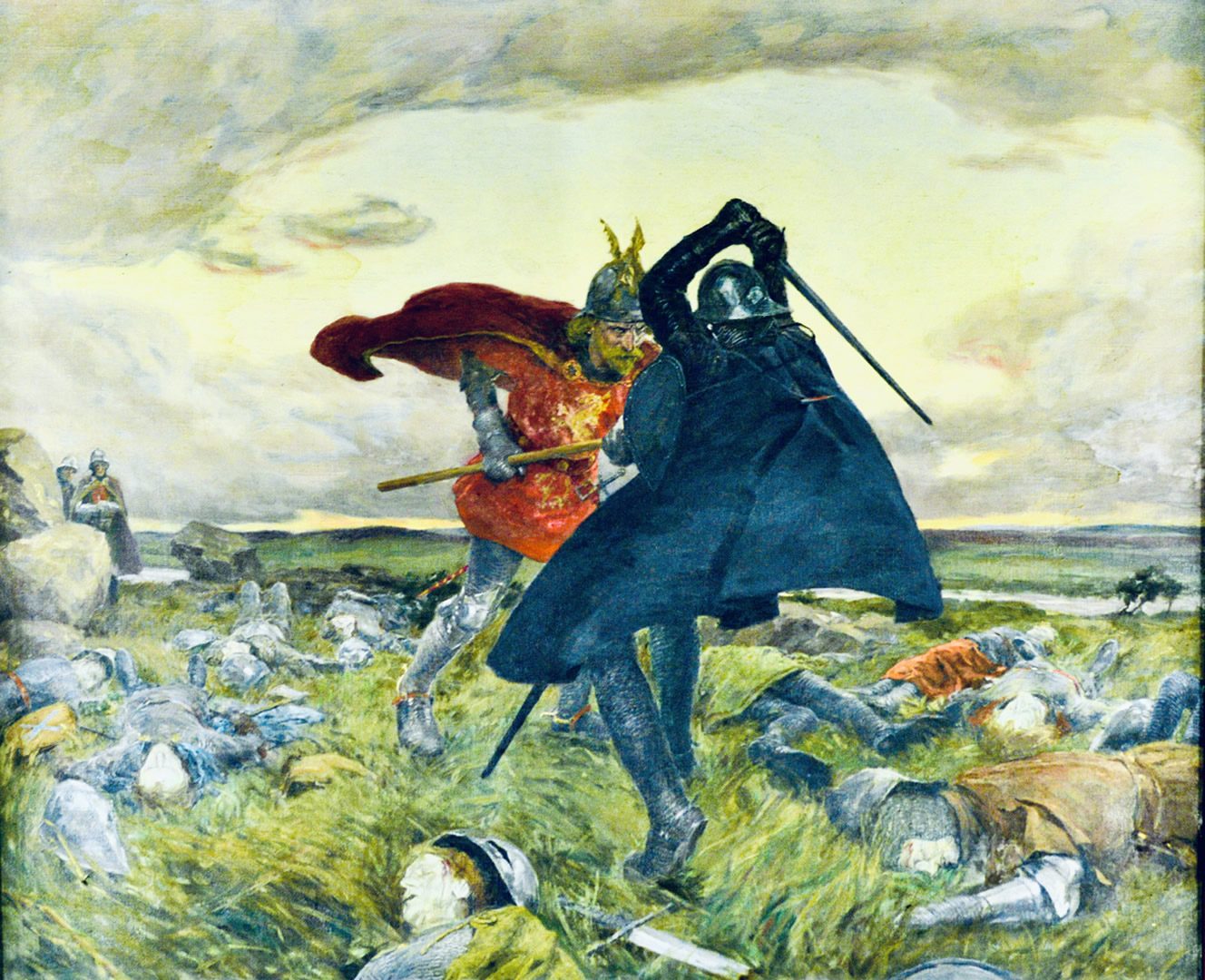
However, there is one part of Geoffrey’s account right at the end of Arthur’s reign which almost certainly refers to Cadwallon. In the description of the Battle of Camlann, Arthur’s final battle against his treacherous nephew Mordred, Geoffrey provides a list of some of those who died at the battle. One of the names is a certain Cassibellaun.
At first, it might seem unlikely that this is a reference to Cadwallon Lawhir of Gwynedd. The name, rather than being ‘Cadwallon’ or ‘Cadwallo’, is Geoffrey’s spelling of the name ‘Cassivellaunus’, the same name as that of the Iron Age king of the Catuvellauni who fought against Julius Caesar in 54 BCE.
Evidence That This Really Was Cadwallon Lawhir
However, a closer examination of the evidence indicates that Cadwallon of Gwynedd very likely is meant here. For one thing, there is no attested figure by the name ‘Cassibellaunus’ seen in any other document about this era (aside from a king who, we will go on to see, was identical to Cadwallon).
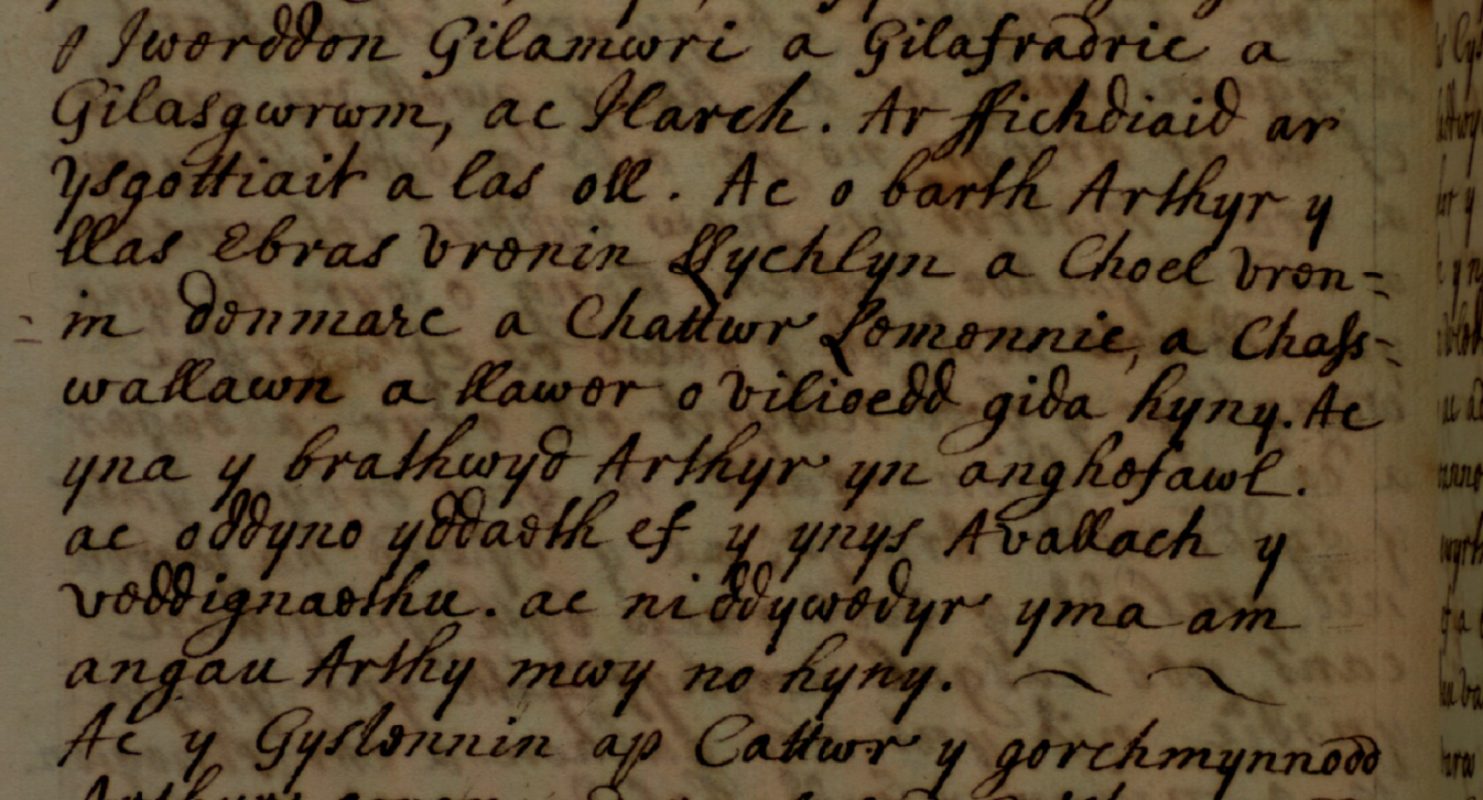
Secondly, Cadwallon Llawhir’s name appears as ‘Caswallon’ in a variety of records. For instance, the Brut Tysilio, a Welsh version of Geoffrey’s account, refers to the king of Gwynedd as ‘Kasswallawn’. This is exactly the same spelling that it uses for this figure who died at the Battle of Camlann.
Additionally, the Historia Brittonum says that Maelgwn became king 146 years after Cunedda arrived in North Wales. Both Peter Bartrum and Rachel Bromwich agree that Cunedda’s arrival probably occurred no earlier than 425. Hence, we can place Maelgwn’s accession in the year 571, or possibly later.
Interestingly, a consideration of the evidence about King Arthur’s reign indicates that he lived several decades later than commonly believed. This is supported by the Historia Brittonum apparently placing the Battle of Badon in the reign of Ida of Bernicia, whose reign started in 547. See the article When Did King Arthur Really Live? for more details.
This would mean that the dates for the Battle of Badon and the Battle of Camlann in the Annales Cambriae have evidently been backdated by thirty-three years, due to accidental confusion between the birth and the death of Jesus, since both events were sometimes used as anchor points by chronologists.
Hence, the date of 537 for the Battle of Camlann in the Annales Cambriae should evidently be corrected to 570. This corresponds almost perfectly to when the Historia Brittonum places the start of Maelgwn’s rule. Since Maelgwn is the only attested son of Cadwallon, this logically means that this was likely when Cadwallon died.
Therefore, we can see that the evidence indicates that Cadwallon died in about the same year as the Battle of Camlann. This strongly supports the conclusion that the Cassibellaun who died at the Battle of Camlann in Geoffrey’s account was Cadwallon Lawhir, king of Gwynedd.
Chretien de Troyes
Cadwallon appears in Erec et Enide, written by Chretien de Troyes in c. 1170. His name appears as ‘Cadualans’ or ‘Cadoalant’. As in Geoffrey’s account, his does not have a prominent role in Chretien’s Arthurian tale. In one place, he is referred to as being among the ‘best knights of the court’ and is specifically singled out as being ‘very wise and bold’.
In another part, Cadoalant appears as one of at least two kings accompanying Gawain.
Peter Bartrum states that Chretien got this name from Geoffrey of Monmouth, but this is clearly not likely, since Geoffrey did not preserve the ‘n’ on the end of Cadwallon’s name, whereas Chretien did. Hence, Chretien likely got this name through traditions that came to him independently of Geoffrey.
Later Romances
In later texts, such as the Vulgate Cycle and Malory’s Le Morte d’Arthur, Cadwallon appears in a more corrupt form. His name appears variously as ‘Tradelmant’, ‘Cradilmant’, ‘Cardelmans’, ‘Tradelmans’, and so forth.
The fact that it is still Cadwallon being described in these texts is evident from the fact that, aside from the name being vaguely similar, this character is called the King of North Wales.
In these contexts, Tradelmant appears as one of the eleven allied kings who rebel against Arthur’s rulership right at the beginning of his reign.
Arthur manages to defeat Tradelmant and the other kings at the Battle of Bedegraine. After this, the eleven kings become subject to Arthur and work alongside him as allies to fight against the invading Anglo-Saxons.
Cadwallon’s Career
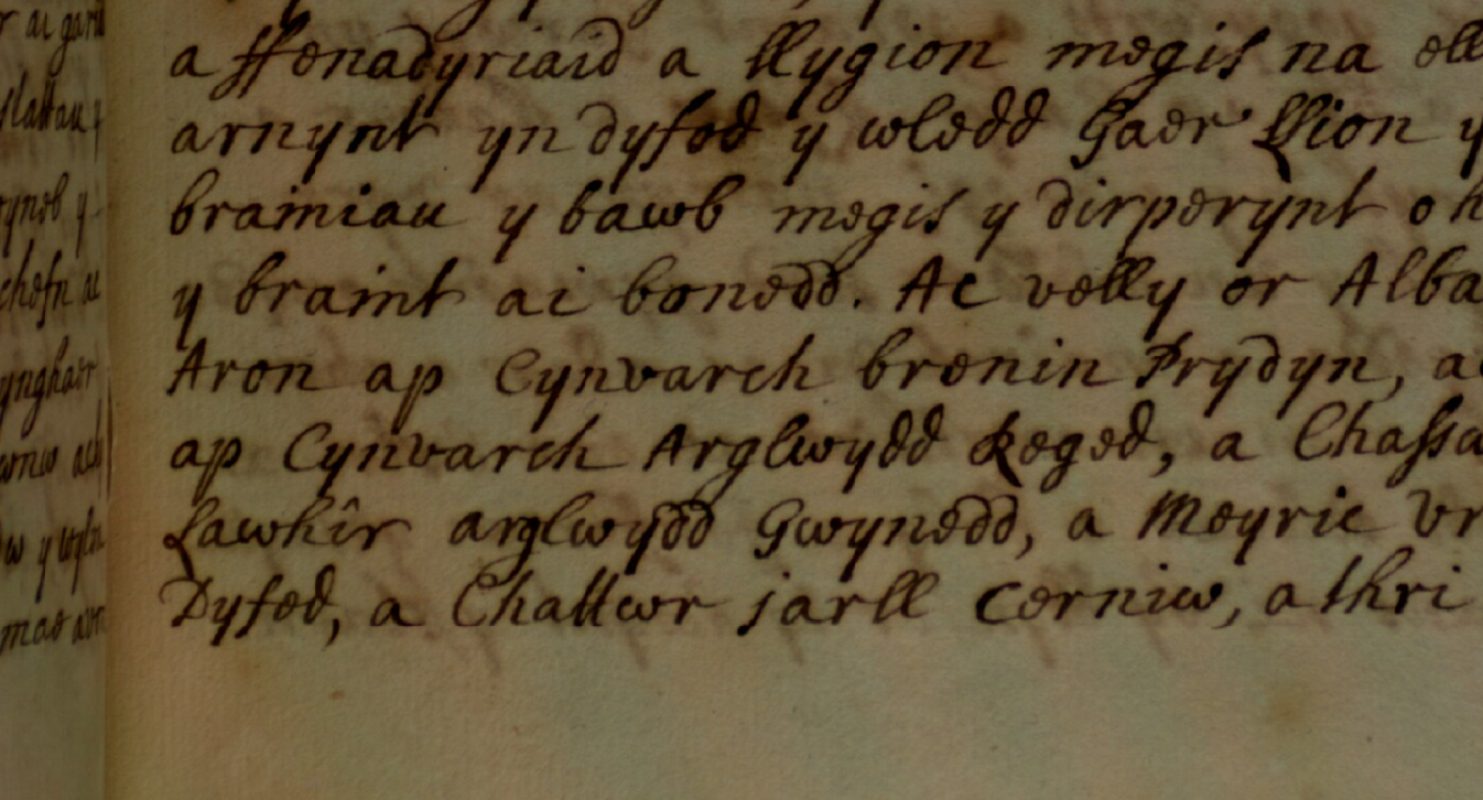
Outside of the Arthurian legends, there is some more information available about Cadwallon’s career. This information is found in Welsh texts, such as the expanded Hanesyn Hen tract. According to this, Cadwallon expanded his family’s rule over the parts of northwest Wales, such as Arfon and a large portion of Anglesey, from the Irish who still ruled over those parts.
A war took place between Cadwallon and an Irish ruler named Serigi in Anglesey, with the latter being defeated and slain at a place called Llam-y-Gwyddyl. This translates to ‘the Irishmen’s Leap’. However, another version of this account calls it Llan-y-Gwyddyl, meaning ‘Church of the Irishmen’.
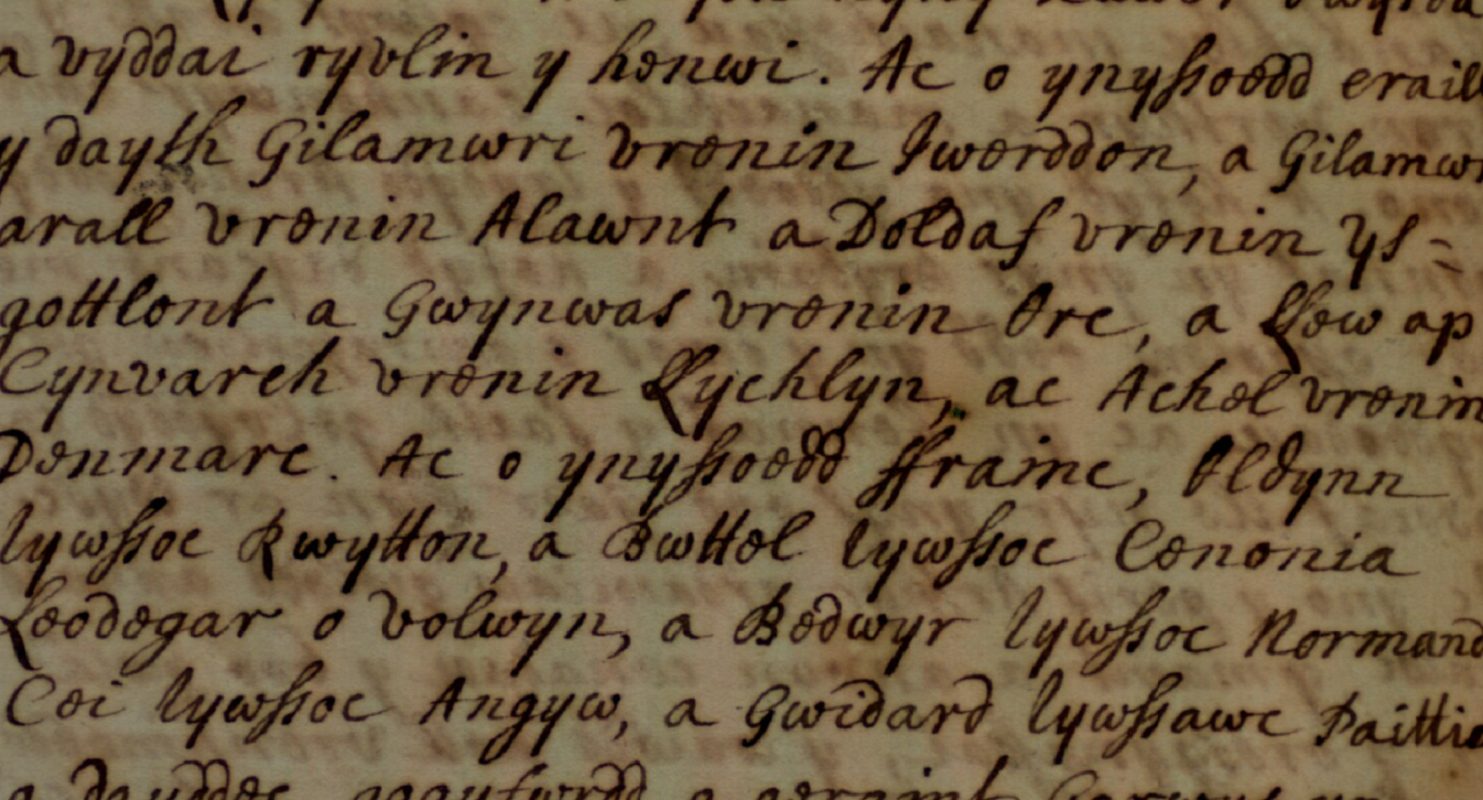
According to this tradition, Cadwallon was assisted by three of his cousins, Cynyr, Meilir and Yneigr. They were allegedly the sons of Gwron ap Cunedda, although for chronological reasons, this lineage is clearly deficient. Support for this is seen in the fact that the older lists of Cunedda’s many children do not mention Gwron.
During the fight against the Irish, Cadwallon and his men were said to have tied their horses’ fetterlocks to their own feet, ‘lest they should waver’.
Did Cadwallon Lawhir Meet Saint Kentigern?
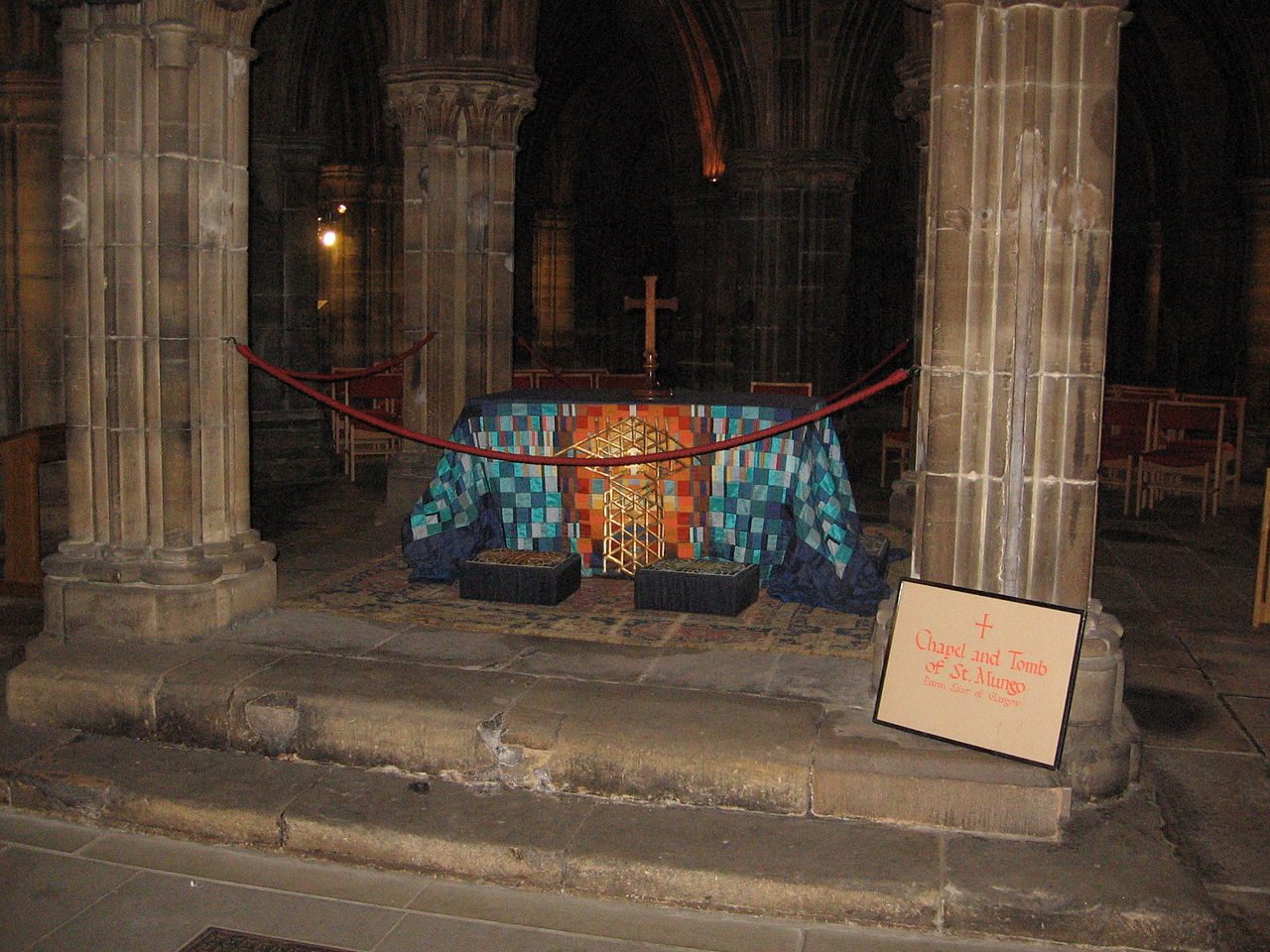
According to the Life of St Kentigern, the titular religious figure, Kentigern, is said to have met a king named Cathwallain. This is clearly another spelling of the name ‘Cadwallon’. Due to this, it has been suggested that the king in this account was supposed to be Cadwallon Lawhir.
However, there are some problems with this. The main one is the chronology. Kentigern was the son of Owain by Denw or Tenew, the daughter of Leudonus, or Lot of Lothian. Hence, given that Owain was born in c. 545, Kentigern was probably born in about c. 565.
His birth could have been somewhat earlier, since Owain was said to have raped Denw rather than this pregnancy coming about through marriage. However, realistically, we cannot put Kentigern’s birth any earlier than c. 561.
Since the death of Maelgwn, Cadwallon’s son, is usually placed in 547 based on the obviously erroneous date in the Annales Cambriae, this would ostensibly make it impossible for his father Cadwallon to have been a contemporary of Kentigern. For this reason this, the Cathwallain of this account is usually considered to be anachronistic.
A More Likely Identification
Another possibility that Bartrum suggested is that he should be identified as Cadwallon Llyw ap Cuitcun ap Sawyl Benisel. Bartrum places his birth in 540. This would easily allow him to have been an older contemporary of Kentigern.
However, Bartrum’s date is much too early. Sawyl Benisel was the son of Pabo Post Prydyn, son of Arthwys ap Mar. Therefore, Cadwallon Llyw was his great-great-grandson. The birth of this Arthwys (who was actually a later descendant of Mar) should be dated to c. 500.
This would place the birth of Cadwallon Llyw in c. 580-590, using an average of twenty to twenty-five years per generation. Although making Cadwallon a younger contemporary of Kentigern rather than an older contemporary, their careers would still have comfortably overlapped, which is the key point.
Furthermore, Cadwallon Llwy’s grandfather, Sawyl, appears in the Life of St Cadoc as a king in southeast Wales. This provides a crucial connection to the Cathwallain of the Life of St Kentigern, since he is shown to have possessed some territory in southeast Wales, which would not match a king of Gwynedd.
Cadwallon in the Mabinogion
Although it is not commonly recognised, there is strong evidence that Cadwallon Lawhir of Gwynedd features as a prominent character in the Mabinogion. This is a collection of medieval Welsh prose tales. Some of them, such as Culhwch and Olwen, are explicitly Arthurian legends. However, the so-called Four Branches are examples of Welsh mythology which do not, on the surface, have anything to do with King Arthur.
In fact, the Four Branches are sometimes viewed as taking place in pre-Roman Britain, specifically in the first century BCE around the time of Julius Caesar’s invasion. The basis for this is the fact that one of the central characters is a certain Caswallon ap Beli.
Who Was the Legendary Caswallon?
He appears in the Third Branch of the Mabinogion. While Pryderi and his companions travel to Ireland, Caswallon ap Beli is said to have usurped the throne of Britain. He is said to have conquered it from Caradog ap Bran, while the latter’s father, Bran, was away in Ireland.
To achieve this conquest, Caswallon used a magic mantle which made him invisible. This allowed him to kill six of the seven chief officers who had been left in charge of Britain in Bran’s absence. The seventh was Bran’s son, Caradog. Caswallon spared him since he was his relative. Nevertheless, Caradog died of dismay anyway. Caswallon is then said to have been crowned high king in London.
Caswallon ap Beli also appears in the Welsh Triads. In Triad 71, he is presented as the lover of a woman named Fflur ferch Mugnach Gor. In Triad 67, he is said to have gone to Rome to search for Fflur. In Triad 35, he is said to have pursued the men of Caesar, the Romans, to Gascony in France, and his army is said to have never returned.
Certain Welsh poets referred to Fflur, and one of these references states that Julius Caesar himself desired her.
Caswallon’s Mixed Origin
Based on these latter references, it is clear that at least some of the traditions surrounding Caswallon ap Beli come from Cassivellaunus, the king of the Britons who fought against Julius Caesar in the first century BCE.
The Setting of the Four Branches
However, the evidence is also clear that the Four Branches of the Mabinogion are based in King Arthur’s time. One of the pieces of evidence for this is the fact that Pryderi himself, the central character of the Four Branches, appears as one of Arthur’s allies in Culhwch and Olwen (where a form of his alternative name, Gwri Wallt Eurin, is used).
Likewise, Pryderi’s foster father, Teyrnon of Gwent, appears in that same tale as one of Arthur’s allies. Additionally, Arthur’s chief bard Taliesin himself appears in the Mabinogion as one of the companions of Pryderi who goes with him to Ireland. In one of Taliesin’s poems, he mentions that he saw one of the sons of Lleu, a character who appears in the Fourth Branch.
Furthermore, medieval genealogies make Pwyll, the father of Pryderi, the son of a certain ‘Alyn frenin Dyfed’. This figure can surely be identified as Alun Dyfed, a figure who appears in a number of Arthurian sources. An unnamed son of his appears in Culhwch and Olwen, while a named son appears in The Dream of Rhonabwy, another Welsh prose Arthurian tale.
Based on these and other pieces of evidence, it is clear that the characters in the Four Branches of the Mabinogion are supposed to have lived at about the same time as King Arthur. Indeed, some of the most important figures in the Four Branches can be identified as prominent figures from the Arthurian legends, even though Arthur himself never appears.
For example, Arawn the king of Annwn is certainly to be identified as Arawn the king of Scotland in the Arthurian tales.
What This Means for Caswallon
Yet, the evidence from the Welsh Triads shows that Caswallon ap Beli must be at least partially derived from Cassivellaunus. Therefore, the Caswallon from Welsh tradition is evidently a composite figure. Such composite figures were rare, but they did exist.
Another example appears to be Arthur himself in some traditions, since the tale of him conquering Europe most likely comes from distorted accounts of one of the military leaders involved in Magnus Maximus’ usurpation of Europe.
Evidence That Caswallon Was Partially Cadwallon Lawhir of Gwynedd
However, who was the figure who occupied the role of Caswallon ap Beli in the main context of the Four Branches of the Mabinogion, the figure who supposedly took the position of high king while Bran was away in Ireland?
The fact that he was allegedly the high king of Britain means that he must have been an extremely important and powerful king. There is only one option for a prominent king with a name which could be written as ‘Caswallon’, and this is Cadwallon Lawhir of Gwynedd.
As we saw earlier, his name was sometimes written with an ‘s’ instead of a ‘d’. We saw this in the Brut Tysilio, and we also see this same phenomenon in at least one version of the account of Cadwallon’s expulsion of the Irish from northwest Wales.
Furthermore, the fourteenth century poet named Iolo Goch referred to this king as Kyswallon Lawhir. A site in Anglesey is named Llys Caswallon, and this is believed to be named after Cadwallon of Gwynedd. A sixth century religious figure named Elian is said to have received land from a king named Caswallon in Anglesey. Given the time and place, this can only be King Cadwallon Lawhir.
Even in a Welsh poem attributed to Taliesin, Cadwallon is referred to as Kyswallon.
Therefore, there can be no objection at all about Cadwallon Lawhir’s name not matching that of Caswallon in the Mabinogion. Plenty of examples show that Cadwallon’s name is indeed a match for that legendary king.
An additional piece of evidence is the fact that the Four Branches tend to focus on west Wales, including Gwynedd, rather than the southeast, where Arthur was king.
How Cadwallon’s Career Matches Caswallon ap Beli of the Mabinogion
If Cadwallon was the historical figure behind the legendary Caswallon of the Four Branches, then how should we understand the narrative of Caswallon usurping the position of high king?
Firstly, we need to recognise the obvious fact that the Four Branches were not written from the perspective of someone in Arthur’s kingdom in the southeast. They focus much more on Gwynedd, meaning that the idea that Cadwallon was the ‘high king’ should be interpreted as the opinion of someone from or near Gwynedd, who viewed that kingdom as the preeminent one.
In other words, this narrative about Caswallon evidently describes Cadwallon Lawhir becoming the king of Gwynedd. As we saw earlier, he is said to have conquered a lot of territory in northwest Wales, and Bartrum also observes that he was likely not the eldest son.
Therefore, this act of conquest perhaps corresponds to Caswallon’s usurpation in the Mabinogion. It is interesting that this is said to have taken place at the same time as when Bran, the reigning high king, travelled to Ireland to attack the Irish.
The Irish War
In view of Caswallon’s identity as Cadwallon, we could easily interpret this as being part of a larger Irish war. While Bran, the then-high king, travelled with his forces to attack the Irish in Ireland, perhaps he left Cadwallon in charge of waging war against them in northwest Wales itself.
This does not mean that Bran was necessarily the king of Gwynedd before Cadwallon. He may have been a king of another kingdom which was viewed by those in Gwynedd as the preeminent power, perhaps being one which exerted some degree of control over northwest Wales. Notably, there are a number of references to at least one seemingly prominent figure named Bran in the North in the sixth century.
Therefore, Cadwallon’s ‘usurpation’ may not necessarily mean that someone prior to him had been ruling Gwynedd, but it may simply mean that this was when he rejected Bran as high king and claimed that position for himself.
On the other hand, the possibility that Bran really was the king of Gwynedd is strengthened by the fact that he was said to have been the son of Llyr Llediaith, and Welsh tradition from at least as early as the sixteenth century gives Cadwallon Lawhir a brother named Llyr.
In any case, it is likely that Bran’s attack on Ireland at this time can be associated with Arthur’s attack on Ireland shortly after the Battle of Badon in Geoffrey of Monmouth’s account of Arthur’s career.
Since the Battle of Badon likely took place in c. 549 based on the evidence from the Historia Brittonum and the expected correction of the date in the Annales Cambriae, this would place Cadwallon’s accession in c. 550. See the article When Did King Arthur Really Live? for more details.
Connecting these two events is supported by the fact that Taliesin was said to have gone to Ireland while Bran was there, yet Taliesin was likely born no earlier than c. 520. Hence, the journey to Ireland logically would have taken place after 540.
Conclusion
In conclusion, Cadwallon Lawhir was the king of Gwynedd in the mid-sixth century. It appears that his reign lasted from approximately 550 to 570, when he died at the Battle of Camlann. He was one of the most powerful kings of his time, since Gwynedd was a powerful kingdom. In fact, it appears that Cadwallon was largely responsible for making Gwynedd so powerful, being the one who greatly expanded its borders in northwest Wales by driving out the Irish.
The conquest of this territory was likely part of a greater Irish war. This war seems to have involved both Bran and Arthur travelling to Ireland to attack it shortly after the Battle of Badon. It seems to have been at this time that Cadwallon, as the Mabinogion’s Caswallon, rejected Bran’s authority and declared himself high king over his kingdom.
Also, we have seen that the normal lineage given to Cadwallon is defective by two generations. He was likely the son of Einion ap Ebiau ap Dunod ap Cunedda.
Sources
Bartrum, Peter, A Welsh Classical Dictionary, 1993
Bromwich, Rachel, Trioedd Ynys Prydein: The Triads of the Island of Britain, 2014
Howells, Caleb, King Arthur: The Man Who Conquered Europe, 2019
Bromwich, Rachel & Simon Evans, D, Culhwch ac Olwen, 2012
https://www.rhyddiaithganoloesol.caerdydd.ac.uk/en/ms-page.php?ms=Pen4&page=58r&srch=catwan