When Did King Arthur Really Live?

Establishing when King Arthur was really supposed to have lived is vitally important to being able to understand him and the Arthurian legends as a whole. Without establishing an accurate chronology, we are not able to properly assess the potential evidence for his historicity, or understand who was really his contemporary or how he may have had an impact on other events whose historicity are unquestioned. Tradition places him in the early sixth century, but does more recent research require a different chronology?

The Traditional Dating of King Arthur
Traditionally, King Arthur is believed to have lived in the late fifth, early sixth centuries. The basis for this is primarily the Annales Cambriae, which is a tenth century Latin document written by the Welsh.
Two of the earliest entries are about Arthur. The first of these is a reference to the Battle of Badon, which was allegedly Arthur’s climactic battle against the Anglo-Saxons, which ended the war between the two peoples for at least forty-three years. The entry reads:
“The Battle of Badon, in which Arthur carried the Cross of our Lord Jesus Christ for three days and three nights upon his shoulders and the Britons were the victors.”
This entry is dated to the year 516.
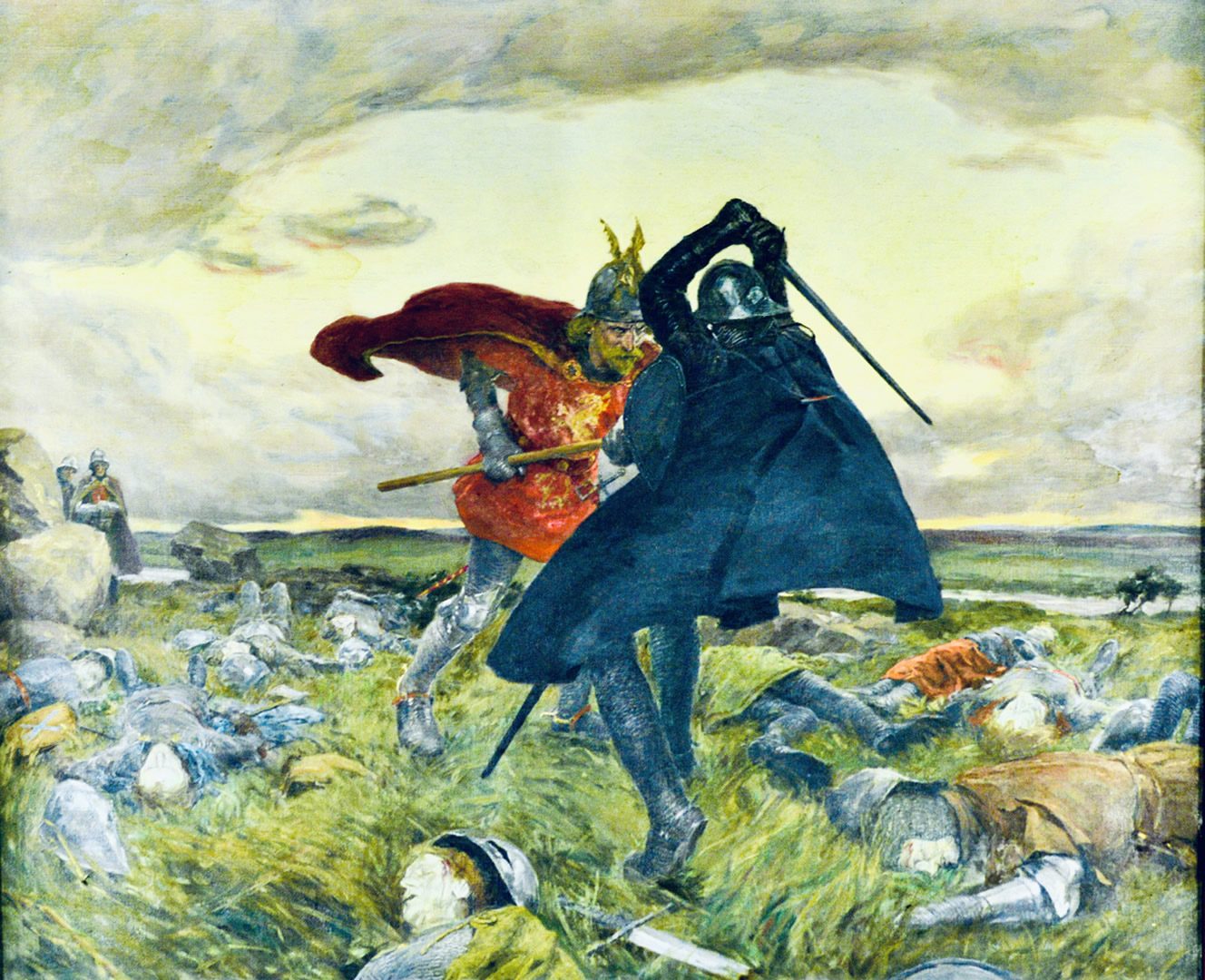
The second Arthurian entry mentions the Battle of Camlann. This was a battle which involved Arthur and a figure named Medraut, or Medrawd. According to later tradition, he was Arthur’s own nephew and his opponent at the battle. The entry reads:
“The battle of Camlann, in which Arthur and Medraut fell; and there was plague in Britain and Ireland.”
This entry is dated to the year 537, twenty-one years after Arthur’s climactic battle against the Anglo-Saxons at Badon.
What This Means for the Chronology of King Arthur
The Annales Cambriae is the earliest source which provides any specific dates to Arthur. Because of this, this is quite naturally the most commonly used source to establish when Arthur lived. This appears to confirm that Arthur was a figure of the early sixth century.
Since Arthur was obviously older than just sixteen years old at the time his climactic battle against the Saxons was fought, the date of 516 for the Battle of Badon would place his birth earlier than the year 500. Furthermore, evidence from later Welsh tradition and even the earlier Mirabilia gives Arthur adult sons during his reign.
Although this is not usually mentioned in considerations of this subject, the Welsh prose tale Culhwch and Olwen, from c. 1100, appears to be set shortly after the Battle of Badon. That it is set after that battle is evident from the fact that Arthur’s enemy at Badon, Osla Gyllellfawr, is presented as being subject to Arthur and then dying in Culhwch and Olwen, showing that it is set after he had already defeated Osla.
Yet the fact that it is set not long after the Battle of Badon is evident from the fact that that the events described in the story appear to be another version of events that Geoffrey of Monmouth, writing in c. 1137, placed in the year following the Battle of Badon.
The importance of this is that Culhwch and Olwen presents Arthur as having an adult son who died in the events of the tale. Hence, this would suggest that Arthur was at least in his forties at the time of the Battle of Badon.
Support from the Historia Brittonum
Even aside from this, the evidence from the Historia Brittonum, which predates the Annales Cambriae by a century, is that the Battle of Badon came at the end of a long career of warfare against the Anglo-Saxons by Arthur. It claims that Arthur fought a total of twelve battles against them.
Thus, the evidence from both Welsh tradition (which is rarely taken into account) and the Historia Brittonum is that Arthur was already a mature leader by the time the Battle of Badon was fought. Hence, given the date of 516 for that battle, his birth could have been in c. 470 or thereabouts.
Based on this dating evidence, King Arthur is regularly described as a late-fifth, early-sixth century king.
The Dating Based on Gildas
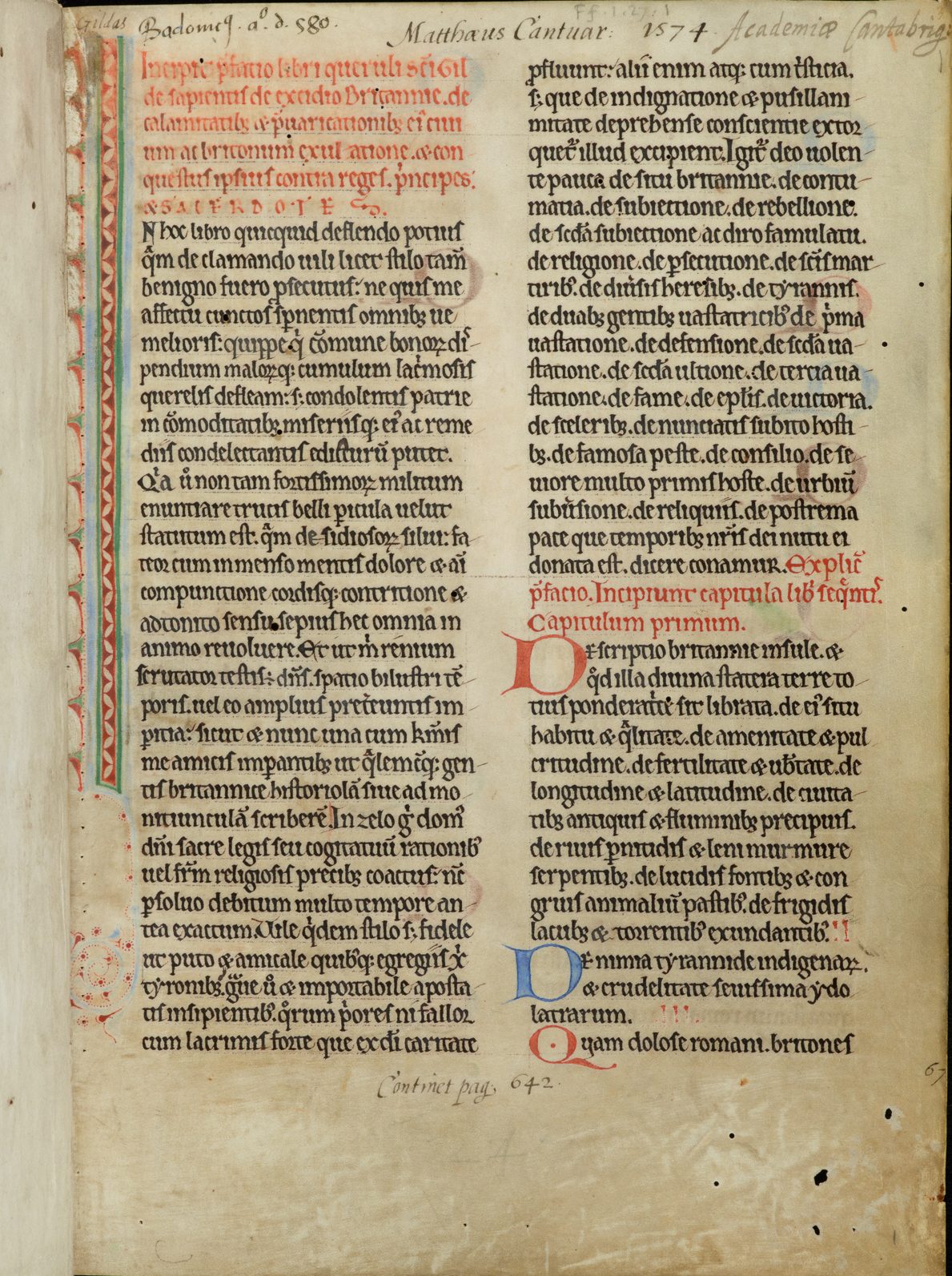
However, scholars in more modern times have favoured a slightly earlier date for Arthur’s floruit. The reason is due to evidence seen in De Excidio, a work written by a monk named Gildas at some point in the sixth century. Although this is not a history of Britain, but rather a religious polemic, it does provide some useful historical information.
In De Excidio, Gildas mentions the Battle of Badon. Although his Latin is difficult and at times ambiguous, the line mentioning Badon is usually understood to mean that it occurred forty-three years before he was writing, which was also the year of his birth.
This means that if we can establish when Gildas was writing, we would simply have to count back forty-three years to establish when the Battle of Badon occurred, thus establishing an anchor point for King Arthur’s chronology.
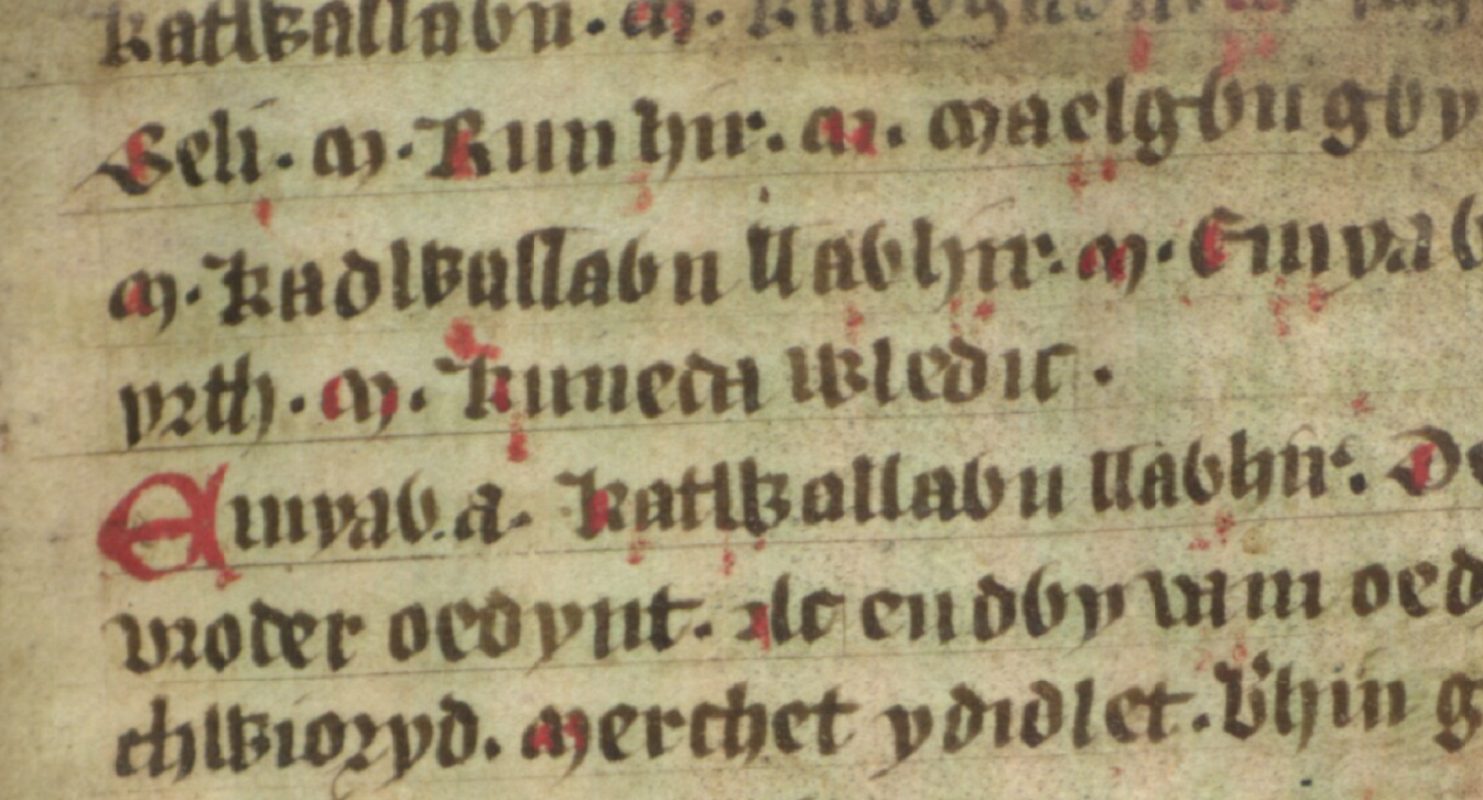
While Gildas does not provide us with any explicit dates, he does direct some of his critical comments in his polemic to five living kings: Constantinus, Vortiporius, Aurelius Caninus, Cuneglasus, and Maglocunus.
This is very helpful, since later medieval records provide us with lots of information about most of these kings. While this later medieval information is not contemporary, it is the best that we have, and we can use it in conjunction with Gildas’ contemporary claim that they were alive and ruling forty-three years after the Battle of Badon.
The Annales Cambriae Anchor for the Date of Gildas
It is widely agreed that the Maglocunus mentioned by Gildas should be identified with a king recorded in later records as Maelgwn, a king of Gwynedd. One of the earliest pieces of chronological information about Maelgwn is seen in the Annales Cambriae. The entry for the year 547 says the following:
“The great death in which Maelgwn, king of Gwynedd died.”

If Maelgwn died in the year 547, yet he was still alive when Gildas was writing De Excidio, then Gildas must have been writing no later than 547. Since the Battle of Badon happened forty-three years earlier than the writing of De Excidio, 504 is the absolute latest year in which it could have occurred.
Perhaps out of a desire to leave a more comfortable gap between when Gildas wrote and when Maelgwn died, many scholars today place the Battle of Badon in c. 500. This is viewed as more historically plausible than the date of c. 516 for the Battle of Badon as claimed by the Annales Cambriae, since it is based more directly on the evidence from Gildas’ words regarding when that battle took place and who was still alive when he was writing.
Inconsistencies in Arthurian Chronologies
Although this is a common conclusion, the reader might have already noticed a logical flaw in the aforementioned argument. It is true that Gildas apparently tells us that the Battle of Badon occurred forty-three years before he was writing, and Maelgwn was still alive at that time.
However, the date of 547 for the death of Maelgwn comes from the Annales Cambriae. This is exactly the same source that tells us that the Battle of Badon occurred in 516. Using exactly the same evidence from Gildas and the Annales Cambriae, we could say with equal confidence that Maelgwn must have actually died no earlier than 559.
The fact of the matter is that the Annales Cambriae must be in error somewhere, because it does not provide forty-three years between Badon and Maelgwn’s death, yet Gildas reveals that Maelgwn was still alive at least that long after the Battle of Badon. Hence, either the date of Badon is wrong, or the date of Maelgwn’s death is wrong.
The conclusion that the Annales Cambriae’s date for Maelgwn’s death shows that the Battle of Badon actually occurred no later than 504 is obviously logically flawed. There is no reason whatsoever to hold, arbitrarily, to the date of 547 for Maelgwn’s death while happily rejecting the date of 516 for the Battle of Badon as being inaccurate.
The simply reality is that either date could be inaccurate, or in fact, both of them could be. Since they both come from the same document and are both from about the same era, both dates obviously hold equal weight. There is nothing about the date of Maelgwn’s death that suggests that it is more historical or more secure than the date of the Battle of Badon in the very same document.
The point of this is that the date of c. 500 for the Battle of Badon is actually no more historically convincing than the date of 516 for the date of that battle. In reality, both dates are directly based on the tenth-century Annales Cambriae. Both suggested dates are as convincing and well supported as each other.
What the Weight of Evidence Really Indicates
While it is true that the Annales Cambriae is the earliest source which gives explicit dates for the Battle of Badon and for Maelgwn’s death, it is not the earliest source which gives chronological information about those things.
The Historia Brittonum’s Date for the Battle of Badon
The Historia Brittonum, although not giving them specific dates, does place the Battle of Badon and the reign of Maelgwn in specific historical contexts. Regarding the Battle of Badon, let us consider what it tells us:
“And Octa, after the death of his father Hengist, came from the sinistral part of the island to the kingdom of Kent, and from him have proceeded all the kings of that province, to the present period. Then it was, that the magnanimous Arthur, with all the kings and military force of Britain, fought against the Saxons.”
This provides us with an earliest possible date for the Battle of Badon. In what way?
The Date of Octa of Kent
According to this, Arthur began his career fighting the Saxons at some point after Octa became the king of Kent. The start of the reign of Octa is generally placed in 512. This is because the Anglo-Saxon Chronicle tells us that Oisc reigned for twenty-two years, beginning in 488, and Oisc was the father of Octa according to Bede.
The length of Octa’s reign is more difficult to establish, but some sources give him a reign of twenty-two years like his father. That would put his dates from 512 to 534. In any case, it seems reasonable to say that the Historia Brittonum, based on this claim, places Arthur’s career after 512.
This source claims that Arthur fought twelve battles against the Saxons, with Badon being the final one. It does not tell us how many years these twelve battles covered, but we can reasonably assume that at least a decade was involved in this long series of engagements.
With 512 as the earliest possible year for the start of Arthur’s war against the Anglo-Saxons, this would place the Battle of Badon in 522 at the earliest.
The Date of Ida of Bernicia
Of course, since Octa evidently ruled for quite some time and the Historia Brittonum does not say that Arthur started his campaigns as soon as Octa became king, the Battle of Badon might have happened quite a bit later than that.
Interestingly, after describing all twelve battles, the Historia Brittonum tells us the following:
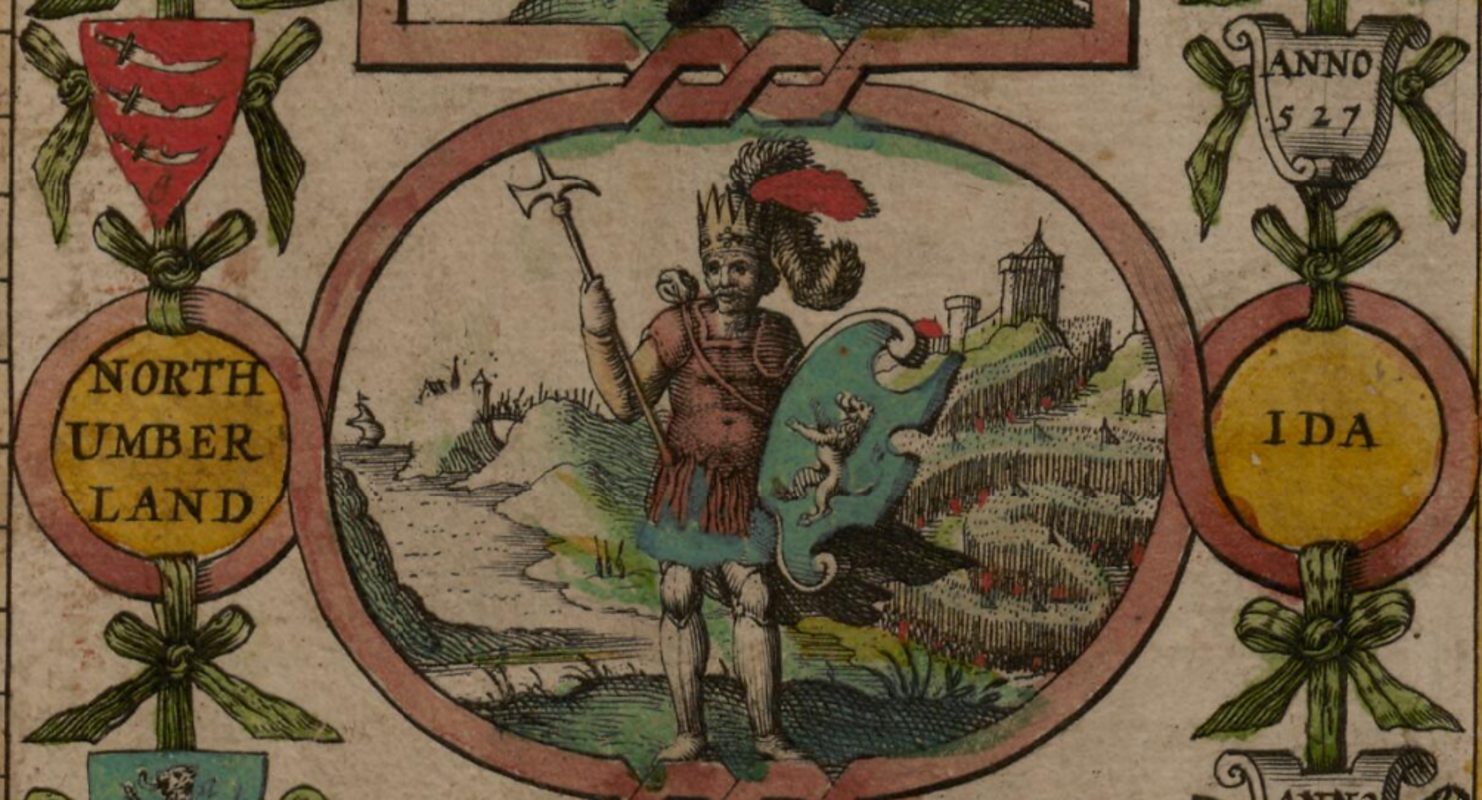
“And in all these wars he [Arthur] was the victor. And they, while they were defeated in all these wars, asked for help from Germany and increased manifold without ceasing, and brought kings from Germany to reign over them in Britain until the time when Ida reigned.”
For reference, here is the original Latin text:
“et nemo prostravit eos nisi ipse solus, et in omnibus bellis victor extitit. et ipsi, dum in omnibus bellis prosternebantur, auxilium a Germania petebant et augebantur multipliciter sine intermissione et reges a Germania deducebant, ut regnarent super illos in Brittannia usque ad tempus quo Ida regnavit.”
The wording here is very significant. This tells us that Arthur was victorious in all these wars. It then follows this statement by telling us what the Anglo-Saxons were doing during all these wars. The narrative claims that they were seeking help from Germany and bringing over leaders from there, and it explicitly tells us that this continued until the time when Ida reigned.
If the Anglo-Saxons did this ‘while they were defeated all these wars’, and it continued until the reign of Ida, then this logically means that these wars continued until the reign of Ida. Hence, that would be when the Battle of Badon occurred.
So, when did Ida begin his rule? The Anglo-Saxon Chronicle tells us that this was in the year 547. Hence, the information in the Historia Brittonum would actually appear to place the Battle of Badon in that year or even later (since Ida ruled for twelve years).
The Historia Brittonum’s Date for the Reign of Maelgwn Gwynedd
The idea that the Battle of Badon occurred as late as c. 547 might seem much too late at first, but it is consistent with the Historia Brittonum’s date for Maelgwn. It is important to remember that the Historia Brittonum was written in c. 830. That makes it a century older than the Annales Cambriae and thus logically more authoritative.
This source, which is the oldest one that we have for Maelgwn’s chronological placement, provides three pieces of chronological information about Maelgwn.
Chronological Positioning
The way that the Historia Brittonum introduces Maelgwn is with the following chronological information:
“Ida, the son of Eoppa, possessed countries on the left-hand side of Britain, i.e. of the Humbrian sea, and reigned twelve years, and united Dynguayth Guarth-Berneich. Then Dutgirn at that time fought bravely against the nation of the Angles. Then Talhaiarn Cataguen was famed for poetry, and Neirin, and Taliesin and Bluchbard, and Cian, who is called Guenith Guaut, were all famous at the same time in British poetry. The great king, Mailcun, reigned among the Britons.”
This passage first mentions Ida reigning for twelve years. Then ‘Dutgirn’ is mentioned as fighting at that time. After this, the narrative says ‘then’ Talhaiarn was famed for poetry. The Latin word translated ‘then’ is ‘tunc’, which can mean ‘then’ in the sense of ‘at that time’ or in the sense of ‘next’.
In any case, after mentioning several famous bards famed for their poetry, Maelgwn is said to have reigned among the Britons. Since it is unclear whether the Latin ‘tunc’ before Talhaiarn should be ‘at that time’ or ‘next’, it is safest to simply connect Maelgwn to the bards that immediately precede him rather than to speculate about whether he ruled at the same time as ‘Dutgirn’ or somewhat after him.
We also do not know if this latter figure was imagined to have fought against the Angles during the twelve-year reign of Ida or just after it ended, which would have been in about 559.
Of the bards mentioned, the most firmly established ones chronologically are Taliesin and [A]Neirin. They were both mid- to late-sixth century bards. Aneirin, for example, is believed to have written Y Goddodin, generally dated to c. 600.
The fact that Maelgwn is placed by the Historia Brittonum in the same era as those bards would suggest that he, too, was a mid- to late-sixth century figure. It is abundantly obvious that this does not fit the death date of 547 for Maelgwn provided by the Annales Cambriae. This is especially so given that Gildas reveals that Maelgwn’s reign – which included an interruption of unknown length – lasted quite a long time.
Descent from Cunedda
This passage continues by saying:
“The great king, Mailcun, reigned among the Britons, that is, in the district of Guenedota, because his great-great-great-grandfather, Cunedda…”
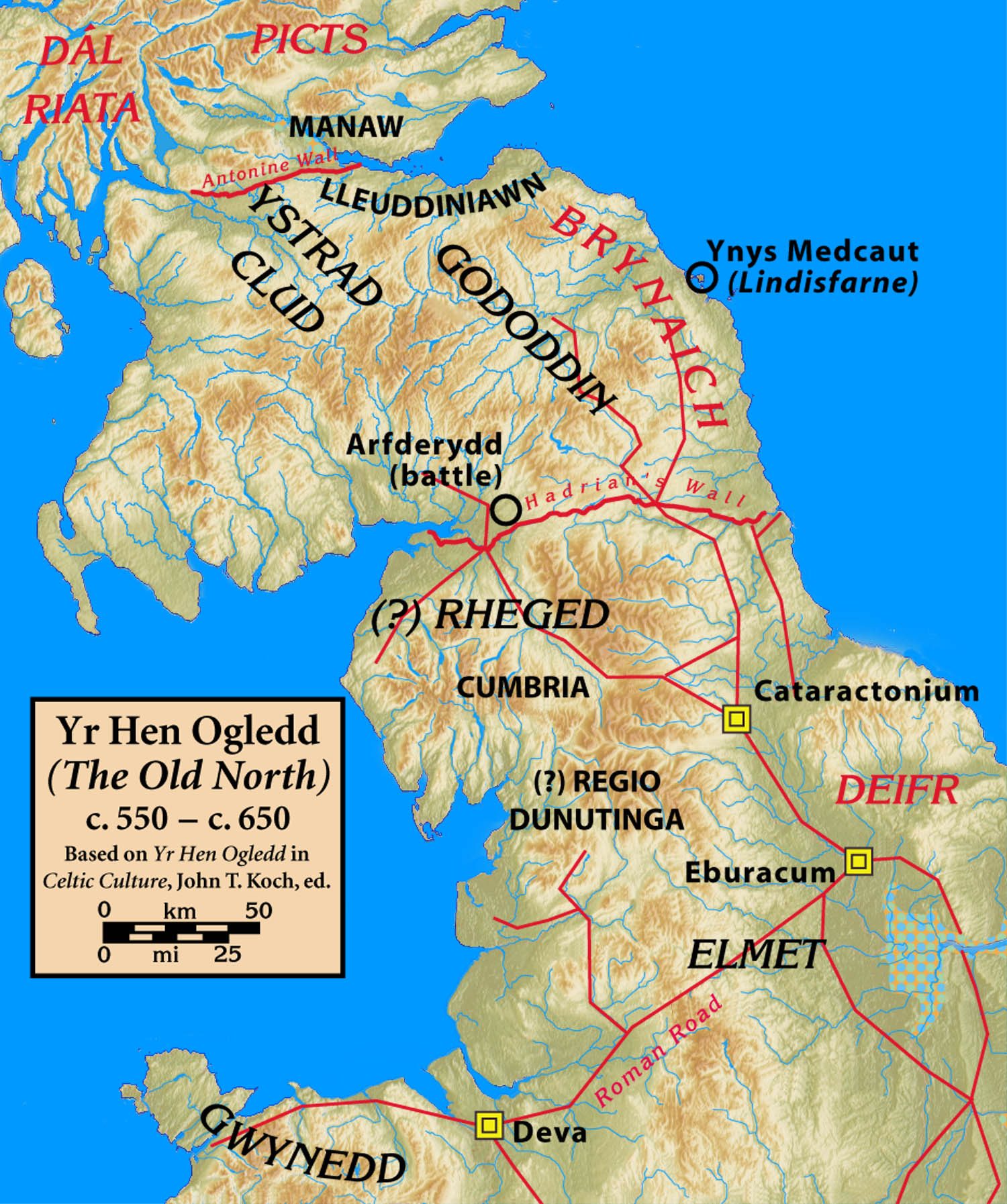
According to this, Maelgwn was the great-great-great-grandson of Cunedda. This Cunedda was a famous figure in Welsh tradition and had many descendants. Based on these many descendants and the narrative about his activities, scholar Peter Bartrum placed his birth in c. 370. Other scholars tend to agree with this general dating.
Based on this, if we count forward five generations to get to Maelgwn’s birth, that would take us to c. 480-520, using an average of twenty-two to thirty years per generation. Of course, we do not know how old he was when he took power.
One Hundred and Forty-Six Years After Cunedda
The passage in the Historia Brittonum continues:
“Cunedda, with his twelve sons, had come before from the left-hand part, that is, from the country which is called Manau Gododdin, one hundred and forty-six years before Mailcun reigned, and expelled the Scots with much slaughter from those countries.”
According to this account, Maelgwn’s reign began 146 years after Cunedda arrived in Gwynedd from Manau Gododdin. Peter Bartrum placed Cunedda’s arrival no earlier than 425. Renowned scholar Rachel Bromwich agreed, saying that Cunedda likely arrived in Gwynedd closer to 450 than 400.
Hence, counting forward 146 years from 425 would take us to 571 for the start of Maelgwn’s reign. Bromwich herself acknowledged this and suggested that Maelgwn’s death being placed in 547 in the Annales Cambriae may have been a result of confusion between the plague that killed Maelgwn and the earlier Justinian Plague of the 540s.
Since, as we mentioned earlier, Gildas makes it clear that Maelgwn had already been reigning for quite some time before he wrote De Excidio, this would place the writing of that work well after 571.
The Historia Brittonum’s Arthurian Chronology
From this analysis of the information in the Historia Brittonum, we can see that it clearly points to a much later date for the Battle of Badon than the traditional date of 516. The passage about King Arthur’s activities places his campaigns after Octa began his reign, and it strongly suggests that these wars continued until the reign of Ida, which was in 547.
In harmony with this, the Historia Brittonum firmly places Maelgwn’s reign well into the second half of the sixth century, making him a contemporary of figures such as Taliesin and Aneirin and placing his reign 146 years after Cunedda’s descent from the North.
Since Maelgwn’s reign had been going for some time when Gildas wrote, which was forty-three years after the Battle of Badon, that would place the battle towards the middle of the sixth century. This is exactly what the Arthurian passage itself suggests, based on the connection to Ida.
How This Harmonises with the Annales Cambriae
This is not to say that the Arthurian chronology of the Historia Brittonum is completely at odds with the chronology of the Annales Cambriae. As it happens, there is a very simple explanation for the date of 516 for Badon given by the latter source.
Sometimes, in medieval documents, events were dated relative to the death of Jesus. This is seen in the Historia Brittonum itself, for example. However, events were usually dated relative to Jesus’ birth.
Due to this, medieval scribes sometimes backdated events by some thirty-three years due to misreading a source as dating an event relative to Jesus’ birth, when the source in question had actually mentioned his death.
While the date of 516 in the Annales Cambriae is significantly out of line with the date indicated by the Historia Brittonum, the two sources line up very well when we assume that the date in the Annales Cambriae had been mistakenly backdated by some thirty-three years.
That would move it forward to 549. This fits extremely well with the Historia Brittonum’s claim that the twelve battles, of which Badon was the last, continued up until the reign of Ida, whose reign is recorded as starting in 547.
Evidence from Welsh Poetry
Many Welsh poems that mention Arthur do not provide useful chronological data. However, there are at least three Welsh poems which support this late Arthurian chronology.
Preiddeu Annwn
The first is Preiddeu Annwn. This is attributed to Taliesin, the mid- to late-sixth century bard mentioned earlier. Scholars generally agree that this poem was not actually written by him, but by a later poet presenting it as one of Taliesin’s poems. It tells the story of Arthur’s voyage to Annwn, the Otherworld of Welsh mythology.
This has generally been dated to about the tenth century, but more recently, John T Koch has argued that it contains early Welsh forms which suggest that it was originally composed in the mid-eighth century.
If this suggestion is accurate, it would make it the earliest known source for Arthur’s career. In any case, even if the later date is correct, it is still early. What is significant about this is that it makes Taliesin a contemporary of King Arthur.
What This Means for Arthur’s Chronology
Taliesin is believed to have been born around 530 or so. He is most firmly associated with Urien and his son Owain, both kings of the North in the second half of the sixth century. It was not until the 590s that Urien died.
Hence, the fact that Taliesin is made a contemporary of King Arthur by Preiddeu Annwn clearly points to Arthur being active long past the Annales Cambriae’s date of 537 for his final battle. Since this Welsh poem seems to be at least as early as that chronicle, if not much earlier, it should hold at least as much weight, if not more.
Pa Gur
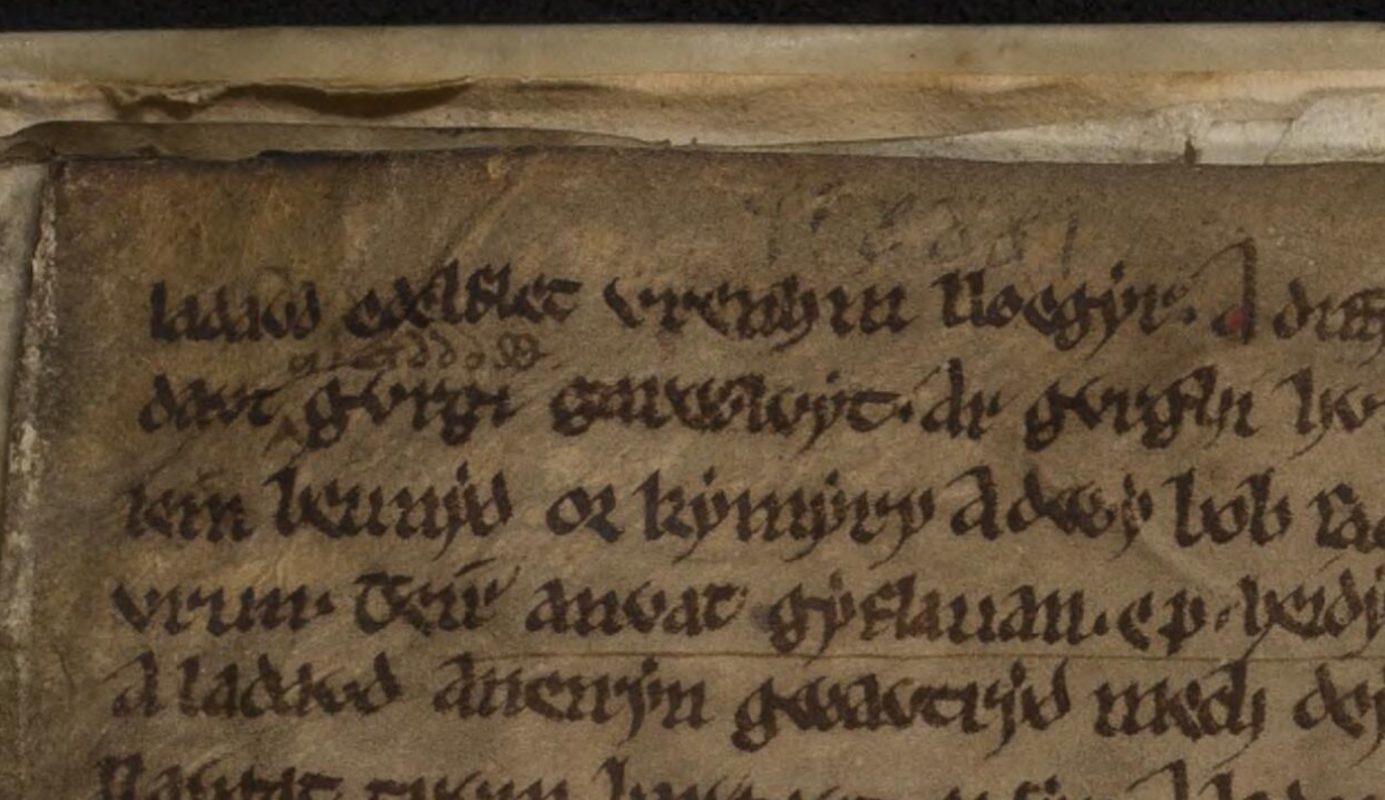
Another Welsh poem which dates to c. 900 is Pa Gur. This poem recounts numerous deeds performed by Arthur’s men, and it mentions one of the twelve battles from the Historia Brittonum. This battle is the Battle on the Shore of the Tribruit. At this battle, Arthur’s ally Bedwyr is described as fighting against an enemy named Garwlwyd.
Scholars generally agree that this is the same person as Gwrgi Garwlwyd seen from other Welsh texts. He is made an evil contemporary of Arthur, so this fits the conclusion that he is the Garwlwyd mentioned in the Pa Gur poem.
With this in mind, it is notable that the Welsh Triads tells us that Gwrgi Garwlwyd was killed by a man named Diffydell. The triad in which this claim appears is entirely about Diffydell and his two brothers. While Diffydell is said to have killed Gwrgi Garwlwyd, his two brothers are said to have killed Gwenddoleu and Athelfrith of Northumbria.
Gwenddoleu was a king recorded as dying at the Battle of Arderydd, dated to 573 by the Annales Cambriae, while Athelfrith of Northumbria died in 616. If Diffydell’s two brothers killed these two figures, then it stands to reason that Diffydell’s own victim was likewise a figure of the late sixth or even early seventh century.
What This Means for Arthur’s Chronology
Since Diffydell’s victim, Gwrgi Garwlwyd, was involved in Arthur’s Battle on the Shore of the Tribruit according to Pa Gur, this battle would logically have occurred near the middle of the sixth century at the earliest. This is incompatible with placing the Battle of Badon (which came after Tribruit) as early as 516.
Therefore, just like Preiddeu Annwn, the early Welsh poem Pa Gur supports this later Arthurian chronology.
Trawsganu Kynan Garwyn mab Broch
The poem Trawsganu Kynan Garwyn mab Broch does not mention Arthur, but it is very valuable for establishing the chronology of the sixth century. It is a very early Welsh poem, and may well have been genuinely composed by Taliesin in the sixth century.
This poem describes the feats of Cynan Garwyn, a powerful king of Powys in the second half of the sixth century. One of the feats mentioned is that he caused dread to Aircol. This would be Aircol Llawhir, a king of Dyfed in the sixth century.
Welsh genealogies, including the earliest pedigree in the Harleian 3859, agree that Aircol was the father of Vortipor of Dyfed. The reason that this is significant is that Vortipor was one of the five kings mentioned by Gildas.
As explained earlier, these five kings were reigning when Gildas was writing, which was forty-three years after the Battle of Badon. Since Aircol was still alive during the reign of Cynan Garwyn, which is firmly dated to the last few decades of the sixth century, this shows that Vortipor was definitely not an early sixth century figure.
The significance of this is heightened by the fact that Gildas refers to the fact that Vortipor was growing old and grey. Hence, if Vortipor was growing old when Gildas was writing, yet his father Aircol was still active during at least the early part of the career of Cynan Garwyn, Gildas would have had to have been writing towards the very end of the sixth century.
This supports placing the Battle of Badon in about the middle of the sixth century, as suggested by the Historia Brittonum. There is no way to maintain a date as early as 516 for this battle without simply ignoring this evidence from Trawsganu Kynan Garwyn mab Broch.
Evidence from Welsh Prose Tales
The earliest Welsh prose tale about King Arthur is Culhwch and Olwen, believed to have been written in c. 1100. This tale is useful in that it provides Arthur with numerous allies, showing roughly when he was believed to have lived.
Like Preiddeu Annwn, this makes Taliesin a contemporary of Arthur. However, let us consider some new information provided by this source.
One of the people mentioned in the tale is Maelwys ap Baeddan. This is Mael Umai mac Baetan, an Irish king. He died in about the year 608. It is evident that he cannot have been a contemporary of Arthur if the latter died in 537, as claimed by the Annales Cambriae.
Another figure mentioned is Morfudd the daughter of Urien Rheged. As mentioned earlier, Urien himself did not die until the 590s, so his daughter would have certainly been a figure of no earlier than the mid sixth century.
Gwyn ap Nudd is another interesting figure mentioned as one of Arthur’s allies. He is appears in various other sources, where he is frequently associated with mid- to late-sixth century figures. For example, one record calls him the half-brother of Gwallog ap Lleenog. Gwallog was the father of the Ceredic who was driven out of his kingdom by King Edwin in the early seventh century.
Another record states that he was present for the death of Gwallog, as well as for the death of Gwenddoleu, who died in c. 573. Hence, if Gwyn ap Nudd was one of Arthur’s allies as Culhwch and Olwen claims, Arthur cannot have died in the early sixth century.
Evidence from Geoffrey of Monmouth
Finally, let us consider the information provided by Geoffrey of Monmouth. While it is true that he gives Arthur’s year of abdication as being 542, this is contradicted by everything else that he says about Arthur’s reign.
Appointments During Arthur’s Reign
Geoffrey refers to several events during Arthur’s reign that can be independently dated. Two examples come from his special coronation, which occurred some twelve years after the Battle of Badon.
At this event, Dubricius is described as being succeeded by David as the chief bishop of the area. This same event is described in the Life of St David, and it is presented as occurring at the Synod of Brefi. Based on the evidence from the Life of St Cadoc, which also describes this event, in conjunction with the Annales Cambriae, this event seems to have occurred around the year 560 (see the article Bishop David, Uncle of King Arthur for more details).
This conforms excellently to the date of c. 549 for the Battle of Badon in this late Arthurian chronology.
The other dateable event mentioned in this passage from Geoffrey of Monmouth is the appointment of Teilo as bishop of Dol in the place of Samson. This event is mentioned in the Life of St Teilo and is placed at the end of the Yellow Plague.

In that latter source, this event is immediately followed by the appointment of Oudoceus as bishop of Llandaff. Since Oudoceus was a late son of Budic III of Brittany, born c. 500, Oudoceus was probably born c. 540. Hence, his appointment as bishop cannot have realistically occurred before c. 570.
Since Teilo’s appointment as bishop in the place of Samson is placed immediately prior to this, it is evident that it happened not long before then. Therefore, Geoffrey placing this event during the reign of Arthur clearly requires Arthur to have continued ruling until that late in the sixth century.
The Family of Mordred
Consider, for example, the contemporaries that Geoffrey assigns to Arthur. He makes Arthur the brother-in-law of Lot of Lothian. In Welsh tradition, this figure appears as Llew ap Cynfarch. Both Welsh tradition and Geoffrey of Monmouth agree that this was the brother of Urien Rheged.
Lot, or Llew, was the father of the Medrawd mentioned in the Annales Cambriae as falling in the Battle of Camlann. He is most famously known as Mordred.
Since Urien was active during the mid to late sixth century, it stands to reason that his brother Lot was likely active at about the same time. In turn, his son Mordred was almost certainly not born until approximately the middle of the sixth century.
We arrive at this same conclusion when working from another direction. According to the Welsh Triads, Lot’s father Cynfarch was married to Nyfain the daughter of Brychan. This would make Lot the grandson of Brychan. Brychan, for his part, was born in c. 480, as an analysis of his family reveals. If Lot was his grandson, then that would place Lot’s birth in c. 520 or later.
Lot’s own son, Mordred, would have therefore been born in the 540s. Any battle in which he was involved would thus have to have been in the 560s at the earliest.
With Mordred being one of the main figures involved in the Battle of Camlann, this would mean that the Battle of Camlann should be dated well into the second half of the sixth century. If we assume, like in the case of the Battle of Badon, that the Annales Cambriae’s date for Camlann was accidentally backdated by thirty-three years, then its correct date should be 570.
This fits perfectly with the information surrounding Mordred and his father Lot and their relationship to Urien, along with their descent from Brychan.
After Arthur’s Death
All the information that Geoffrey provides about the period following Arthur’s death likewise supports the conclusion that Arthur died well into the second half of the sixth century.
Following Arthur’s death, Geoffrey presents Gildas’ five kings (excluding Cuneglasus) as ruling successively. In the reign of Constantine, Arthur’s immediate successor, Geoffrey claims that Bishop David of Menevia died. Scholars agree that he died in about 587, on the basis of the Irish annals.
This fits very well with placing the Battle of Camlann in 570, but it does not remotely fit the traditional date of 537 for that battle. Geoffrey also claims that Daniel, or Saint Deiniol, died in Constantine’s reign. His death is usually placed in 584. Again, this supports the late chronology.
Immediately after Maelgwn, Geoffrey presents the next high king of Britain as being Cereticus. This can only be Ceredic of Elmet, son of Gwallog. He is referred to by Bede as the ‘king of the Britons’ and is the only prominent Ceredic known from this general era. Yet he was definitely a late-sixth, early-seventh century figure, being expelled from his kingdom by King Edwin.
In the Life of Merlin, written by Geoffrey of Monmouth in c. 1150, Aurelius Conanus (one of Gildas’ five kings) is presented as ruling during the time of the Battle of Arderydd, which the Annales Cambriae places in 573.
This same source also makes Taliesin and Myrddin Wyllt contemporaries of Arthur, both of whom were mid- to late-sixth century bards.
Conclusion
It would be impossible to address every piece of evidence supporting this late chronology, just as it would be impossible to address all the potential objections (relatively few though they are). Nevertheless, from this brief analysis, we can see that there is strong evidence that Arthur was a thoroughly mid-sixth century figure.
Contrary to the date in the Annales Cambriae, the earlier Historia Brittonum suggests that Arthur’s twelve battles continued until the reign of Ida, which began in 547. This is supported by the Historia Brittonum’s placement of Maelgwn in the late-sixth century, since he was ruling forty-three years after the Battle of Badon. Evidence from early Welsh poetry also supports this dating for Arthur. It is also supported by the Welsh prose tale Culhwch and Olwen and various details in Geoffrey of Monmouth’s account.
While the main objection would probably be that there is evidence that Gildas was born much earlier than the middle of the sixth century, the weight of evidence shows that there was more than one Gildas. The Life of St Gildas explicitly presents the older Gildas as giving his name to a younger figure born around the middle of the sixth century, who is also said to have gone on to become a prominent religious figure.
Sources
Bartrum, Peter, A Welsh Classical Dictionary, 1993
Bromwich, Rachel, Trioedd Ynys Prydein: Fourth Edition, 2014
Livingston, Elizabeth A. & Cross, Frank Leslie, The Oxford Dictionary of the Christian Church, 2005
Farmer, David, Oxford Dictionary of Saints: Fifth Edition Revised, 2011
Howells, Caleb, King Arthur: The Man Who Conquered Europe, 2019