Was Cuneglasus the Real King Arthur?

One relatively obscure theory about the true identity of King Arthur is that he can be identified with a historical figure named Cuneglasus. As well as the theory itself being obscure, this historical figure is also relatively unknown. Yet, he is one of the best attested figures of Arthurian Britain. Who was he, and why do some researchers conclude that he was the real King Arthur?
Who Was Cuneglasus?
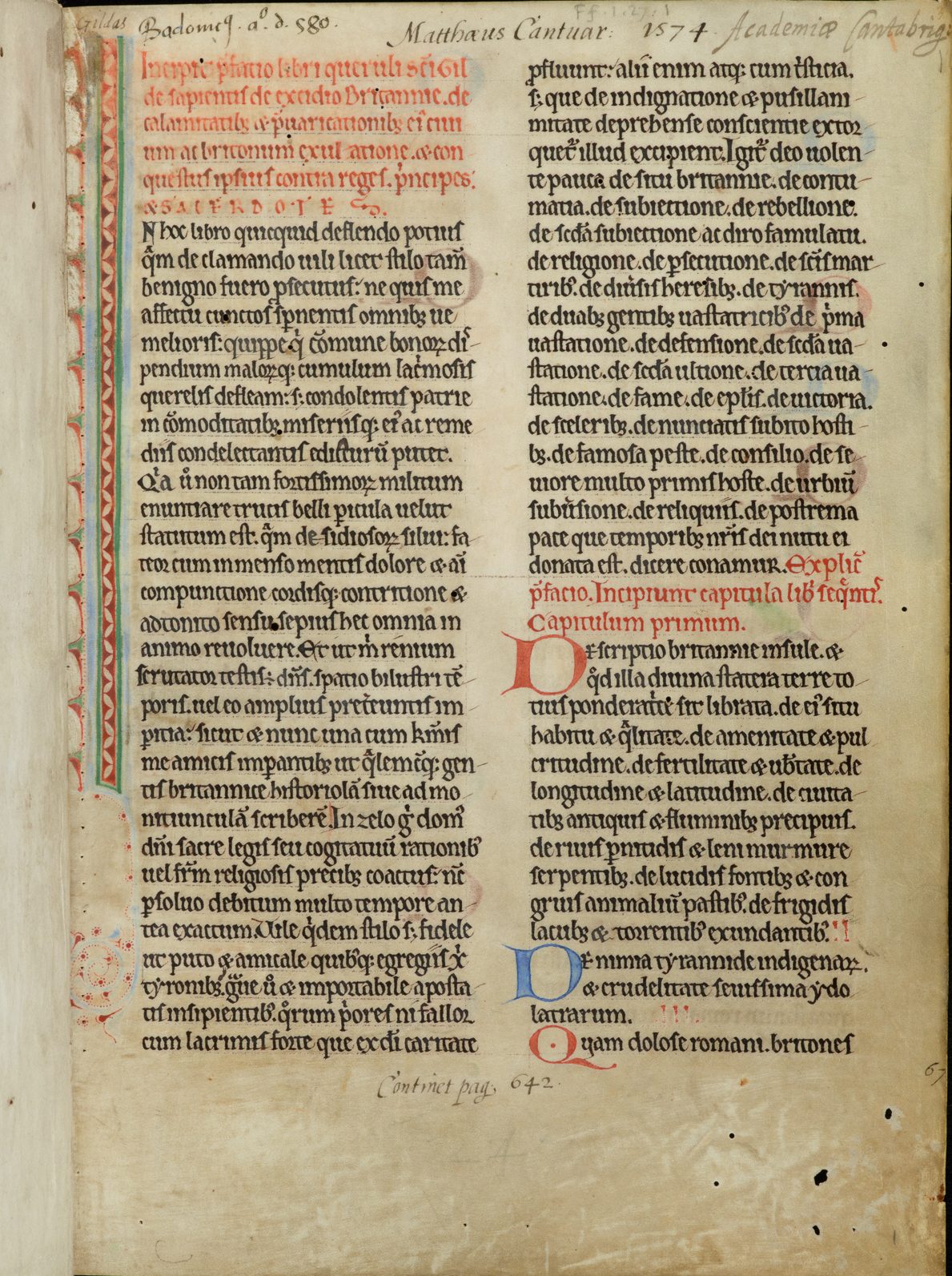
Cuneglasus was one of the five kings mentioned by Gildas in his document known as De Excidio, written at some point in the sixth century. In this document, Gildas criticised the current state of Britain and directed some scathing comments towards five contemporary kings. Cuneglasus was one of these kings.
Unfortunately, Gildas does not provide us with any kind of coherent biography for this king. Rather, he provides a collection of somewhat random pieces of information about him, things which were only relevant for Gildas’ purpose of criticising his character.
Cuneglasus’ Dynasty
Gildas does not tell us directly which kingdom Cuneglasus ruled over. However, in the later medieval genealogical records concerning the Welsh kingdoms, there is only one figure from this period who bears a name which can be interpreted as a form of ‘Cuneglasus’.
The figure in question is named Cynlas. In the earliest record in which he appears, the tenth-century genealogy found in the Harleian MS 3859, his name is spelt ‘Cinglas’, preserving more clearly the connection to ‘Cuneglasus’.
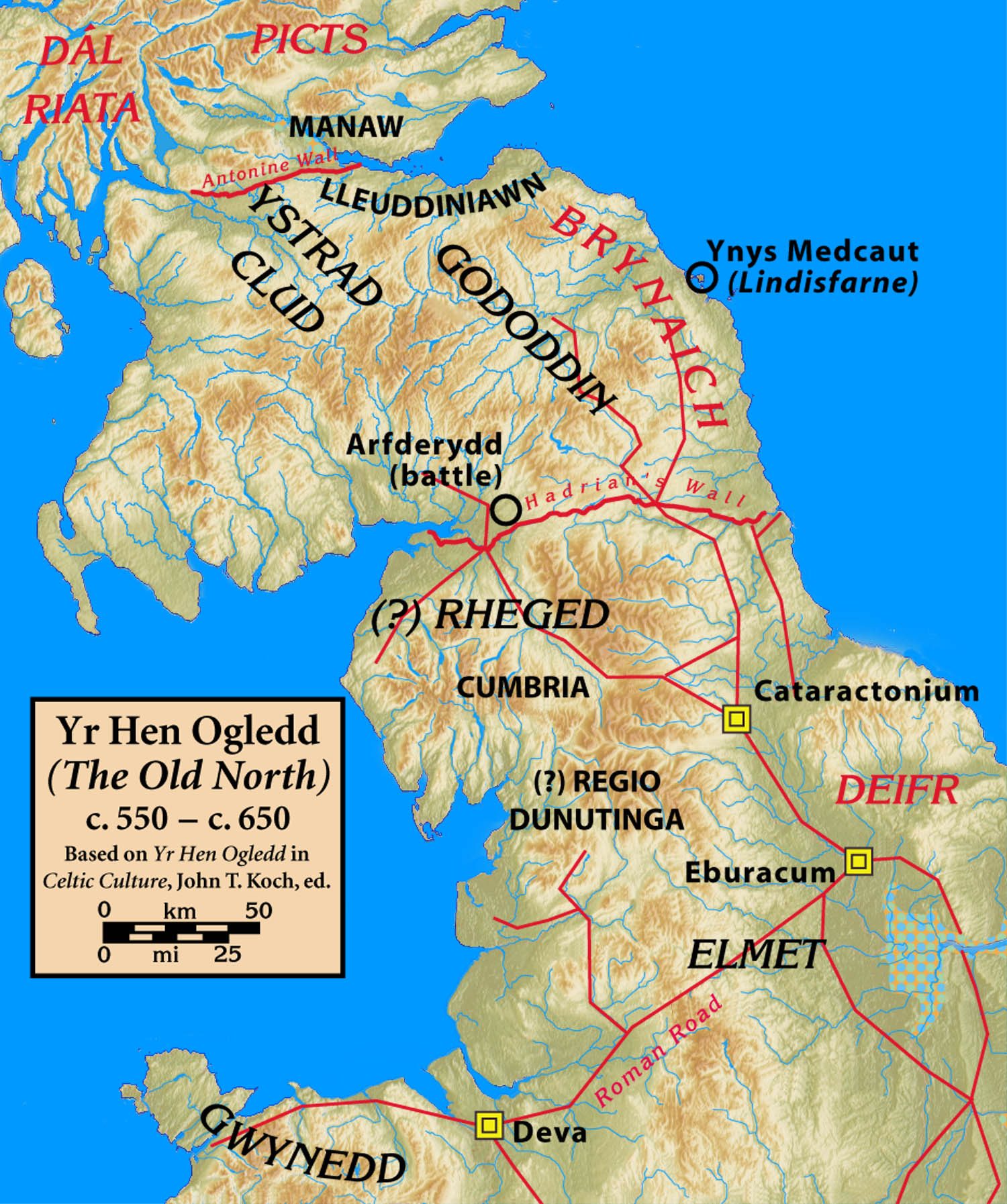
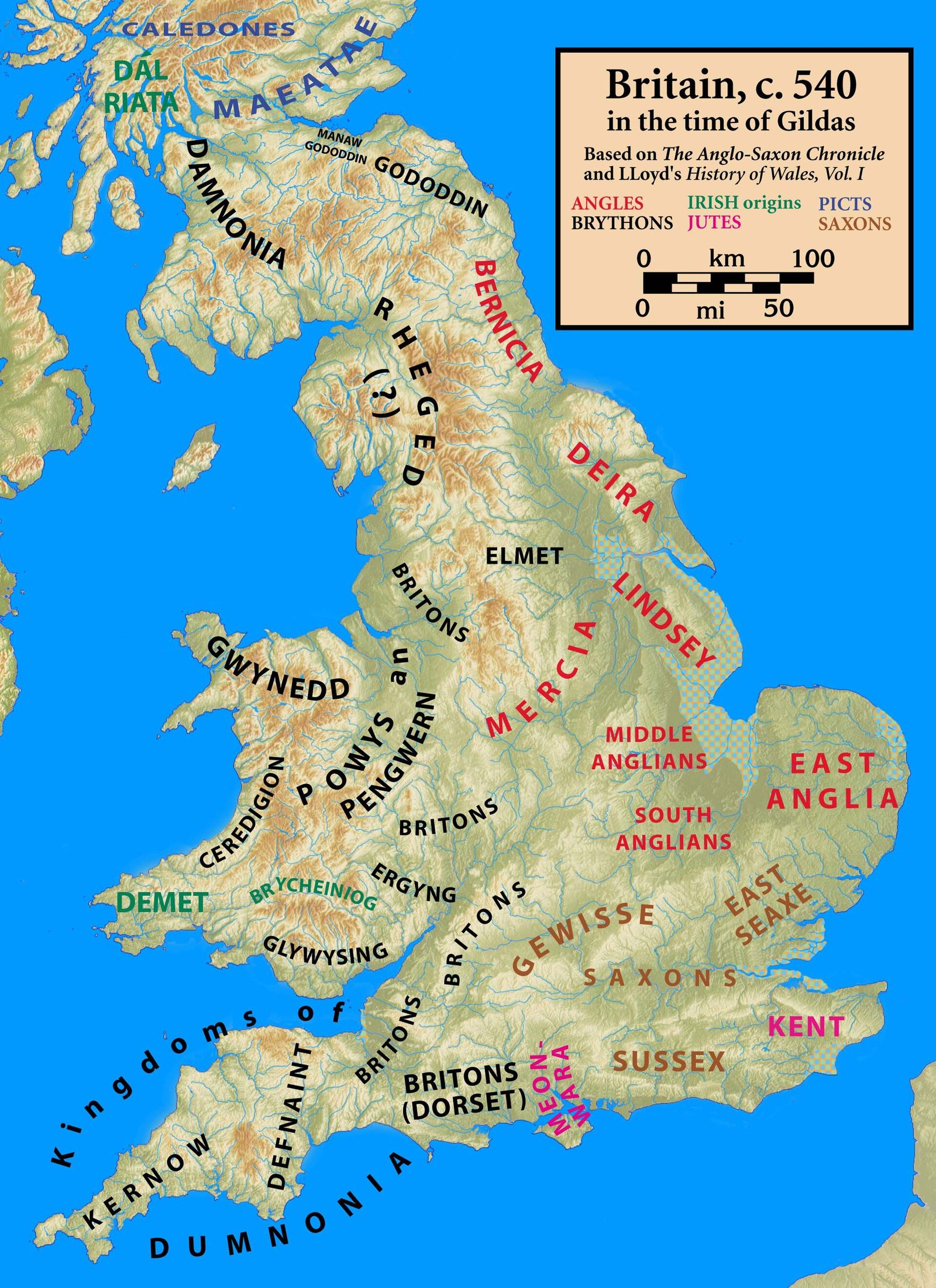
According to these later medieval genealogies, Cuneglasus (if this identification with Cynlas is correct, which it most likely is) was a king of the kingdom of Rhos. This was a kingdom in the north of Wales, which was either part of the larger kingdom of Gwynedd or was a small kingdom just next to it.
The close connection to Gwynedd is also borne out by the genealogies. They make Cynlas the first cousin of Maelgwn, the powerful king of Gwynedd to whom Gildas also directed some critical comments. It thus makes sense for Maelgwn and Cuneglasus’ kingdoms to have been close to each other.
Other Family Members
According to these genealogical records, Cuneglasus was the son of a figure named Owain Danwyn (another king who is sometimes identified by modern researchers as the real King Arthur).
Not much is known about Cuneglasus’ immediate family. Accrording to one record, the Bonedd Y Saint, Cuneglasus’ father Owain also fathered the saints Einion Frenin, Seiriol and Meirion. However, this is all that is known about his family. No other siblings are known, nor is the name or lineage of his mother mentioned in the surviving records.
When Did Cuneglasus Live?
Since Cuneglasus is very obscure in surviving Welsh tradition, the only real basis for dating his career is the fact that he was still king when Gildas wrote De Excidio. We can also use the evidence from the genealogies, although these are not without their problems.
Gildas himself does not say when he was writing, although the fact that he names four other living kings does help us to date Cuneglasus. Of these five, the king about whom we know the most is Maelgwn, king of Gwynedd. Although his death has traditionally been placed in 547 on the basis of the Annales Cambriae, more recent research found in Rachel Bromwich’s Trioedd Ynys Prydein highlighted that there is some basis for believing that Maelgwn may have reigned in the late sixth century.
If this is so, then this would place the reign of Cuneglasus, likewise, in the late sixth century. Of course, the dating of Gildas and his five contemporary kings is highly controversial, but we can see with confidence that Cuneglasus reigned somewhere in the sixth century.
Evidence That Cuneglasus Was the Real King Arthur
The argument that Cuneglasus was the real King Arthur is primarily based on the various details that Gildas supplies us with, although it also incorporates the little that is recorded about him from elsewhere.
Cuneglasus the Bear
One of the primary pieces of evidence used in support of this theory comes from one specific line in Gildas’ De Excidio. In the line in question, Gildas directly calls Cuneglasus a ‘bear’. Why is this so interesting for Arthurian researchers?
The reason is that the Welsh word for ‘bear’ is ‘arth’. Based on this fact, many have speculated that the name ‘Arthur’ is actually a title based on this animal. Or, conversely, ‘Arthur’ may have been another one of Cuneglasus’ names, with Gildas’ reference to him as a bear being a pun based on that name. In any case, Gildas calling Cuneglasus a bear is clear evidence for a connection with the ‘arth’ element, which is close to the name of King Arthur.
Geoffrey of Monmouth’s Missing King
Another notable piece of evidence that has been used by proponents of this theory is the fact that Cuneglasus does not appear in Geoffrey of Monmouth’s Historia Regum Britanniae, written in c. 1137. Why is this so significant?
The reason is that Geoffrey of Monmouth wrote about the contemporary kings mentioned by Gildas. It appears that he somehow misunderstood Gildas’ comments in De Excidio to be descriptions of consecutive kings rather than contemporary kings. He wrote about each one of them in turn, presenting them as successors of King Arthur in sequence.
However, Geoffrey notably did not include Cuneglasus. He first mentions Constantine as Arthur’s successor. Then he mentions Aurelius Conan, after whom reigns Vortipor. Finally, Geoffrey mentions Maelgwn Gwynedd.
This is precisely the same order as Gildas’ comments towards them in De Excidio, and many of the details that Geoffrey includes in his brief summary of their respective reigns seem to be taken from Gildas too. Yet, Cuneglasus is missing. What is the explanation for this?
According to proponents of this theory, Cuneglasus is missing from Geoffrey’s account of Arthur’s successors because he understood that Cuneglasus himself was actually identical to Arthur.
A Special Sword
Another interesting connection between Arthur and Cuneglasus involves their weapons. Famously, King Arthur had his special sword, Excalibur. In the Welsh texts, it is called Caledfwlch. In the early Latin texts, it is called Caliburnus. But Excalibur is the name by which it is most commonly known today.
What about Cuneglasus? There is a brief but interesting comment that Gildas makes concerning him. Notice the following line from De Excidio:
“Why dost thou maintain such strife against both men and God? Against men, thine own countrymen, to wit, by arms special to thyself; against God, by crimes without number?”
Notice the reference to Cuneglasus causing strife to his own countrymen by means of ‘arms special to thyself’. Assuming that Cuneglasus did not possess some kind of secret Dark Age technology, this suggests that he had a special sword, and also that this sword was famous. This ties in very well with the legend of Arthur having his own special sword.
A Cruel and Brutal King
At least one researcher argued that identifying Cuneglasus as Arthur – or at least, by supposing that he had contributed to the legend of Arthur by the twelfth century – would explain the portrayal of Arthur in many hagiographies of religious figures as a troublesome tyrant who opposes the work of God.
This is in stark contrast to the praiseworthy way in which Arthur is portrayed in many of the earlier accounts, such as the Historia Brittonum.
Similar to how Arthur is portrayed in those hagiographies, Gildas presents Cuneglasus as a cruel tyrant, disrespectful to God and his standards. Although only a minor point, this description of Cuneglasus could explain the characterisation of Arthur in those later religious records.
Marital Strife
Gildas also refers to some sins that Cuneglasus committed regarding his married life which arguably match the legends of King Arthur. Notice the following statement from Gildas:
“Why, in addition to innumerable lapses, dost thou, having driven away thy wife, cast thine eyes upon her dastardly sister, who is under a vow to God of the perpetual chastity of widowhood.”
According to this scathing accusation, Cuneglasus had driven away his own wife and ‘cast his eyes’ upon her sister, whom Gildas refers to as ‘dastardly’. Another translation calls her ‘detestable’. How does this fit the information found in the Arthurian legends concerning Arthur and his wife?
The Arthurian legends famously involve lots of intrigue involving Arthur and his wife Guinevere. This intrigue comes in lots of different forms depending on which specific legend is followed. In one version, Guinevere herself abandons Arthur and joins Mordred in his rebellion.
In the Welsh Triads, we find hints at a tradition in which Guinevere’s similarly-named sister married Mordred and opposed Guinevere. In yet another legend, Arthur and his former ally Lancelot fought a war over Guinevere.
However, the form of the legend most similar to what Gildas referred to is the legend of the False Guinevere. This appears in the Vulgate Cycle, written in the early thirteenth century. In this legend, Guinevere has an evil identical sister who conspires to take the real Guinevere’s place. She manipulates Arthur, leading to him driving out and imprisoning his real wife and taking her sister as his queen.
This matches extremely well with what Gildas wrote concerning Cuneglasus driving away his own wife and setting his eyes upon her ‘detestable sister’.
The Lioness
An extension of this point about Cuneglasus’ wife is the statement that Gildas makes concerning a certain ‘lioness’. He denounces Cuneglasus’ conduct and explains that it will lead to the teeth of a ‘fierce lioness’ coming down on him to destroy him.
Who was this lioness? Interestingly, earlier in De Excidio, Gildas had referred to King Constantine as ‘the tyrannical whelp of the unclean lioness of Damnonia’. In this statement, the lioness appears to represent the mother of Constantine.
Based on this, the argument has been made that the ‘teeth of a fierce lioness’ that would soon attack Cuneglasus for his sins were forces from the kingdom of Dumnonia, possibly even meaning Constantine himself, as the son of said lioness.
Why is this so interesting? The reason is that Guinevere, the wife of Arthur, is said by Geoffrey of Monmouth to have been the foster-sister of King Constantine.
Recall that Gildas condemned Cuneglasus for driving out his wife. According to proponents of this theory, this may be the specific sin that Gildas was suggesting would lead to the ‘teeth of the fierce lioness’ attacking him. If this expression was a reference to Constantine, as theorised, this would indicate that Constantine had some personal connection to Cuneglasus’ wife. This supports the identification of Cuneglasus’ wife with Guinevere, the foster-sister of Constantine according to legend.
Horrible as a Youth
Another argument comes from the fact that there is an obscure tradition of Arthur being horrible in his youth. The main example of this is found in one version of the Historia Brittonum. The main text was written in 830, but there are a variety of different manuscript versions dating from different periods. Some of these have glosses, comments added by the scribe.
One manuscript, dating from the thirteenth century, adds the following line in its account of Arthur, explaining that he was called:
“in British mab Uter, that is in Latin terrible son, because from his youth he was cruel.”
This is somewhat supported by a Welsh poem known as The Dialogue of Arthur and the Eagle, in which we find the following description of Arthur:
“Arthur the terrible sword bearer.”
This idea that Arthur was terrible in his youth is consistent with how Gildas describes Cuneglasus. Notice the following description of Cuneglasus from De Excidio:
“Why dost thou, also, wallow in the old filth of thy wickedness, from the years of thy youth?”
According to this, Cuneglasus had been engaging in wickedness since ‘the days of his youth’. In this sense, he could certainly be described as ‘terrible son’ and ‘cruel from his youth’, as the thirteenth-century manuscript of the Historia Brittonum describes Arthur.

Objections to This Theory
The fundamental problem with this theory is that almost all of the evidence is very generic or relies on very strenuous connections. Let us consider each piece of evidence in turn.
Was Cuneglasus Really Called Arthur?
The only piece of evidence that has any particular weight is the point about Cuneglasus potentially being called ‘Arthur’. It is a fact that Gildas really does directly call this king a bear, and it is also a fact that ‘bear’ in Welsh is ‘arth’.
However, even despite these unambiguous facts, this argument is not without its problems. The biggest problem is something that the reader has potentially already noticed. Cuneglasus is not the only figure whom Gildas refers to as an animal. We have already seen that he referred to Constantine’s mother as a lioness.
In fact, Gildas refers to all five kings as beasts. For example, Vortiporius is called a leopard, Aurelius Caninus is called a lion’s whelp, and Maelgwn is called a dragon. Scholars generally interpret these descriptions to be based on, or at least inspired by, the beasts mentioned in the Bible book of Revelation.
This being the case, there is no reason to interpret Cuneglasus’ description as a bear to be a reference to any actual title he held.
Counterargument
On the other hand, several of the expressions used by Gildas are obviously puns based on the standard terms. For instance, he calls Constantine’s kingdom ‘Damnonia’ rather than the correct ‘Dumnonia’, evidently to hint at the concept of damnation. Other examples exist in this section of De Excidio.
Therefore, although the references to beasts do seem to be inspired by the Bible, this does not rule out the possibility that Gildas chose the bear for Cuneglasus specifically because it would be a pun related to his other name.
Nonetheless, despite this possibility, we see that this piece of evidence for Cuneglasus also being known as ‘Arthur’ is not nearly as strong as it first seems.
Why Did Geoffrey Not Mention Him?
What about the fact that Geoffrey did not mention Cuneglasus in his list of kings following Arthur, when he mentions the other four kings criticised by Gildas?
The simple answer is that we do not know. One suggestion is that the original version of Geoffrey’s Historia Regum Britanniae did include Cuneglasus, but that he was lost from the manuscripts early on in its distribution.
In any case, the idea that this can be used to justify identifying Cuneglasus with Arthur is seriously flawed. One massive issue is the fact that this would require Geoffrey to have known and understood that Gildas’ Cuneglasus was the same as Arthur.
However, if Geoffrey had understood that, then he would logically have incorporated the details that Gildas included about Cuneglasus in his description of Arthur. For example, there is the point about Cuneglasus being wicked in his youth. Then there is the point about him leaving his wife in favour of her sister. None of this is in Geoffrey of Monmouth’s narrative. Yet, regarding the other kings, Geoffrey demonstrably does use the details provided by Gildas in his account of their respective reigns.
Did Cuneglasus Really Have a Special Sword?
The idea that Cuneglasus had his own special sword, in the same vein as Arthur’s Excalibur, is based on the translation by Hugh Williams, written in 1899. The actual words written by Gildas were ‘armis specialibus’. The idea that this means ‘weapons special to you’ is not supported by all translations (notably the Giles translation of 1900), but it does seem like a reasonable translation.
Nonetheless, should we really interpret this to mean that he had a special sword like Arthur’s Excalibur?
Notably, Gildas does not refer to a single special weapon, but ‘weapons’. Perhaps Cuneglasus employed the use of certain Roman equipment that had fallen out of use in most other parts of Britain by that time. Alternatively, it could be that this refers to Cuneglasus’ general method of engaging in warfare, which was peculiar to him.
In any case, the idea that this refers to a special sword is not the most natural explanation, in view of Gildas’ use of the plural ‘armis’.
Gildas’ Critical Comments
Let us now consider the argument that Gildas’ harsh criticisms of Cuneglasus make sense of Arthur’s characterisation in the Lives of the Saints. There are at least two problems with this argument.
The first is that Arthur is not portrayed as morally corrupt in the majority of other sources, including the Historia Brittonum. Therefore, at best, Cuneglasus could have contributed only to Arthur’s characterisation in those religious hagiographies. It is clear that he could not be the central origin behind the legend of Arthur, who was famed for his moral uprightness.
We see this even in Gildas’ own writings. He praises the work of Ambrosius Aurelianus in fighting back against the Saxons. He views the successful campaigns from that time up to and including the climactic Battle of Badon as entirely positive.
The Arthurian legends firmly link Arthur to the Battle of Badon. This is seen as early as the Historia Brittonum, the earliest source for Arthur’s career. Therefore, if Arthur was a historical person of Gildas’ era, he could not justly have criticised him after having spoken so positively about the Battle of Badon.
Therefore, it makes no sense whatsoever to understand Cuneglasus, the king who was severely criticised by Gildas, as the victor at Badon.
The second problem with this argument is that Arthur’s characterisation in the Lives of the Saints is very clearly nothing more than the writers of the hagiographies wanting to provide prominent antagonists to the religious figures they were writing about.
These hagiographies constantly show kings in a negative light to provide an opportunity for the saint in question to overcome some kind of opposition. Therefore, the negative characterisation of Arthur in those records is likely not historically valuable.
The Truth about Arthur’s Relationship with Guinevere
An argument which seems convincing at first sight is the correspondence between Gildas’ remarks about Cuneglasus’ behaviour towards his wife and her sister and the Arthurian legend of the False Guinevere. The correspondence does appear to be perfect.
The major problem with this is that the story of the False Guinevere does not appear anywhere earlier than the thirteenth century. There is no trace of it in Welsh tradition or in earlier continental tradition.
In fact, in prior versions of the Arthurian legends, King Arthur is generally either the saviour of Guinevere after she is kidnapped by someone else, or it is Guinevere who betrays Arthur. However, the idea of Arthur discarding his wife and pursuing someone else is non-existent in earlier sources.
Therefore, we must reject the story of the False Guinevere as having any historical value.
Was Constantine’s Mother Really the Lioness?
Suppose, for a moment, that we ignore this obstacle to identifying Cuneglasus’ wife with Arthur’s Guinevere. What about the argument that Constantine was the ‘teeth of the lioness’ who would soon punish Cuneglasus for his sins against his wife, in line with the Arthurian legend that Guinevere was the foster-sister of Constantine?
There are at least two big problems with this. First of all, Gildas mentions a multitude of sins. There is no basis for the conclusion that Gildas was referring to Cuneglasus’ sins against his wife as being the act of wickedness that would incite to wrath the ‘teeth of the lioness’. This connection is entirely arbitrary.
Furthermore, there is also no evidence that Gildas had in mind the same person or entity when he referred to a lioness in this passage as he had when referring to the lioness associated with Constantine.
In fact, a reading of the line in full makes it clear that he was not talking about Constantine’s mother. Notice the following:
“Why dost thou provoke, by thy repeated injuries, the groans and sighs of saints, who on thy account are living in the body, as if they were the teeth of a huge lioness that shall some day break thy bones?”
As we can see from the full passage, Gildas actually connects the wrath soon to come on Cuneglasus with his sins against the saints. Furthermore, it is those saints whom Gildas refers to as the teeth of a lioness. Therefore, when we read the full sentence, it is clear that this cannot have anything to do with Constantine or Cuneglasus’ wife, and thus it cannot offer any evidence for his wife being Guinevere.
Was Arthur Really a Horrible Youth?
Finally, there is the argument that Arthur was known for being wicked in his youth, which fits Gildas’ description of Cuneglasus. The evidence for this comes from the thirteenth century version of the Historia Brittonum discussed earlier.
Needless to say, this is very late evidence, and it contradicts earlier evidence. Based on the very wording provided in that manuscript, it is obvious that this is based on an alternative understanding of Arthur being ‘ap Uthyr’. This means ‘son of Uthyr’, but the scribe responsible for the thirteenth-century gloss understood it to mean ‘terrible son’.
Both in Geoffrey of Monmouth’s Historia Regum Britanniae and in pre-Galfridian tradition, Arthur is made the son of Uthyr. Therefore, the evidence overwhelmingly points to the gloss in the Historia Brittonum being the misunderstanding of this earlier tradition, rather than the other way around.
That being the case, we cannot use the gloss in the Historia Brittonum to try to find the real King Arthur, since this is demonstrably a late tradition that evolved from an entirely different one.
The fact that the Welsh poem The Dialogue of Arthur and the Eagle calls Arthur ‘terrible sword bearer’ offers no help to this theory. The use of the word ‘terrible’ in this context clearly refers to being highly effective with a sword, terrible from the point of view of his enemies. It has nothing to do with moral character.

Conclusion
In conclusion, the theory that Cuneglasus was the real King Arthur is based primarily on a comparison between Gildas’ comments regarding this king and a variety of disparate traditions concerning Arthur. However, this theory relies on picking and choosing a wide range of details, many of which contradict earlier – and thus weightier – traditions. We see this, for instance, in the argument concerning the False Guinevere. In all, there is very little to recommend this theory as a viable explanation for the real King Arthur.
Sources
Bartrum, Peter, A Welsh Classical Dictionary, 1993
Anderson, A. O., Gildas and Arthur, 1912
Pestano, Dane and Wilson, Mak, Cuneglasus, Ursus and King Arthur, 2017