Was Ambrosius Aurelianus, the Last Roman, the Real King Arthur?

One very popular idea about the real identity of King Arthur is that he can be identified as Ambrosius Aurelianus. Unlike many other theories, this has quite a bit of academic support. Ambrosius is one of the few figures from the Arthurian period about whom we have near-contemporary evidence. He is sometimes known as the last Roman. What is the basis for the speculation that this historical figure was the real King Arthur?
Who Was Ambrosius Aurelianus?
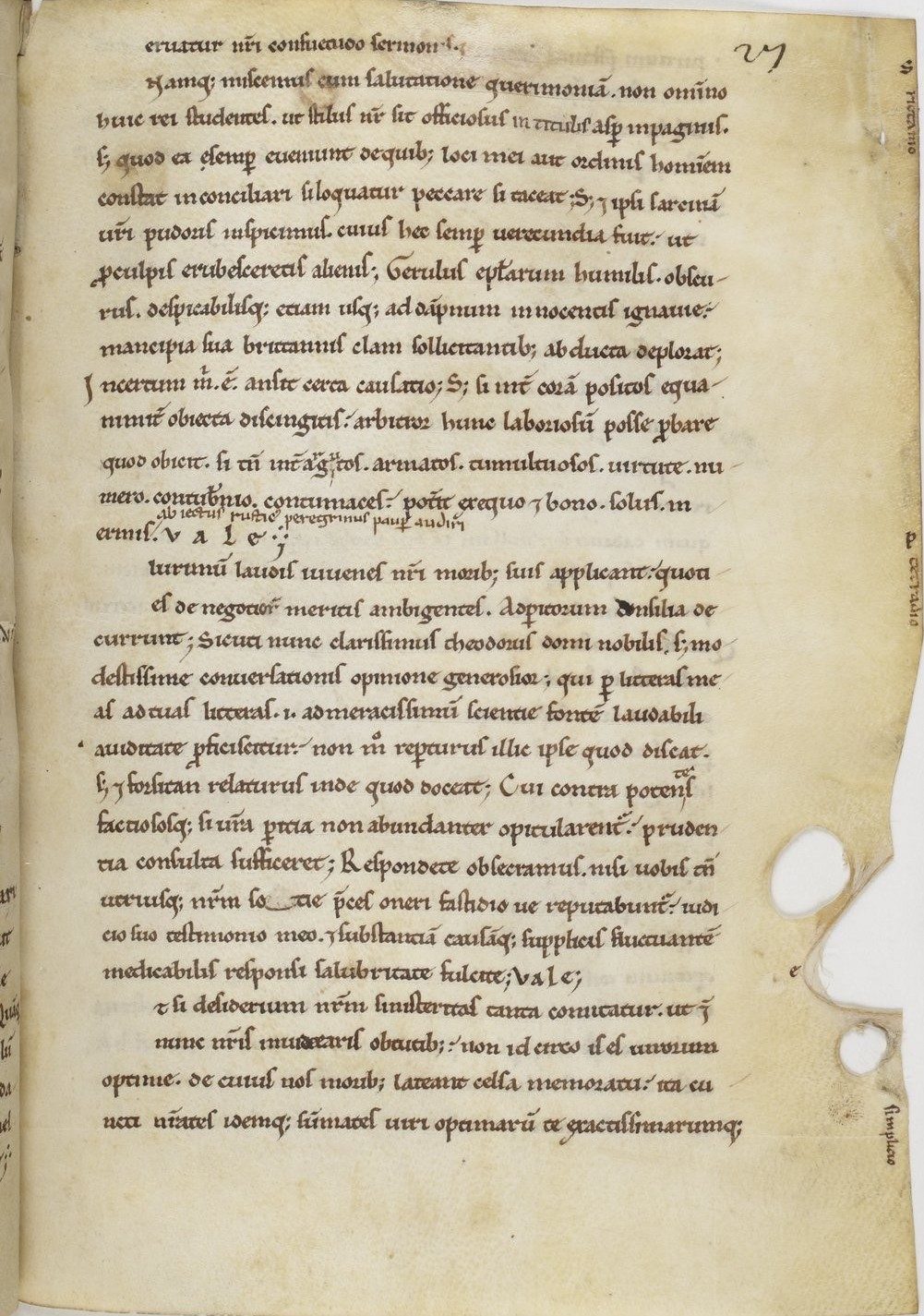
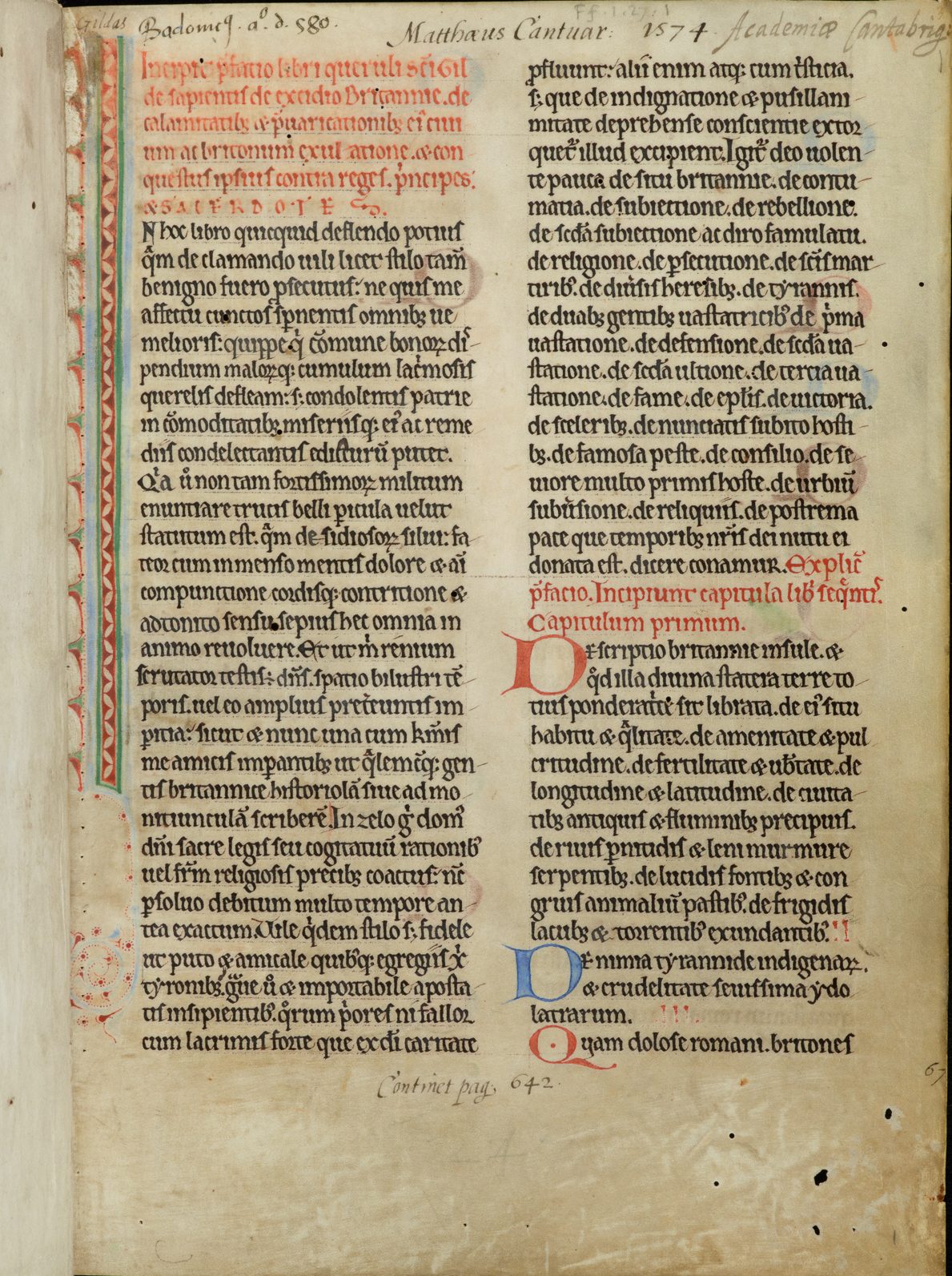
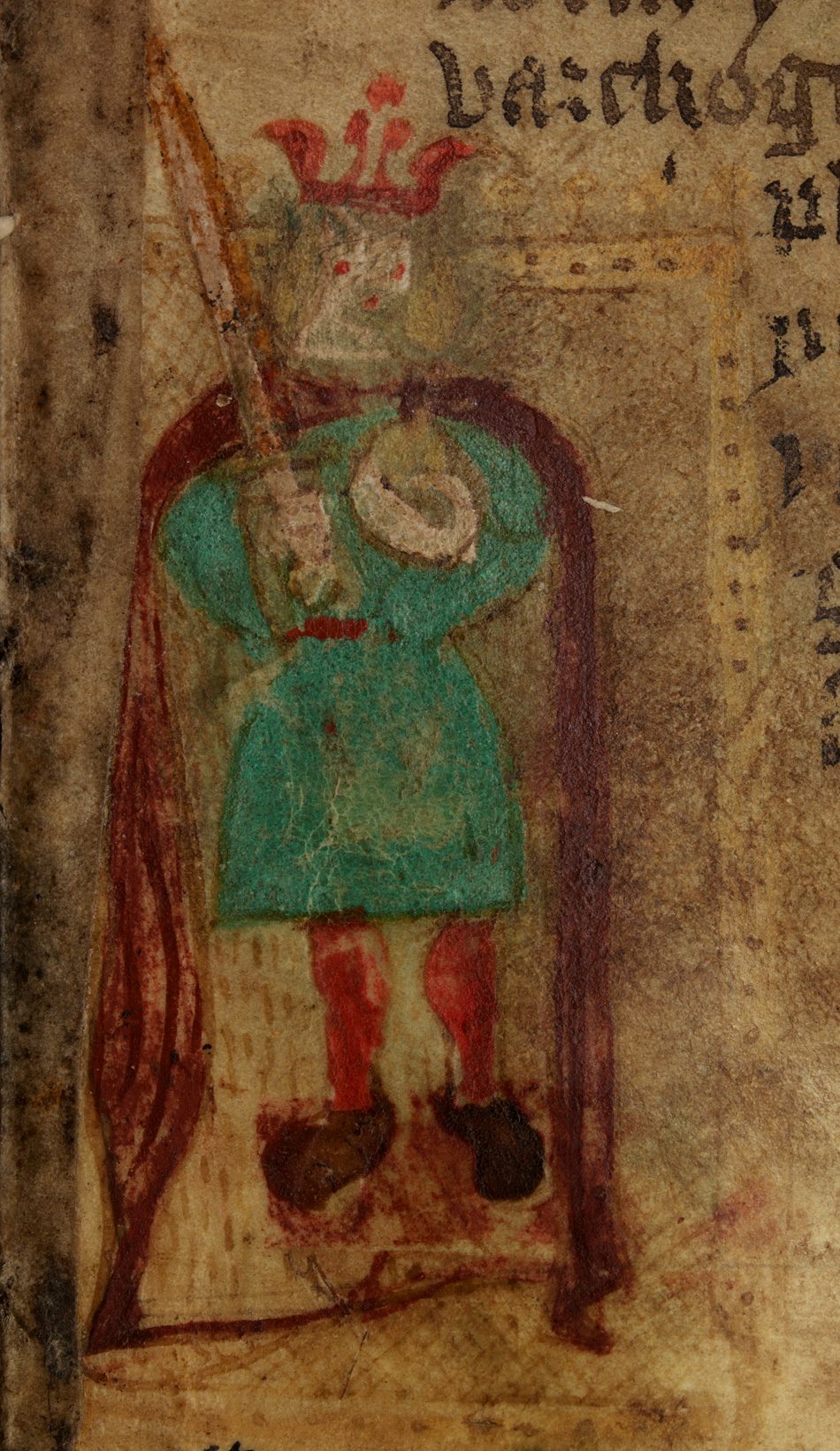
Ambrosius Aurelianus was a war leader active in early post-Roman Britain. He is mentioned in De Excidio, a British document written by Gildas. This is the only Latin document from sixth century Britain which still survives until today, making it very valuable. As such, Ambrosius Aurelianus is one of the most firmly-established figures of the Arthurian era.
Gildas’ Account of Ambrosius Aurelianus
Gildas does not tell us very much about Ambrosius. In fact, the entire passage about him can be quoted in full here:
“A remnant [of the Britons], to whom wretched citizens flock from different places on every side, as eagerly as a hive of bees when a storm is threatening, praying at the same time unto Him with their whole heart, and, as is said, burdening the air with unnumbered prayers, that they should not be utterly destroyed, take up arms and challenge their victors to battle under Ambrosius Aurelianus.
He was a man of unassuming character, who, alone of the Roman race chanced to survive in the shock of such a storm (as his parents, people undoubtedly clad in the purple, had been killed in it), whose offspring in our days have greatly degenerated from their ancestral nobleness. To these men, by the Lord’s favour, there came victory.
From that time, the citizens were sometimes victorious, sometimes the enemy, in order that the Lord, according to His wont, might try in this nation the Israel of to-day, whether it loves Him or not. This continued up to the year of the siege of Badon Hill, and of almost the last great slaughter inflicted upon the rascally crew.”
What This Tells Us
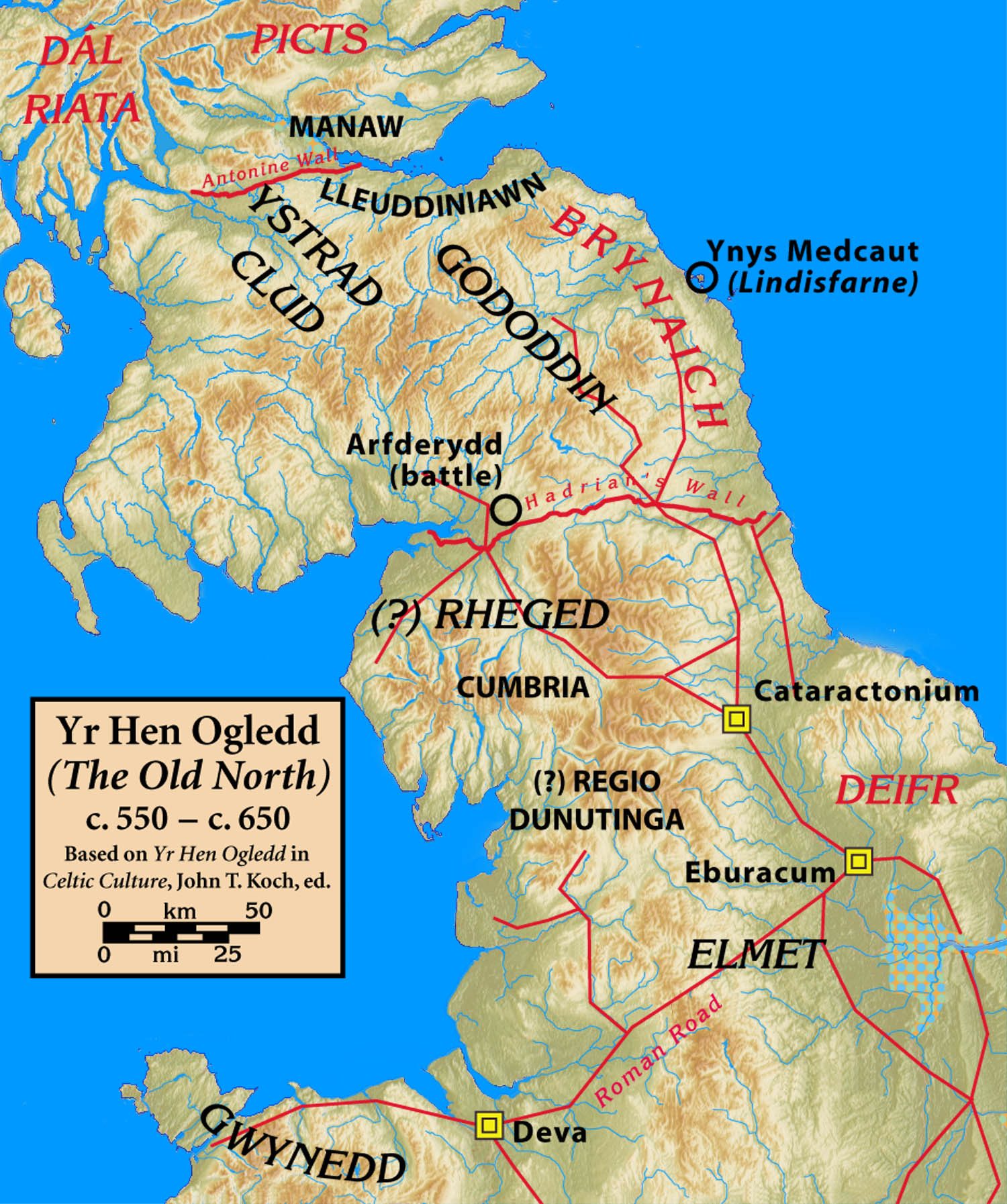
According to this passage, some of the Britons who survived the initial period of Anglo-Saxon conquests through the country came together under the leadership of Ambrosius Aurelianus. Modern scholarship has revealed that the Anglo-Saxons first came to Britain in c. 430 and started conquering soon after that. This is based on archaeological discoveries and two contemporary fifth-century sources, the Gallic Chronicle of 452 and the Life of Saint Germanus.
Gildas does not tell us how long the initial phase of the Anglo-Saxon conquests lasted. Nonetheless, it lasted long enough for the invaders to at least briefly reach the western shore of Britain. According to a chronological record provided by Bede, an English historian of the eighth century, Ambrosius’ campaign against the Anglo-Saxons occurred in the time of Emperor Zeno, who was emperor from 474 to 491.
Although Gildas does not provide sufficient information to confirm this, this dating is consistent with Gildas’ description.
Gildas’ near-contemporary account also describes Ambrosius as an ‘unassuming man’. Another translation renders this ‘a modest man’. Apparently, he was of a pleasant nature, even though he was a war leader.
According to Gildas, Ambrosius led a military campaign against the Saxons which resulted in some notable successes. The Britons were not always victorious, although they did achieve many victories. The Saxons, likewise, were victorious on many occasions.
This back-and-forth continued until the siege of Badon, which was almost the last great slaughter inflicted upon the Saxons. Gildas does not tell us if Ambrosius was still leading the British armies at that point, or whether this victory occurred in the time of one of his successors.
The Family of Ambrosius
As we can see from that passage, Gildas does not tell us very much about Ambrosius’ family. Yet, he does tell us three interesting pieces of information. The first is that his parents died in the ‘storm’ described in the De Excidio. This refers to the troubled period in the first portion of the fifth century, up to and including the period of violent Saxon conquest.
Secondly, Gildas mentions that his parents had ‘worn the purple’. What exactly this means is a mystery, although most commentators understand this to be related to a Roman position of authority. In fact, many have understood this to mean that his father was actually a kind of emperor.
We know that several individuals set themselves up as emperors in Britain in the first few years of the fifth century. It would not be surprising at all if this continued for some time thereafter.
On the other hand, other scholars have suggested that Ambrosius’ father was a Roman consul. This would not necessarily have to be a Roman consul actually within the Roman Empire. He may have been a consul within a region that had already declared itself independent of Rome, such as Britain itself or a part of Gaul.
In any case, it is evident that his parents had some considerable authority, and they were evidently considered to be Romans, since Ambrosius specifically calls Ambrosius a Roman.

Evidence That Ambrosius Aurelianus Was the Real King Arthur
What is the basis for the theory that Ambrosius Aurelianus was the historical King Arthur? One reason is the simple fact that he is someone whom we know for a fact was active as a war leader against the Saxons in post-Roman Britain. As such, he is an obviously attractive candidate for the real Arthur, the legendary war leader who famously fought against the Saxons. However, there are several specific reasons for this theory beyond this general connection.
The Battle of Badon
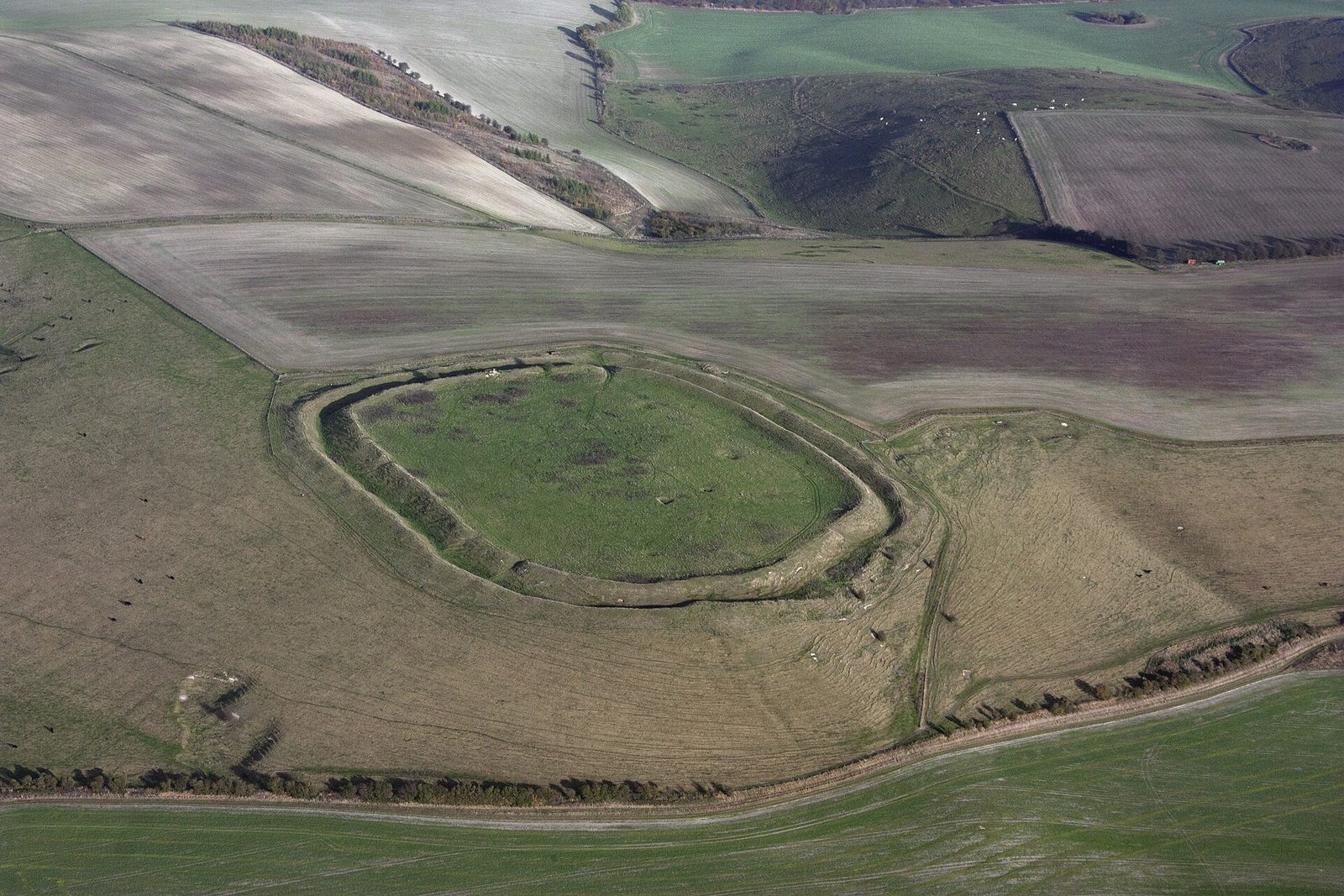
By far the most important reason behind this theory is related to the Battle of Badon. As we saw previously, the campaign initiated by Ambrosius against the Saxons culminated in this battle, which was actually a siege.
The reason that this is so notable is because the Battle of Badon has strong connections to King Arthur. It appears in the Arthurian legends as Arthur’s final battle against the Anglo-Saxons. We first see this in the Historia Brittonum, a document which was written in 830. After Gildas’ De Excidio, this is the first account describing the Battle of Badon (aside from Bede, who simply used Gildas’ account almost verbatim).
Later tradition also attributes the Battle of Badon to Arthur, such as the tenth-century Annales Cambriae and the twelfth-century Historia Regum Britanniae. This is considered a major part of Arthur’s career. Thus, a common viewpoint is that the victor at Badon must be identified as the historical Arthur.
Ambrosius Aurelianus as the Victor at Badon
Based on this line of reasoning, many researchers believe that Ambrosius Aurelianus can clearly be identified as the real King Arthur. This is due to the perceived fact that Gildas attributes Ambrosius with the victory at Badon.
As we saw from Gildas’ passage earlier, he clearly describes how Ambrosius started a military campaign that repelled the Saxon forces. The war continued over some time, with victories and defeats on both sides, until there was finally the climactic victory at the Battle of Badon.
Some scholars and independent researchers argue that this strongly implies that Ambrosius was the victor at Badon. After all, Gildas attributes the start of this military campaign to Ambrosius and never gives any specific indication that he was succeeded by a new military leader before the Battle of Badon. Thus, they argue that the most natural reading of this line, ignoring later tradition, is that Ambrosius was still the leader of the Britons when the Badon occurred. Therefore, he must be King Arthur.
Chronological Evidence
Additional support for this theory comes in the form of chronological evidence. After all, Arthur is usually placed in the sixth century, whereas Ambrosius Aurelianus is usually placed in the fifth century. This would seem to preclude identifying them as the same figure. However, there is some evidence which places Arthur in the fifth century, the time of Ambrosius.
Legend of Saint Goeznovius
One interesting source which is primarily discussed in the context of the theory that Arthur was identical to a historical figure known as Riothamus is the Legend of Saint Goeznovius. Although usually used in favour of that other theory, it is equally applicable to this Ambrosius theory.
This source has been traditionally dated to the eleventh century, which makes it a relatively early Arthurian source. Notably, we find the following passage in this document:
“In the course of time, the usurping king Vortigern… summoned warlike men from the land of Saxony and made them his allies in the kingdom. Since they were pagans and of devilish character, lusting by their nature to shed human blood, they drew many evils upon the Britons. Presently their pride was checked for a while through the great Arthur, king of the Britons.”
This reads as if Arthur immediately followed the reign of Vortigern (the king who invited the Saxons over as mercenaries in c. 430), and that he was the one who offered the first effective counteroffensive against the Saxons. From Gildas, we know that Ambrosius is the one who fits this profile historically.
Direct Chronological References
Another source that seemingly supports this theory is the chronicle of Alberic of Trois-Fontaines. Writing in the thirteenth century, he placed Arthur’s reign from 459 to 475. Although this does not perfectly match Bede’s chronological information for Ambrosius, it is quite a close match and is certainly broadly compatible with Gildas’ information about Ambrosius.
Similarly, a thirteenth-century gloss in the tenth century Salzburg Annals includes a reference to Arthur’s reign in the year in which Hilarius was appointed pope, which was in 461. Again, while not perfectly matching Bede’s chronology, it is close.
Essentially the same could be said about Jacques de Guise, who placed Arthur’s reign in the time of Aegidius, a ruler in Gaul whose reign lasted from 461 to 464.
King Arthur’s Associates
This identification of Arthur with Ambrosius could also be supported by some of the people with whom Arthur is associated in the legends. While many of them are sixth century figures, there are some notable examples which seemingly place him in the fifth century.
Pope Supplicius
One example which is also often seen in the context of the Riothamus theory is Pope Supplicius. In Geoffrey of Monmouth’s landmark Historia Regum Britanniae, written in c. 1137, Arthur is described as sending his nephew Walgan (better known as Gawain) away to be educated under the tutelage of Pope Supplicius.
A pope by that exact name is not known to history, but the pope from 468 to 483 was named Simplicius. Due to the similarity between the two names, many have proposed that the legendary Pope Supplicius should be identified as the historical Pope Simplicius.
If this is correct, this would apparently place Arthur in the second half of the fifth century, which is exactly when Ambrosius Aurelianus was active.
Dubricius
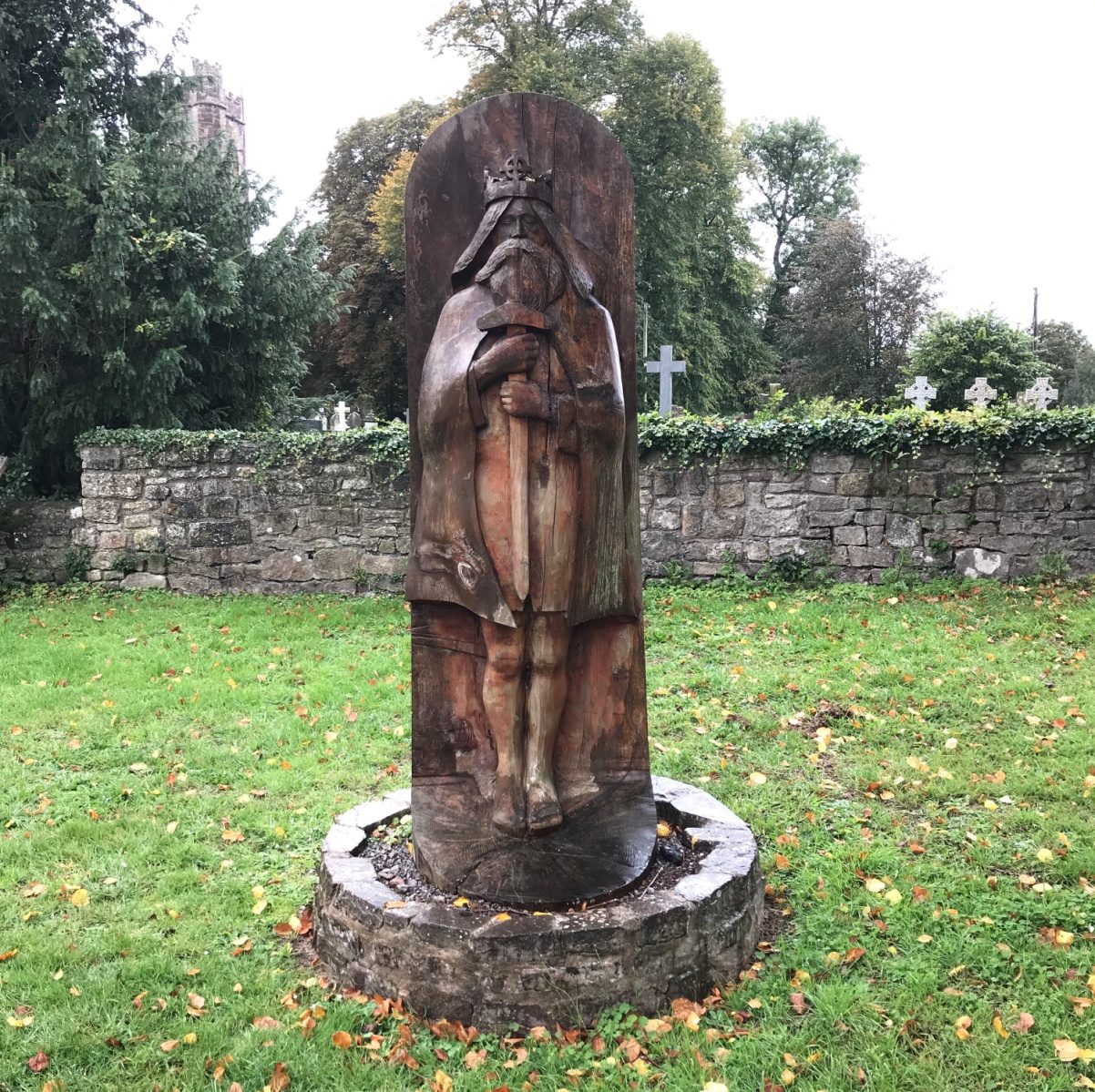
Arthur is prominently associated with Dubricius, an important bishop in southeast Wales in the early medieval period. According to Geoffrey of Monmouth’s account, Dubricius was the bishop was crowned Arthur as king.
According to a different twelfth-century account, Dubricius was appointed bishop by Germanus. Historically, we know that Germanus of Auxerre was sent to Britain in about 429 and then some time later, usually understood to have been around 447. After that, he died in 448.
Therefore, if Germanus of Auxerre appointed Dubricius, then Dubricius must have already been an adult by 447 at the very latest. Since Dubricius features in Geoffrey’s account as bishop throughout much of Arthur’s reign, this would mean that Arthur’s reign must have covered much of the latter half of the fifth century, but not realistically later than that.
This, again, would make Arthur an exact contemporary of Ambrosius Aurelianus.
Ambrosius’ Family
Now that we have seen that Ambrosius appears to have been the historical victor of King Arthur’s greatest victory and the two are placed at exactly the same time period according to many records, let us see how their respective families match up.
As a matter of fact, the legendary material explicitly makes Ambrosius and Arthur members of the same family. Ambrosius was said to have been the uncle of Arthur. They were both descendants of Constantine, the king of Britain who ruled in the immediate aftermath of the Roman era of Britain. Ambrosius is described as the son of Constantine, while Arthur is described as Constantine’s grandson.
Already, we can see that they are closely connected. But can we take this connection even further?
Alternative Genealogies
There is a phenomenon that we sometimes see in the medieval Welsh genealogies which may well provide further support for this theory, explaining how Ambrosius could have been described as the uncle of Arthur despite actually being identical to him.
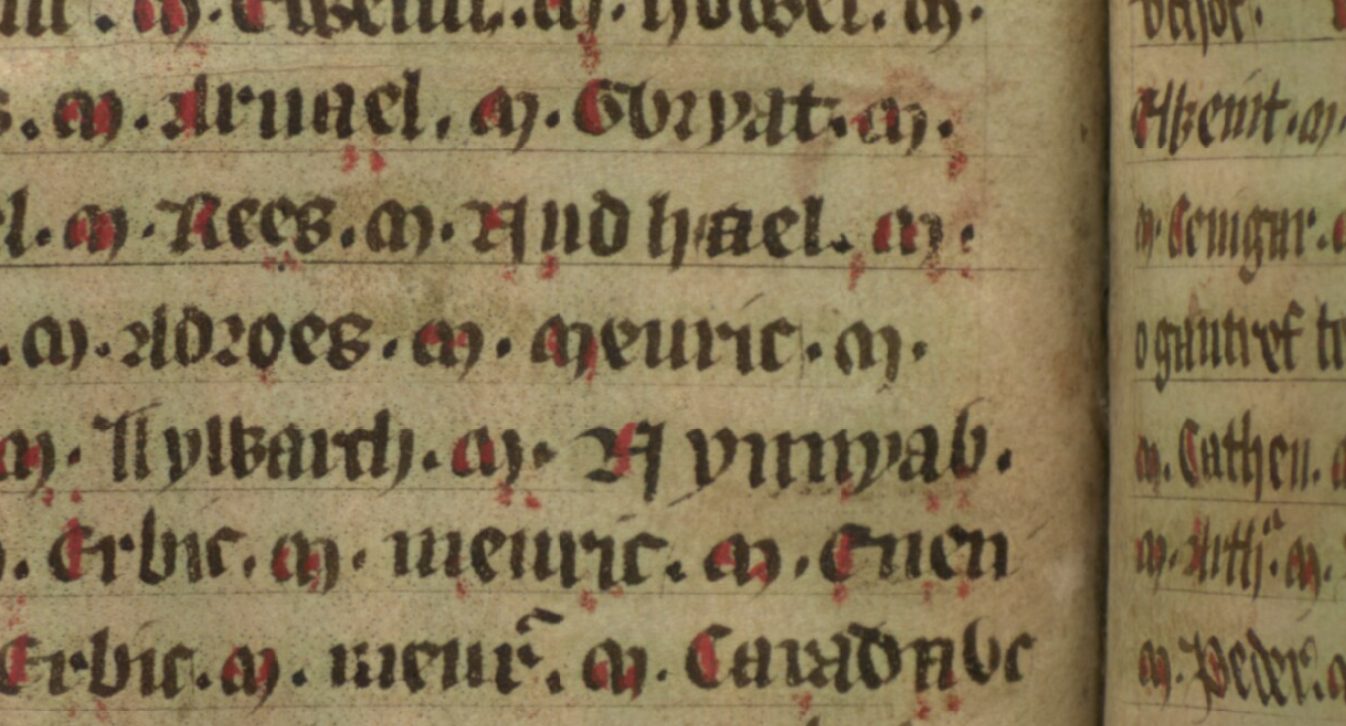
What we sometimes see in the genealogical records is a generation being skipped. For instance, in one genealogical record of the kings of southeast Wales, we find the following sequence:
However, in the majority of other records, we find this sequence:
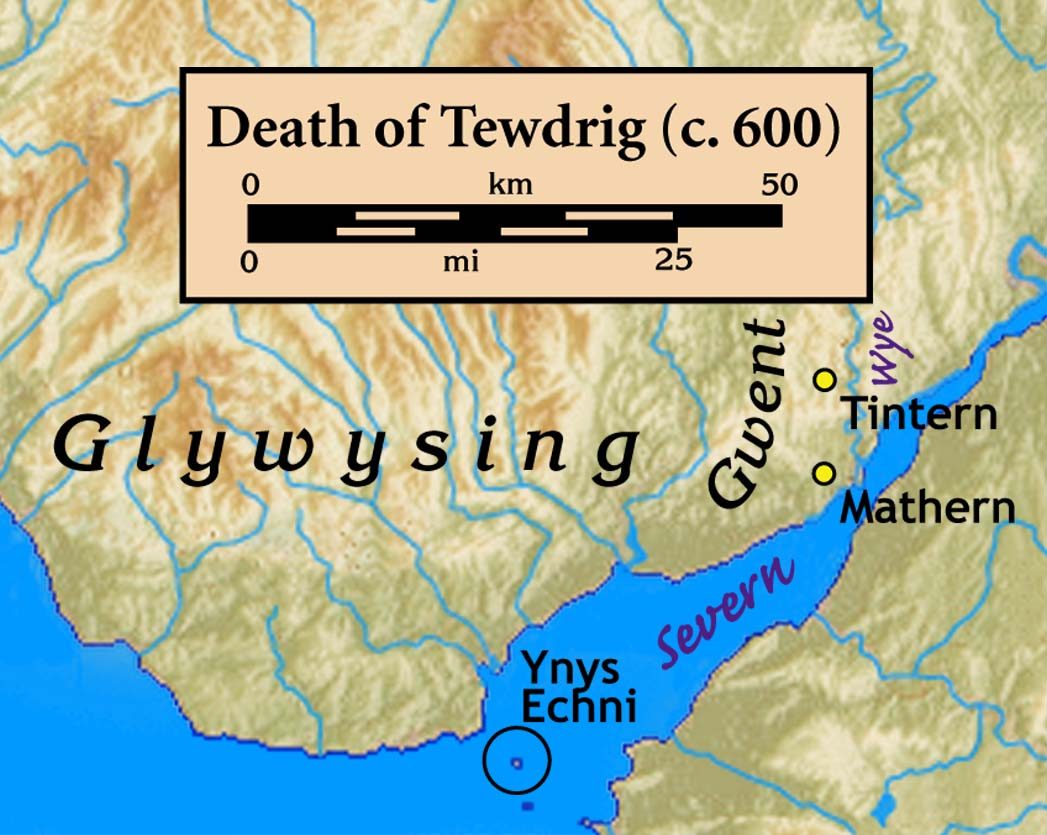
Athrwys son of Meurig son of Tewdrig
Based on the weight of evidence, the vast majority of scholars accept the longer version. Many other examples could be given. The point is that sometimes a person could be described as the son of their grandfather, their direct father being skipped entirely.
This offers an explanation for how Ambrosius could have been described as his own uncle, if he was actually Arthur. He could have actually been the grandson of Constantine. Perhaps he was remembered correctly as his grandson in the records which called him ‘Arthur’, but in the records which remembered him as ‘Ambrosius’, his father was skipped.
The Father of Ambrosius
Additionally, recall that Ambrosius’ parents are described by Gildas as being ‘clad in purple’. This suggests that his father had a very high status in Britain. Although a generic detail, this matches perfectly with how King Arthur’s father is described in the legends.
His father is Uther Pendragon, high king of Britain. Although never specifically described as being ‘clad in purple’, he is definitely given the high status which would be befitting of Gildas’ ‘clad in purple’ statement.
Objections to This Theory
As we have seen, this relatively simplistic theory is fundamentally based on the argument that Ambrosius Aurelianus was the real victor at the Battle of Badon. This is the key to the theory, since the arguments making Arthur a contemporary of Ambrosius would not, in themselves, indicate that they were the same person, any more so than any other two contemporary figures from Dark Age Britain chosen at random.
Was Ambrosius Aurelianus Really the Victor at Badon?
With this being by far the most important point, let us examine whether or not this really stands up to scrutiny. Does the evidence really indicate that Ambrosius Aurelianus was the victor at Badon?
It must be admitted that, in the absence of any other evidence, the most logical reading of the passage from Gildas’ De Excidio is indeed that Ambrosius Aurelianus was the victor at Badon. After all, it is a fact that he does not tell us anything about how long the back-and-forth between the Britons and the Saxons lasted, nor does he specifically mention Ambrosius being succeeded by a new war leader.
Therefore, in the absence of any reason to actively believe that Ambrosius was succeeded by someone else before the Battle of Badon occurred, it must be admitted that we should logically place Ambrosius at Badon.
Crucially though, there is not an absence of other evidence. This is an extremely reductionist viewpoint; it is an argument that actually depends on focusing in on just one small bit of evidence to reach a desired conclusion, ignoring contradictory evidence.
The Contradictory Evidence
Gildas tells us that the Battle of Badon occurred forty-three years before the time in which he was writing. Therefore, if we can ascertain when Gildas was writing, we can calculate approximately when this important battle occurred.
Gildas addresses some comments to five contemporary kings ruling different parts of Britain in his time. The one about whom we know the most from later documents is Maglocunus, the Maelgwn Gwynedd of the medieval records.
As highlighted by renowned scholar Rachel Bromwich, the earliest chronological information about Maelgwn, which comes from the ninth-century Historia Brittonum, makes him a late-sixth century king. While this does contradict the later, but more famous, date of 547 for his death during a plague in 547 according to the Annales Cambriae, Bromwich points out that this could easily be explained as a result of the plague in which Maelgwn died being confused for the Justinian Plague of the 540s.
Most subsequent tradition supports Bromwich’s suggested revision, such as the records about his wives and mistresses, those whom he interacted with, and those who attacked Gwynedd shortly after his death.
If Bromwich’s suggestion is correct, which it does appear to be, this would indicate that Gildas was actually writing in the late-sixth century. This would mean that the Battle of Badon occurred nearer the middle of that century than the beginning.
How This Relates to Ambrosius
If the Battle of Badon occurred near the middle of the sixth century, then could Ambrosius Aurelianus have still been the commander of the Britons at that battle? As we saw earlier, Bede places the start of Ambrosius’ campaign in the reign of Emperor Zeno, which was from 474 to 491.
Supporting Bede is the fact that all other early tradition concerning Ambrosius places him in the fifth century. For example, the Historia Brittonum records Ambrosius fighting a battle in 437.
It would clearly not be possible for Ambrosius to have still been the commander of the Britons at the time of the Battle of Badon given this chronological information. In fact, if the date in the Historia Brittonum for Ambrosius’ earliest battle is correct, then he would actually have been long dead by the time the Battle of Badon occurred.
Thus, when we look at the weight of evidence as a whole rather than just focusing on one small part of the available information, we see that it is extremely unlikely that Ambrosius Aurelianus historically had anything to do with the Battle of Badon. This would therefore contradict the fundamental argument used in support of this theory about King Arthur’s real identity.
Arthur as Ambrosius’ Officer
Even if one were to reject completely the aforementioned chronological information, and one were to insist that Ambrosius really was still the leader of the Britons when the Battle of Badon occurred, it would still not be the case that Ambrosius was necessarily the real King Arthur.
One obvious alternative view is that Arthur was a prominent military commander within Ambrosius’ army. There are numerous examples of campaigns or battles being attributed to lesser commanders. We see this in British records as well as countless examples from outside Britain.
In the Bible, for instance, there is a victory which is attributed in one place to King David, and in another place to Joab, the commander of David’s army. In Geoffrey of Monmouth’s Historia Regum Britanniae, we see the reconquest of Britain in the time of the usurper Allectus attributed to Asclepiodotus. In reality, Asclepiodotus was simply one of the commanders involved in this campaign, with Constantius Chlorus being the overall leader.
Therefore, there is no issue whatsoever with supposing that Arthur and Ambrosius Aurelianus were the victors at Badon. If Ambrosius was still the leader of the Britons at the time this battle occurred, this would not require him to have been the real King Arthur.
Does the Chronological Evidence Really Stand Up to Scrutiny?
What can be said regarding the chronological evidence which seems to make Arthur an exact contemporary of Ambrosius Aurelianus?
What the Legend of Saint Goeznovius Really Shows
The main issue with the evidence from the Legend of Saint Goeznovius is that it is an extremely broad summary of events in the Arthurian era. It does not present itself as a detailed description of events, but simply a general overview of the period.
The evidence from the Historia Brittonum shows that Arthur was already, by the ninth century if not before, remembered as the primary defender against the Saxons. Therefore, it makes sense that the one mentioned in the Legend of Saint Goeznovius was Arthur, rather than any one of the other war leaders who fought against the Saxons (there were others besides Ambrosius too).
The Problem with the Later Chronological References
Regarding the explicit chronological references, the issue with these is that they all date from long after Geoffrey of Monmouth wrote his highly influential Historia Regum Britanniae. In that work, he made Arthur a contemporary of a Roman Emperor named Leo, generally understood as being Leo I of the fifth century. It is evident that those later historians who placed Arthur in the fifth century did so on this basis.
However, does that mean that Geoffrey can be used as evidence for Arthur being an exact contemporary of Ambrosius? In fact, Leo is mentioned specifically in the context of Arthur’s European campaign, which is widely recognised as having a separate origin to the rest of the Arthurian legend. Therefore, this cannot have a bearing on the origin of the legend of Arthur.
The Truth about Pope Supplicius
However, it is true that Geoffrey does mention, outside of the context of the European conquest, a pope named Supplicius who was a contemporary of Arthur. Does this prove that Arthur lived in the fifth century, on the basis of the similarity between ‘Supplicius’ and the historical Simplicius?
As we already saw, Geoffrey mentions this pope as the teacher of Walgan, or Gawain. This character is presented both in Geoffrey’s account and in Welsh tradition as the nephew of Urien Rheged and first cousin of Owain. This unambiguously places him in the mid to late sixth century, since Urien and Owain are very firmly dated to that era.
Therefore, it is more likely that ‘Supplicius’ is a memory of the historical Pope Pelagius, whose papacy lasted from 556 until 561. The prefix, ‘Sup’, is probably a corruption of ‘escop’, the Old Welsh word for ‘bishop’.
Dubricius and the Later Germanus
What about the fact that Arthur is firmly associated with Bishop Dubricius, supposedly educated by Germanus of Auxerre before 447? While this connection seems like it would have to place Arthur in the second half of the fifth century, just like Ambrosius, this is built on a false premise.
The false premise in question is the idea that the Germanus who educated Dubricius really was Germanus of Auxerre. In reality, modern scholarship has firmly established that there was another, later bishop who is often confused for Germanus of Auxerre. He is often called Garmon in Welsh records, although he frequently appears as ‘Germanus’ in Latin ones.
The records about him reveal that he was a disciple and possible nephew of the famous Patrick of Ireland. He allegedly became the bishop of the Isle of Man, although he was said to have been sent to Britain afterwards. He lived in the second half of the fifth century.
As such, he is perfectly chronologically placed to have been the educator of Dubricius, who was, himself, mostly active in the sixth century as a contemporary of the sixth-century King Arthur.
The Issue with the Genealogical Evidence
The argument that Ambrosius could have been Arthur while at the same time being recorded as his own uncle simply because of some genealogical records skipping a single generation is an interesting idea. At first sight, there is nothing that stands out as implausible about it.
However, one flaw in this argument is that there is no inherent reason why we would expect the hypothetical generation between Ambrosius and Constantine to be omitted in the records which used the name ‘Ambrosius’, while those which kept the extra generation (Uther) consistently use the name ‘Arthur’.
If it was just random chance that some of the records kept that particular generation while others omitted it, as in other attested examples, we would expect to see at least some instances of Arthur being presented as the direct son of Constantine. Or, conversely, we would expect to see instances of Ambrosius being made the son of Uther. Yet, neither of these things is attested.
Therefore, although it is an ingenious explanation for how Ambrosius could have been recorded as his own uncle, it is not a particularly convincing case. And even if it were possible, this would still only be evidence that allows Ambrosius to be identified as Arthur, rather than evidence which actively supports such an identification.
Conclusion
In conclusion, the theory that Ambrosius Aurelianus was the real King Arthur is fundamentally rooted in the desire to connect Arthur to the only historical figure known to have fought the Saxons in the era preceding Gildas’. The key to this argument is the perceived implication that Ambrosius was the victor at the Battle of Badon, the victory traditionally attributed to King Arthur.
However, when we look at the evidence from Gildas as a whole, we see that the Battle of Badon would have occurred long after the end of Ambrosius’ career. He therefore cannot have been the victor at Badon. Additionally, while many pieces of evidence have been used to try to place Arthur in the fifth century as an exact contemporary of Ambrosius, none of them really stand up to scrutiny.
Sources
Bromwich, Rachel, Trioedd Ynys Prydein, 2016
Bartrum, Peter, A Welsh Classical Dictionary, 1993
https://www.maryjones.us/ctexts/gildas01.html
https://www.tertullian.org/fathers/gildas_02_ruin_of_britain.htm