Was Tewdrig of Gwent the Real Uther Pendragon?

Just as many researchers attempt to identify King Arthur with a known historical figure, the same happens with Uther Pendragon, Arthur’s legendary father. One of the historical figures who has been connected to Uther Pendragon by some researchers is King Tewdrig of Gwent. What do we know about this historical figure, and why might he have had something to do with the legends of Uther Pendragon?
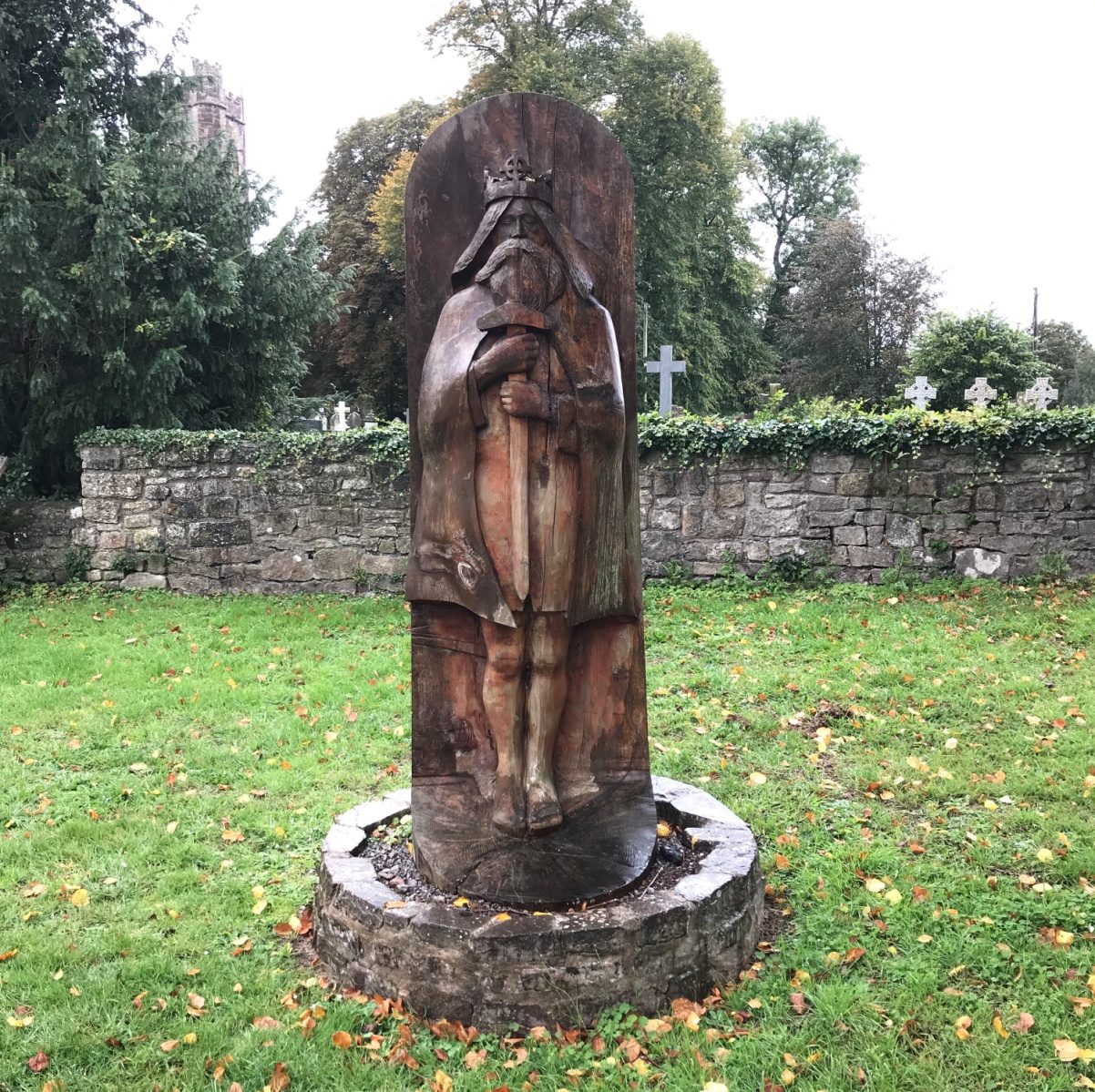
Who Was Tewdrig of Gwent?
Tewdrig of Gwent was a king of southeast Wales in the early medieval period. His dynasty was the most powerful in that area, with a number of subkings present within his kingdom. He was allegedly descended from Magnus Maximus, a Roman emperor who ruled over much of the Western Roman Empire in the late fourth century.
Tewdrig was a powerful war leader who is remembered as fighting against the Saxons. There is also evidence that he fought against the Irish in Dyfed, attacked saints in Cornwall, and deposed a Breton king in Brittany. Overall, when we examine the available information about Tewdrig, the overwhelming impression we get is that he was a powerful king who extended his power far and wide.
Within Catholic tradition, Tewdrig is remembered as a saint. He is said to have died due to being mortally wounded while fighting against the pagan Anglo-Saxons in battle, which led to him being remembered as a martyr.
When Did King Tewdrig of Gwent Live?
For us to entertain the possibility that Tewdrig might have been the real Uther Pendragon, we need to establish when he lived. After all, he cannot have been Uther if he did not even live in the right century.
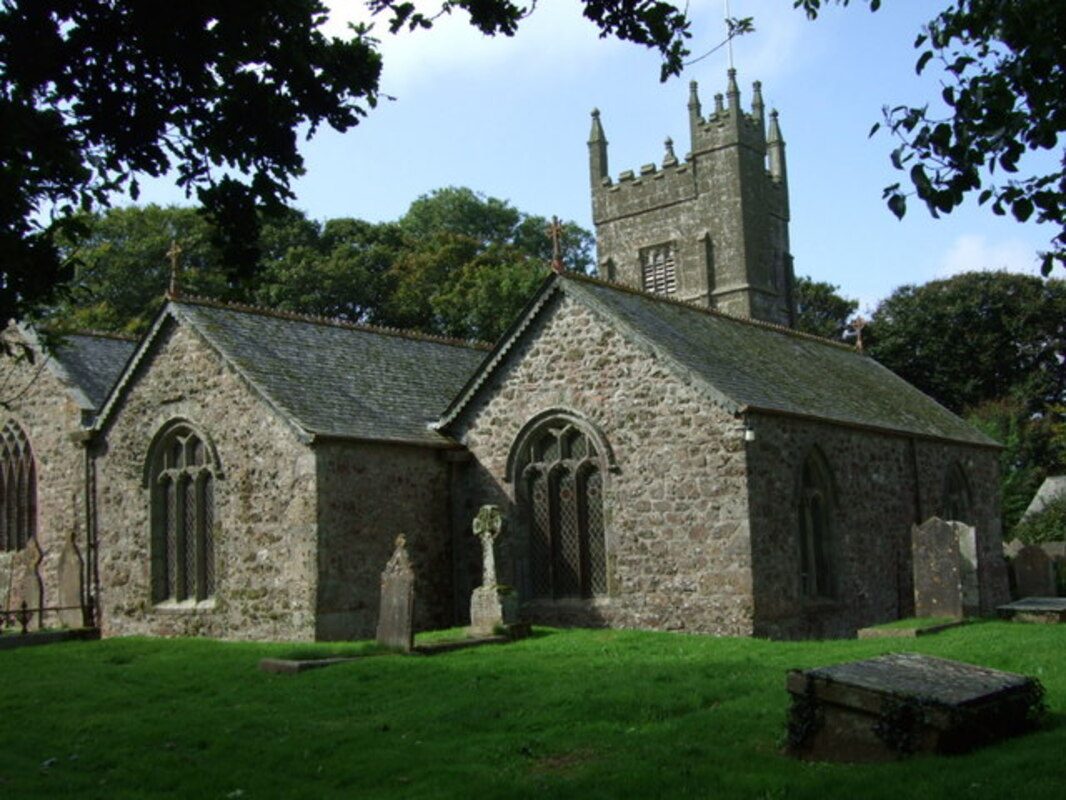
Traditionally, Tewdrig has been placed in the fifth century. For example, an information board at the church where he is buried gives his date of death as being in the year 470, as does a plaque at the nearby St Tewdric’s Well.
However, throughout much of the twentieth century, a general shift occurred among scholars of this period which placed his life about a century later, or even later than that. For this reason, a popular date these days is 630 for Tewdrig’s death. This is much too late for him to have been the father of King Arthur, whose career spanned much of the sixth century.
Interestingly, in recent decades, a number of scholars have argued once again in favour of an earlier date. Examples include Timothy Venning, Brian Davies, David Farmer, Michelle Ziegler, Chris Barber, and Terry Breverton. In view of all these historians who support an early date for Tewdrig’s life, it is worth briefly examining some of the chronological evidence for this position.
Evidence for an Early Date
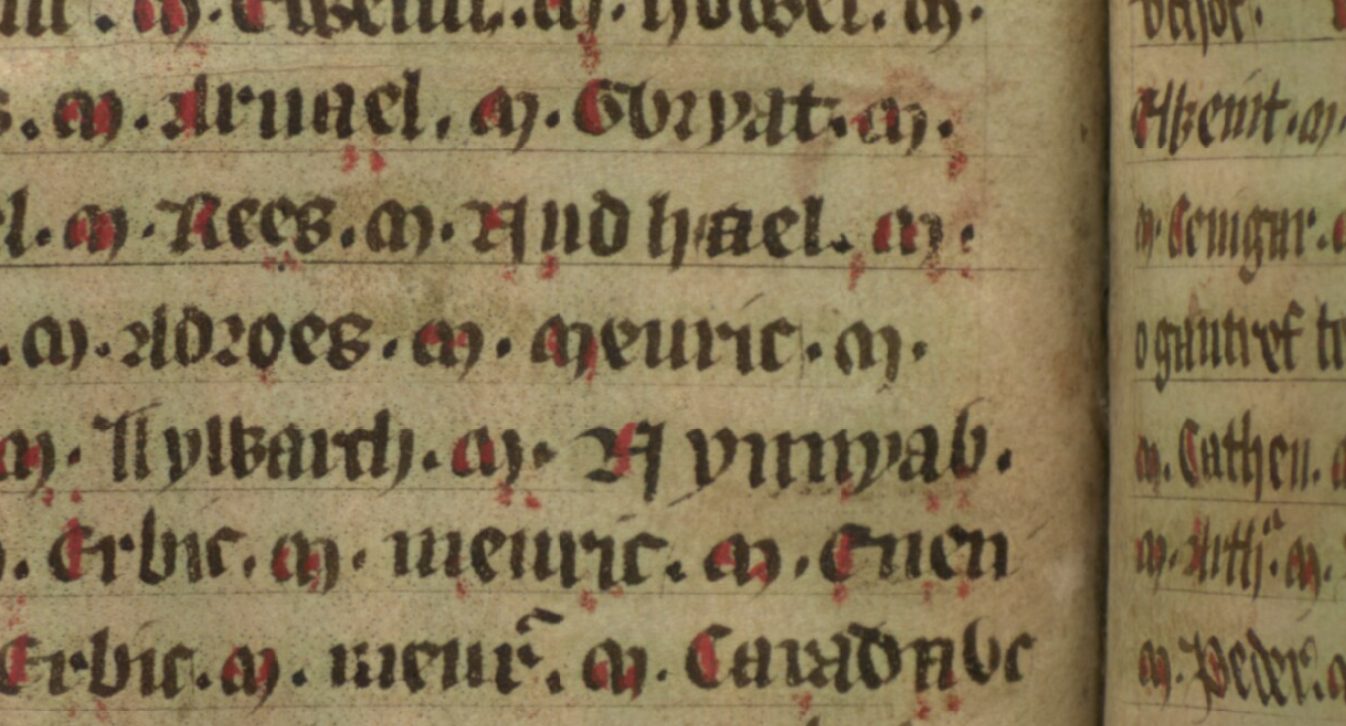
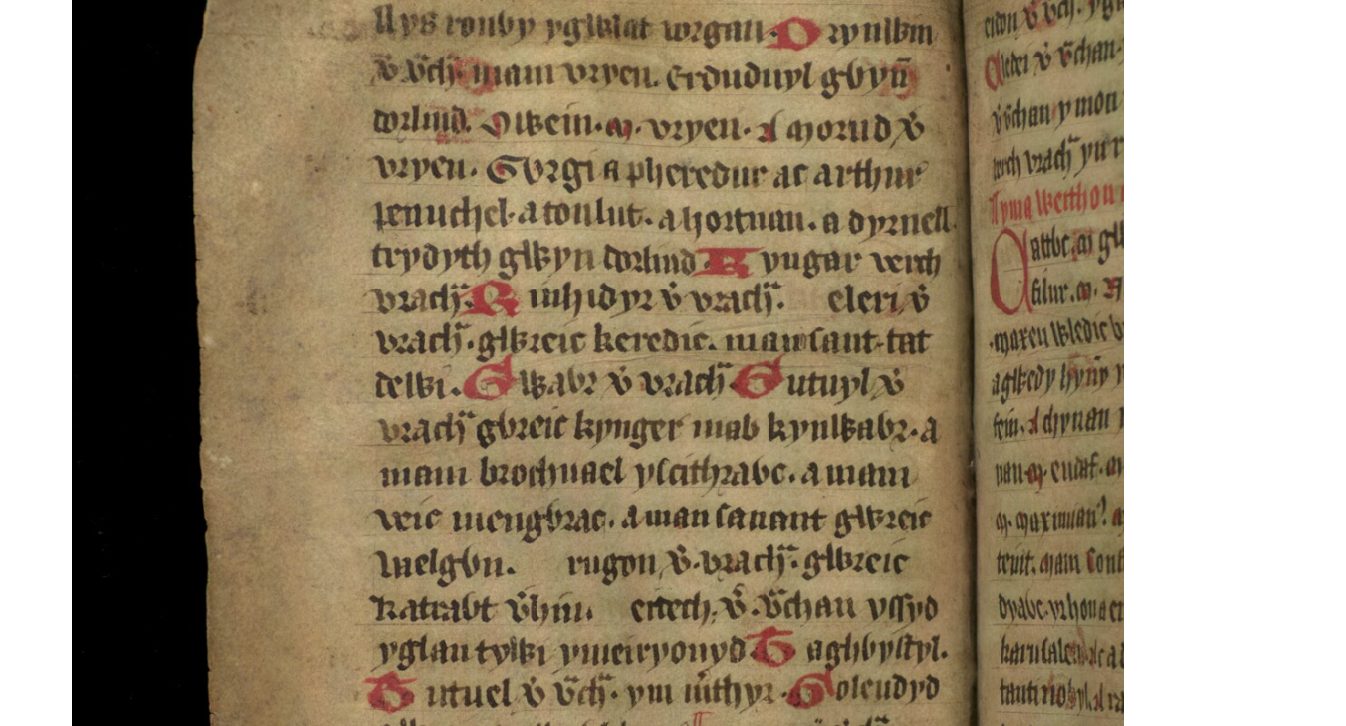
One piece of evidence is seen from the genealogical record contained in a document called the Jesus College MS 20, which contains one of the earliest genealogical records of the kings of medieval Britain.
In this document, we find Tewdrig as ‘Thewdric’. He is made the son of Llywarch ap Nynniaw. In reality, there is good evidence that this is a list of succession rather than descent, since various other records give Tewdrig a different line of descent. Nevertheless, this is useful for showing approximately when he lived.
In the genealogical list immediately below this one, there is a reference to a certain ‘Peibiawn’. He is better known as Peibio, and he is widely accepted (with good reason, on the basis of a variety of other records) as being the brother of the aforementioned Nynniaw.
Peibio’s grandson through his unnamed daughter is listed in this document as ‘Deuric’, better known as ‘Dyfrig’ or Dubricius. He is accepted as being born in c. 465. Since Tewdrig is listed two generations after Nynniaw, the brother of Peibio, he should logically have lived around the same time as Dubricius, the grandson of Peibio.
This would place the birth of Tewdrig in approximately 465. Of course, as we said before, Tewdrig does not appear to have actually been the grandson of Nynniaw, so this is only approximate.
Evidence from Peibio’s Grandson
There is more evidence concerning the family of Peibio that we can use. His grandson through his son Cynfyn was Gwrgan Fawr (‘Fawr’ meaning ‘the Great’). We know this from the information presented in the twelfth century Book of Llandaff.
Logically, Gwrgan would have been born at approximately the same time as his first cousin, Dubricius. Since Dubricius was born in c. 465, that is a reasonable estimate for the birth of Gwrgan as well.
The reason that this is significant is because we know (once again, from the Book of Llandaff) that Gwrgan’s daughter Onbrawst married Tewdrig’s son Meurig. Their firstborn son was Athrwys. Hence, this supports the conclusion that Tewdrig was approximately of the same generation as Gwrgan.
Evidence from Brychan
However, when we examine yet more evidence, we see that his birth should actually be placed somewhat earlier. We see this when we examine the evidence from Brychan. He was a prominent forefather of many religious figures.
His genealogy is provided in the Jesus College MS 20, among other places. In these records, he is made the son of Marchell, daughter of Tewdrig. The fact that this is the same Tewdrig is evident from the fact that he is recorded as being the son of Teithfallt.
Since the genealogical records about Brychan are primarily for the sake of recording the descent of ‘saints’, these lists are evidently the true genealogical ones. In contrast, the lists in which King Tewdrig of Gwent appears as the ‘son’ of Llywarch are almost exclusively king lists.
Notably, in the Book of Llandaff, King Tewdrig of Gwent is called the son of Teithfallt.
Furthermore, the Life of St Cadoc explicitly supports this identification. It describes Tewdrig, the grandfather of Brychan, as the Tewdrig who was made a martyr in Gwent and buried at Mathern. This description fits the story of the death of King Tewdrig of Gwent.
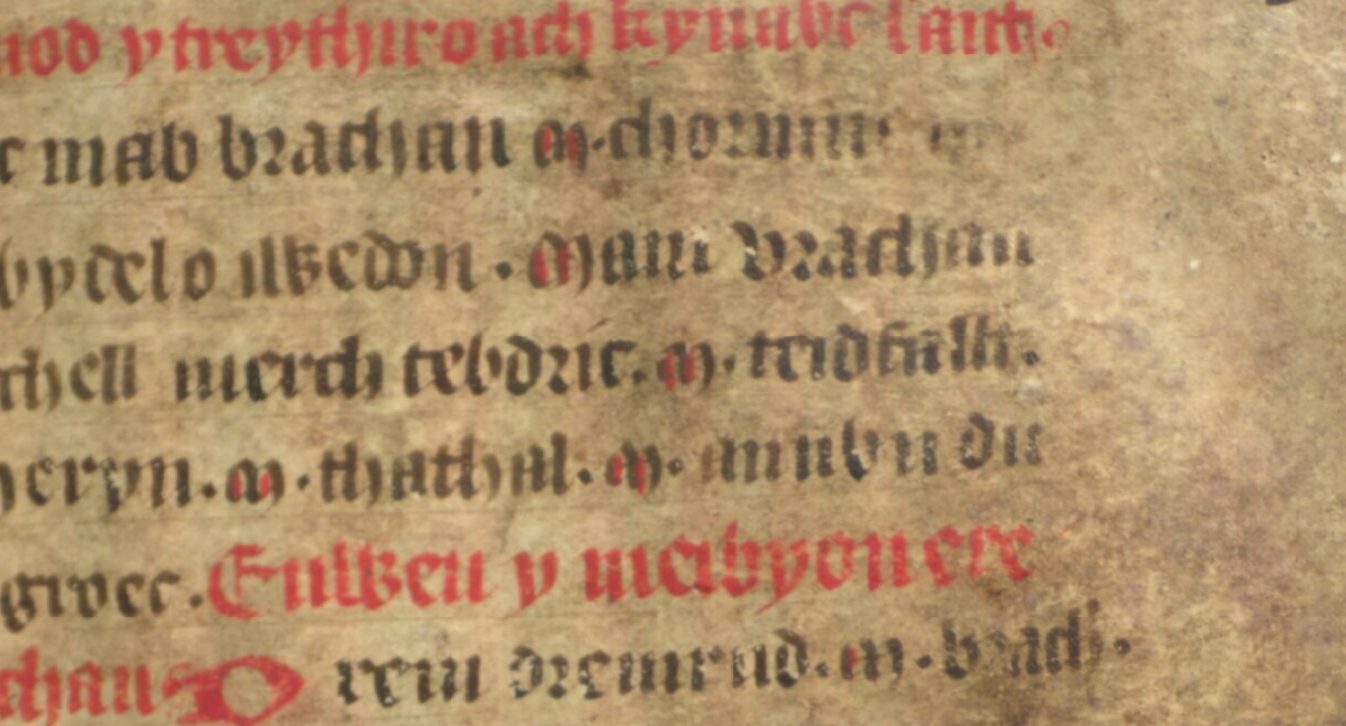
The Chronological Significance of Brychan
Why is it so notable that Tewdrig of Gwent was the grandfather of Brychan? The reason is that Brychan himself is firmly placed in the fifth century. In fact, based on an analysis of his children, it appears that there were two figures named Brychan.
One was born in approximately 400, while the other, according to scholar Peter Bartrum in A Welsh Classical Dictionary, was born in c. 470. A date of 480 seems more likely for this second Brychan. In any case, it is evident that Tewdrig was the grandfather of this second Brychan, in view of his connection to the family of Peibio.
This would mean that Tewdrig was probably born around 440. This would allow for his daughter Marchell to have been born in c. 460 and her son Brychan to have been born in c. 480.
Meurig was evidently a late son of Tewdrig’s, being born around the same time as Brychan. This is consistent with the fact that the records about Brychan’s birth say that his mother Marchell was still an only child when she was sent to Ireland, after which she married Anlach and gave birth to Brychan.
Evidence That Tewdrig of Gwent was the Real Uther Pendragon
Now that we have established that Tewdrig of Gwent was apparently born in approximately the year 440, what can we say regarding his alleged connections to Uther Pendragon, the father of King Arthur?
A fairly extensive amount of information is known about Tewdrig. This is useful, as it allows us to compare his life with that of Uther Pendragon in quite some detail.
Name
Firstly, let us establish an important point about the name of Uther Pendragon. The second part of this name, ‘Pendragon’, is widely accepted as an epithet meaning ‘Chief Warrior’.
However, there is good reason to argue that the first part, ‘Uther’, is also part of the epithet. It appears to be the Welsh word ‘uthr’, meaning ‘fearsome’ in this context. This makes sense as part of a title which would mean, in its entirety, ‘Fearsome Chief Warrior’.
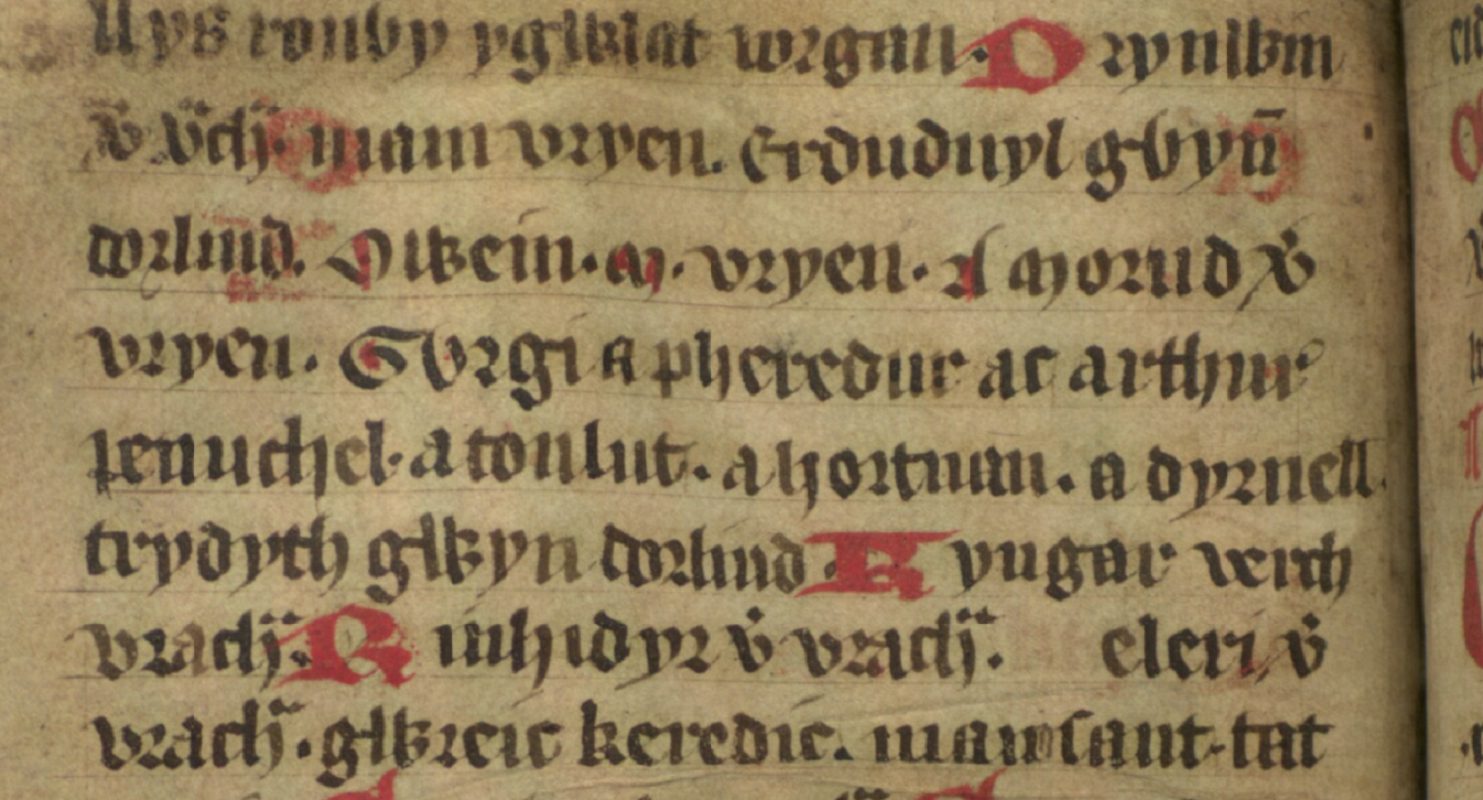
The evidence from the early Welsh Arthurian poems Pa Gur and Marwnat Uthyr Pen is that it was a title which was sometimes applied to Arthur himself. This demonstrates that ‘Uther’ is part of the title as well, since that was obviously not Arthur’s personal name.
The significance of this is that it explains how Tewdrig could have been the real Uther Pendragon despite not having a name remotely similar to ‘Uther’.
Chronology
Let us now consider the first important connection between Tewdrig and Uther Pendragon. It can be argued that they both lived at exactly the same time. As we have seen, Tewdrig appears to have been born in c. 440.
The Book of Llandaff presents Tewdrig as being old when he died. If we assume that he was approximately eighty years old when this happened, he evidently died in c. 520. This is consistent with the fact that the Harleian MS 3859, which contains the earliest surviving genealogical record of this dynasty, skips Meurig and goes straight from Tewdrig to Athrwys.
Since Meurig appears to have been a prominent king, going by the Book of Llandaff, it is unlikely that Meurig was omitted because of a lack of importance. Rather, it makes more sense that he was omitted because Athrwys directly succeeded Tewdrig.
As we saw earlier, Meurig was probably born in around 480, meaning his son was born in c. 500 or just after. Therefore, placing Tewdrig’s death in c. 520 would allow for Athrwys to have succeeded him directly.
The Chronology of Uther Pendragon
Does the chronology of Uther Pendragon match Tewdrig’s dates? As explained more fully in the article ‘Uther Pendragon, Father of King Arthur’, the evidence from Gildas shows that Uther cannot have been a younger brother of the war leader and high king Ambrosius, despite what the legends about Uther claim.
Rather, since he was his successor, it is more likely that Uther was Ambrosius’ son. Since Ambrosius was a child when Vortigern’s rule began in 425, Ambrosius was likely born in c. 420, which would accommodate a date of c. 440 for Uther’s birth.
As we can see, this fits perfectly with Tewdrig’s likely birth date.
Uther appears to have succeeded Ambrosius as king in approximately the year 500. At that time, a dramatic comet was said to have appeared in the sky. This matches two medieval records about a comet appearing in the sky in the final years of the fifth century.
It is just after this that Uther is said to have taken Igerna for himself, shortly after which Arthur was born. Since Arthur is said to have succeeded Uther directly after the latter’s death, as a fifteen year old, this would place Uther’s death some time shortly after 515.
This is a close match for the estimate of c. 520 for the death of Tewdrig.
Power
Another important match is the power wielded by Uther and Tewdrig. Needless to say, Uther was a very powerful king. In the legends about him, such as Geoffrey of Monmouth’s Historia Regum Britanniae of c. 1137, he is presented as the High King of Britain. Of course, his son became the next High King of Britain and was famously powerful.
In Geoffrey’s account, Uther’s power is also shown by his actions. He engages in war in various locations. He fights the Picts and the Scots in the north, the Irish in Ireland and in Dyfed, fellow Britons in Cornwall, and the Saxons in England.
Is this compatible with the evidence about Tewdrig? Let us examine what the records claim.
Evidence from the Book of Llandaff
To begin, we will see the basic description of him provided in the Book of Llandaff:
“While he possessed the kingdom, he was never overcome, but was always victorious; so that when his face was seen in battle, the enemy immediately were turned to flight. And the angel of the Lord said to him on the preceding night, ‘Go tomorrow to assist the people of God against the enemies of the Church of Christ and the enemy will turn their face in flight, as far as Pwll Brochuail; and do thou, being armed, stand in the battle. Seeing thy face and knowing it, they will, as usual, betake themselves to flight.’”
According to this account, Tewdrig was always successful in battle. Not only does this show that he was a powerful king, but it also shows that he was active in warfare. He was so famously successful, in fact, that his enemies are said to immediately turn in flight upon seeing him.
Evidence from the Life of St Gwinear
According to the Life of St Gwinear, the king who attacked and killed the titular religious figure and his companions was a certain Tewdrig, king of Cornwall. There is no king named Tewdrig in the medieval king lists of the kings of Dumnonia, which suggests that this Tewdrig was not part of the main line of kings ruling over that area.
Likely, he was a king from another area who held some power over Cornwall. We see something similar in the case of Arthur, who is presented as ‘ruling’ in the West Country in the Life of St Carannog despite not actually being part of that dynasty.
Given the chronology of the Life, this is obviously Tewdrig of Gwent. No other figure by that name is known from this period.
This shows that Tewdrig extended his power quite far out of southeast Wales.
Furthermore, the same Life also explains that Tewdrig had deposed Maxentius and placed his brother Budic on the throne of the kingdom of Domnonée, one of the main kingdoms of Brittany.
This is a frankly astonishing display of power, especially from a king who was based far away from Brittany.
Evidence from Irish King Lists
The Irish ruled over Dyfed for over a century, from the late fourth century until the end of the fifth century. This is reflected in medieval historical accounts, such as the Historia Brittonum, as well as king lists.
What is interesting about these king lists is that they show a sudden shift from Irish to Roman and Romano-British names in c. 500. This strongly suggests that the Irish dynasty was expelled and replaced with a native Brythonic one.
A late tradition about Tewdrig claims that he expelled the Irish from Wales. It does not specify which part of Wales he expelled them from, but during his reign, Dyfed was the only place that was still ruled by the Irish, and the date of their evident expulsion fits well within Tewdrig’s reign.
Hence, based on this evidence, Tewdrig was active in warfare all across South Wales, since the Book of Llandaff also shows that he fought against the Saxons in the southeast.
Not only did he fight in Dyfed, but he actually drove out the dynasty that ruled over that region.
Based on the aforementioned evidence, it seems very clear that Tewdrig was an exceptionally powerful king in early medieval Britain.
Location
As well as living at the right time and being a suitably powerful king, we should also consider the fact that Tewdrig lived in the right location to be Uther Pendragon.
There is not much information directly about Uther in Welsh tradition. Geoffrey of Monmouth places him at Winchester, but Geoffrey’s geography sometimes suffers from mistranslating place names from the original Welsh document that he was using.
The most useful thing is to look at what Welsh tradition and pre-Galfridian Latin documents say regarding Arthur’s base of operations. It is not a stretch to suppose that Arthur’s father Uther probably lived in more or less the same location as his son.
Welsh tradition and Latin documents overwhelmingly associate Arthur with the southwest of Britain. He is particularly associated with southeast Wales and the West Country. This is seen, for example, in Culhwch and Olwen, the Life of St Illtud, and the Mirabilia.
Welsh tradition most firmly associates Arthur with a location called Gelliwig in a region called Cerniw. Culhwch and Olwen heavily implies that this is in southeast Wales.
Indeed, medieval records show that there was a location named Gelliwig in that region, where we also find the place name ‘Cerniw’. This seems to have been a prominent region of Gwent, or perhaps an alternative name for Gwent itself.
This being so, this matches King Tewdrig of Gwent perfectly. He was based in southeast Wales, yet he also had some power over at least part of the West Country, as shown in the Life of St Gwinear.
The Daughter Who Became the Mother of the Kings of Britain
As well as Tewdrig living in the same place at the same time as Uther Pendragon and being appropriately powerful, there are also various specific similarities between them. For example, in Geoffrey of Monmouth’s Historia Regum Britanniae, a comet appears in the sky that is said to represent Uther and his family.
A dragon shines forth from the comet. This represents Uther himself. Two rays are emitted from the dragon, which are said to represent Uther’s son and daughter. The ray representing his daughter extends over the Irish Sea towards Ireland.
This latter ray has seven smaller rays coming from the end. Merlin interprets this to Uther by saying that the sons and grandsons of his daughter will rule over Britain.
How Tewdrig’s Daughter Explains This Prophecy
This prophetic sign has been the subject of considerable debate, since there is nothing in Geoffrey’s account which seems to correspond to it. Uther is not presented as having a daughter whose descendants ruled over Britain.
However, when we identify Uther as Tewdrig, this prophecy is easily explainable. He is recorded as sending his daughter, Marchell, to Ireland. This corresponds to the fact that the ray shone over the Irish Sea.
Marchell’s son, Brychan, began a line of kings that ruled over Brycheiniog, a kingdom in South Wales. However, Brychan’s children also included numerous daughters who married into important dynasties.
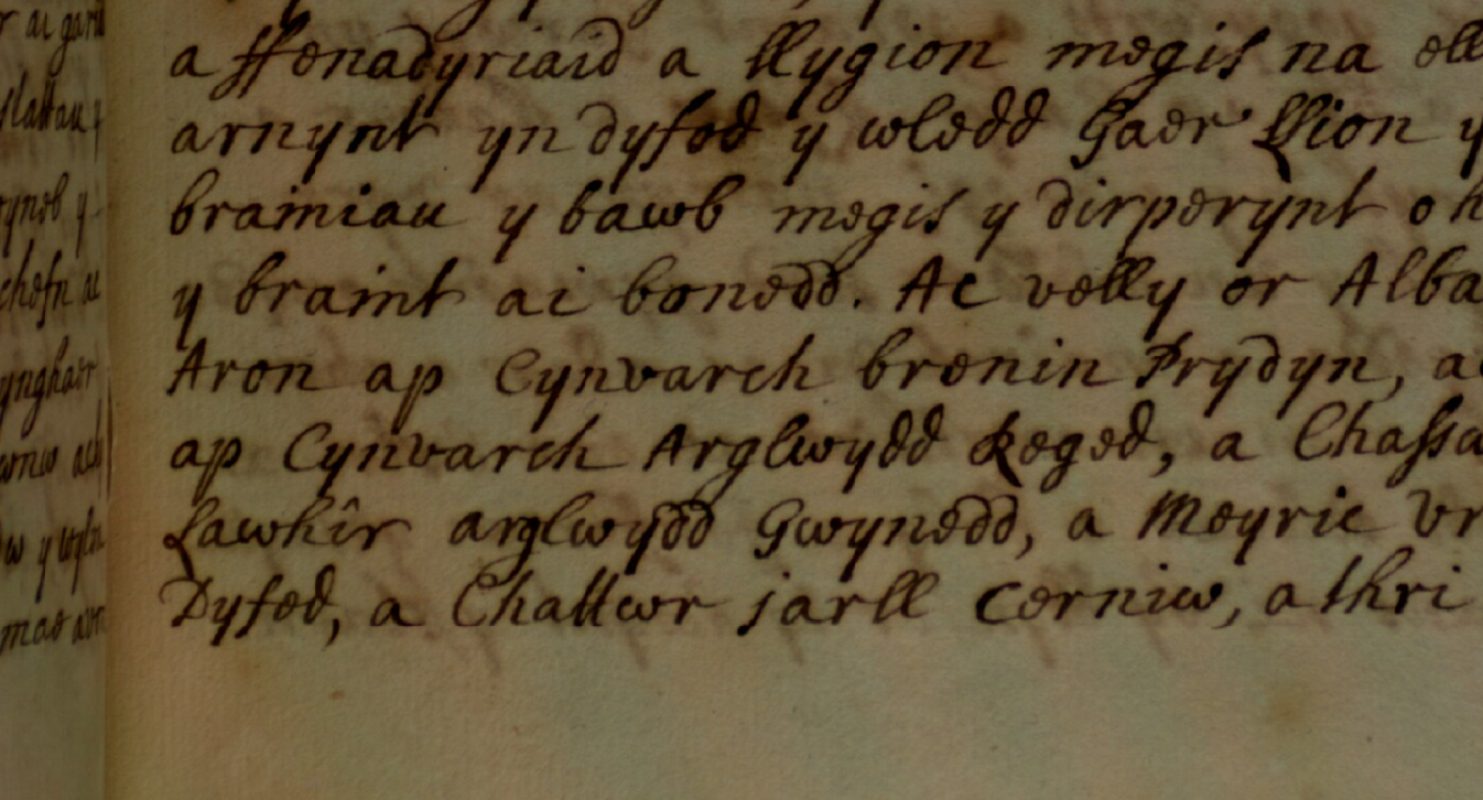
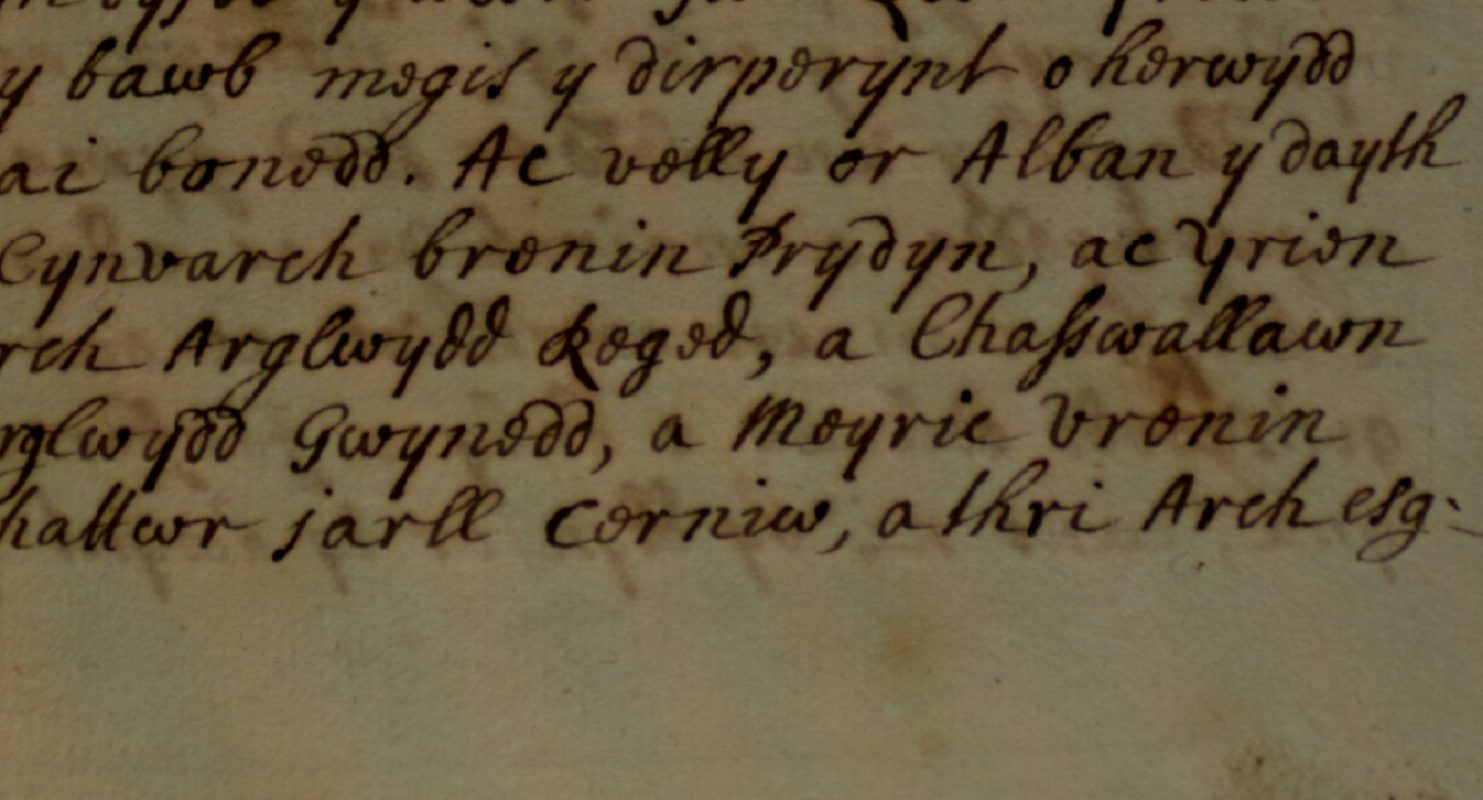
For example, a daughter named Nyfain married Cynfarch. Their children were Urien, Llew, and Arawn. These were three powerful kings of the north of Britain. Another daughter married into the dynasty of Powys, another one of the most powerful kingdoms of medieval Britain.
Various other examples exist. The point is that it is definitely true that Tewdrig’s daughter, Marchell, became the ancestress of the kings that ruled over Britain. The number ‘seven’ in the prophecy is likely symbolic, since it is used in the Bible to represent completeness.
The Grandson Who Became King Arthur
What about the obvious fact that Uther Pendragon was supposedly the father of King Arthur? Can Tewdrig explain this part of the legend?
Recall that ‘Uther Pendragon’ appears to have been a title that was applied to Arthur as well, not just his father. This being so, it shows that it was a title that was passed from father to son. Perhaps, then, it was also held by Arthur’s grandfather, not only his father.
On this basis, some researchers have argued that Geoffrey of Monmouth’s account of Uther Pendragon is not actually a description of Arthur’s father, but his grandfather. Geoffrey mistakenly presented them as father and son due to Arthur’s father also being known as ‘Uther Pendragon’.
Tewdrig did not have a son who could match the historical King Arthur. However, his grandson Athrwys has been argued by many to be the real Arthur. His name has been interpreted by some as a corruption of ‘Arthurus’, ‘Artus’, or ‘Arturis’, all attested forms of the name of King Arthur.
Why Athrwys Might Have Been King Arthur
As well as living in the right place at the right time, Athrwys had various family members who can be interpreted as the family members of King Arthur from the legends.
For example, Culhwch and Olwen tells us that Arthur had a maternal uncle named Gwrfoddw. A person by that name appears as a king of Ergyng (the home territory of Athrwys’ mother) in the same generation as Athrwys’ uncles, although his ancestry is not provided.
Furthermore, Bishop David was said to have been the maternal uncle of King Arthur. In line with this, a figure with the same name appears in the Book of Llandaff as the son of a certain ‘Circan’. This peculiar name, which does not seem to be attested elsewhere, is likely a corruption of ‘Gurcan’, the name of Athrwys’ maternal grandfather (Gwrgan Fawr).
There is also a tradition that Athrwys had a sister named Anna, just like King Arthur. In addition, there is evidence that Athrwys had a brother named Madoc Morfryn, just as Arthur is recorded as having a brother named Madoc.
Expedition to Ireland
As well as these various similarities between Tewdrig’s family and Uther’s family, Tewdrig’s career also matches Uther’s career in some remarkable ways. Let us begin by considering the earliest known part of Tewdrig’s career.
In the documents about the birth of Brychan, we are told that Tewdrig sent his daughter on a journey to Ireland to protect her from a plague that was afflicting Britain at the time. As we saw earlier, this evidently occurred in approximately 480, or the late 470s.
Interestingly, Geoffrey of Monmouth records Uther as engaging on an expedition to Ireland at about this same time. We can conclude that it occurred at approximately the same time because it happened after Ambrosius had temporarily subdued the Anglo-Saxons.
Bede tells us that Ambrosius’ campaign against the Anglo-Saxons occurred in the reign of Zeno, who ruled from 474 to 491. Therefore, although we cannot place a precise date on it, Uther’s expedition to Ireland likely occurred at about the same time that Tewdrig is recorded as sending his daughter to Ireland.
Another interesting similarity is the fact that Uther goes on this expedition specifically because of the desire to acquire something (the Giants’ Dance) which will provide relief from sickness.
Bearing in mind that both the account about Tewdrig and the account about Uther were written centuries after the fact, they do share some interesting similarities which suggest that they could derive from the same event.
Expulsion of the Irish
The next notable part of Uther’s career is the fact that he expelled the Irish from Dyfed. This occurred years after the expedition to Ireland. It happened around the time of the appearance of the comet. As mentioned earlier, that was likely in c. 500.
We have already noted that Tewdrig apparently expelled the Irish dynasty that ruled over Dyfed in c. 500. This is the conclusion of Arthurian Period Sources and other scholars.
This is an obvious and substantial similarity between Uther and Tewdrig.
Conflict in Cornwall
Soon after the expulsion of the Irish from Dyfed, Uther is said to have had a conflict with Gorlois, the duke of Cornwall. This occurs as a result of Uther wanting to take Gorlois’ wife, Igerna, for himself. A war breaks out between the two men.
Uther invades Gorlois’ territory in Cornwall and attacks him on two fronts. On the one hand, he besieges Gorlois himself in the castle of Dimilioc. On the other, he besieges the castle of Tintagel, where Gorlois has placed his wife.
Uther eventually gets Igerna through the use of magic, and then his other body of troops manages to defeat Gorlois and kill him.
Tewdrig’s Conflict with Gwinear
Is there any record about Tewdrig that corresponds to this? As we noted earlier, Tewdrig is recorded as engaging in some conflicts in Cornwall. One medieval source, the Life of St Meriasek, presents Tewdrig (called ‘Teudar’) as fighting against the Duke of Cornwall.
However, the Life of St Gwinear is particularly interesting in this regard.
The titular figure, Gwinear, is described as the son of an Irish prince. He left his father’s court and travelled to Brittany, staying there for many years. Eventually, he left Brittany and travelled back to Ireland. He gathered a party of 800 people and then set sail to Brittany again.
However, at that point, he was blown ashore to Cornwall. There, he was attacked by King Theodoricus (Tewdrig). At this point, the party was split into two groups. The group without Gwinear present fell to Tewdrig’s men first, and then Tewdrig’s men killed Gwinear himself.
How This Matches the Arthurian Legend
There are various reasons to think that this could be another perspective of the legend of Uther’s war with Gorlois. For one thing, as the son of an Irish king, Gwinear was an important and at least relatively powerful person.
It is not stretching credibility to believe that he may have set himself up as a ruler in Brittany, where he spent many years. One of the main kingdoms of Brittany was Cornouaille, also known as Cornubia in some medieval Latin records, just like Cornwall in Britain. Hence, Gwinear could have been the duke of Cornubia in Brittany, mistaken for the British Cornwall.
On the other hand, there is evidence that he was active in Cornwall itself for a substantial period. One suggestion seen in A Welsh Classical Dictionary is that he was active in Cornwall before he travelled to Brittany.
One version of the legend of Gwinear specifically says that when he travelled to Ireland, gathered a party of 800 people, and then left again, he was actually setting out to attack King Tewdrig.
In the legend of Uther as recorded by Geoffrey of Monmouth, there is an interesting statement right near the beginning of the account of Uther’s war against Gorlois. After Uther starts to attack, Geoffrey says that Gorlois decided not to attack until he could succour assistance from Ireland.
Arguably, this can be associated with the record of Gwinear travelling to Ireland, gathering a small army, and then setting off to attack Tewdrig in Cornwall.
The fact that Gwinear’s landing party is split into two groups is also similar to Gorlois being attacked by Uther in two different places, Tintagel and Dimilioc. Furthermore, it is notable that the group with Gwinear present is defeated second, just as in the case of Gorlois.
There is even a Welsh text, Arthur a Kaledvwlch, which records a detail not present in Geoffrey’s account. This tells us that Uther made peace with Gorlois’ kinsmen and allies after Gorlois died. This same statement is made concerning Tewdrig and the surviving members of Gwinear’s kinsmen and allies.
This event involving Gwinear occurred in c. 500, the same time as Uther’s war against Gorlois.
Gorlois and Gwinear
If Gorlois should be identified as Gwinear, how can we explain the differences between their names? It may be that the ‘s’ on the end of ‘Gorlois’ is a corruption of the ‘r’, which is a mistaken seen in some medieval manuscript. The ‘rl’, meanwhile, might be a corruption of the ‘n’ from ‘Gwinear’, although this would be unusual.
Another possibility is that the ‘n’ was corrupted into an ‘r’, which is a far more common corruption, and the ‘r’ in ‘Gwinear’ was corrupted into an ‘l’, another attested mistake. Given that his name is sometimes attested with the Latin ‘us’ termination, this would give something like ‘Gwrealus’, easily corrupted further into ‘Gorlois’.
Interestingly, it has been suggested that an obscure saint recorded variously as ‘Gueriir’ and ‘Guier’ is actually Gwinear, which would demonstrate the fact that the ‘n’ was corrupted into an ‘r’.
Abdication and Death
The next thing that Geoffrey tells us is that Uther abdicated in favour of his son-in-law Lot due to poor health. Lot then continued waging war against the Saxons as Uther had done, but he was not as effective in battle as Uther.
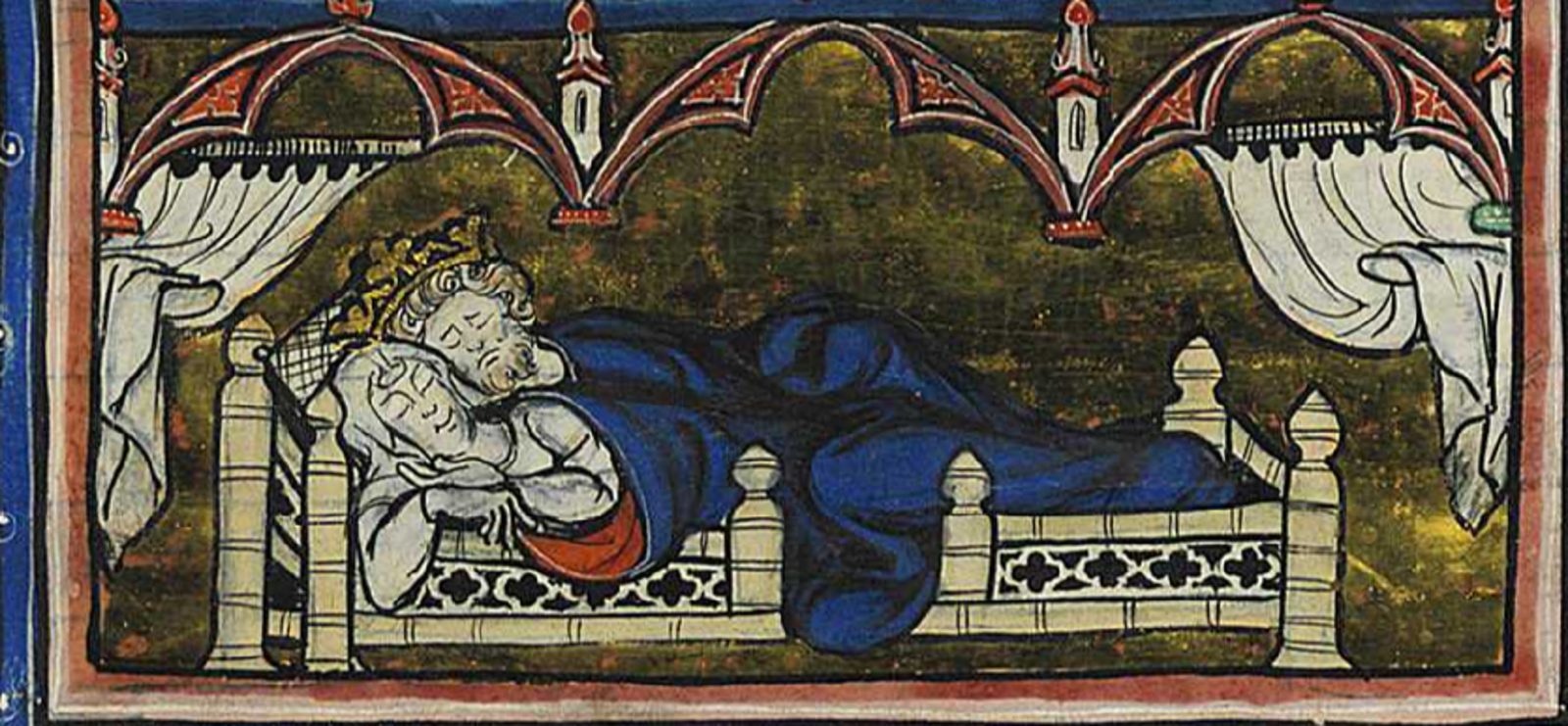
For this reason, Uther was compelled to return for one final battle, in which he was carried in a cart. The battle occurred at Verulam, or St Albans. The Britons were victorious, but then Uther’s condition deteriorated after the battle. Shortly afterwards, he died at a spring which had been poisoned by the Saxons.
This matches very well with the final part of Tewdrig’s known career. According to the Book of Llandaff, he abdicated in favour of his son Meurig upon becoming old. However, Meurig struggled to repel the Saxons, so Tewdrig returned.
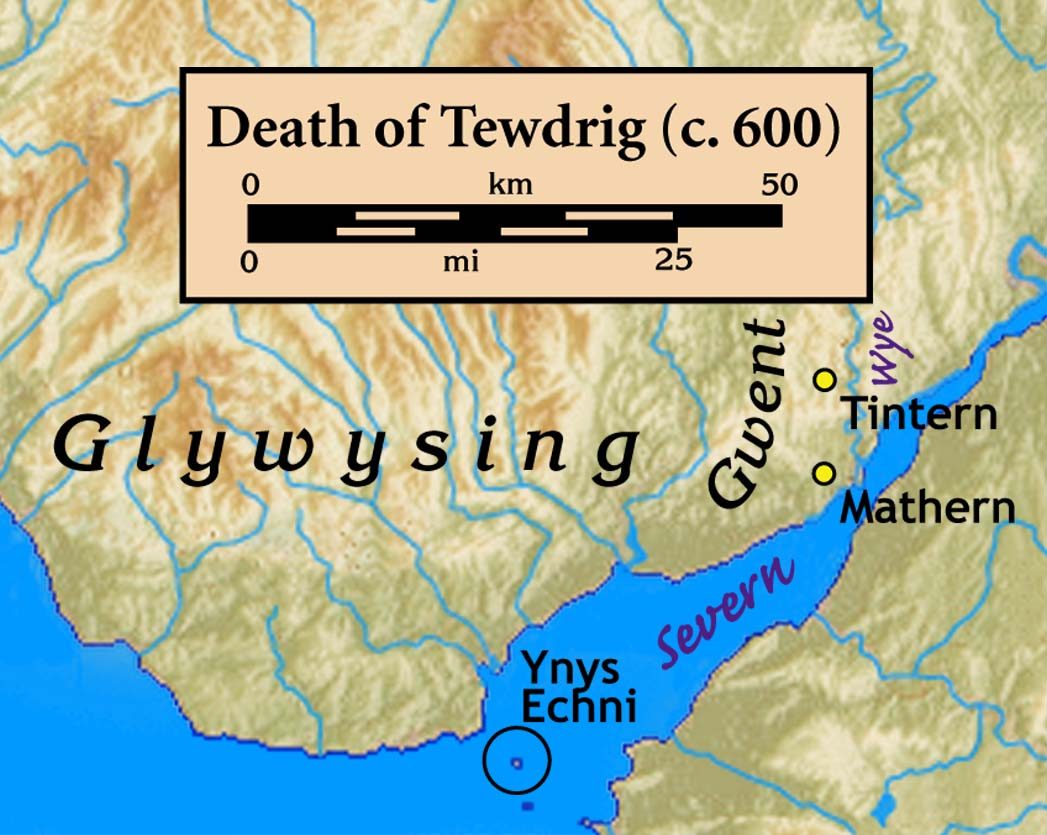
He led the Britons into battle at Tintern, at which they were victorious. However, Tewdrig was struck in the head with a spear during the battle, leaving him mortally wounded. His men then carried him in a cart, but he died a few days later by a spring.
The similarities between the two accounts are striking, specific, and obvious. Even the apparent conflict regarding the location of the battle is explainable. Just two miles from Tintern is St Arvans.
Given the use of the ‘v’ to represent a ‘b’ sound in medieval Welsh documents, as well as the ease with which the letters ‘r’ and ‘l’ are swapped, it would have been easy for Geoffrey to have misunderstood a reference to St Arvans for the more prominent St Albans.
Objections To This Theory
The only significant objection to this theory is the fact that Tewdrig is usually placed much too late to be the historical Uther Pendragon. His death is usually placed in the early seventh century rather than the early sixth century.
If this late chronology is correct, then Tewdrig obviously cannot have been the predecessor of King Arthur. Furthermore, it would also mean that he cannot have been the one who expelled the Irish in c. 500, nor could he have been the same as the Theodoricus who fought against Gwinear, deposed Maxentius in Brittany, and sent an expedition to Ireland in c. 480.
Hence, if we accept the late chronology, it would completely break the apparent match between Tewdrig’s career and Uther’s career.
Nevertheless, the evidence presented in this article for the early chronology of Tewdrig and his dynasty provides a solid basis for overcoming this objection, although it must be left to the reader to decide which view is more convincing.
Conclusion
In conclusion, King Tewdrig of Gwent is a strong candidate for the historical Uther Pendragon. He was a powerful king of southeast Wales who seems to have lived at exactly the same time as Uther Pendragon. He was so powerful that he is even recorded as deposing one king and setting up another all the way over in Brittany.
An analysis of his career reveals many strong similarities to the legendary career of Uther Pendragon. Furthermore, his daughter Marchell elegantly explains the mystery of Uther’s daughter who became the ancestress of the kings of Britain. Tewdrig’s grandson, Athrwys, is a good candidate for the historical King Arthur, which in turn supports the conclusion that Tewdrig was the real Uther Pendragon.
Sources
Bartrum, Peter, A Welsh Classical Dictionary, 1993
Bromwich, Rachel, Trioedd Ynys Prydein: The Triads of the Island of Britain, 2014
Morris, John, Arthurian Period Sources, Vol 3: Persons, 1995
Breverton, Terry, Wales: A Historical Companion, 2009
Howells, Caleb, King Arthur: The Man Who Conquered Europe, 2019
https://mythbank.com/uther-pendragon/#the-story-of-uther-pendragon