The Mystery of Madoc and Artegall, Brothers of King Arthur

Artegall is the half-brother of King Arthur from Edmund Spenser’s famous The Faerie Queene, while Welsh tradition provides Arthur with a brother named Madoc. While it might seem, at first glance, that the two characters are completely unconnected, there is some evidence that they are ultimately the same figure. What is this evidence?
Who Were Madoc and Artegall?
Madoc and Artegall are both figures from Arthurian literature, both of them being relatively obscure. However, one of them more obviously belongs to Arthurian tradition than the other. Madoc appears in several Welsh texts, one of which is an elegy devoted to him in the medieval Book of Taliesin.
On the other hand, Artegall appears in Edmund Spenser’s 1590 The Faerie Queene. This significantly postdates most of the influential Arthurian literature, including the relatively late Le Morte d’Arthur by Thomas Malory.
Madoc, for his part, is presented in Welsh tradition as a son of Uthyr Pendragon and thus the brother of King Arthur. He has a son, Eliwlod, who is recognised as Arthur’s nephew. According to some evidence, he was a religious figure and also a sailor.
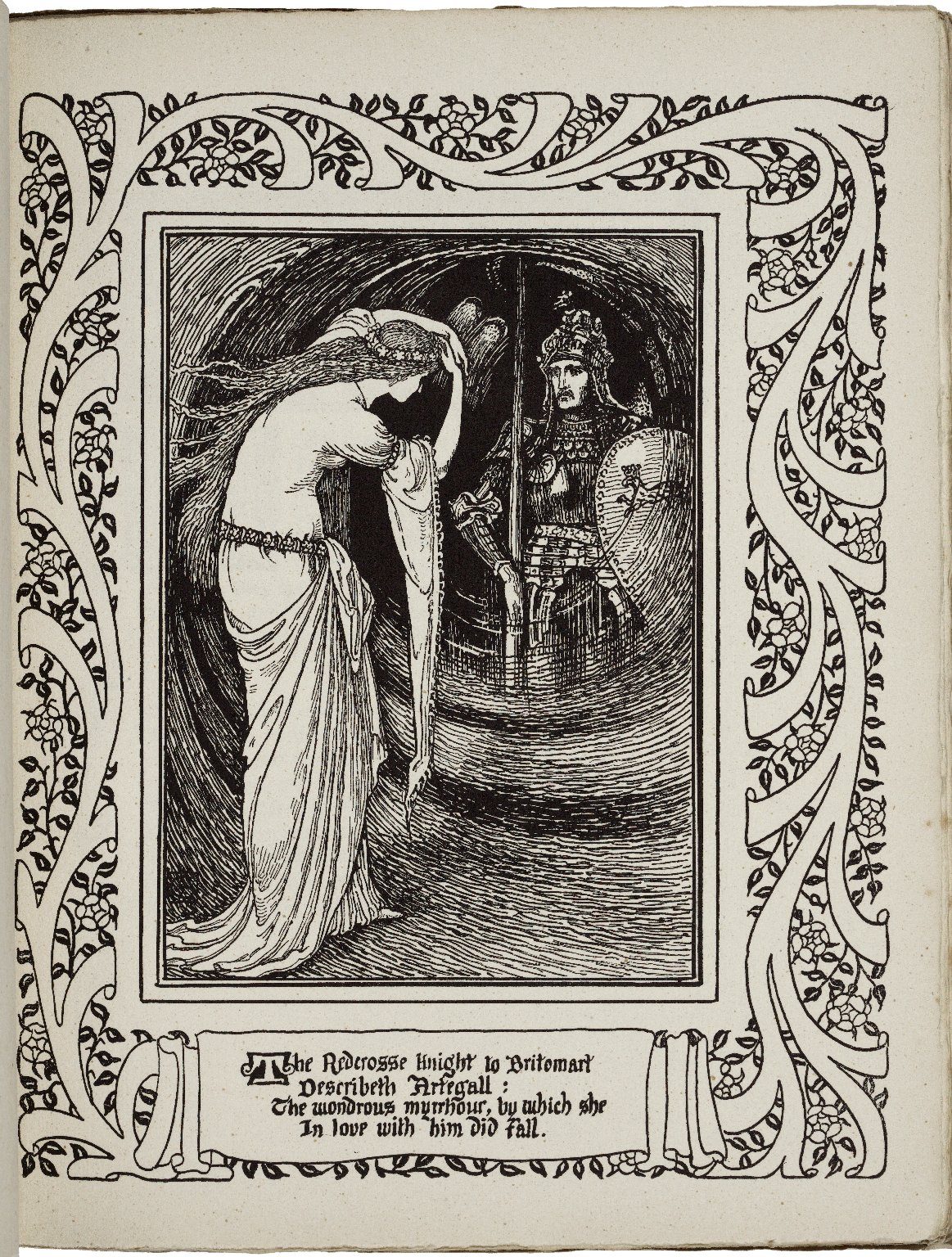
Artegall, meanwhile, is presented by Spenser as Arthur’s half-brother, the son of Gorlois the duke of Cornwall and Igerna. He is the hero for a portion of The Faerie Queene, being a champion of justice whom the evil Queen Radigund imprisoned for a while, before being freed by his beloved Britomart.
Spenser presents Artegall as engaging on adventures alongside King Arthur, thus portraying them as friends and also suggesting that Artegall was one of the Knights of the Round Table.
As we can see, Madoc and Artegall share only a few similarities, such as both being brothers of Arthur and engaging on some adventures.
Could Spenser’s Artegall Have Had an Authentic Origin?
Although it is true that Edmund Spenser was writing an entirely made up story as an allegory, this does not mean that he invented all the characters. We have already seen that he did not. King Arthur himself is one obvious example of a pre-existing character. Artegall’s father, Gorlois, is another example.
Therefore, although we are certainly on shaky ground when using Spenser’s The Faerie Queene as a way of investigating Arthurian tradition, we should not dismiss it completely. Significantly, there is clear evidence that Spenser did not invent the character of Artegall.
Artegall in Geoffrey of Monmouth’s Historia Regum Britanniae
Indeed, commentaries on Spenser’s poem have not overlooked this evidence. Consider the statement of one modern commentary:
“On the ‘historical’ Arthgallo in Geoffrey, see V i 3n. Arthgal of Cargueit or Warguit (Warwick) is included in his list of consuls who attend Arthur (9.12), and is cited by Hardyng 1812:137 as a knight of the Round Table.”
As we can see from this, it is acknowledged that Spenser’s character of Artegall appears to come from a figure mentioned by Geoffrey of Monmouth in c. 1137, in his influential Historia Regum Britannniae. This figure is also seen in some later Arthurian sources.
In Geoffrey’s account of Arthur’s reign, there comes a moment where Arthur has a special coronation ceremony after most of his wars have ended. Numerous allies of Arthur are described as attending. One of the names of these figures is a certain:
“Arthgal, of Cargueit or Warguit.”
The spelling actually used by Geoffrey is ‘Artgualchar’, although forms such as ‘Arthgal’ are commonly seen in translations and commentaries. Geoffrey does not provide any more information at all about this figure.
Artegall in Later Arthurian Texts
Is it reasonable to believe that Spenser could have taken this minor character from this passage in Geoffrey’s Historia Regum Britanniae and given him an important role in The Faerie Queene? He certainly could have done this, although this would be unusual.
However, we do not need to go as far back as Geoffrey of Monmouth to find references to this figure. In fact, there are several sources between Geoffrey and Spenser that mention this enigmatic earl of Warwick.
Wace’s Roman de Brut
The earliest of these is Wace’s Roman de Brut. Being heavily based on Geoffrey’s work, this is no surprise. He refers to Algal of Guivic in the same passage in which Arthgal appears in Geoffrey’s narrative. Here, it seems that the ‘r’ has been corrupted into an ‘l’ and the ‘t’ has been lost completely.
While Wace’s Roman de Brut does post-date Geoffrey’s work, it does not post-date it by very much. Furthermore, the form of this name is further from Spenser’s ‘Artegall’ than Geoffrey’s spelling is, making this an unlikely direct source.
Fifteenth and Sixteenth Century Sources
There are two sources that are much closer to Spenser’s time from which he could have derived this character. The first is Hardyng’s Chronicle, dated to about 1437. This rhyming chronicle closely follows Geoffrey of Monmouth’s narrative. In the passage about Arthur’s special coronation, Hardyng presents a list of the Knights of the Round Table.
The figures mentioned closely correspond to those mentioned in Geoffrey’s work. One of the figures mentioned by Hardyng is ‘Syr Argalle, Erle of Warrewyke’.
As with Wace’s spelling, the ‘t’ has been dropped, but here the ‘r’ is correctly preserved.
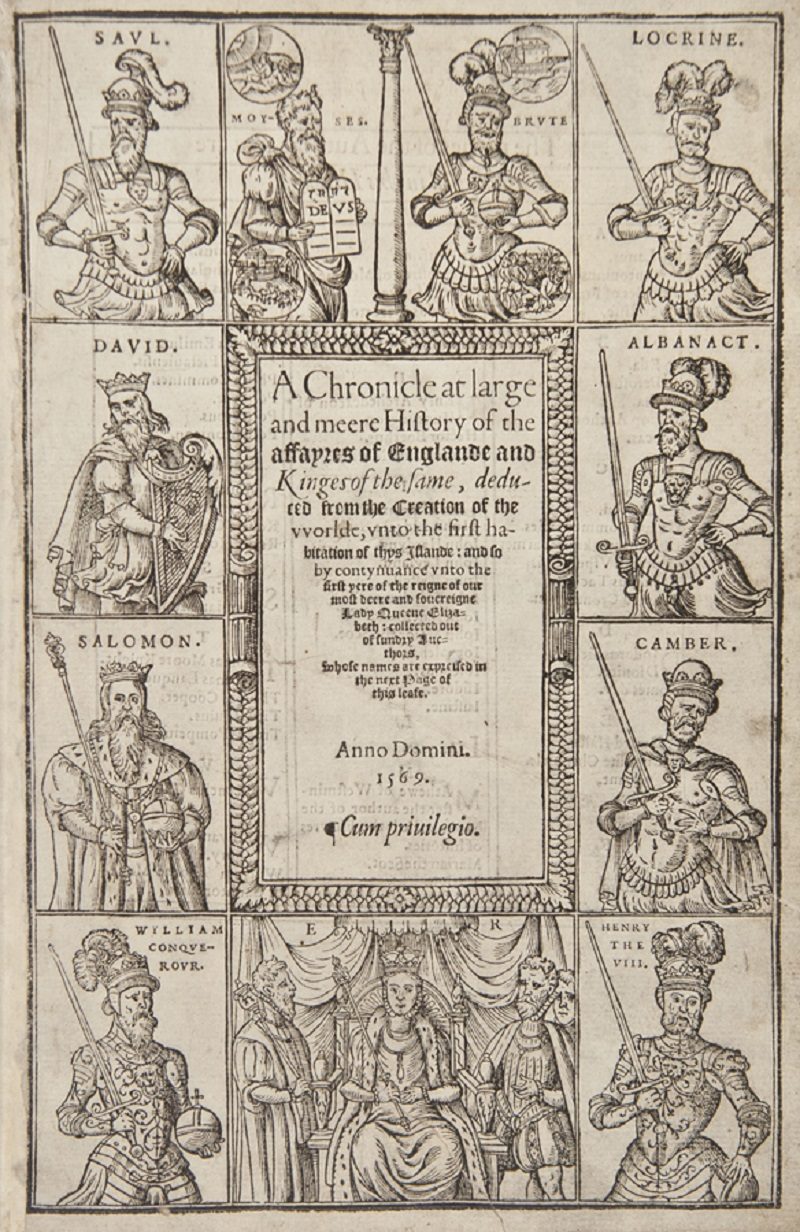
Closer still to the time of Spenser is A Chronicle at Large, written by Richard Grafton in 1569, about two decades before Spenser’s The Faerie Queene. Hence, it would have been perfectly available as a potential source to be used by Spenser.
In this passage, Grafton writes:
“In this tyme also I finde mencion made of a noble and valiant man called Arthgall, and he was the first Erie of Warwike, and he was one of the knightes of the round Table of King Arthure, after whome folowed by succession Moruyde, and Merthrude. This Arthgal tooke a Beare for his beast because the first sillable of his name which is Arth, in the Britishe speche, and is in English a Beare.”
This is a very interesting passage, because it provides us with information that is not found in Geoffrey’s account, nor in Wace’s, nor Hardyng’s. It tells us that Arthgal was specifically the first earl of Warwick, and it also tells us who his successors were. Furthermore, this passage mentions that it is from Arthgal that Warwick gets its heraldic bear emblem.
A Possible Reference in the Post-Vulgate Queste del Saint Graal
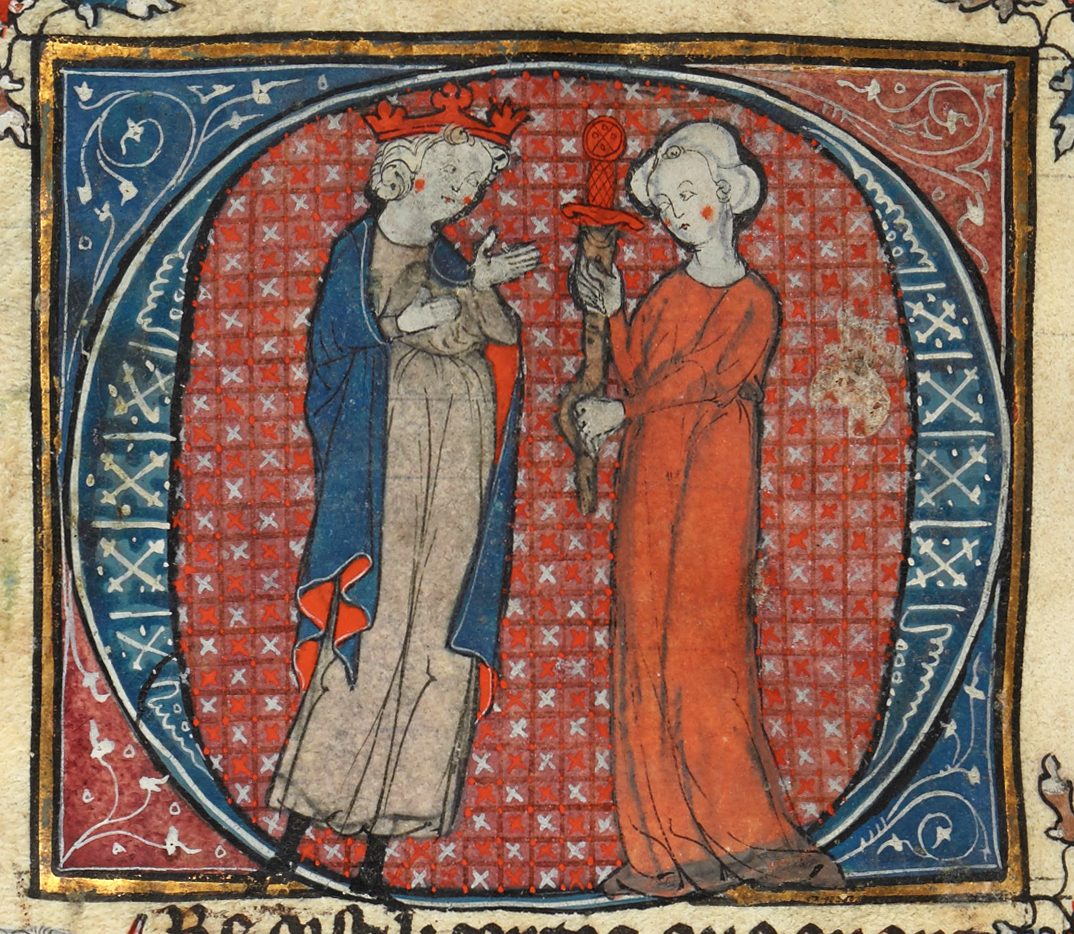
There is another possible reference to Arthgal in between Wace’s Roman de Brut and Hardyng’s Chronicle. This is the Post-Vulgate Queste del Saint Graal, written in c. 1235.
In this work, an otherwise unknown knight of the Round Table named Artel appears. On the basis of his name, it is entirely possible that this is an evolution of ‘Arthgal’. There are many instances in which the letter ‘g’ disappears from names.
The character of Gawain exemplifies this point excellently. In Geoffrey of Monmouth’s account, he appears as ‘Gualguanus’. In numerous later records in English, French, and other European languages, the middle ‘g’ is not included.
Therefore, the ‘Artgualchar’ of Geoffrey, whose name evolved into ‘Arthgal’ through one line of transmission, could have easily evolved into ‘Artel’ through another. The fact that this minor character is presented as one of King Arthur’s knights adds support to the idea that he can be identified as Geoffrey’s Arthgal.
Of course, whether he really was or not is impossible to say.
What These Texts Mean for Arthegall’s Authenticity
Returning to Artegall of Edmund Spenser’s The Faerie Queene, what conclusion can we come to regarding the authenticity of this character? What this evidence means is that it is entirely plausible for Spenser to have based his character directly on the attested figure of Arthgal from the Arthurian legends, just as he used other attested figures from existing Arthurian texts (such as Arthur and Merlin).
Indeed, the spelling used by Richard Grafton (‘Arthgall’), the source closest to the time of Spenser himself, is very close to Spenser’s spellings of the name (variously ‘Artegall’, ‘Arthegall’, ‘Arthegal’, and ‘Artegal’).
Therefore, it would have been perfectly easy for Spenser to have taken the character from Grafton’s Chronicle and adapted him for his story, similar to what he did for other Arthurian characters.
What This Means for Spenser’s Usefulness
Crucially, what does this mean regarding the usefulness of the information that Edmund Spenser provides about the figure of Artegall? Of course, the actual story about this figure was made up by Spenser as an allegory. Many commentators understand his character to represent Arthur Grey, 14th Baron Grey of Wilton.
However, this does not by any means suggest that Spenser made up the biological information about this character. After all, he demonstrably uses plenty of authentic familial relationships from the Arthurian legends in his account.
For example, in Book III, Canto III, stanzas 27 and 29, Spenser refers to Cador as being the son of Gorlois. He also presents Constantius as being of this family. While a close examination of the historical sources shows that Cador was not, in fact, the son of Gorlois, this was a widely-held belief for much of the medieval era.
The point is that Spenser accurately preserved traditions that existed about these characters at the time. While he was writing an allegory, that does not mean that he simply invented the biographical information about characters who already existed in the Arthurian legends.
Artegall’s Fame
This raises the possibility that Spenser may have preserved, in his character of Artegall, some accurate details about the Arthurian character of Arthgal that have not otherwise come down to us.
The key biographical detail that he provides about Artegall is that he was the son of Gorlois, thus making him the half-brother of King Arthur. Is it reasonable to believe that this detail could have been preserved by Spenser without appearing in any prior source?
It is worth noting that several statements by the sources which mention the Arthurian Arthgal indicate that there may have been many more sources that spoke about him than only the ones which we now have.
From Wace
For example, in Wace’s passage about Arthur’s coronation, where he mentions ‘Algal of Guivic’, Wace describes him as:
“…a baron much held in honour by the court.”
Of all of Arthur’s many allies who appear in this passage, Algal is one of the very few who is described in more detail than just his name and geographical association. He is also the only one whose honour is highlighted.
Since Geoffrey does not mention this, this suggests that Wace was aware of some other existing tradition about Algal (Arthgal) and added this comment.
From Hardyng
In John Hardyng’s Chronicle, we find a similar statement. He describes this figure as:
“Syr Argalle, Erle of Warrewyke of grete prise.”
According to this, Argalle was ‘of great praise’. This is consistent with the evidence from Wace. Admittedly, however, unlike in the case of Wace, this statement from Hardyng is not so unusual. As a rhyming chronicle, he provided extra comments about many of the knights of Arthur’s court so as to provide rhymes.
From Grafton
Richard Grafton’s comments are particularly interesting. In his history of Britain in A Chronicle at Large, he refers to King Arthur and the numerous records about him, providing an overview of who he was and what he was said to have done.
Immediately after providing this context, he goes on to state:
“In this tyme also I finde mencion made of a noble and valiant man called Arthgall…”
See above for the full quotation.
None of Arthur’s other allies are described here. The fact that Grafton makes a point of writing about Arthgall immediately after providing an overview of King Arthur and his reign is surely significant. It strongly suggests that there was something especially notable about Arthgall.
Evidently, there were other records about him which have not survived until today. The fact that Grafton makes a point of describing him as a ‘valiant man’, when that is not explicitly stated by Geoffrey, Wace, or Hardyng, provides additional motive for believing that he had access to other sources which are now lost.
He also goes on to describe Arthgall as the first earl of Warwick and who his successors were, which likewise demonstrates the existence of other records about him which are now lost.
The concept of an Arthurian character being the subject of stories that are now lost, the character now only being known from a few obscure references, is not an uncommon one. Many other examples of this phenomenon are known. The obscure figure of Ilinot, appearing in the writings of just two German writers, shows evidence of having been the subject of other stories now lost to us.
Therefore, since there were evidently other sources available about Arthgall existing in the time of Grafton, they could easily have been available to Spenser, writing just two decades later.
Evidence That Artegall was Madoc, King Arthur’s Brother
Now that we have established that Spenser appears to have taken the character of Artegall from the Arthurian records about Arthgal of Warwick, and that there appear to have been other records about him circulating in the sixteenth century, what does this mean for his relationship to Arthur?
As we have already noted, the character of Artegall in The Faerie Queene is presented as the son of Gorlois and thus the half-brother of King Arthur. With no active reason to have made up this lineage, it is entirely logical that this was an authentic part of the tradition about Arthgal found by Spenser in his research.
While not absolutely required by it, this is broadly consistent with the information about him provided by Wace, Hardyng, and Grafton.
As we have already seen, Wace and Hardyng (the former being particularly significant) highlight him as the object of honour and praise. The fact that Wace describes Arthgal (‘Algal’) alone as a ‘baron much held in honour by the court’ suggests that he was one of the most important people there.
A similar observation could be made about Richard Grafton singling out Arthgal after providing an overview of who King Arthur was. Although Grafton does not describe Arthgal as a brother of Arthur, such a prominent position would explain why Grafton made a big deal out of him in his Arthurian passage.
Therefore, although there is no direct confirmation of it from the surviving accounts prior to Spenser’s The Faerie Queene, there is no valid objection to the suggestion that Arthgal of Warwick really could have been the brother, or half-brother, of King Arthur.
He being merely Arthur’s half-brother rather than a full brother would explain why he did not have a more prominent place in the legends and why his relationship to Arthur was usually left unmentioned.
Evidence from the Brut Tysilio
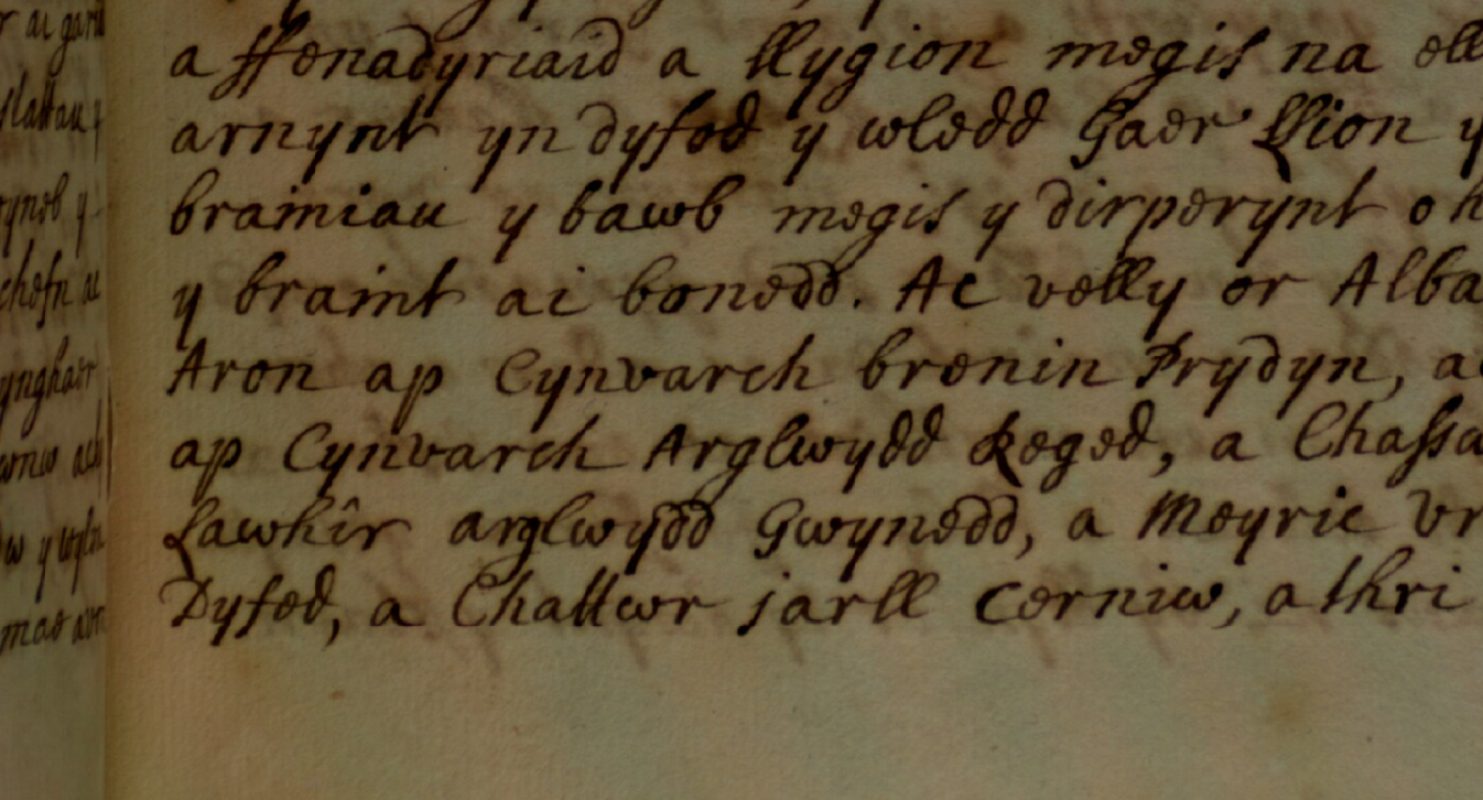
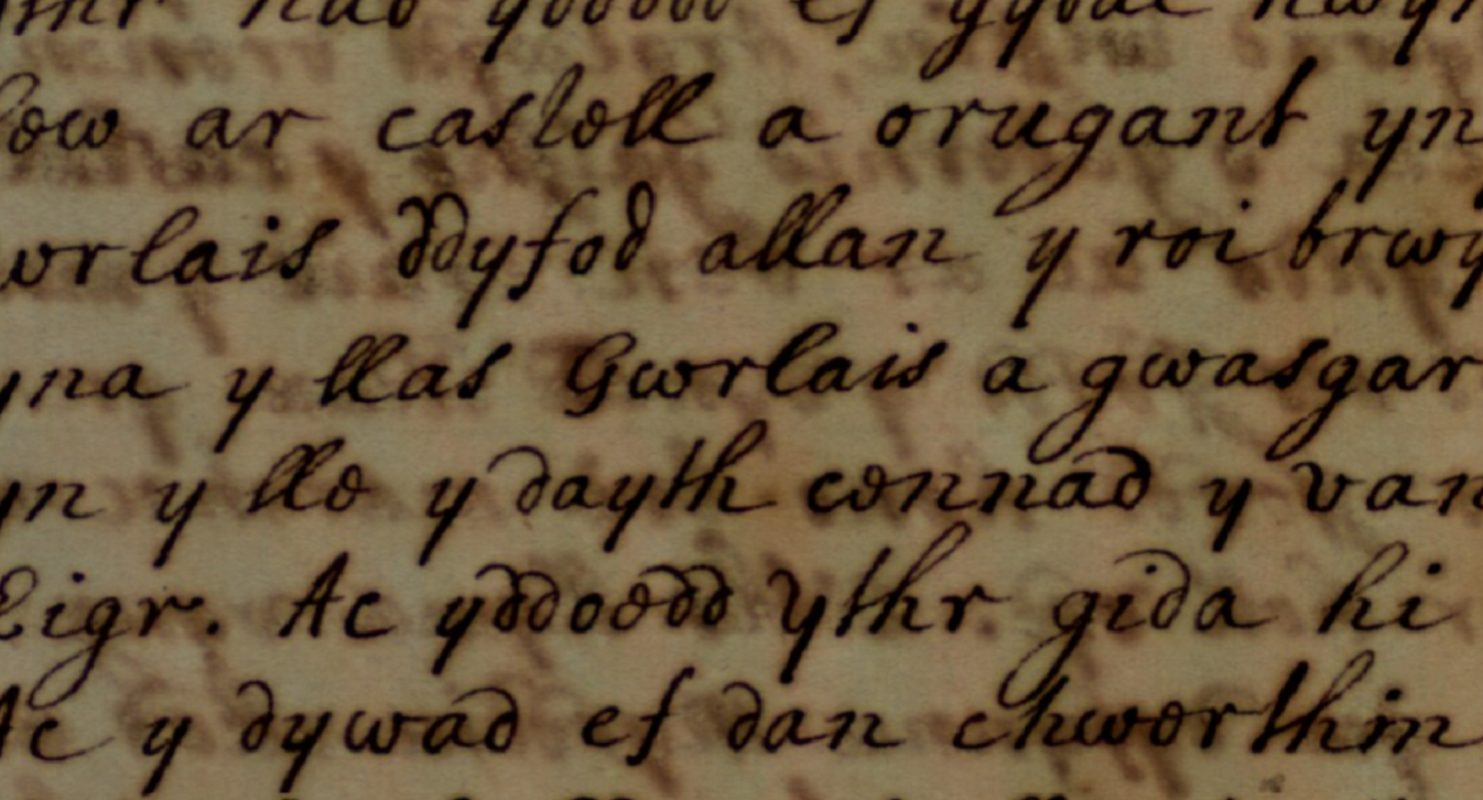
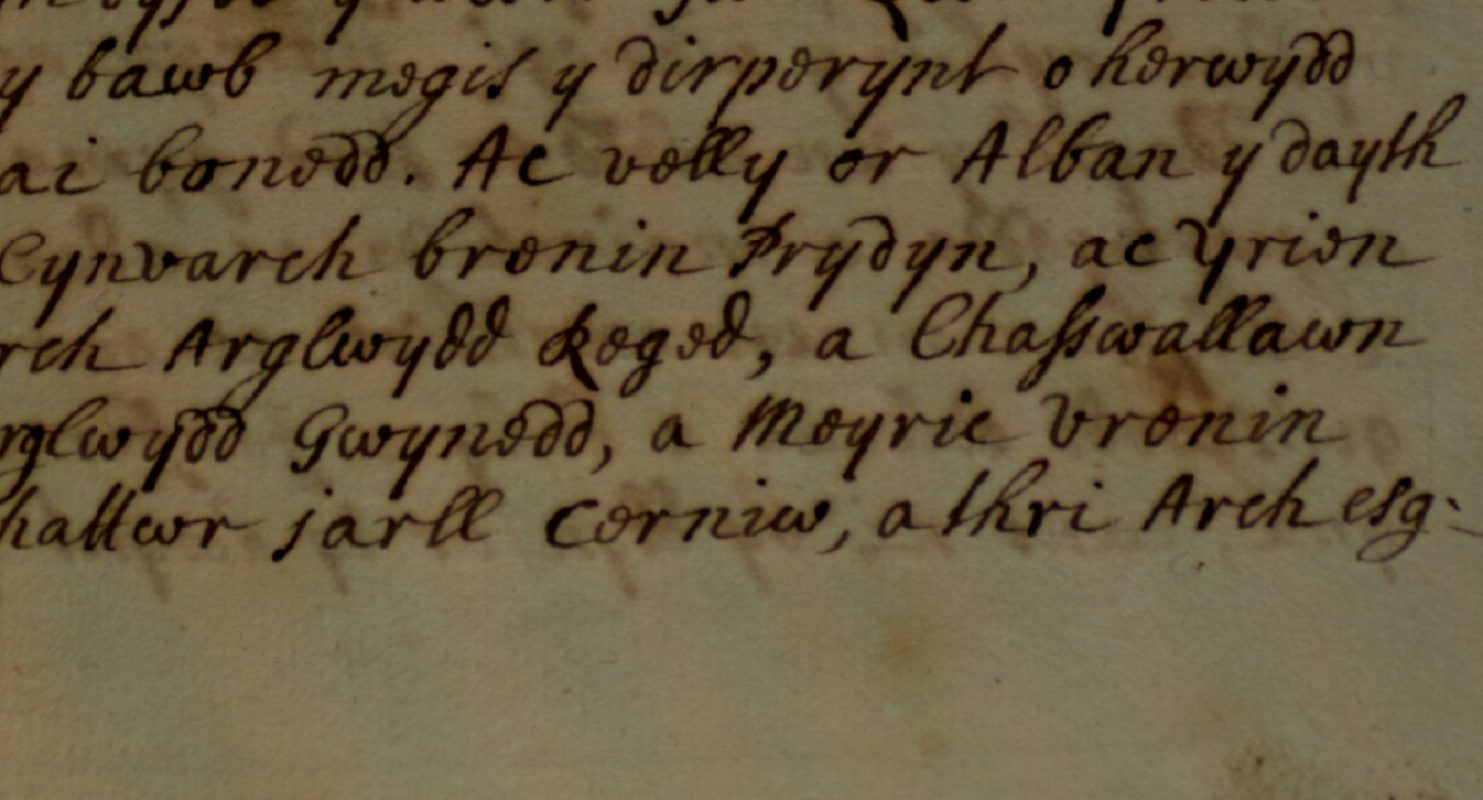
However, a far more direct piece of evidence for this conclusion is to be seen in Brut Tysilio. This is a Welsh version of Geoffrey of Monmouth’s Historia Regum Britanniae. There are numerous instances in which names used by Geoffrey are substituted for ones which were more familiar to the Welsh writers.
In some cases, the names are simply modified in accordance with Welsh spelling. In others, names are completely changed. In any case, this provides us with valuable information about who the Welsh understood Geoffrey’s Arthurian figures to actually be.
Notably, the Brut Tysilio exchanges the name ‘Arthgal’, or ‘Artgualchar’, with the entirely different ‘Madoc’. Why is this so significant?
The significance is because, as mentioned at the outset of this article, Madoc appears elsewhere in Arthurian tradition as one of King Arthur’s brothers. Unlike in the case of Artegall, Madoc’s status as Arthur’s brother is well established.
He appears in the Book of Taliesin, where there is an elegy written for him. He is also referenced in the poem known as Arthur and the Eagle, in which Arthur talks to the spirit of his nephew, Madoc’s son Eliwlod, who appears to him in the form of an eagle.
Both of these references confirm that Madoc was the brother of Arthur, calling him the son of Uthyr. There are also several other references to a Madoc who may well be Arthur’s brother. For example, there is ‘Saint Madoc’, the patron saint of several sites in South Wales.
There is also a certain ‘Saint Maidoc’ who, in at least some records, was likely Madoc ap Uthyr. In others, he was certainly Aidan of Ferns.
The fact that the Brut Tysilio exchanges the name of Geoffrey’s Arthgal for Madoc is highly significant. Welsh tradition knows of no other Madoc associated with King Arthur. Therefore, the most logical and natural solution is surely that Geoffrey’s Arthgal was understood to be Madoc the brother of King Arthur.
How This Harmonises with Artegall Being Arthur’s Half-Brother
As we have noted, Madoc is recorded as being the son of Uthyr, thus making him Arthur’s brother. On the other hand, Edmund Spenser presents Artegall as being the son of Gorlois, and thus the half-brother of Arthur.
Can these two biographies be reconciled? Well, the easy solution is to conclude that this child was adopted by Uther after the death of Gorlois, whom Uther killed so as to take his wife Igerna for himself.
The practice of someone being known as the son of their adoptive father is and always has been extremely common. Therefore, there would be nothing surprising about Madoc being known as ‘ap Uthyr’ while actually only being Uthyr’s adopted son.
Of course, it seems perverse to accept the testimony of Edmund Spenser, writing an allegory in 1590, over the testimony of much earlier Welsh tradition. Nevertheless, we will go on to see how other early evidence supports the conclusion that Madoc really was a half-brother of Arthur.
Evidence from the Athrwys ap Meurig Theory
The conclusion that Madoc was actually Artegall, and that he was actually a half-brother rather than a full brother of King Arthur, is supported by the Athrwys ap Meurig theory. This is the theory that King Arthur can be identified as the historical Athrwys ap Meurig.
The Basis for the Athrwys Theory
This historical figure was a king of southeast Wales who appears to have ruled from Ergyng in the east to Glywysing (Glamorgan) in the west. Although most scholars place him in the seventh century and thus 100 years after Arthur’s time, many other scholars place him in the sixth century.
For a full examination of this theory, see the article Was Athrwys son of Meurig the Real King Arthur? As a brief summary, this theory is fundamentally based on the argument that Athrwys lived at the right time and place to be Arthur. His kingdom in southeast Wales encompassed the key Arthurian territory, according to where Arthur is placed in a variety of early records.
Since Athrwys was the only royal individual at that time with a name anything like Arthur’s, the argument is that his name must be a corruption of ‘Arthur’, perhaps through the attested form ‘Arturus’.
To support this theory further, researchers highlight the fact that many of Athrwys’ family members appear to match many of the family members of Arthur in the legends. For example, the Welsh prose tale Culhwch and Olwen gives Arthur a maternal uncle named Gwrfoddw. A king by this very name appears in the Book of Llandaff in a position that suggests that he is Athrwys’ maternal uncle.
Additionally, there is evidence that Athrwys had a sister named Anna, just like in Geoffrey of Monmouth’s account of Arthur’s family. There is also evidence that Athrwys was the cousin of King Cado of Cornwall, just as Arthur was said to have been.
Madoc as a Brother of Athrwys
Another one of the Arthurian family members used to support this theory is Madoc himself, the very subject of this article. The argument involves evidence that Madoc was actually the father of Myrddin Wyllt, the bard who later evolved into the famous Merlin.
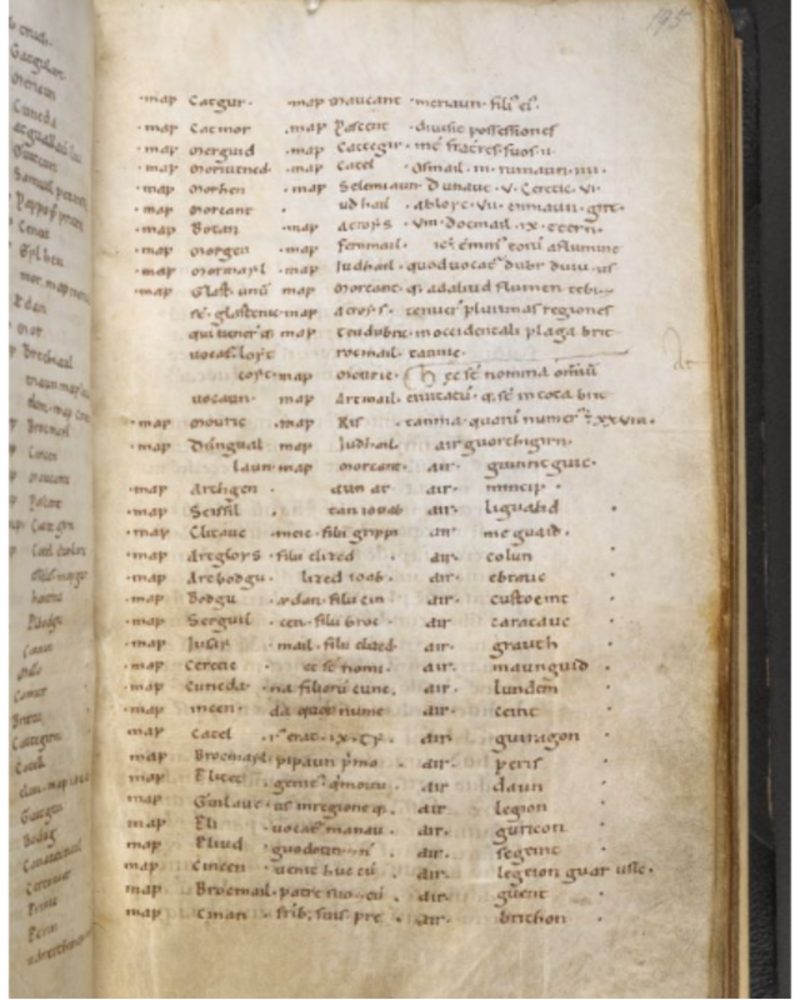
Numerous Welsh texts refer to the father of Myrddin as ‘Morfryn’. One Welsh text describes him as being ‘of the tribe of Meirchion’. The Meirchion in question is almost certainly the figure of that name who appears in the Jesus College MS 20 as the son of Glywys. This would make him a prince or even king of the Glamorgan area, which matches the territory of Arthur’s family.
Furthermore, a seventeenth century account of the life of Myrddin describes him as the grandson of King Meurig of Dyfed. This can only be Meurig the father of Athrwys, since no other King Meurig of South Wales in this era is known. Let it be noted that ‘Dyfed’ sometimes applied to South Wales in general, including Glamorgan, as seen in the Life of St Cadoc.
This would imply that Myrddin’s father, Morfryn, was the son of King Meurig. Interestingly, a slightly later record refers to this Morfryn as ‘Madoc Morfryn’. This provides evidence that Meurig had a son named Madoc. He would therefore have been a brother of Athrwys.
According to this theory, ‘Uthyr Pendragon’ was a title used by Meurig (and others in this dynasty).
How This Supports Madoc Being Arthur’s Half-Brother
How does this evidence support the conclusion that Madoc was the half-brother of King Arthur? As noted above, Myrddin is described in a Welsh text as being ‘of the tribe of Meirchion’, this Meirchion almost certainly being the son of Glywys. There is no other logical candidate.
However, if Myrddin was the son of Madoc Morfryn, the son of Meurig (that is, Uther, according to this theory), then why is he referred to as being of the tribe of Meirchion? Interestingly, there is strong evidence that the legendary figure of Gorlois is actually derived directly from Glywys. See the article Was Gorlois, Duke of Cornwall, a Real Person?
This being so, it is highly significant that Myrddin is described as being of the tribe of Meirchion. This suggests that his father was a close relative of Meirchion, the son of Glywys. This supports the conclusion that Myrddin’s father, Madoc Morfryn, may have been a son of Glywys, and thus the brother of Meirchion. In any case, they must have been closely related.
In other words, if Myrddin was the son of Madoc Morfryn, son of Meurig (the real Uther Pendragon according to this theory), and Madoc was a brother of Meirchion, then this means that this Madoc was actually the son of Glywys, the ‘real’ Gorlois.
Admittedly, the reference to Myrddin being ‘of the tribe of Meirchion’ is vague. It does not necessarily require Myrddin’s father to have been the brother of Meirchion. Nevertheless, it is indicative.
Furthermore, it is possible that Madoc Morfryn might be identifiable as a certain ‘Mar’ or ‘Mur’ who appears in the Life of St Cadoc and the Jesus College MS 20 as a son of Glywys.
If so, then this would mean that Madoc was indeed King Arthur’s half-brother, actually being the son of the historical Gorlois.
Artgal as a Half-Brother of Athrwys
The theory that Athrwys ap Meurig was the historical King Arthur also supports the identification of Artegall, or Arthgal, as a historical half-brother of Arthur in another way. This is seen from the Life of St Cadoc.
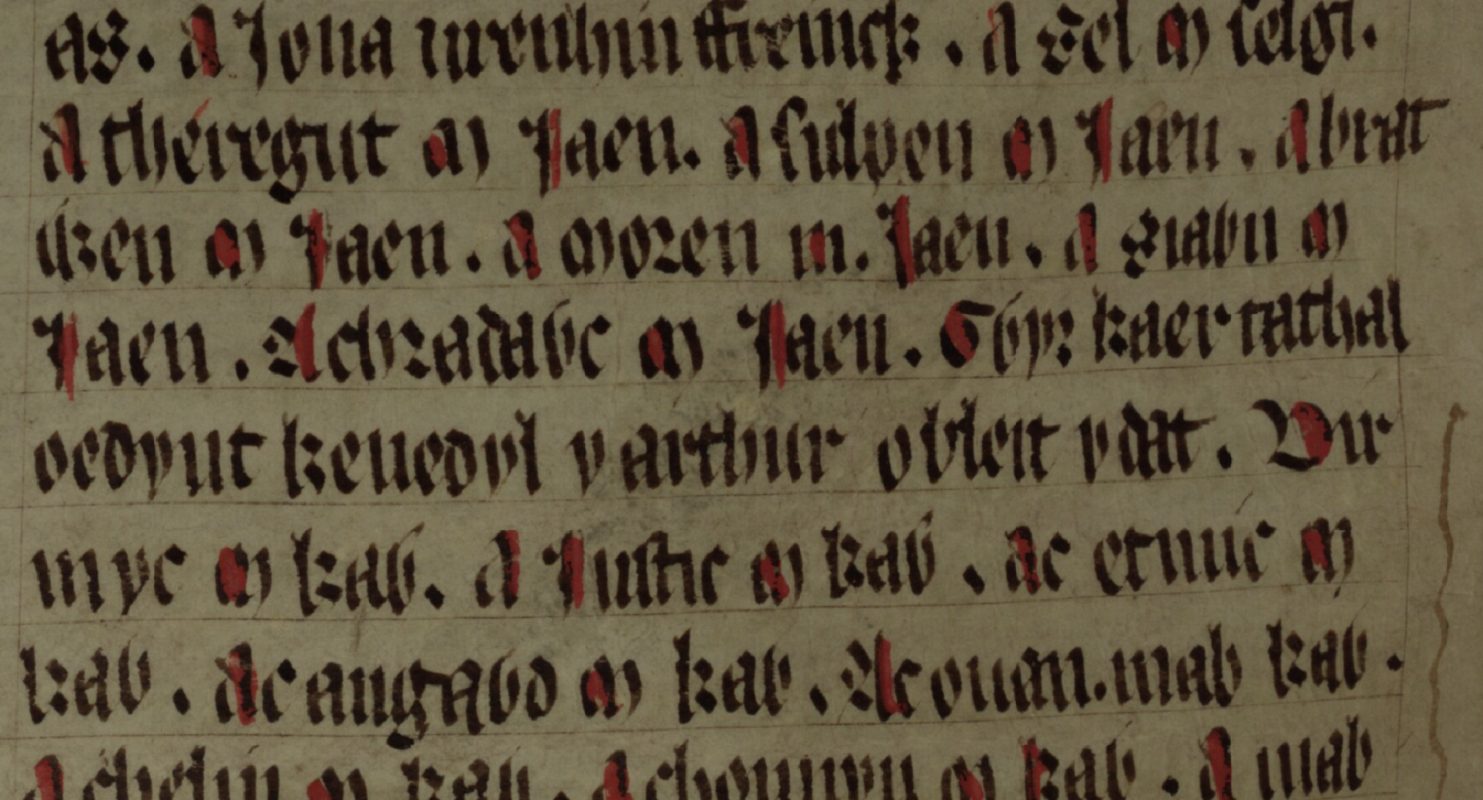
In the charters that appear at the end of that document, there is a record of a land grant associated with the deaths of two important individuals. The narrative leading up to the land grant reads:
“After an interval of time Euan Buurr slew two men, the sons of his sister, to wit, Atgan and Aidnerth. Wherefore came Cadog and Illtud, and they cursed Euan. Wherefore Euan being compelled came, and kings with him, to the presence of Cadog and Illtud, and confessed to them his crimes.”
As we can see here, in the time of Cadoc and Illtud a man named Euan Buurr slew two sons of his sister, men named Atgan and Aidnerth. Who exactly these men were is not explained in more detail than this, but the only figure attested elsewhere with a name like ‘Aidnerth’ in this period is Idnerth. He was a prince of the kingdom that ruled over Glywysing and Gwent.
This high status would explain why kings got involved in the resolution of this issue. The men who were murdered cannot have been common or unimportant figures of the time. Hence, this supports the identification of the Aidnerth of this account with the Idnerth attested elsewhere as a prince of this time and place.
Significantly, Idnerth was actually the brother of Athrwys. He appears as such in the Life of St Oudoceus and the charters of the Book of Llandaff.
Atgan as the Historical Arthgal
With this being so, this would mean that Atgan was also one of Athrwys’ brothers. While this is not identical to the name ‘Artegall’ or ‘Arthgal’, it is tantalisingly similar.
The concept of one of the consonants in a consonant cluster being dropped by some scribes is well established in medieval Wales. For example, the figure of Briafael ap Llywarch has his name recorded as ‘Binael’ in one record, the ‘Br’ being reduced to just a ‘B’ (and the ‘n’ being a mistake for a ‘u’, representing the ‘f’ sound).
Another example is the place name ‘Tribruit’, which appears with the ‘T’ missing in at least one record. An even more fitting example is Cynwal Garnwch, whose epithet appears as ‘Canwch’ in Culhwch and Olwen. There, the ‘r’ before the ‘n’ in the middle of the epithet has been dropped.
We even see the same thing in the case of Arthgal himself, whose name is written ‘Algal’ by Wace and ‘Argalle’ by Hardyng. Therefore, there is nothing implausible about accepting ‘Atgan’ as a variant of ‘Arthgal’, at least in terms of the first part of the name.
The only aspect of the name which is notably strange is the fact that the name ends with ‘n’ rather than ‘l’. However, even this is not without precedent. In Geoffrey of Monmouth’s Historia Regum Britanniae, the brother of Urien and Lot is named Augusel. In the Welsh texts, this brother appears as ‘Arawn’.
Another example is Rhydderch Hael, whose epithet appears in the Historia Brittonum and the Harleian genealogies as ‘Hen’.
Madoc Arthgal in the Book of Llandaff
The Book of Llandaff appears to provide additional evidence for the identification of Madoc as the historical Artegall, or Arthgal, as well as providing a halfway point between the Life of St Cadoc’s ‘Atgan’ and the Arthurian ‘Arthgal’.
In one of the charters from the time of Meurig, the father of Athrwys, we find a reference to a certain ‘Matuc’. This is a match for the name of Madoc, King Arthur’s brother. The name which appears immediately after Matuc is ‘Arthcuman’. Whether this is supposed to be Matuc’s second name or a different witness entirely is unclear.
Notably, some editions of the Book of Llandaff present it as the second name of Matuc. If so, this would mean that we have here a reference to a certain Matuc Arthcuman as a contemporary of Meurig and his son Athrwys.
The fact that this figure has the same name as Arthur’s brother and seems to be associated with a second name which is similar to Artegall, or Arthgal, is extremely interesting.
The Relationship Between Arthcuman, Arthgal, and Atgan
The connection between the names ‘Arthcuman’ and ‘Arthgal’ is more obvious when we take into account the fact that many names which have ‘c’ in them in the Book of Llandaff appear with a ‘g’ elsewhere in Welsh texts. For example, a king named ‘Gurcan’ in the Book of Llandaff appears elsewhere as ‘Gwrgan’. Morcant becoming Morgan is another obvious example.
Therefore, ‘Arthcuman’ would, or could, have logically evolved into ‘Arthguman’. From this form, it is easy to arrive at both the Life of St Cadoc’s ‘Atgan’ and Geoffrey of Monmouth’s ‘Artgualchar’.
The form ‘Atgan’ used in the Life of St Cadoc is evidently just a shortening and slight corruption of the name. The first part, ‘Art’, has been reduced to ‘At’ (in line with the examples considered above), while the second part, ‘guman’, has been reduced to ‘gan’. There is nothing unusual or extraordinary about this variation.
Regarding ‘Arthguman’ becoming Geoffrey’s ‘Artgualchar’, the corruption of the letter ‘n’ to the letter ‘r’ and vice versa was common among medieval scribes. Therefore, there is nothing unusual about the final ‘an’ becoming ‘ar’.
The only major difference, then, is the corruption of the letter ‘m’ into ‘lch’. This can simply be attributed to Geoffrey’s unique mistake, in line with many other strange mistakes and alterations that he made.
Matuc Arthcuman as the Historical Madoc Arthgal
In summary, the figure recorded as ‘Matuc Arthcuman’ in the Book of Llandaff as a contemporary of Athrwys can very probably be interpreted as the historical figure behind the character of Madoc in the Arthurian legends, as well as the character of Arthgal, Edmund Spenser’s Artegall.
Additionally, the understanding of Madoc as a half-brother of Arthur, as per Spenser’s character of Artegall and implied by Myrddin being ‘of the tribe of Meirchion’, explains why this figure of Matuc Arthcuman does not appear as one of the primary witnesses in the charter in which he appears.
He appears about halfway down the list of witnesses, far below King Meurig and his son Athrwys. The understanding that he was only Meurig’s son by adoption rather than his natural son would explain why this figure does not have a more prominent position.
It also explains why Geoffrey and the other Arthurian sources never mentioned anything about Arthgal being a brother of King Arthur. It was evidently not a prominent part of the tradition about him, being preserved only by Edmund Spenser.
Conclusion
In conclusion, it appears very likely that King Arthur’s brother Madoc from Welsh tradition can be identified as Artegall, the half-brother of King Arthur from Edmund Spenser’s The Faerie Queene. This latter character can be identified with Arthgal, a relatively obscure but apparently quite important Arthurian figure mentioned by several sources prior to Spenser. Indeed, the Welsh appear to have equated this figure with Madoc.
An examination of the evidence strongly suggests that these two figures can both be identified with the Matuc Arthcuman who appears in the Book of Llandaff, and with the Atgan who appears in the Life of St Cadoc as the brother of Aidnerth and thus the brother of Athrwys ap Meurig.
Sources
Bartrum, Peter, A Welsh Classical Dictionary, 1993
Bromwich, Rachel, Trioedd Ynys Prydein: The Triads of the Island of Britain, 2014
Jones, Nerys Anna, Arthur in Early Welsh Poetry, 2019
Howells, Caleb, King Arthur: The Man Who Conquered Europe, 2019
Rees, William J, The Liber Landavienses, 1840
Mason, Eugene, Wace: The “Arthurian” Portion of the Roman de Brut, 1999
Nohrnberg, James, The Analogy of the Faerie Queene, 1976
Ashley, Mike, The Mammoth Book of King Arthur, 2011
Bruce, Christopher W, The Arthurian Name Dictionary, 1999
Hamilton, Albert Charles, Spenser: The Faerie Queene, 2014
https://www.maryjones.us/ctexts/cadog.html
https://www.luminarium.org/renascence-editions/queene3.pdf
https://metseditions.org/read/Q0KDmd6WslY8f7QwSaL3DHzrZR8ldwZ
https://archive.org/stream/graftonschronicl01grafuoft/graftonschronicl01grafuoft_djvu.txt
.png)
