Igerna, Mother of King Arthur

Igerna is an important character in the legends of King Arthur, since she is the king’s own mother. Without her, there would be no Arthurian legend. Indeed, her most famous contribution to the Arthurian legends is the story of the events leading to the conception of Arthur, involving a war between Uther Pendragon and Igerna’s first husband. In this article, we will examine that story in more detail and see what else the disparate references can reveal about Igerna.
Who Was Igerna?
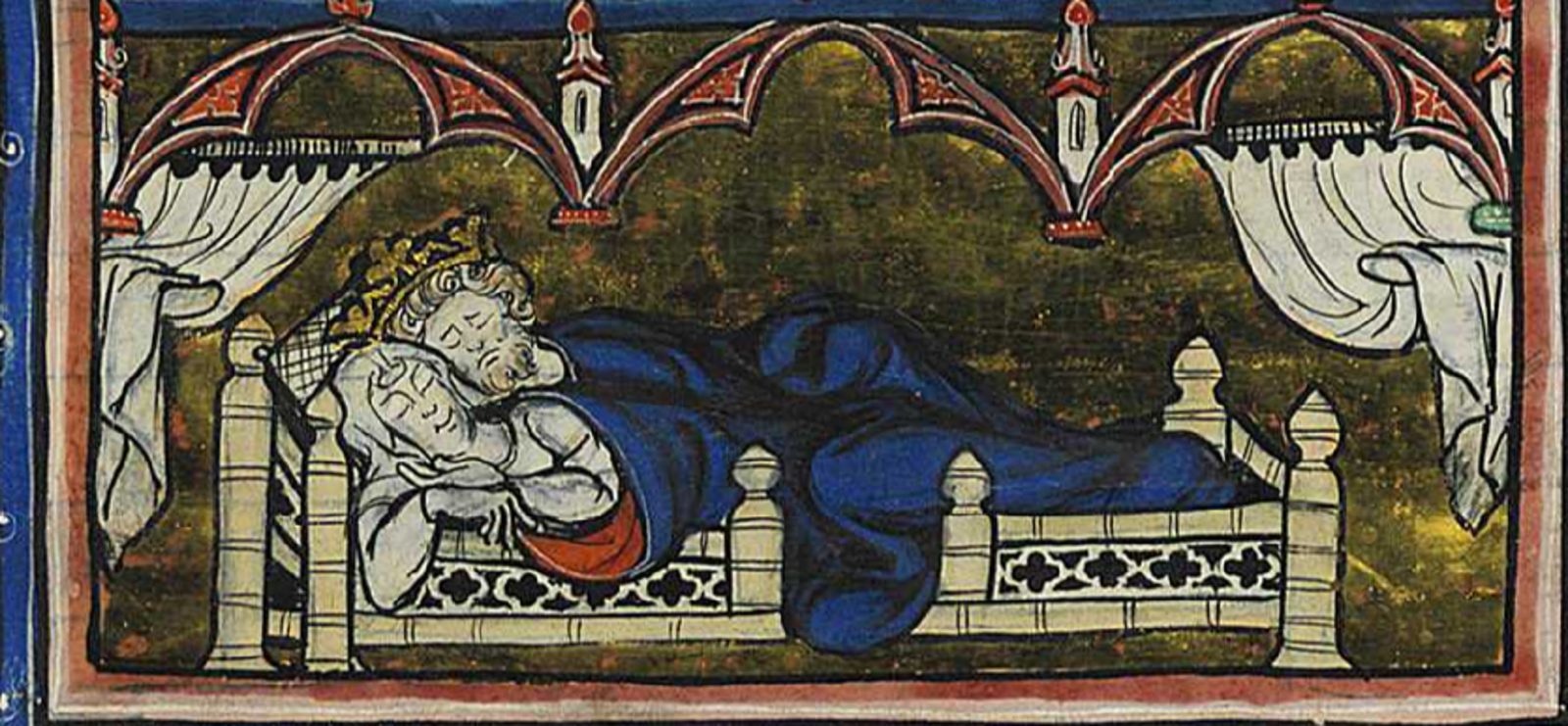
Igerna was the mother of King Arthur according to the Arthurian legends. She was the beautiful wife of Gorlois, the Duke of Cornwall, before later becoming the wife of Uther Pendragon. The story of how Uther fell in love with her and went to war against Gorlois to take her as his wife is a key part of the legends.
This story, as well as the character of Igerna herself, first appears in the writings of Geoffrey of Monmouth. He mentions her in the Historia Regum Britanniae, written in c. 1137. Post-dating this, she appears in a variety of places within Welsh texts. Usually, in those Welsh texts, her name is written as ‘Eigr’ or ‘Eigyr’.
Igerna continues to feature in the Arthurian legends long after this, with Geoffrey of Monmouth having firmly established her character for subsequent generations of writers. In Thomas Malory’s famous Le Morte d’Arthur of the fifteenth century, she appears as ‘Ygrayne’, which led to the spelling ‘Igraine’, a form by which she is perhaps more commonly known today.
Because of her absence from the earliest traces of Welsh traditions, she could easily be dismissed as fictional. However, in this article we will examine some evidence that she may well be identified as a historical figure.
Family
The legendary family of Igerna is, to put it mildly, complicated. There is clear evidence that her familial relationships to other Arthurian characters evolved over time, with each retelling of the story.
Something which is essentially consistent across the different versions is that Igerna was originally married to the duke of Cornwall. His name is most commonly presented as ‘Gorlois’, or a similar variation, although Thomas Malory used the completely different ‘Hoel’.
Igerna’s second and presumably last husband was Uther Pendragon. Again, this is generally consistent across the different versions.
One final detail which is consistent is that one of Igerna’s children was Arthur. However, aside from these details, the facts about Igerna’s other familial connections are very fluid within Arthurian lore.
The Complex Nature of Igerna’s Children
In Geoffrey of Monmouth’s account, Igerna is explicitly presented as the mother of Anna by Uther Pendragon. Hence, Anna and Arthur were full siblings.
In the Life of Merlin, which Geoffrey wrote in c. 1150, he mentions an enigmatic figure named Morgen (the famous Morgan le Fey), a sorceress on the Isle of Avalon. There is no indication in Geoffrey’s account whatsoever that she was related to Arthur, let alone that she was his sister.
However, in later versions of the legend, both of these facts change. Anna comes to be presented as the older half-sister of Arthur. Morgan le Fey also gets drawn into the family, becoming a daughter of Igerna.
It was in c. 1168, in Chretien de Troyes’ Erec et Enide, that Morgan was first described as Arthur’s sister. Later, in the Vulgate Cycle of the thirteenth century, she is presented as Arthur’s older half-sister, the daughter of Igerna and Gorlois, just like Anna.
This is the most famous version of the legend today. Anna (or rather, as she is more commonly known from later sources, Morgause) and Morgan le Fey are widely considered to have been the older half-sisters of King Arthur by Igerna and Gorlois. In reality, the earliest surviving traditions make Anna a full sister of Arthur by Igerna and Uther, while Morgan is entirely unrelated to them.
Another daughter of Igerna in some versions is Blasine, the wife of King Nentres of Garlot. Thomas Malory calls her Elaine, by which name she is better known today. She appears in the Prose Merlin, written in c. 1210. Right from her earliest appearance, she is presented as the half-sister of Arthur by Igerna and Gorlois.
The Reasons Behind These Inconsistencies
Are there any discernible reasons for these inconsistencies? There are indeed. While the case of Blasine, or Elaine, is somewhat more complicated, there are some obvious possible reasons for why Anna and Morgan were altered in the way that they were.
Anna
The reason why Anna was made a daughter of Igerna by Gorlois rather than by her second husband Uther is evidently because of chronological concerns by the writers who came after Geoffrey.
Geoffrey’s Historia Regum Britanniae only explicitly mentions Anna as a sister of King Arthur. There is no direct reference to him having more than one sister. Hence, this suggested to many writers after Geoffrey (including many modern commentators) that Anna was, according to the Historia Regum Britanniae, the only sister that Arthur had.
The reason that this is significant is because Geoffrey also describes how Arthur’s sister (unnamed) married King Budic of Brittany. They had a son named Hoel, who went on to help Arthur during his Saxon wars. Yet, Geoffrey presents Anna as being married to a king named Lot since before Uther’s death, which occurred fourteen years after Uther took Igerna as a wife.
Hence, Anna cannot have been any older than fourteen at the most when she married Lot, if she was a daughter of Igerna and Uther. Yet, if she was also the sister of Arthur’s who married Budic of Brittany, then that marriage must have occurred prior to her marriage to Lot.
The idea of her getting married to Budic, giving birth to Hoel, Budic then dying or divorcing her, and then Anna being remarried to Lot all before she was fourteen years old clearly stretches chronology to its breaking point.
It was almost certainly due to this that later writers presented Anna (although not always by that name) as the daughter of Igerna and Gorlois, allowing her to be considerably older than Arthur.
In reality, Arthur undoubtedly had multiple sisters.
Morgan
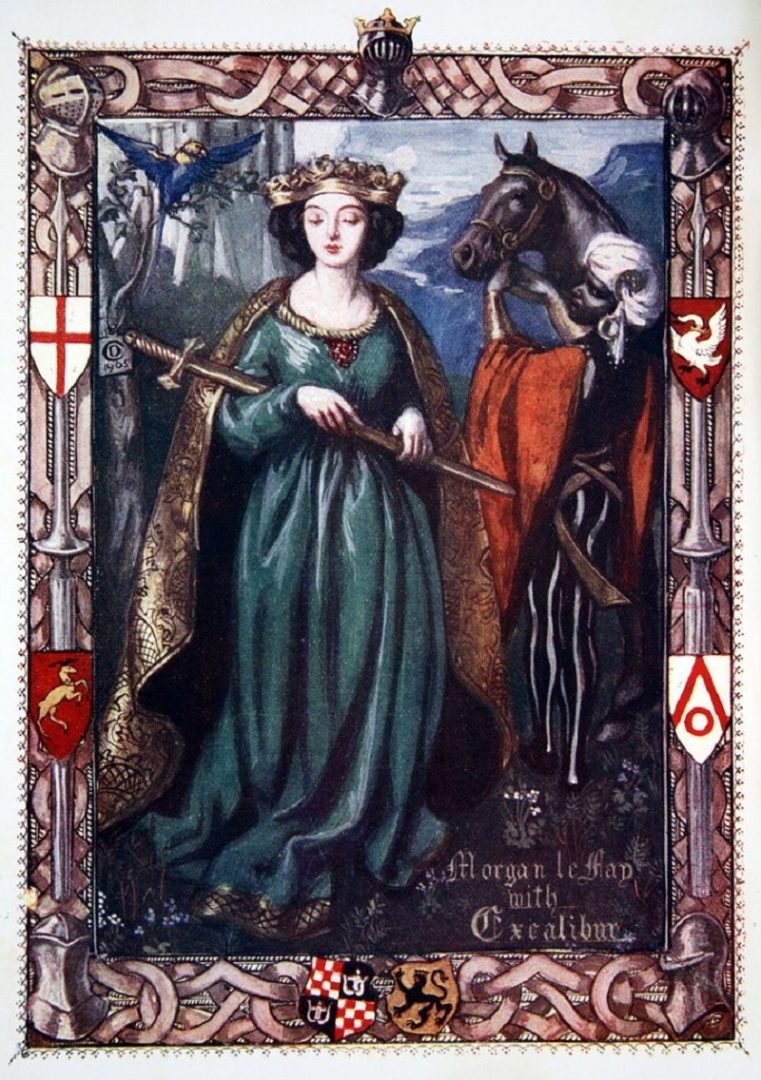
What about Morgan le Fey? How did she come to be known as Igerna’s daughter? Furthermore, once that connection had been made, how did she come to be known as the daughter of Igerna and Gorlois rather than the daughter of Igerna and Uther?
There is no obvious explanation for why either of these things happened, unlike in the case of the confusion surrounding Anna. However, there is one possibility that stands out as fairly likely.
In Welsh tradition, the figure of Modron takes the place of Morgan. In Welsh texts, she is the daughter of King Afallach, the ruler of Annwn, the Welsh Otherworld. This is the equivalent of the Avalon of the Latin texts.
As we can see from this, there is no connection to King Arthur’s family in Welsh tradition. However, the name ‘Modron’ is very similar to the name ‘Madrun’, which is the name of a female religious figure in the late-fifth, early-sixth centuries.
Her father is recorded as being Vortimer. In Welsh texts, the name of Vortimer appears as ‘Gwerthyfer’. His name also appears as ‘Gwertheuyr’, ‘Gwrthyuyr’, and other similar variations.
While by no means certain, it is possible that a non-Welsh writer may have confused the name of this king with ‘Uthyr’, the name of Arthur’s father in Welsh texts, especially since this latter name often appears as a variant of the name ‘Gwythyr’.
Another possibility is connected to the theory that the legendary figure of Uther Pendragon is largely derived from King Tewdrig of Gwent. He had a daughter named Marchell who was sent to Ireland. There is evidence that she is the unnamed sister mentioned in Geoffrey’s account as being sent to Ireland and becoming the ancestor of the kings of Britain.
In some texts, Madrun is called ‘Marcelliana’. There may have been confusion between Tewdrig’s daughter Marchell, Marcelliana/Madrun, and Modron. This may have led to Modron, or Morgan le Fey, becoming known as the daughter of Uther (Tewdrig) and thus the daughter of Igerna.
The explanation for why she was later portrayed as the daughter of Igerna by Gorlois rather than by Uther is less clear. Perhaps this was simply done to keep Arthur’s own birth unique, making him the only child of Igerna by Uther.
Blasine
Finally, what about Igerna’s daughter Blasine? Who was she, and why was she portrayed as the daughter of Igerna by Gorlois?
Blasine is portrayed as the wife of Nentres of Garlot. For a number of reasons, it is quite likely that she is simply a duplicate of either Anna or Morgan. An alternative name given to Anna is ‘Belisent’, which is very similar to ‘Blasine’. Furthermore, ‘Garlot’ could be interpreted as ‘Caer Lot’, as in the Fortress of Lot, the name of Anna’s husband.
Furthermore, Blasine’s son Galeschin is nominally very similar to Anna’s son, Gawain (also written as ‘Gwalchmai’ and ‘Gualguanus’), or her other son Gaheris.
Additional support for Blasine as a duplicate of Anna is seen from the fact that some texts directly present Nentres as Anna’s (Morgause’) husband.
On the other hand, there is also some evidence connecting Blasine to Morgan. Perhaps she is a mistaken duplicate of both figures combined into one, although Geoffrey’s Anna seems like the primary origin.
Igerna’s Forgotten Son
In a Welsh text that we will examine in more detail later, there is an obscure reference to someone who does indeed appear to be Igerna’s son by Gorlois.
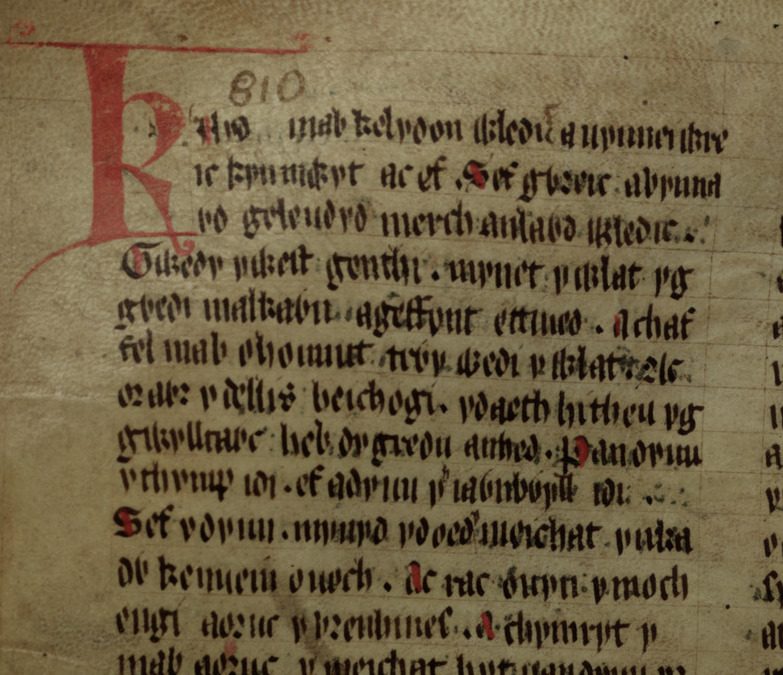
The text in question is the Welsh prose tale Culhwch and Olwen, written in c. 1100. In this tale, one of Arthur’s allies is presented as the following:
“Gormant the son of Ricca (Arthur’s brother by his mother’s side; the Penhynev of Cornwall was his father).”
This brief reference presents either Gormant or his father Ricca as the half-brother of Arthur. The fact that clarification is provided about who his father was indicates that he was related to Arthur through his mother. Hence, either Gormant or Ricca can be identified as a son of Igerna by Gorlois.
If the take the view that the parenthetical statement applies to Gormant, then this would have to mean that ‘Ricca’ was an alternative name for Gorlois. The practice of having multiple names was not uncommon in this era, so this is not impossible.
On the other hand, a more elegant solution which does not require giving Gorlois another name is that the parenthetical statement in question actually applied to Ricca, not to Gormant. That would mean that Ricca was the half-brother of Arthur, the son of Igerna and Gorlois.
Another Possible Son
Welsh tradition also provides King Arthur with a brother named Madoc. Not much information is known about him, but he is called the son of Uthyr.
There is no explicit text which makes him the son of Igerna (or Eigr, as she is normally known in Welsh texts), but in the absence of any other recorded wife of Uther Pendragon, Igerna is the most logical choice for his mother.
Ancestry
Now that we have examined Igerna’s children and her husband, what do we know about her own ancestry?
Geoffrey of Monmouth does not reveal the answer to this, but Welsh texts make her the daughter of a popular but enigmatic ancestral figure named Amlawdd Wledig.
Amlawdd appears in a variety of sources as the father of sons and daughters. However, almost nothing is known about him directly. A comparison of the various familial connections, such as his marriage to the daughter of Cunedda Wledig and his daughter’s marriage to Teithfallt of Cerniw (born in c. 420) shows that he must have been born before the turn of the fifth century. For more information, see the article ‘Amlawdd Wledig, Ancestor of King Arthur’.
This conclusion means that many of the individuals who appear as his children must actually be later descendants. While uncommon, it was not unheard of for scribes to greatly summarise someone’s descent, referring to them as a ‘son’ or ‘daughter’ of an earlier ancestor. Amlawdd was evidently a popular ancestor figure.
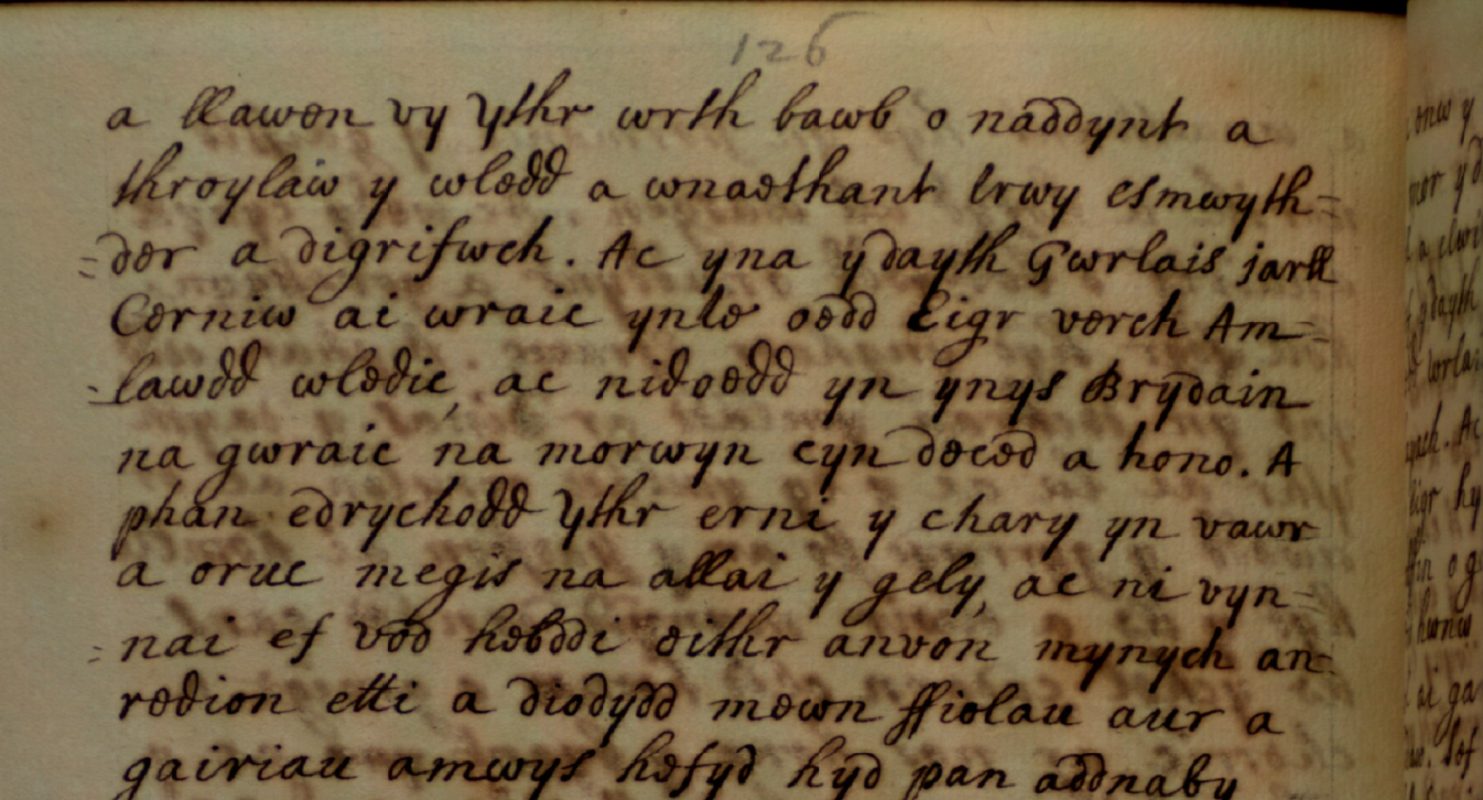
Given that Igerna was still of childbearing age in c. 500, when King Arthur was born (as we will see in more detail later), she was clearly not the direct daughter of someone born before the year 400. She must have been Amlawdd’s later descendant.
In fact, we will see some evidence later which indicates that she was actually the daughter of a certain Ceredic, born several generations after Cunedda Wledig.
Igerna in Geoffrey of Monmouth’s Historia Regum Britanniae
Now that we have analysed Igerna’s ancestry, let us see how she appears in the main corpus of texts. Firstly, let us consider her role in Geoffrey of Monmouth’s Historia Regum Britanniae.
Igerna first appears in a passage which tells of how Uther Pendragon, after establishing peace in the north of Britain, arranged for a great Easter festival at London. Many of his allies attended, including Gorlois, the duke of Cornwall.
During the event, Uther saw Igerna (presumably for the first time) and was enamoured by her beauty. He gave her all his attention during the festival, making his interest in her very obvious.
This infuriated Gorlois, leading to him withdrawing from the festival. Uther was greatly offended at Gorlois’ reaction, leading to him declaring war against him.
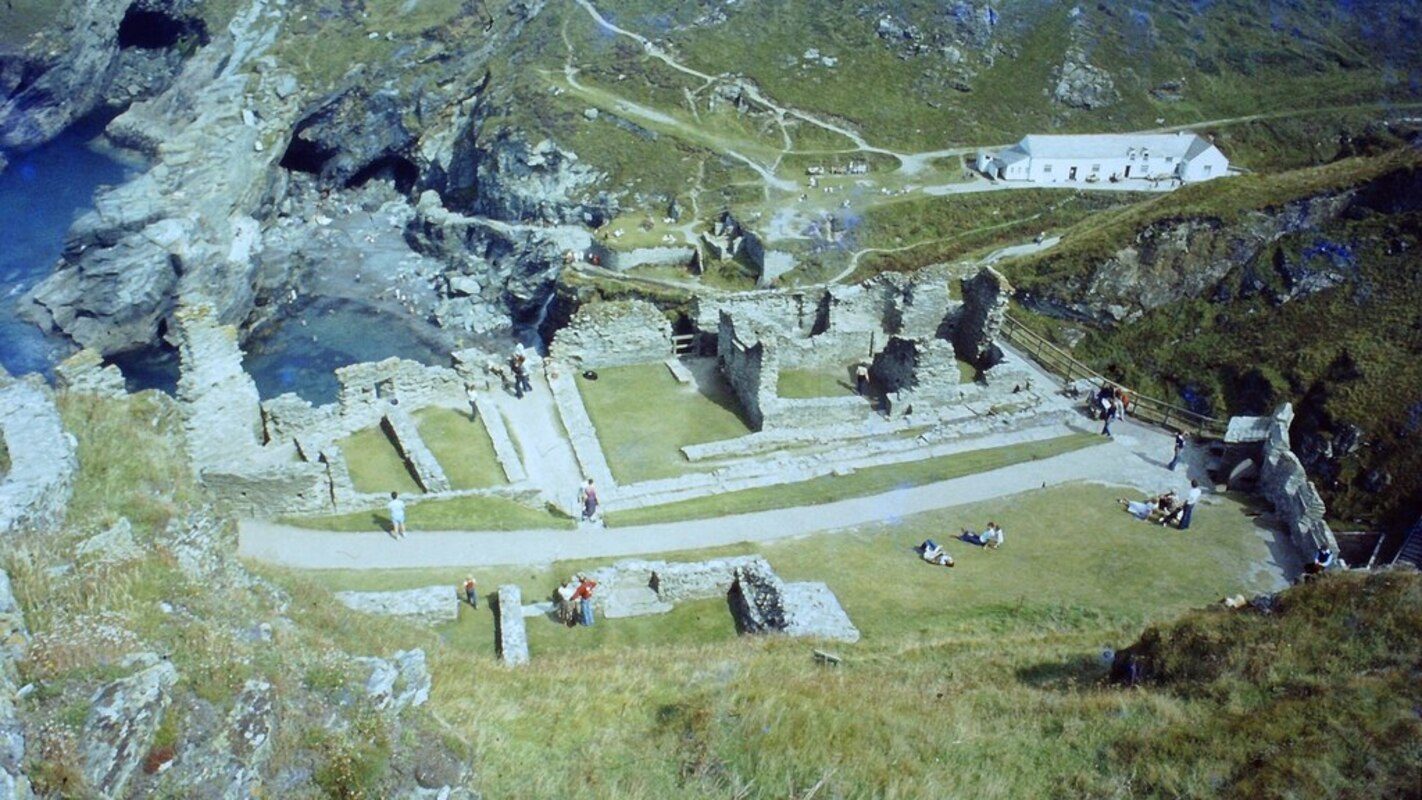
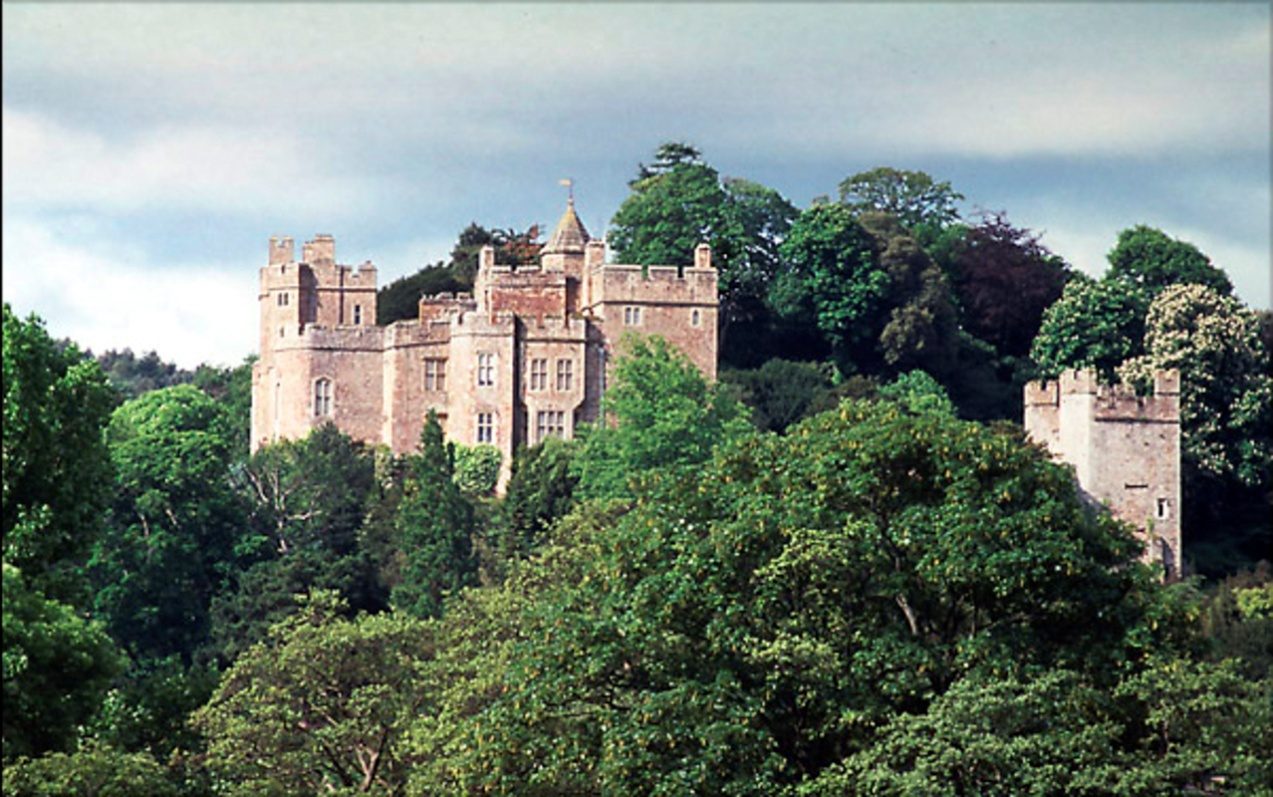
Gorlois secured his wife Igerna in the Castle of Tintagel, which was very easily defended. The duke of Cornwall himself, meanwhile, went with most of his army to the Castle of Dimilioc.
How Igerna Became Uther’s Wife
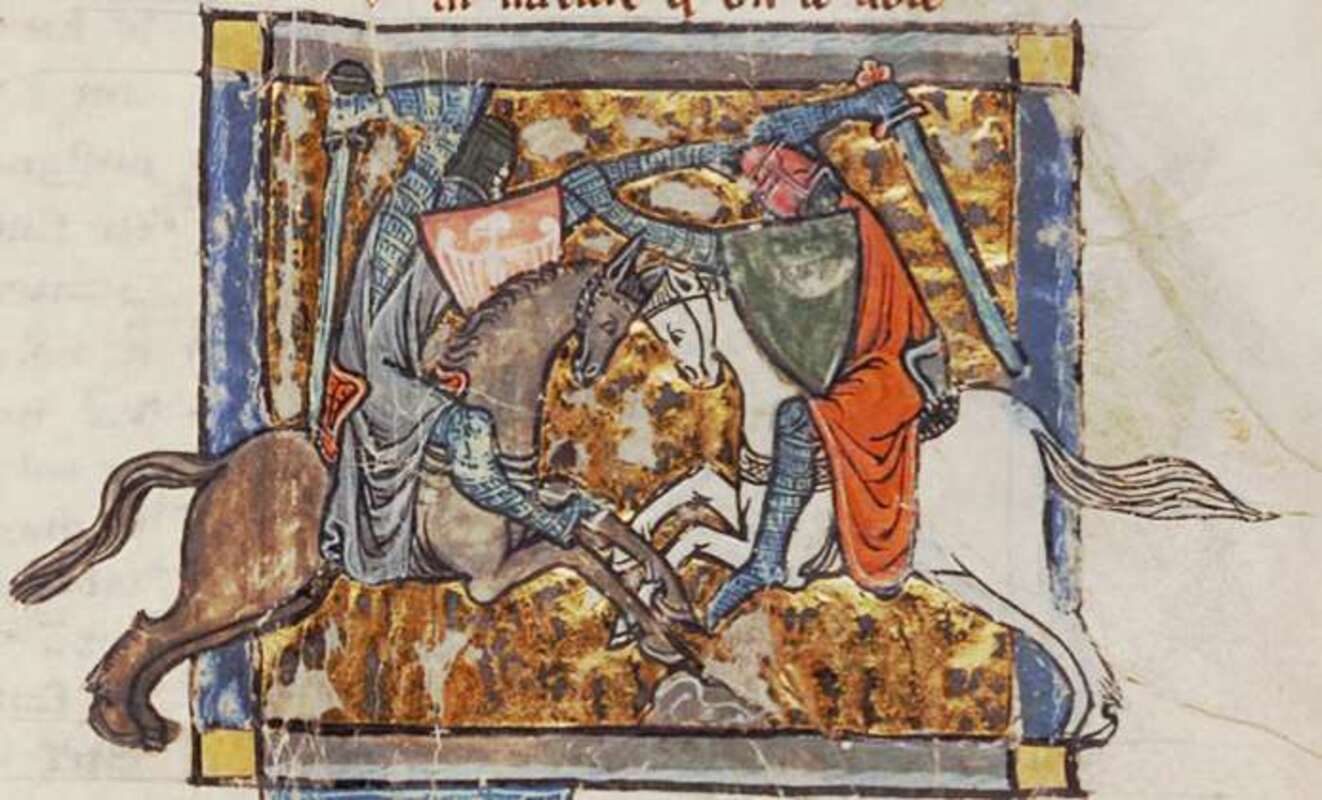
During this war, Uther plotted with his magician Merlin to gain entry to Tintagel Castle. Merlin used magic to allow Uther to shapeshift into the appearance of Gorlois, while Merlin himself and another one of Uther’s men take on the appearance of two of Gorlois’ men.
With these disguises, they are able to gain easy access to the castle. Uther, in the guise of Gorlois, goes into Igerna’s presence and has relations with her. At the same time, Uther’s men have a final clash against the army of Gorlois at Dimilioc Castle, leading to the duke’s death.
After this, Uther went back outside and returned to his own army. He then took on his own normal appearance again and ended the war. He then took Igerna as his wife.
According to Geoffrey of Monmouth:
“After this they continued to live together with much affection for each other.”
Igerna in Later Texts
Geoffrey does not reveal anything else about Igerna after this. He does not reveal anything about when she died or what happened to her. However, this information does appear in later sources, although it is not entirely consistent.
Chretien’s Version
First, let us consider what Chretien de Troyes had to say about this subject. In his work known as Perceval, the Story of the Grail, Igerna is presented as still being alive long after Uther’s death. She is discovered by Gawain in a location called the Castle of Marvels. Gawain found her and her daughter (Gawain’s own mother) at this castle.
Given that Gawain was Arthur’s nephew, the grandson of Igerna, and was born well into Arthur’s reign, this means that Igerna survived to be at least relatively elderly. She substantially outlived Uther, according to this version.
This same basic story is found in another telling of Percival’s life, known as Parzival, written by Wolfram von Eschenbach in the first quarter of the thirteenth century. Chretien de Troyes wrote his version over a decade earlier, in c. 1190.
Robert de Boron’s Version
However, writing probably somewhere between Chretien and Wolfram in the stream of time was Robert de Boron. Some online sources claim that Robert de Boron presents Igerna as dying before Uther in his poem Merlin. However, this does not appear to actually be present in that source.
The Vulgate Cycle
Just after Robert de Boron’s Merlin, the Vulgate Cycle does indeed present Igerna as dying just before Uther’s death or shortly before Arthur’s coronation. The cause of her death is not made clear.
However, a text which belongs to the Vulgate Cycle according to some classifications presents a version more in line with Chretien’s account. This is the Livre d’Artus, which dates to c. 1230 or later.
According to this narrative, Igerna dwells in hiding in the Castle of Corbenic during part of King Arthur’s reign, where the Holy Grail is kept. While not identical to Chretien’s version, it is clearly reminiscent of it, with Igerna residing in a special, magical castle during Arthur’s reign.
Igerna in Welsh Tradition
Igerna appears in Welsh tradition in a variety of texts of different types, such as genealogical records and several prose tales. In these sources, her name almost always appears as either ‘Eigr’ or ‘Eigyr’.
Culhwch and Olwen
The very earliest reference to Arthur’s mother comes from Culhwch and Olwen, written in c. 1100. However, this does not actually name her, although it refers to her existence and implies certain details about her.
The reference in question is the quotation about Arthur’s relative named Gormant, which reads:
“Gormant the son of Ricca (Arthur’s brother by his mother’s side; the Penhynev of Cornwall was his father).”
As we saw earlier, this could be interpreted in two ways. Either Gormant was Arthur’s half-brother, meaning that his mother had been married to Ricca, or Ricca was his half-brother, meaning that Arthur’s mother had been married to the unnamed father of Ricca.
In order to avoid needing to provide an additional name for Gorlois, the second option seems preferable.
What This Reference Reveals about Igerna
Although this fleeting reference to Arthur’s mother does not actually name her as Igerna, or Eigr, Welsh tradition does not provide any other name for her, so we can do no better than to assume that this is referring to the same woman as she who appears as Arthur’s mother in other texts.
What is especially interesting about this subtle appearance of Igerna in the text of Culhwch and Olwen is that it provides strong support to Geoffrey’s narrative about Igerna having been the wife of the duke of Cornwall.
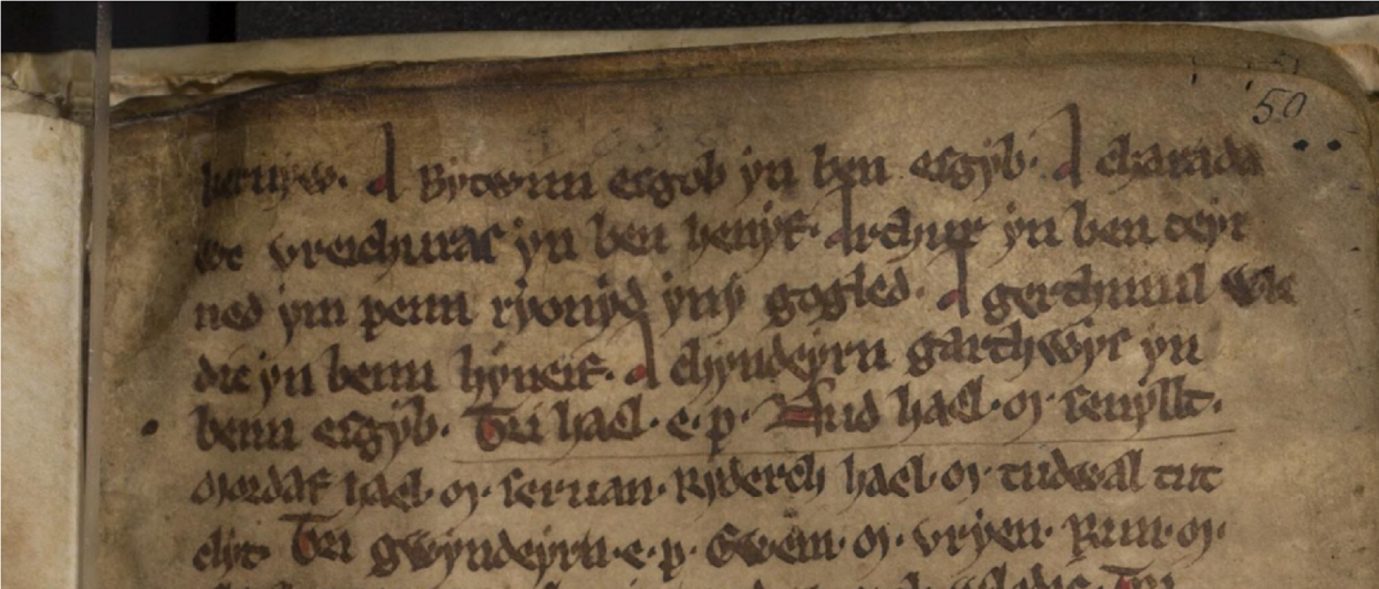
In this Welsh text, Igerna’s former husband is called the ‘Penhynev of Cerniw’. The word ‘Penhynev’ is understood to mean ‘Chief Elder’, or possibly ‘Chief of Elders’. In any case, it is clearly a position of leadership over the territory, while at the same time not being a king. This fits Geoffrey’s description of Gorlois, Igerna’s former husband, as a duke.
The Territory of Igerna’s Former Husband
Regarding the territory in question, Cerniw, this place name is frequently translated as ‘Cornwall’. This would mean that this Welsh text provides independent support (inasmuch as Culhwch and Olwen shows no influential from Geoffrey of Monmouth, nor vice versa) for the tradition that Arthur’s mother had formerly been married to the duke of Cornwall.
However, Cornwall is not the only possible interpretation of the true location of Cerniw. In fact, the Welsh Triads refer to Arthur having a Chief Elder at Cerniw, but the triad in question specifies the royal court as being called Gelliwig.
Medieval records show that there was a Gelliwig in a region of southeast Wales called Cerniw. The story of Culhwch and Olwen itself also heavily implies that Arthur’s court of Gelliwig in Cerniw is in southeast Wales.
Therefore, this would suggest that the reference to the Chief Elder of Cerniw in the aforementioned quotation is more likely to be referring to the region by that name in southeast Wales rather than Cornwall, for which there is no definite ‘Chief Elder’ known in the records.
Nevertheless, this is by no means incompatible with the understanding that this text is indeed referring to Gorlois. After all, Geoffrey frequently mistranslated place names, leading to all sorts of confusion. It is entirely possible that the ‘Cornwall’ with which Gorlois was associated was originally the region of Cerniw in southeast Wales.
In fact, we will later go on to see that this is almost certainly the case.
Therefore, this brief statement in Culhwch and Olwen provides strong support to the authenticity of what Geoffrey wrote about Igerna.
Welsh Translations of Geoffrey’s Account
There are a number of Welsh translations of Geoffrey’s Historia Regum Britanniae, such as the Brut Tysilio. These are very useful, for there are many places where the Welsh translators altered certain names or provided extra information.
In the case of Igerna, the Welsh versions called her Eigr ferch Amlawdd Wledig. Geoffrey, in contrast, never tells us anything about Igerna’s ancestry.
Welsh Genealogical Records
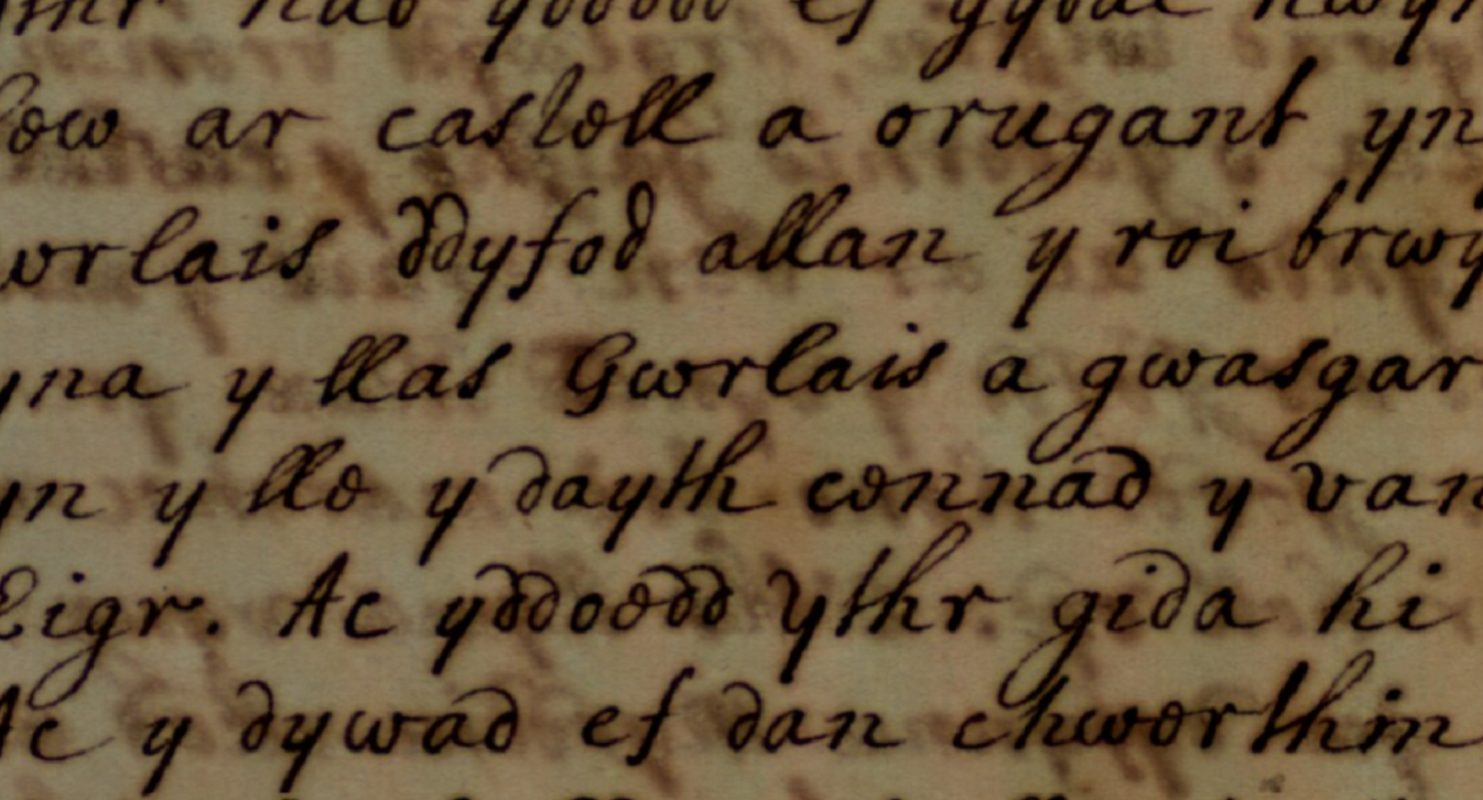
According to scholar Peter Bartrum, the expanded Hanesyn Hen genealogical tract states that Cadwr ap Gwrlais was the nephew of King Arthur on his mother’s side. Bartrum goes on to say:
“This means that Eigr was the mother of Cadwr.”
Of course, this is not what it means. If Eigr was the mother of Cadwr, then that would make him Arthur’s half-brother, not his nephew. The confusion evidently results from the fact that the Welsh genealogical tract has mistakenly made Cadwr the son of Gwrlais (Gorlois), when he was actually the well recorded King Cado (also recorded as ‘Gadwr’) son of Geraint.
When we ignore the incorrect reference to Gorlois and we simply focus on the fact that the text says that Cadwr was Arthur’s nephew on his mother’s side, this evidently means that Cadwr was the son of Arthur’s sister. Since Geraint, the father of King Cado, is recorded as marrying a woman with an identical name to that of Arthur’s sister (Gwyar), this conclusion is evidently correct.
Another misleading aspect of this genealogical tract is that it presents Eigr’s mother as being Amlawdd’s wife, Gwen ferch Cunedda Wledig. In reality, as we saw earlier, Amlawdd was born in the late fourth century, and his wife’s father Cunedda was born in c. 370. Both Amlawdd and Gwen were thus ancestors, not the parents, of Eigr.
When Did Igerna Live?
Now that we have seen what the legendary sources tell us about Igerna, what can we conclude about when she likely would have lived?
The first observation is that her most famous son, Arthur, appears to have been born in c. 500. This is seen by a comparison of several details in Geoffrey’s account with earlier sources, such as Bede. Ambrosius Aurelianus appears to have died towards the end of the fifth century.
This is reinforced by Geoffrey’s reference to a notable comet at the time of his death, while other medieval sources show that the final few years of that century did indeed see the appearance of a notable comet. Uther’s taking of Igerna and the conception of Arthur appears to have occurred within the next few years, based on his account.
The much earlier Historia Brittonum supports this chronology, in that it very heavily suggests that King Arthur’s final battle against the Saxons occurred at the same time as Ida’s reign over Bernicia, which was from 547 to 559. For more details, see the article When Did King Arthur Really Live?
What This Means for Igerna’s Birth
This would mean that Igerna was of childbearing age by c. 500. Therefore, we can place her birth no later than c. 585, but a somewhat earlier date would be a more reasonable limit.
Of course, she could have been much older than just barely childbearing age. However, she is unlikely to have been over forty years old at the time. This would mean that her birth can likely be placed between c. 460-485.
Was Igerna a Real Person?
Now that we have seen what the legends claim about Igerna and when she would have lived, can we make any progress towards establishing whether or not she was real? Fortunately, the evidence regarding her husband provides strong evidence in favour of not only her existence, but of her specific identity.
As we have seen, Gorlois was likely the Chief Elder of a region in southeast Wales. Geoffrey’s account also makes it clear that he was a close ally of Uther Pendragon, Arthur’s father. His birth, based on the evidence in Geoffrey’s account, can likely be placed in c. 450.
A historical figure from the Arthurian era who stands out as by far the most likely candidate for the real Gorlois is Glywys. He was a king of a large region in southeast Wales which neighboured Cerniw. Since southeast Wales appears to have been the centre of the Arthurian dynasty, this means that he must have been a subking under Uther Pendragon, and hence an ally.
Furthermore, Glywys’ birth can be placed in c. 450, which matches perfectly with the estimate of the birth of Gorlois. There is also evidence that Glywys experienced a violent death, fitting his role as Igerna’s legendary husband.
For more evidence for the identification of Gorlois as Glywys, see the article Was Gorlois, Duke of Cornwall, a Real Person?
What This Means for Igerna
With Igerna’s legendary husband Gorlois being established as very probably the same as the historical Glywys, what does this mean for the historicity of Igerna herself? Of course, just because Gorlois was apparently real, that does not necessarily mean that Igerna was.
After all, most historians would say that Uther Pendragon was a fictional character, while acknowledging the historicity of his legendary brother Ambrosius. Therefore, Igerna needs to be assessed on her own merit.
As it happens, there is a reference to the wife of Glywys in at least two sources. One of them is the Life of St Cadoc, while the other is the genealogical record found in the Jesus College MS 20. In the former, her name is spelt ‘Guaul’ (usually rendered ‘Gwawl’). In the latter, her name is spelt ‘Gwawr’.
This is not the only example of these two forms being used for the same individual. Given the ease with which the letters ‘r’ and ‘l’ were mixed around, the use of both of these spellings is easily appreciated. Nevertheless, the evidence indicates that ‘Gwawr’ is the more authentic spelling, since ‘Gwawl’ is actually the Welsh word for ‘wall’, which is unlikely to have been chosen as a personal name.
Igerna as Gwawr
The obvious suggestion is that Gwawr can be identified as the historical figure behind the character of Igerna. With Gorlois being very probably identifiable as Glywys, Gorlois’ wife should be identifiable as Glywys’ wife, Gwawr.
These identifications are supported by Arthurian scholar Chris Barber and also by local historian Peter Chesbrough.
A Comparison of Their Names
While their names are not identical, they are not particularly different, either. The Welsh spellings, which are usually closer to the original than Geoffrey’s spellings, include ‘Eigr’ and ‘Eigyr’. When we compare this name with ‘Gwawr’, we can see that the most important difference is simply the absence of the initial ‘Ei’ from the name of Glywys’ wife.
If this initial syllable had been there, then the original would have been ‘Eigwawr’. While an unusual name, apparently unattested anywhere else, we could say the exact same about ‘Eigr’, so this is not significant.
Alternatively, it is possible that the original was simply ‘Eigyr’, and then through one line of transmission, the ‘gyr’ became expanded into the more familiar ‘Gwawr’ after the first syllable was dropped.
By comparison, the Welsh Triads refers to a figure named Gweir ap Gweirioed in one manuscript, while another manuscript spells his name ‘Geyr’, and his father’s name ‘Geryoet’. In both cases, the ‘Gweir’ has been reduced to a ‘Geyr’ and even ‘Ger’. This shows the flexibility of the medieval Welsh scribes.
Similarly, one of Arthur’s concubines in the Triads is called Gwyl in one manuscript, while another manuscript calls her ‘Gwawl’. Therefore, the suggestion that ‘Eigyr’ could have become ‘[Ei]gwawr’ is not implausible.
The concept of the initial vowel being dropped from a name is not unheard of in medieval Welsh manuscripts. For example, the Welsh Triads refers to a figure named Ysgafnell. However, an attested variant spelling of this name is ‘Sgafnell’, the initial ‘Y’ having been dropped.
Another example is the name of King Arthur’s nephew, Eliwlod. Some later references to this character spell his name as ‘Liwlod’, the initial ‘E’ having been dropped.
Therefore, the concept of the initial ‘Ei’ being dropped from Eigyr’s name, with the remaining being expanded into ‘Gwawr’, is perfectly plausible. The alternative, that the name was originally something more like ‘Eigwawr’, is also acceptable.
A Comparison of Their Chronologies
What about the chronological information concerning Glywys’ wife Gwawr? Does this match what we should expect regarding Igerna?
The Jesus College MS 20 shows that Gwawr was a fifth-generation descendant of Cunedda, born in c. 370. Counting forward using an average of twenty to twenty-two years would bring us to c. 470-480 for Gwawr’s birth.
As we saw earlier, the birth of Igerna can be placed between c. 460 and 485. Therefore, the estimated birth of Gwawr the wife of Glywys is a perfect fit. This strongly supports the conclusion that Igerna and Gwawr can be identified as the same figure. It accommodates the likely date of the birth of Arthur, as well as the births of his older half-siblings, such as Ricca.
Therefore, on the basis of their respective husbands, names, and chronological placements, it is very likely that Igerna can be identified as the historical Gwawr.
Conclusion
In conclusion, Igerna is the mother of King Arthur in the Arthurian legends. She is first the wife of Gorlois, before later becoming the wife of Uther Pendragon after the former was killed by the latter. As well as being the mother of Arthur, she was also the mother of Anna and, according to later tradition, Morgan le Fay. Welsh tradition also gives her a son, either Gormant or, more likely, Ricca. Her birth can likely be placed between c. 460 and 485.
An examination of the evidence surrounding her husband indicates that Igerna can be identified as the historical wife of Glywys, a woman named Gwawr.
Sources
Bartrum, Peter, A Welsh Classical Dictionary, 1993
Bromwich, Rachel, Trioedd Ynys Prydein: The Triads of the Island of Britain, 2014
Barber, Chris, King Arthur: The Mystery Unravelled, 2016
Howells, Caleb, King Arthur: The Man Who Conquered Europe, 2019